-
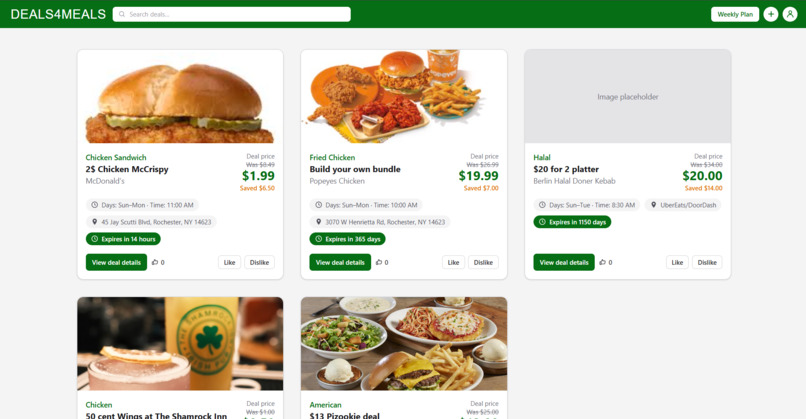
Landing Page
-
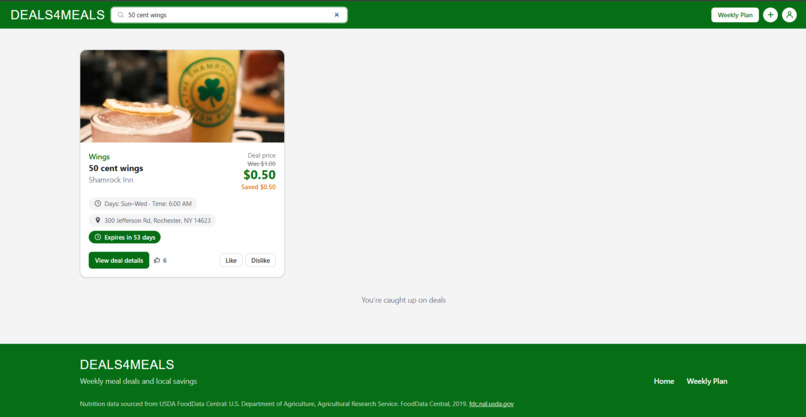
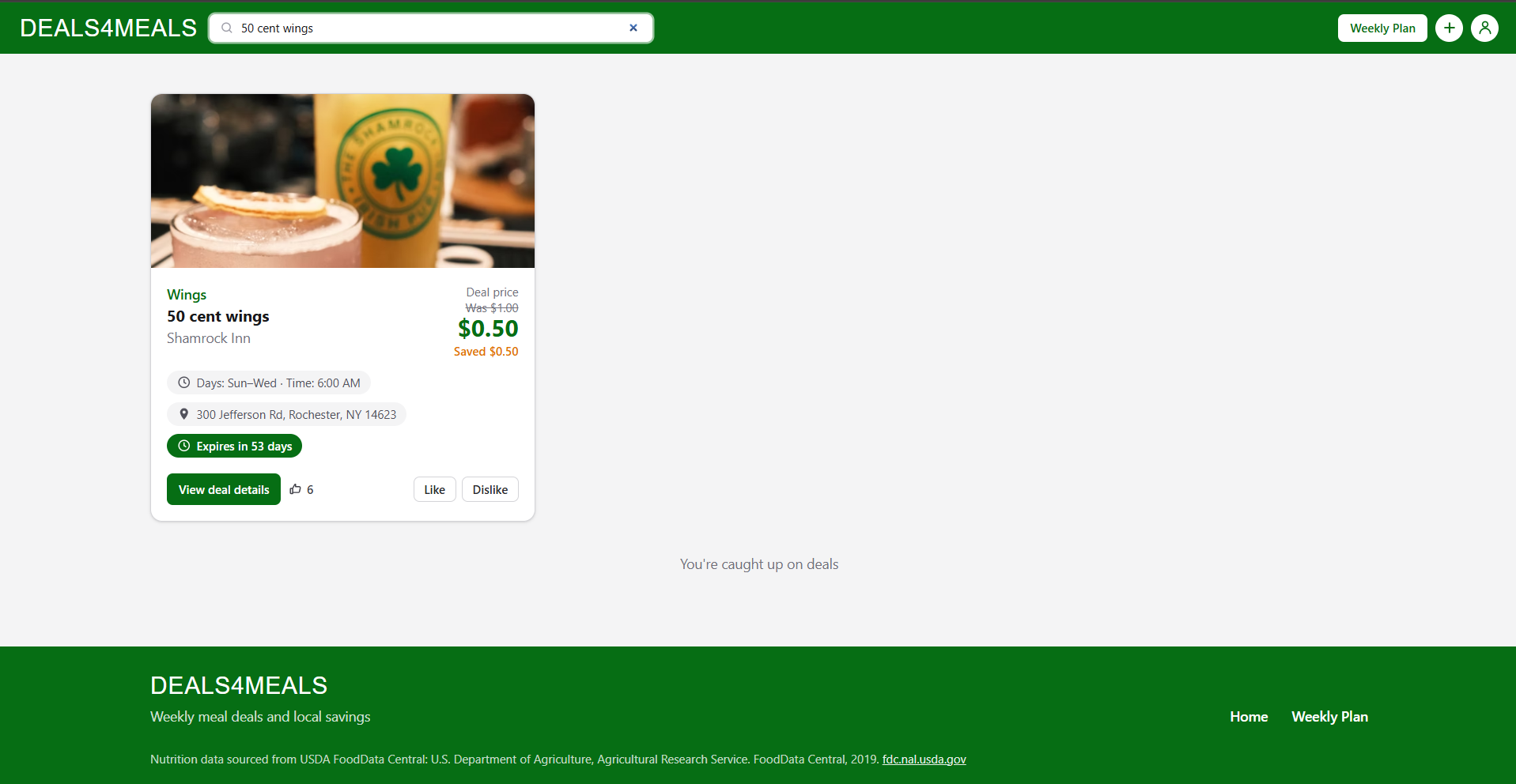
Full Site Wing Search
-
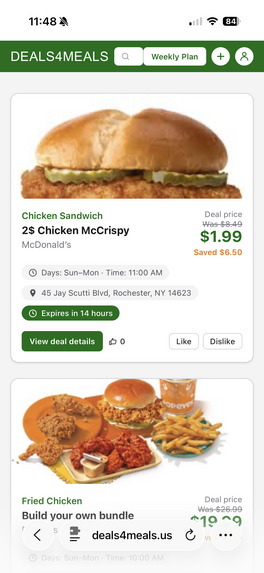
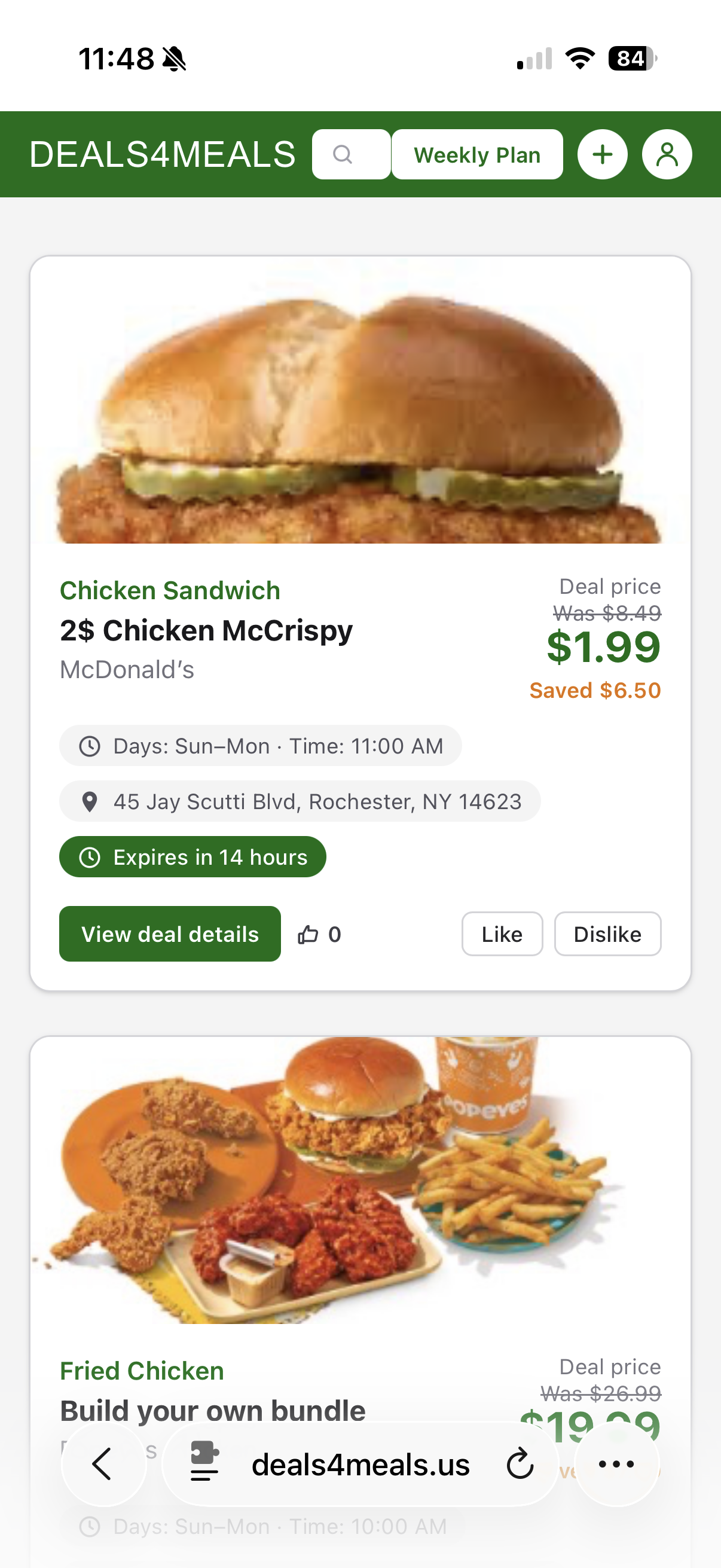
Mobile
-
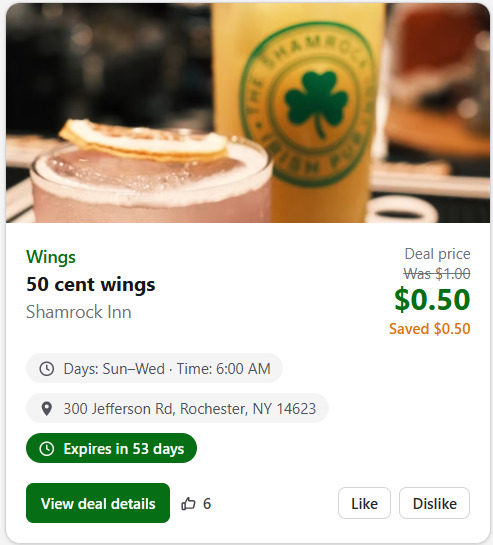
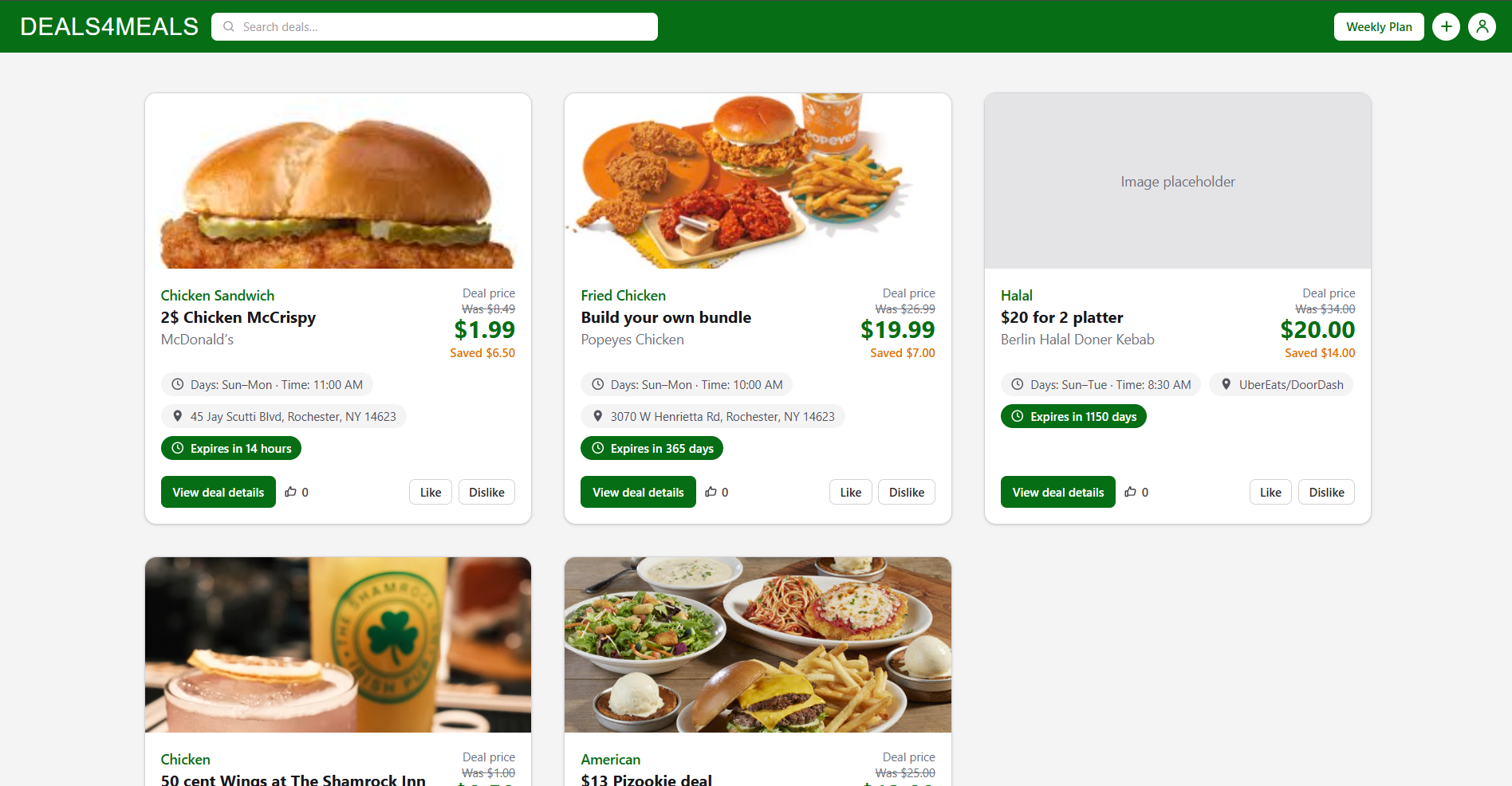
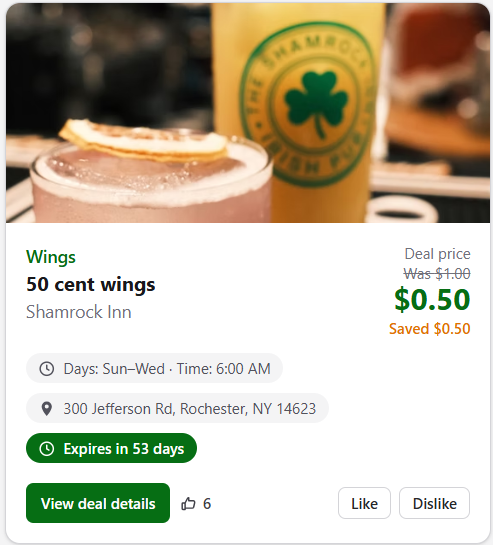
Deal Card
-
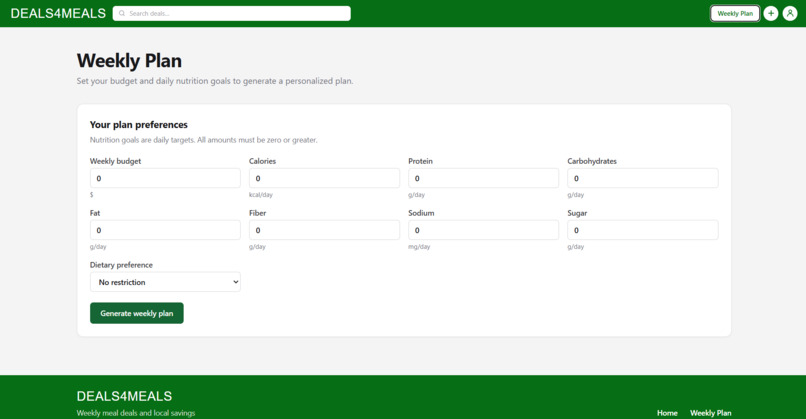
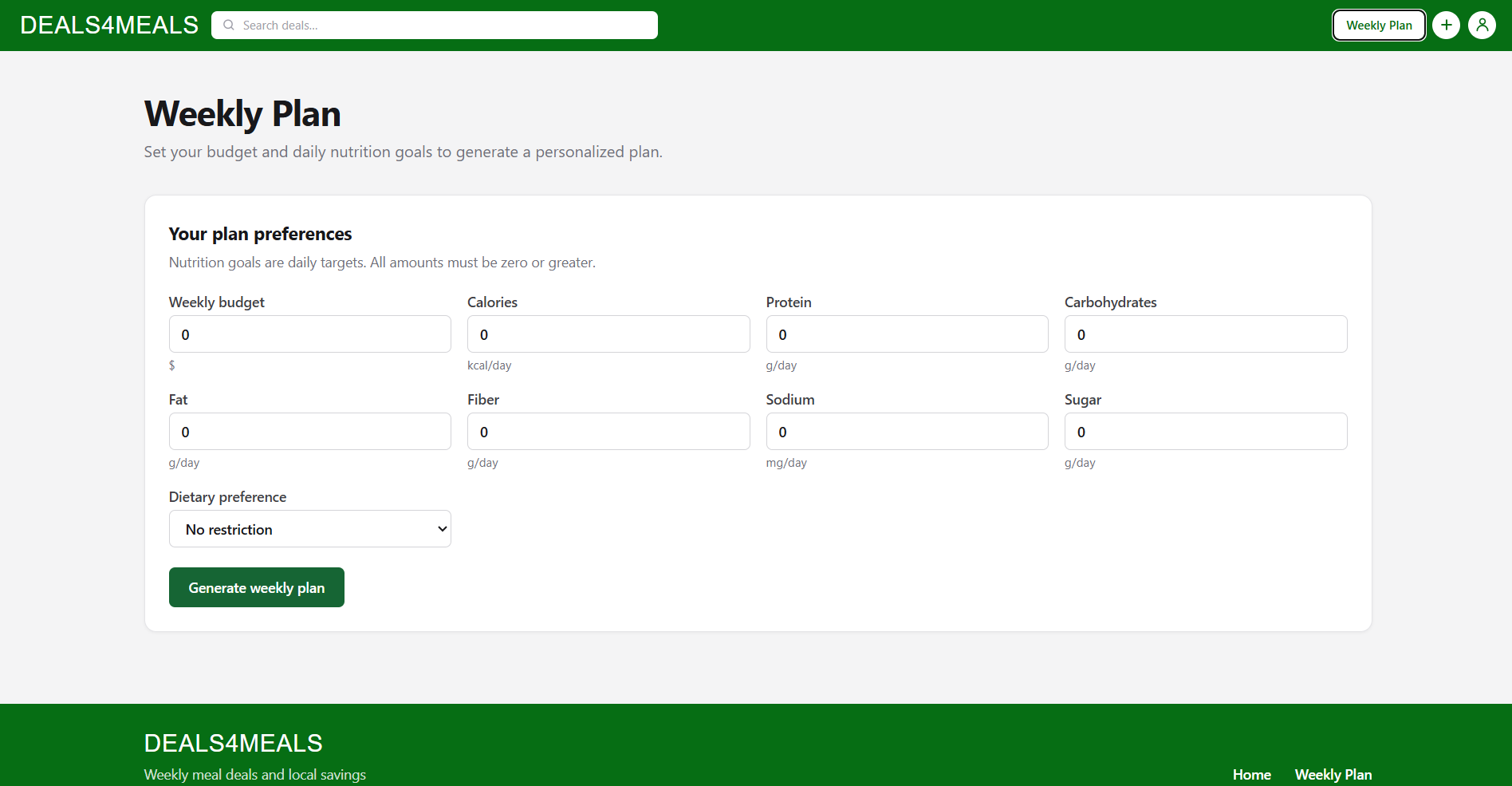
Weekly Set-Up
-
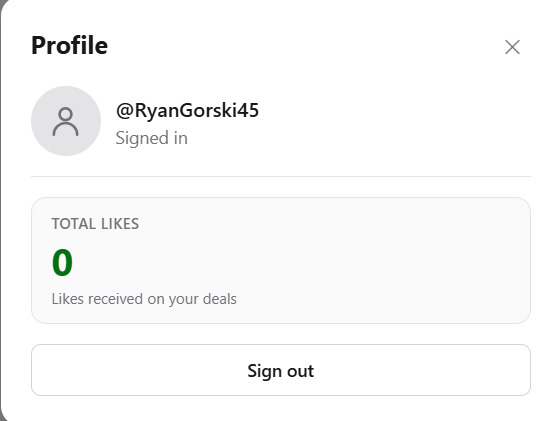
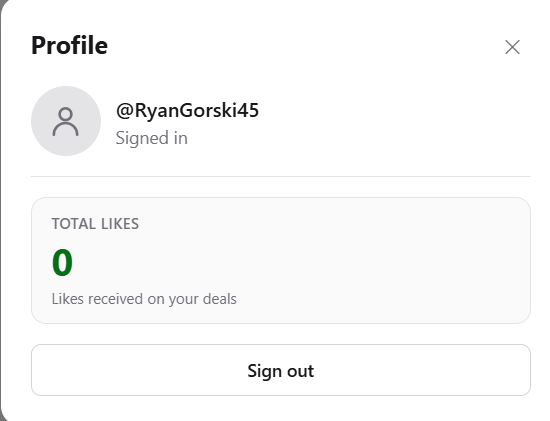
Profile
-
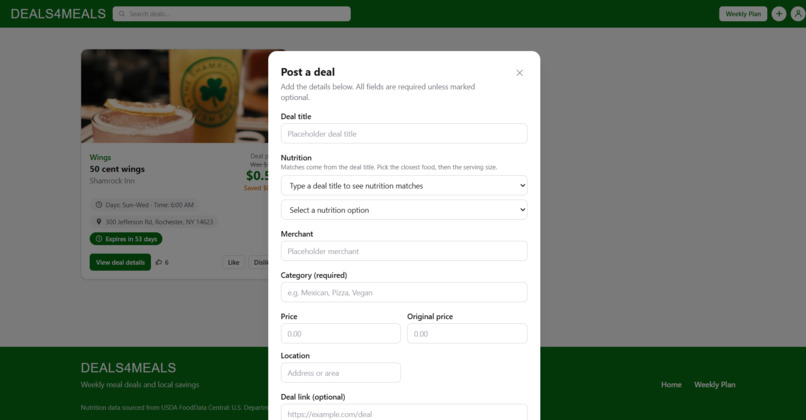
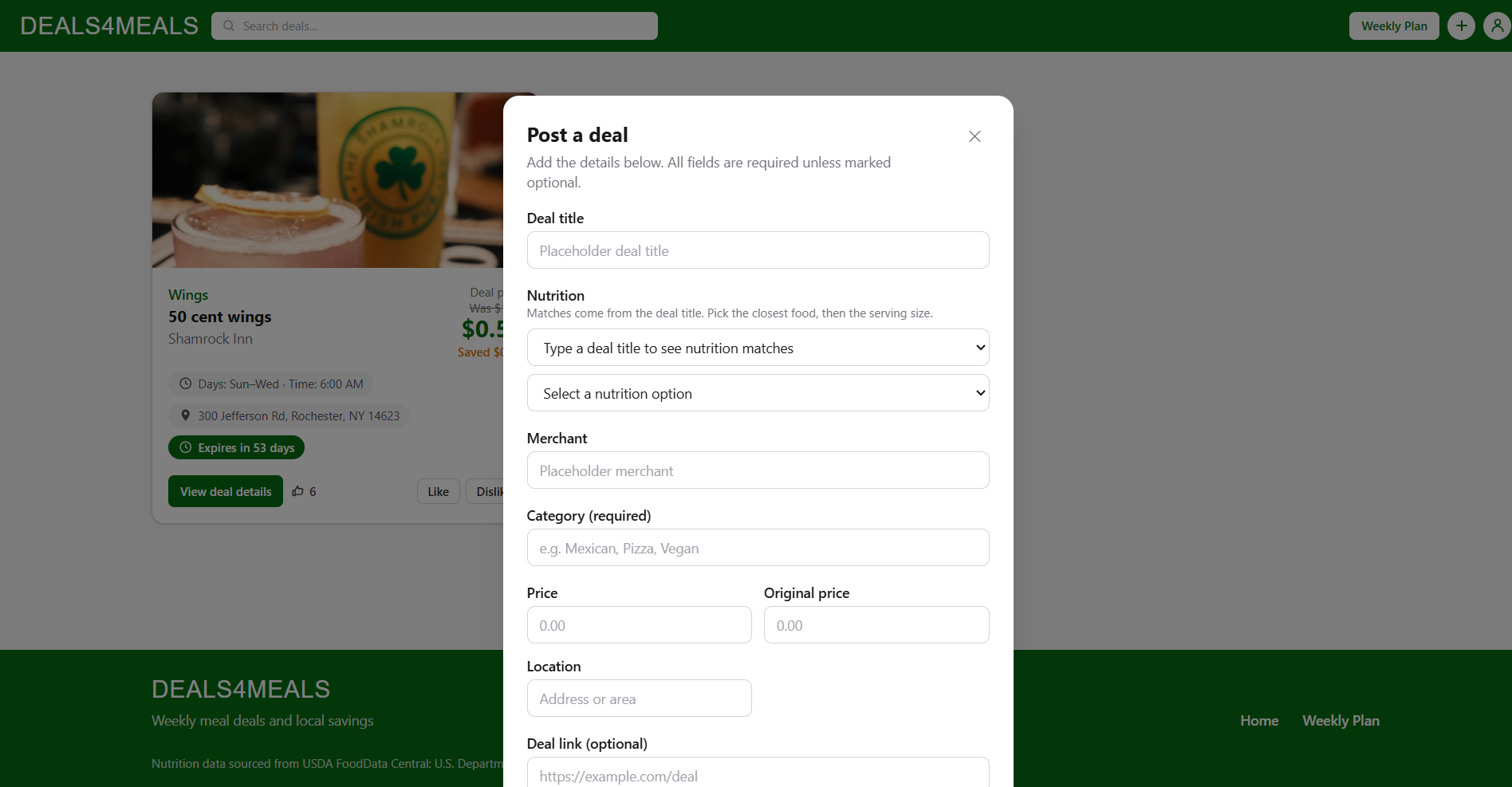
Post Form
Inspiration
Every Monday, we go to the Shamrock Inn on Jefferson. The Shamrock Inn offers wings at 50-cents a wing every Monday. As college students, we use this as an opportunity to eat out every week and get together with friends. A good friend of the team has found several deals like these and coined them as his "rotation". From wings on Monday nights to BJ's weekday Pizookie specials, we learned that everyone likes affordable tasty meals. This gave us our idea for this hackathon: sharing food builds community, but not everyone has the budget to spend $22 on a sandwich. We wanted to create Deals4Meals for people of all walks of life to enjoy restaurant quality meals at the best prices available.
What it does
Deals4Meals is a crowd-sourced, community-driven platform where food lovers unite to share their favorite local promotions. Whether it's a flash promotion like "Free Chicken Sandwich Day" or a long-term special like our favorite Shamrock Inn wings, users can both post and discover new deals in their area. To further help our users get the most out of every dollar, the platform features an AI-powered meal planner that builds a customized weekly menu based on currently active community deals and macro goals, taking the stress out of budgeting and meal prepping for the week.
How we built it
The heart of our engineering approach was heavily inspired by SWEN 261, a class that taught us the value of building full-stack applications to serve the community and non-profit organizations.
To turn our vision into reality quickly, we fed our initial wireframe designs into Grok and Cursor. These tools helped generate the foundation of our frontend, allowing us to dive straight into the meat and potatoes that give the application its real functionality. We built our frontend using React, Tailwind, and Vite, powered the backend with a robust custom API, and managed our data using Tiger Data. To bring our automated weekly planner to life and implement user input verification, we integrated the Google Gemini API. Finally, we tied it all together by manually deploying the entire ecosystem onto a Vultr VPS.
Challenges we ran into
Bringing this platform to life was a true test of our perseverance and patience. Setting up the infrastructure from scratch on a Vultr VPS proved shockingly difficult, complete with unexpected billing loops preventing access and steep learning curves. As our vision for the platform's potential kept growing, we outgrew our own database schemas multiple times, requiring us to completely rework our data architecture repeatedly. This is where Cursor came in especially handy to meticulously go through our codebase and make the required changes after we realized we needed something updated. Additionally, with four developers working simultaneously in a monorepo, we inevitably ran into overlap and minor miscommunications that required us to frequently take a step back to untangle our code and communicate our individual visions for each feature.
Accomplishments that we're proud of
We are incredibly proud to have transformed a hackathon idea into a functional, 24/7 live product. Seeing our application successfully deployed on a VPS with complete, stable database support feels like a massive leap forward for our team. While the product is very much a prototype, it is a project we could all imagine being a really useful tool in our day-to-day lives and we are excited to see where we might take the idea post-demo!
What we learned
We learned what it takes to host and run real world infrastructure. Connecting multiple distinct providers and ensuring they communicated flawlessly was a serious undertaking. When our custom APIs initially failed to reach the database, we learned how to trace network requests, monitor ports, and identify the exact moments our operations dropped, gaining significant debugging experience. Our team is compromised of 4 members with 4 different levels of experience, so the hackathon served as a great learning experience in both programming and project architecture for our less experienced members.
What's next for Deals4Meals
Our next steps include:
- Growing a dedicated community: Bringing in more users to share the love (and the deals) across new cities.
- Long-term maintenance: Keeping the VPS architecture stable, secure, and scalable.
- Mobile Port: Turn Deals4Meals into a mobile app for ease of access
- AI optimization: Optimizing our Gemini prompts and backend operations to deliver personalized meal plans and validate user inputs even faster and at scale.
- Additional Features: Adding more features such as a notification system, saved deals, settings, and more.
- Enhanced user profiles: Building a better account system so users can interact with each other and become apart of a deal loving community!
Built With
- css
- cursor
- express.js
- gemini
- github
- grok
- pnpm
- react
- tailwind
- tigerdata
- typescript
- usdafooddata
- vite
- vultr

