-
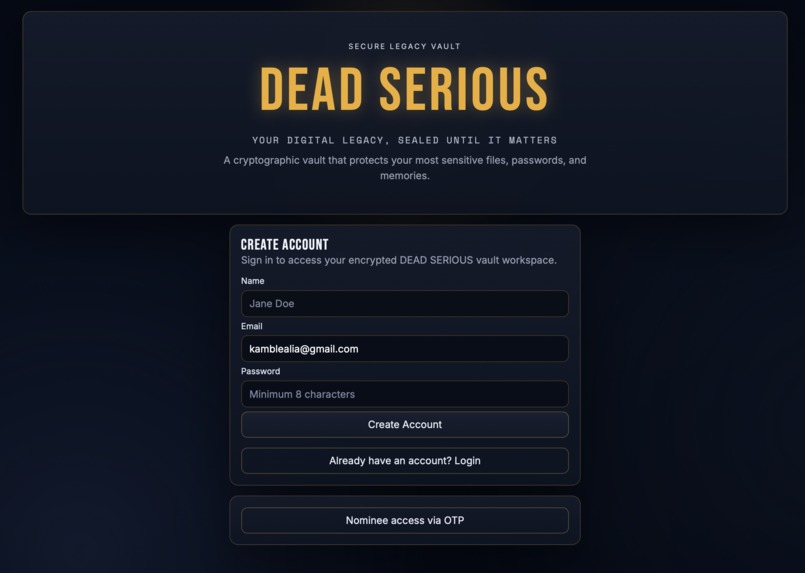
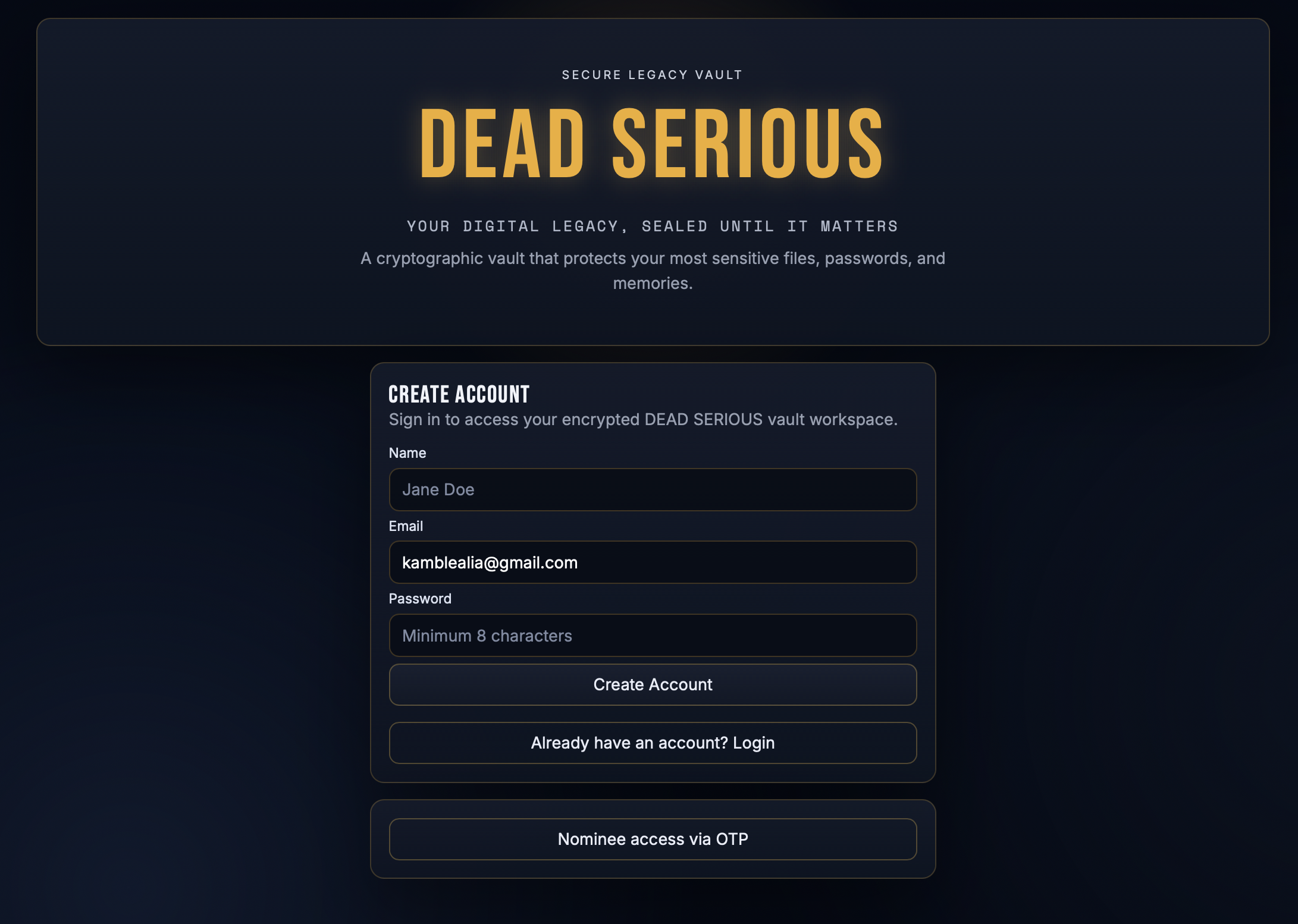
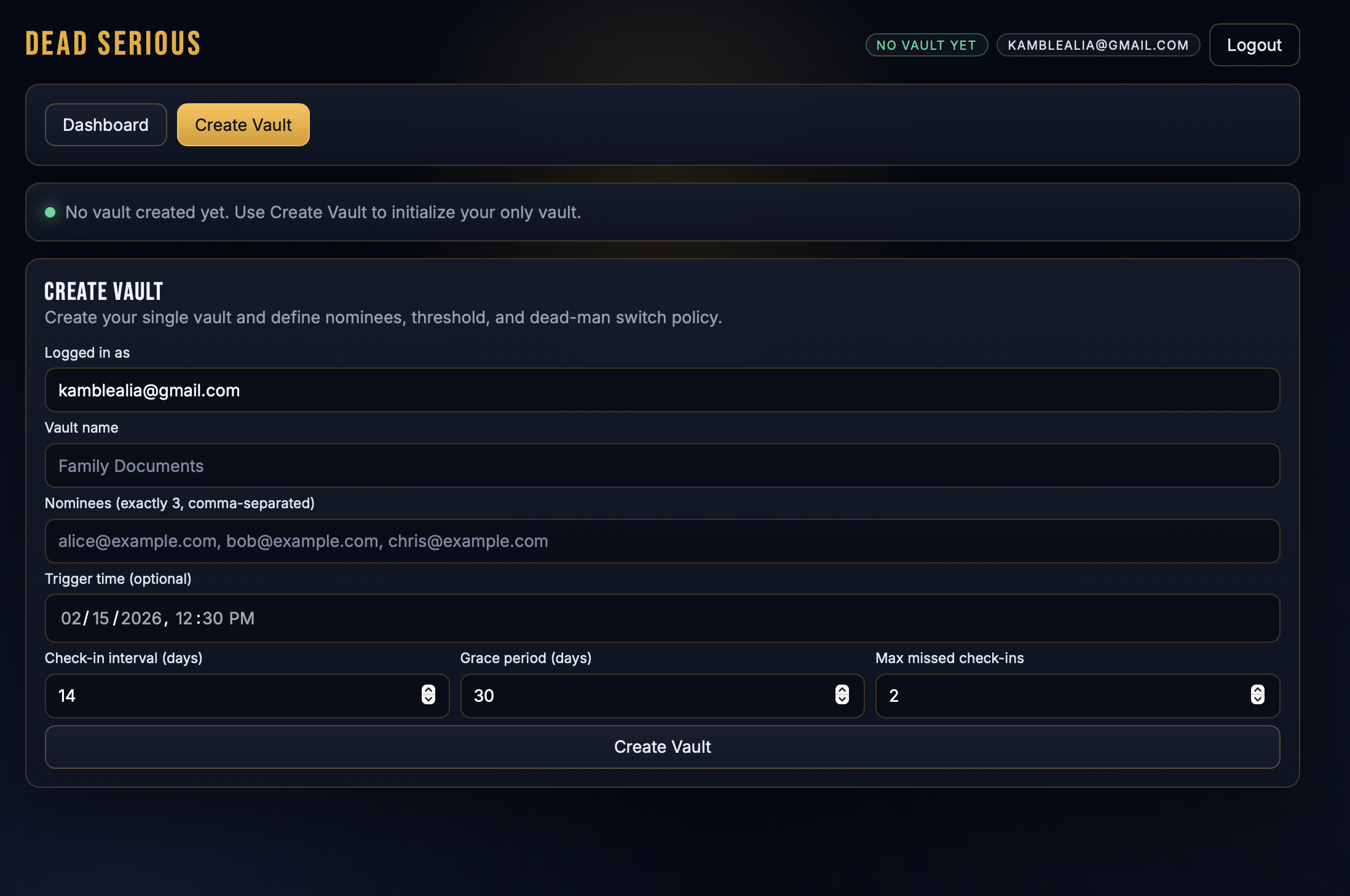
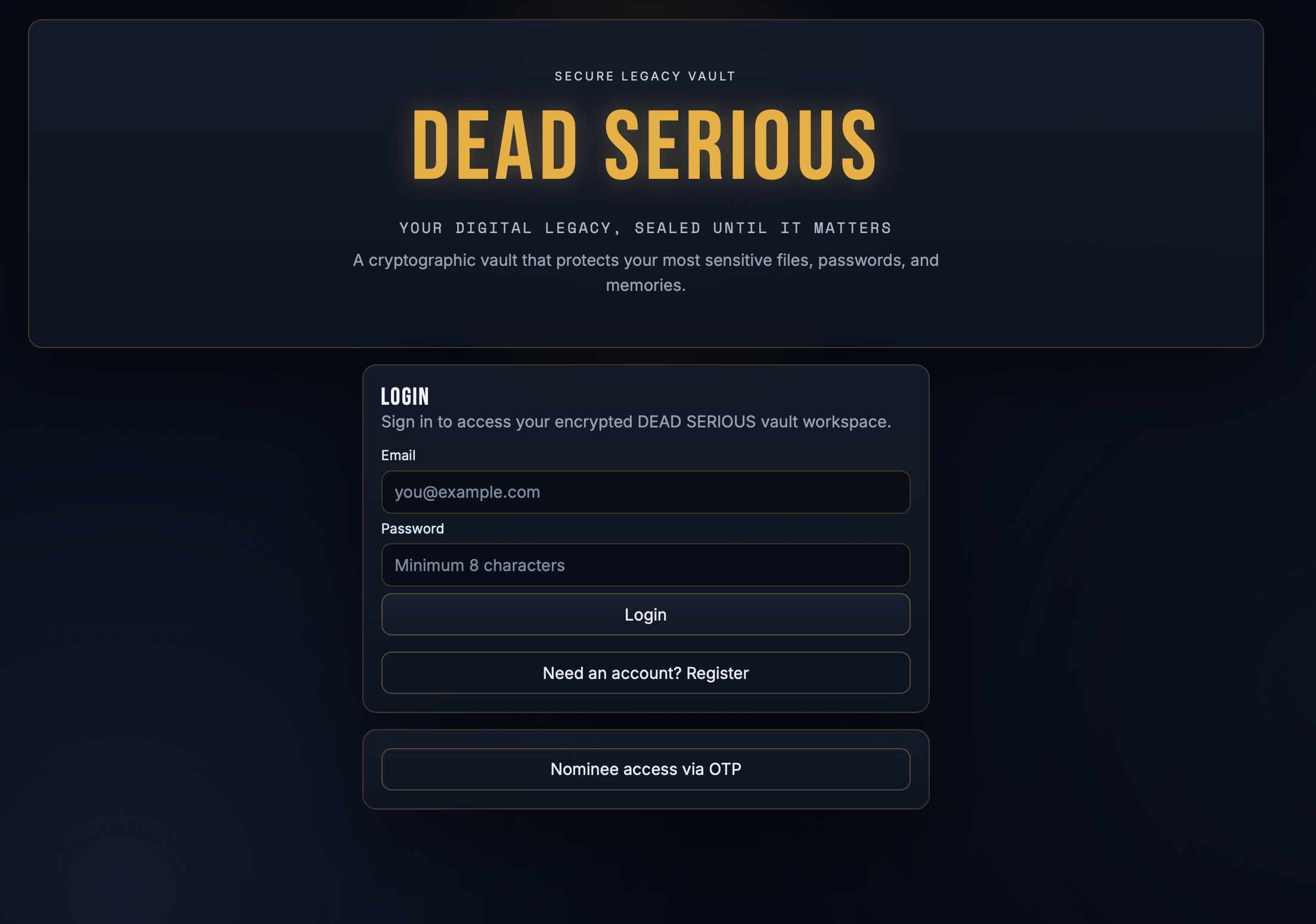
Login page
-
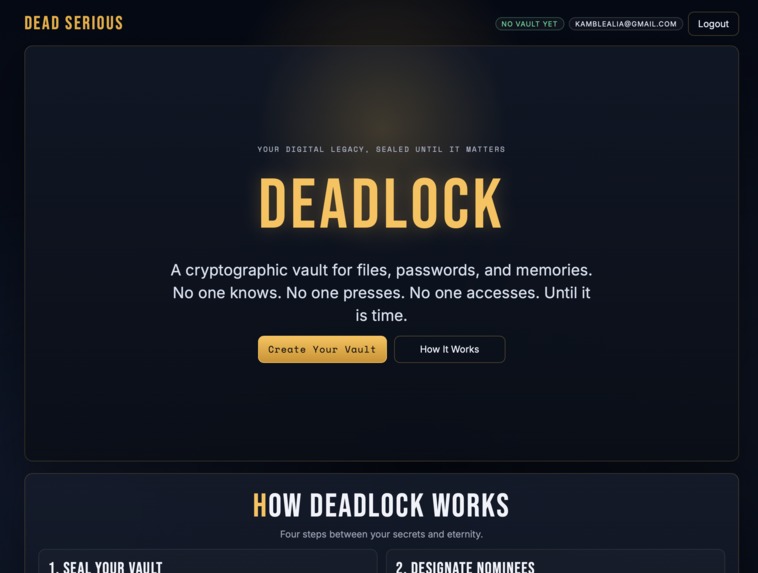
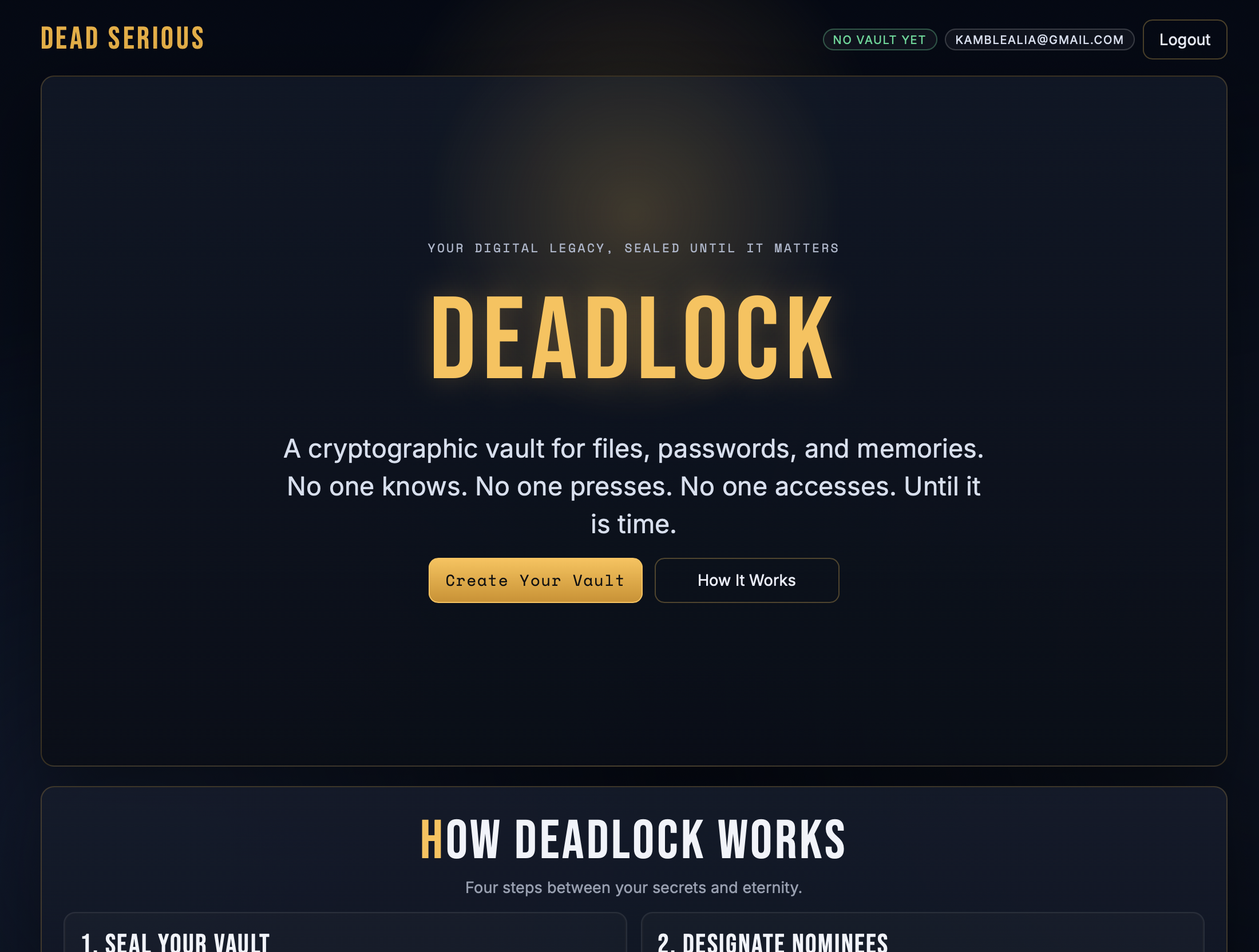
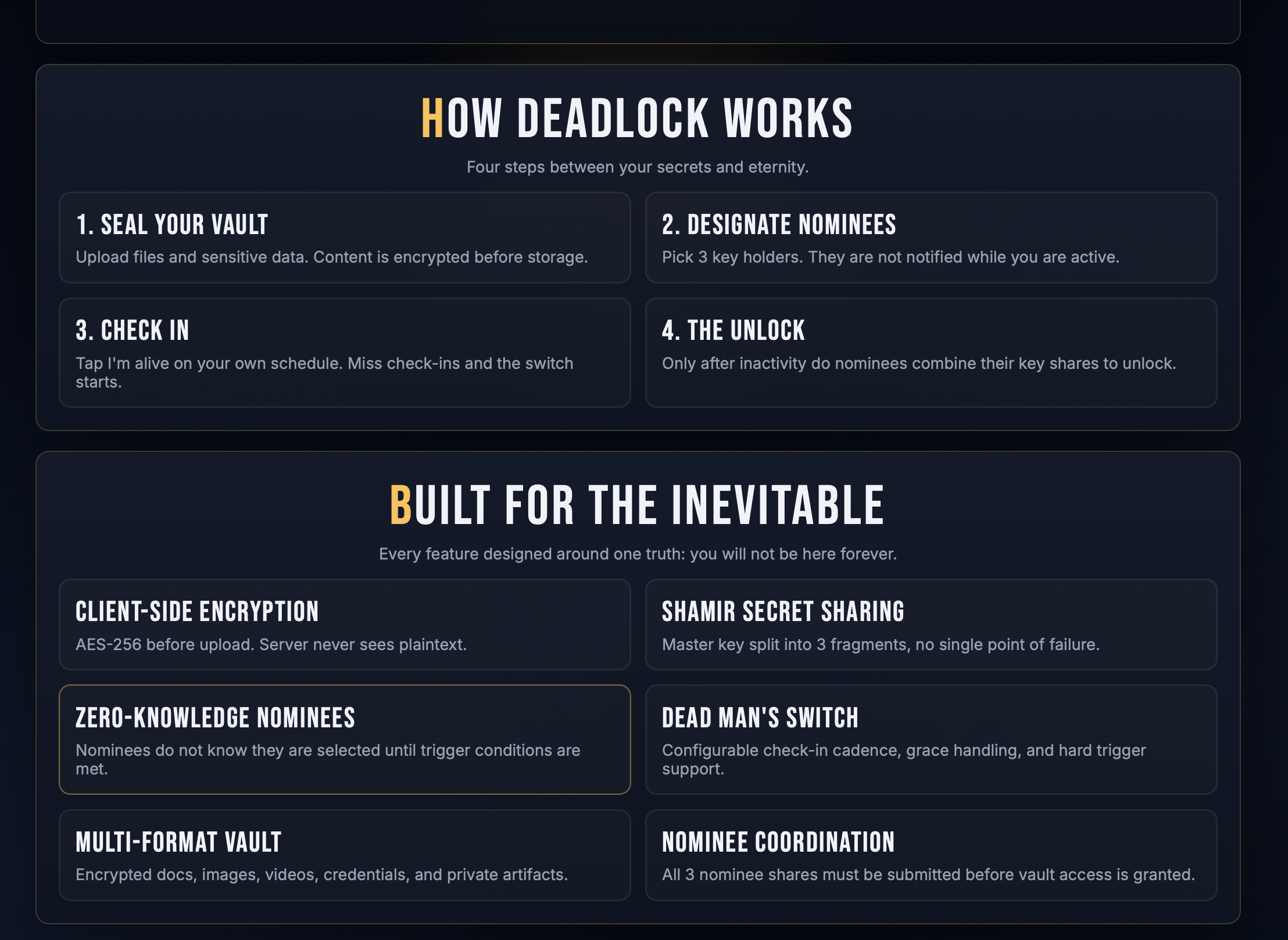
Landing page
-
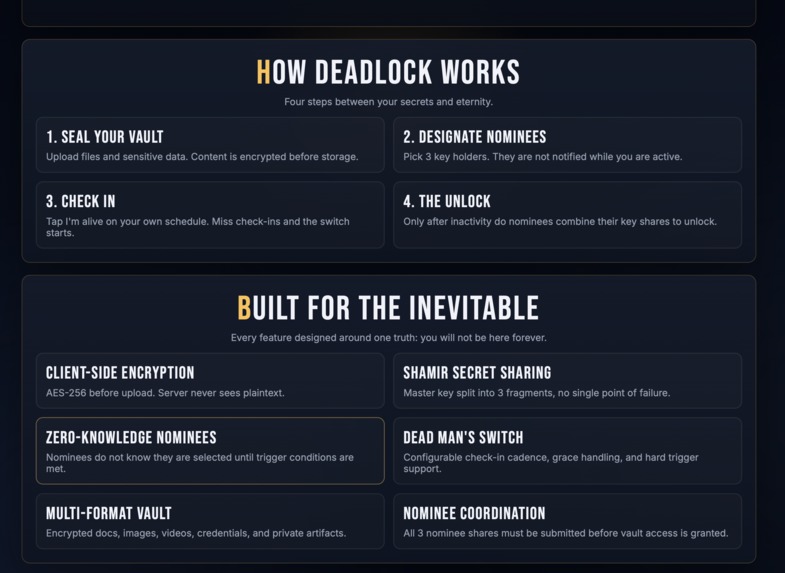
Landing page
-
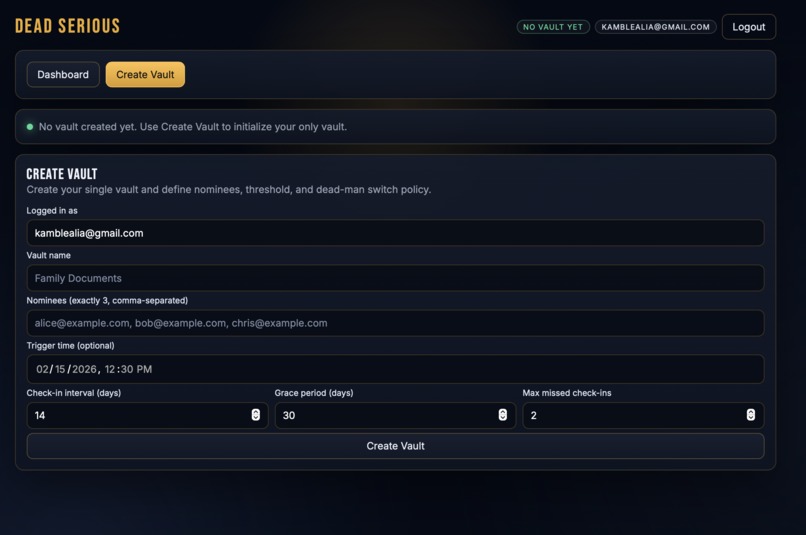
Landing page
-
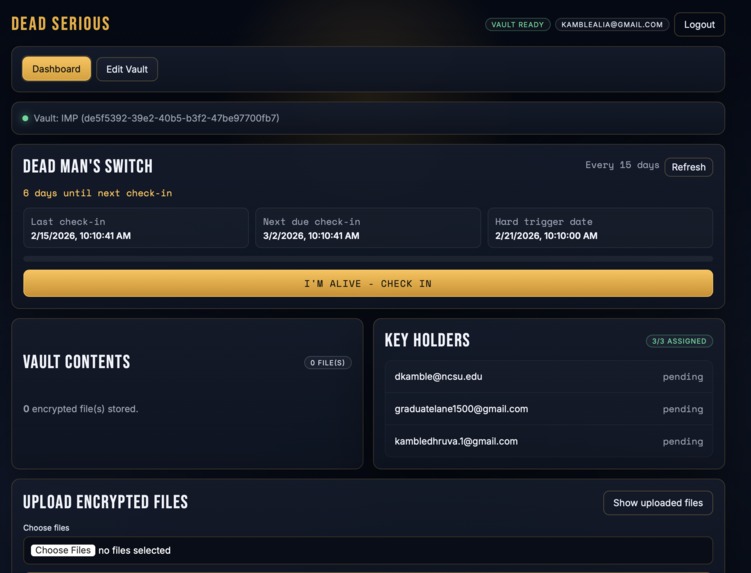
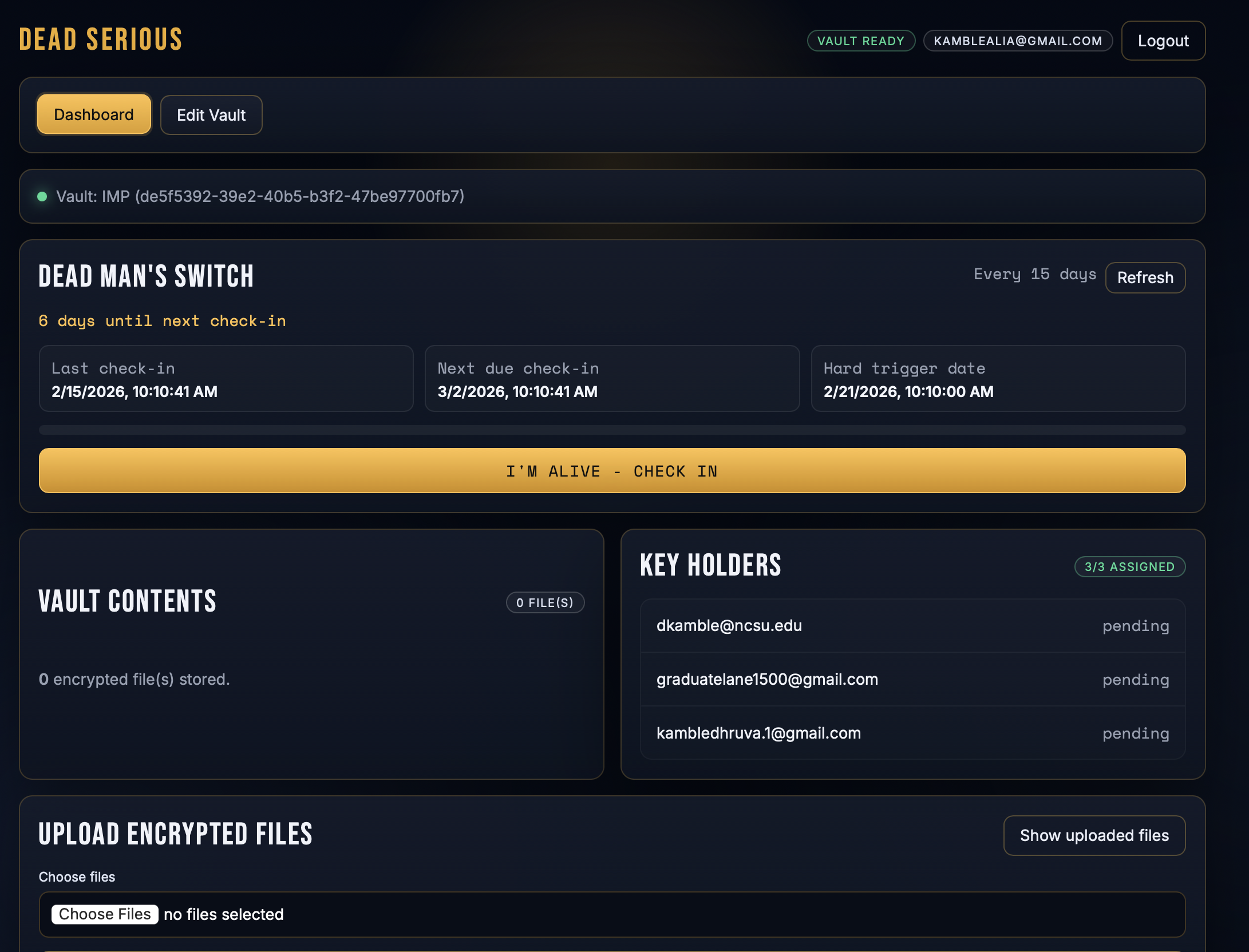
Vault dashboard
-
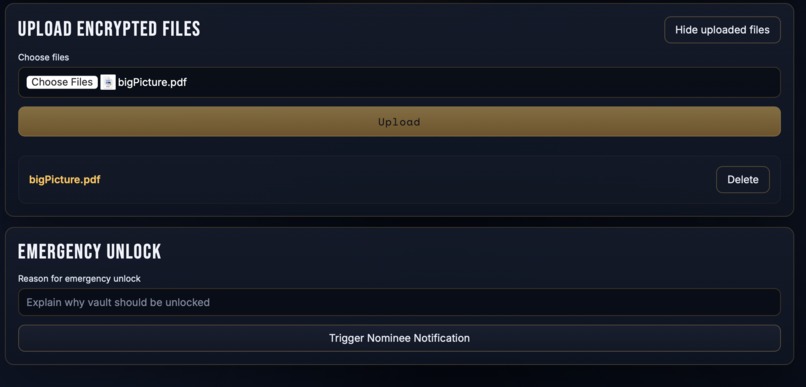
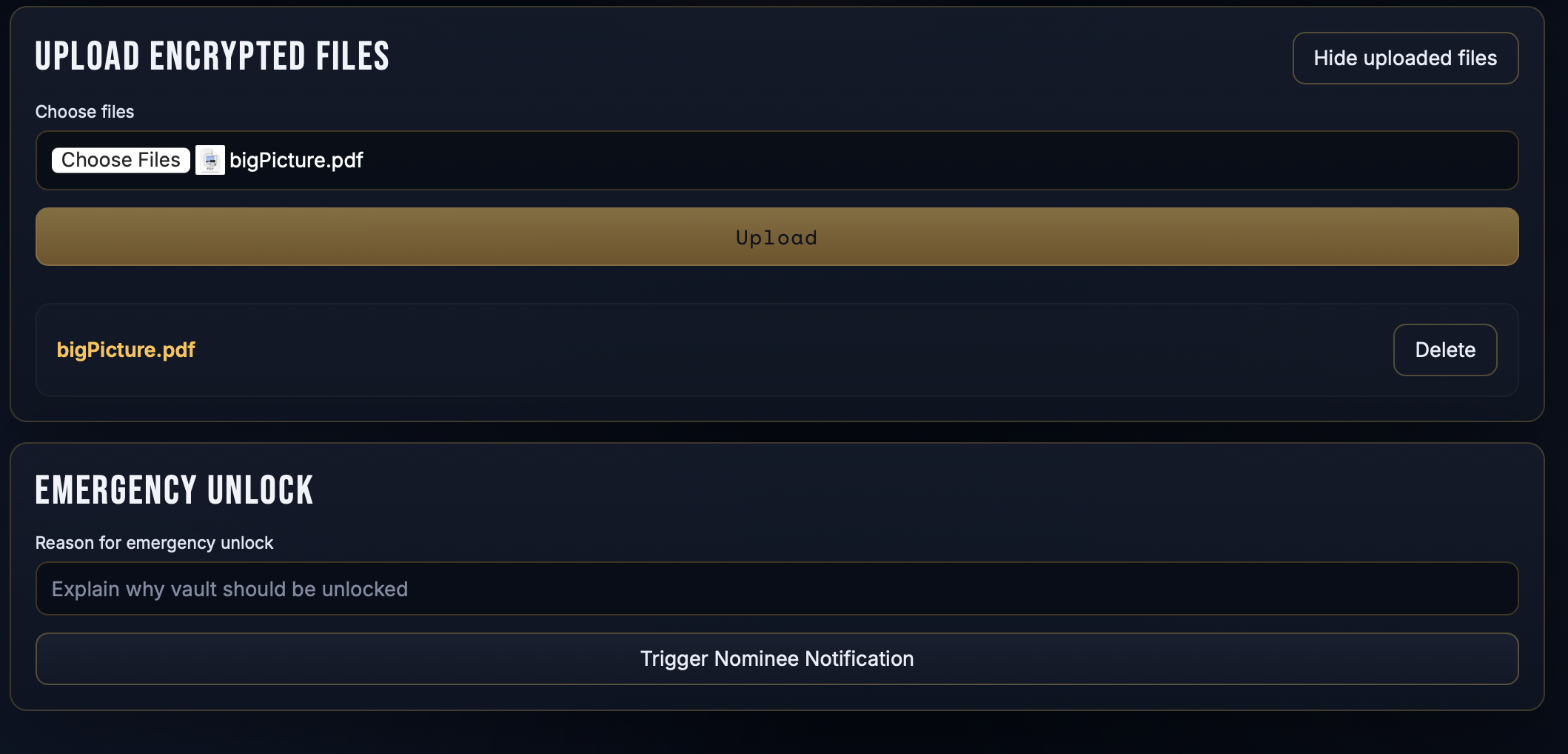
File upload
-
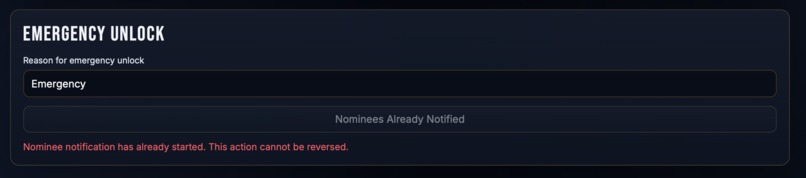
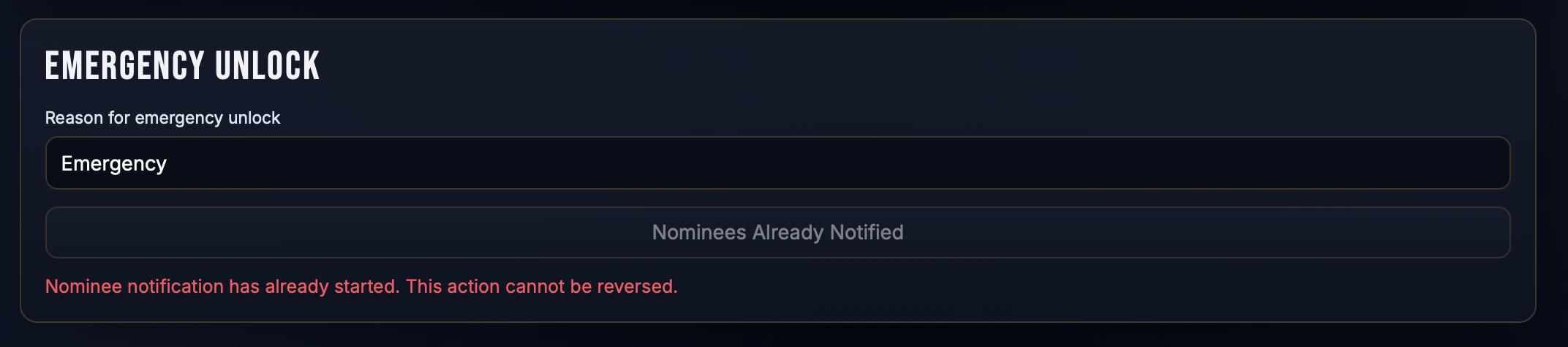
Trigger Nominee Notification
-
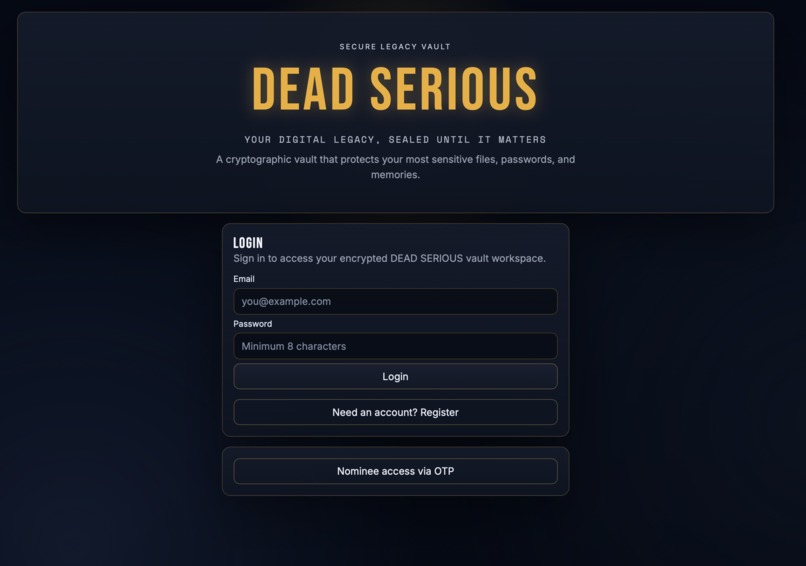
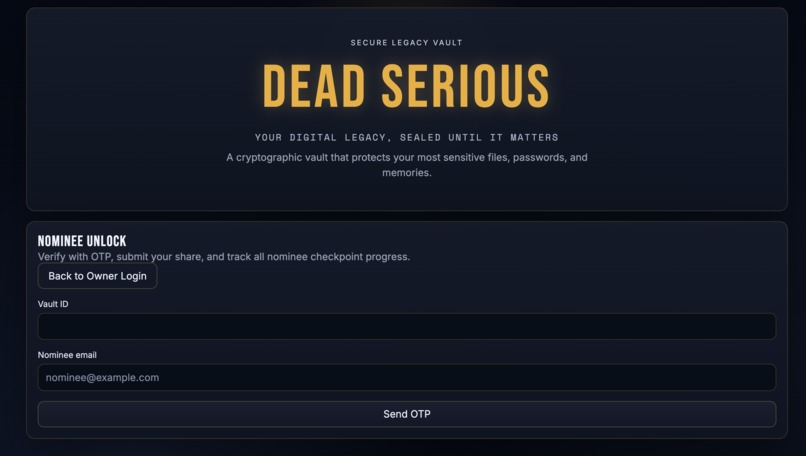
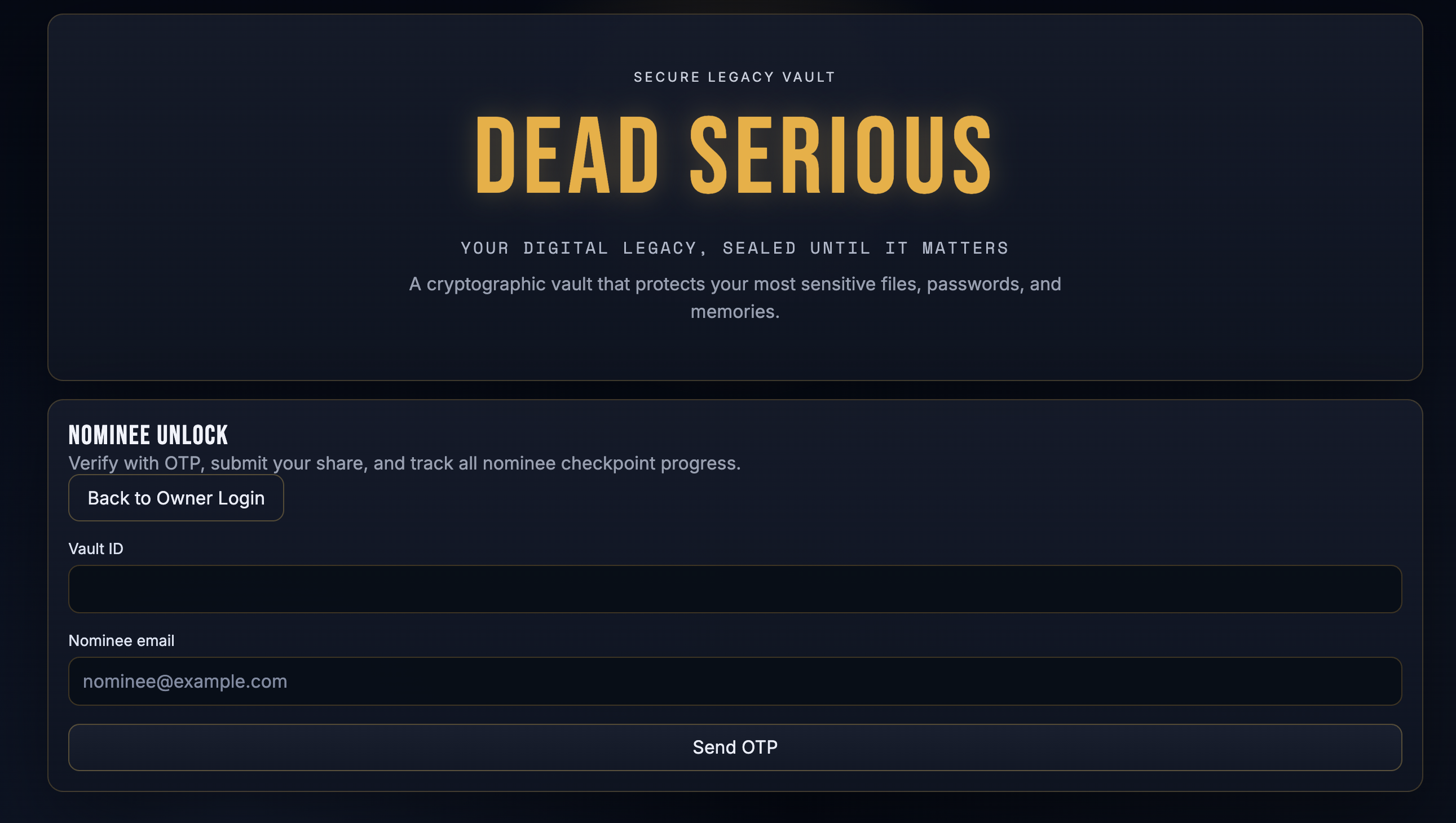
Nominee access via Login page
-
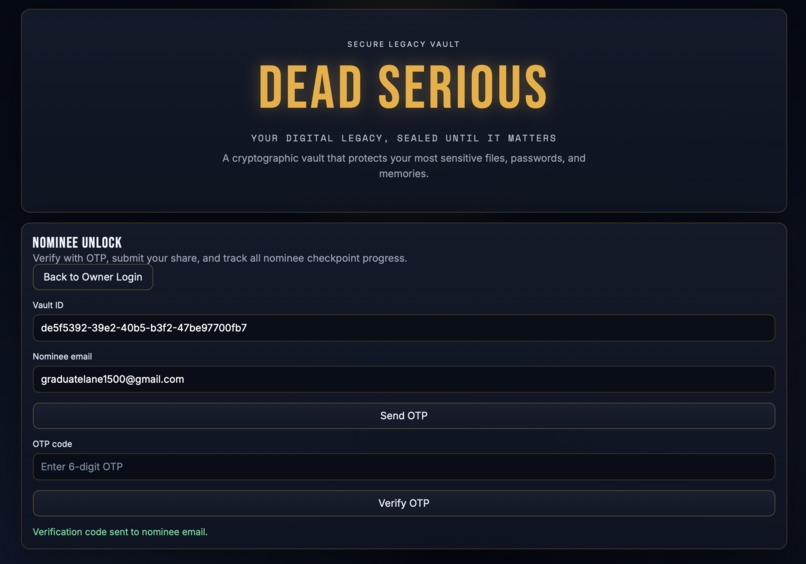
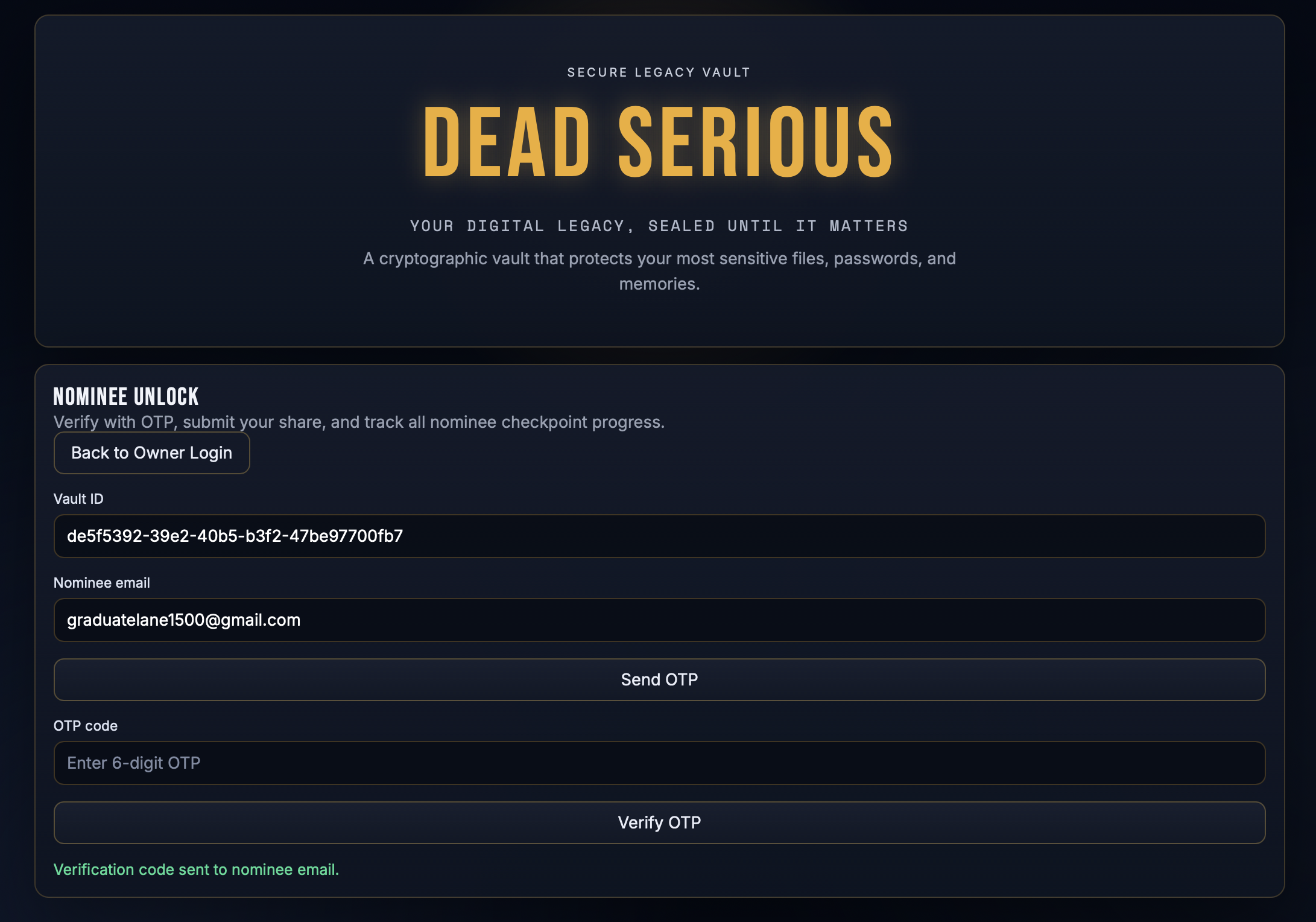
Nominee OTP verification
-
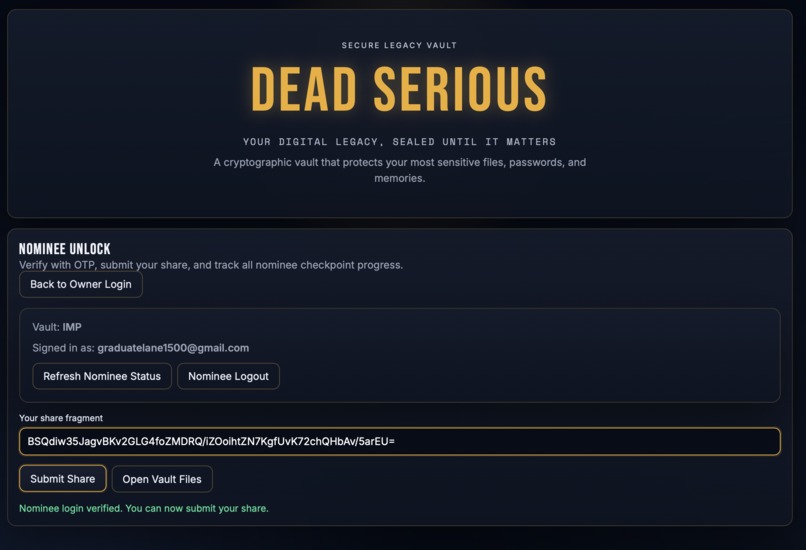
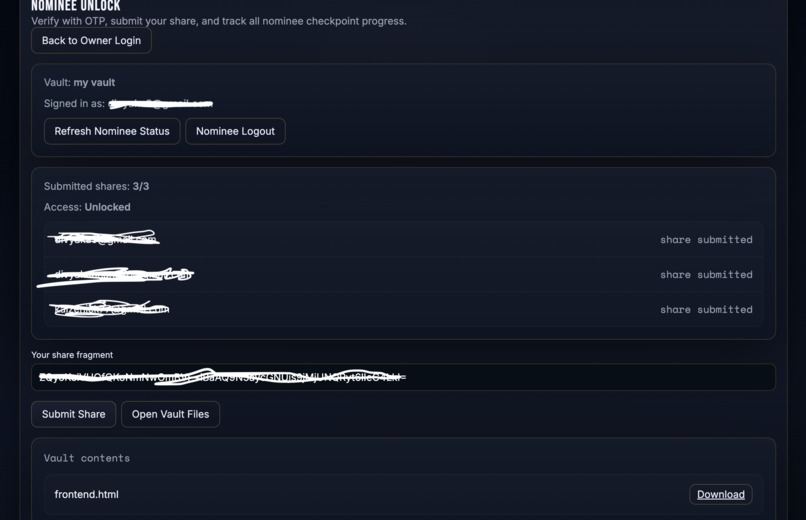
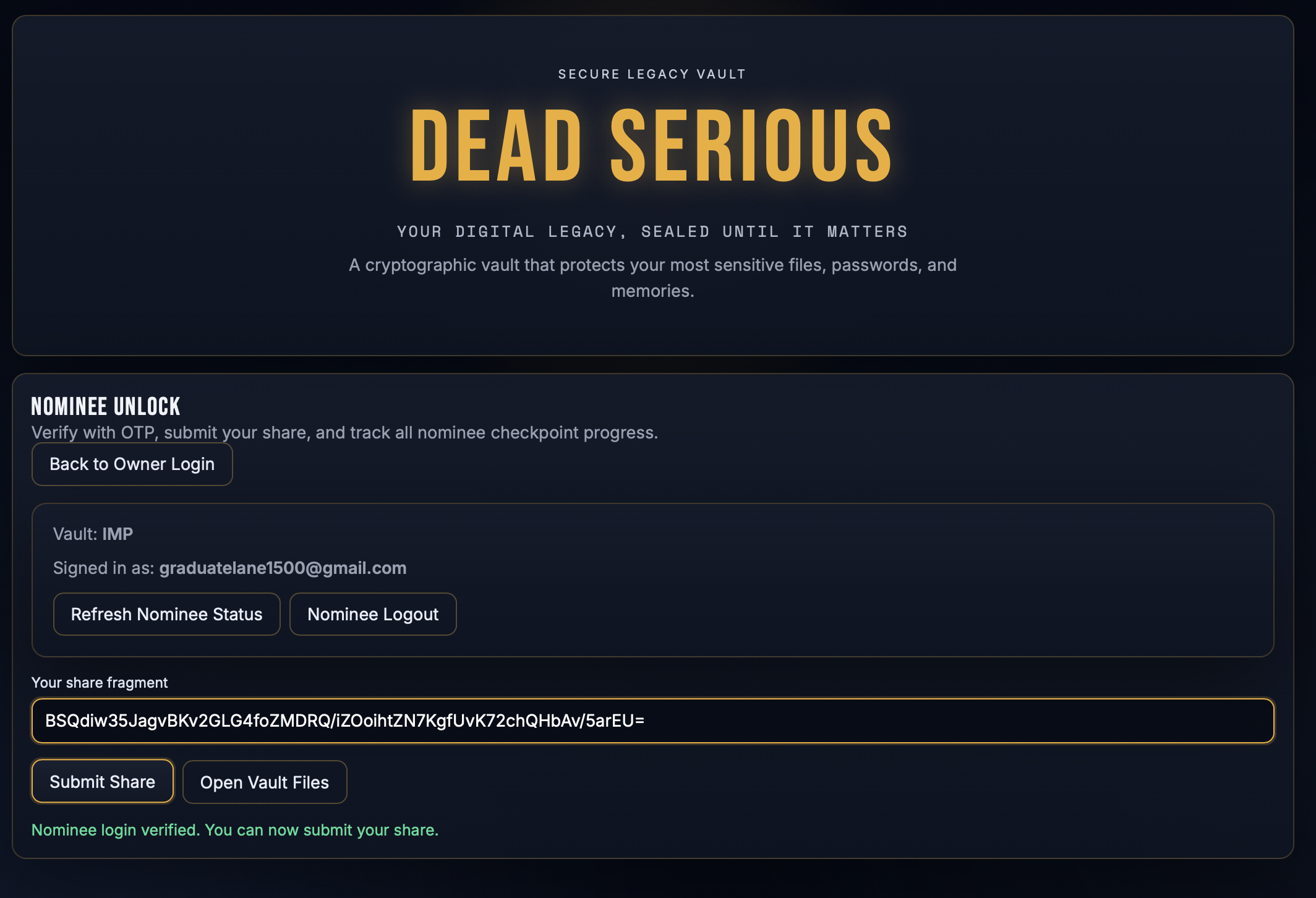
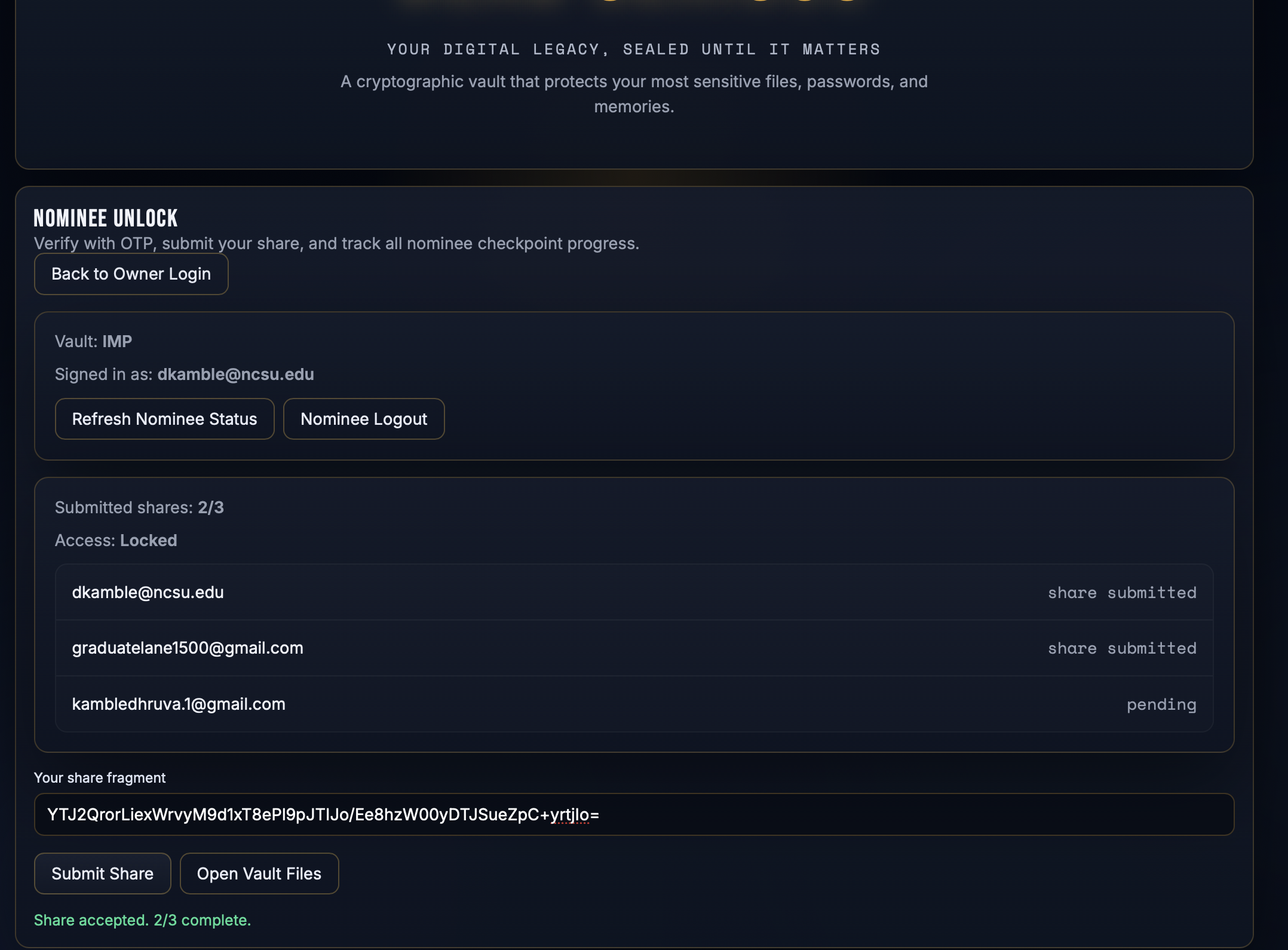
Nominee fragment share
-
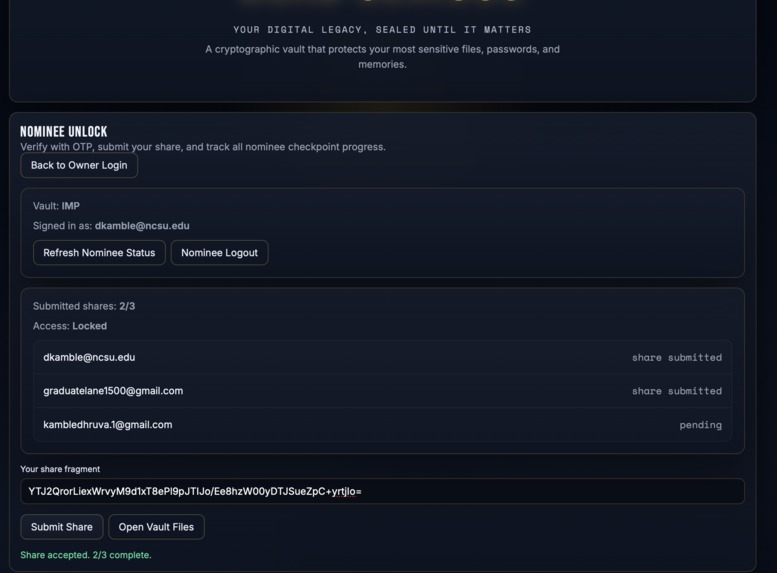
Nominee fragment share
-
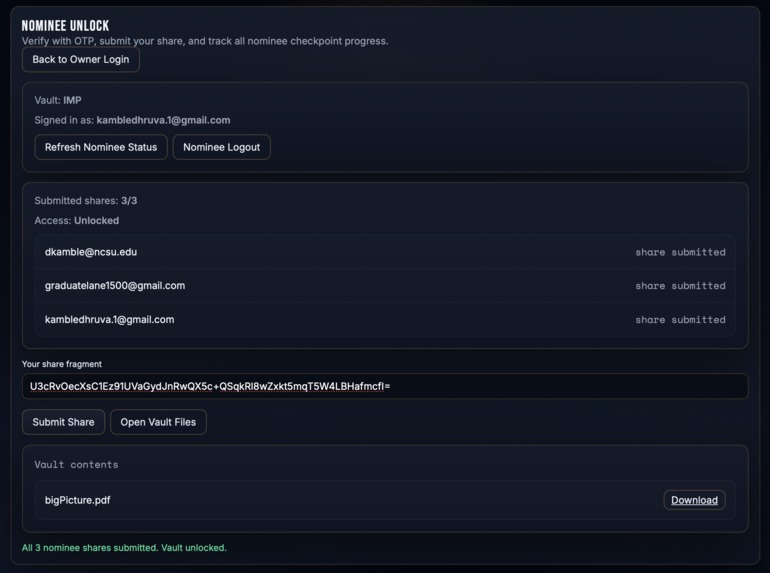
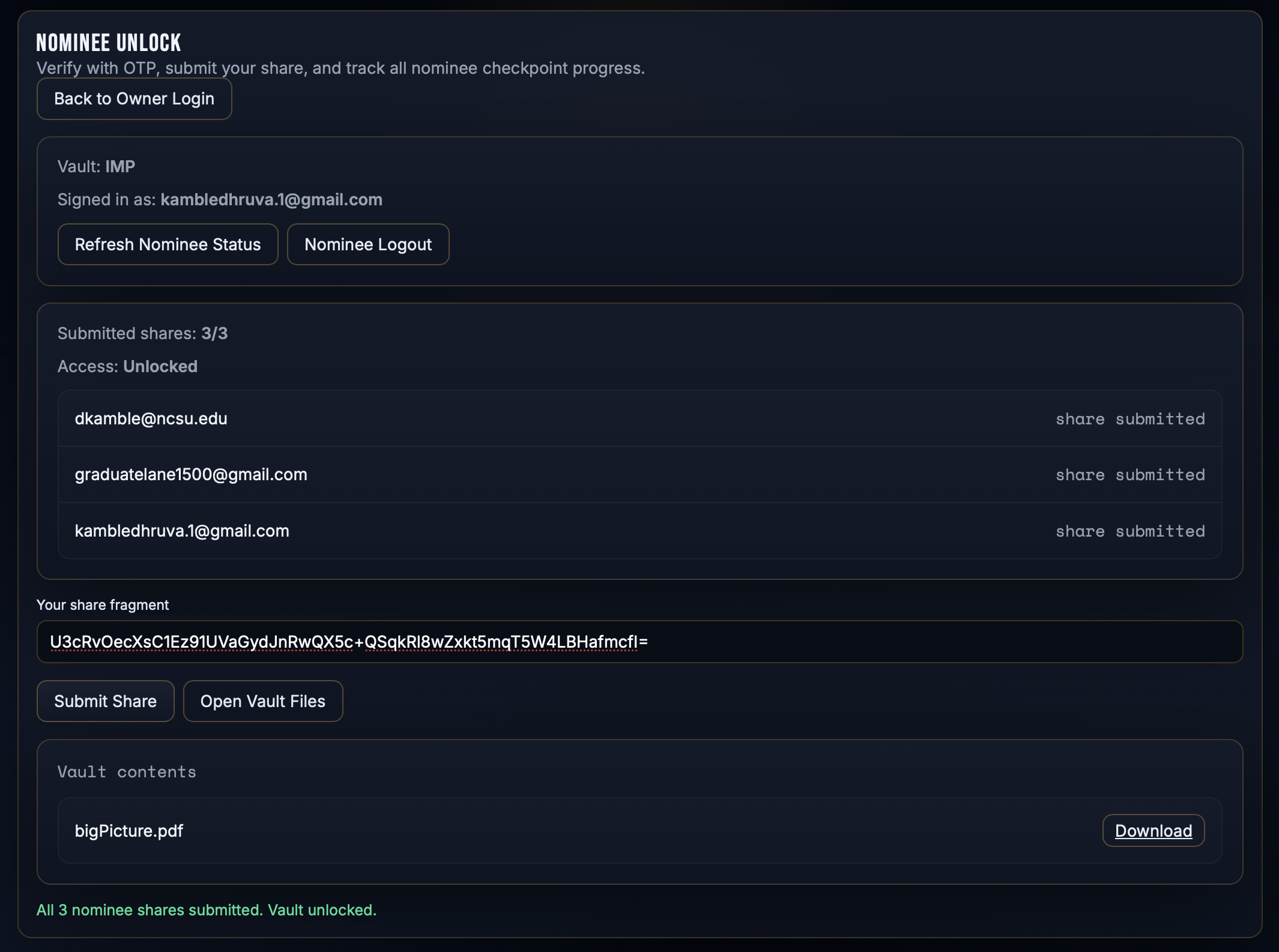
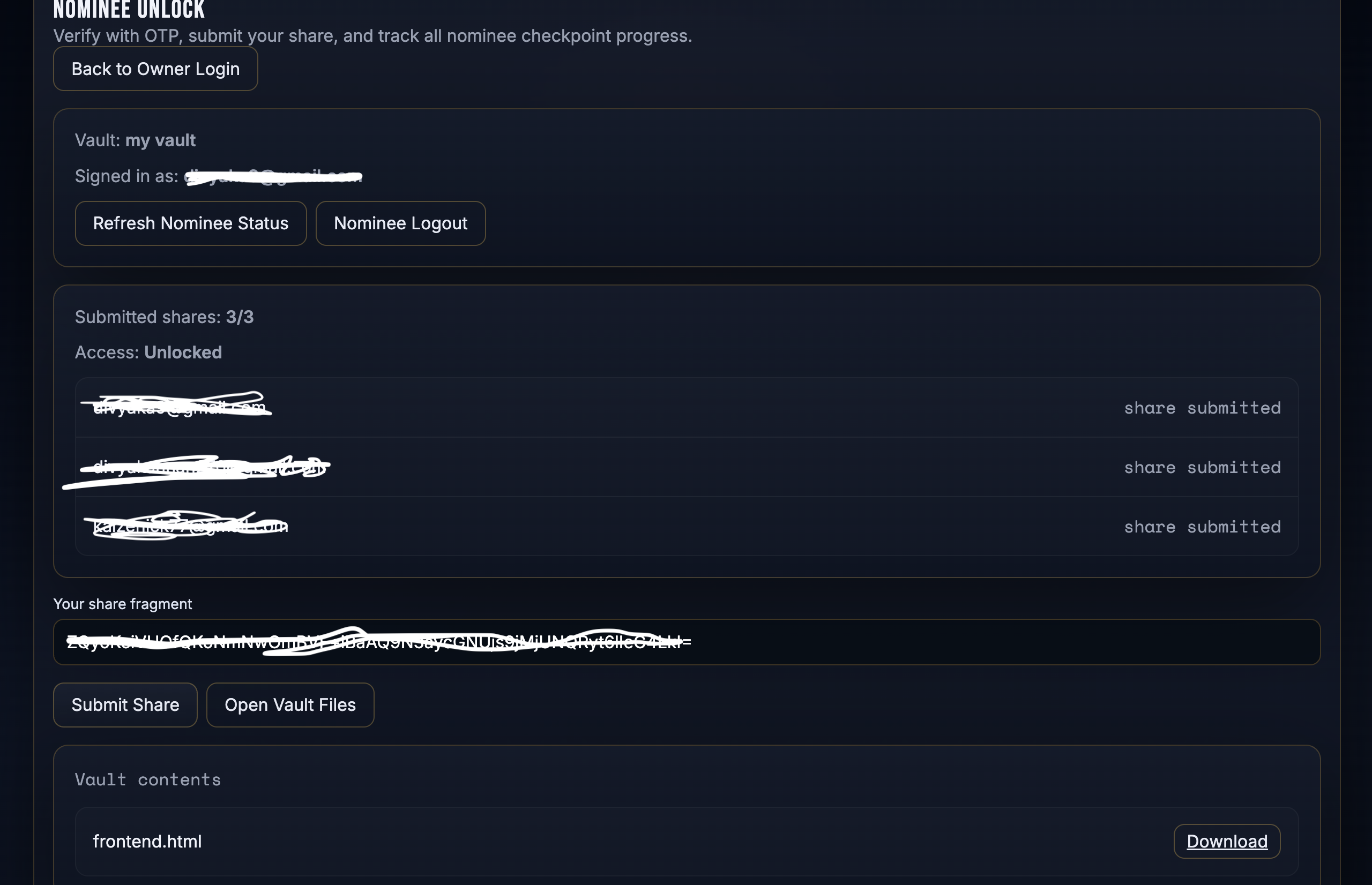
Vault Unlock
-
-
DeadSerious — Zero-Knowledge Digital Inheritance Vault
Inspiration
In today's world, our most valuable assets are digital — passwords, crypto wallets, personal documents, private videos. Yet there is no truly secure and privacy-first way to pass them on after death.
Most existing solutions:
- Notify emergency contacts immediately
- Rely on centralized trust
- Store sensitive data in ways that companies can technically access
We wanted to build a system that behaves like a real will:
- Private while you're alive.
- Unlocked only after you're gone.
- Accessible only through distributed trust.
That idea became DeadSerious.
What It Does
DeadSerious is a zero-knowledge digital inheritance vault.
It allows users to:
- Encrypt sensitive data client-side
- Split the encryption key using Shamir's Secret Sharing
- Designate secret nominees (who are not notified while the user is alive)
- Set a check-in frequency to prove they are still alive
- Trigger a dead-man's switch if check-ins stop
- Require all nominees to collaborate to reconstruct the master key
The server never sees plaintext or the reconstructed key.
How We Built It
Frontend
- JavaScript
- React (Vite)
- TailwindCSS
- WebCrypto API — for AES-256-GCM encryption
secrets.js-grempe— for Shamir's Secret Sharing
Backend
- Node.js + Express
Storage
- PostgreSQL — vault metadata, nominee status, and check-in tracking
- AWS S3 — encrypted file storage
Core Architecture
Vault content is encrypted client-side using AES-256-GCM. The master encryption key is split into fragments using Shamir's Secret Sharing. Encrypted vault data is uploaded to S3. PostgreSQL stores vault metadata, nominee information, check-in timestamps, and unlock status. A dead-man's switch mechanism checks for missed check-ins. Once triggered, nominees are notified and must collaborate to reconstruct the key.
At no point does the server have access to the decrypted content.
Challenges We Ran Into
- Coordinating client-side encryption with backend state — ensuring the encrypted blob and the metadata stayed in sync without ever exposing raw key material to the server.
- Managing secure file uploads to S3 — streaming ciphertext through a presigned URL pipeline while preserving end-to-end encryption guarantees.
- Designing the dead-man's switch logic cleanly — handling edge cases like network outages, delayed check-ins, and partial nominee responses without false triggers.
- Ensuring key fragments were handled securely — preventing fragments from being logged, cached, or accidentally serialized server-side.
- Balancing security with 24-hour time constraints — carefully scoping features to ensure a working demo while preserving core cryptographic guarantees.
Accomplishments We're Proud Of
- Successfully implemented true client-side AES encryption
- Integrated Shamir's Secret Sharing for distributed trust
- Built a working dead-man's switch mechanism
- Achieved a genuine zero-knowledge design
- Delivered a fully functional end-to-end demo in 24 hours
Most importantly, we built a system where secrets stay secret until mathematically unlocked.
What We Learned
- Security is about reducing trust assumptions — every party you don't have to trust is an attack surface eliminated.
- Distributed key management is more powerful than centralized control — no single node, not even ours, can unlock a vault alone.
- Client-side encryption drastically changes threat models — the server becomes a blind courier, not a custodian.
- Simplicity is critical when building cryptographic systems under time pressure — complexity is the enemy of correctness.
- We also learned how to clearly communicate security design decisions to non-technical audiences.
What's Next for DeadSerious
| Feature | Description |
|---|---|
| Configurable threshold schemes | Support flexible $k$-of-$n$ configurations (e.g., 2-of-3 nominees required) |
| Verifiable death confirmation | Automated, auditable confirmation workflows that don't rely on self-reporting |
| Multi-factor nominee auth | Require nominees to prove identity before receiving their key fragment |
| Hardware-backed key storage | Leverage secure enclaves (TPM, Secure Enclave) for fragment protection |
| Formal threat modeling | Penetration testing and adversarial analysis of the full cryptographic pipeline |
| Legal estate planning integration | Tie digital inheritance to legally recognized estate documents |
Our long-term goal is to build a secure digital legacy platform people can truly trust — one where the math does the trusting, so you don't have to.
Built With
- express.js
- node.js
- postgresql
- react-(vite)
- react-router
- s3
- secrets.js
- sss
- tailwindcss
- web-crypto-api-(aes-256-gcm)


Log in or sign up for Devpost to join the conversation.