-
-
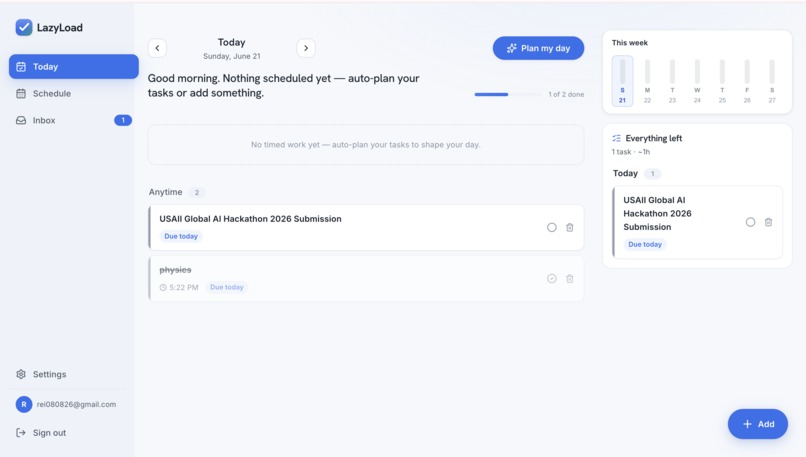
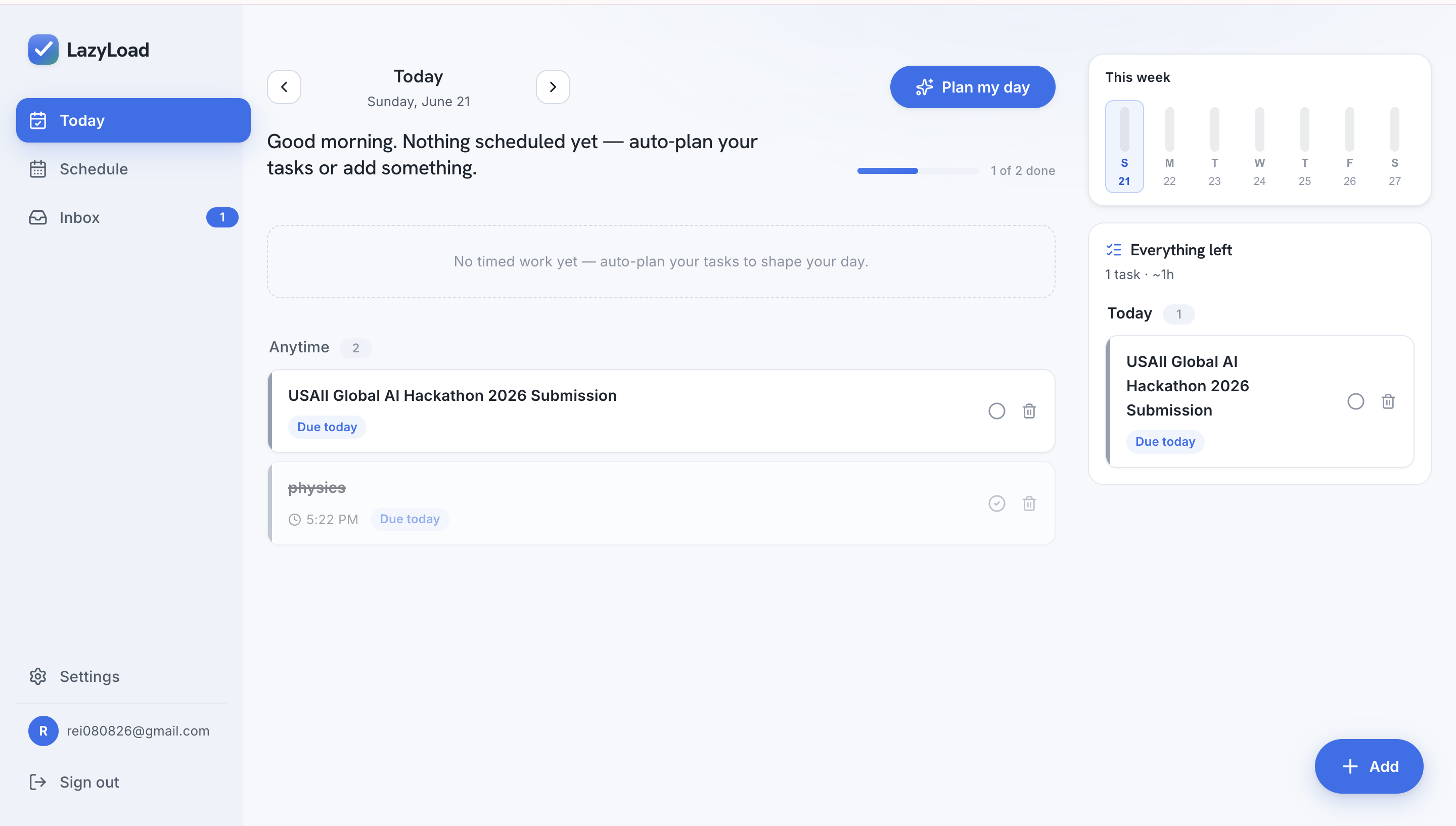
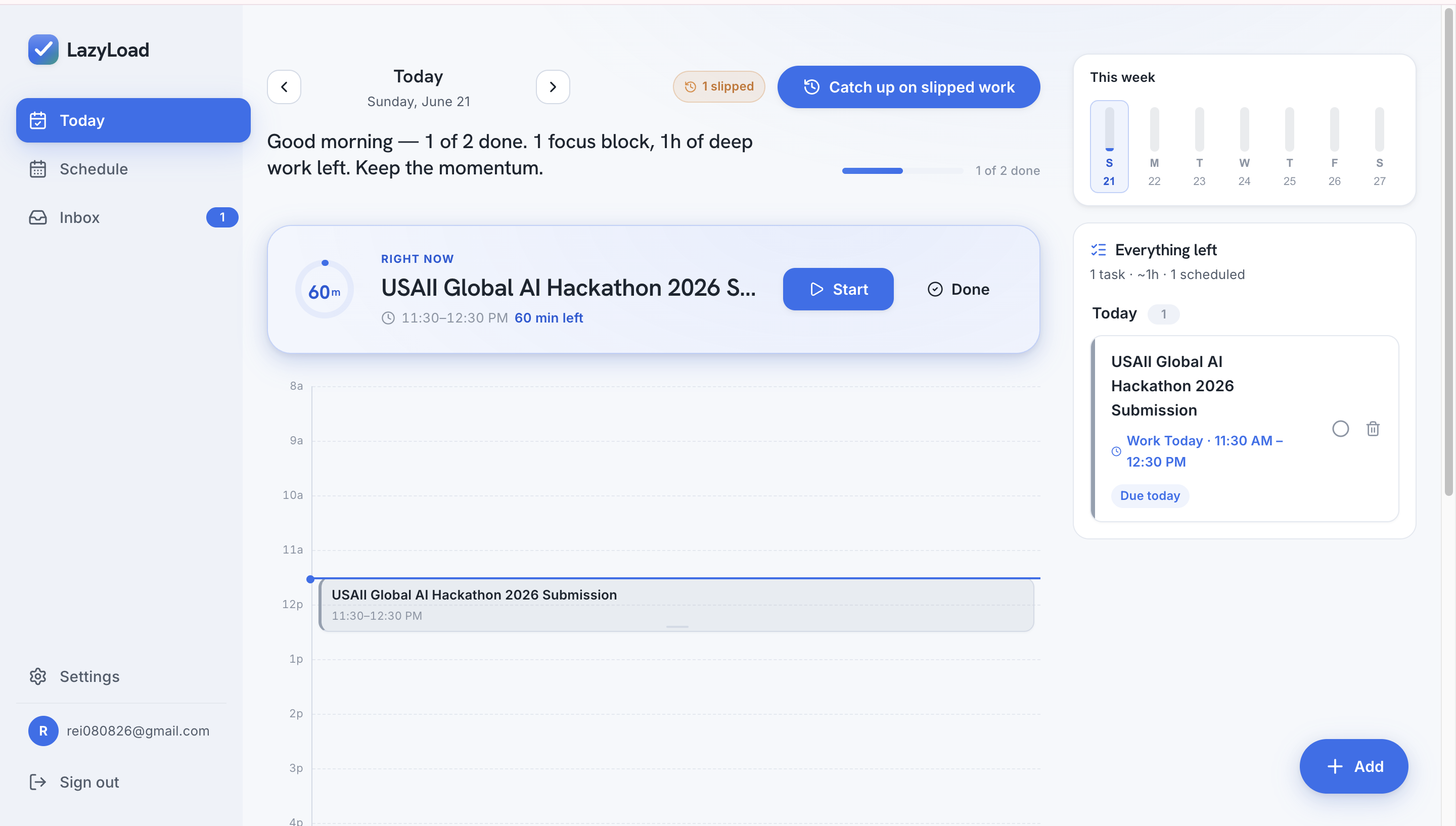
Plans for Today
-
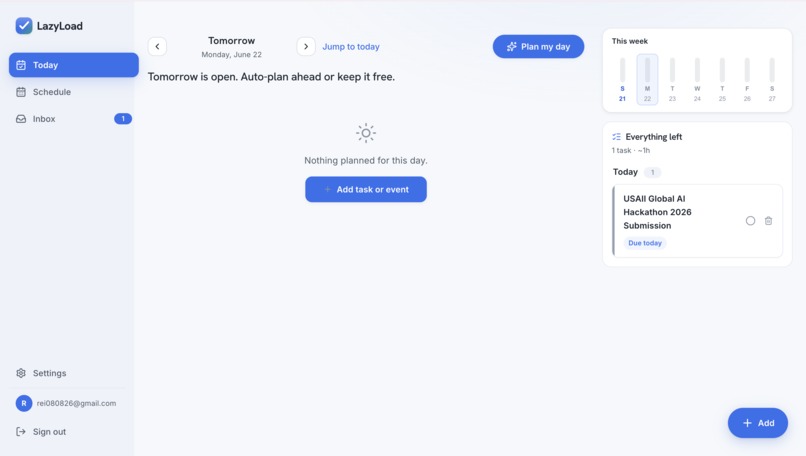
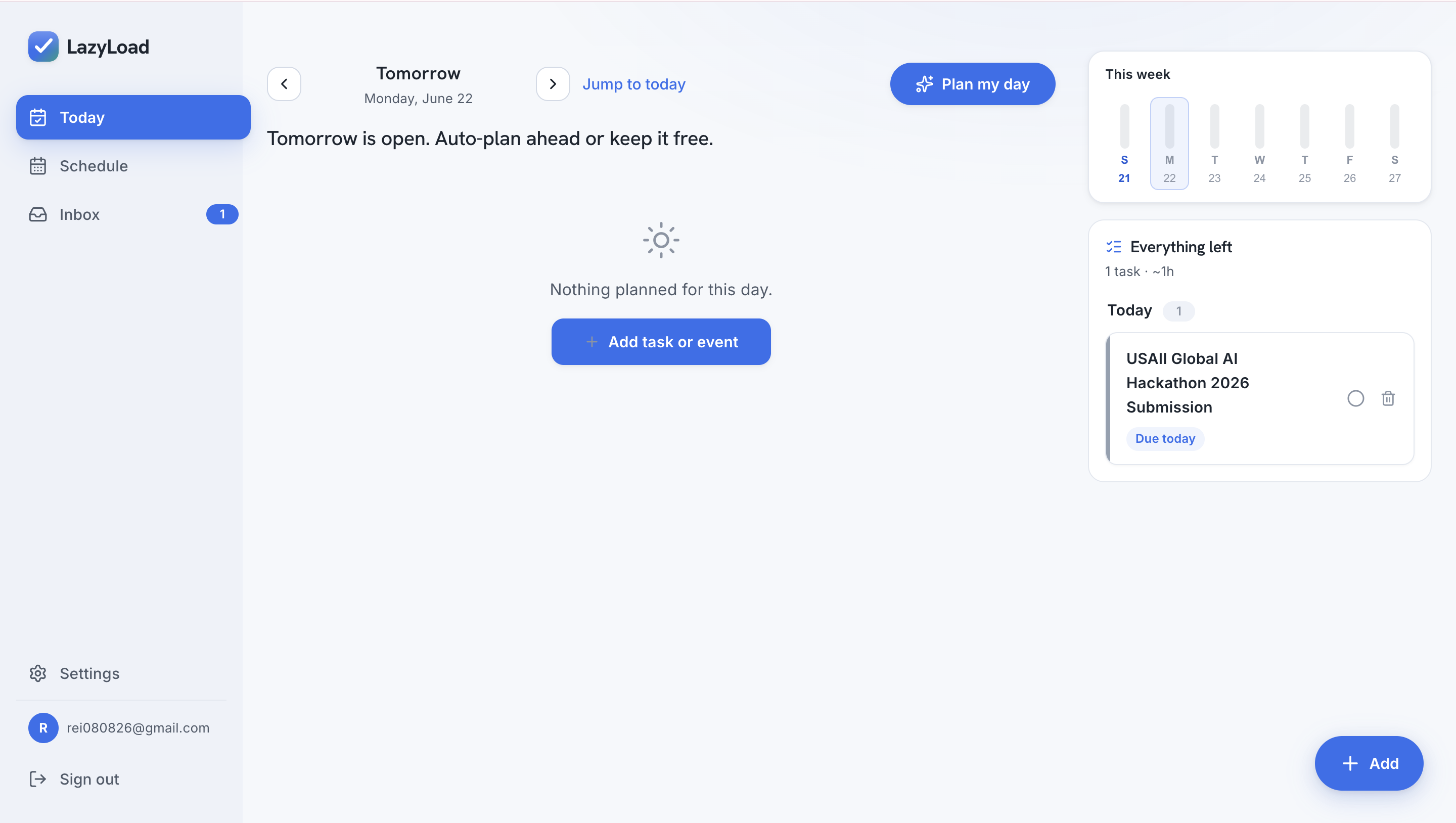
Plans for Tomorrow
-
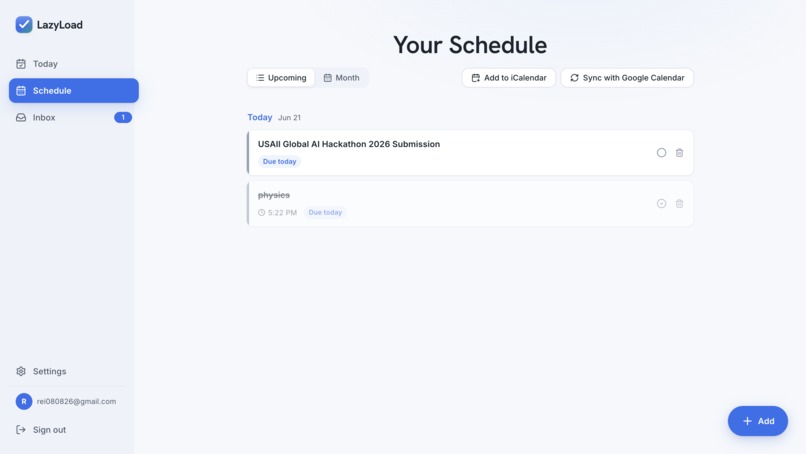
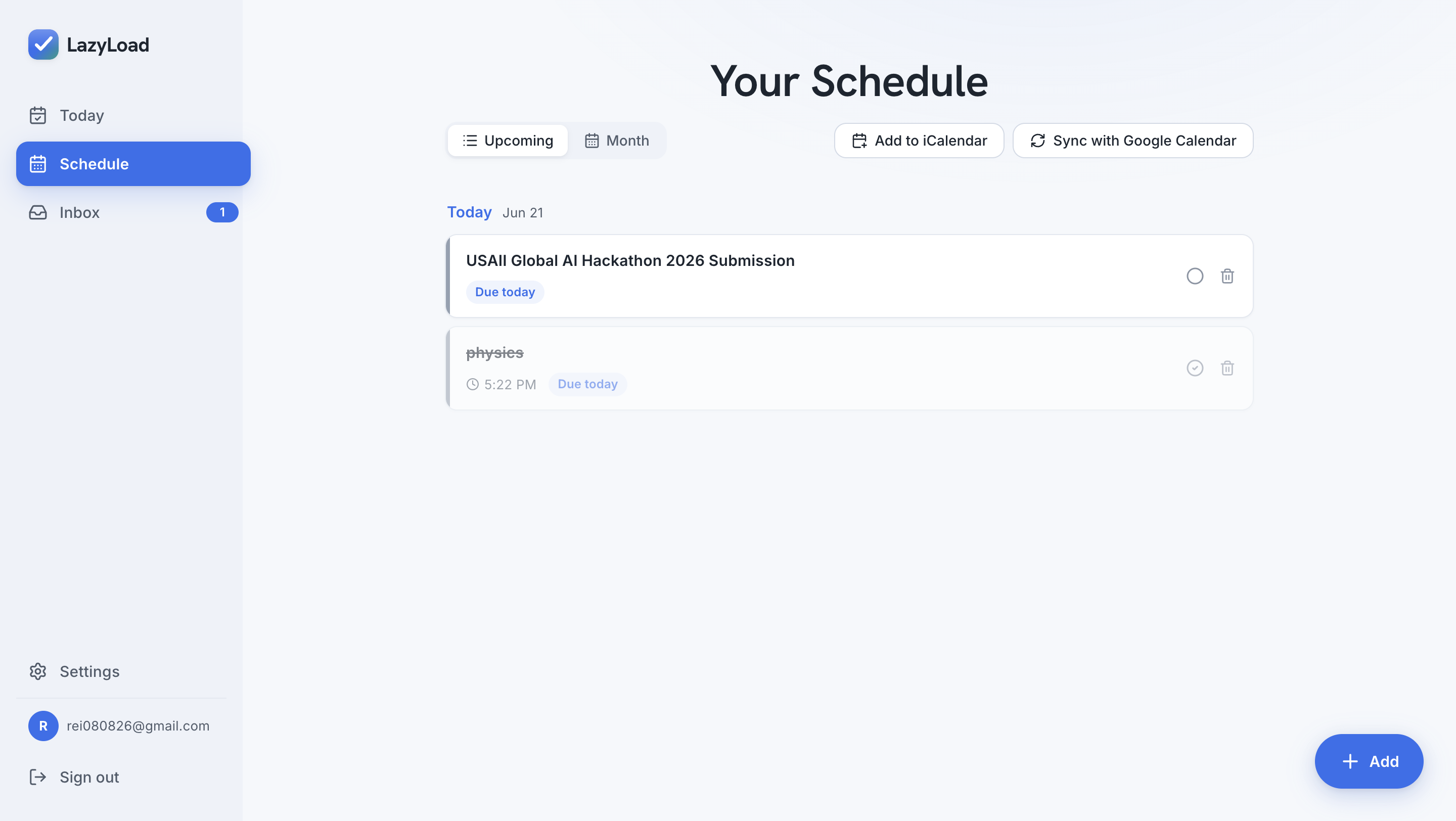
My Schedule (Upcoming)
-
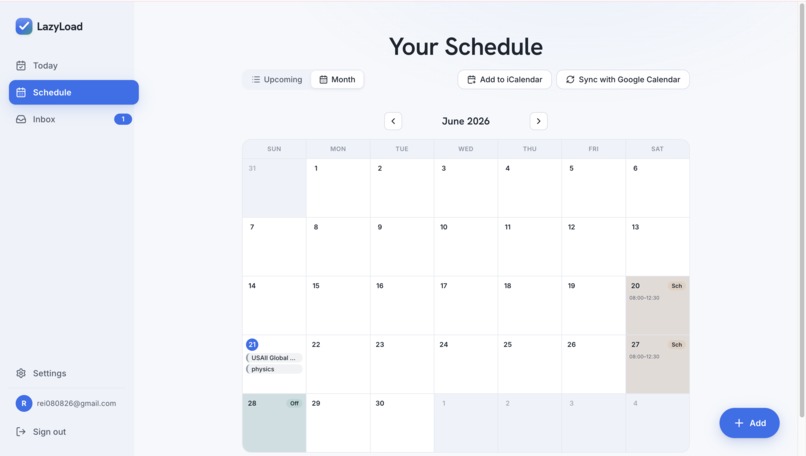
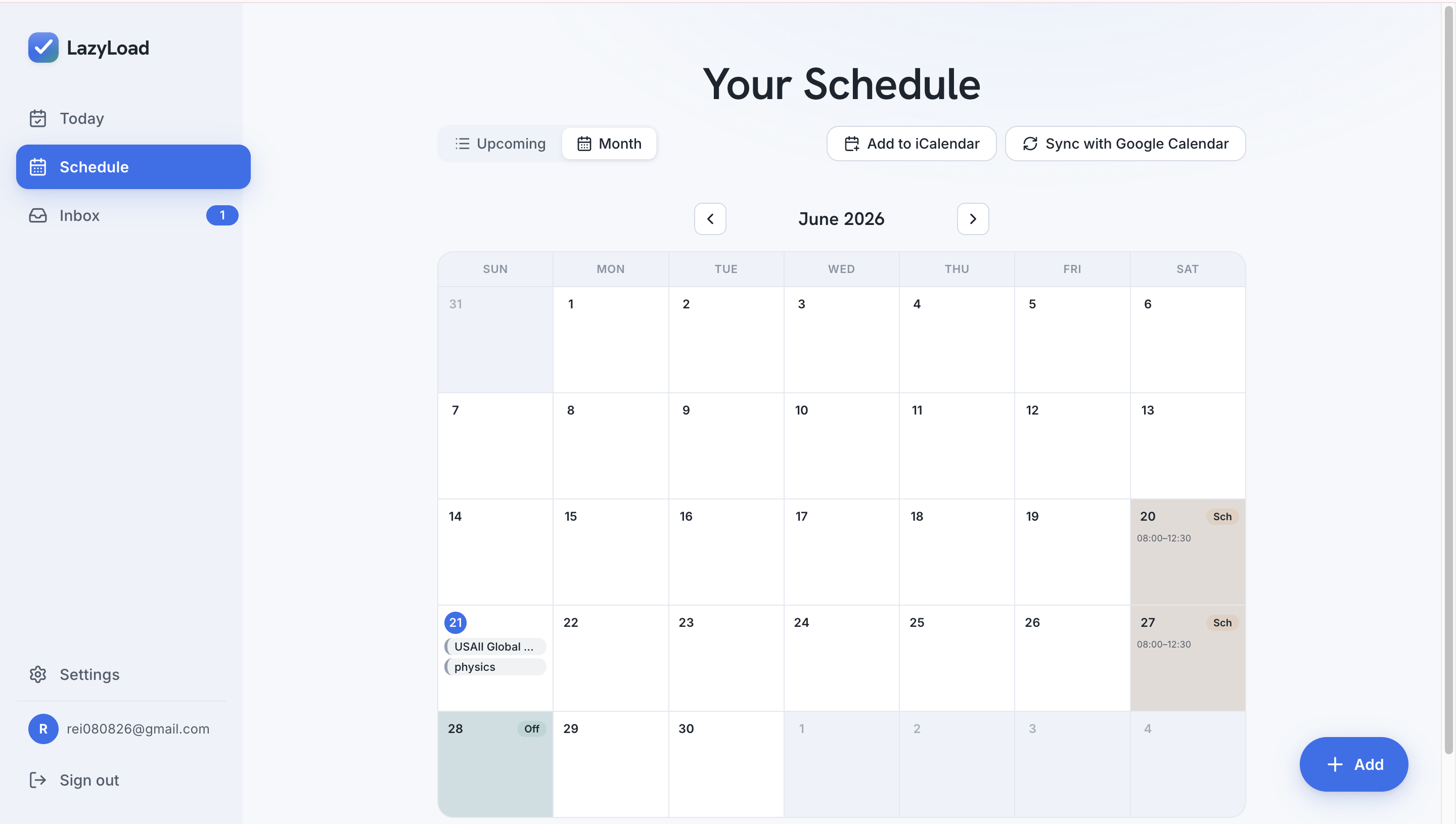
My Schedule (In a Calendar)
-
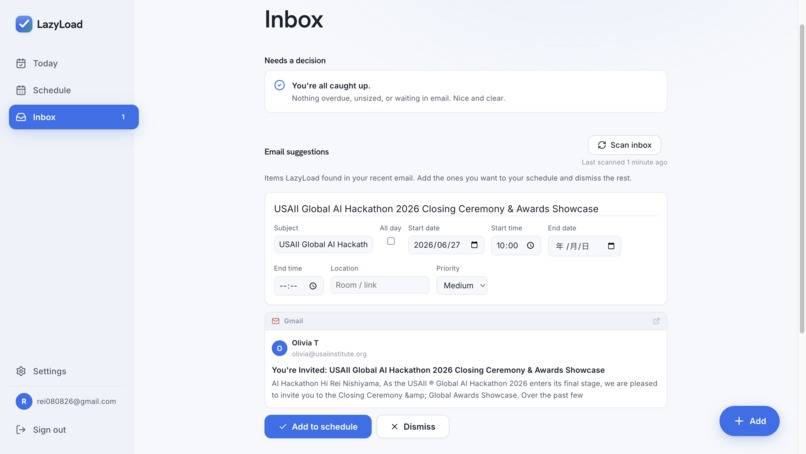
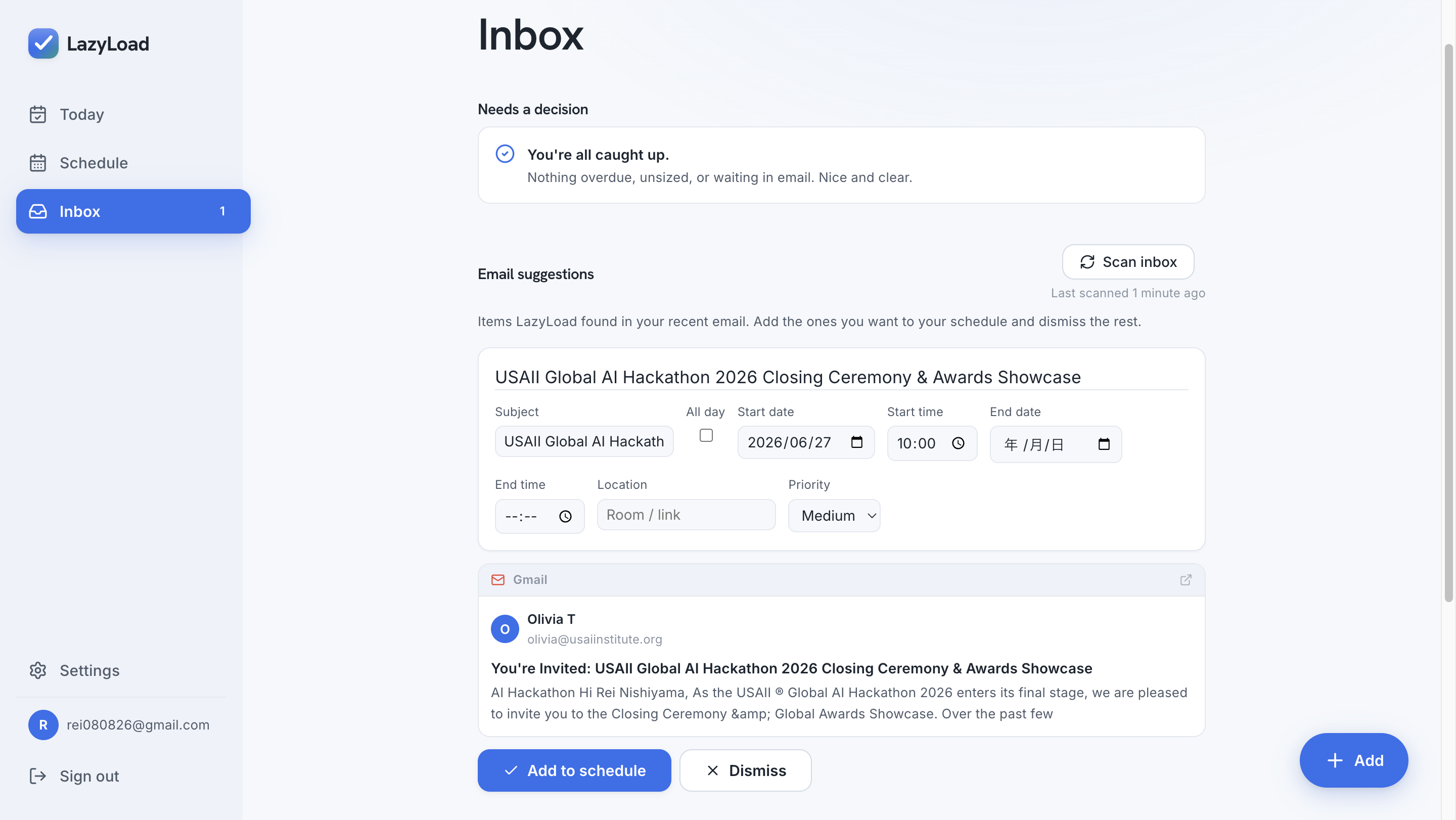
Inbox that allows you to add or remove plans extracted from gmail
-
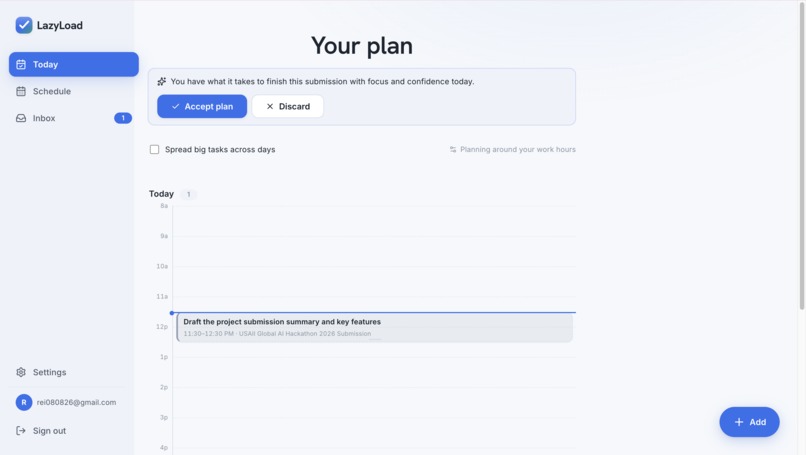
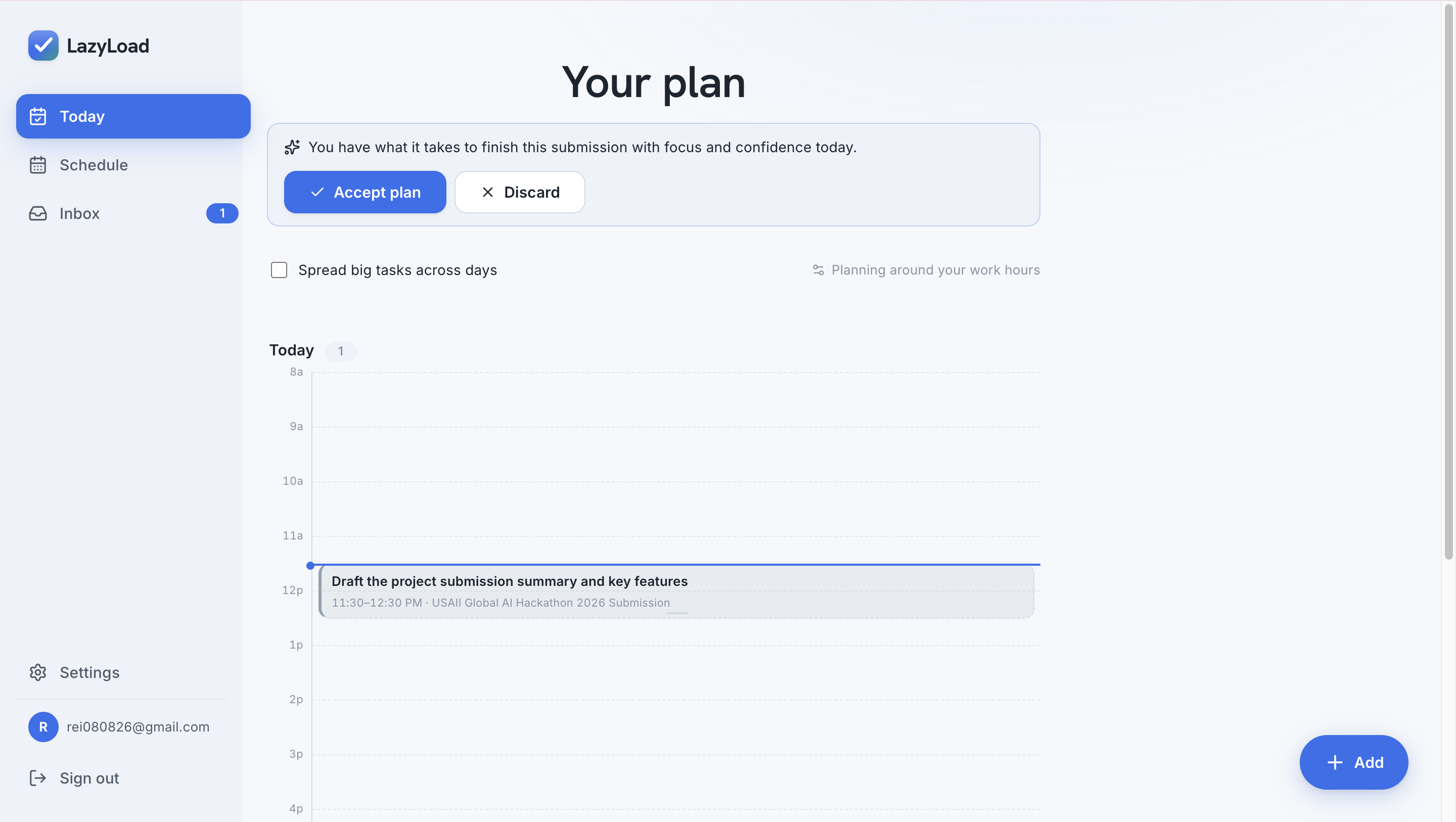
AI planning my schdule
-
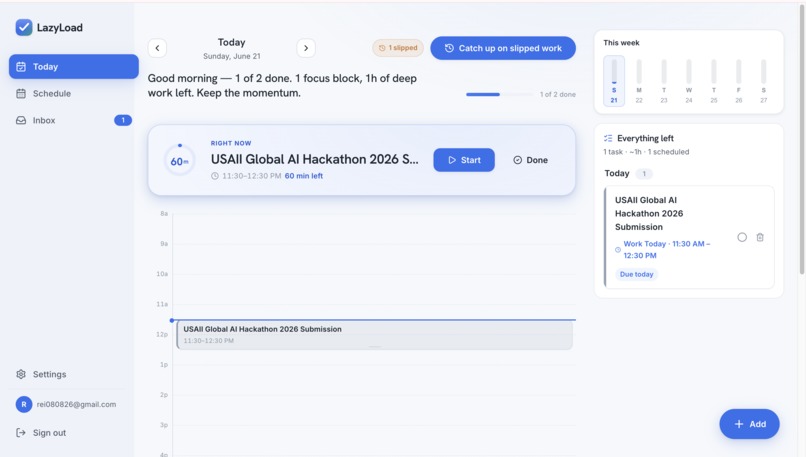
Screen after AI scheduled a plan
-
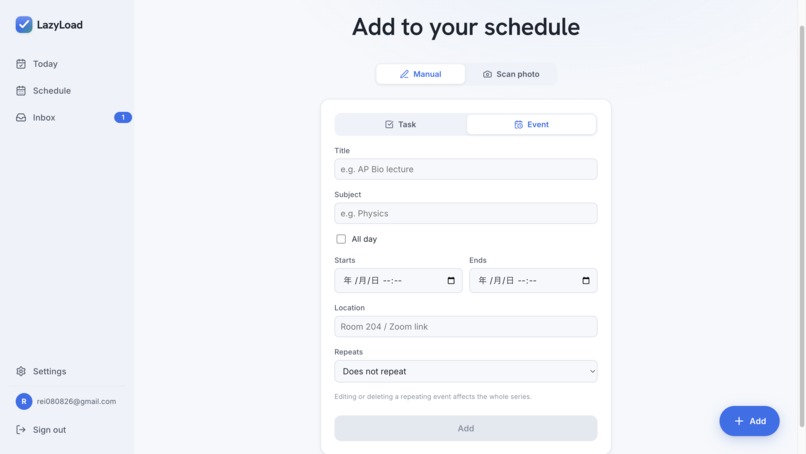
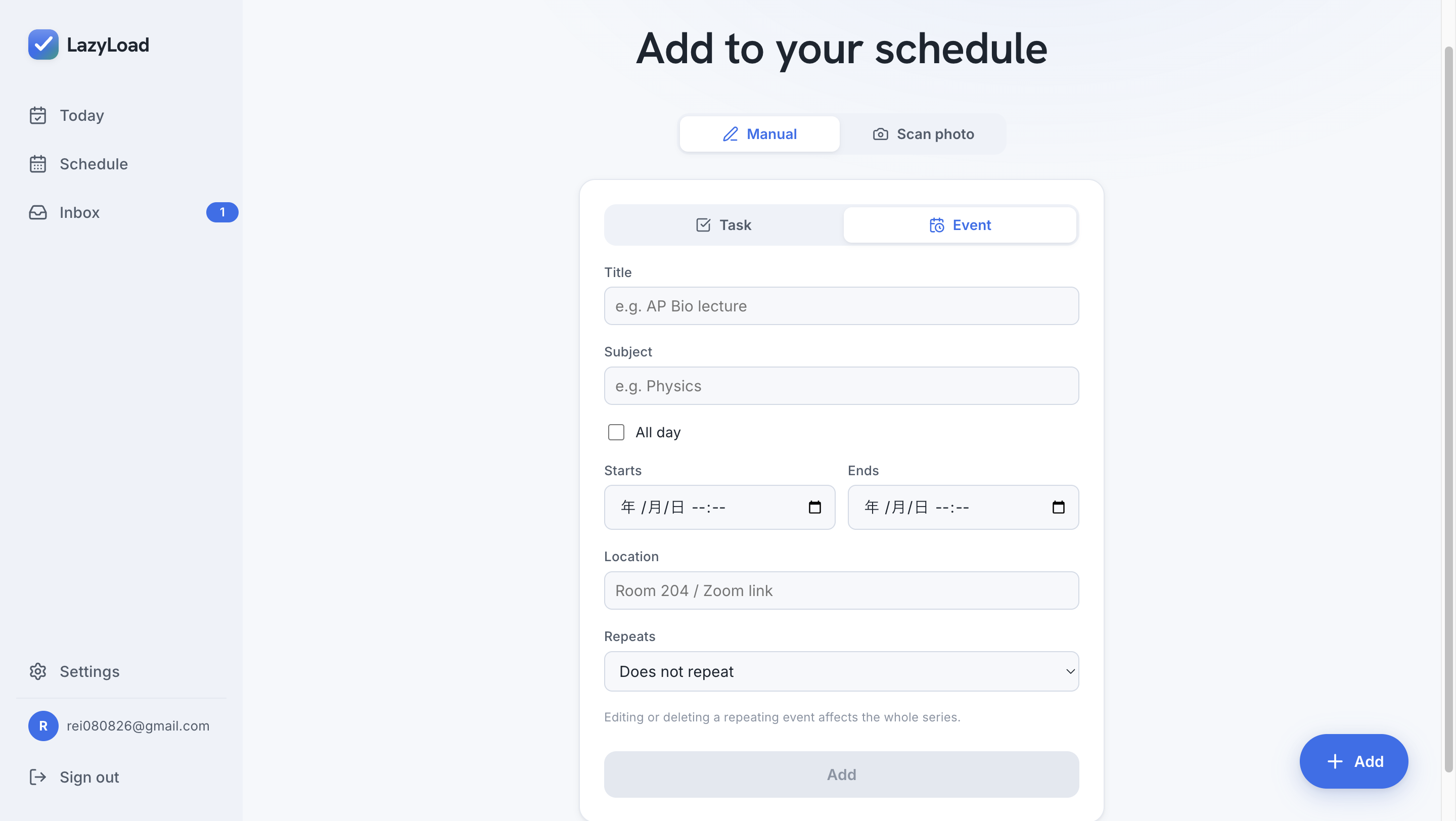
Adding a schedule (Manually)
-
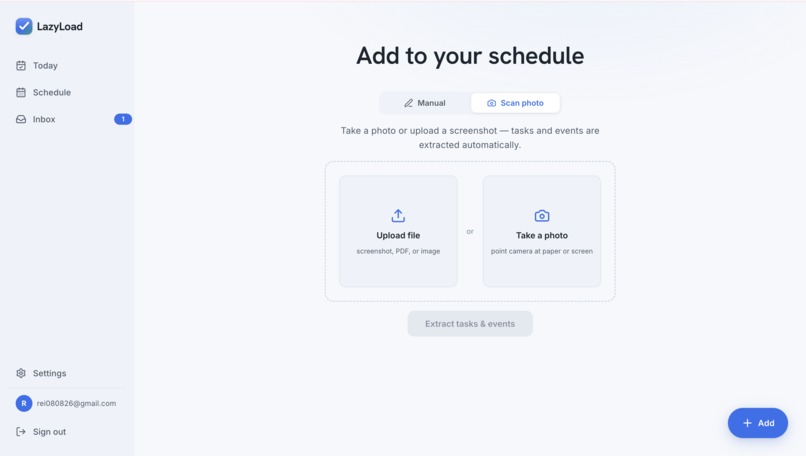
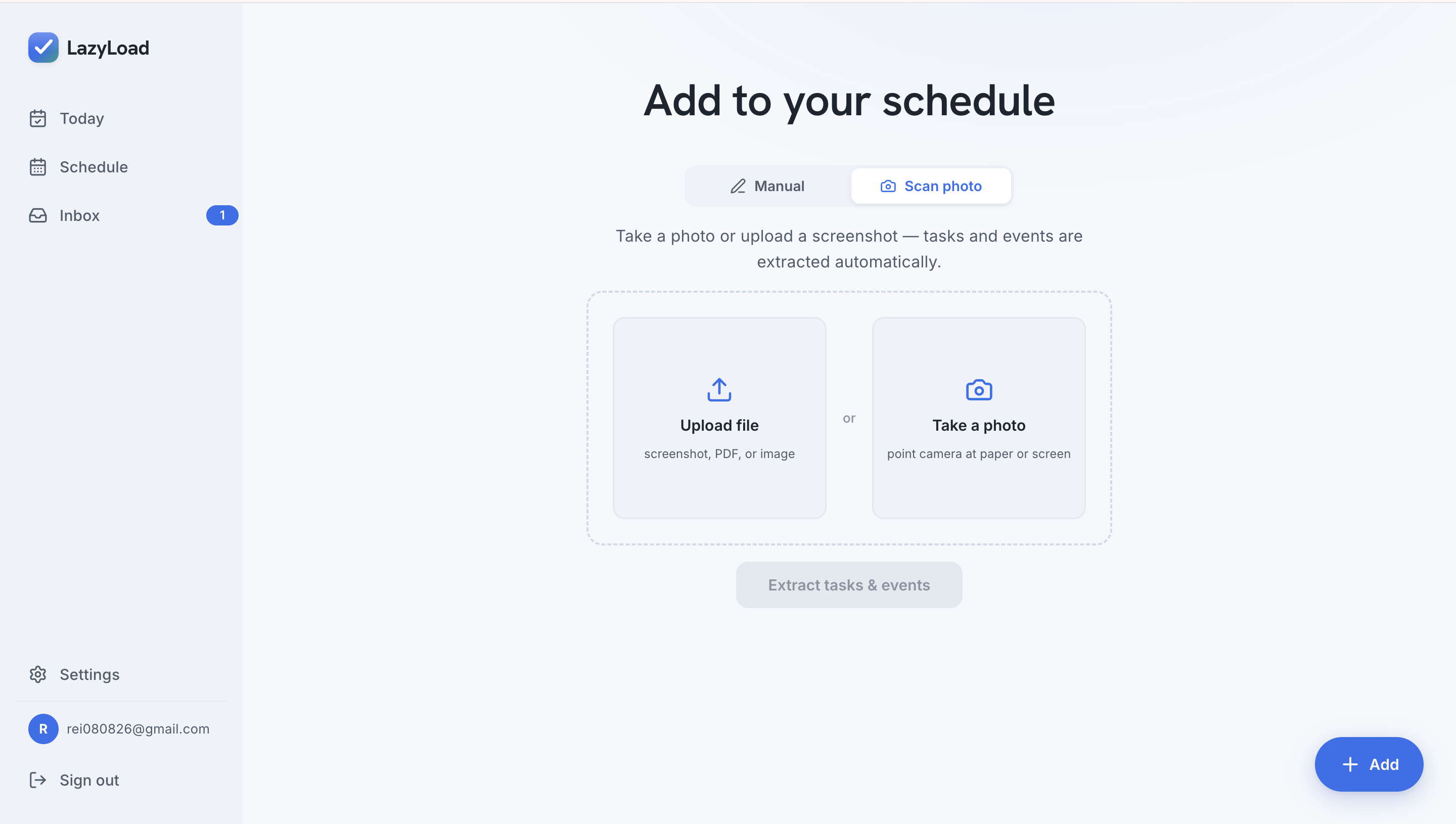
Adding a schedule (Scanning photo or uploading file)
-
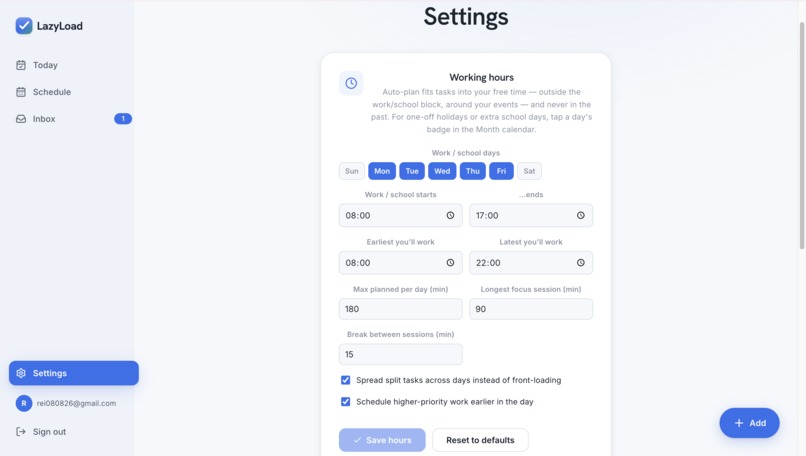
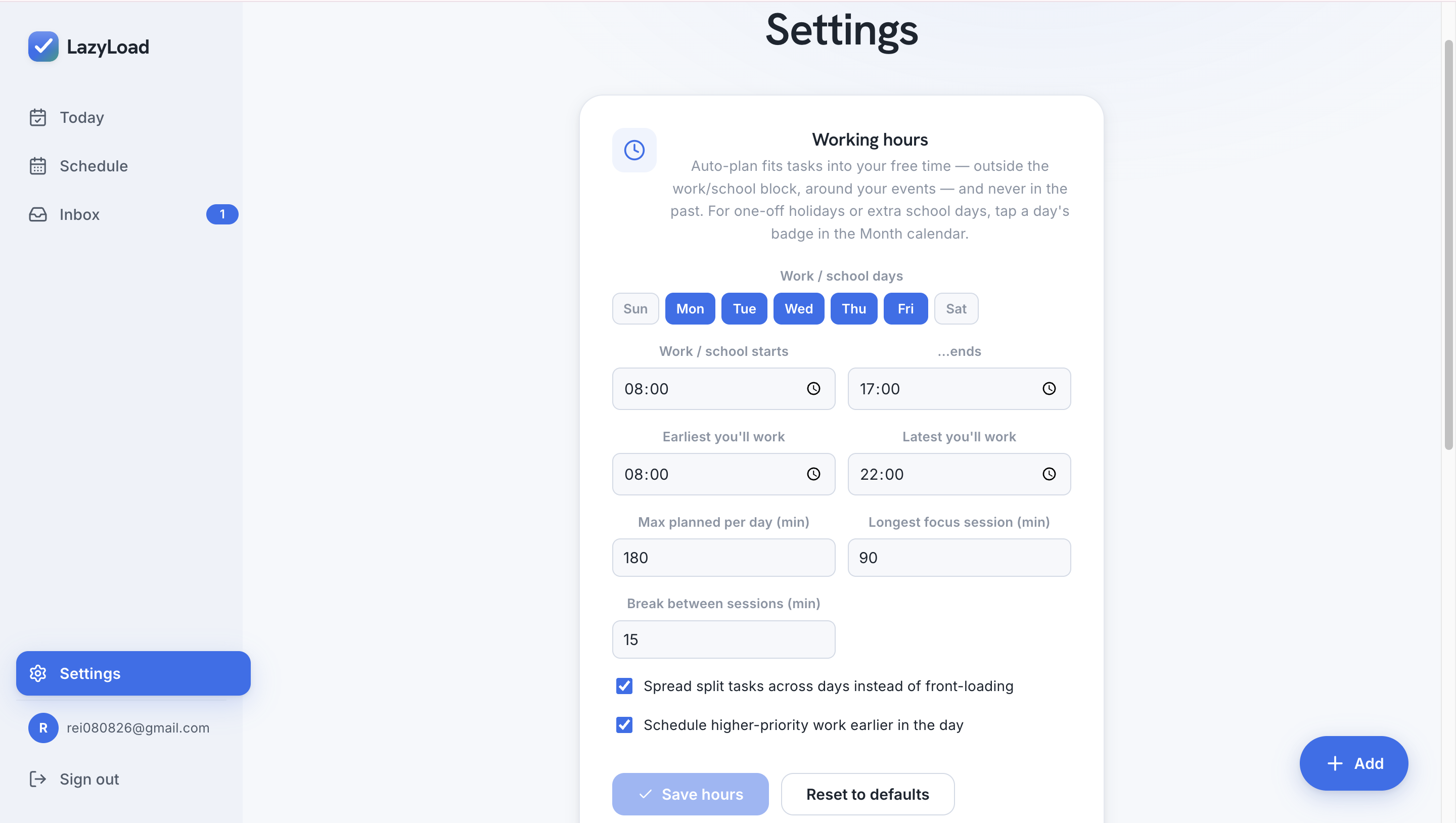
Setting Screen(Working Hours)
-
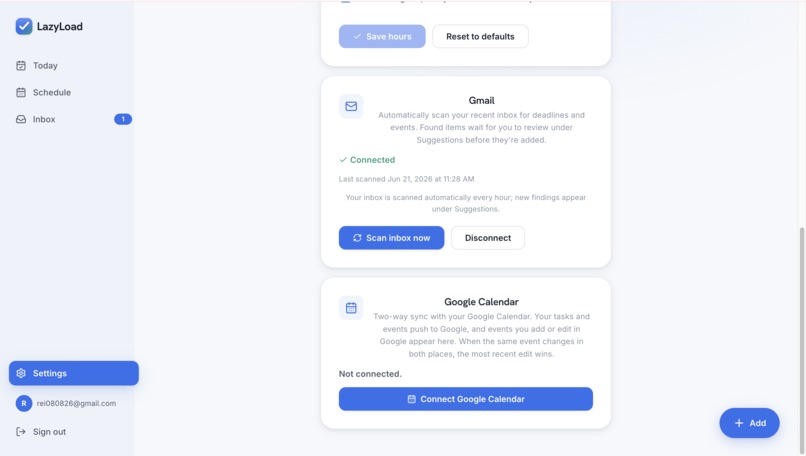
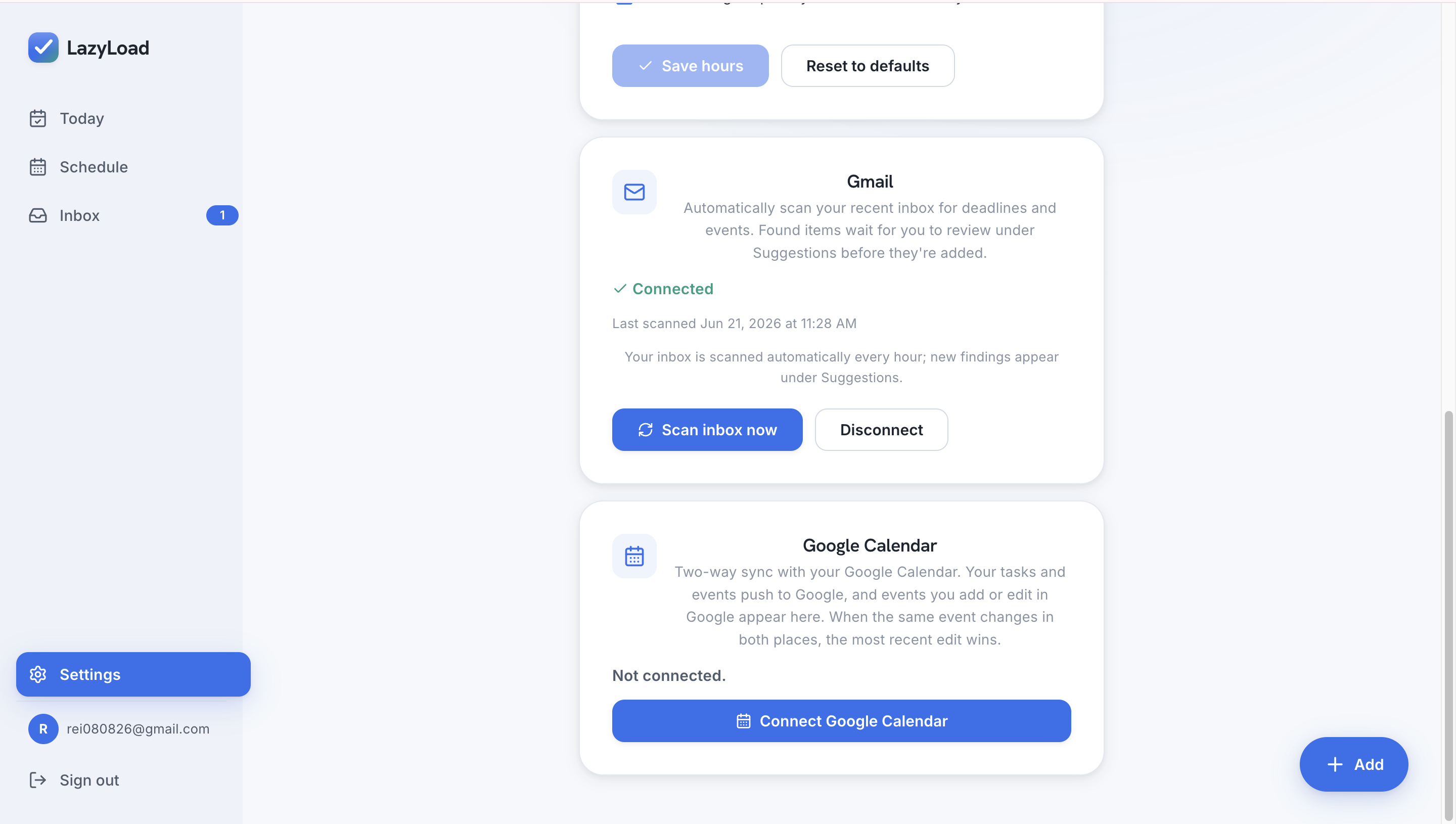
Setting Screen(Connecting with apps)
Inspiration
As high school students, we constantly balance assignments, exams, extracurricular activities, university preparation, and personal commitments.
The problem is not that students lack information—it is that they are overwhelmed by it.
Important academic information is scattered across emails, classroom announcements, assignment sheets, photos of whiteboards, calendars, learning management systems, and group chats. During busy weeks, students often spend more time trying to find information than actually completing their work.
This creates a real academic risk. Assignments are forgotten, deadlines are missed, workloads become uneven, and students frequently realize too late that multiple major assessments overlap.
Many students attempt to use planners or scheduling apps, but these tools often require manual entry of every assignment and deadline. When students are already overwhelmed, maintaining another system becomes an additional burden.
We saw this as a growing problem of information overload and academic disorganization.
This inspired us to create LazyLoad.
Rather than asking students to manually organize everything themselves, LazyLoad automatically gathers information from multiple sources, identifies important tasks, predicts scheduling conflicts, and helps students create realistic plans before they fall behind.
What it does
LazyLoad is an AI-powered academic planning assistant that helps students turn scattered information into an organized action plan.
Students can add work/events in several ways:
Upload a screenshot or photo of an assignment sheet, syllabus, calendar, or classroom whiteboard Allow LazyLoad to scan recent Gmail messages for academic deadlines and events Sync with Google Calendar Manually enter tasks and deadlines
Using AI vision and natural language processing, LazyLoad extracts important information such as deadlines, assignment details, and upcoming events. Students can also provide additional information such as priority level, estimated workload, subject, and personal notes.
Once tasks are collected, LazyLoad uses a non-AI algorithm to build a personalized study schedule around the student's existing events and other tasks. Instead of simply listing deadlines, the system breaks large assignments into manageable work sessions and places them into available time blocks.
LazyLoad provides:
A prioritized task list An automatically generated study schedule Google Calendar synchronization A timeline and weekly workload overview Conflict detection for overlapping events and deadlines Daily AI-generated briefings with personalized next-step recommendations Progress tracking and productivity insights
As students complete work, LazyLoad compares estimated and actual completion times to help improve future planning. For example, if a student consistently underestimates how long physics assignments take, the system can recognize the pattern and adjust future recommendations.
The goal is to reduce academic overload by helping students spend less time organizing information and more time completing meaningful work.
How we built it
First, we started brainstorming. Our own problem was that both of us are the kind of students who know what needs to get done but avoid the overhead of maintaining a planner. We wanted something with near-zero upkeep where the system does the organizing and you just do the work. That constraint shaped every product decision.
In actually creating the tool, we knew that we had a lot of things in mind to make this usable and reliable, so we decided to break development up into iterations. To ship this in a week, we also knew that we didn't have time, so we used claude code as a code-writing tool to ship a total of 11 versions until reaching a quality that we had confidence in.
Actual iterations: We started V1 with a simple image uploader and a system to return a pre-written json file, just to start simple. We then moved onto V2 to apply text extraction using free Gemini API, as well as adding a daily/monthly calendar view and a task reviewing view. In V3, we added the ability to add events to the schedule, recurring plans, and editing of plans. In V4, we added a Gmail connection + Gemini-powered extraction with review queue and "dumb" auto-scheduling with a weak algorithm. In V5, we added Google Calendar connection/conflict resolution. In V6, we added working hours settings to improve auto-scheduling. In V7, we improved the auto daily planner by scoring urgency, adding break buffers, splitting big tasks, allowing editing of plans, and adding catch-up flows. In V8, we split deadlines and planned work times, and added free notes to tasks (+ other minor additions). In V9, we added the ability to learn task duration by getting feedback after tasks are finished and comparing that to estimated times that are entered beforehand, nudging users' estimates. In V10, we added Start/Done/Not Done controls to tasks so tracking progress became easier. In V11, we made some Frontend changes to clean up the UI, getting us ready for submission.
Challenges we ran into
Privacy vs. Convenience
Our initial concept included automatically scanning messaging apps to detect assignments and deadlines.
However, we realized this would require access to personal conversations and could expose information unrelated to school.
As a result, we redesigned the system so that users remain in control of what is shared. Instead of connecting directly to messaging apps, LazyLoad analyzes screenshots and documents intentionally provided by the student.
Browser Extension Development
We also explored building a Google Chrome extension that could automatically detect assignments from websites.
While promising, integrating it reliably across different platforms proved more technically challenging than expected within the available timeframe.
We therefore focused on a screenshot-based workflow that is simpler, more privacy-conscious, and works across many sources.
Estimating Workload
Deadlines alone are not enough.
An essay due next week may require significantly more effort than a worksheet due tomorrow.
Designing an AI that considers both urgency and expected effort was one of our biggest technical challenges.
Accomplishments that we're proud of
Multi-Source Information Extraction
We successfully created a system that can extract meaningful information from:
Emails Screenshots Whiteboards Assignment sheets Calendars
and convert them into structured tasks.
Intelligent Gmail Extraction
One accomplishment we are particularly proud of is our ability to automatically identify meaningful academic deadlines from a student's inbox. Rather than simply searching for dates, LazyLoad filters incoming emails and converts relevant deadlines and events into actionable suggestions that students can approve or dismiss. This reduces manual data entry while ensuring students remain in control of what gets added to their schedule.
Beyond Traditional Planners
Most planners depend on users remembering to enter information manually.
LazyLoad reduces that burden by automatically gathering information and turning it into a personalized plan.
What we learned
Through this project, we learned that students often struggle with information overload, not information scarcity.
Assignments, deadlines, and announcements are spread across many platforms and formats.
We also learned that effective AI should:
Understand context Connect information across sources Prioritize what matters Support human decision-making
Most importantly, we learned that responsible AI design requires careful consideration of privacy, transparency, and user control.
We believe the challenge is no longer access to information, but the ability to manage it effectively. LazyLoad transforms scattered academic information into clear, actionable plans, helping students stay organized before information overload becomes missed opportunities.
What's next for LazyLoad
Our long-term goal is to reduce academic overload by making assignment management as automatic as possible. Future versions of LazyLoad will integrate with platforms such as Google Classroom, Canvas, and other learning management systems so that new assignments can be detected automatically before students miss deadlines or become overwhelmed by overlapping responsibilities. Due to time and technical constraints, our current prototype focuses on screenshots and email extraction, but deeper educational platform integration is a key area for future development.
We would also like to develop an optional Chrome extension that can detect assignments and deadlines from supported educational websites while still allowing students to control what information is shared with the AI.
Beyond integrations, we plan to improve the intelligence of our scheduling system. Future versions could automatically create study sessions, adjust schedules when new assignments are added, and personalize workload estimates based on a student's study habits and productivity patterns.
Most importantly, we will continue to prioritize privacy and user control. Any future integrations will remain optional, ensuring students always decide what information the AI can access and analyze.
When students fall behind, it is often not because they lack motivation, but because important information is fragmented across too many platforms. LazyLoad transforms that fragmented information into a clear plan of action, helping students stay organized, reduce stress, and focus on learning.
Built With
- axios
- css
- date-fns
- eslint
- gemini-3.1-flash-lite.api
- gmail.api
- google-calendar.api
- google-gmail-oauth
- html
- ics
- lucide-react
- postgresql
- react
- react-dom
- react-router
- rrule
- supabase
- tsx
- typescript
- vercel
- vite
- ws
- zod

Log in or sign up for Devpost to join the conversation.