-
-
-
-
-
-
-
-
-
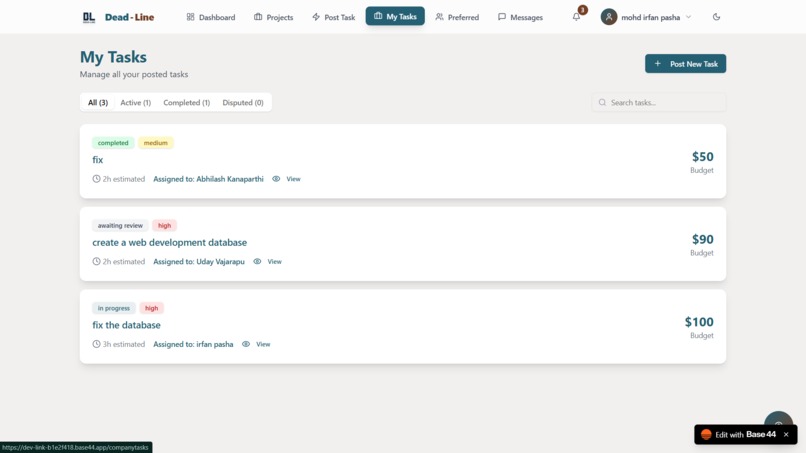
page
-
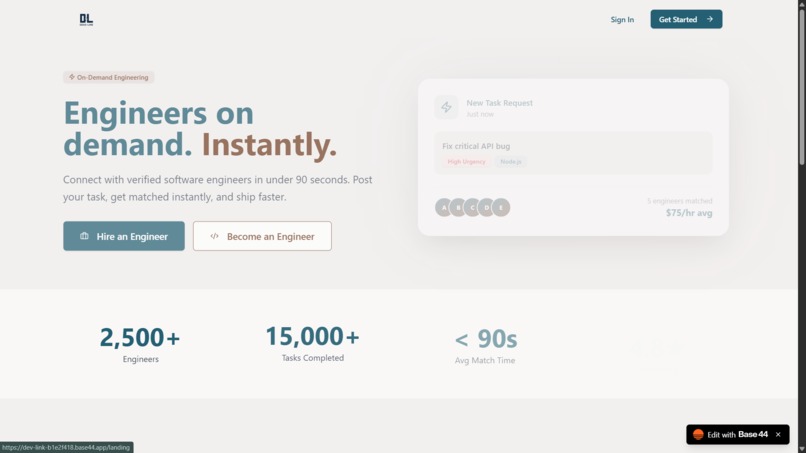
page 1 landing
-
-
-
DEAD-LINE
Today, companies face a major challenge when they need software engineers quickly for urgent tasks, bug fixes, deployments, or short-term projects. Traditional freelancing platforms are slow and complicated — companies must post a project, wait for bids, compare profiles, negotiate, and then assign work. This entire process can take hours or days, causing delays, missed deadlines, and drops in productivity.
At the same time, many software engineers — especially freshers and early-career developers — struggle with lack of employment opportunities. They often don’t get full-time jobs immediately, and there are very few platforms that offer them real-time, skill-based micro-work opportunities. Engineers want a flexible way to earn, but current platforms don’t notify them instantly when matching tasks appear, and competition is extremely high. There is currently no system that connects companies and engineers the way Ola/Uber connects drivers and riders:
Companies can’t instantly request technical help Engineers don’t get immediate work notifications The entire process is slow, outdated, and inefficient Because of this gap, companies lose valuable time, and engineers lose potential income.
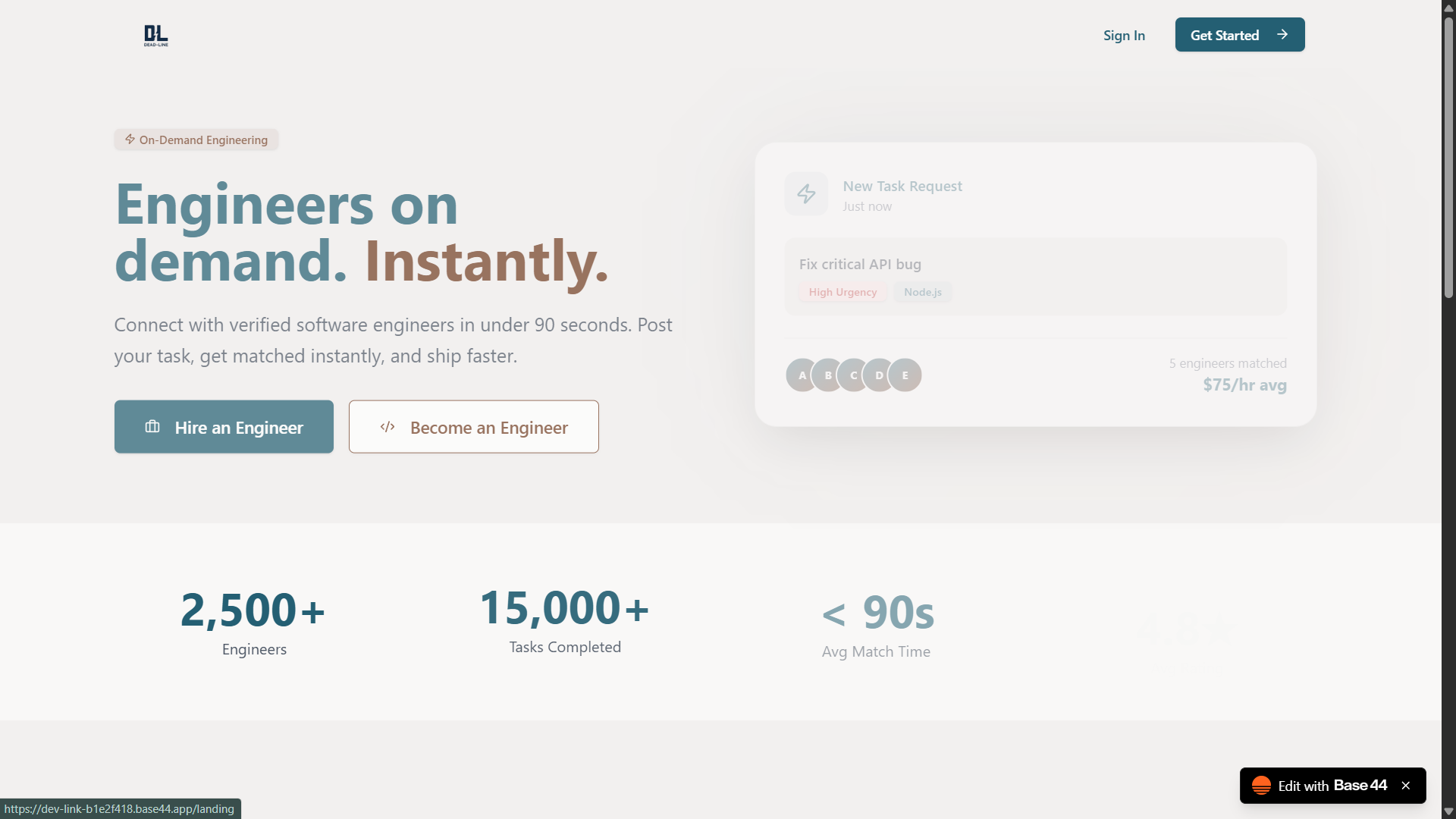
Dead-Line is an on-demand platform that connects companies with software engineers instantly, working just like Ola/Uber but for real-time tech help. Instead of waiting for proposals on freelancing platforms, companies can post a task and immediately get matched with available engineers who can start work within minutes.
Our project aims to solve both problems by creating a real-time, on-demand software engineering platform where:
Companies can request skilled engineers instantly Available engineers get real-time job notifications Jobs are accepted and started within minutes
This model not only speeds up work for businesses but also helps reduce unemployment by giving engineers quick, continuous, and flexible earning opportunities based on their skills. What solution are you proposing? Explain your idea in detail
1) Core idea (one-liner) A real-time, skill-based marketplace that connects companies with available software engineers instantly — companies post an urgent task, matching engineers get notified, someone accepts, and work starts within minutes. This speeds up business workflows and creates continuous, flexible earning opportunities that reduce under-employment for developers.
2) Key user types & flows Company (Client) flow
- Sign up / verify company
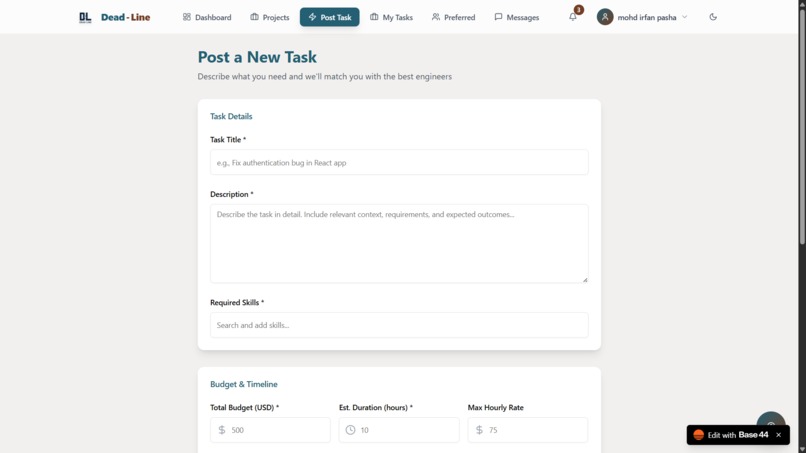
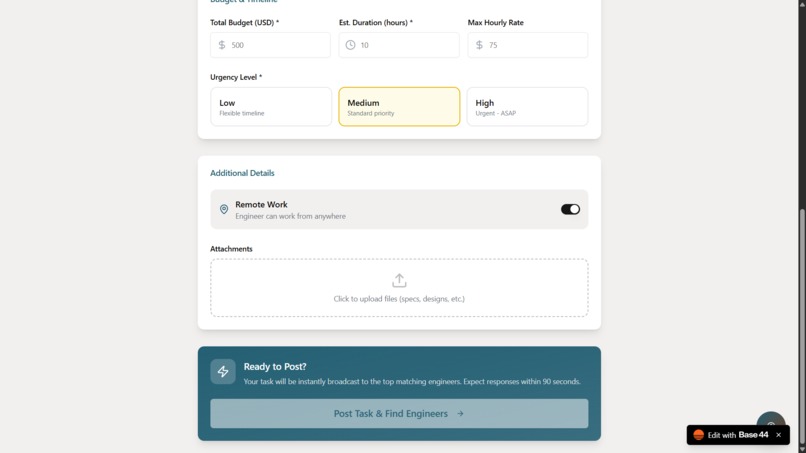
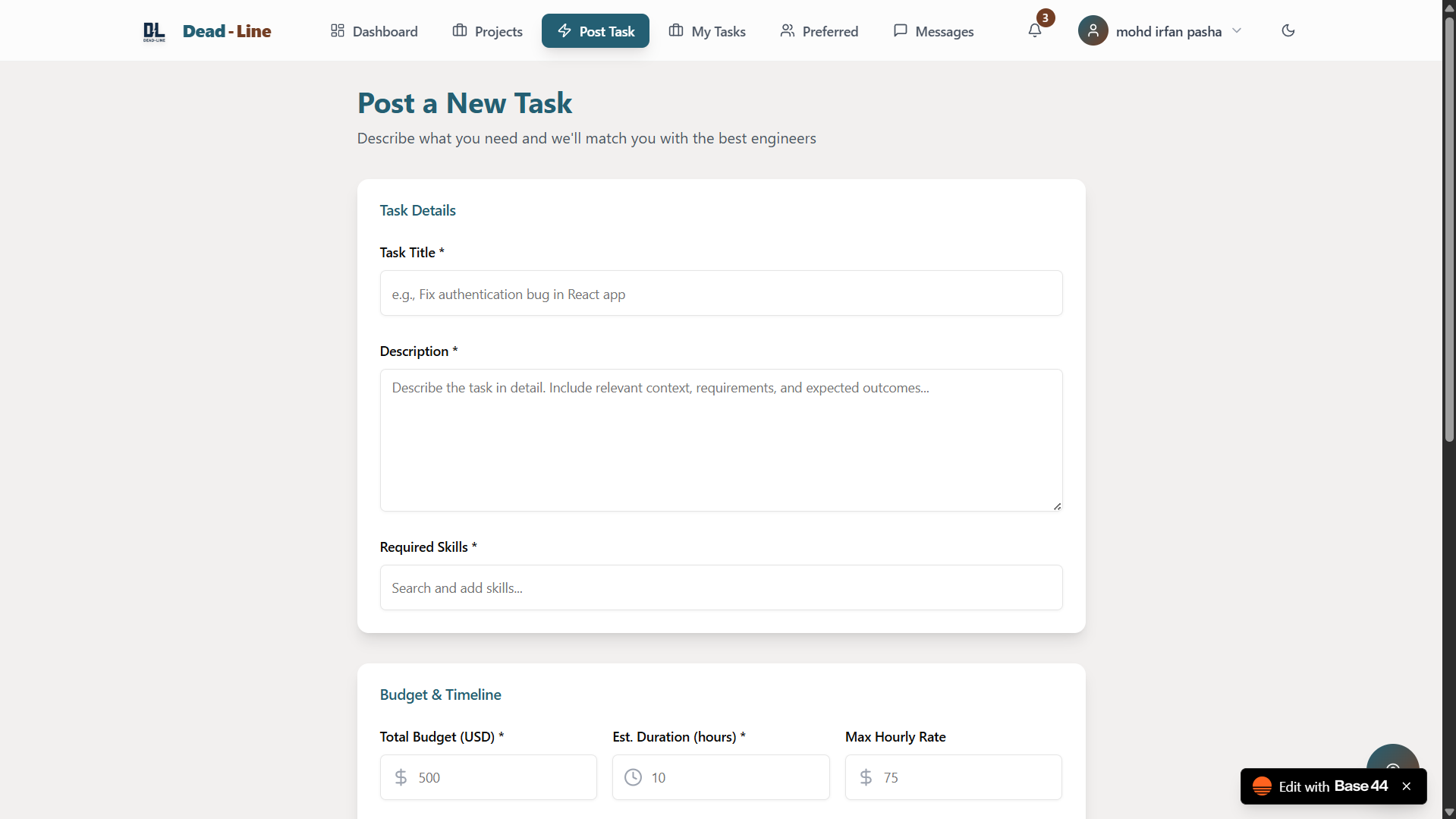
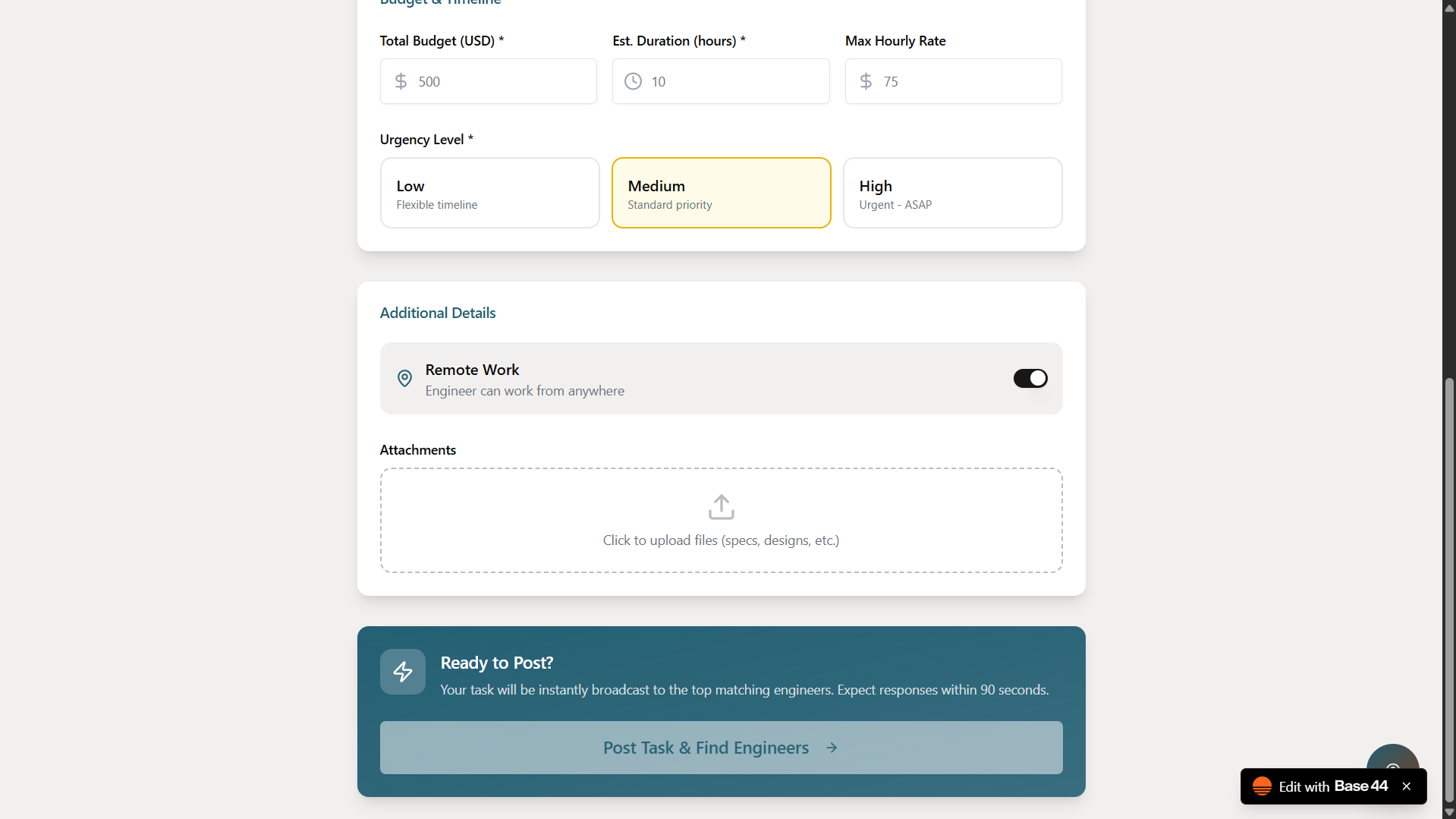
- Describe task: title, description, skills required (e.g., React, Docker), urgency, estimated duration, budget, on-site/remote flag
- Optionally attach logs, repo links, screenshots
- Trigger Instant Match or Request: o Instant Match: platform finds available engineers and broadcasts o Request: company can invite specific engineers
- Engineer accepts → secure session opens (chat/voice/video + screen share + ephemeral collaboration workspace)
- Work completed → client approves → payment released → rating & feedback Engineer (Worker) flow
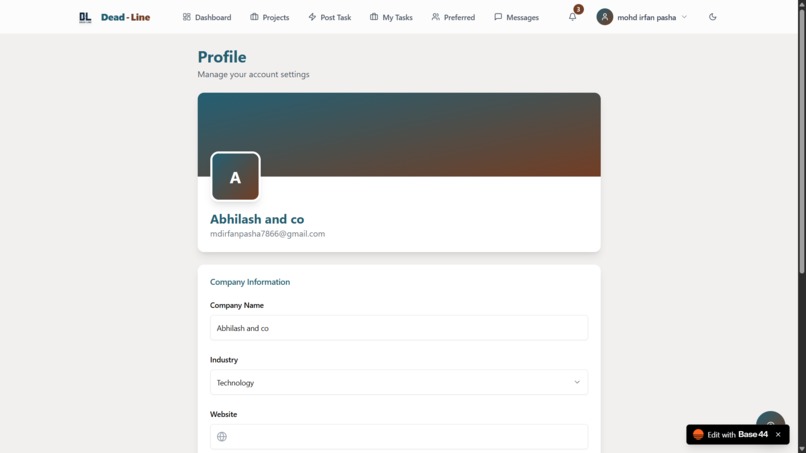
- Sign up, complete skill profile, upload portfolio / GitHub, take optional skill tests
- Set availability status (Online / Busy / Offline), preferred task types, hourly/minute rate
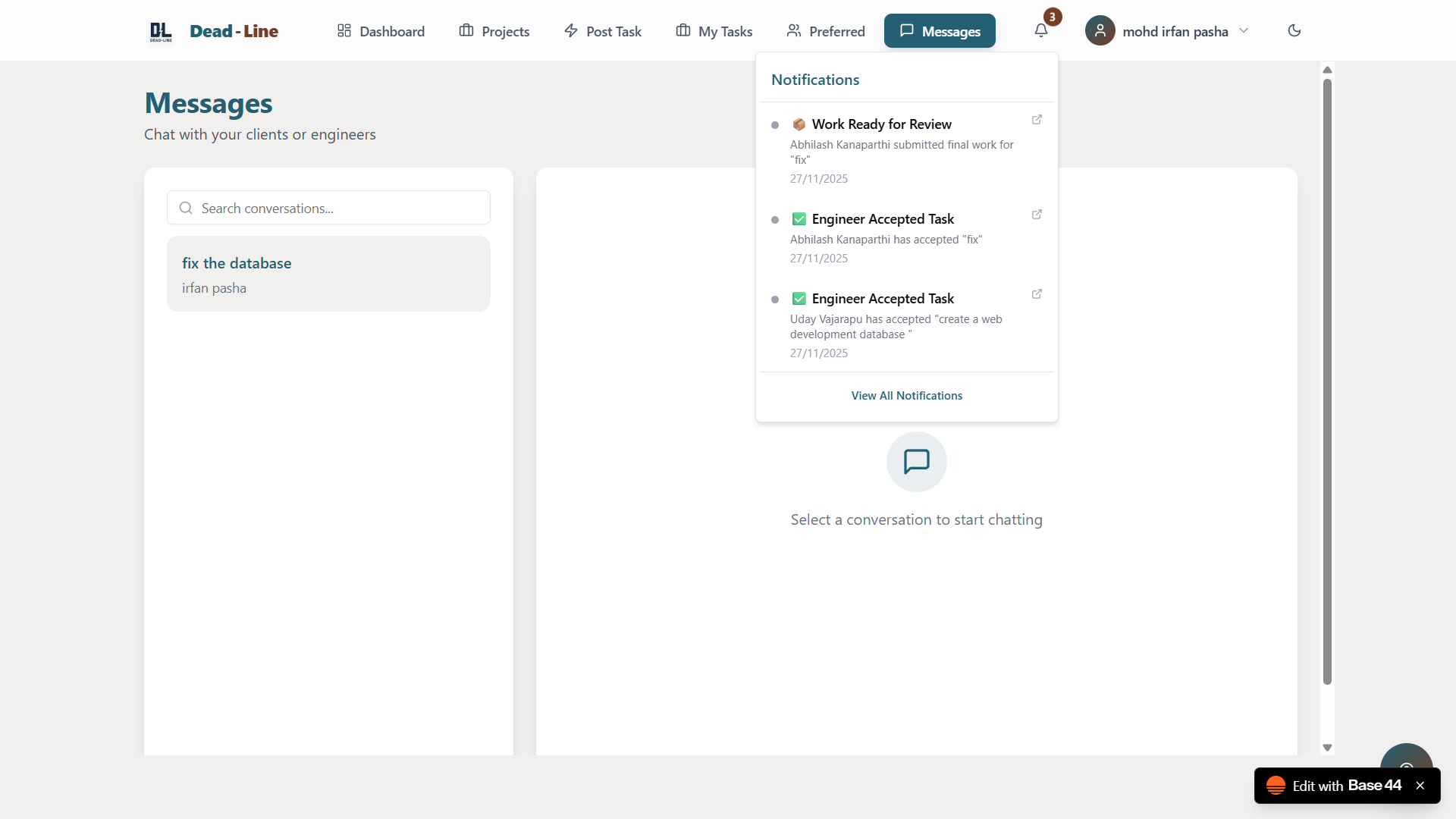
- Receive push notification for matching tasks (with brief task summary and ETA/payment)
- Accept or decline (accept quick to keep ride-like experience)
- Start work in secure session; deliverables uploaded
- Receive payment (instant/settlement options) after client approval; rating updated
3) Matching algorithm (core differentiator) Mix of rule-based + ML ranking:
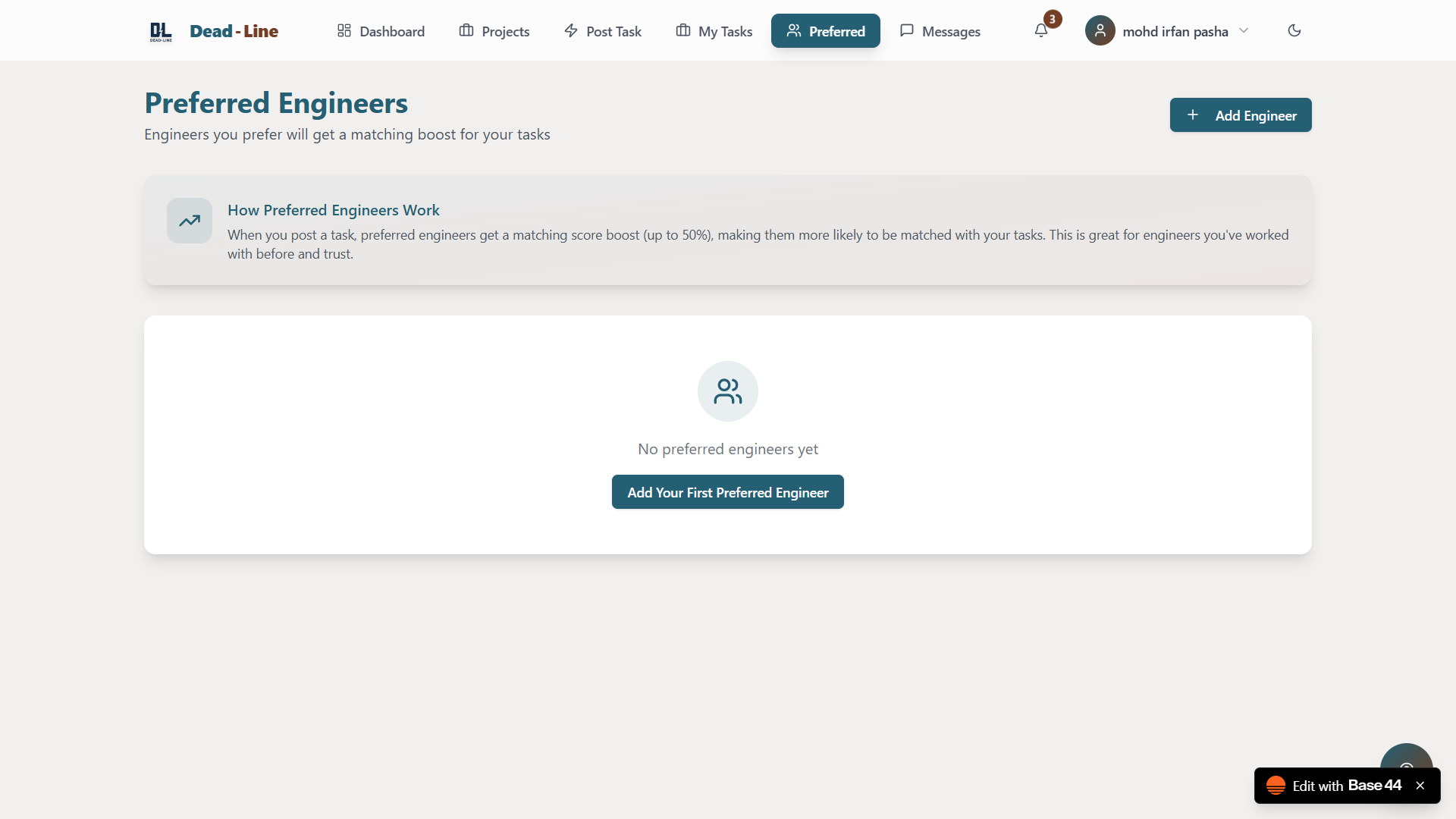
- Hard filters — skills match, availability, minimum rating, hourly rate within budget, location (if on-site).
- Soft scoring — recency of activity, success rate, response time, specialization score, past task similarity, proximity (optional).
- Priority rules — premium/verified engineers first for paid priority requests; engineers with fastest response boosted.
- Broadcast / Radius model — rather than one-to-one, broadcast to top N engineers (like Uber’s pinging drivers) until accepted or timeout.
- Fallbacks — escalate to wider pool or curated agencies when no single engineer accepts.
4) Real-time collaboration & tools • In-app chat + voice/video for negotiation and clarifications. • Temporary collaborative workspace (sandbox environment or ephemeral container) for safe live debugging — optional integrations: GitHub/GitLab, CodeSandbox, VS Code Live Share-like session. • File attachments & logs with size limits and secure storage. • Task timer and activity logger (for micro-tasks billing transparency).
5) Payments & finance • Escrow model: client funds go to escrow when task accepted; released on approval. • Pricing models: o Fixed-price micro-tasks o Time-based (per minute/hour) with automated timer o Subscription for companies (credits) • Payouts: Instant payout (with small fee) or weekly settlement. • Platform revenue: commission (10–20%), priority listing fees, subscription fees, enterprise contracts.
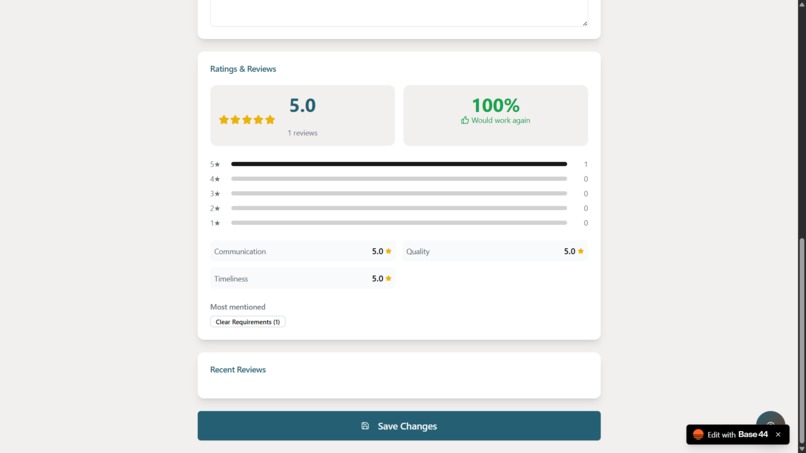
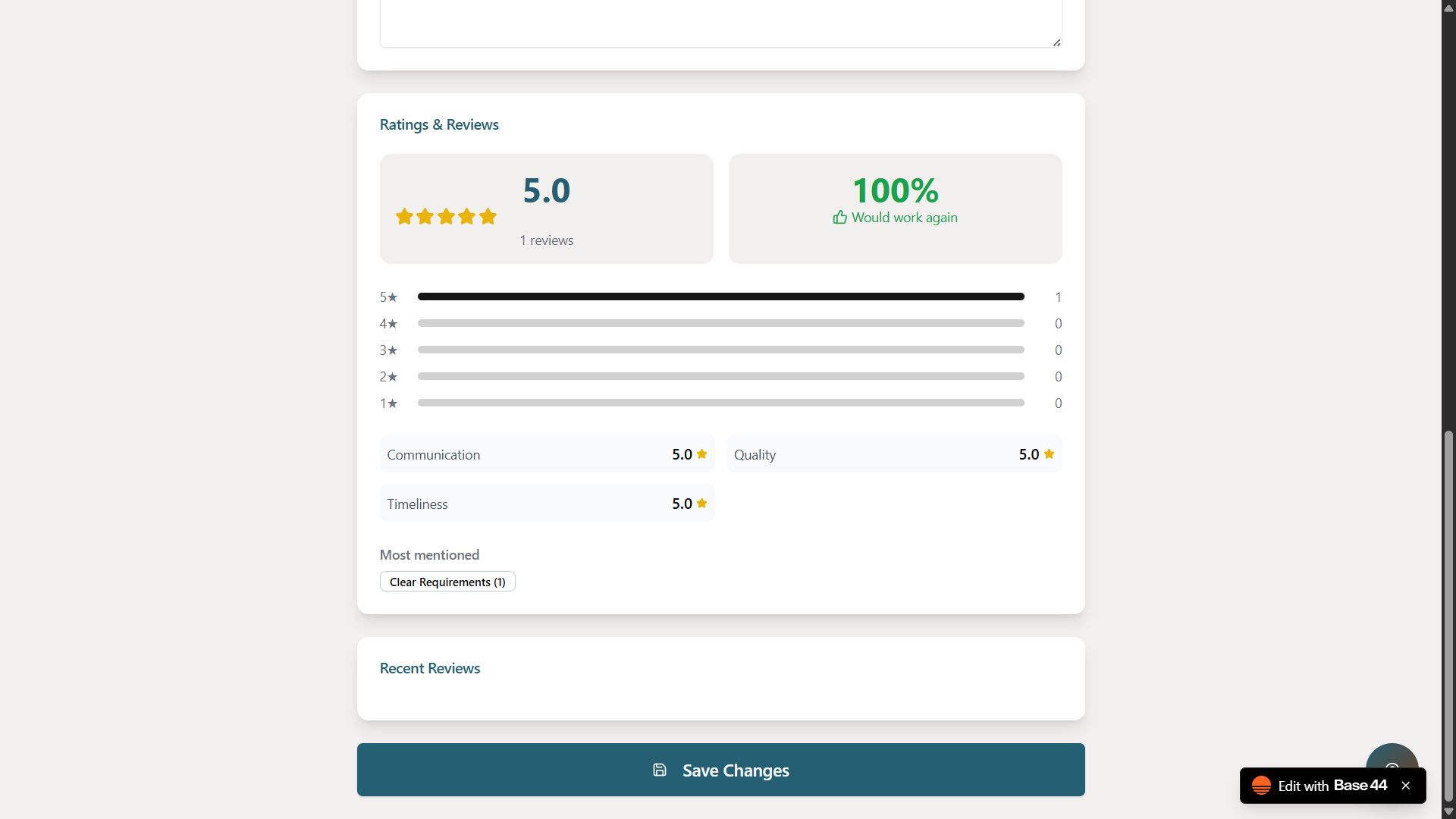
6) Trust, safety & verification • Identity verification for engineers (email, phone, optional government ID). • Skill verification: automated coding tests, curated assignments, GitHub verification. • Ratings & reviews for both sides. • Dispute resolution: in-app support + arbitration window. • Data access control: ephemeral credentials for repo access, no storing of sensitive credentials. • Privacy & security: encryption in transit, role-based access to logs and files.
7) Core features (MVP vs later) MVP • Company & engineer sign up, profile • Post & match tasks (skills, budget, urgency) • Real-time push notifications and accept/decline • In-app chat + basic file share • Escrow payment + payout • Ratings & basic profile verification • Admin dashboard & analytics Post-MVP / 2.0 • Live coding / collaborative IDE • Video calls & screen sharing • Skill tests & badges • ML-driven matching improvements • Enterprise integrations (Jira, Slack, CI/CD) • On-site scheduling & multi-engineer tasks • White-label solutions for staffing partners
8) Suggested tech stack (scalable) • Mobile: React Native or Flutter (fast cross-platform) • Web: React + TypeScript • Backend: Node.js (Express/Nest) or Python (FastAPI) • Realtime: WebSockets via Socket.IO or Pub/Sub (Redis, Pusher, or Firebase) • Database: PostgreSQL (primary) + Redis (cache, presence) • Search/Matching: ElasticSearch or custom service; ML services later • Payments: Stripe/PayPal/Local payment gateway • Storage: AWS S3 (attachments) • Containers: Docker + Kubernetes for scaling • CI/CD: GitHub Actions / GitLab CI • Monitoring: Prometheus/Grafana, Sentry for errors
9) Scalability & architecture notes • Microservices for matching, payments, notifications. • Use event queue (Kafka/RabbitMQ) for broadcasts and high throughput. • Horizontal scaling of worker nodes for matching service. • Presence service (Redis) to track online/offline engineers in real time.
10) Business model & monetization • Commission on each transaction (main revenue). • Subscription plans for companies (credits, lower fees). • Priority/featured listings for urgent tasks. • Enterprise & staffing partnerships (revenue share). • Value-added services: training, verification, insurance for projects.
11) Reducing unemployment & social impact • Microtasks and short gigs enable freshers to earn quickly and build portfolios. • Skill-based matching surfaces niche skills that are under-utilized. • Verified badges and quick ratings help new engineers build trust faster than long traditional hiring cycles. • Offer free/discounted skill tests or training credits for students/freshers to improve employability.
12) Key metrics (KPIs) to track • Time to match (avg minutes) — target: < 5–10 minutes for instant tasks • Acceptance rate (pct of notified engineers who accept) • Task completion rate • Retention of engineers & companies (30/90/180 day) • Revenue per task, take rate, churn • Number of active engineers online per hour • Average earnings per engineer per week
13) Risks & mitigations • Low supply of engineers — Mitigate: onboarding incentives, student partnerships, gamified referral bonuses. • Quality inconsistency — Mitigate: skill tests, probation tasks, strong review & dispute flow. • Fraud / payment disputes — Mitigate: escrow, verification, audit logs. • Legal/compliance — ensure T&C for contractor vs employee classification; comply with local tax/contract laws. • Security exposure — mitigate with ephemeral repo access, least privilege, encryption.
🎯 Target Audience / Users for the Solution Our platform is designed for two primary user groups and several secondary ones:
1️⃣ Primary User Group: Companies & Businesses (Clients) These are the people who need quick, reliable access to software talent. Who they are: • Startups needing urgent bug fixes or feature updates • Small & medium businesses without a full tech team • Tech companies requiring temporary/on-demand specialists • Non-tech companies needing digital help (website issues, app bugs, server problems) • Project managers looking for extra hands during peak workload • Enterprises needing short-term contractors for specific tasks Their common needs: • Immediate access to skilled developers • Quick turnaround for urgent tasks • Flexible, pay-per-task or pay-per-hour support • Faster alternative to traditional hiring or freelancing
2️⃣ Primary User Group: Software Engineers (Workers/Providers) These are the individuals who will complete the tasks. Who they are: • Freshers struggling with unemployment • Early-career engineers wanting micro-jobs to earn & build experience • Freelancers seeking continuous work • Students with coding skills who want part-time tasks • Experienced developers available for side gigs • Remote workers looking for extra income Their common goals: • Get real-time earning opportunities • Flexible work hours • Tasks that match their specific skills • Regular work without long application processes • A platform that boosts employability and gives exposure
3️⃣ Secondary Users These users benefit indirectly or occasionally: Training Institutions / Colleges • Students can find micro-jobs • Colleges can support skill-building and placement Staffing agencies • They can plug into the platform to distribute their engineers’ availability Entrepreneurs / Creators • People who have a project idea but no technical team Non-tech founders • Need quick help for prototypes, bug fixes, or MVP building
Dead-Line was inspired by two major gaps in the tech ecosystem: Companies often face urgent technical issues—bugs, crashes, deployment failures—but struggle to find engineers quickly using traditional freelancing platforms. Many freshers and junior developers face unemployment because they don’t get visibility or opportunities fast enough. Seeing how instant-matching apps like ride-hailing platforms solve real-time demand, I wanted to bring the same speed and simplicity to software engineering tasks. This inspired the creation of Dead-Line—an app that gives companies fast solutions and gives engineers real-time earning opportunities.
I built Dead-Line fully using Base44, which allowed me to generate the complete application—from frontend to backend—through structured prompts.
Using Base44, I created:
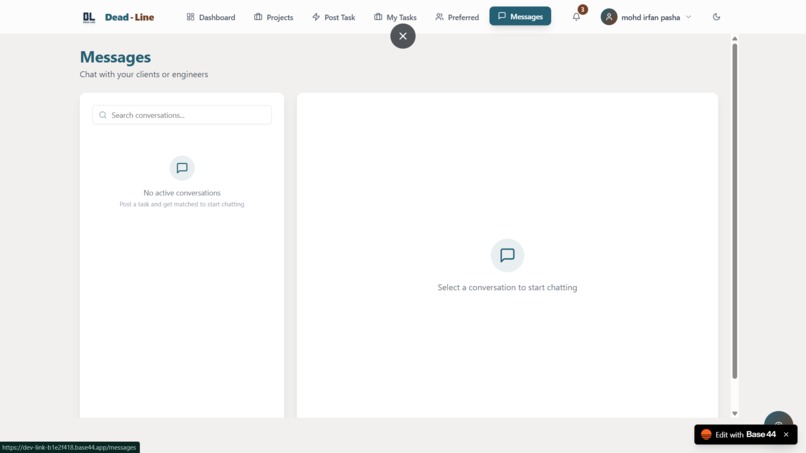
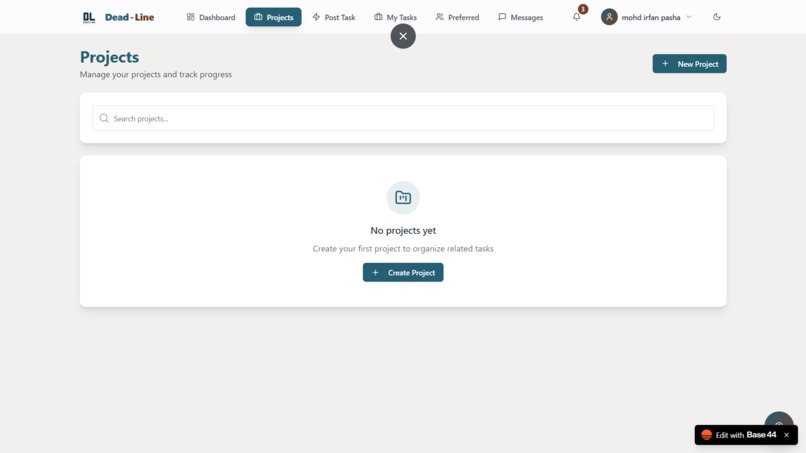
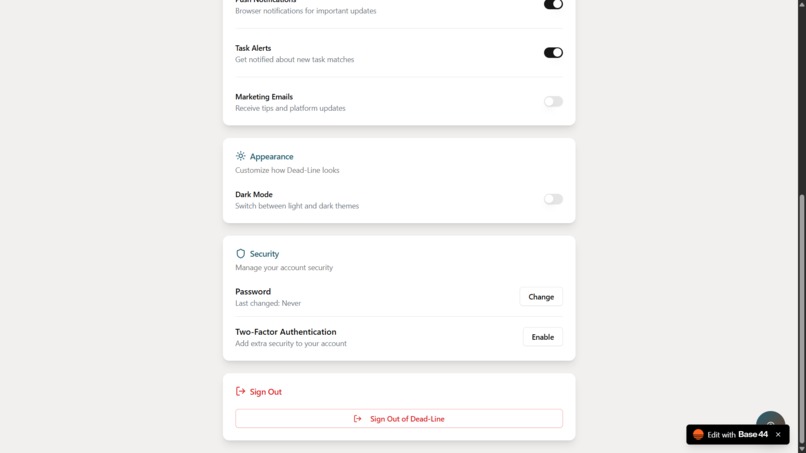
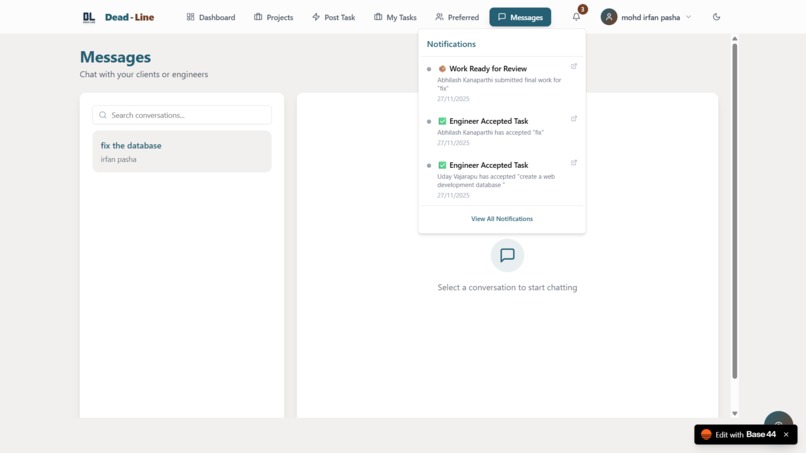
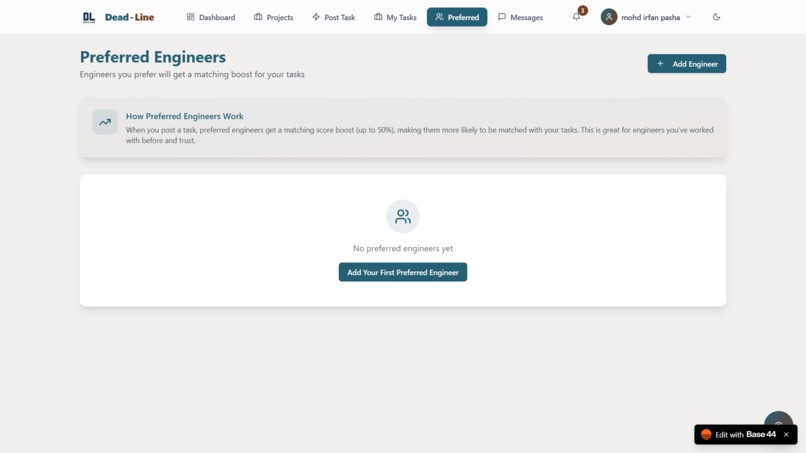
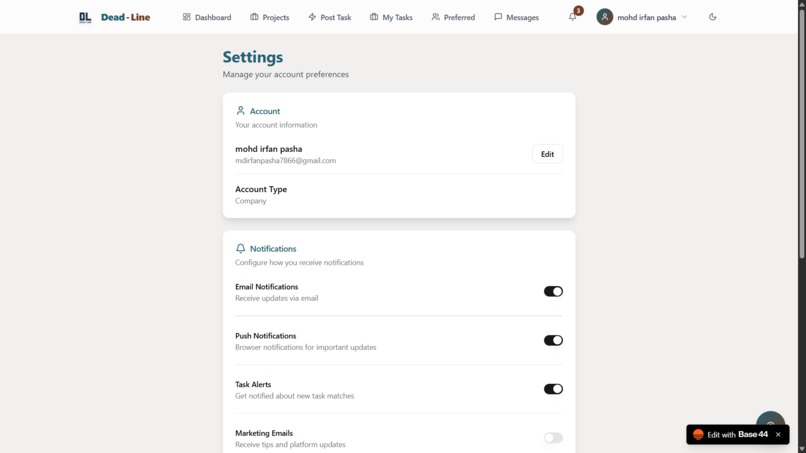
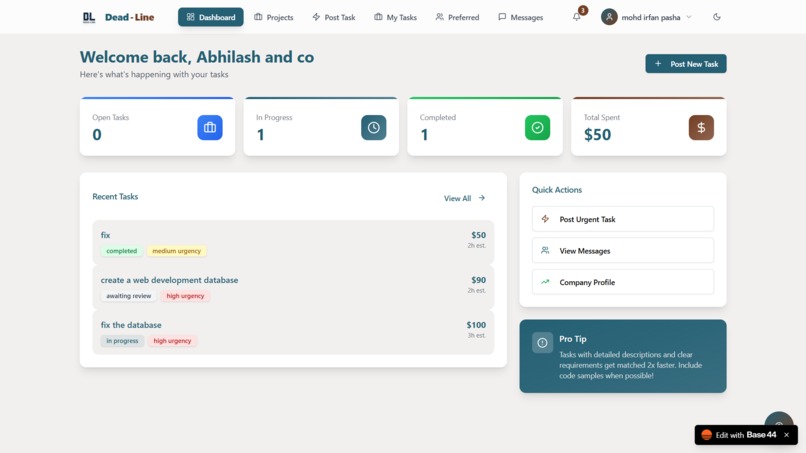
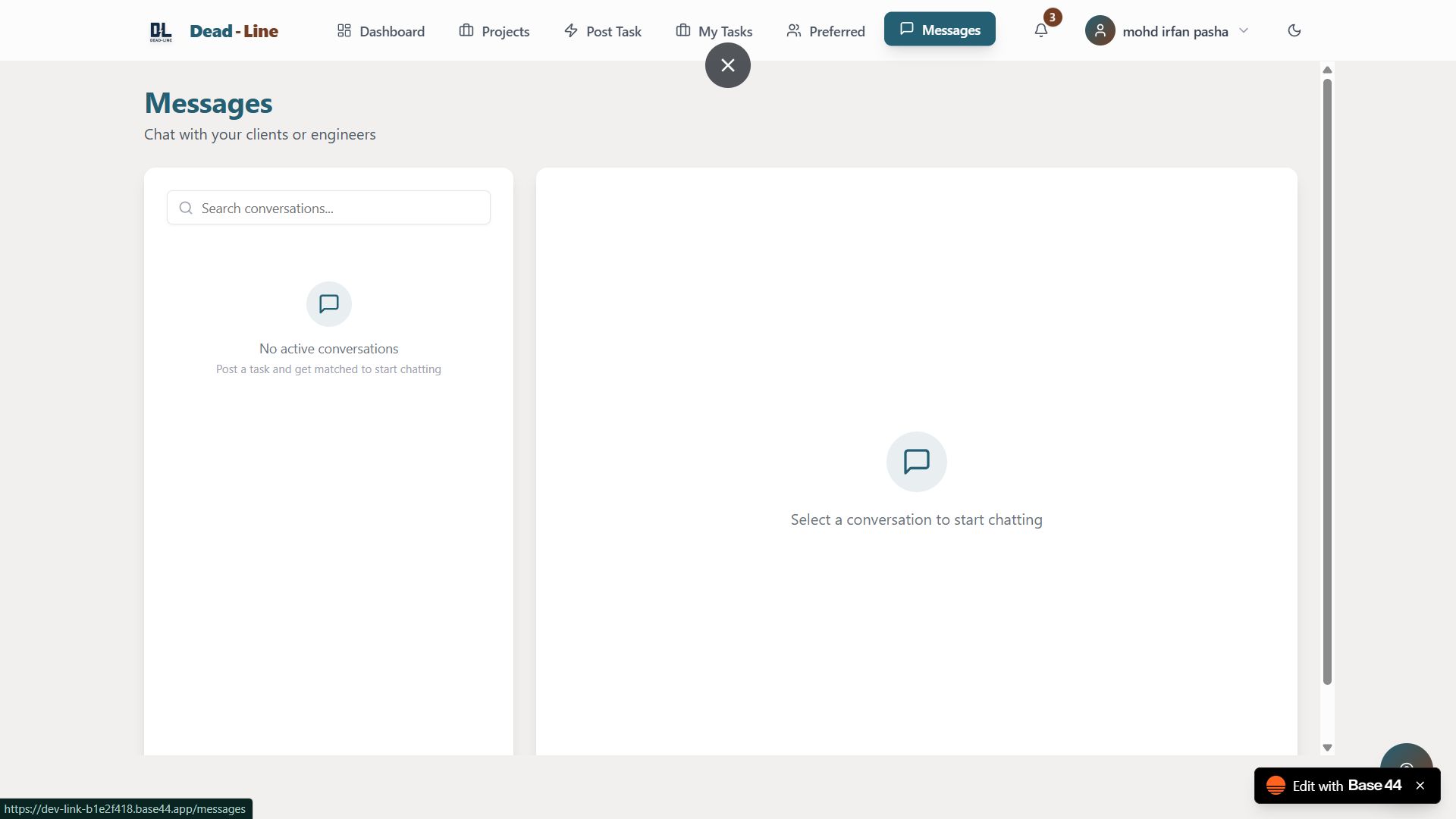
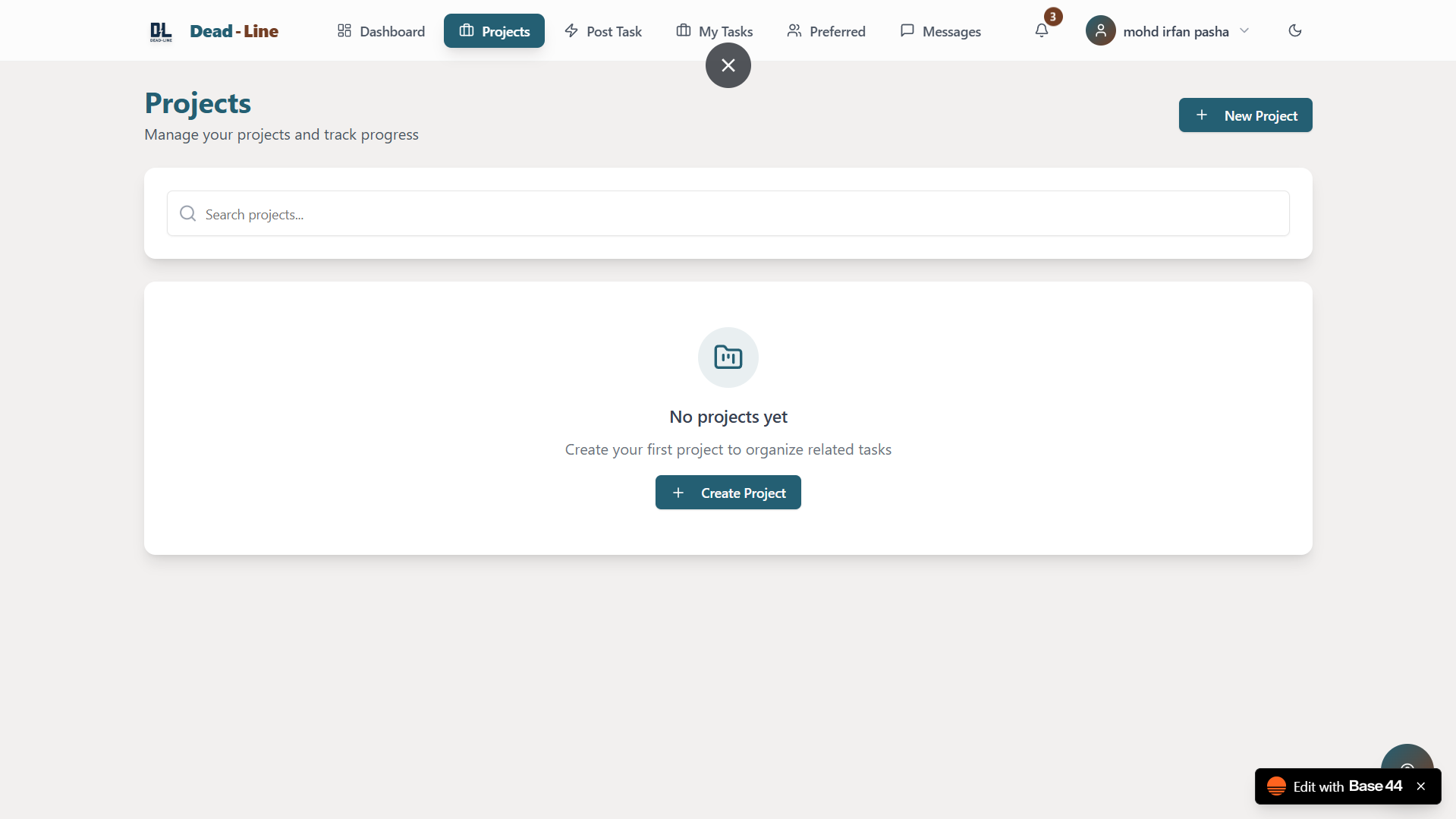
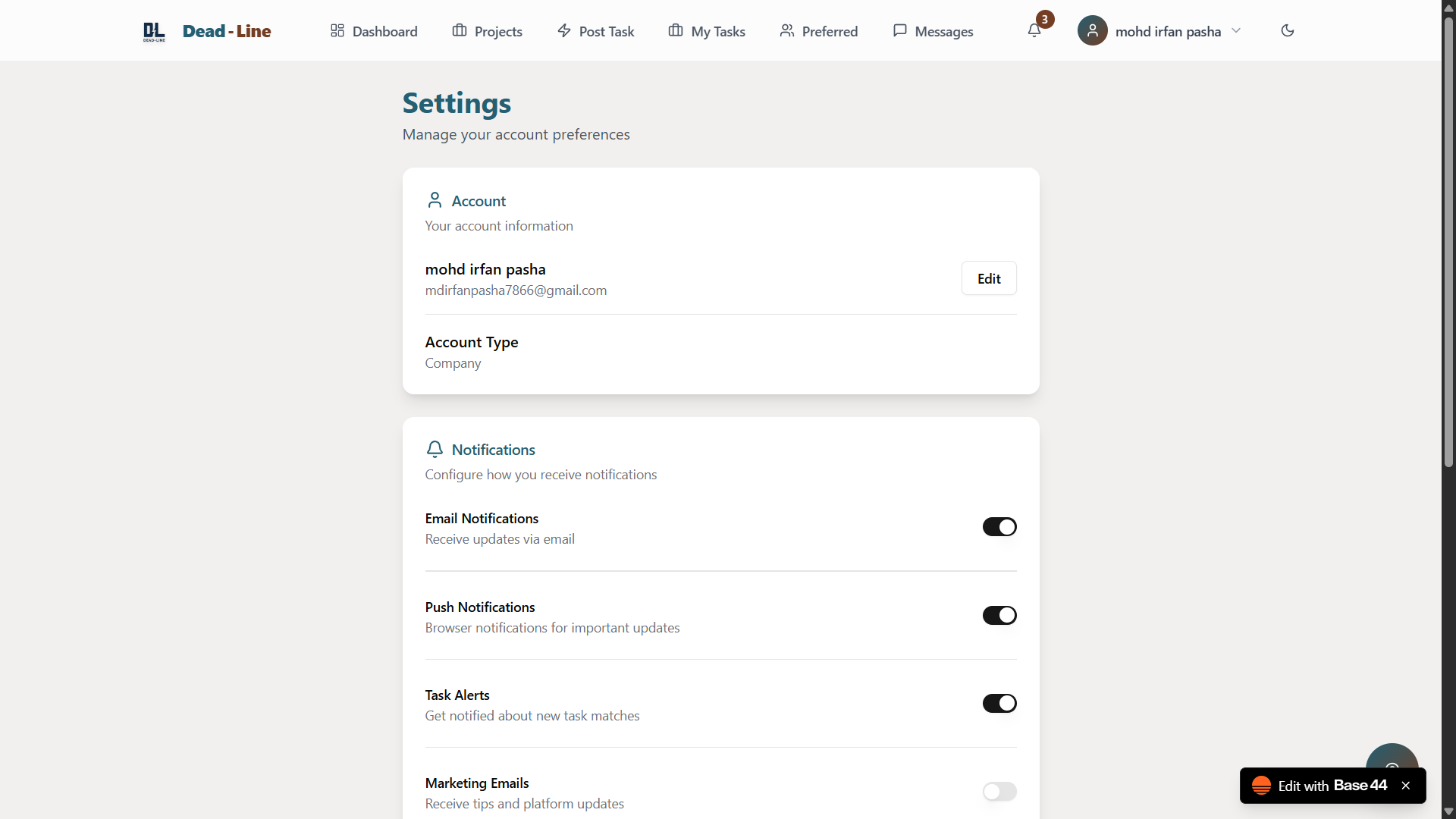
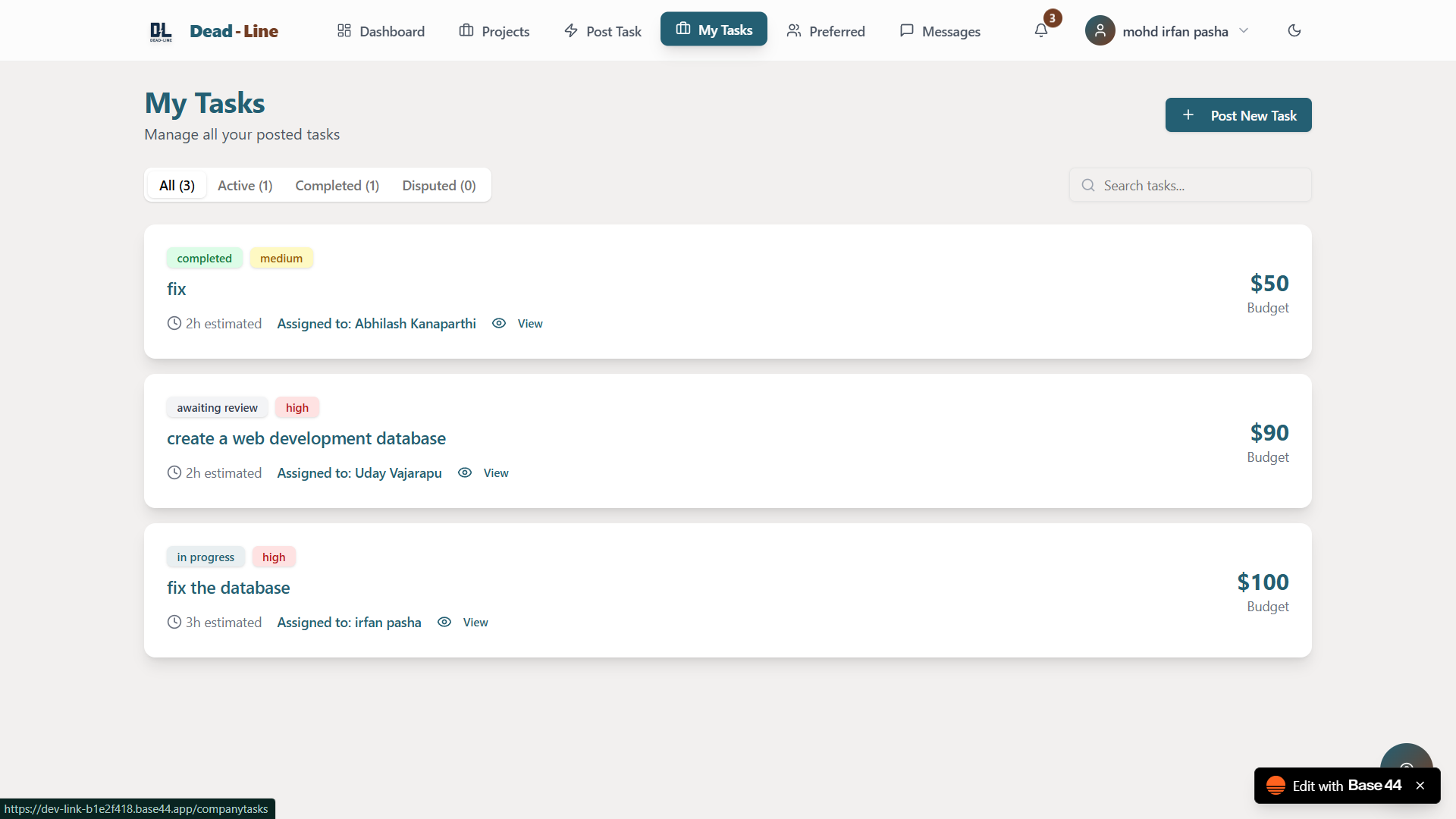
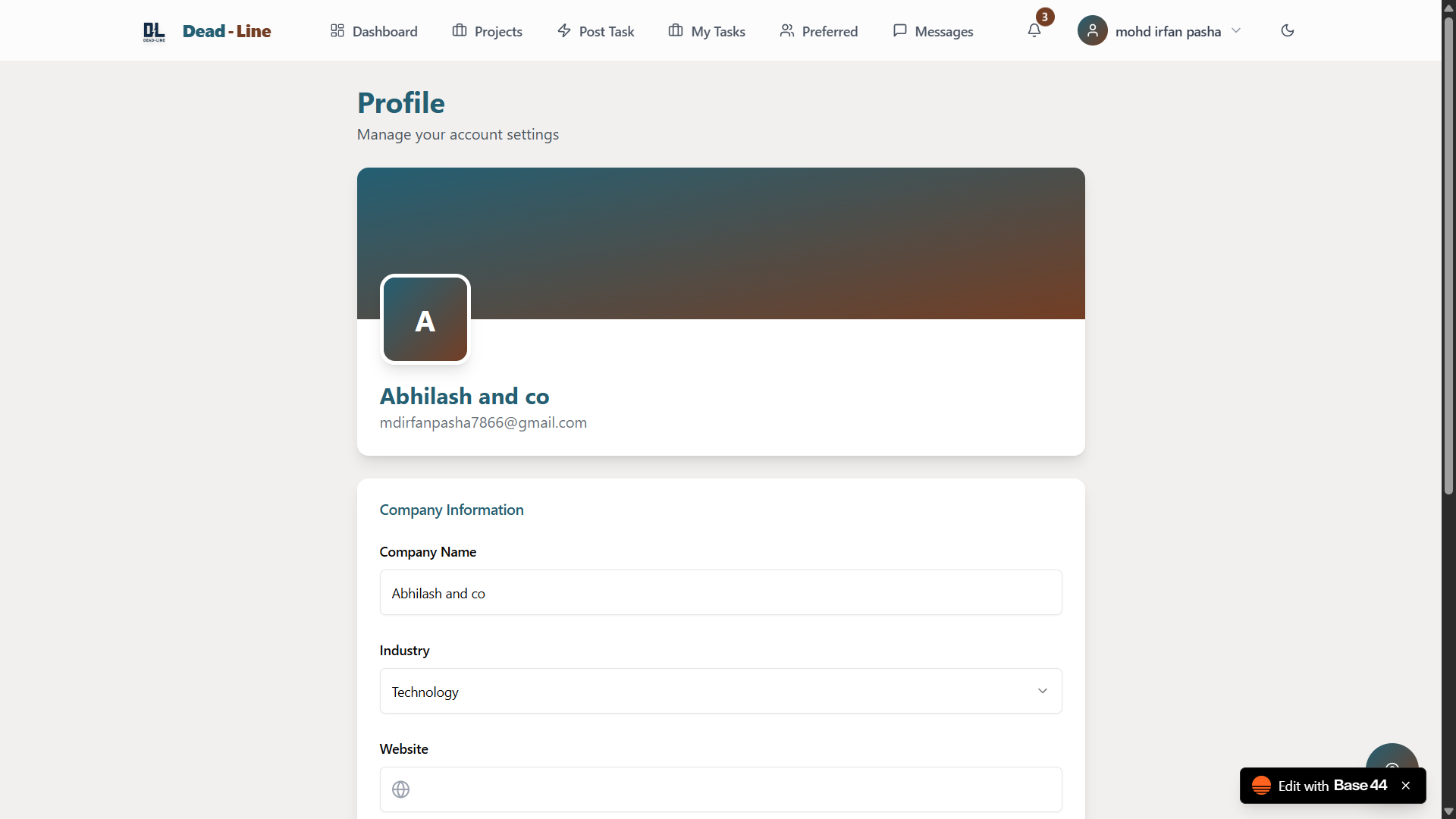
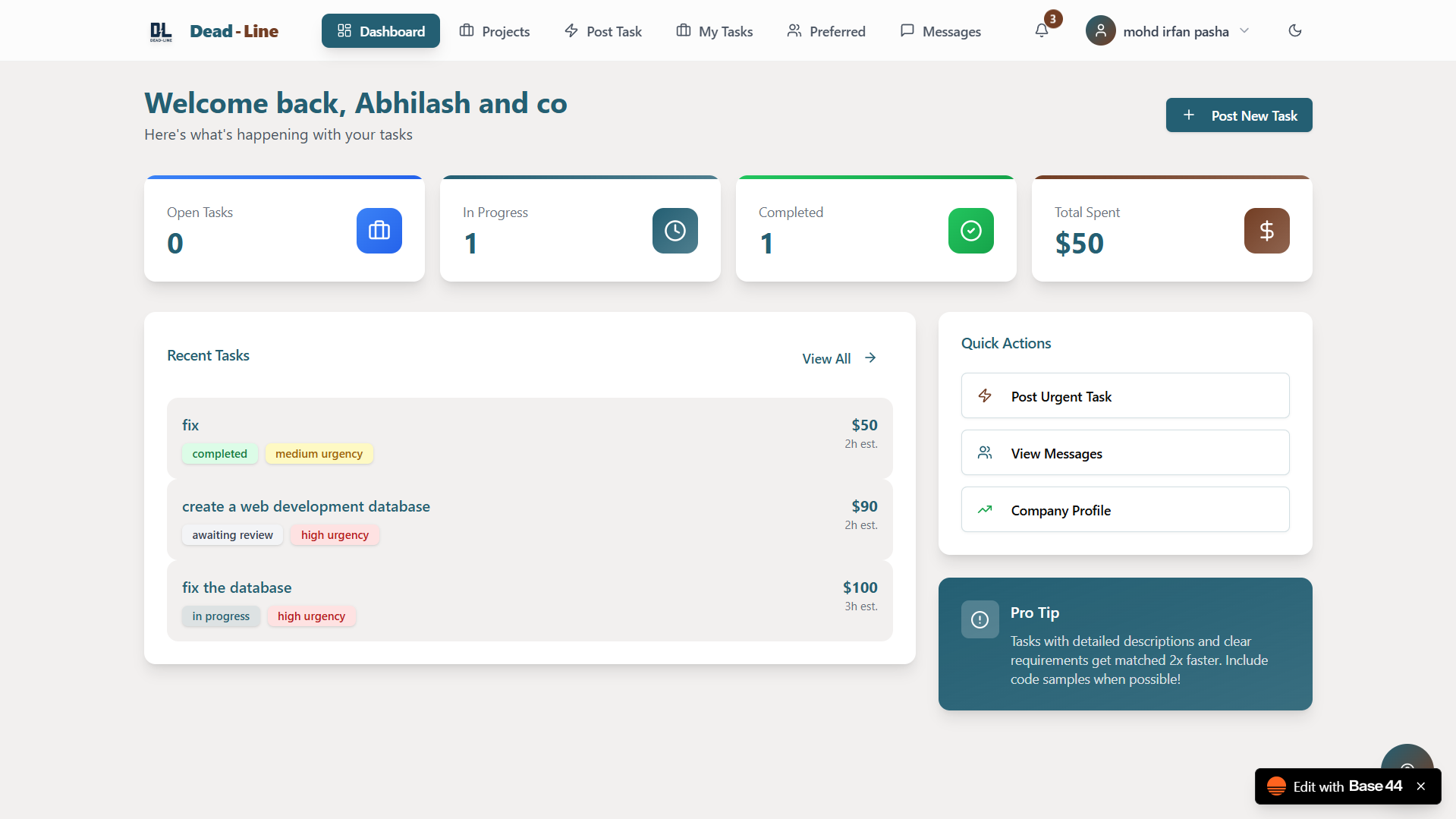
A modern, mobile-friendly UI using the Dead-Line color palette Complete user roles: Company, Engineer, Admin Real-time matching system (skills, availability, rating, budget) Instant accept/decline flow for tasks Secure escrow payment system In-app real-time chat with notifications Task lifecycle: posted → matched → accepted → completed → rated Admin dashboard for full platform control Database models for tasks, users, payments, disputes, and chats Base44 handled code generation, routing, database creation, API setup, authentication, and UI components, making development faster and more structured.
Challenges I Faced
While building Dead-Line, I faced several challenges: Designing reliable real-time matching logic that picks the right engineer within seconds. Preventing race conditions so multiple engineers can’t accept the same task. Implementing secure escrow flows to protect both clients and engineers. Handling real-time bidirectional chat with file sharing. Ensuring UI consistency while managing complex workflows. Testing instant notifications across different devices and roles. These challenges strengthened the platform and helped shape a more stable and professional MVP.
Built With
- and-structured-through-base44
- apis
- authentication
- backend
- database
- devops
- file
- frontend
- generated
- generation
- handled:
- models
- redis
- s3
- scalable
- storage
- which

Log in or sign up for Devpost to join the conversation.