Inspiration
I have read lot of articles recently on how vitamin d deficiency could be cause of many serious issues such as Osteoporosis,Rickets ,Diabetes, high blood pressure,Cancer,autoimmune conditions, and multiple sclerosis. Recently, it has also been shown that vitamin d deficiency could cause complications during covid infections. And seeing that between 70% and 97% of candians have some kind of vitamin d deficiency, i thought that it is really important that there exists a tool that helps people track their daily vitamin d intake and makes sure that they are not among the 70% of canadians that have vitamin d deficiency
What it does
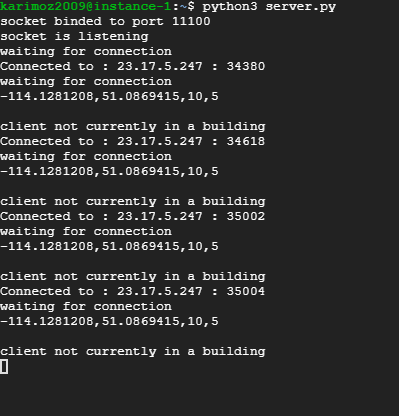
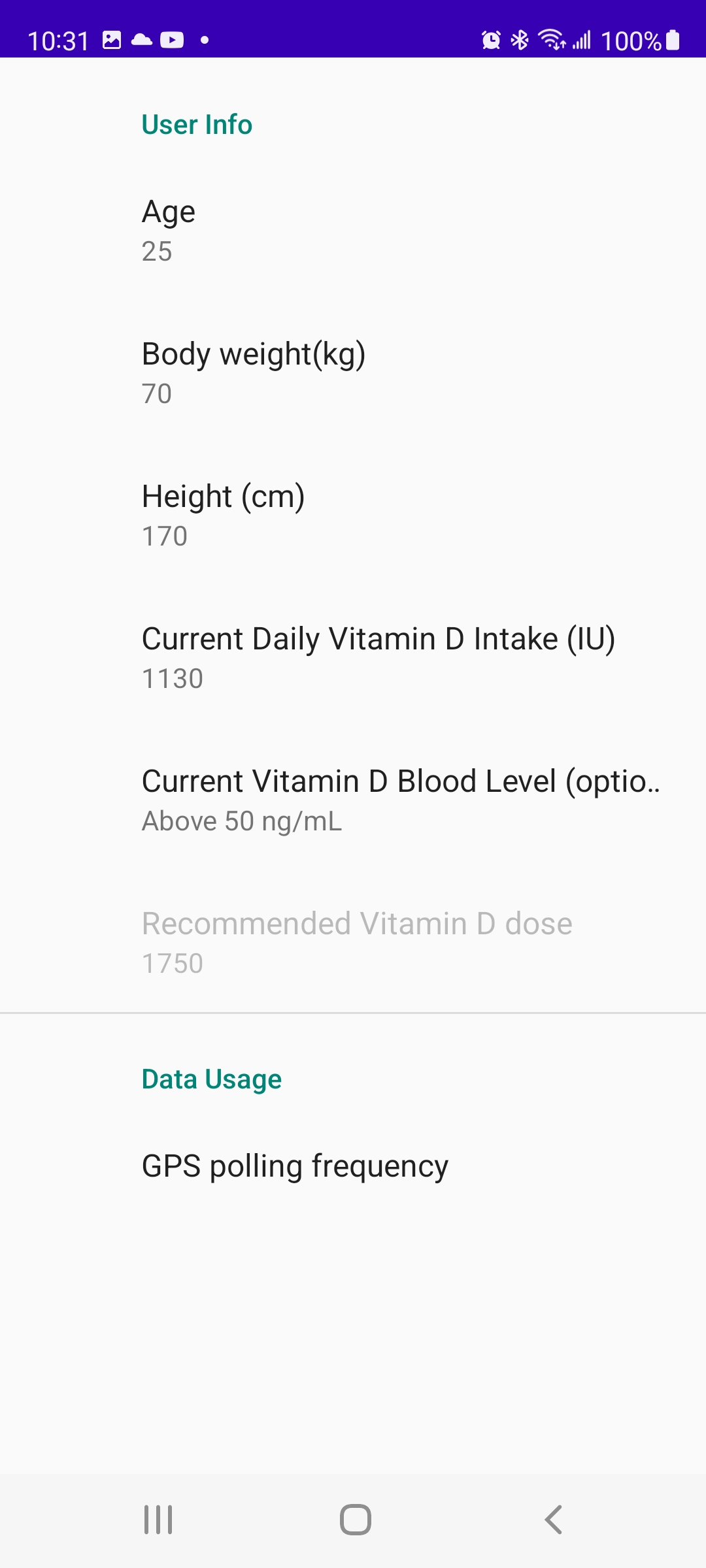
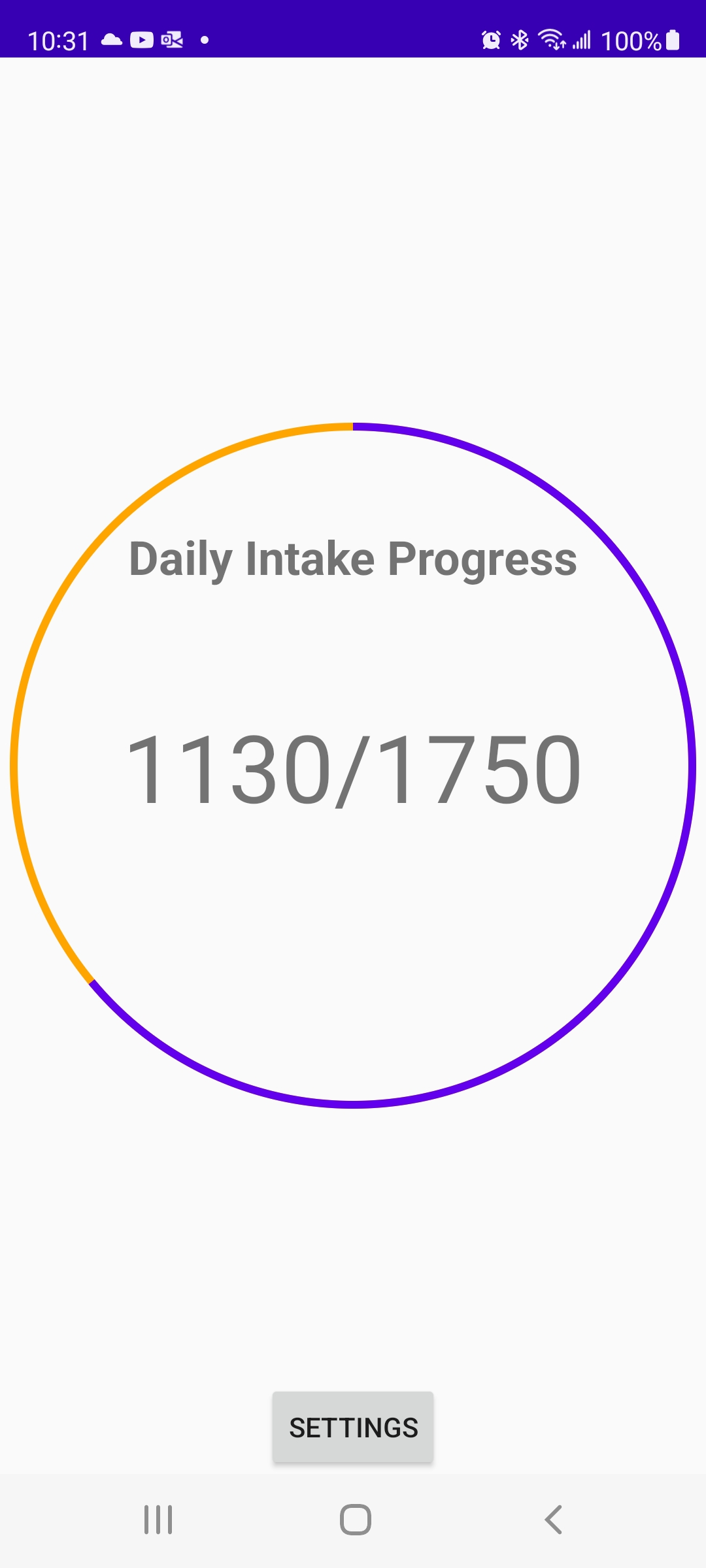
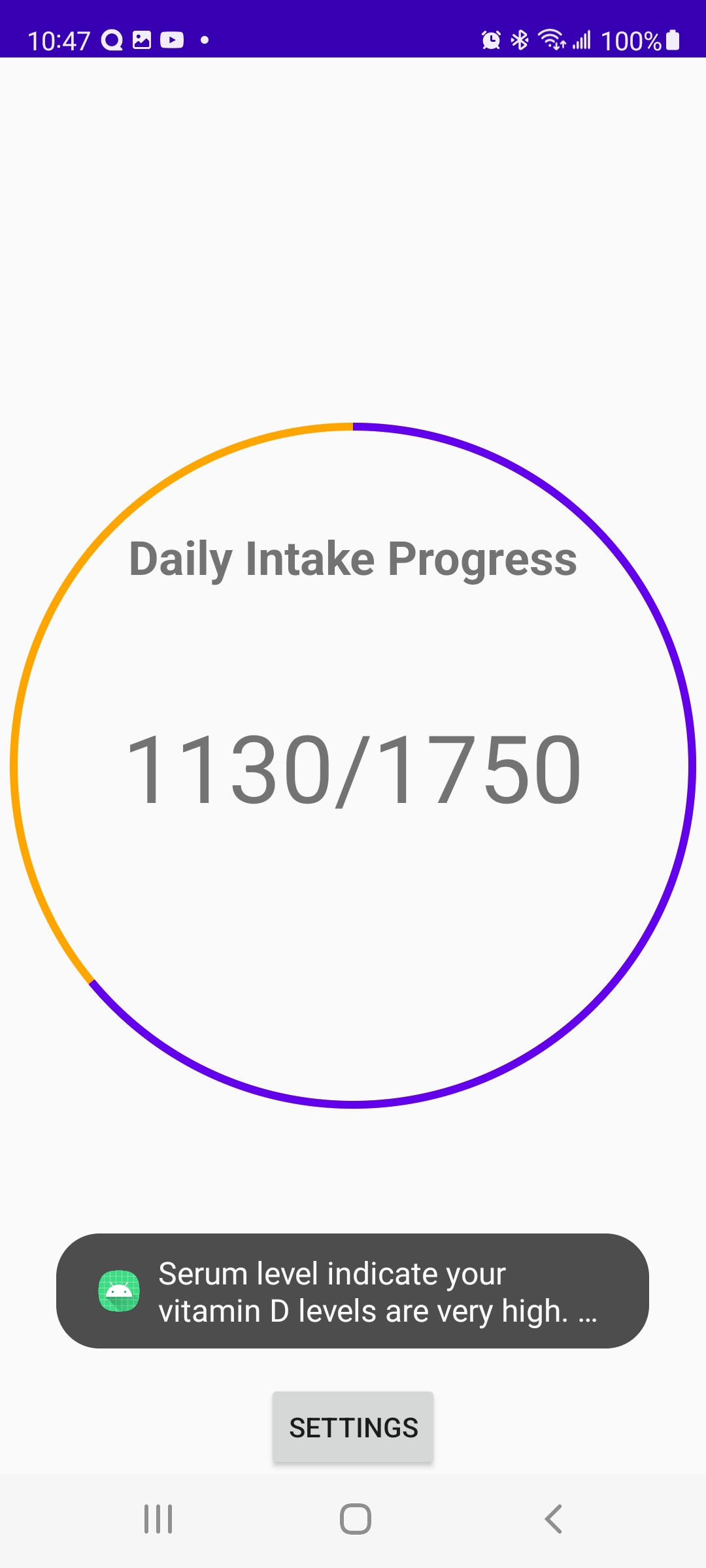
The app calcluates the users recommended daily vitamind d intake using information such as their BMI, Serum levels (Vitamin d in blood),and age. After that it keeps track of their actual daily intake through supplements and sun exposure. The supplments value is easy as the user provides that themselves. Calculating the vitamin d intake from sun exposure is much more tricky as the app needs to figure out if the user is currently in the sun and and how much vitamin d are they getting from that exposure. To deterimine if the user is currently in the sun and how much vitamin d are they getting, the app sends the GPS coordinates to a cloud server every 5-15mins. The cloud server obtains a map picture of the users current location using Google maps static api and then runs that picture through a deep convlutional neural network to determine if the picture is pointing to building or to an open space. If the picture points to an open space then the server assumes that the user is currently outside. If the user is outside, the server uses the user's latitude and their local time to determine what is the vitamin d dosage they are getitng per minute of sun exposure and updates their total daily intake based on that calculation.
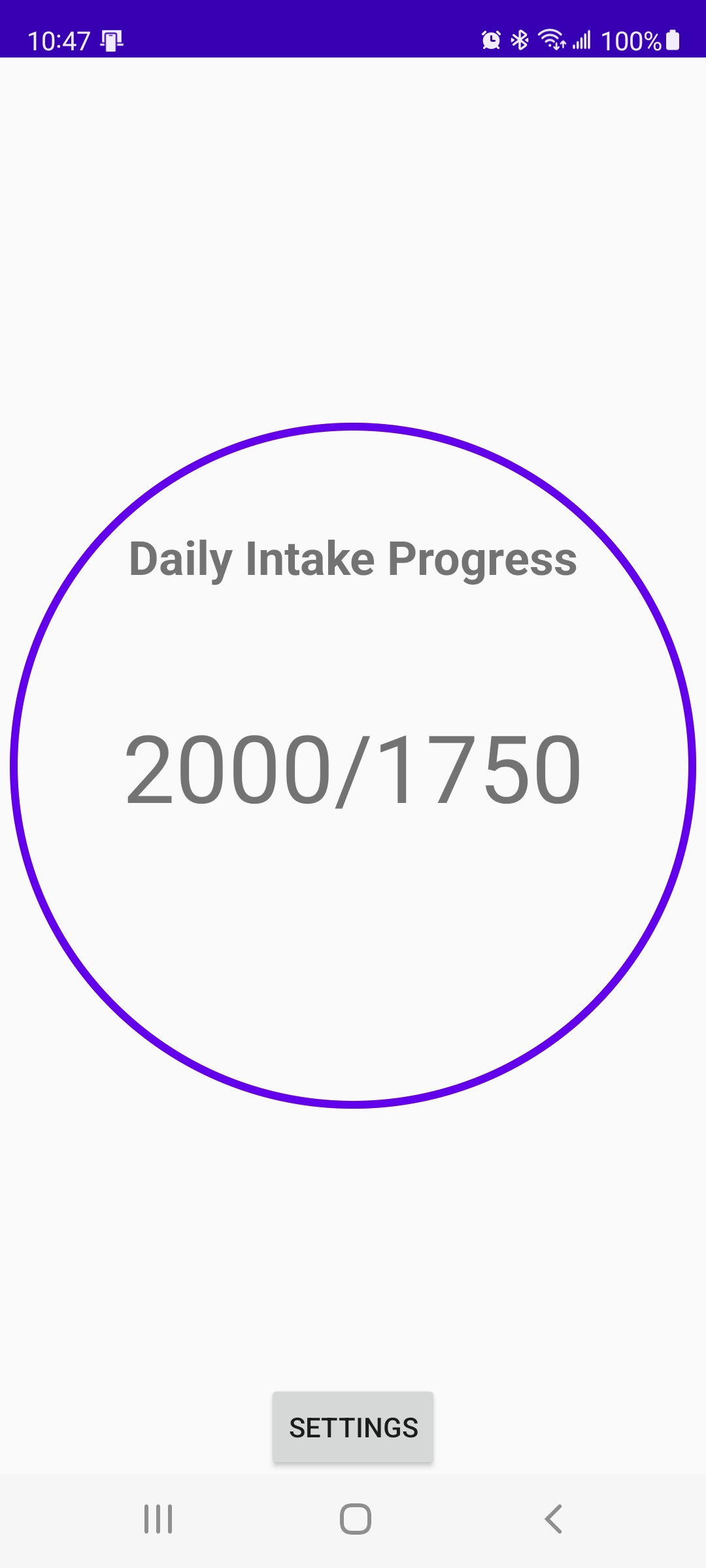
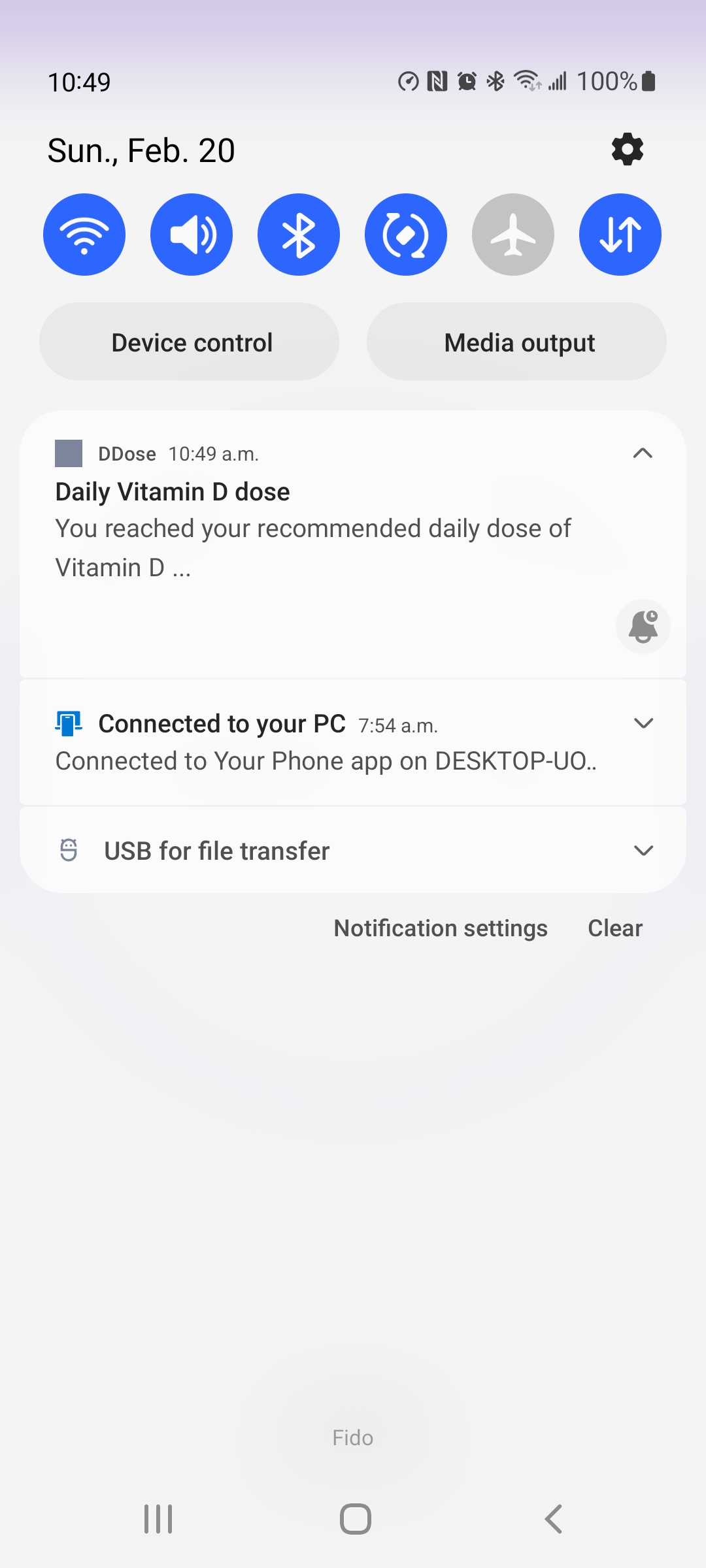
The app also informs the user once they reach their recommended daily intake of vitamin D, and also warns them to consult with a doctor if their Serum levels are too high or too low.
How we built it
The Project is composed of 2 components: 1- The android mobile app: This was built in android studio using java 2- The server hosted on Google cloud This was built purely in Python3 and utlised the Pytorch library for the neural network
Challenges we ran into
There were 2 main challenges that faced me during the 20 or so hours that i worked on this: 1- I never built a mobile app before so alot of time was spent debugging the mobile app and not being sure why it does not work 2- There were no readly avaible training sets for building detection from satallite imagery. So i had to scramble to create a training set from multiple sources. This went well in the end as the Neural network had a 97% accuracy during my limited tested
Accomplishments that we're proud of
I am glad i was able to actually finish this app in under 24 hours
What we learned
I learned alot of how android apps are structured
What's next for DDose
There are many things i want to improve about the app, like the UI, tracking vitamin intake over a longer period of time, better ways to detect if a user is in the sun, vitamin intake from food and many other things
About
Group 103 Groupname: keeperkoko Tier 1 Topic: Develop a tool to help people live a healty lifestyle Aiming for Bounties:Best use of a Cloud Computing service, Best use of Machine Learning Team members: Kareem Abdelaty
Built With
- android-studio
- cloud-computing
- google-maps-static-api
- java
- machine-learning
- python
- pytoch

Log in or sign up for Devpost to join the conversation.