Inspiration
What it does
How we built it
Challenges we ran into
Accomplishments that we're proud of
What we learned
What's next for DC-DC Solar-Powered e-learning kiosks in remote Villages
🌞 DC-DC Solar-Powered E-Learning Kiosk – Project Story
💡 What Inspired Us
Our journey began with the daily reality of many students and youths in underserved communities like Gidan Kwano, Niger State. Despite being close to the Federal University of Technology, Minna, many people still lack access to steady electricity, digital resources, and learning tools. We were inspired by the need to bridge this digital and energy gap using clean, sustainable, and practical solutions that could be locally built and easily replicated across Nigeria.
We also saw the need for a safe space where young people could learn, connect, and grow — especially in places where NEPA is unreliable or completely absent. This led to the birth of the DC–DC Solar-Powered E-learning Kiosk idea.
📚 What We Learned
Technical Insight: We learned how to integrate solar components like 300W–400W panels, charge controllers, and deep-cycle batteries into a functional learning center.
Community Needs: Many people are eager to learn digital skills if the tools are available and accessible.
Sustainability: A kiosk like this can support itself if income-generating features like phone charging, café sales, or printing are added.
Design Thinking: We had to think small but smart — how to use a 12ft by 9ft space effectively for learning, co-working, and digital access.
🛠️ How We Built the Project
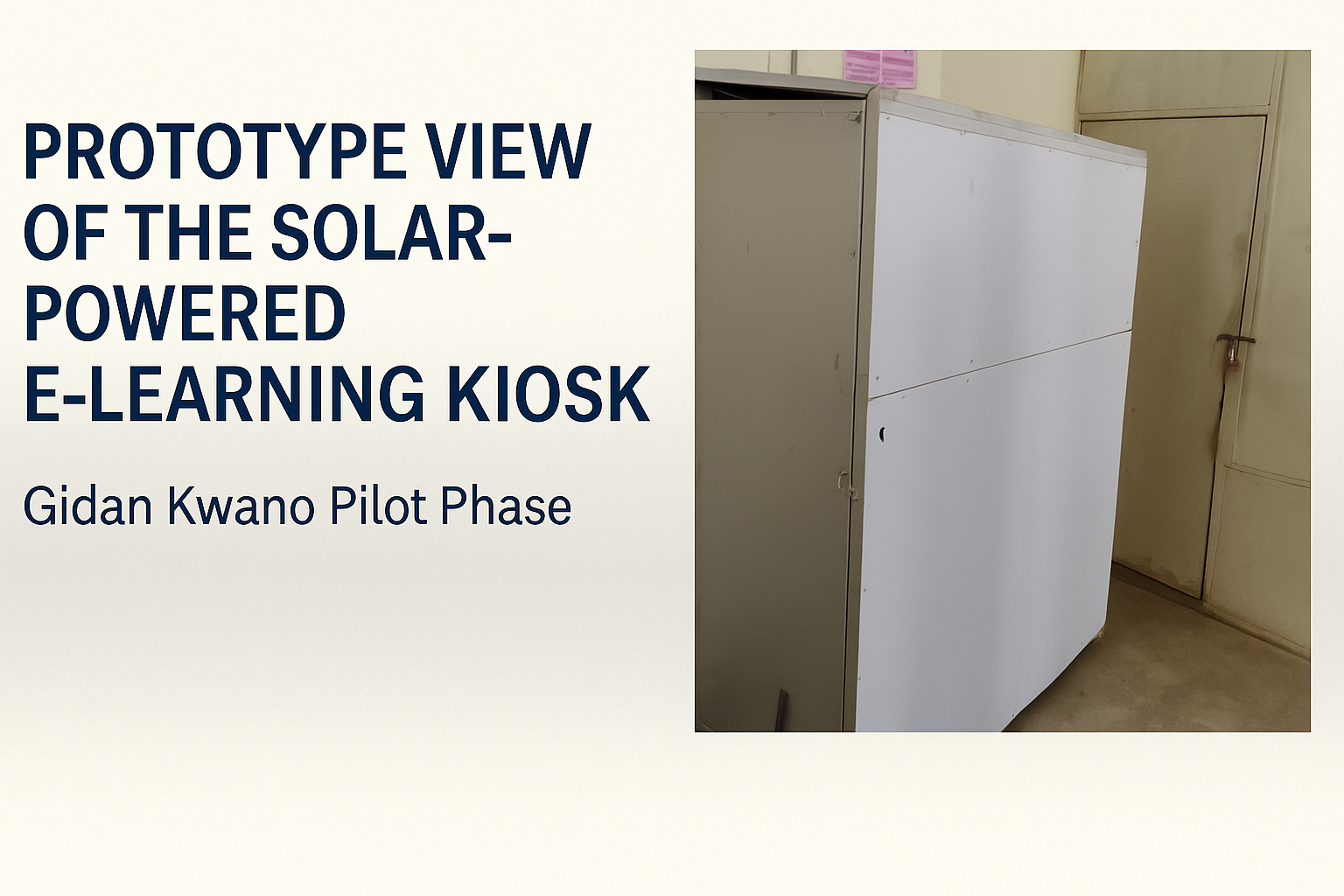
We started by mapping out a simple but scalable structure using locally available materials like wood, metal sheets, and reused components. Key features include:
A DC-powered solar system (12V 200Ah battery, 30A charge controller, 2 × 400W panels)
One low-power computer or Raspberry Pi with offline learning content (WAEC/JAMB past questions, coding tutorials, Khan Academy, etc.)
LED lighting, DC fan, and USB charging ports
A glass-side window for lighting, a metal door for security, and furniture made by local carpenters
Starlink Internet to provide fast, reliable access where possible
Future features include a portable printer and a small snack/working café corner
🚧 Challenges We Faced
Budget Limitations: We had to carefully balance quality and affordability. Some high-end components were beyond our means.
Space Management: Designing a learning space that could accommodate 6–8 people in a 12ft by 9ft area required creativity.
Technical Constraints: Sizing the right inverter, battery, and solar panels for both day and night use was tricky.
Internet Access: Starlink provides excellent speed, but setup costs were initially high.
Heat Management: Ensuring proper ventilation using DC fans and window placement was crucial for comfort.
🚀 What’s Next
We see this kiosk as a model for digital empowerment that can be scaled across Nigeria’s 774 LGAs. The next steps include:
Launching the first prototype in Gidan Kwano
Training a local youth manager to operate and maintain the system
Rolling out a monitoring and feedback system to improve future kiosks
Building partnerships to deploy more kiosks in schools, villages, and IDP camps
🙌 Final Thoughts
This project is more than solar panels and computers — it’s about hope, access, and future-readiness. It’s about showing that with creativity and community focus, every village can be a smart village.
Built With
- none

Log in or sign up for Devpost to join the conversation.