-
-
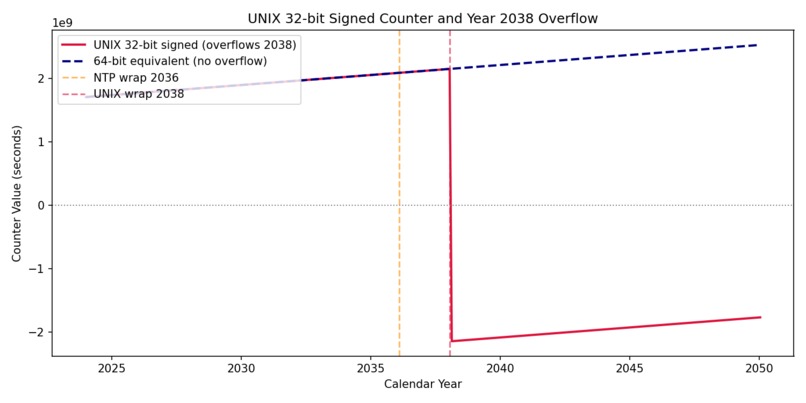
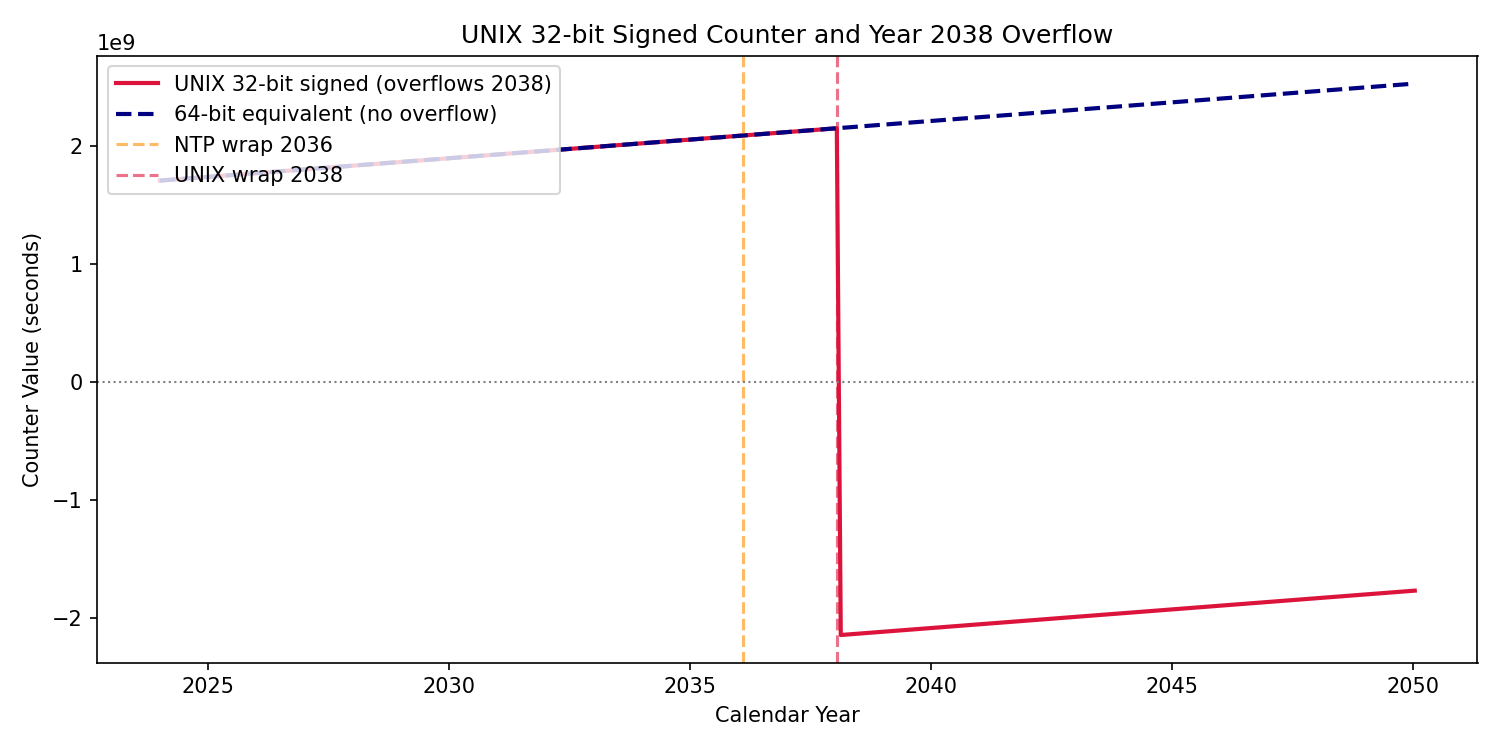
UNIX 32-bit signed integer counter value from the UNIX epoch (1970) through 2050.
-
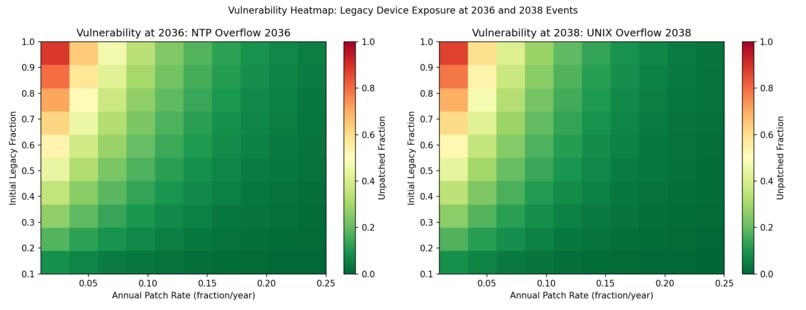
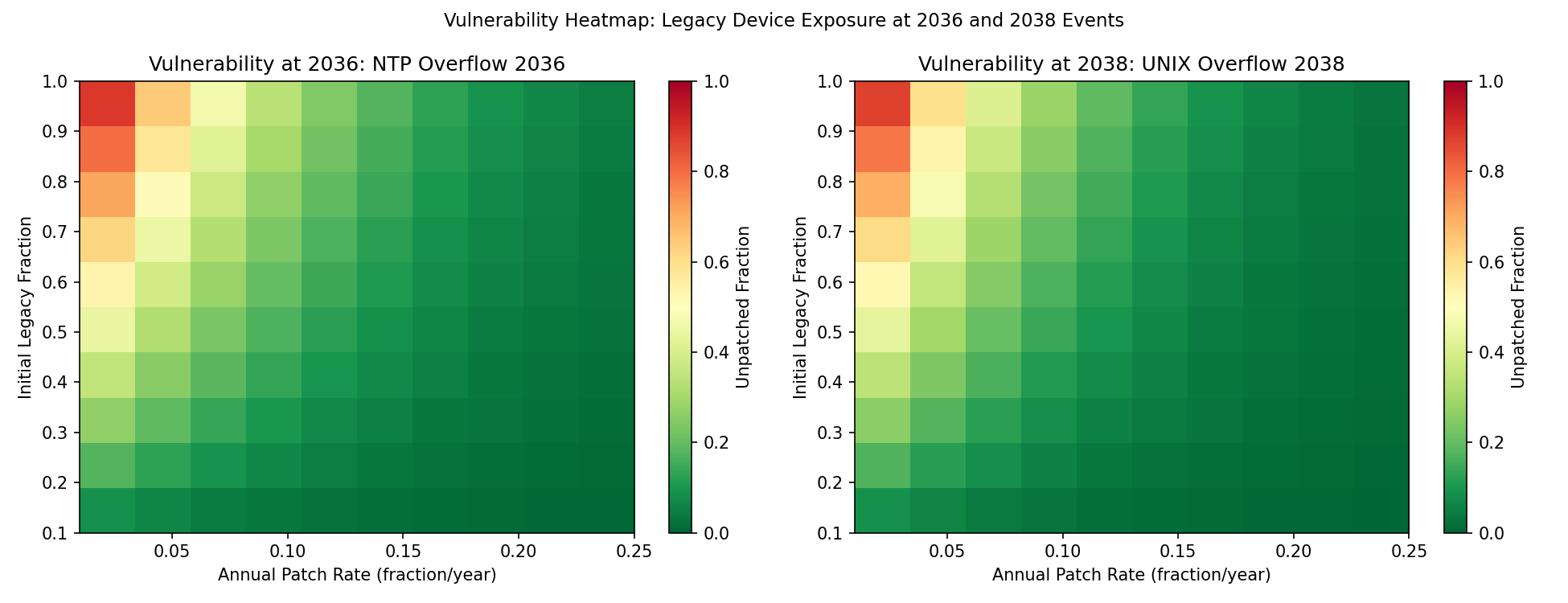
Fraction of devices still unpatched at the time of each overflow event as a function of initial legacy fraction and annual patch rate.
-
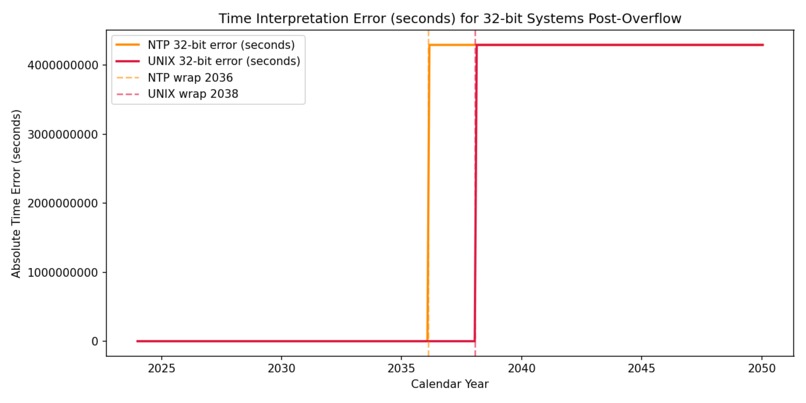
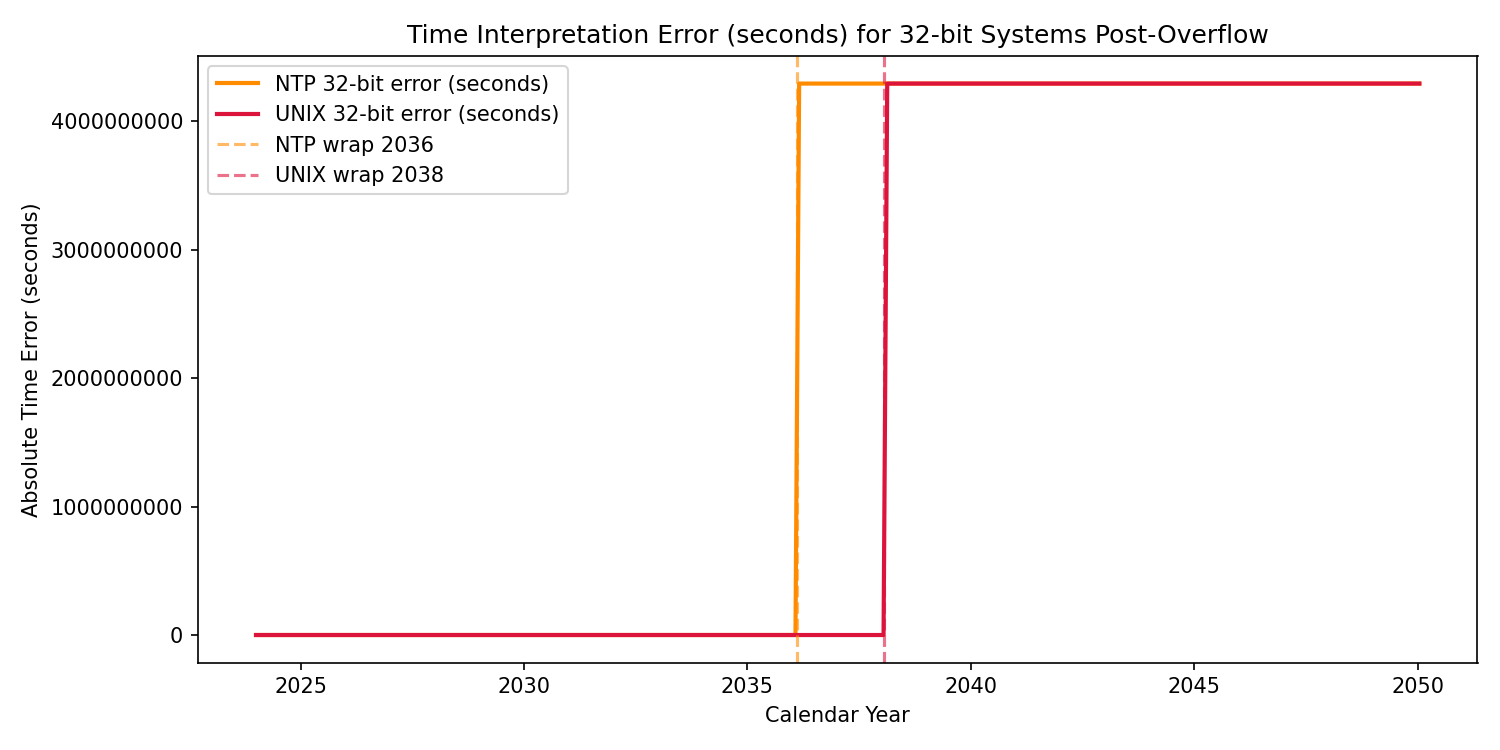
This figure shows the absolute time interpretation error in seconds introduced by overflow.
-
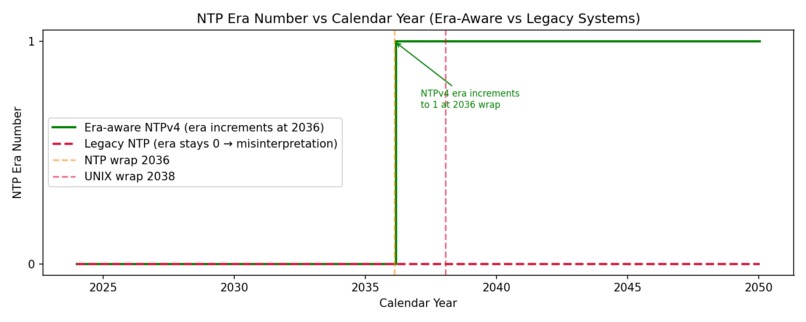
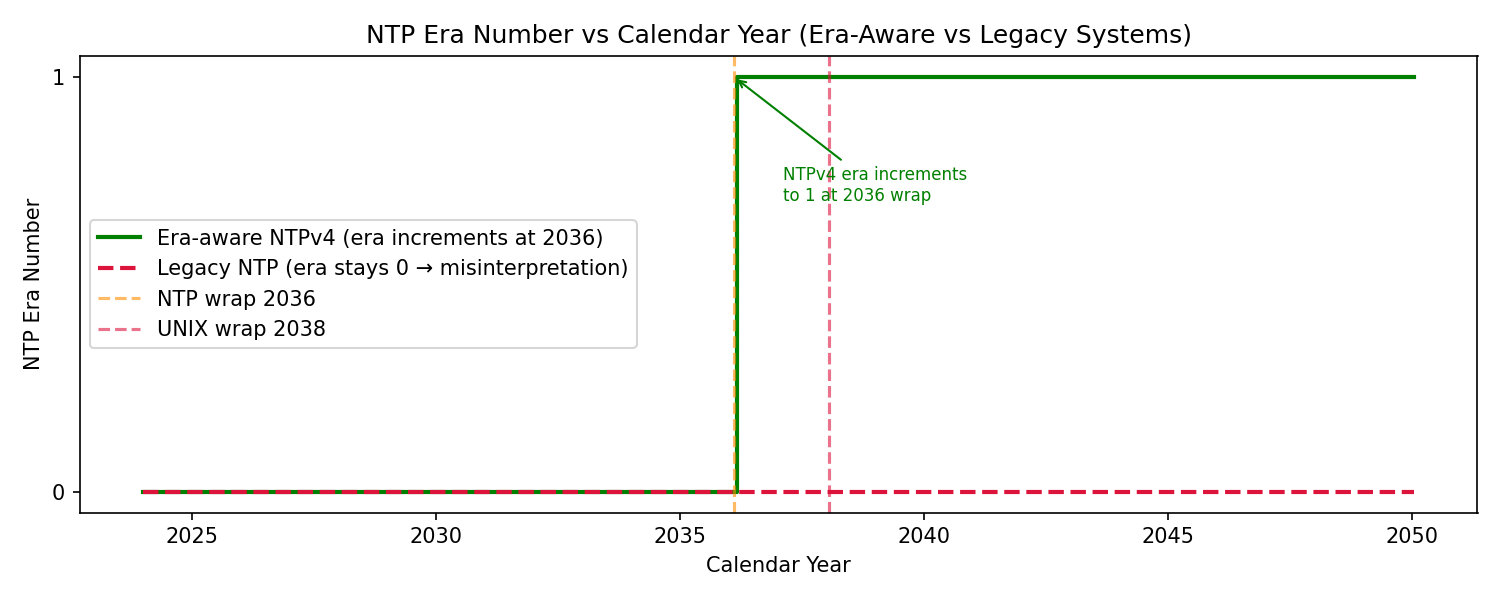
NTPv4 era counter as a step function of calendar year.
-
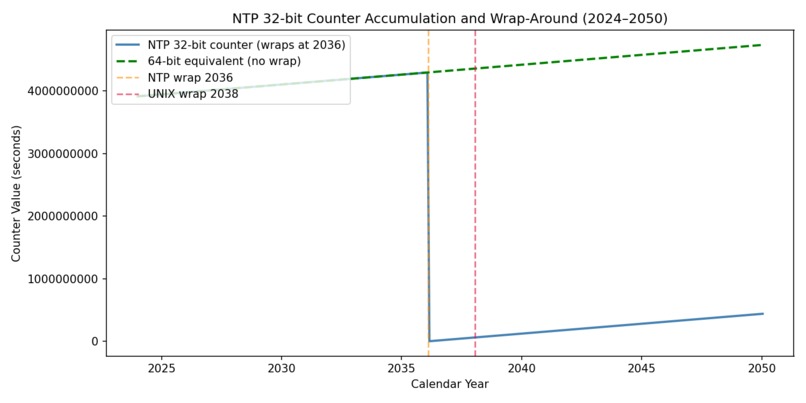
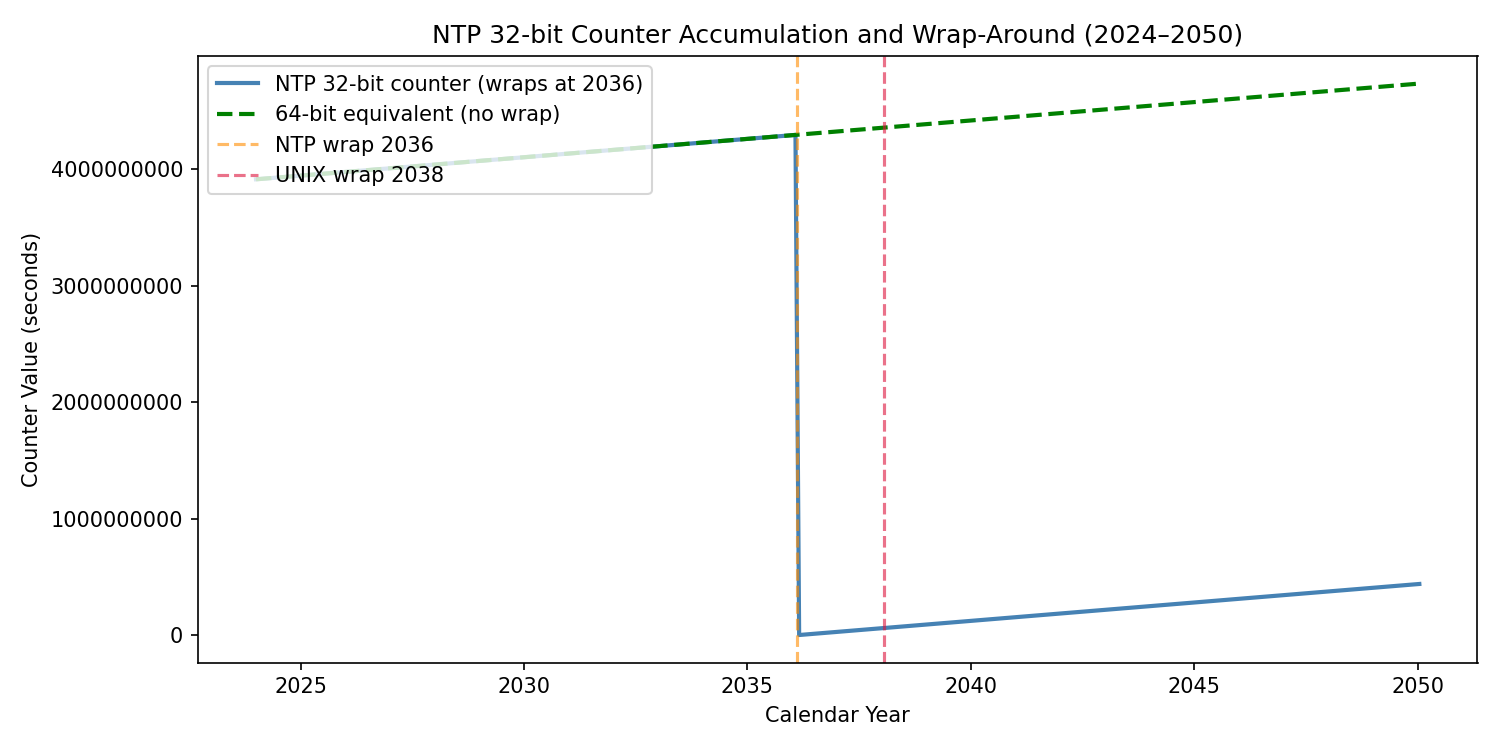
NTP 32-bit unsigned integer counter value accumulating from zero (Jan 1, 1900) as a function of calendar year.
-
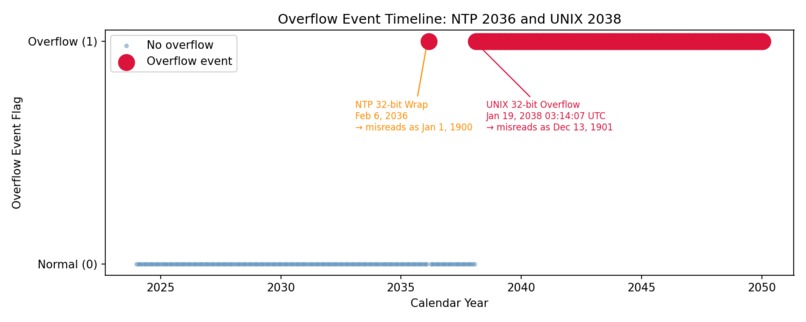
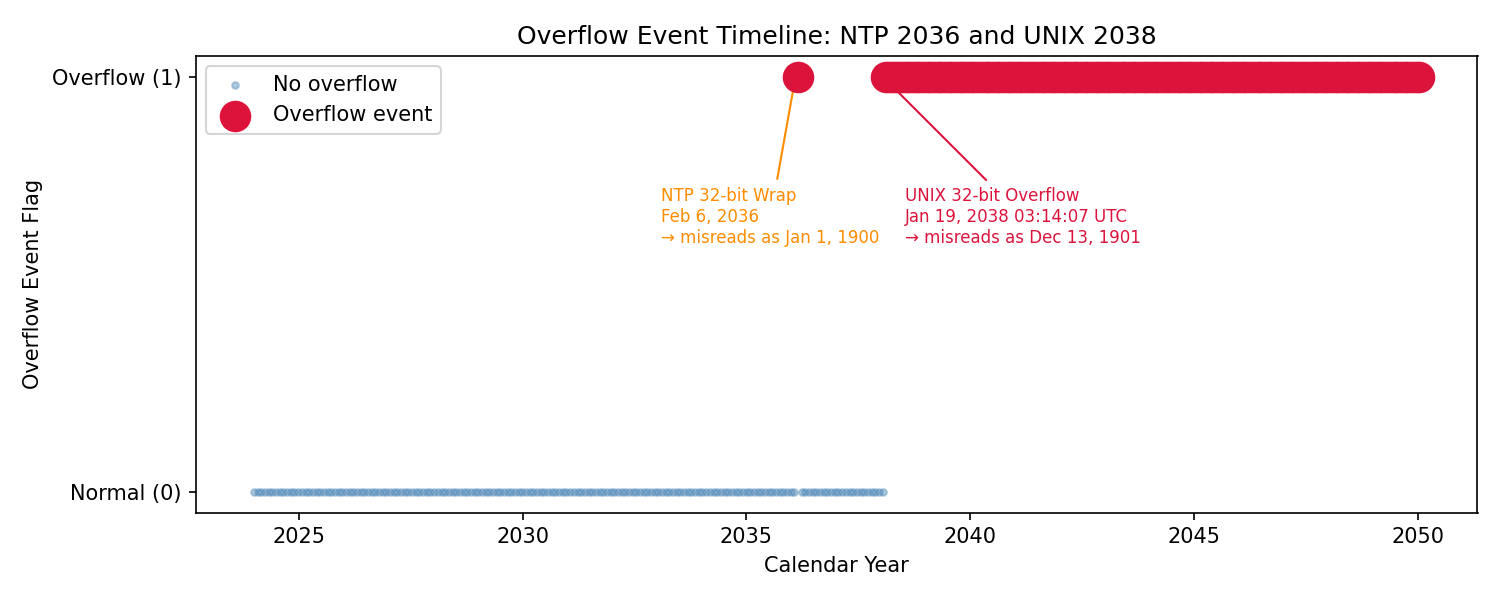
This event timeline scatter plot marks the two critical overflow events as vertical markers on a year axis.
-
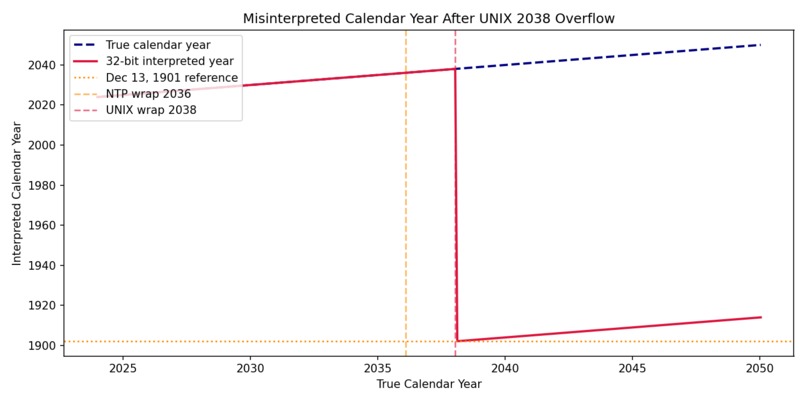
This figure translates the raw counter value into the calendar year that a naive 32-bit UNIX system would report.
-
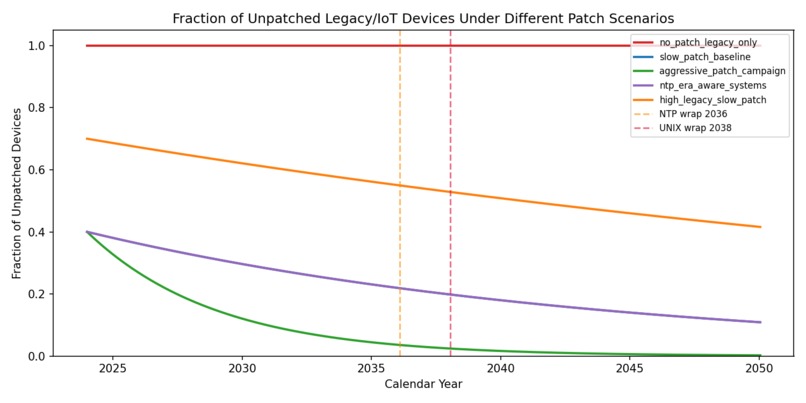
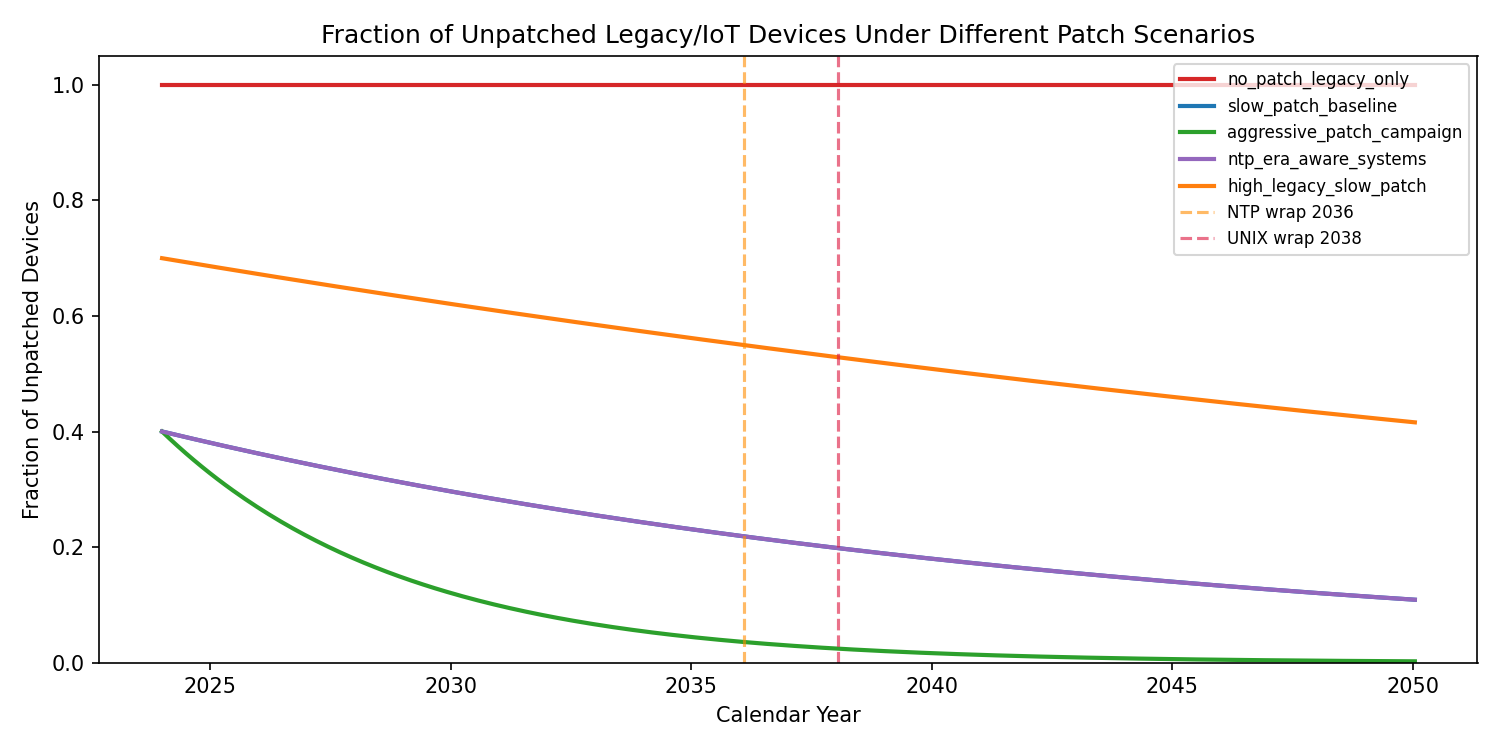
Fraction of deployed embedded and IoT devices still running 32-bit time representations as a function of calendar year.

Inspiration
This project was inspired by Vinton Cerf’s article “It’s about Time,” which highlights two predictable but serious computing risks: the NTP timestamp wraparound in 2036 and the UNIX 32-bit time overflow in 2038. These are not abstract problems. They can affect legacy systems, embedded devices, IoT devices, medical devices, sensors, and other systems that may not be regularly updated.
The broader inspiration is DBbun’s core idea: important technical knowledge should not remain trapped in static documents. A paper, article, diagram, report, or technical note can become something executable.
What it does
DBbun Time Risk Simulator converts a static technical article into a runnable simulation companion. The project models timestamp overflow risks under multiple remediation scenarios and generates structured outputs, including synthetic data, figures, and a written technical report.
The simulator helps users explore questions such as:
- What happens if legacy systems are not upgraded?
- How does risk change under different remediation strategies?
- Which systems remain vulnerable as 2036 and 2038 approach?
- How can static technical writing become executable decision-support software?
Progress made
The submission includes a working GitHub repository with a runnable Python simulator, structured JSON specification, generated CSV outputs, visualizations, documentation, and a video demo. The project is not only a concept; it is an executable prototype showing how DBbun can transform static technical content into reusable simulation software.
Why this could become a business
This project is a focused example of DBbun’s broader product direction. Many organizations have valuable technical knowledge trapped in static articles, reports, diagrams, PDFs, and internal documents. DBbun turns those materials into executable simulation companions: code, assumptions, synthetic data, figures, and scenario outputs.
The Time Risk Simulator demonstrates this workflow on timestamp-overflow risks, but the same approach can support engineering analysis, education, technical due diligence, cybersecurity planning, policy modeling, patent communication, business planning, and decision support.
How I built it
The project was generated through the DBbun document-to-simulator pipeline. Starting from the article, DBbun produced a structured model specification, Python simulator code, scenario logic, CSV outputs, visualizations, and documentation.
The repository includes:
- A runnable Python simulator
- A JSON specification file
- Generated scenario outputs
- Figures and CSV files
- Documentation explaining the model and assumptions
Challenges
The main challenge was turning a short conceptual article into a useful executable model without overcomplicating it. The simulator needed to preserve the article’s core idea while adding enough structure to make the risks testable, visual, and reusable.
What I learned
This project shows that AI can do more than summarize technical writing. It can help convert technical ideas into executable simulations that make risks easier to understand, test, and communicate.
What’s next
The same approach can be extended beyond timestamp overflow. DBbun can generate executable simulation companions from research papers, engineering documents, diagrams, policy documents, patents, business plans, and other static materials.

Log in or sign up for Devpost to join the conversation.