-
-
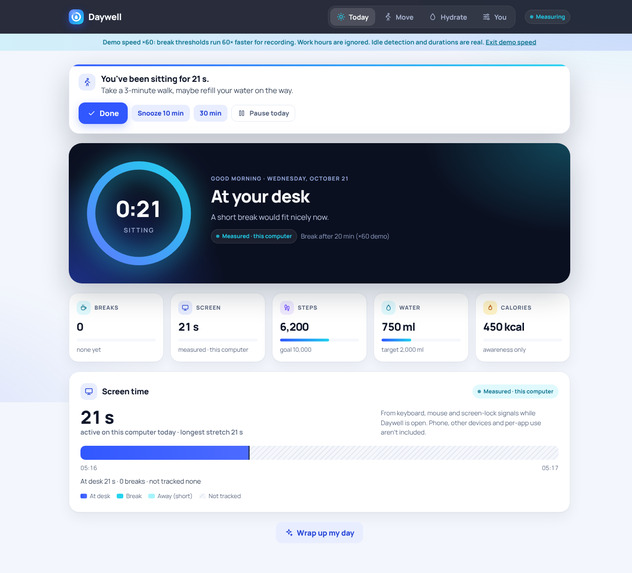
Desktop Mode
-
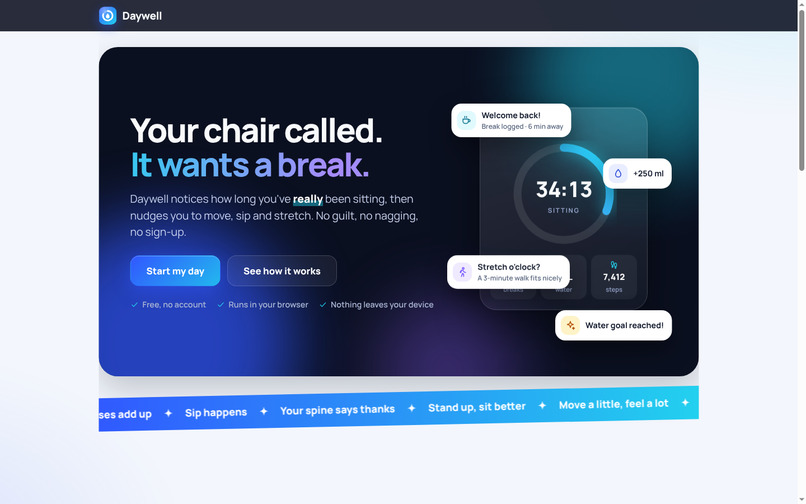
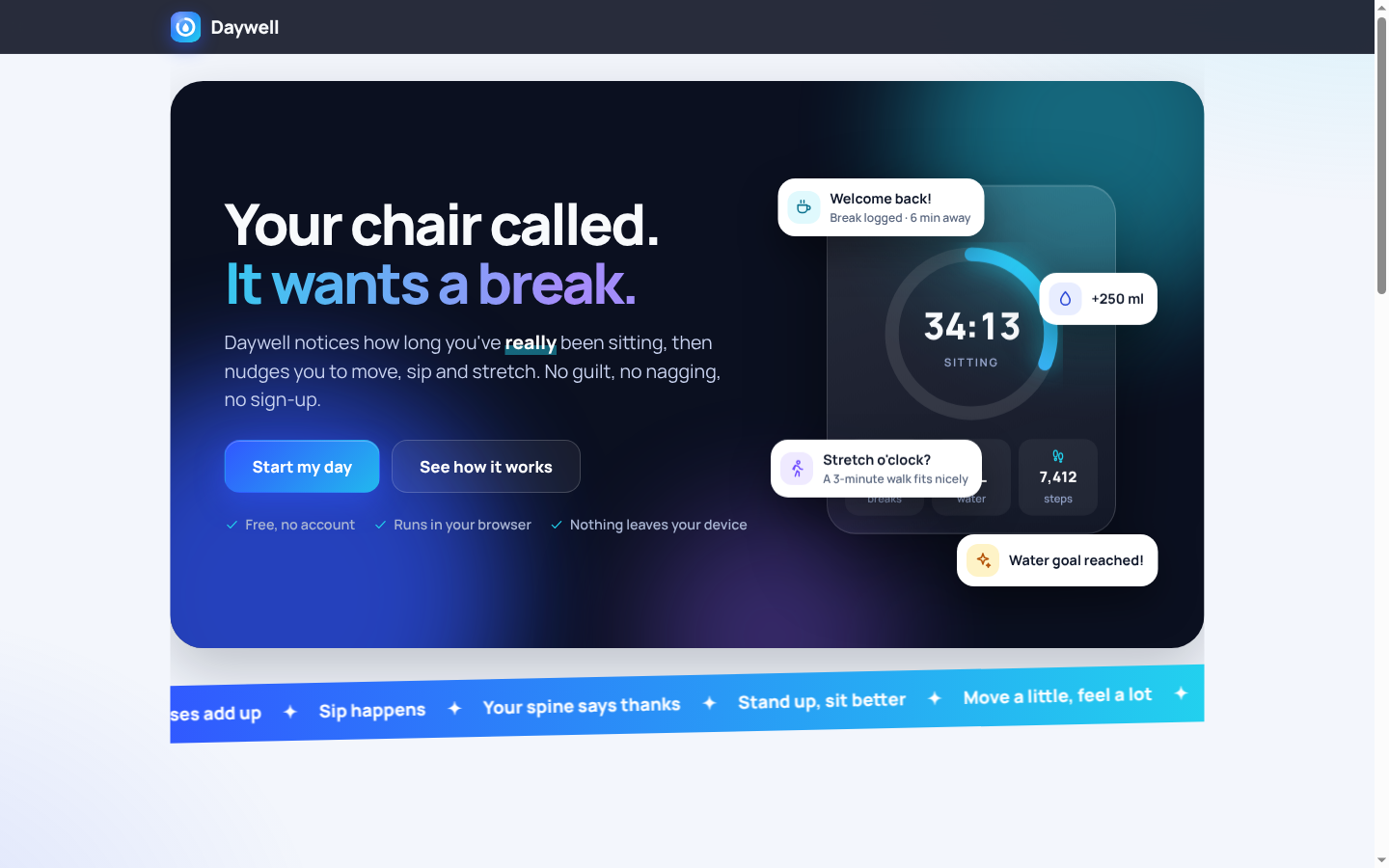
Landing Page
Inspiration
I spend long hours at my desk writing, building and running Web3 communities in Nigeria.
I'd look up and realise three hours had passed without standing, stretching or drinking water.
Most break apps nag on a fixed timer and ignore whether you were actually at your desk, so I wanted one that's honest about real desk time.
What it does
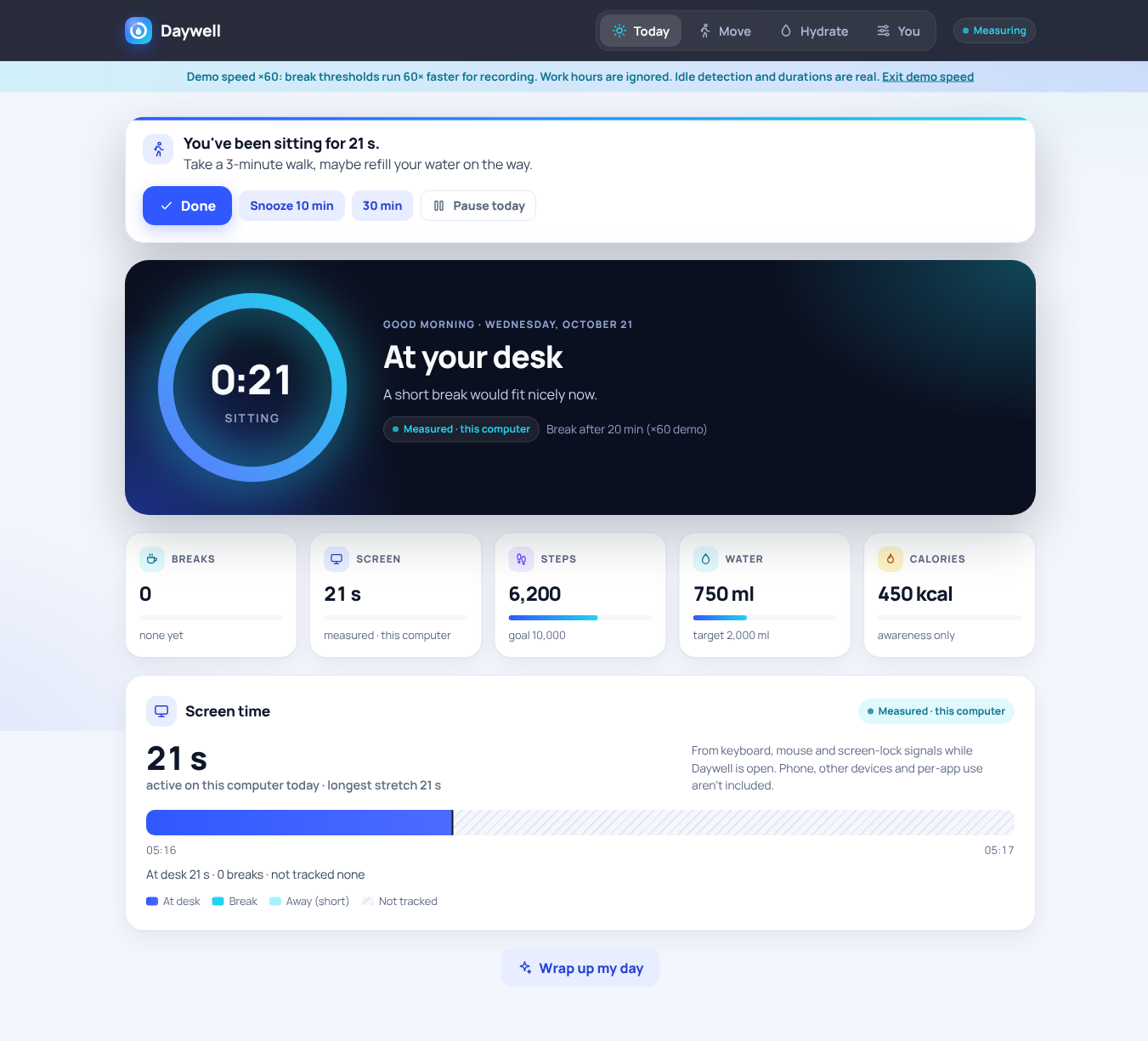
Daywell measures how long you've actually been at your computer, credits breaks automatically when you step away, and nudges you to move, hydrate and stretch.
It has four sections: Today, Move, Hydrate and You.
There's no sign-up, no guilt-tripping, and nothing leaves your device.
How I built it
I followed the Devpost Learn Skill Pack's flipped-interaction approach. Instead of telling the AI what to code, I let it interview me about the problem, my habits and my privacy needs.
From that we wrote planning docs (a product brief, a feature list and a build plan) before any code.
I then built it with Devin in TypeScript and CSS, step by step against the plan, testing each step.
It's an installable web app (PWA) with a strict Content Security Policy, deployed on Vercel.
Challenges
Telling real desk time apart from the app just being open in a background tab
Keeping every number honest while still being encouraging rather than shaming
Keeping all data on-device while still making it installable and working offline
What I learned
Planning before prompting changes everything. Being interviewed by the AI first made the build faster and cleaner, and it showed me I can ship a polished, privacy-first app on my own.
What's next
Gentle desktop notifications, custom break routines, and weekly trends.
Built With
- devin
- javascript
- pwa
- typescript
- vercel

Log in or sign up for Devpost to join the conversation.