Inspiration
Our days are filled with assignments, deadlines, meetings, and personal commitments. Traditional calendars show us what is scheduled, but they rarely help us decide what to do when plans change or new tasks appear.
We wanted to build a more proactive experience: a daily planning assistant that understands natural language, considers existing commitments, identifies scheduling conflicts, and helps users make informed decisions.
That idea inspired DayWeave.
What it does
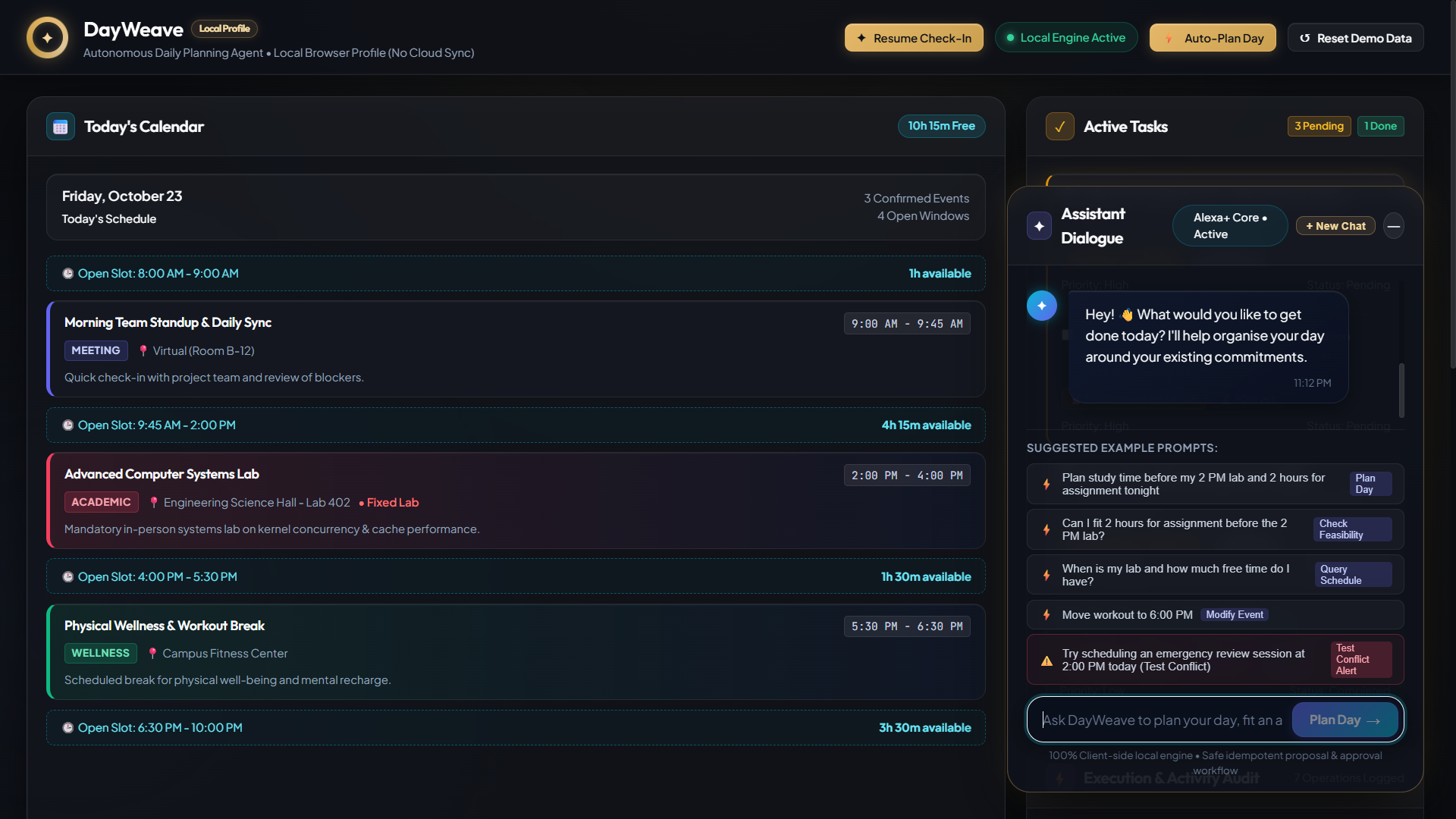
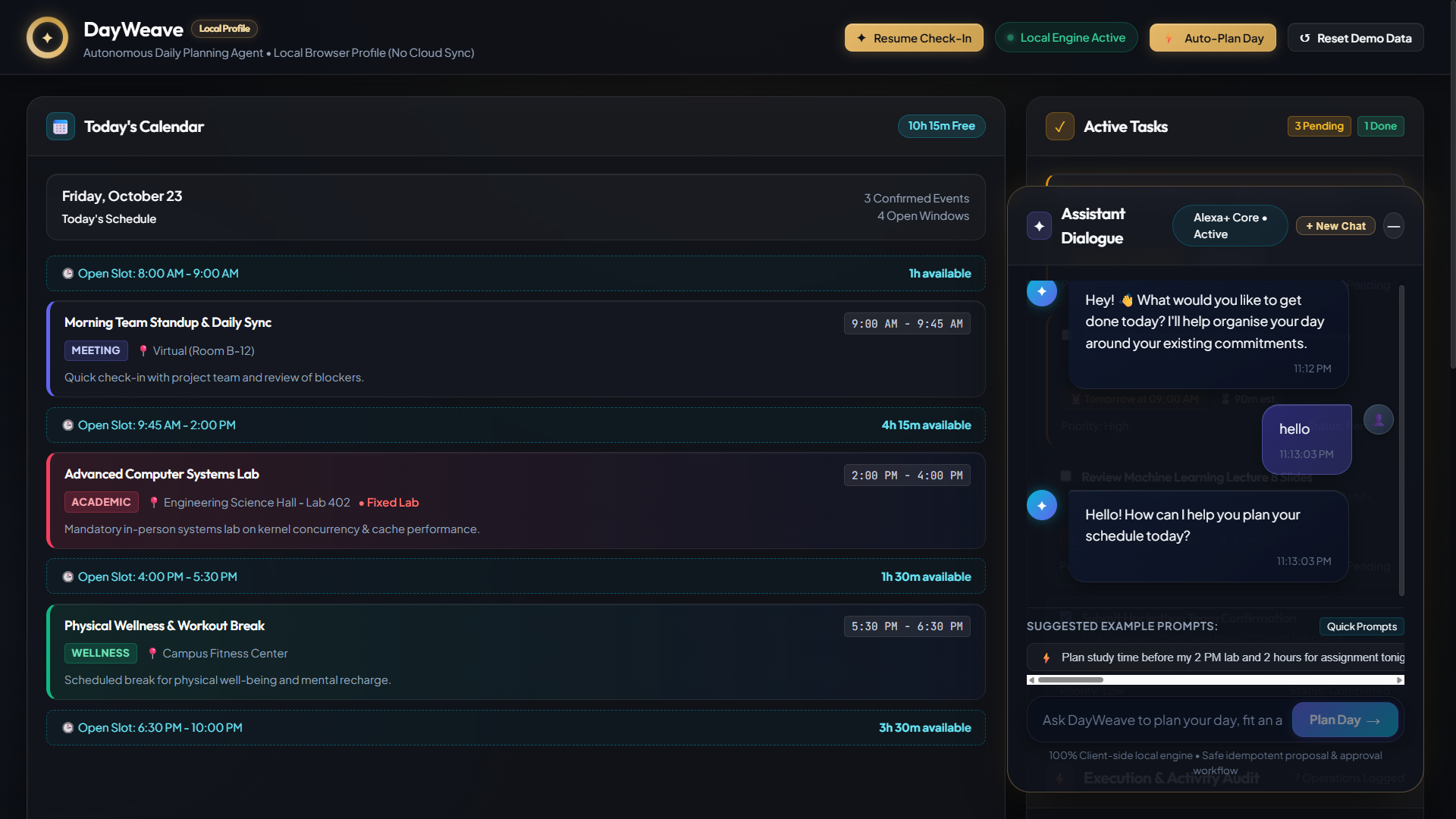
DayWeave is a conversational daily-planning agent that helps users organize their day through natural language.
Users can describe assignments, deadlines, appointments, and scheduling preferences in everyday language. DayWeave interprets their requests, checks the existing schedule, evaluates available time, and proposes suitable focus blocks.
Its key capabilities include:
- Conversational planning: Ask questions about tasks, schedules, deadlines, and available time.
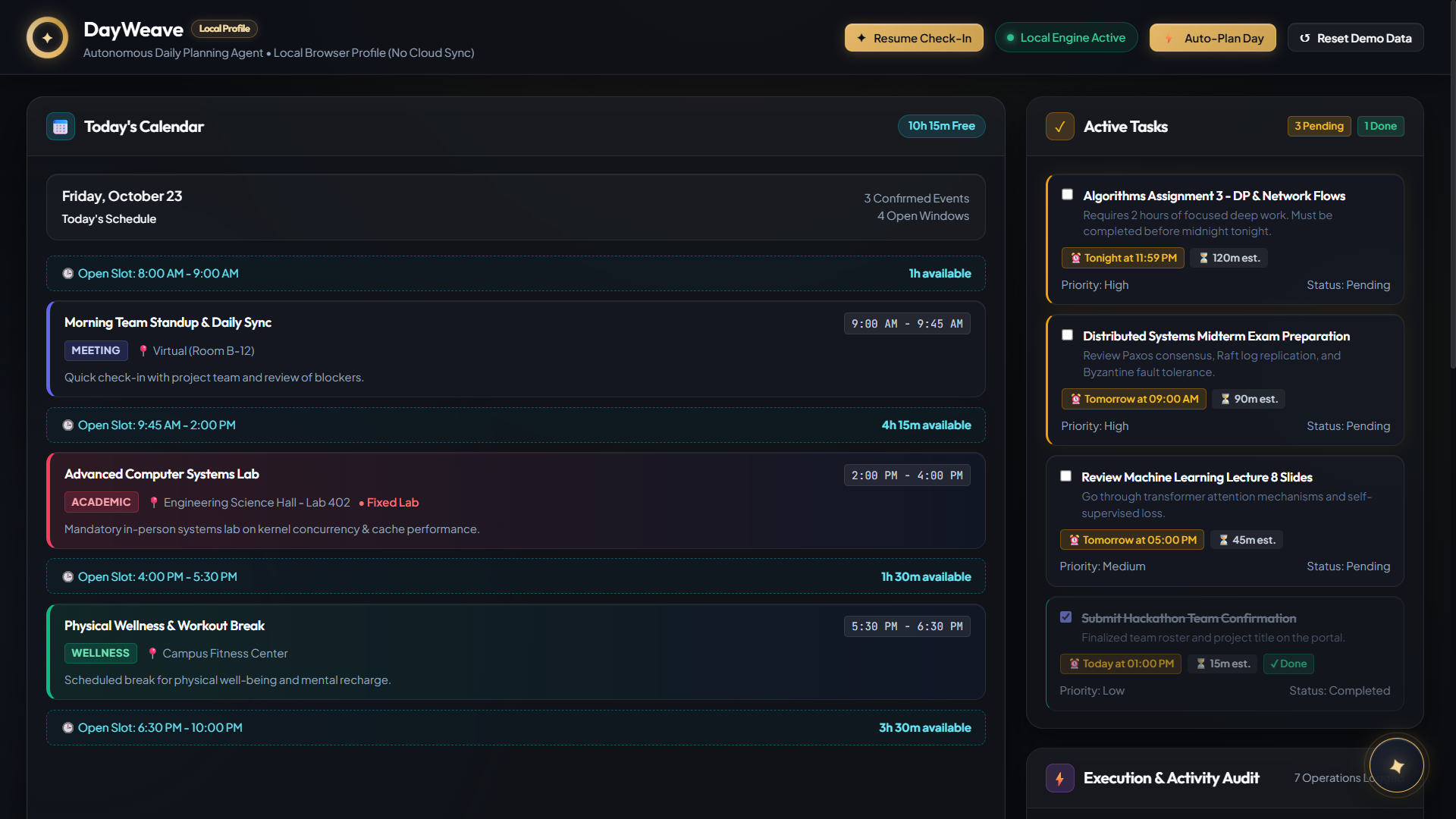
- Conflict-aware scheduling: Identify overlapping commitments and suggest alternative time slots.
- Approval-based changes: Review proposed schedule changes before applying them.
- Task tracking: Distinguish pending, scheduled, and completed work.
- Context-aware interactions: Resolve references to previously mentioned tasks and ask clarifying questions when a request is ambiguous.
- Local execution: Run the planning engine in the browser without requiring a cloud AI API for its core scheduling workflow.
DayWeave aims to make planning feel less like managing a spreadsheet and more like having a helpful personal assistant.
How we built it
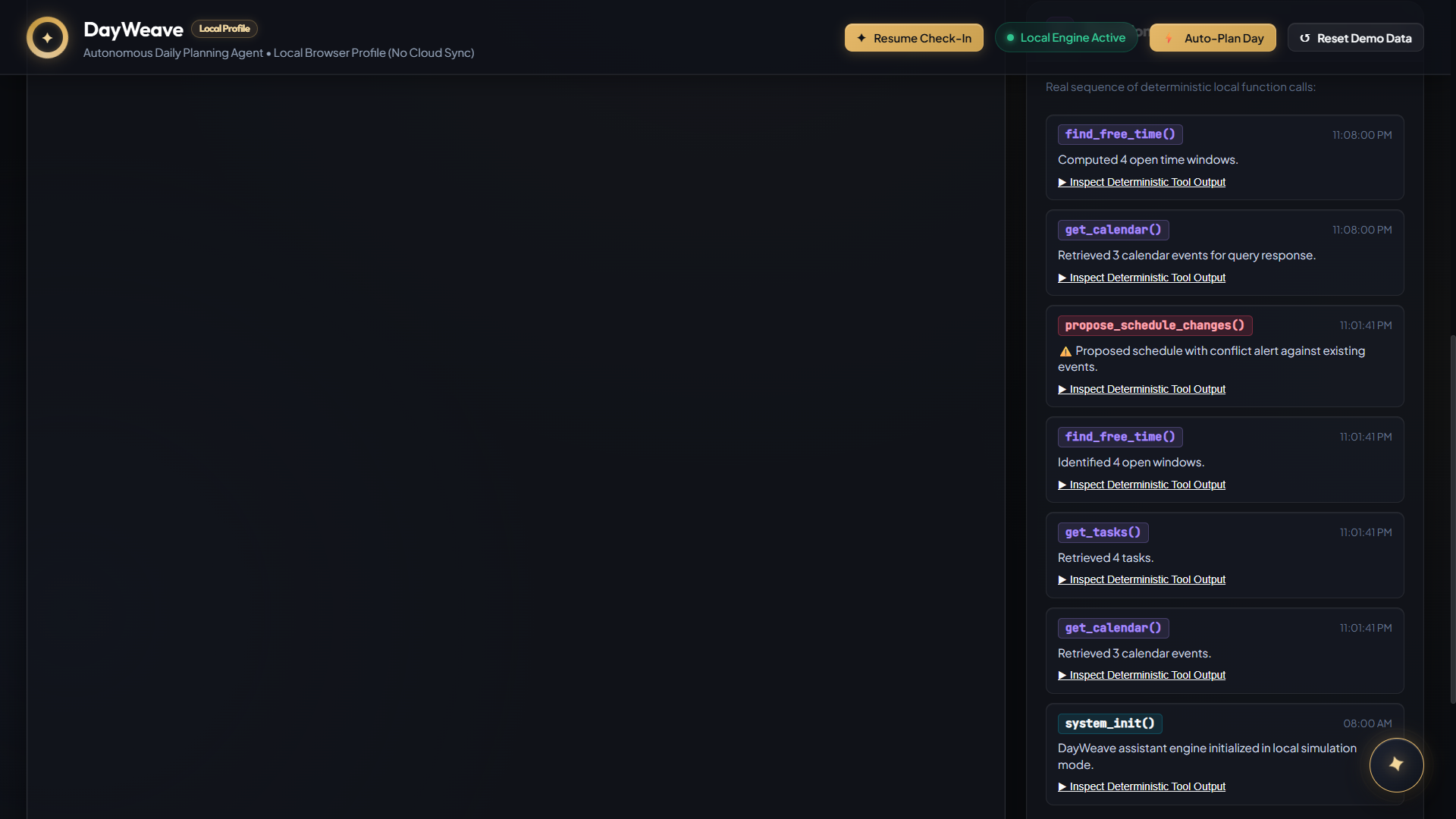
We built DayWeave as a React application using Vite and JavaScript. Its scheduling engine evaluates calendar events, available time windows, task durations, and deadlines. A conversational intelligence layer interprets user requests and coordinates task retrieval, conflict checking, schedule proposals, and approval workflows.
We also developed automated tests for natural-language intent detection, task resolution, scheduling behavior, and safe proposal handling. The application is deployed as a web experience so users can explore its simulated assistant workflow.
DayWeave is a local browser-based simulation inspired by conversational personal assistants. It does not claim to provide a live Alexa+ integration or automatic synchronization with external calendars.
Challenges we faced
One of our biggest challenges was making natural-language requests map reliably to real scheduling actions. Users may use abbreviations, refer to tasks indirectly, or change their minds during a conversation. We improved intent recognition and task-reference resolution so the assistant can clarify ambiguity instead of modifying the wrong task.
Another challenge was handling scheduling conflicts safely. A proposed time should not silently overwrite an existing commitment. We designed an approval-oriented workflow and added regression tests to protect against duplicate events and unintended changes.
We also worked to make the interface feel like an accessible conversational assistant rather than a conventional calendar dashboard.
What we learned
We learned that a useful planning agent needs more than a chatbot interface. It needs reliable state management, context across conversations, clear approval boundaries, conflict-aware scheduling, and predictable behavior.
DayWeave represents our exploration of how conversational interfaces and deterministic scheduling logic can work together to make everyday planning more understandable and manageable.
What's next
We want to improve persistent personal preferences, make scheduling proposals even more transparent, and explore how DayWeave could connect to real calendar and voice-assistant ecosystems in the future.## Inspiration
What it does
How we built it
Challenges we ran into
Accomplishments that we're proud of
What we learned
What's next for DayWeave
Built With
- css
- html
- javascript
- react
- vercel
- vite

Log in or sign up for Devpost to join the conversation.