-
-
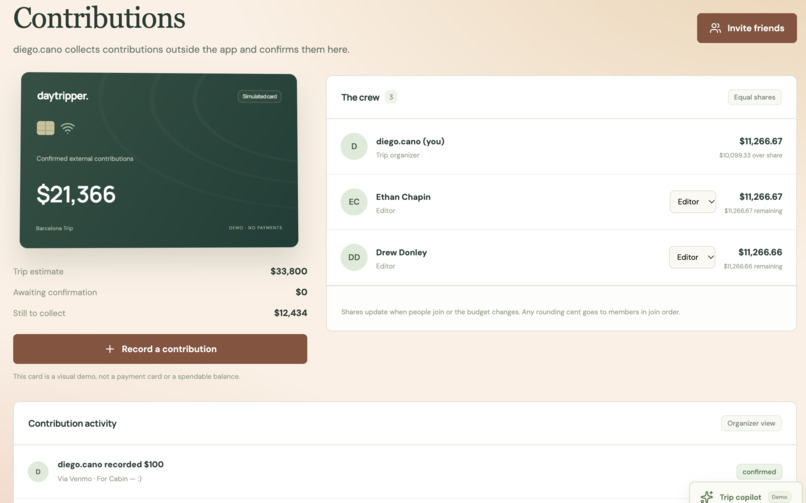
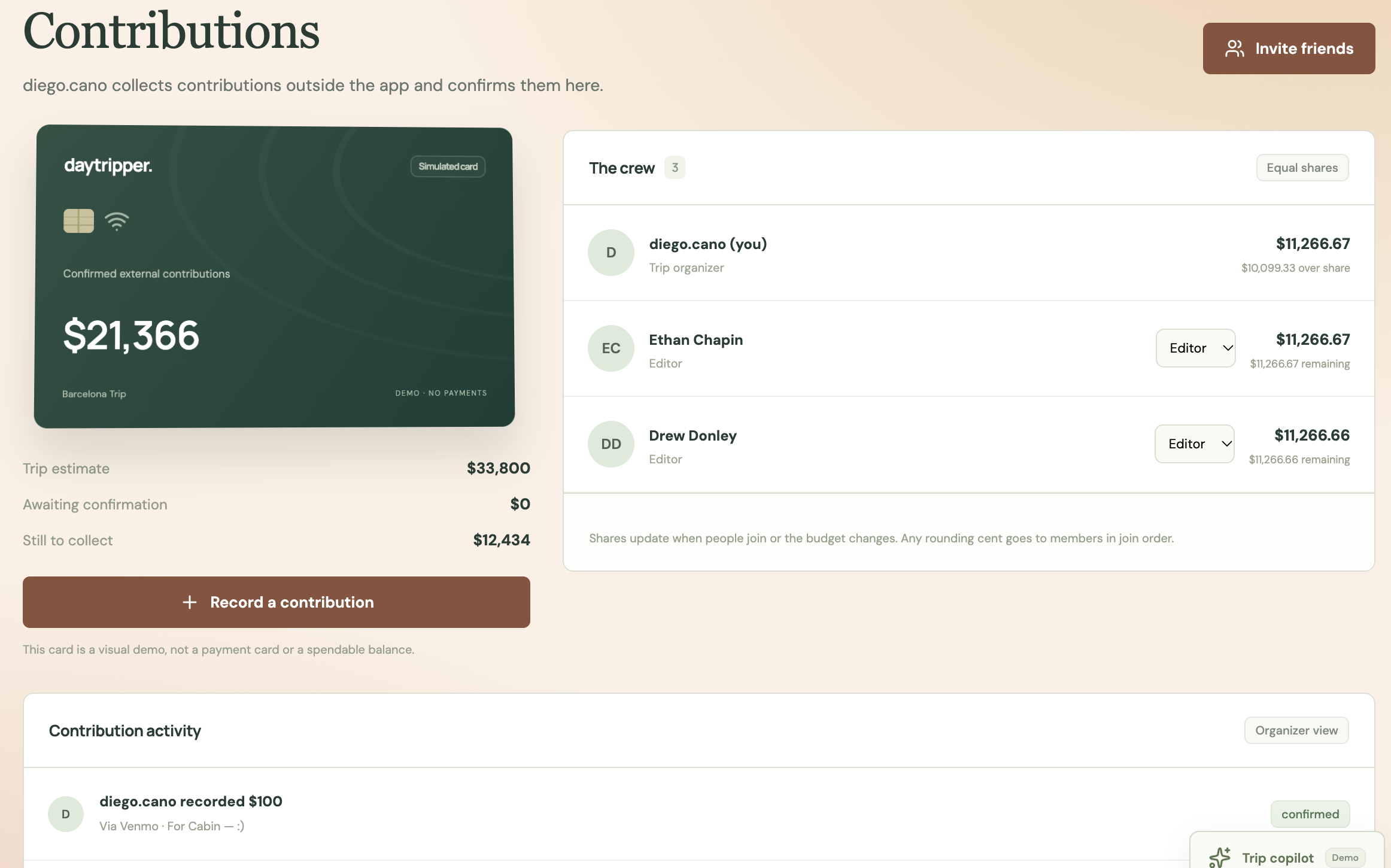
Contributions Screen
-
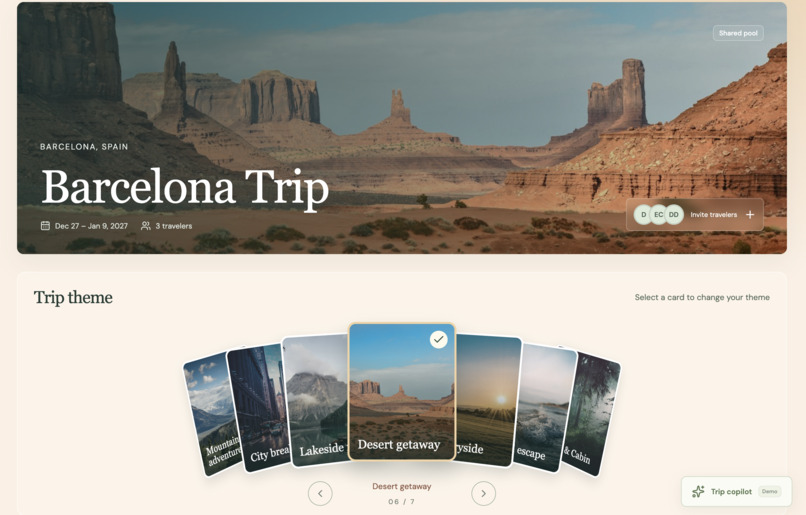
Trip Overview
-
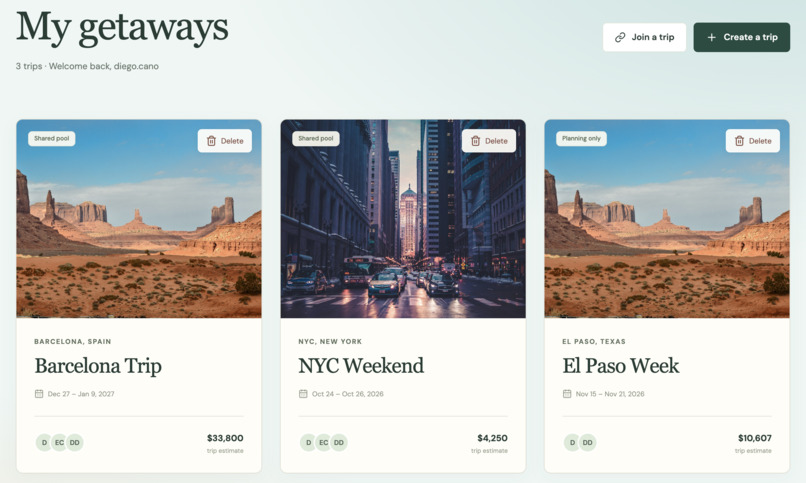
Trip Selector
Inspiration
With everything we’ve enjoyed doing with friends, be it music, exploring somewhere new, or spending a weekend together, the part we look forward to is being there. Getting everyone there is another story. Between finding places to stay, agreeing on costs, and keeping track of who’s paid for what, a simple trip can turn into a collection of messages and links that someone has to sort through.
When we first came up with Daytripper, we questioned whether expense splitters already did enough. What interested us was bringing the planning and spending together, so everyone could understand what they were contributing toward before the trip even started. We wanted to make the transition from “we should go somewhere” to actually going as seamless as possible.
What it does
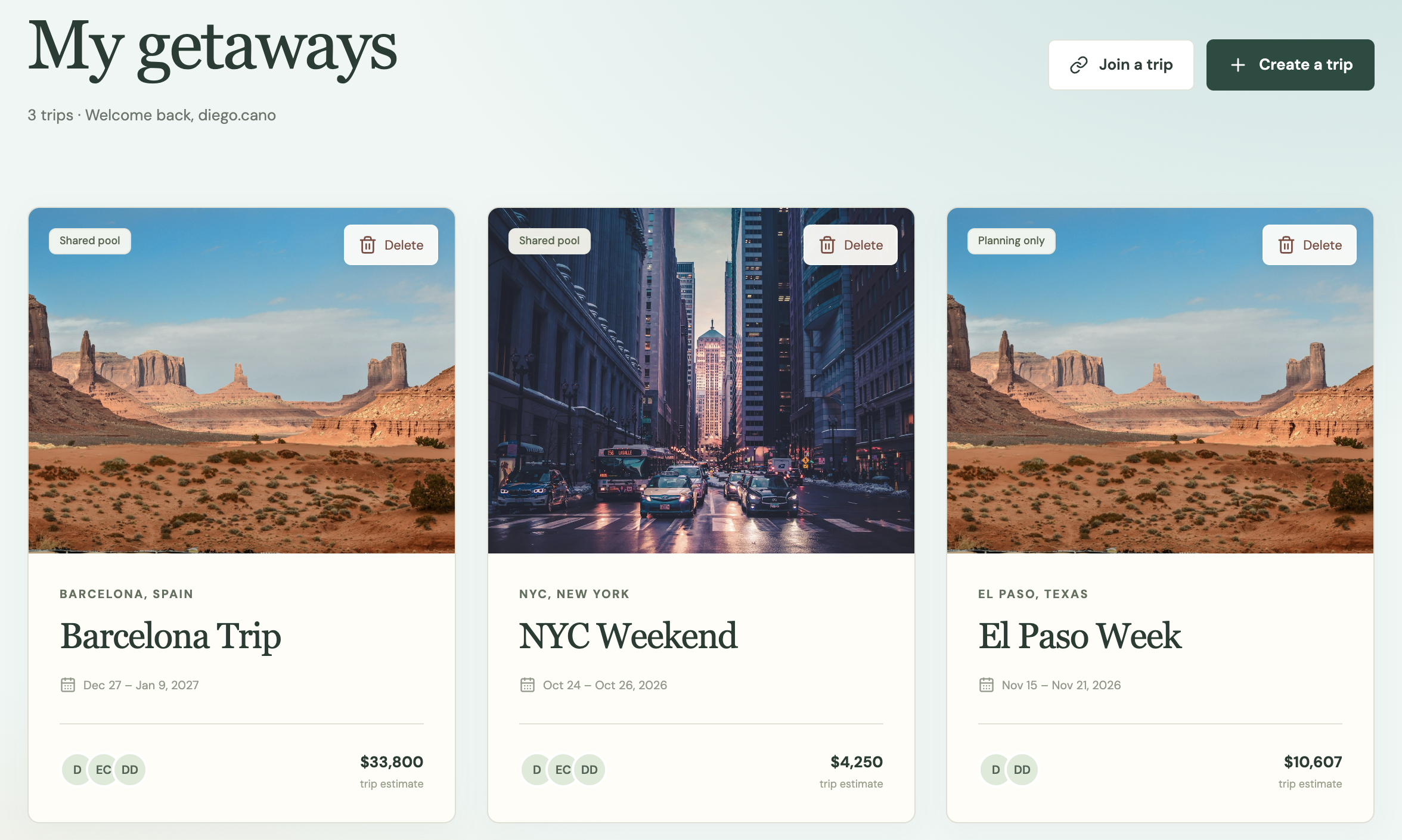
Daytripper gives groups one shared space to plan a trip, organize their itinerary, and understand their expenses. Someone creates a getaway and invites friends through a link and code, with permissions to either view or edit the plan.
Groups can choose between tracking contributions to one organizer or planning together while handling their own payments. Costs split equally as people join, and contributions record both how someone paid and what the money is for. The organizer confirms receipt; payments happen outside the app.
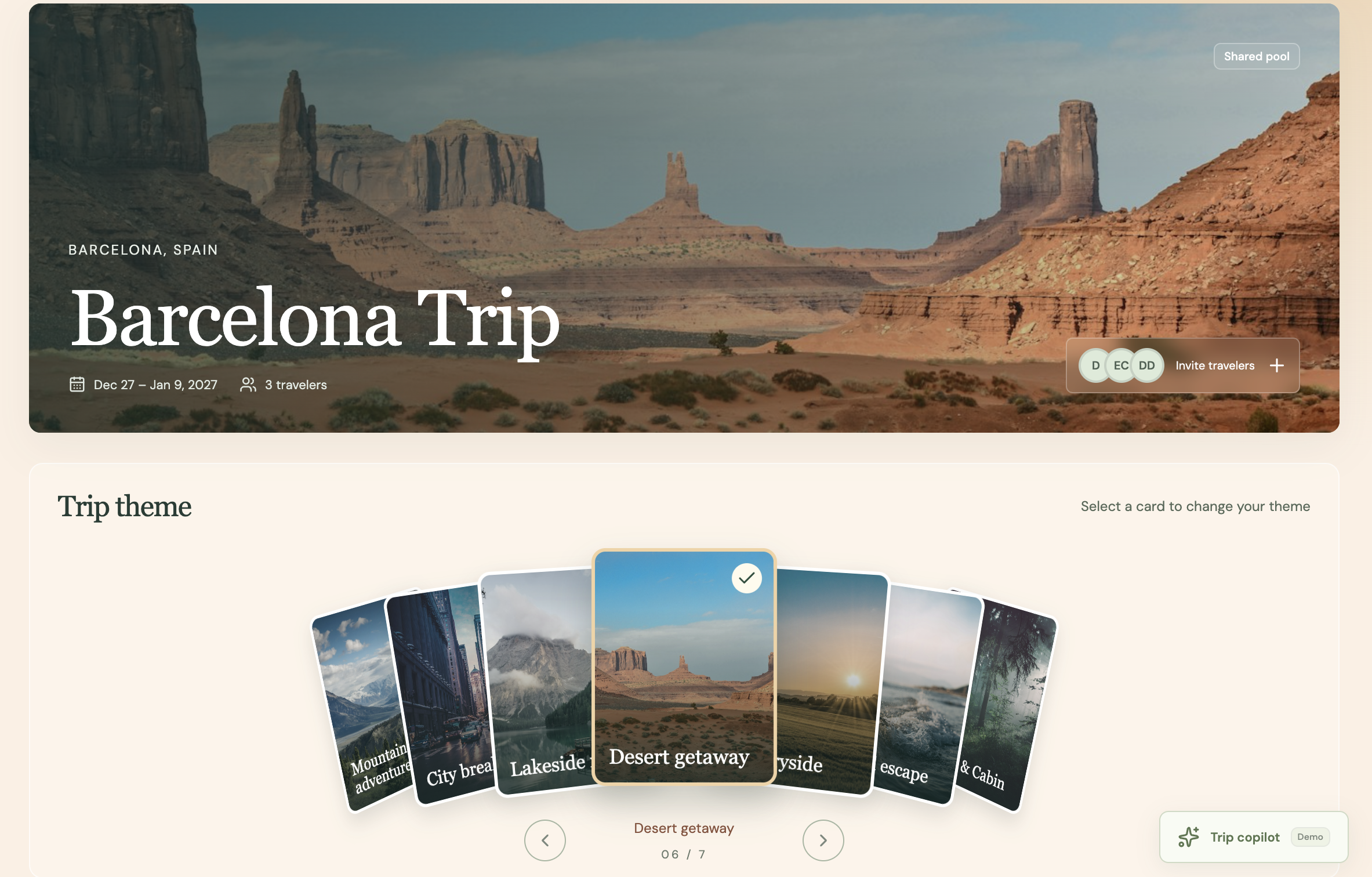
Travelers can also turn booking links into editable drafts, explore nearby places, organize saved locations on an interactive map, and import or export calendar files. Selectable vacation themes change the trip’s imagery and colors, giving each getaway a little of its own personality.
How we built it
We built the interface with React and Vite, with a JavaScript API running through Node and Express. The hosted version uses a Cloudflare Worker and D1 database to keep accounts and shared trip data available across devices.
Leaflet powers the itinerary map, while public geographic services support address searches and nearby recommendations. We added manual ICS calendar import and export so people can bring plans into the calendars they already use.
We used AI-assisted development throughout the process, working iteratively through the features, design, and testing. Our GitHub Pages entry page links to the full hosted application.
Challenges we ran into
One challenge was keeping different kinds of confirmation clear. Confirming a booking, recording a contribution, and confirming that money was received mean different things, even though they all belong to the same trip.
Outside integrations also required flexibility. Booking websites sometimes restrict preview access, and geographic services aren’t always available. We built editable drafts and manual fallbacks so those interruptions wouldn’t prevent someone from making their plan.
We also worked through shared permissions, keeping updates consistent between accounts, and making the interface feel comfortable on a phone.
Accomplishments that we're proud of
We’re proud of turning a broad idea into a working application that connects planning, shared costs, and an itinerary. Our 27 automated tests cover important flows like account permissions, equal splitting, organizer confirmation, and calendar handling.
We’re also happy with how the app feels. The changing vacation themes, animated map, and interactive cards helped us create something we’d enjoy opening with friends.
What we learned
We learned how much thought goes into making a shared experience feel simple. A total needs to stay accurate when someone joins. An invite needs to give the right access. A failed link preview needs to leave someone with a useful next step.
We also learned to be precise about what our prototype can do. Recommendations aren’t verified availability, and a recorded contribution isn’t a processed payment. Making those distinctions helped us build a clearer experience.
What's next for Daytripper
We want to connect a real AI provider to the assistant so travelers can add and edit plans through natural language. The current assistant supports a limited set of demo commands.
We’d also like to improve recommendations with reliable pricing, opening hours, and availability, expand booking-link support, and continue strengthening account security and storage as the app grows.
More than anything, we want to put Daytripper in the hands of people planning actual trips and learn where it helps them—and where they still find themselves going back to the group chat.


Log in or sign up for Devpost to join the conversation.