-
-
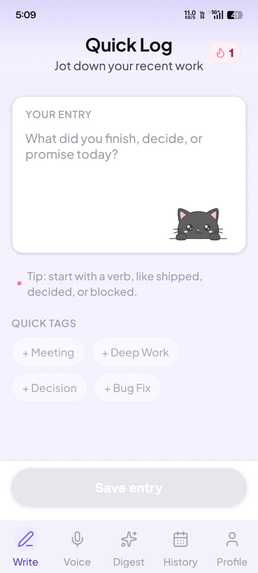
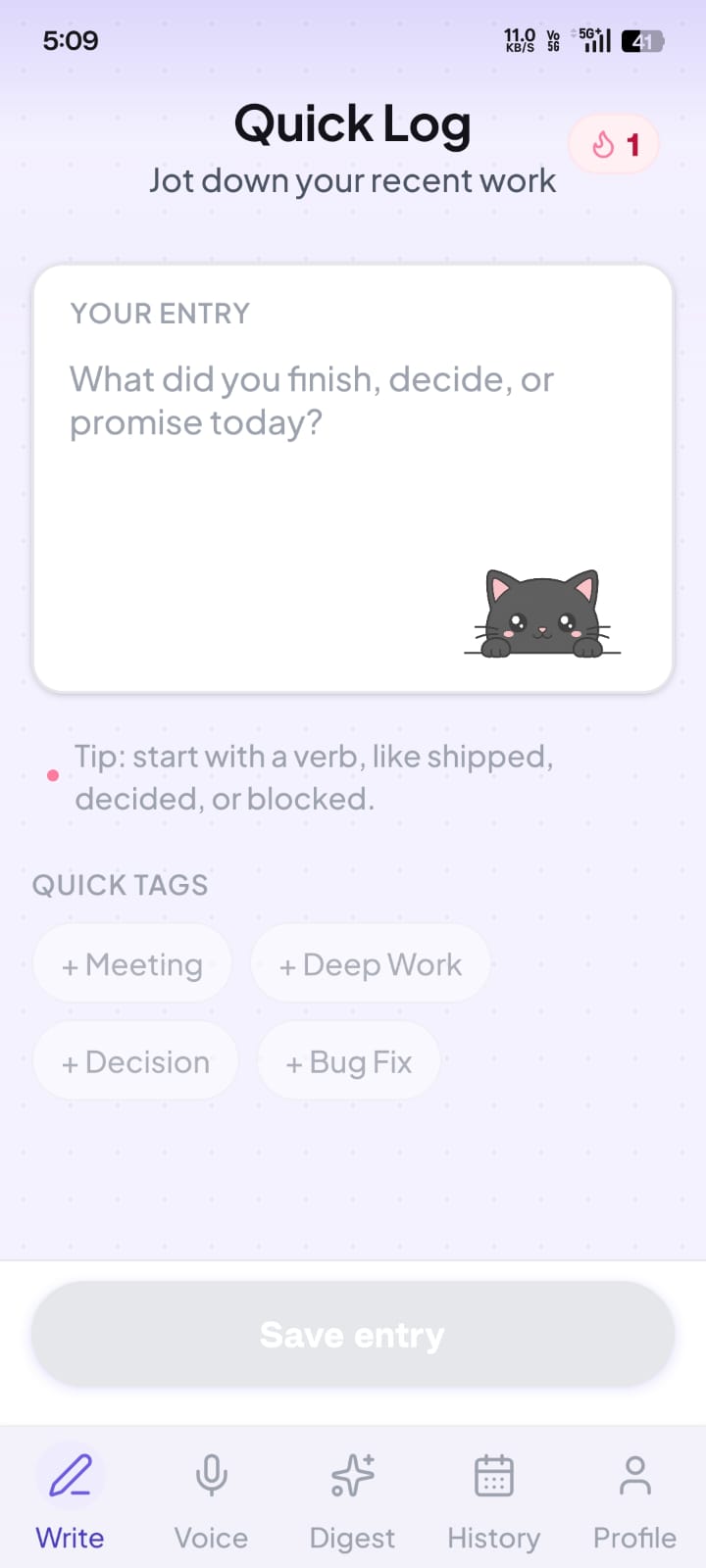
Quick Log
-
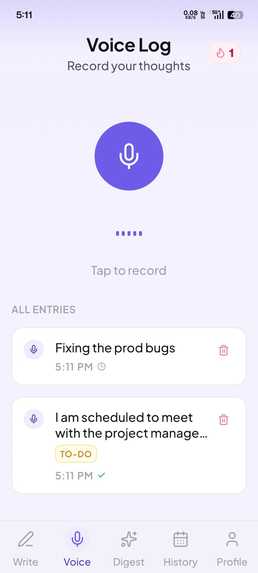
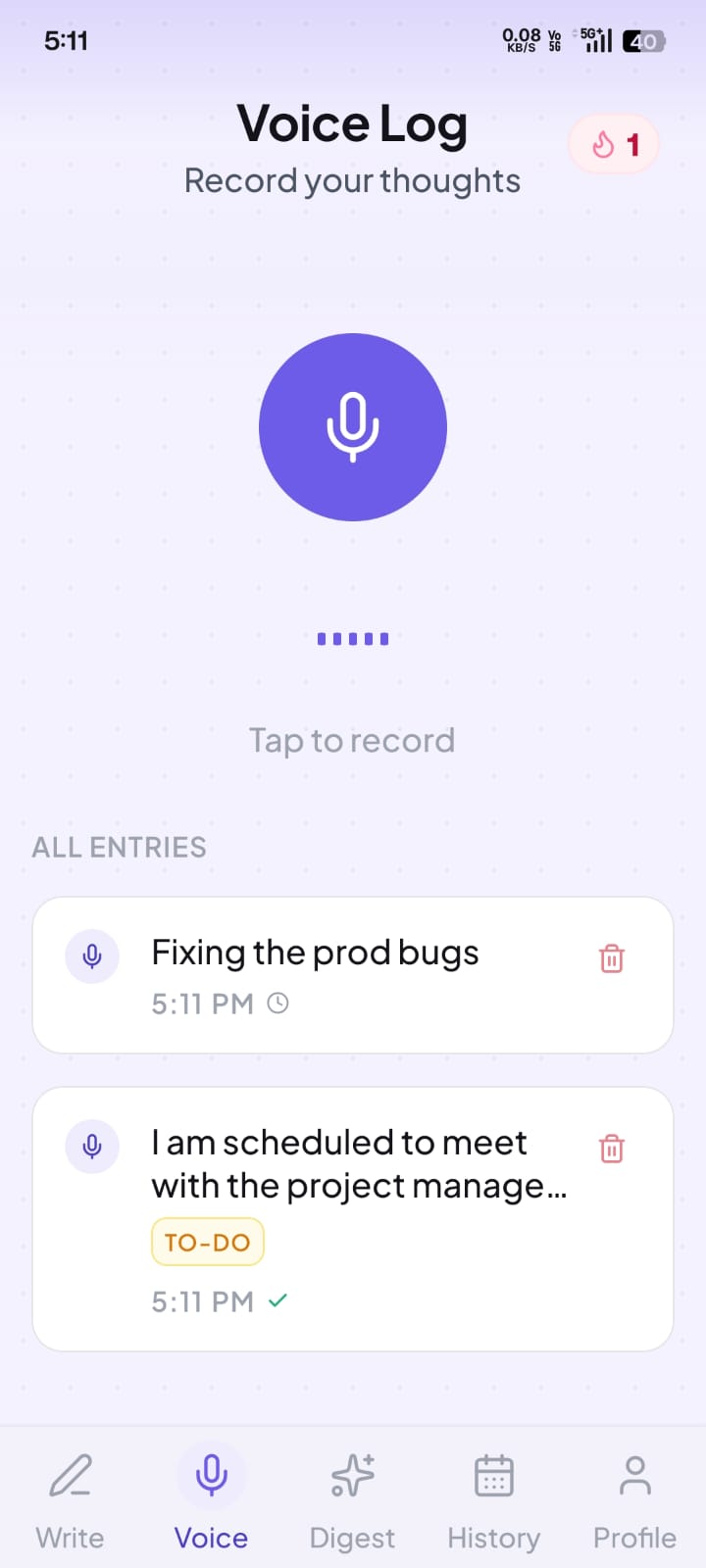
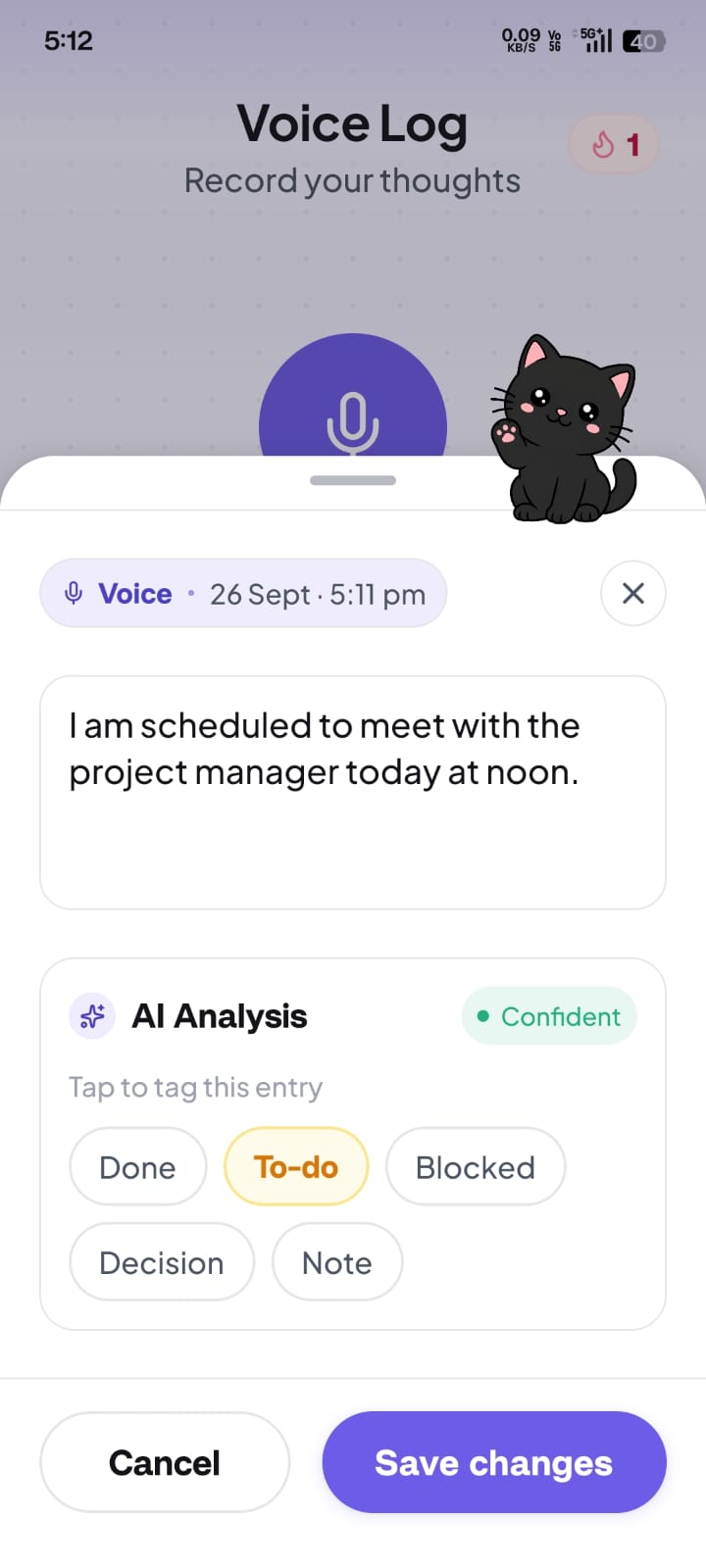
Voice Log
-
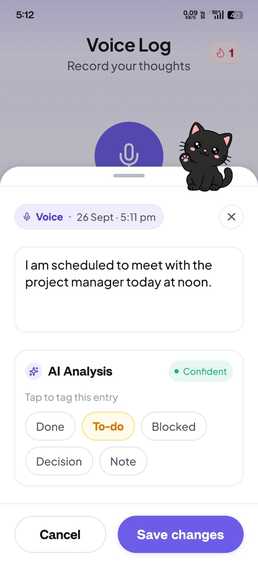
Entry Bottom Sheet Modal
-
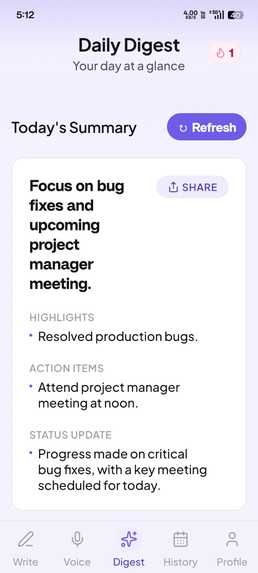
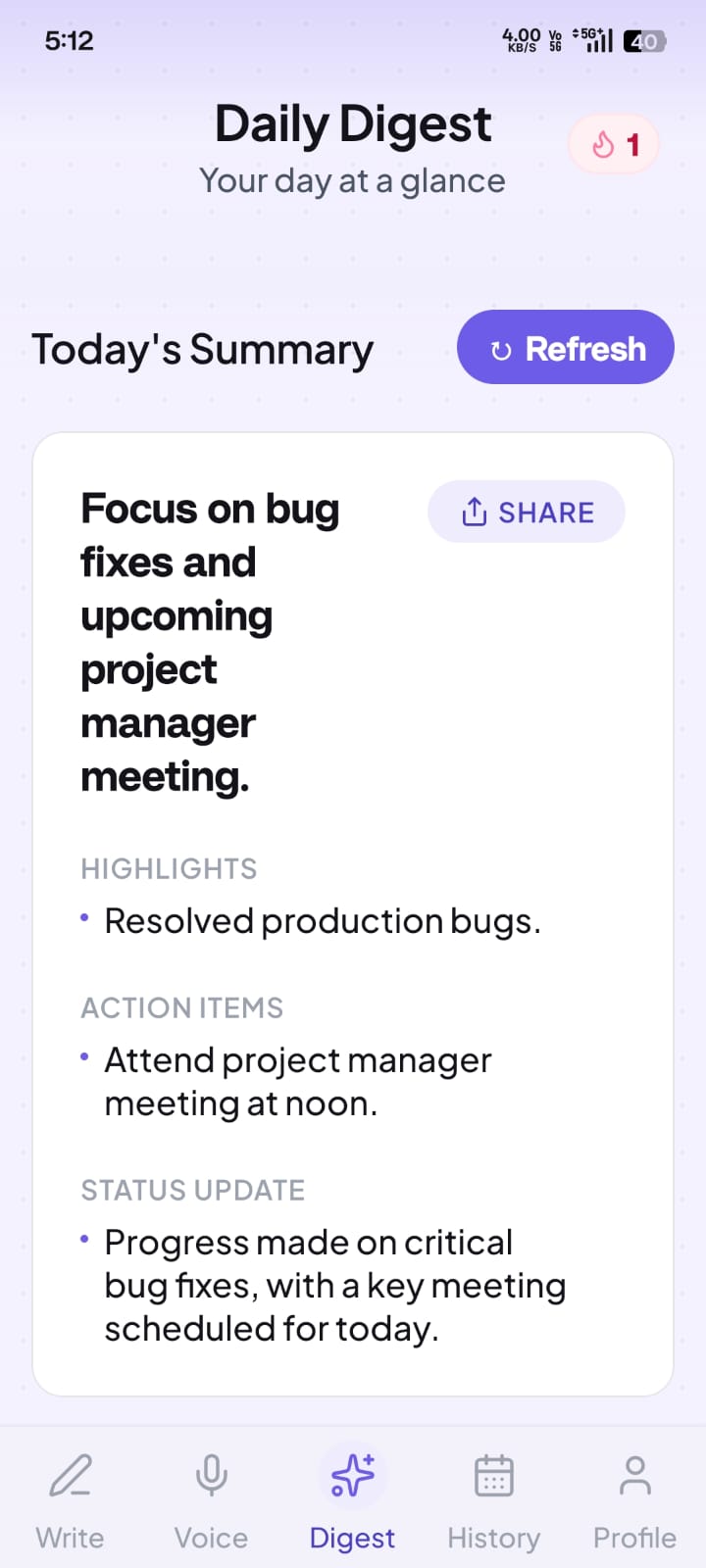
Daily Digest
-
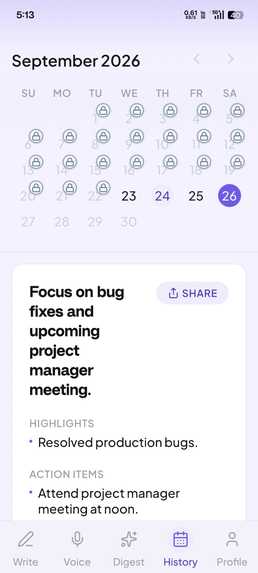
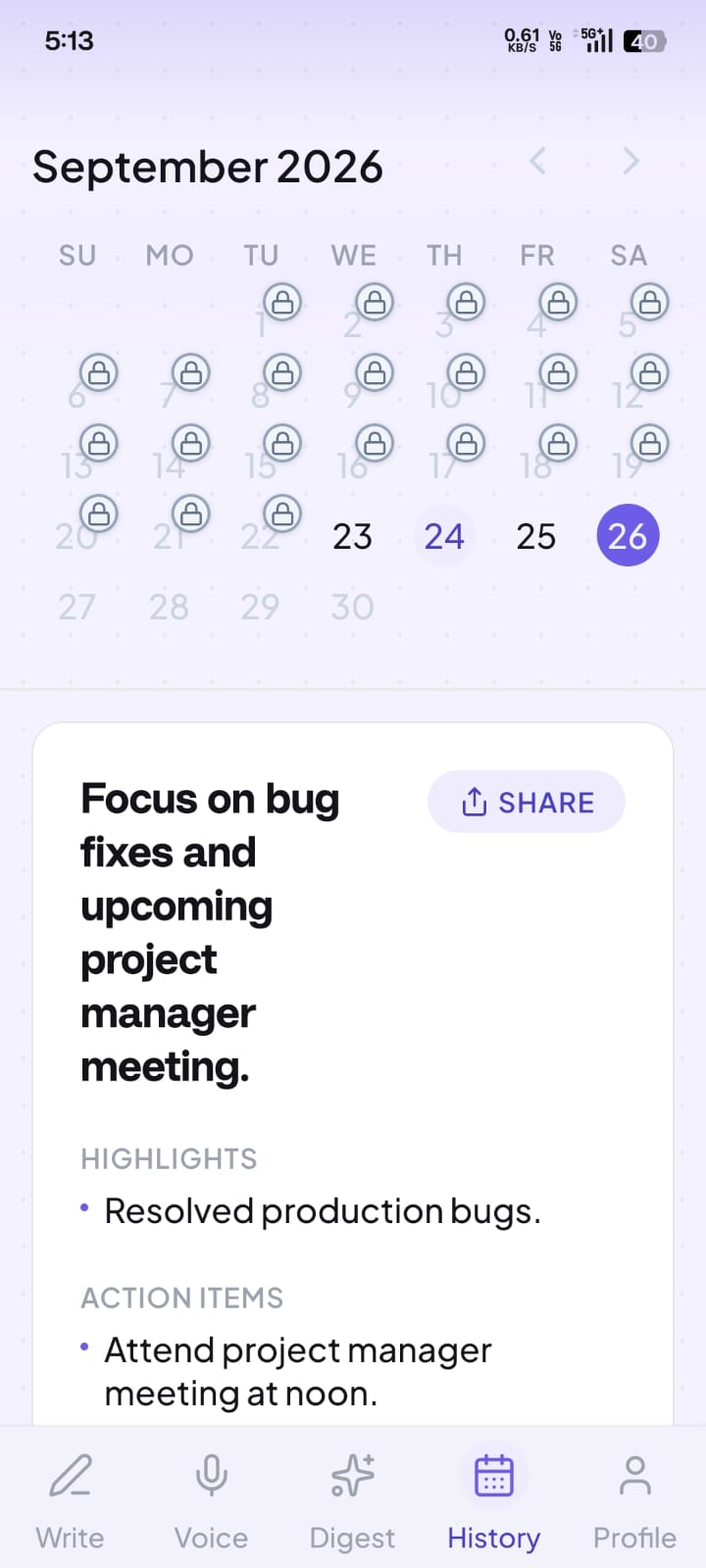
Free History Page
-
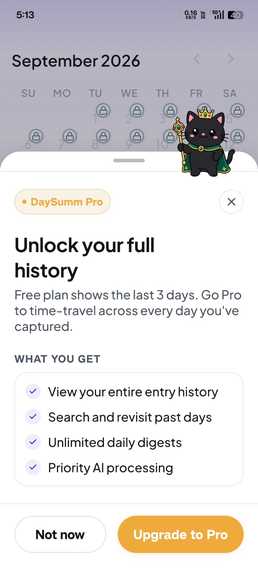
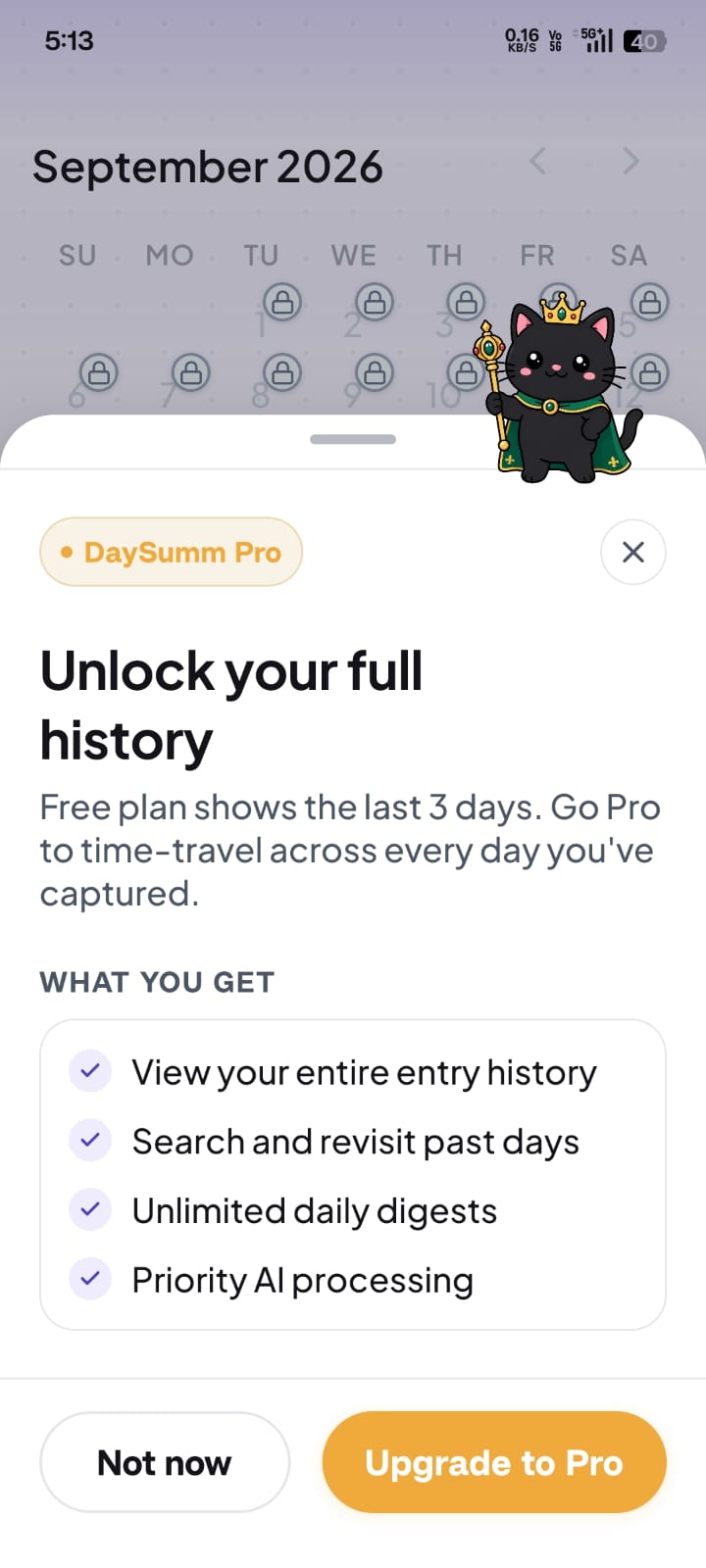
Upgrade Bottom Sheet Modal
-
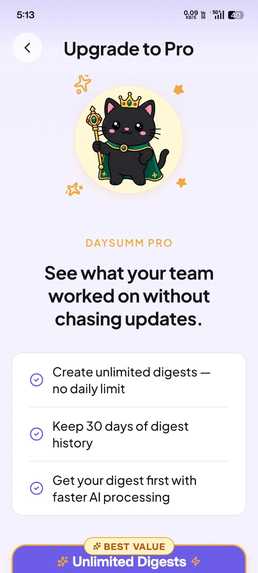
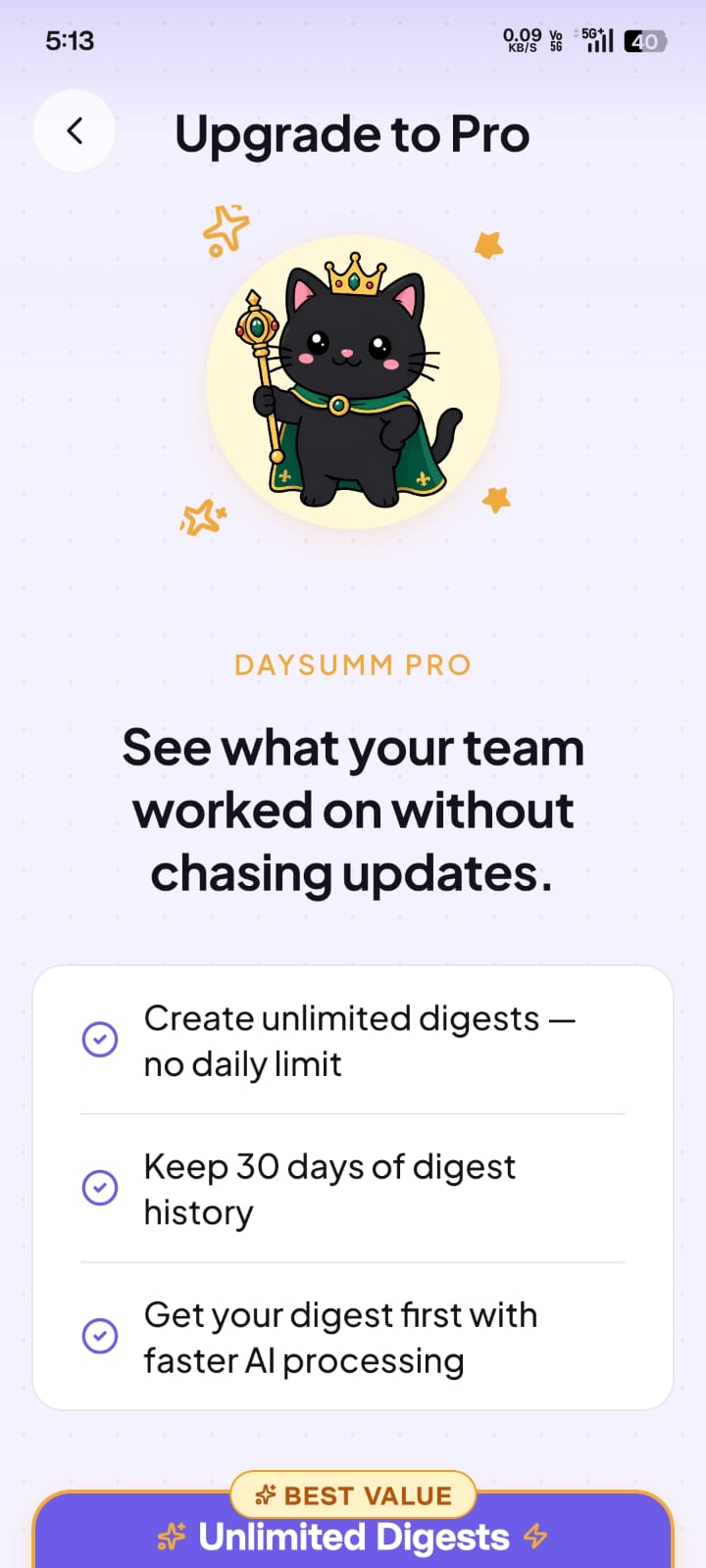
DaySumm Subscription Page
-
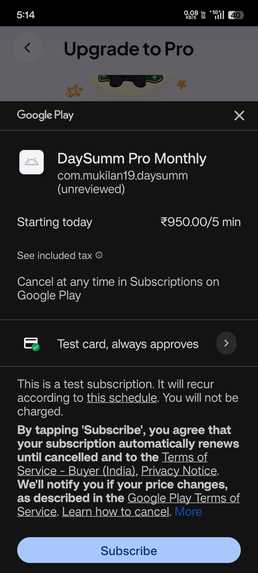
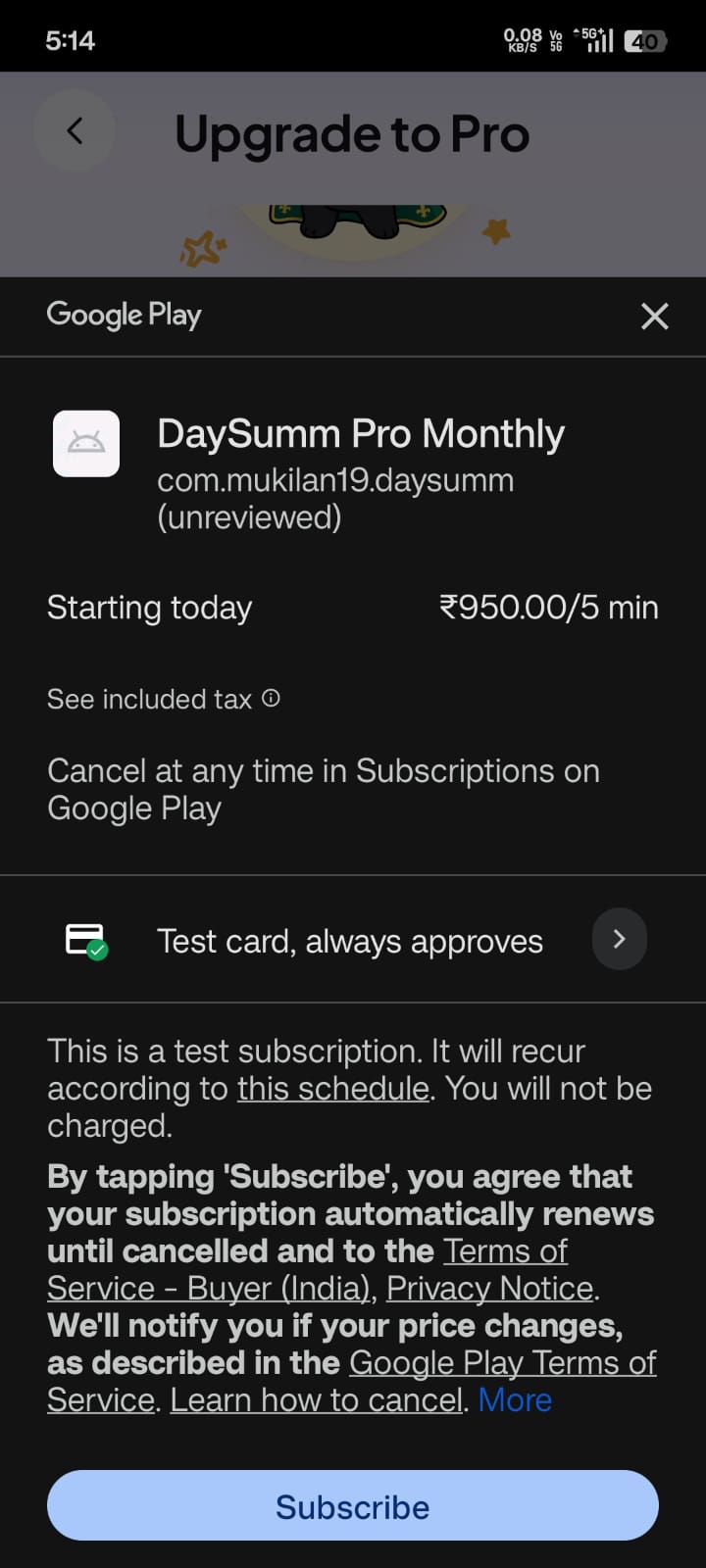
Payment Bottom Sheet Modal
-
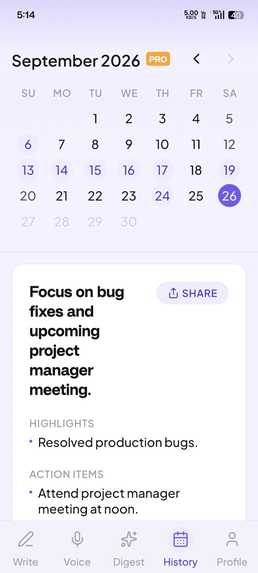
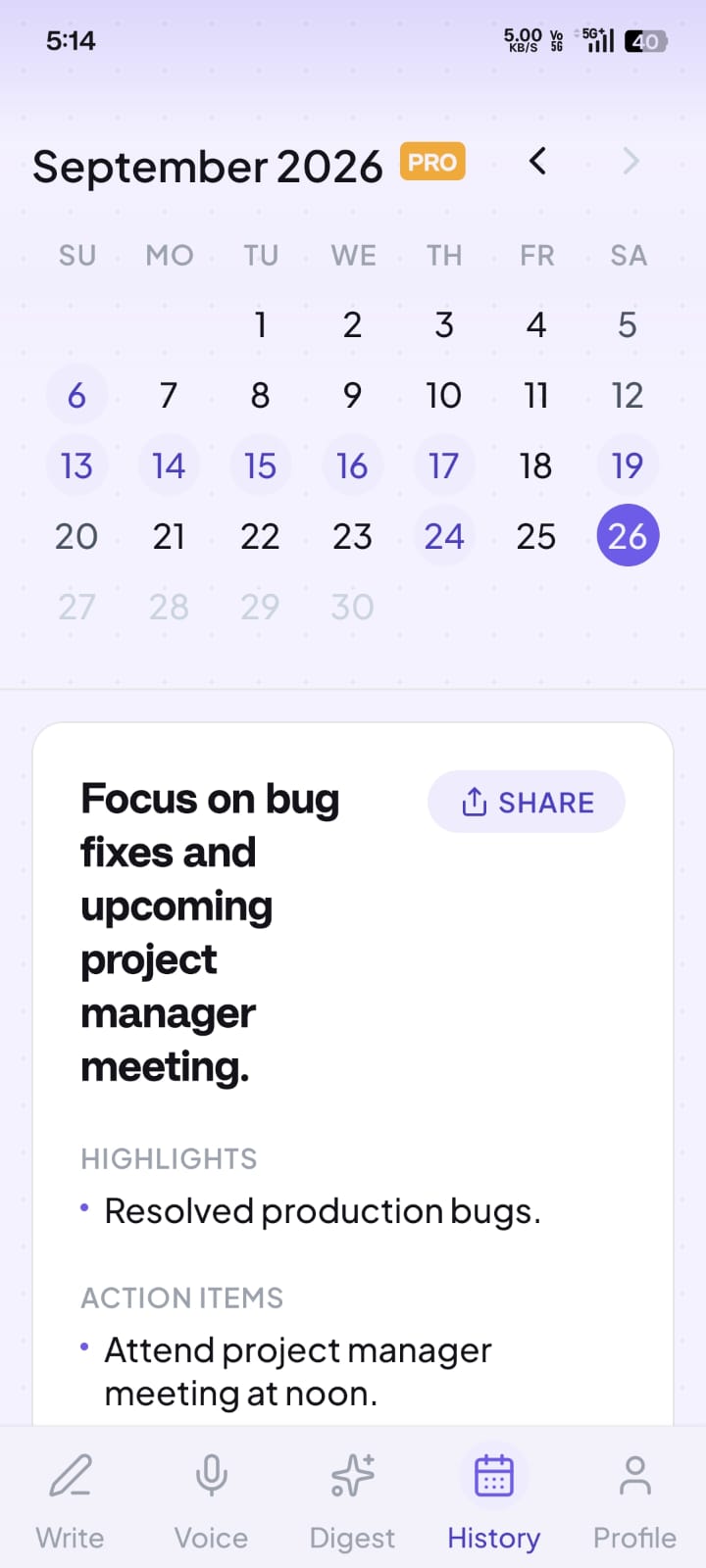
Pro History Page
-
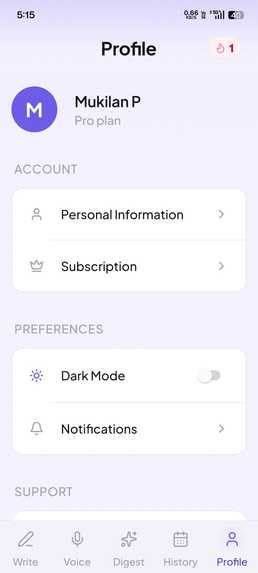
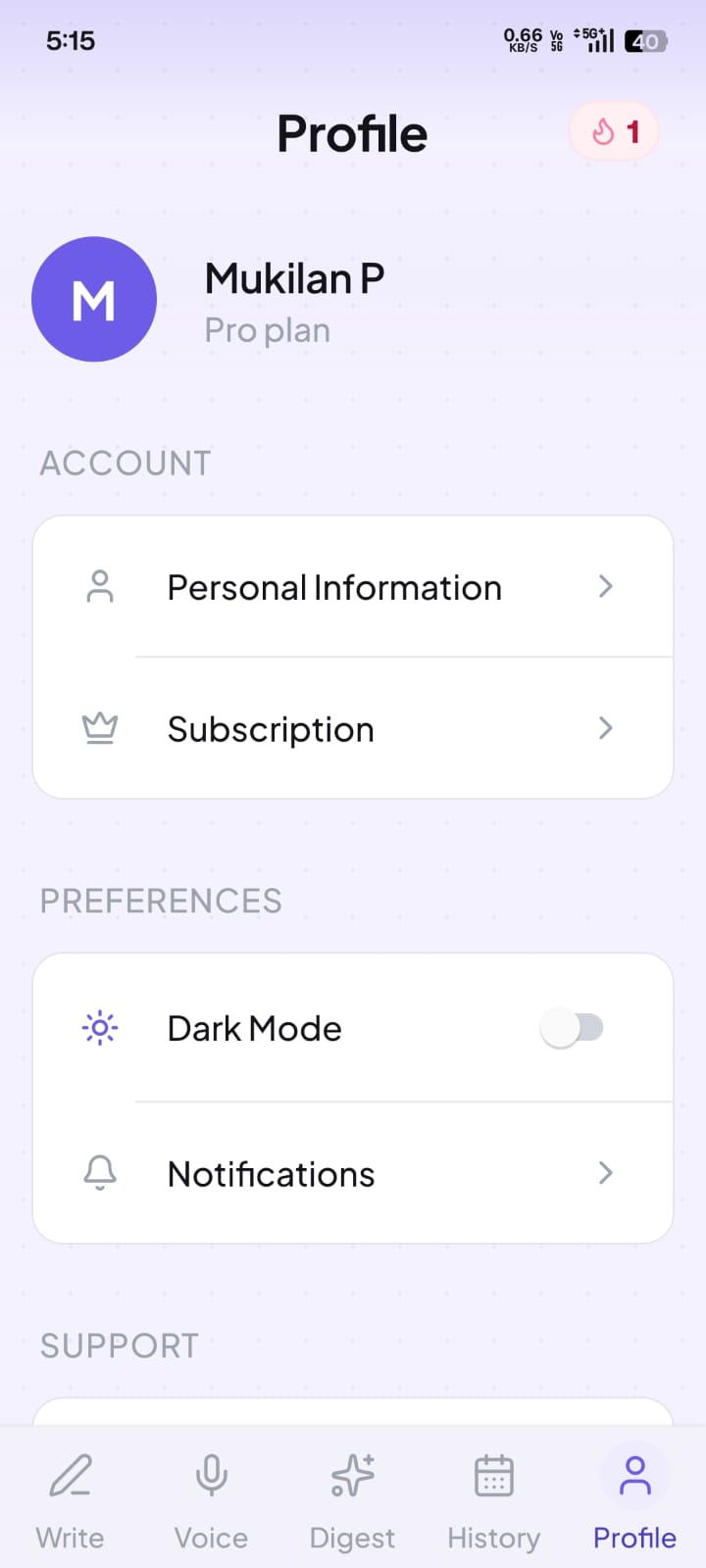
Pro Profile
Inspiration
The work is done, but the day’s story is scattered.
Work happens throughout the day, but important details quickly become scattered across meetings, messages, notes, and memory.
A meeting creates a decision. A message creates an action item. A task gets completed. A blocker appears. A quick note is saved somewhere.
By the end of the day, these details are spread across conversations, notes, and memory. The user then has to search through everything and rebuild the story of the day.
I noticed this problem during my internship. People around me often spent long days in meetings, discussions, and follow-up work. Afterward, they still had to remember what was discussed, what decisions were made, and what needed to happen next.
The problem was not a lack of effort. It was the amount of information people had to keep in their heads.
That observation led me to build DaySumm.
The product changes the process from:
Work, forget, search, reconstruct
to:
Work, capture, continue, review
What it does
DaySumm helps users capture small moments while they are still fresh.
Users can record a voice note or write a quick entry. DaySumm then organizes those entries and turns them into a structured daily digest.
The digest includes:
- Key highlights
- Action items
- Decisions
- Blockers
- A concise status update
Voice entries are transcribed and translated into English when needed. Entries are automatically classified so users do not need to organize everything manually.
The experience follows a simple flow:
Capture a moment → Save it instantly → Organize it automatically → Review a clear daily story
DaySumm is not designed to become another task users have to maintain.
Its purpose is to help people remember the work they already did.
How I built it
DaySumm is an Android-first mobile app built with React Native, Expo, and TypeScript.
Local-first capture
New entries are saved locally using SQLite with a stable local ID, timestamp, source, and sync status.
This allows users to capture thoughts quickly, even when the network is unavailable. Entries remain available locally and are synchronized with Firestore when the connection returns.
Voice processing
Voice entries are sent through authenticated Firebase Cloud Functions.
Groq Whisper handles transcription and English translation. If transcription fails, DaySumm keeps a local fallback entry so the user's thought is not lost.
Automatic classification
Entries are classified into five useful categories:
highlightactionItemblockerdecisionnote
Users can edit entries and correct classifications. Manual corrections are protected from being overwritten by later automatic processing.
AI-generated daily digest
At the end of the day, the backend collects the user's entries and prepares them for digest generation.
The AI creates a structured summary with a headline, highlights, action items, decisions, blockers, and a status update.
The result is validated before being stored. If the user's entries have not changed, DaySumm reuses the existing digest instead of making another AI request.
Notifications and subscriptions
Firebase Cloud Functions handle scheduled digest generation and timezone-aware notifications through Firebase Cloud Messaging.
RevenueCat manages the free and Pro experience:
- Free users: limited daily AI digest generation
- Pro users: unlimited digests, longer digest history, and faster processing priority
RevenueCat manages the mobile offerings and purchases. The backend also verifies the user's Pro entitlement independently before allowing premium access.
This gives DaySumm a clear business model while keeping the core capture experience accessible.
Challenges I ran into
The first challenge was making capture feel effortless.
If recording a thought requires too many steps, users may postpone it and forget the detail. I designed the app around quick voice capture and short written entries.
The second challenge was reliability.
Entries need to be saved immediately, synchronized safely, and recovered when the device goes offline. I built a local queue so entries remain on the device until they are successfully synchronized.
Voice transcription also needed a safe fallback. If transcription fails, DaySumm keeps a local entry so the user's thought is not lost.
Another challenge was making the AI output trustworthy. Users should be able to review the result, correct the system, and keep control of their original information.
To support this, DaySumm allows users to edit entries, correct categories, delete information, and preserve manual corrections.
Accomplishments that I'm proud of
I built a complete flow from capturing a thought to creating a daily digest.
The strongest parts of the current version are:
- Fast voice and text capture
- Offline-first local storage and synchronization
- Automatic transcription and classification
- Structured AI-generated daily digests
- Timezone-aware scheduled notifications
- RevenueCat-powered free and Pro access
I also tested DaySumm with one person for seven days.
They found it easier to record thoughts through voice and review the day from one place. They felt that the summary reduced the need to keep every detail in their head.
Friends gave a different type of feedback. They did not experience the same daily work pressure, but they still found the app useful for important notes, special occasions, and moments they wanted to remember.
This showed me that DaySumm has its strongest daily value for people who handle a large amount of work information, while the same experience can also support personal memory and reflection.
What I learned
Building DaySumm taught me that a focused product can begin with one repeated moment of frustration.
People do not always need more productivity features. Sometimes they need a better way to remember meaningful work without carrying the entire day in their heads.
I also learned that automation needs trust. A useful AI feature should not take control away from the user. It should make the user's information easier to understand while still allowing them to review and correct the result.
The strongest product direction came from connecting three simple ideas:
- Capture moments while they are fresh.
- Organize them automatically.
- Turn them into a clear story at the end of the day.
What's next for DaySumm
The current version focuses on building the habit of capturing moments through voice and quick writing.
The next step is to make this process more passive by connecting DaySumm with tools people already use, such as:
- Calendar and meeting tools
- Notion
- Slack
- GitHub
- Jira
- Other workplace systems
Instead of asking users to record every important moment manually, DaySumm could collect relevant context from their existing workflow and create a more complete daily story.
The long-term vision is to make the end of the workday feel less like a memory test.
Capture work while it happens. End your day with the story already clear.
Built With
- cloud-firestore
- expo.io
- firebase
- firebase-authentication
- firebase-cloud-functions
- firebase-cloud-messaging
- groq
- openrouter
- react-native
- revenuecat
- sqlite
- typescript


Log in or sign up for Devpost to join the conversation.