-
-
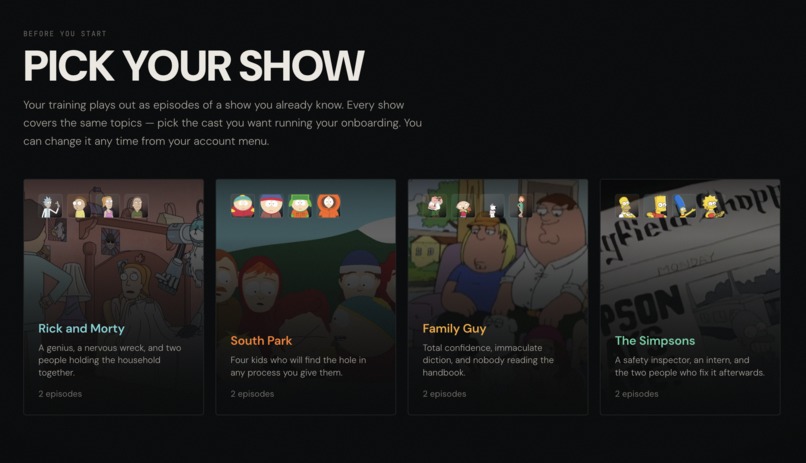
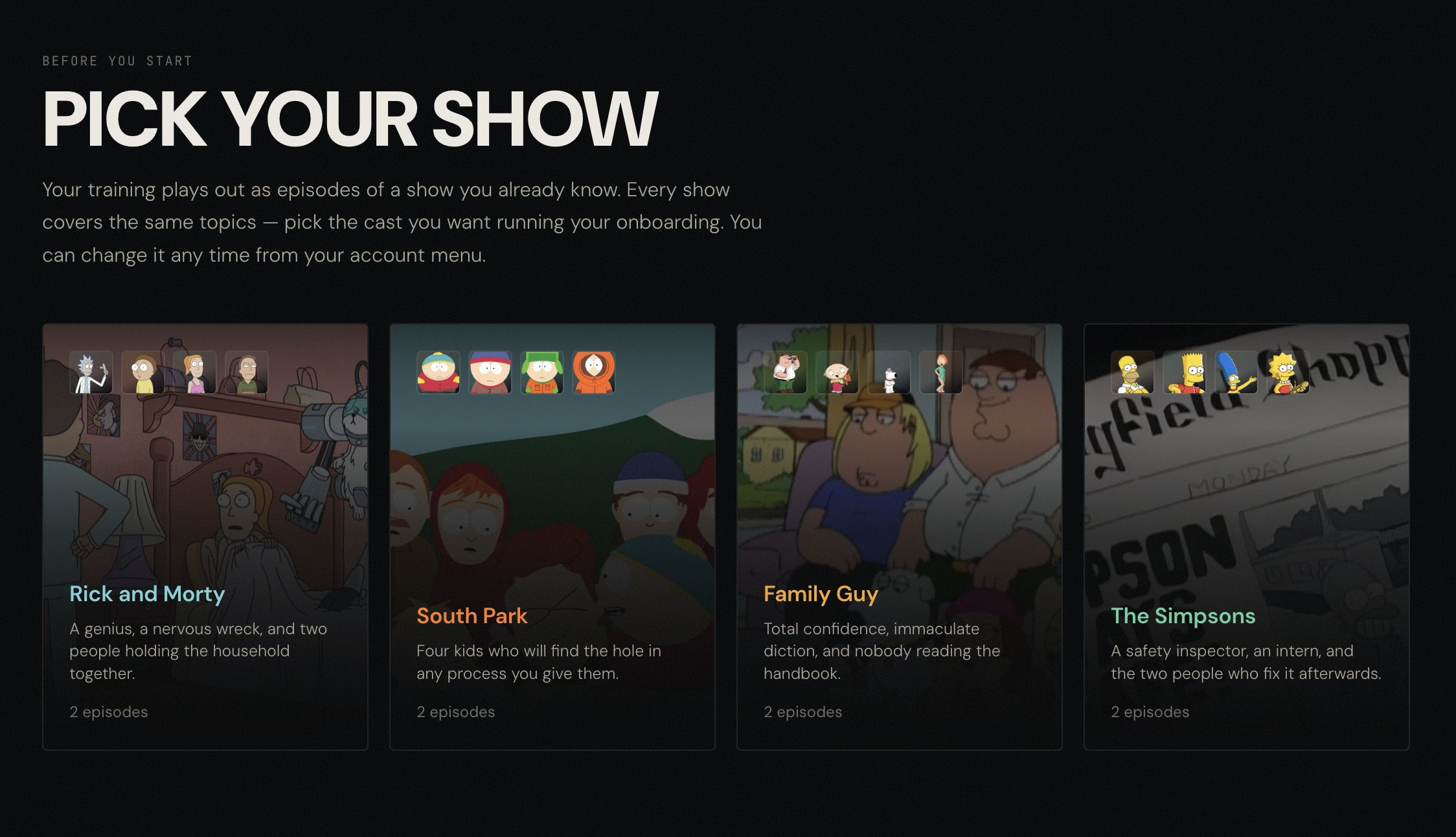
Select a popular show to help you learn
-
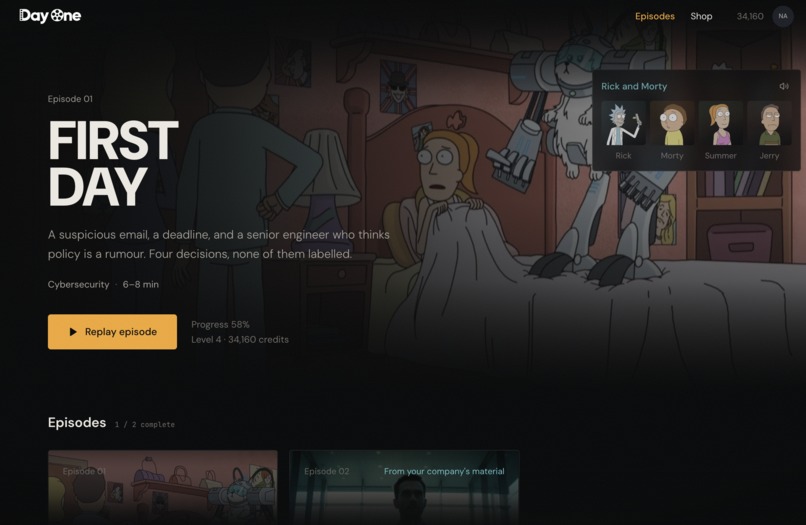
Home Page
-
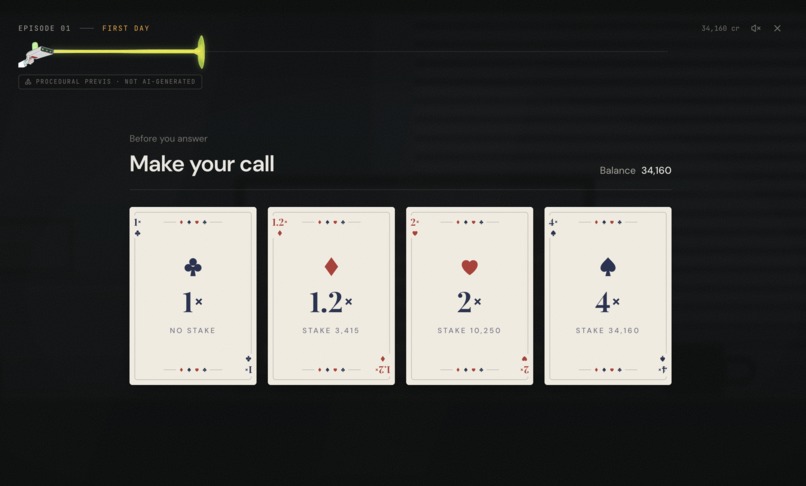
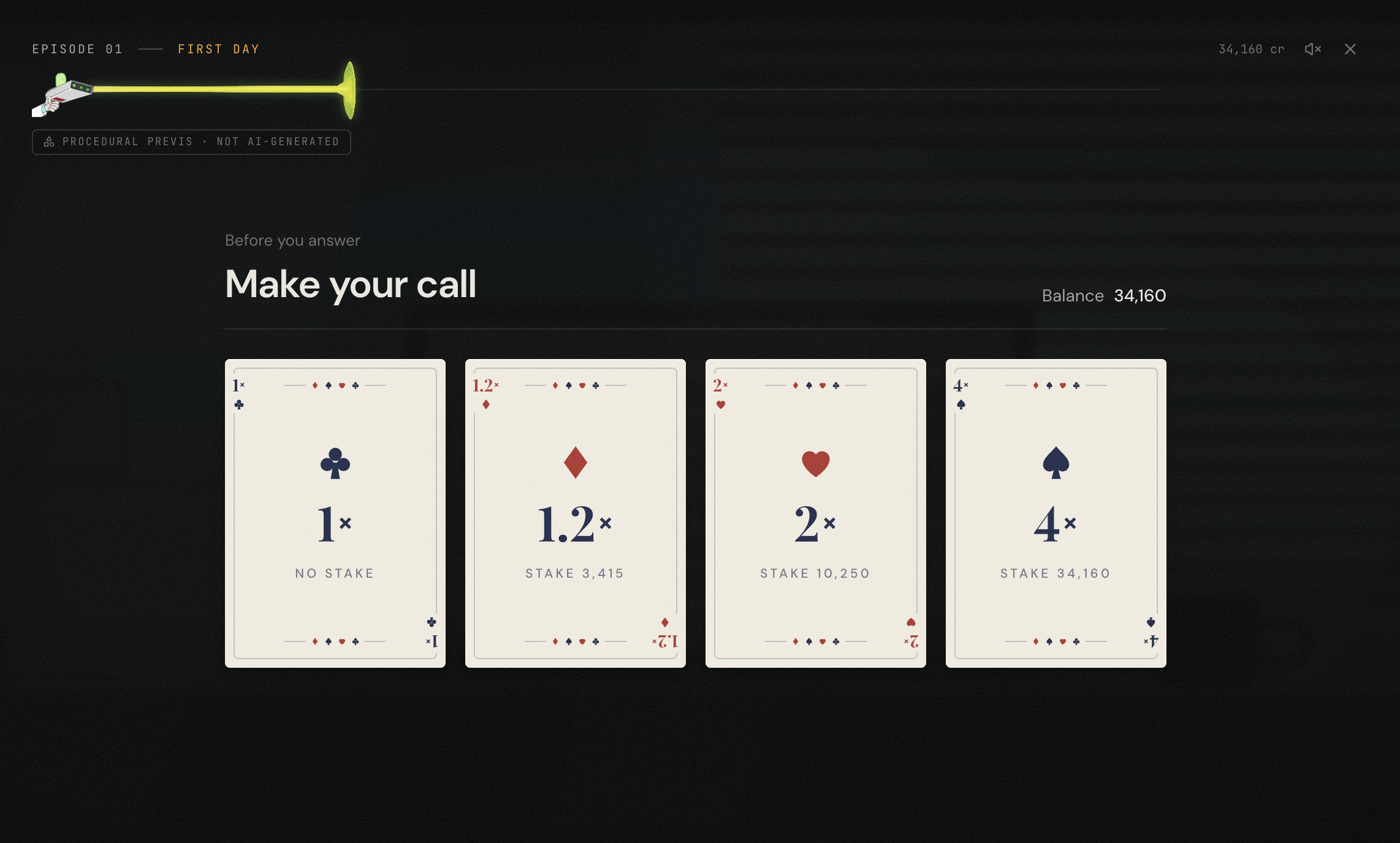
Gamble on your answers!
-
Sign In Page
-
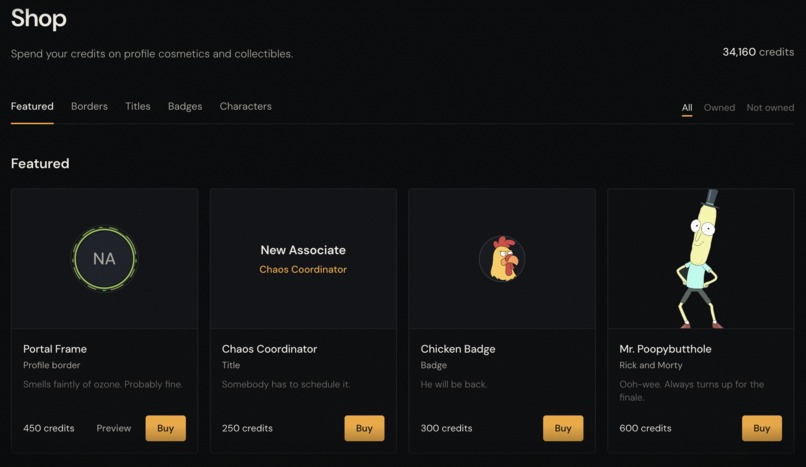
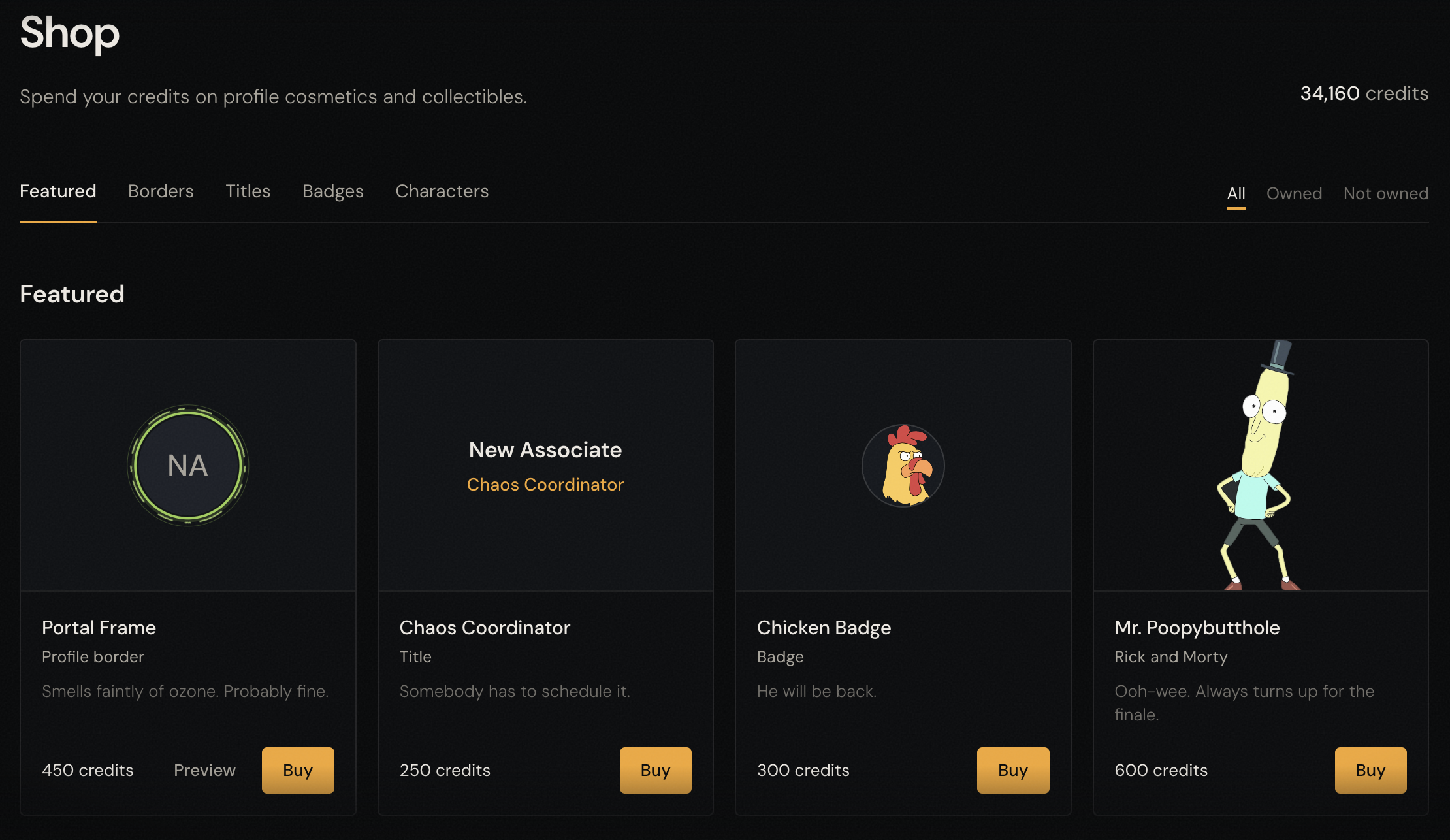
Item Shop
-
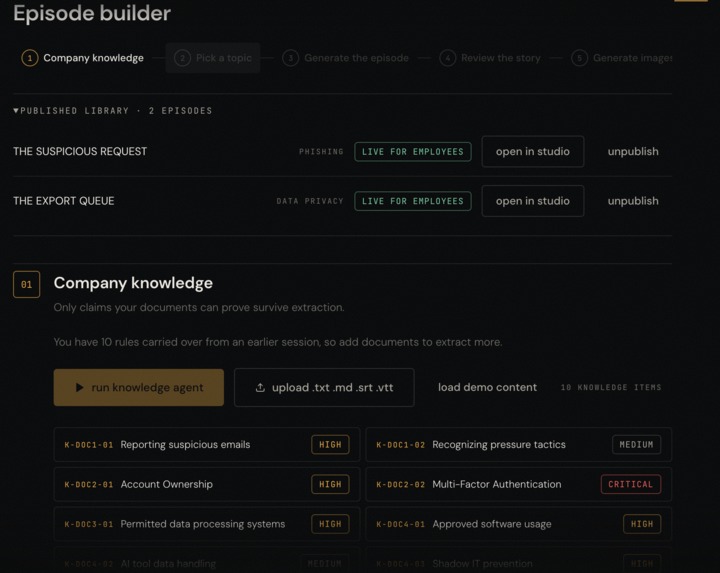
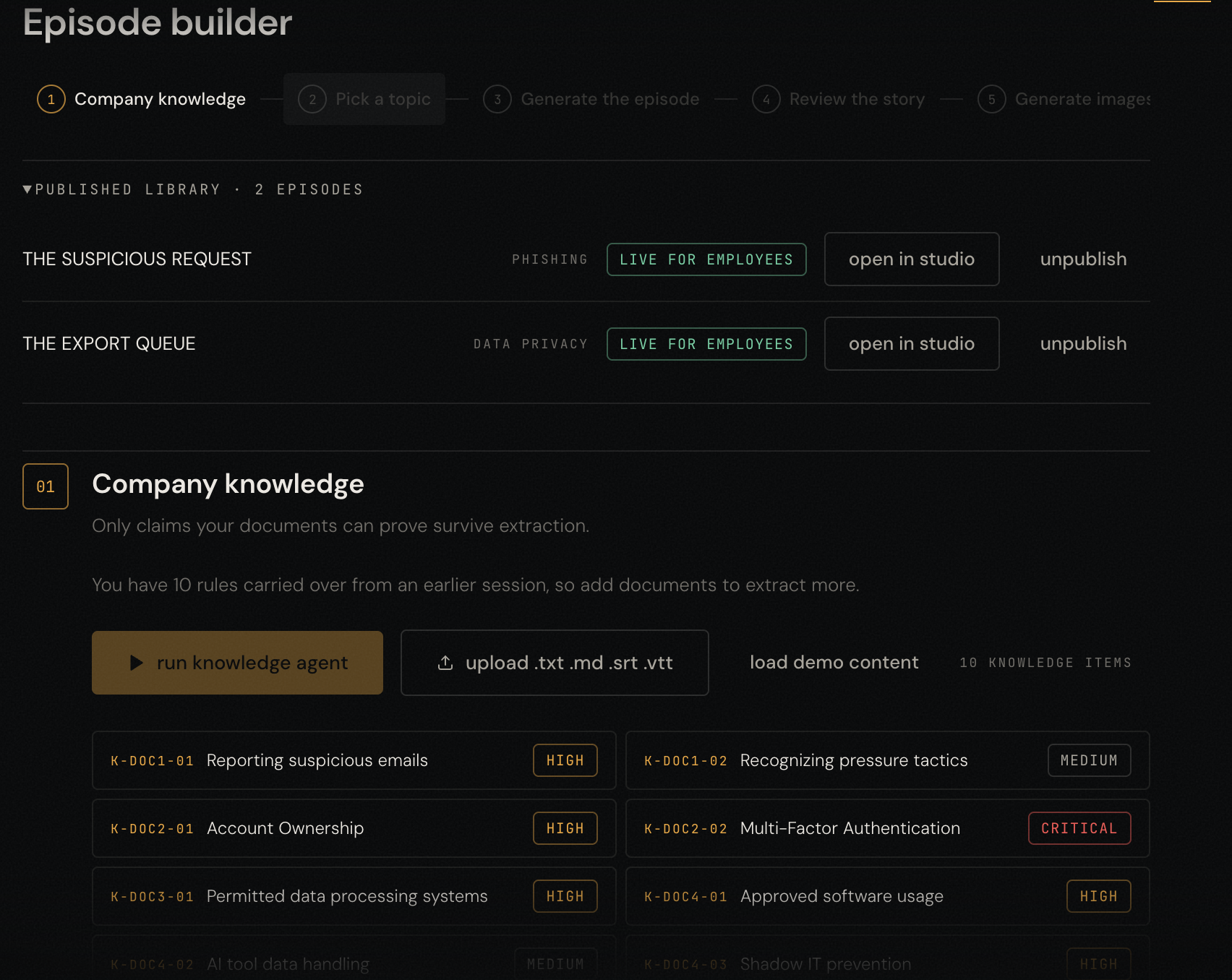
Episode builder home page for Admin
Inspiration
One of the worst things when starting a new job is onboarding. No one likes to do training modules that they blindly click through anyways.
Because of this we came up with DayOne, a way to turn a company's boring training material (handbooks, policy PDFs, decks, video transcripts) into short interactive episodes where the new hire is the the protagonist of the story.
What it does
As an employee, you:
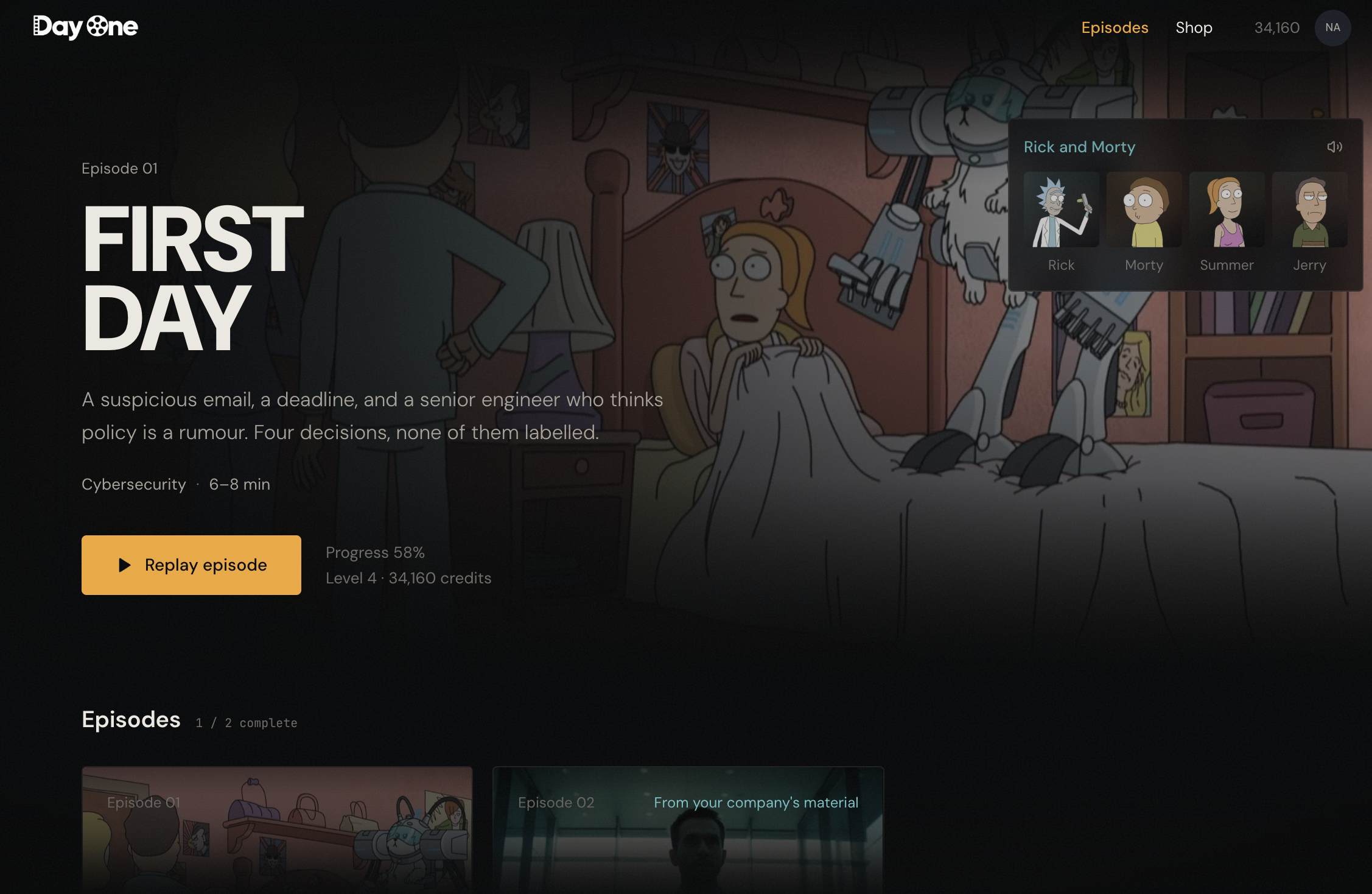
- Pick a show and watch cinematic scenes. This includes Rick and Morty, South Park, Family Guy, or The Simpsons, each in its own world and with its own voice cast.
- Place a wager before each decision: How much you bet shows how confident you really are.
- Live with the consequences. The world reacts first, and the explanation comes after.
- Ask with the characters by text or voice about what just happened. Every answer is grounded in your company's actual policies, and if the material doesn't cover a question, the character says "I don't know" instead of making something up.
- Get an adaptive third act built around the concept you understood the least.
- See an AI coach debrief: accuracy on external threats vs. coworker requests, how much you slow down under pressure from authority, whether your bets were over- or underconfident
As an admin, you use the Studio. Upload your documents, pick a topic, and DayOne extracts citable rules, generates a validated episode, renders scene art, video clips and character voices, shows you how two different employees would get different third acts, and publishes it to every show at once.
How we built it
- Knowledge Agent: an LLM(OpenAI) reads raw company documents and turns them into structured, citable rules. Those rules are validated before they ever reach the game.
- Episode Generator: code builds the structure of the episode (scenes, branches, which option is strong, citations, the adaptive act), and the LLM writes only the words.
- Voice: ElevenLabs, with 16 fun distinct character voices
- Visuals: Gemini image generation draws each scene in its show's world, using character portraits as reference images. FLUX on Replicate makes backgrounds, and Wan 2.2 image-to-video animates key moments into roughly 5-second clips.
- Recasting: an episode is written for four roles (mentor, pressure, peer, manager). A function maps those roles onto any show's cast, rewriting names and pronouns without changing the logic of the episode.
- Storage: Supabase Postgres for episodes, documents and knowledge, plus Supabase Storage for generated media. Stored assets are reused instead of re-rendered. If Supabase isn't configured, it falls back to SQLite and local disk.
Challenges we ran into
- Rate limits during live generation. Replicate throttled our low-credit account to 6 predictions a minute, so the media server needed a queue with retries, render jobs that track their status, and reuse of stored assets so we never paid for the same clip twice.
Accomplishments that we're proud of
- A Studio that can generate new episodes from uploaded documents.
- 16 characters across 4 shows, each with its own voice. All 16 were auditioned against the live ElevenLabs API.
- Personalization you can measure. Two players with different mistakes provably get different third acts, and our automated walkthrough checks it.
- A character that says "I don't know." The refusal gate sits in front of the model, so it's a guarantee rather than a prompt instruction the model might ignore.
- End-to-end automated verification, including a headless run of the whole Studio pipeline: extract knowledge, refuse an uncovered topic, generate, render, compare players, publish, then play the published episode.
What we learned
- Refusing is a feature. In training content, a confident wrong answer is worse than no answer.
- Engagement comes from stakes. The wager mechanic, tiny as it is, changed how people played: they slowed down and thought before choosing.
What's next for DayOne
- Licensed and original casts. Today's show characters are placeholder casting for the prototype. The asset layer already lets a company swap in licensed characters, its own mascots or real coworkers' voices without touching the episode graph.
- Full AI-generated video instead of screenshots for budgets that allow it
- More episode structures than the current cold open → two decisions → adaptive act → ending template.
- Manager and L&D dashboards showing team-wide weak spots
- Integrations with HR and LMS platforms.





Log in or sign up for Devpost to join the conversation.