DayMin.ai — Your AI Agent for Everyday Life
Inspiration
Every day, people manage dozens of small responsibilities: tasks, reminders, appointments, goals, habits, expenses, bills, notes, and personal plans. These are often scattered across different apps, which means the user still has to organize and coordinate everything manually.
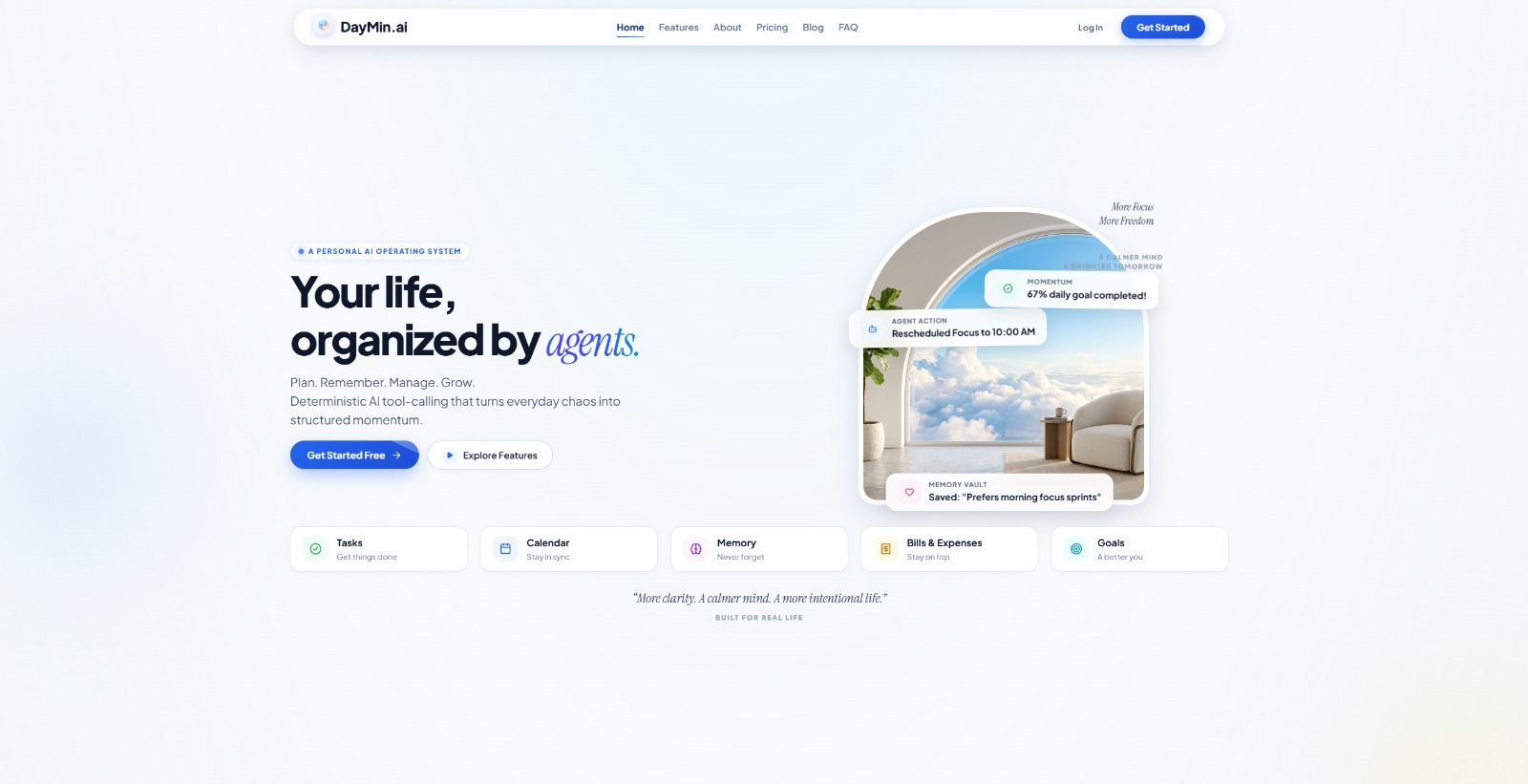
That inspired us to build DayMin.ai — an AI agent designed to become one central place for managing everyday life.
Instead of creating another chatbot that only answers questions, we wanted to build an agent that can understand what a user wants and take meaningful actions using dedicated tools.
What it does
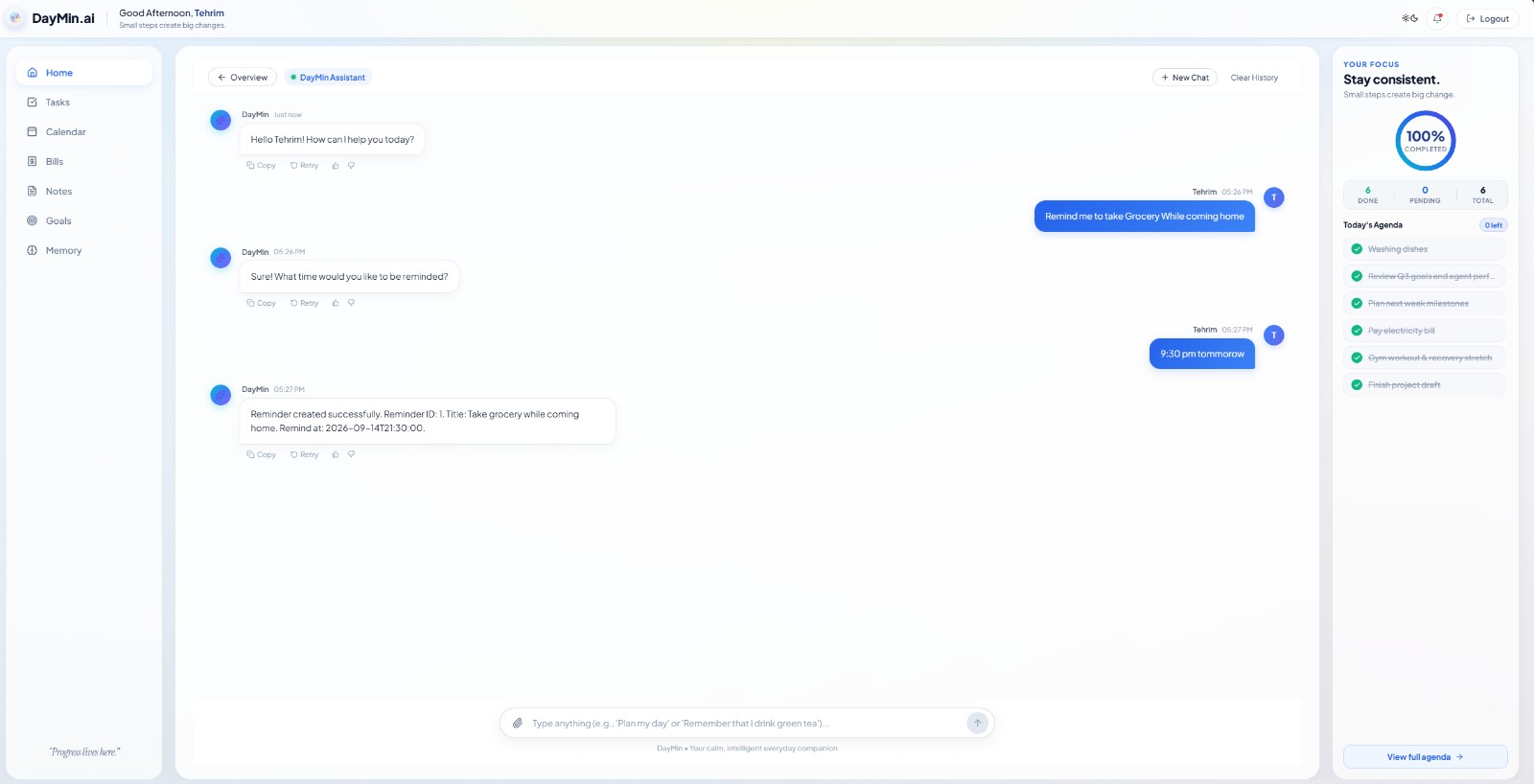
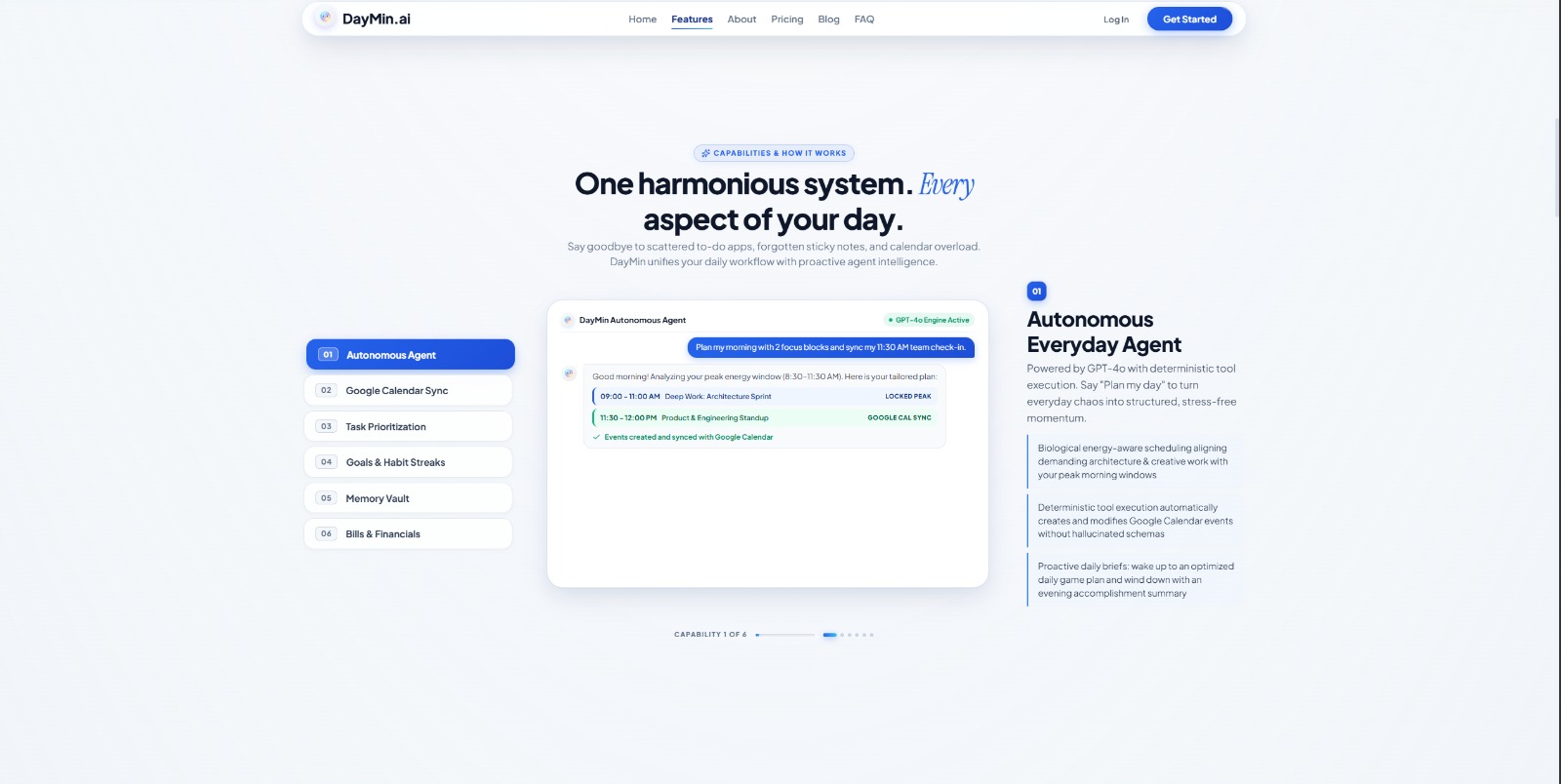
DayMin.ai allows users to communicate naturally with an AI agent while the agent works with structured tools behind the scenes.
The system supports everyday-life management such as:
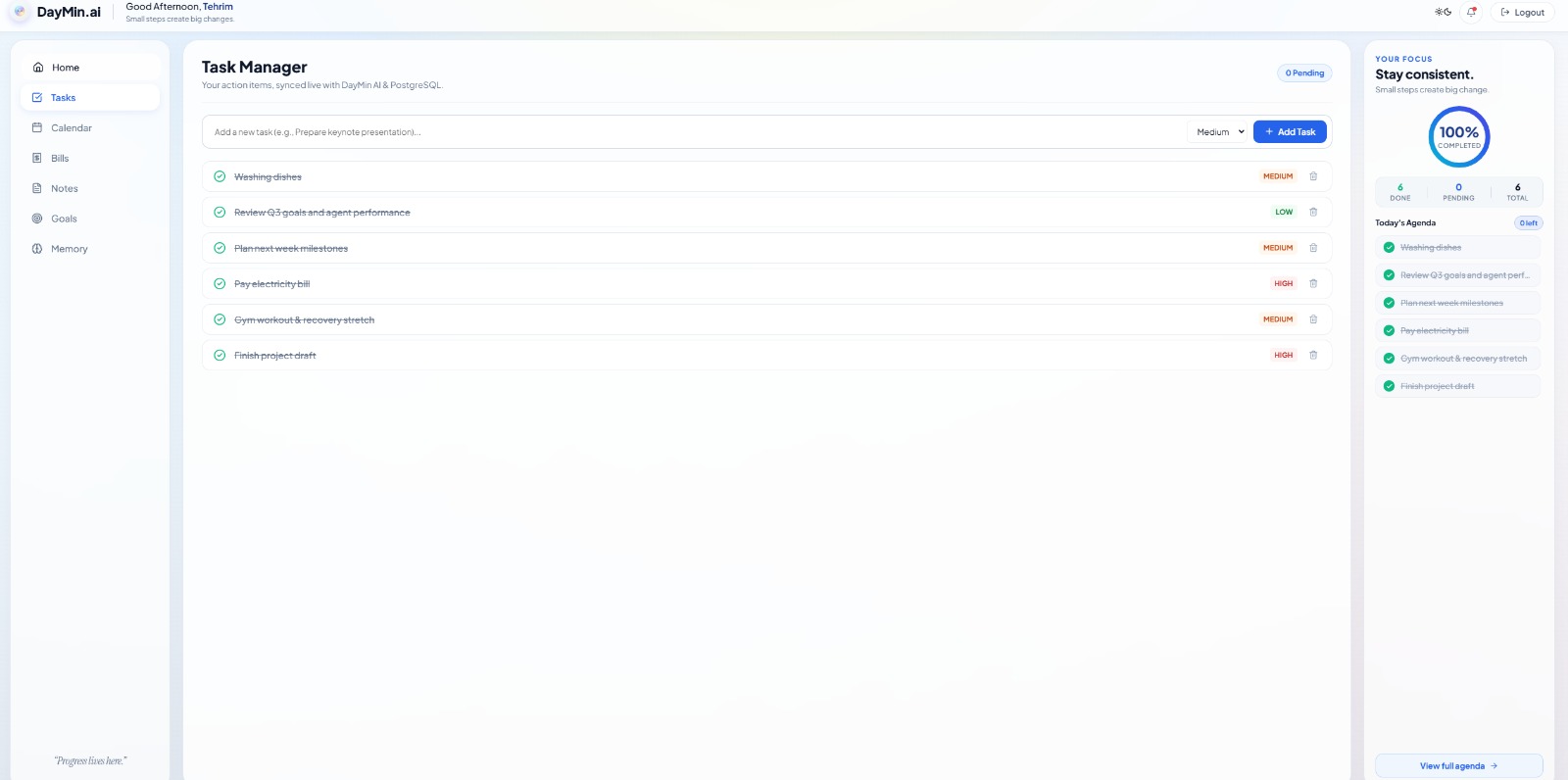
- Creating, viewing, updating, and completing tasks
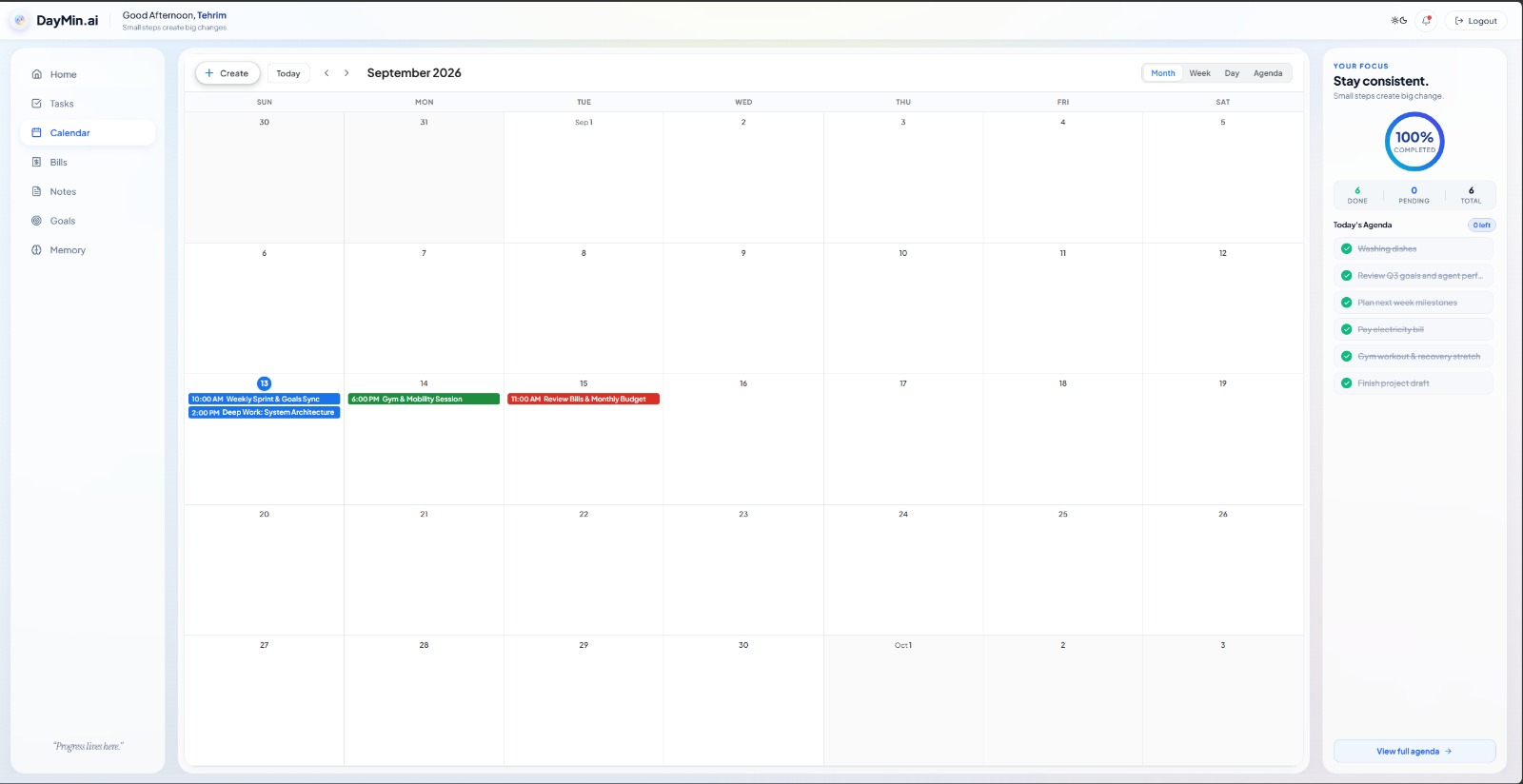
- Managing reminders and calendar items
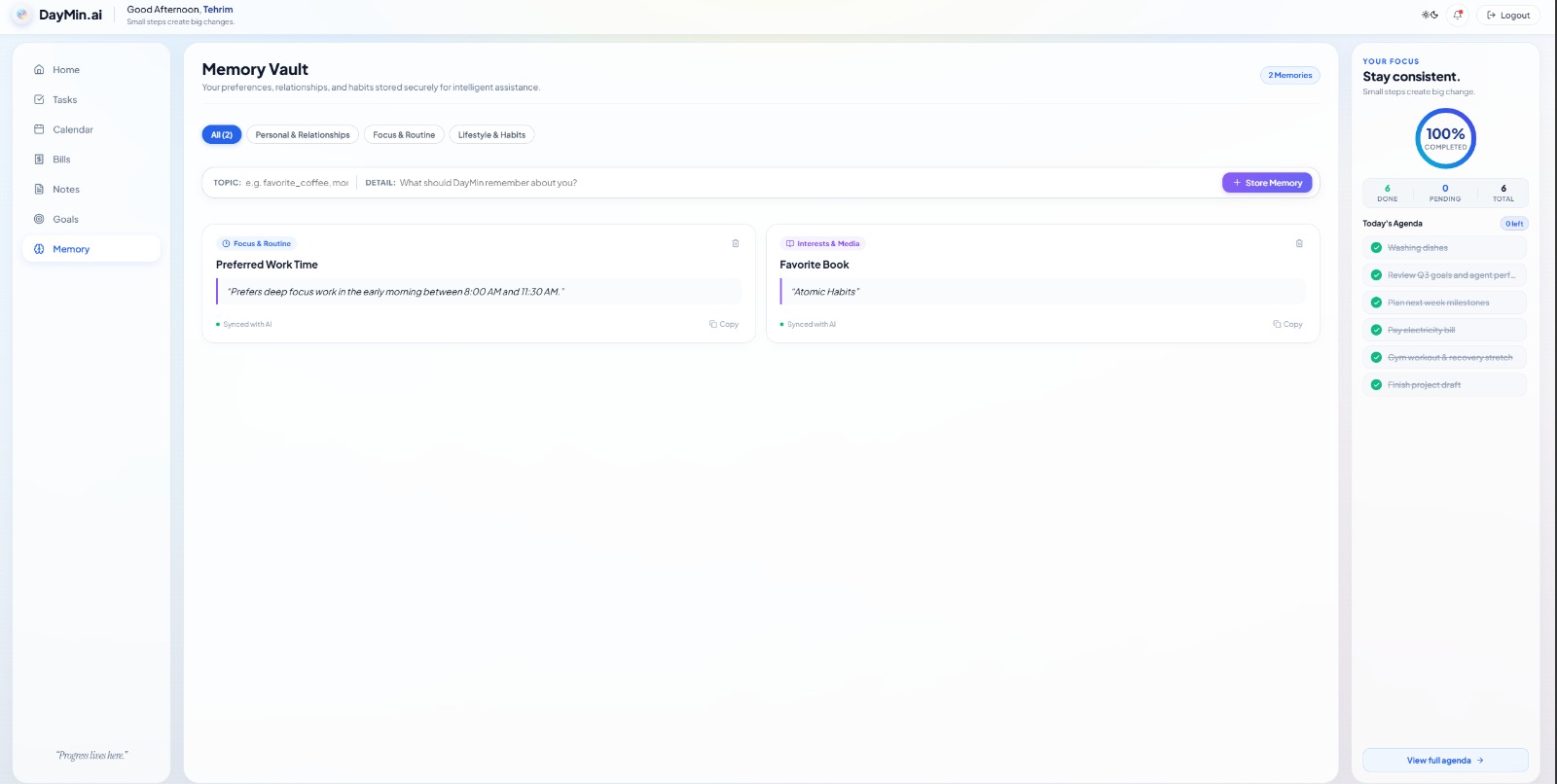
- Storing and updating useful user preferences through memory
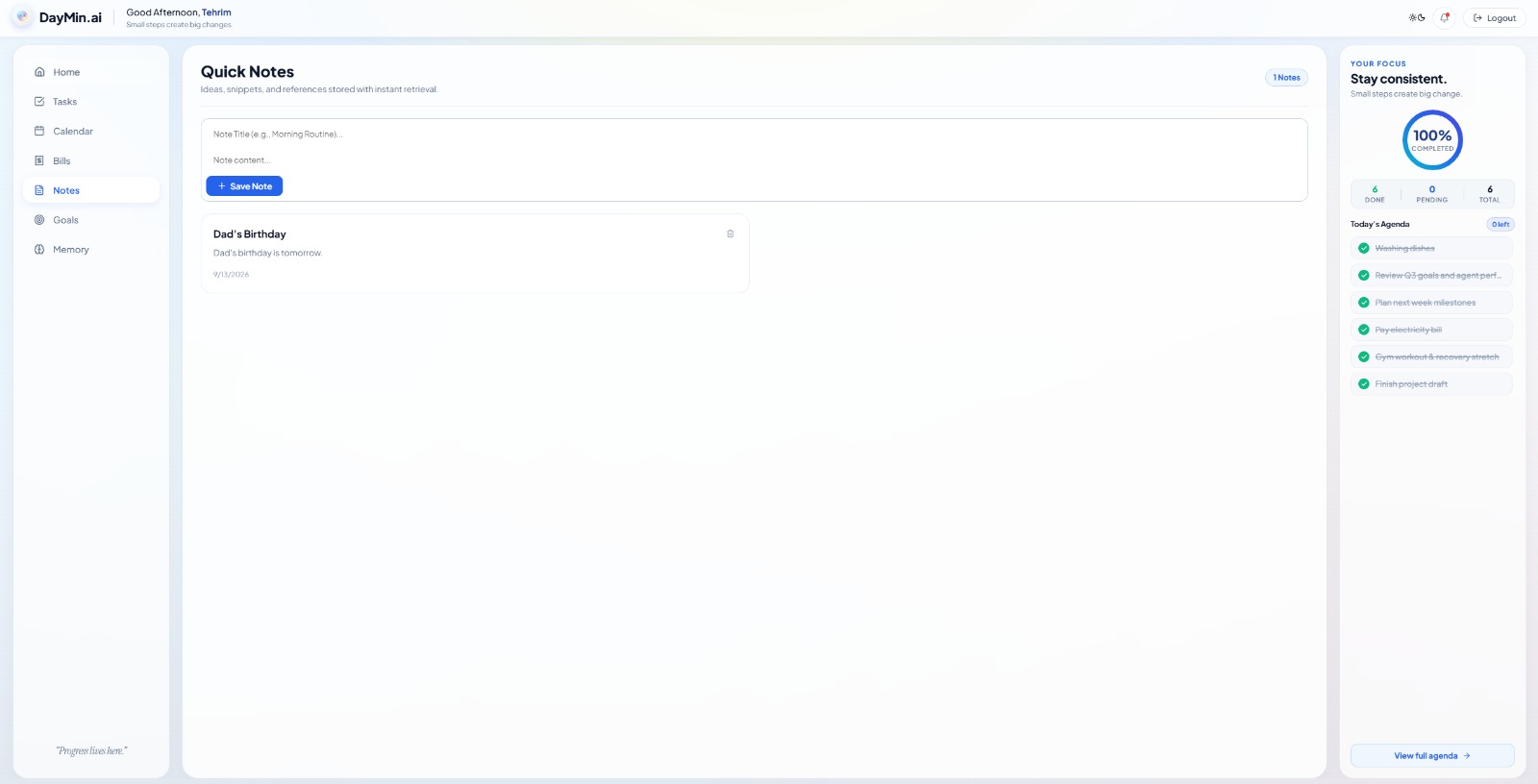
- Creating and managing notes
- Tracking goals and progress
- Managing habits and daily check-ins
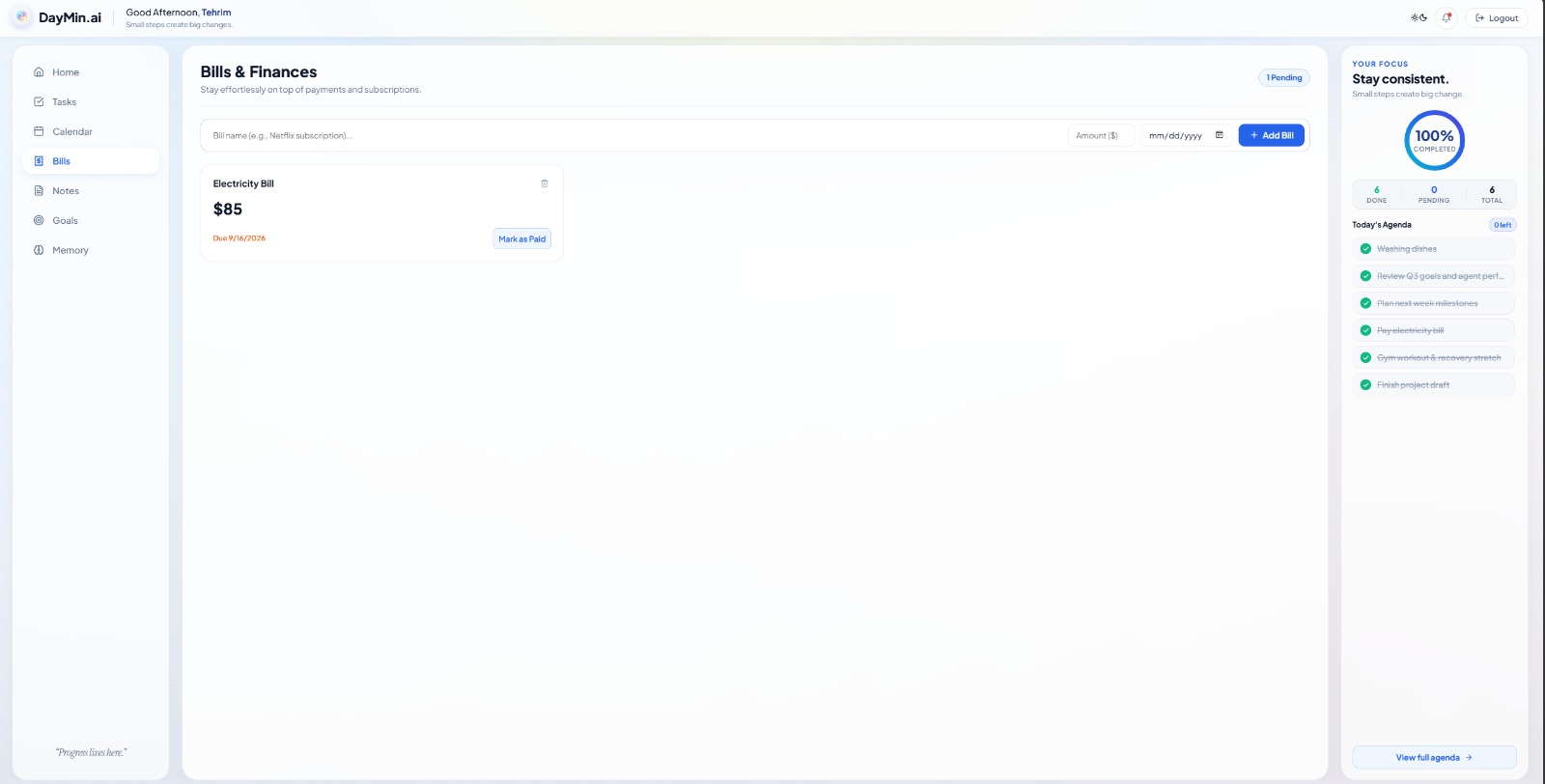
- Recording bills and their payment status
- Recording and tracking expenses
- Generating planning suggestions and recommending the next action
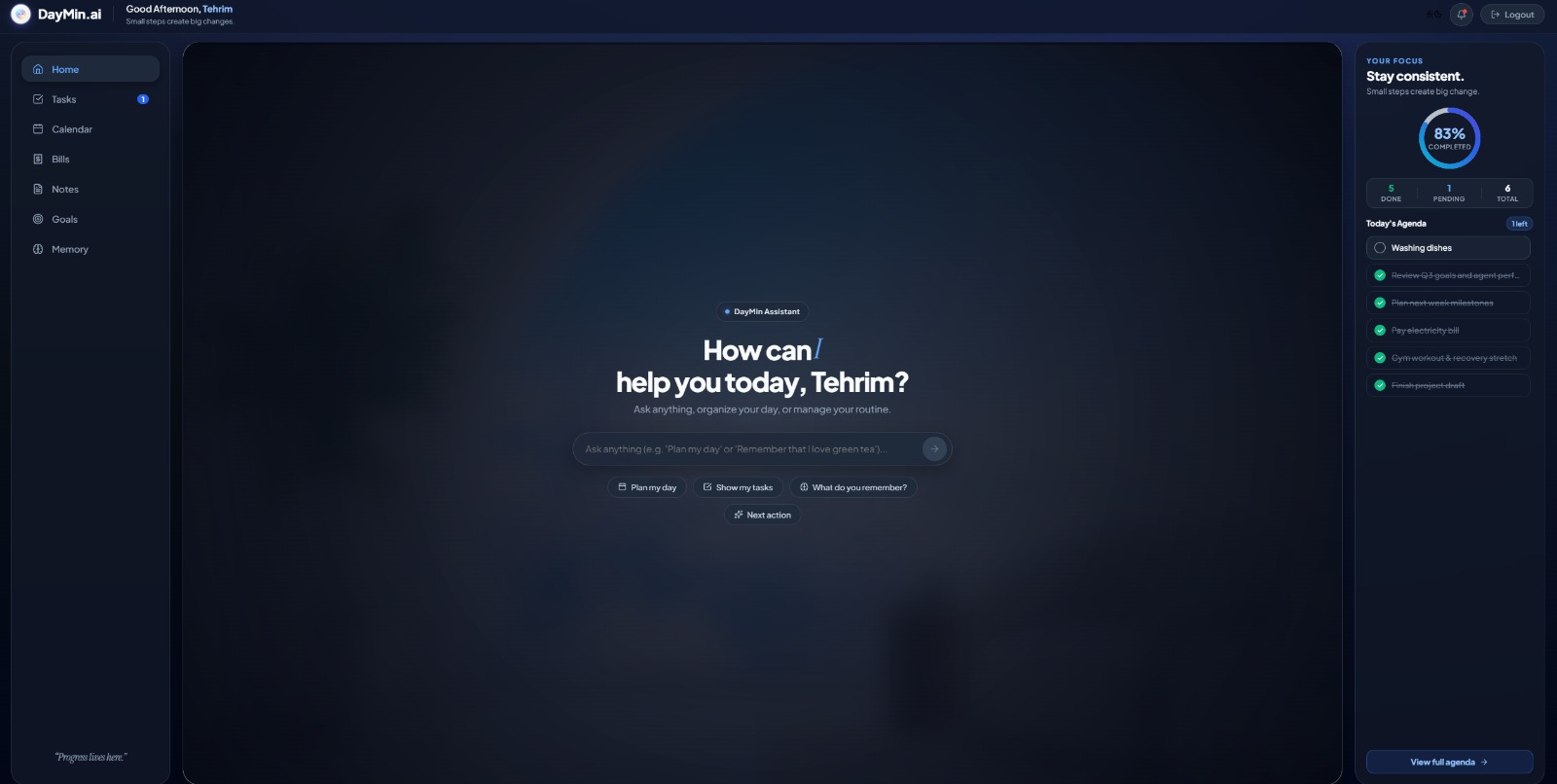
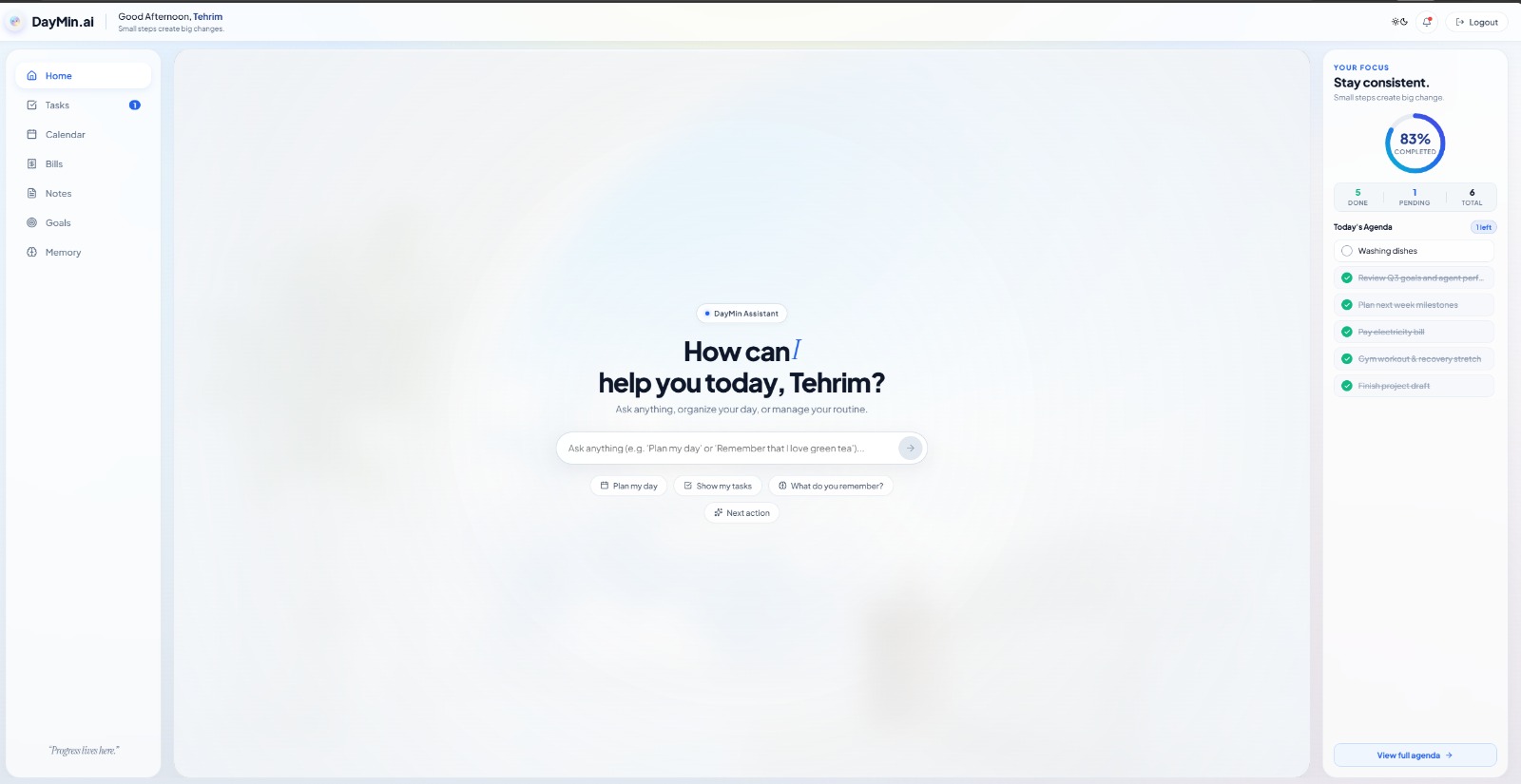
- Providing a personalized dashboard for the user's information
For example, instead of manually navigating through forms, a user can tell DayMin.ai what they need, and the agent can determine which tool should handle the request.
How we built it
The core AI agent is built using Strands Agents.
We created specialized tools for different areas of everyday life, including tasks, planning, memory, reminders, calendar events, notes, goals, habits, bills, and expenses.
The backend is built with Python and FastAPI, with REST APIs connecting the AI agent and application functionality.
We use PostgreSQL with SQLAlchemy for persistent structured data. The production database is hosted using Neon PostgreSQL.
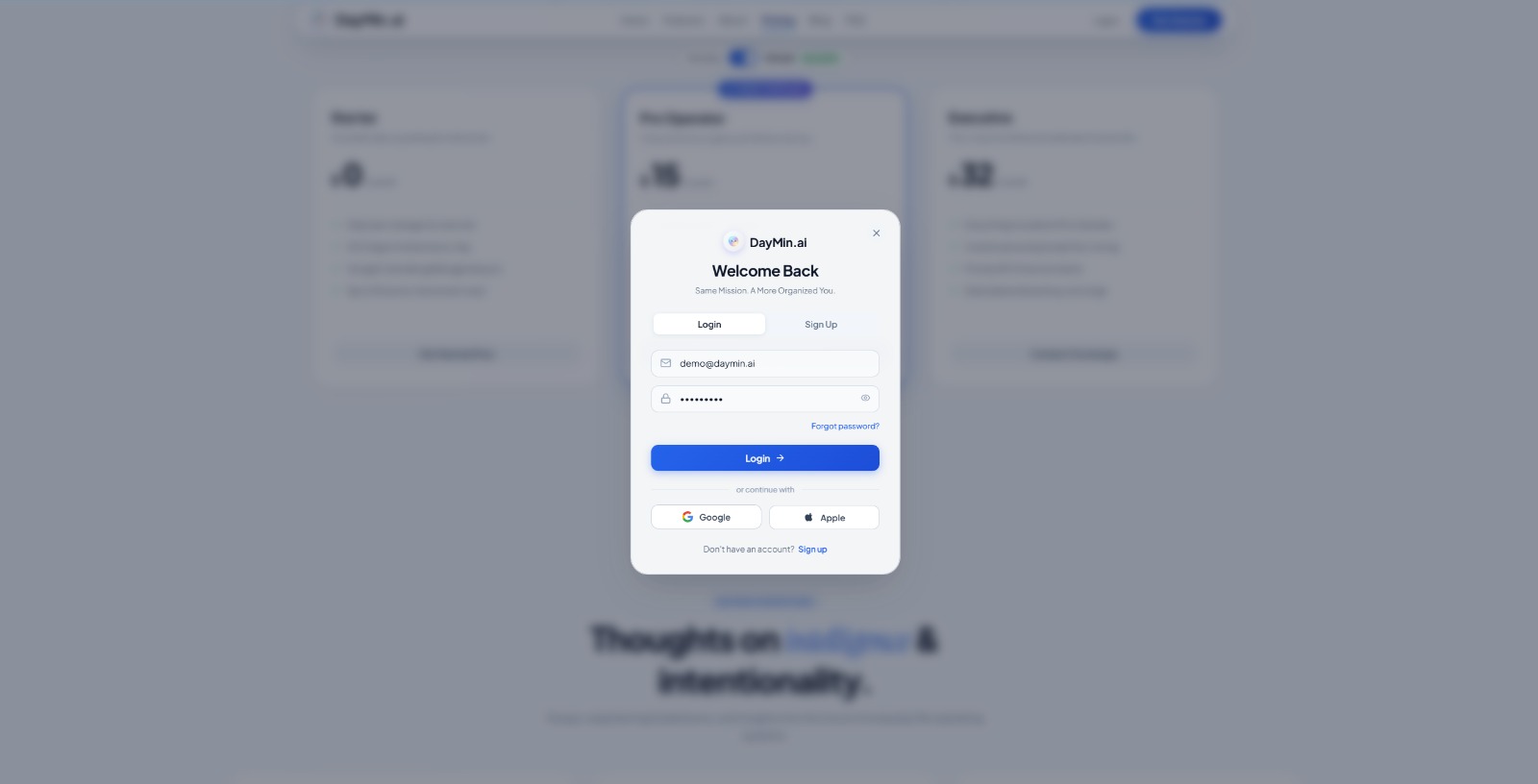
The frontend is built with React, Vite, and JavaScript, providing the user interface for authentication, the AI assistant, dashboard, calendar, and other features.
For deployment, the frontend is hosted on Vercel, while the FastAPI and Strands Agents backend runs on Render.
Our production architecture is:
User → React/Vite on Vercel → FastAPI + Strands Agents on Render → Neon PostgreSQL + AI model
Challenges we faced
One of the biggest challenges was moving from a chatbot-style experience to an actual agent capable of performing reliable actions.
We had to make sure the correct tool was selected for each request and that tool results were preserved instead of being incorrectly rewritten by the model.
Another important challenge was user isolation. Tasks, memories, goals, expenses, and other information must belong to the correct authenticated user. We implemented authentication and user-specific data handling so the agent operates within the current user's context.
Memory management was another challenge. We worked on allowing DayMin.ai not only to remember useful preferences but also to update and delete information when required.
We also encountered challenges while connecting the frontend, backend, AI model, and PostgreSQL database across local and production environments. Moving the application from localhost to separate cloud services required careful handling of environment variables, API URLs, database connections, CORS, and secrets.
What we learned
Building DayMin.ai taught us that an AI agent is much more than a conversational interface.
The most important part is connecting reasoning with reliable tools and real application state.
We learned how to build an agent using Strands Agents, create specialized tools, pass authenticated user context into agent executions, capture tool results, connect AI actions to persistent PostgreSQL data, and integrate the complete system with a modern web application.
We also learned how important security and deployment architecture are when transforming an AI prototype into a working application.
What's next for DayMin.ai
Our vision is for DayMin.ai to become an increasingly capable everyday-life agent.
Future versions could integrate external services such as email, calendars, notifications, shopping and grocery services, and supported payment providers. We also want to expand proactive planning so DayMin.ai can identify upcoming responsibilities and suggest useful actions before the user has to ask.
The long-term goal is simple:
Instead of managing your life across many different apps, tell DayMin.ai what needs to happen — and let your agent help manage the rest.
Built With
- agents
- aiagents
- css3
- fastapi
- github
- html5
- javascript
- neon
- openai
- postgresql
- python
- react
- render
- restapi
- sqlalchemy
- strand
- vercel
- vite


Log in or sign up for Devpost to join the conversation.