-
-
Project Overview
-
Landing Page
-
AI Assistant
-
Dashboard
-
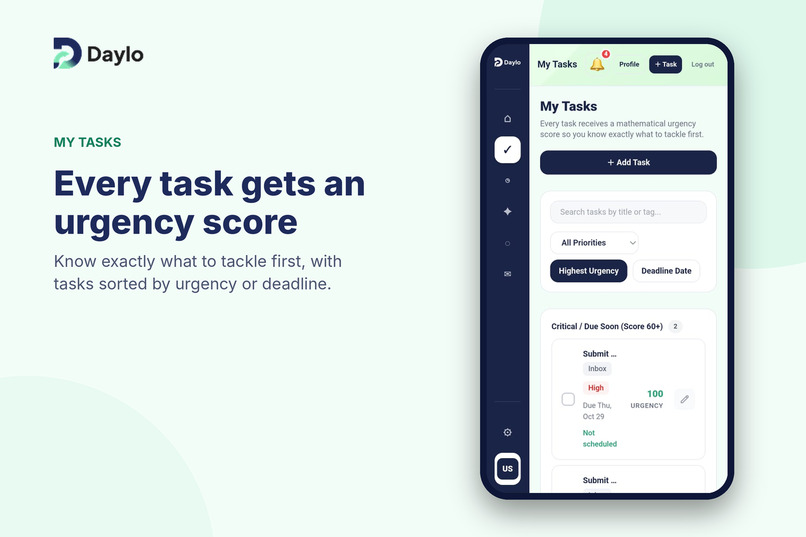
Task Page
-
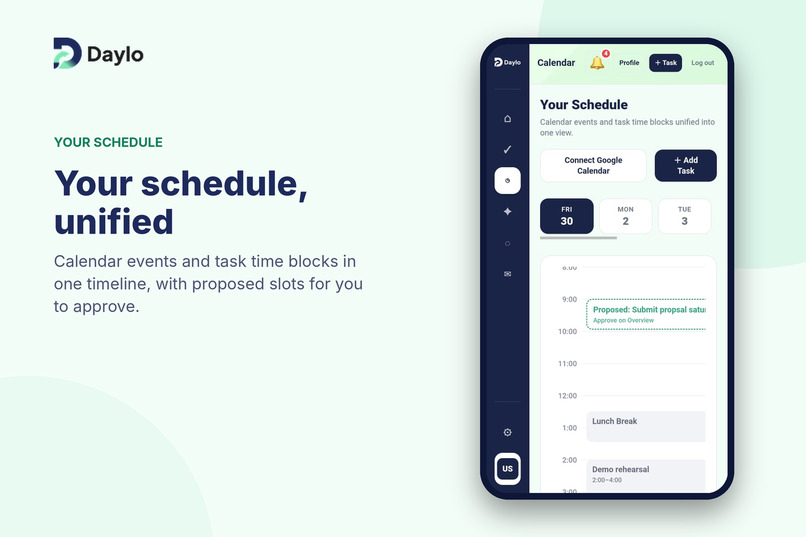
Calendar/Schedule
-
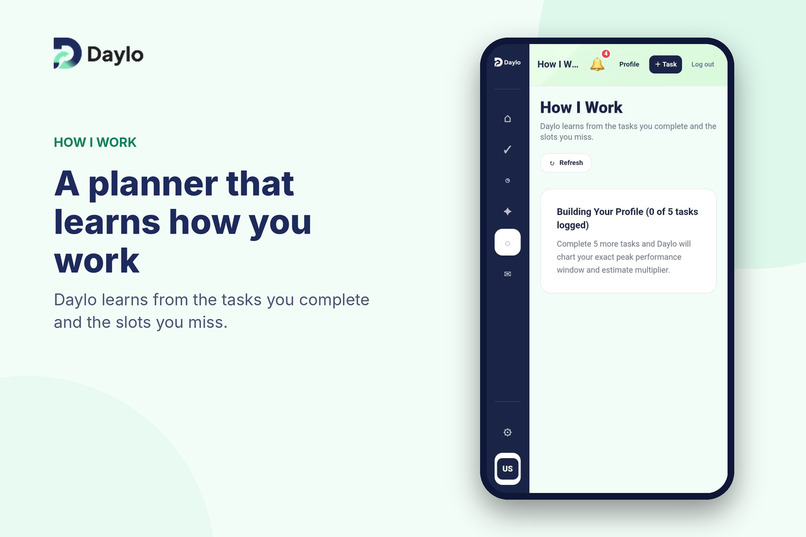
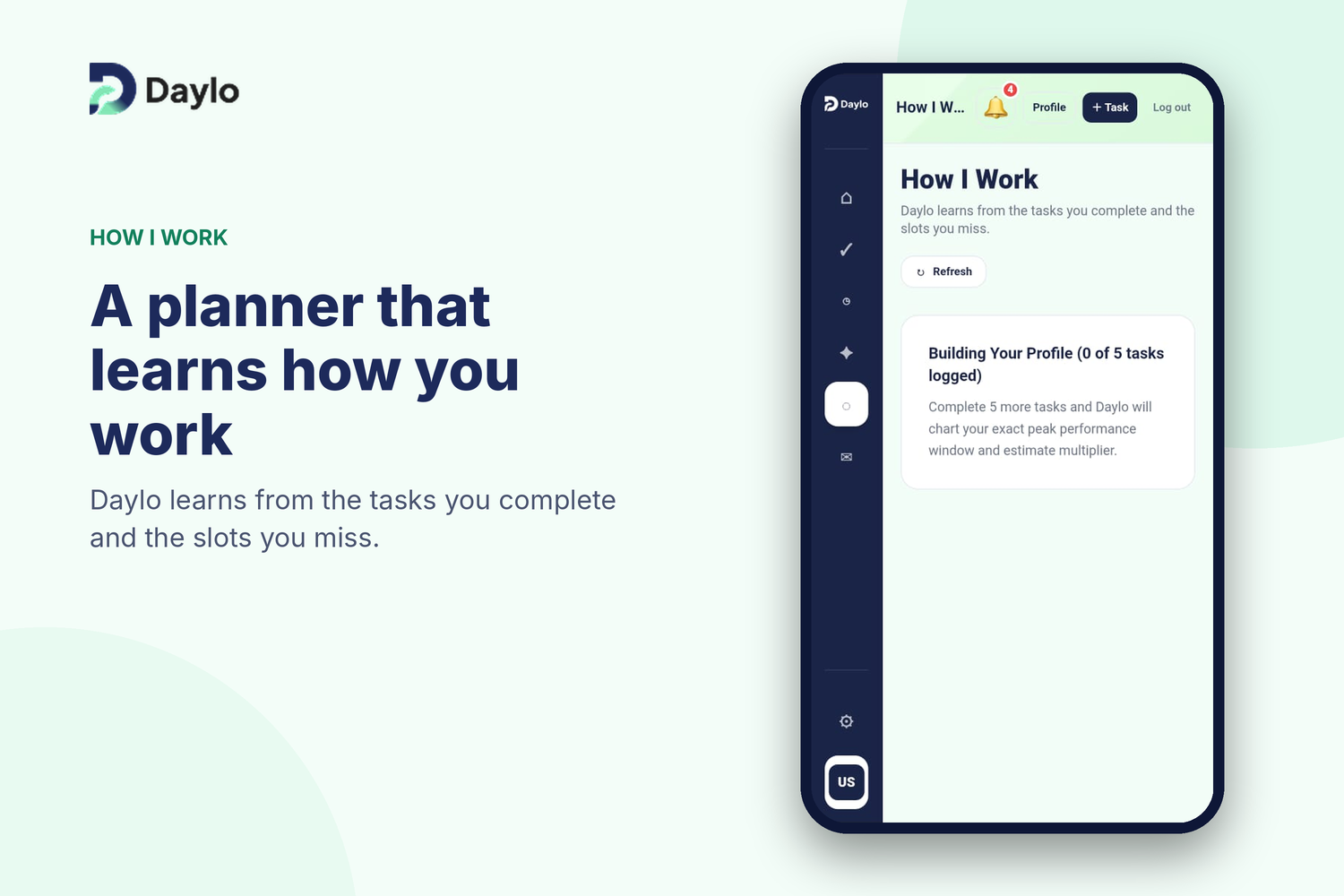
How I Work Page
-
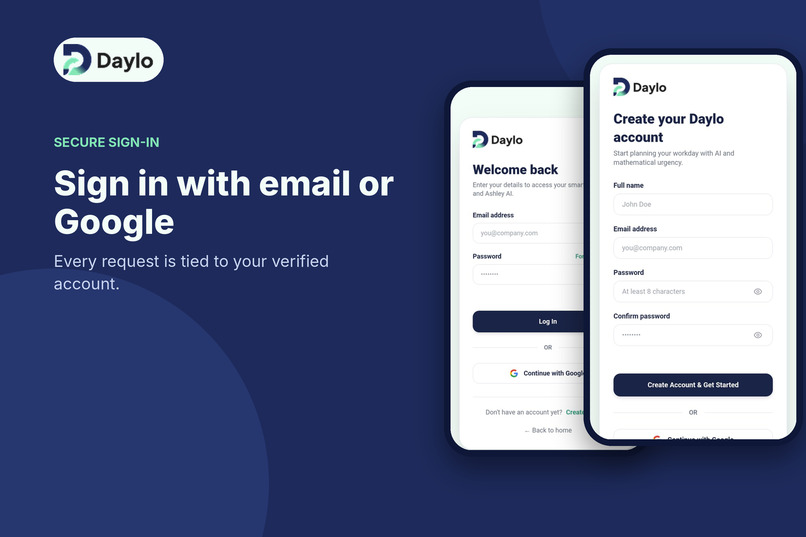
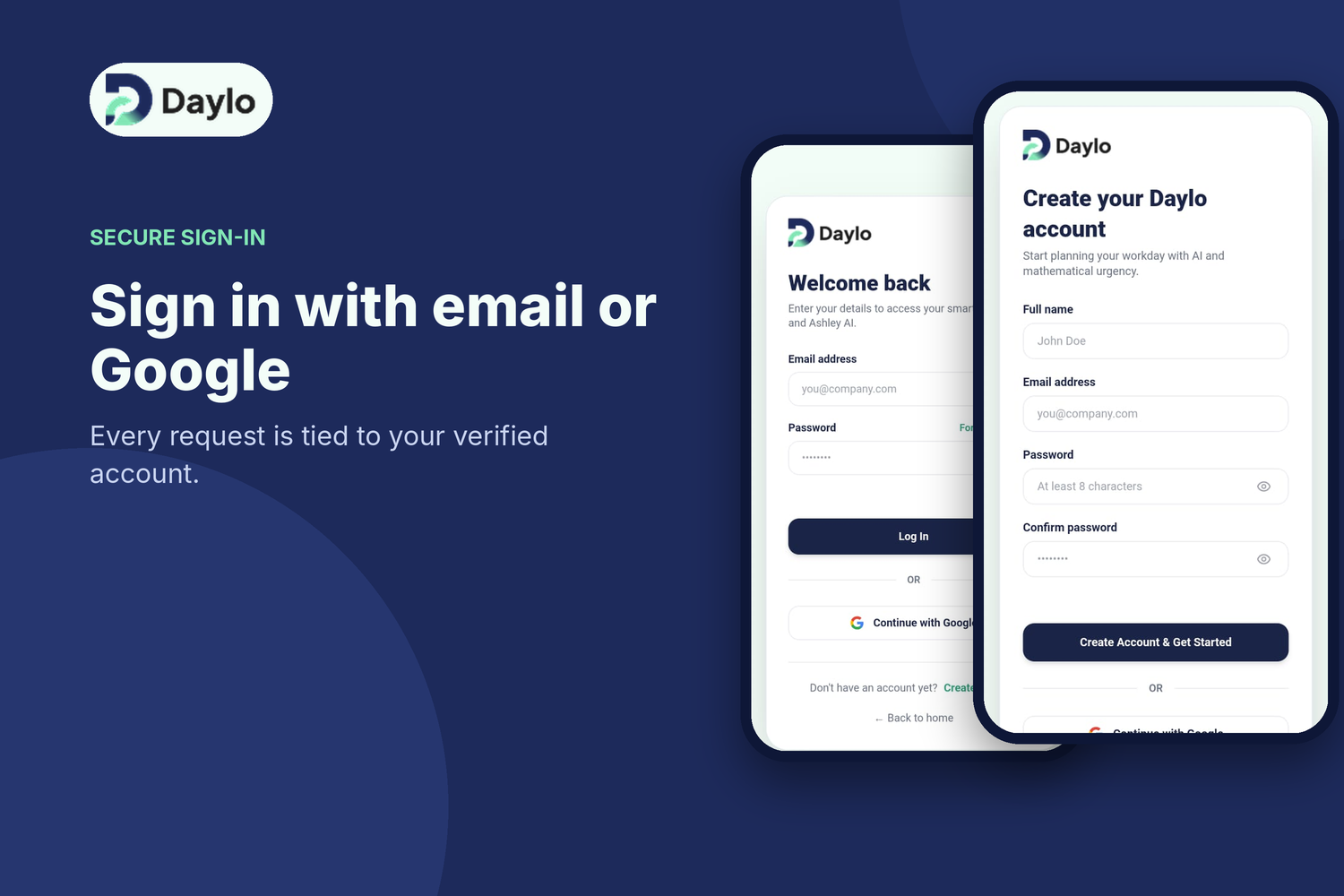
Signup/signin
-
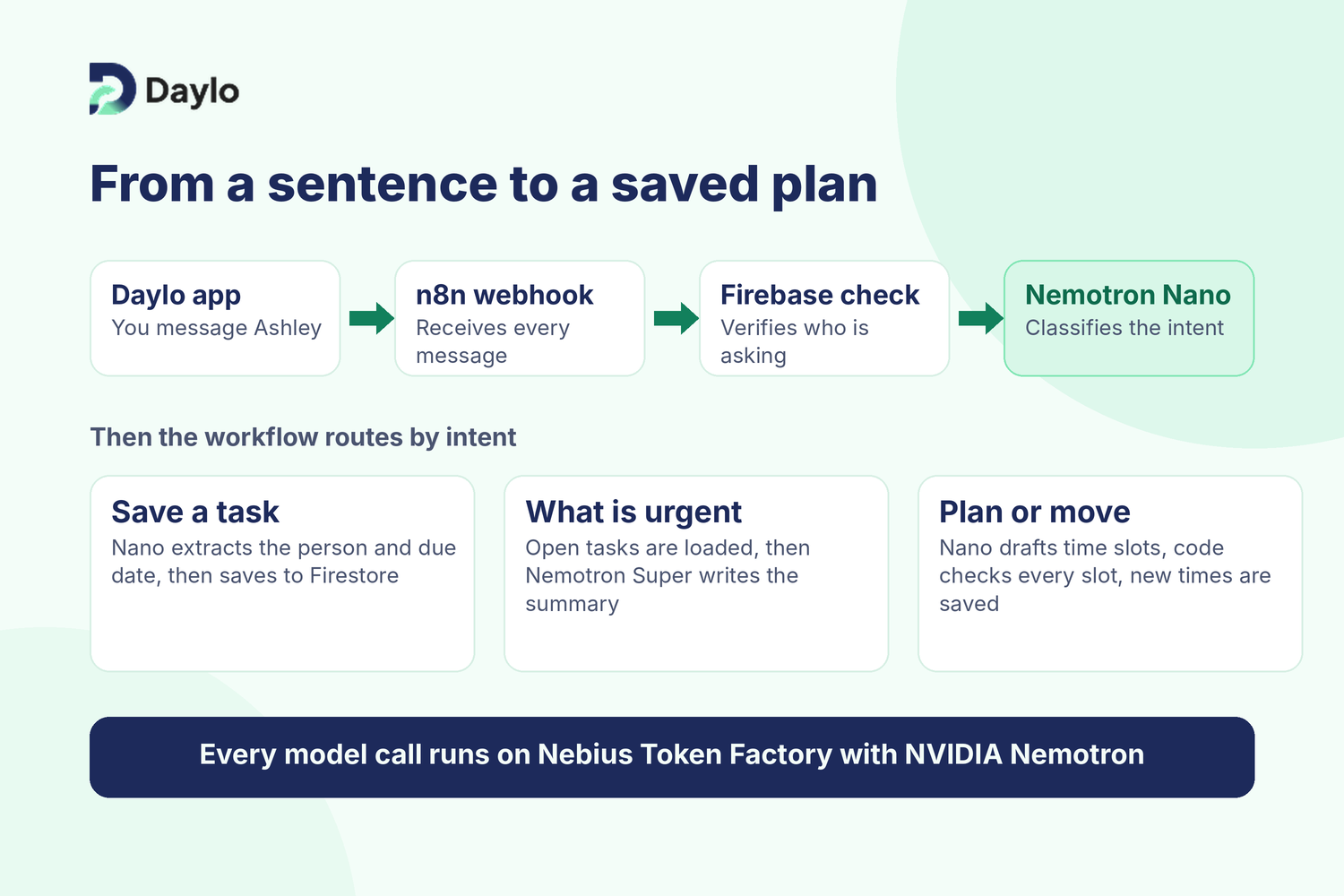
Project Architecture
-
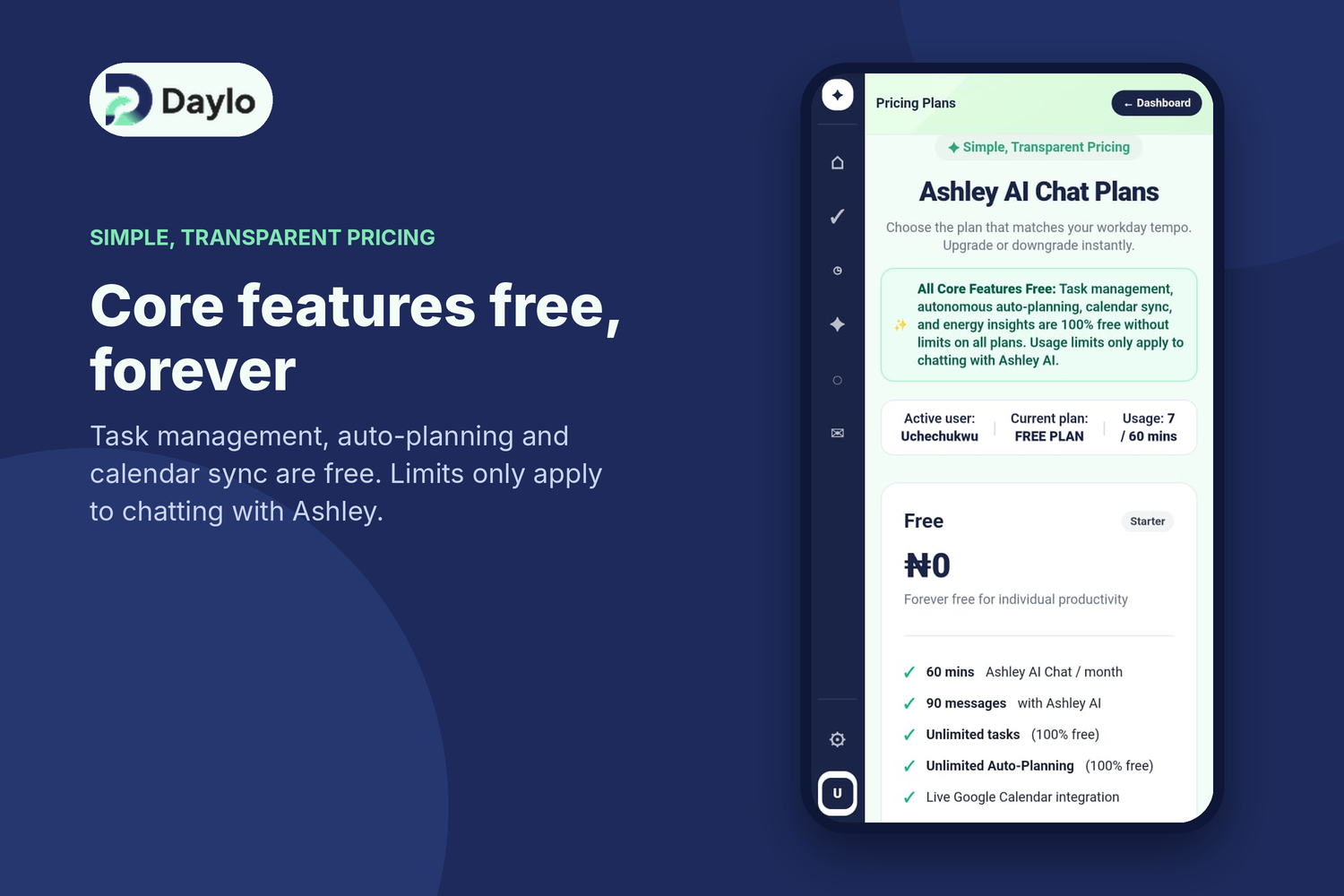
Pricing Plans
Inspiration
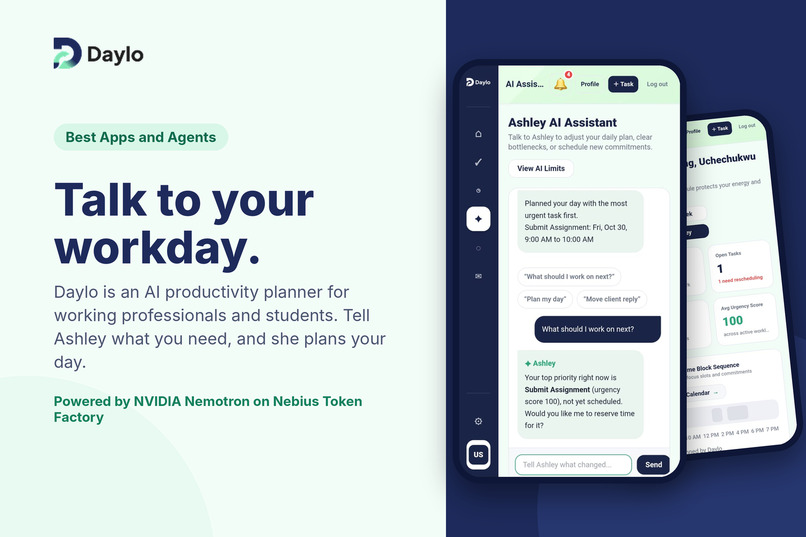
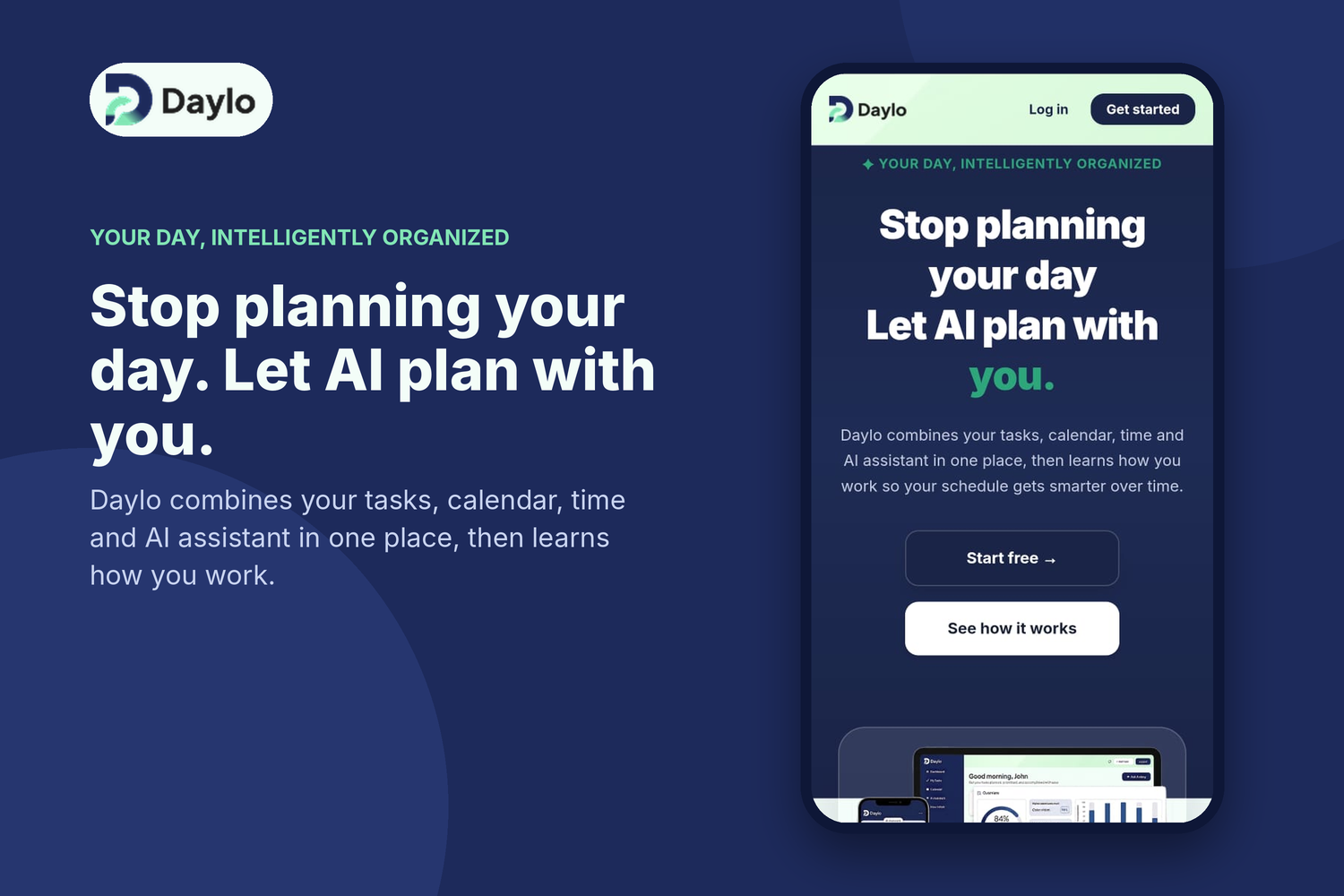
As a VA, I saw how much of a person's day goes into remembering tasks, chasing deadlines and rearranging plans when something changes. When we saw the Best Apps and Agents track for productivity, we knew what to build: "Daylo", an AI powered productivity app that helps working professionals and students stay on top of their day by planning it for them.
What it does
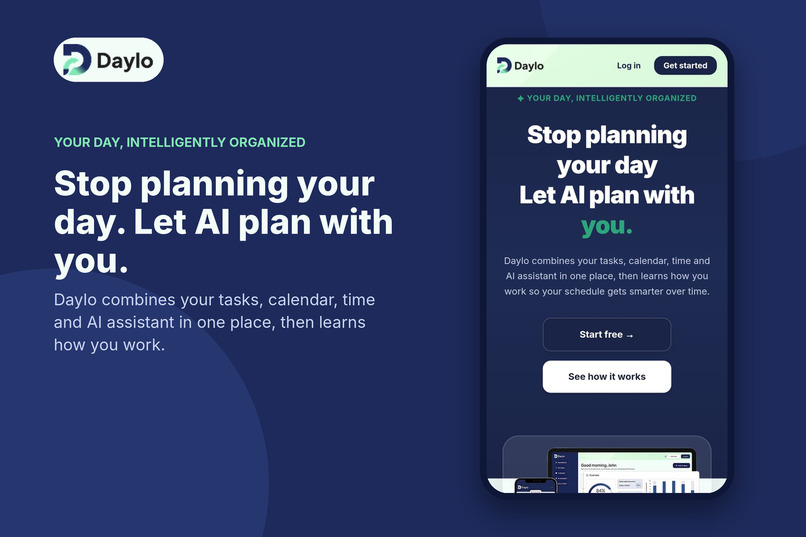
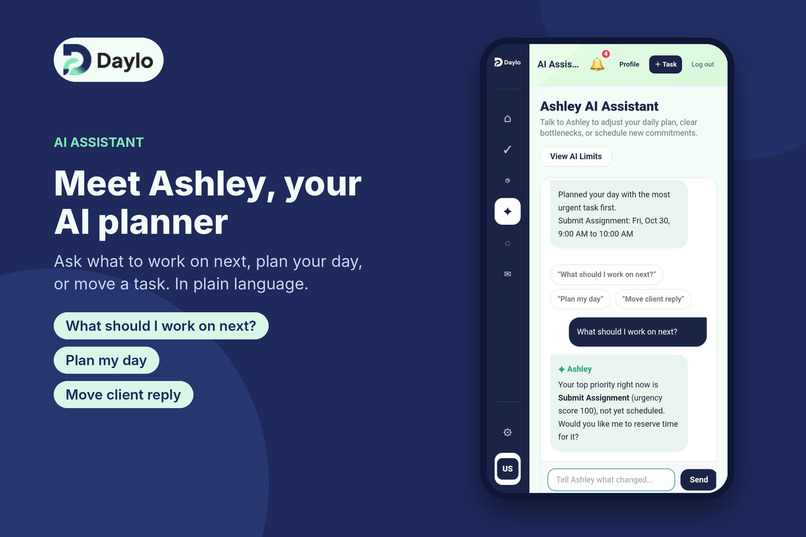
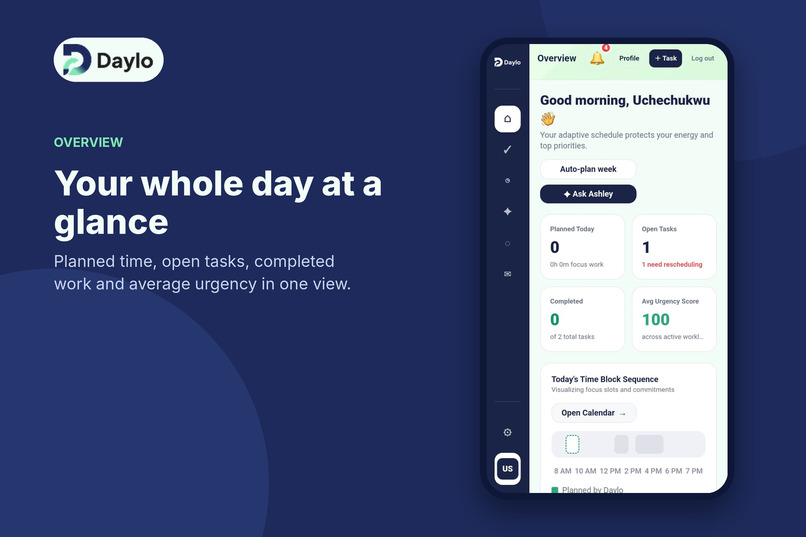
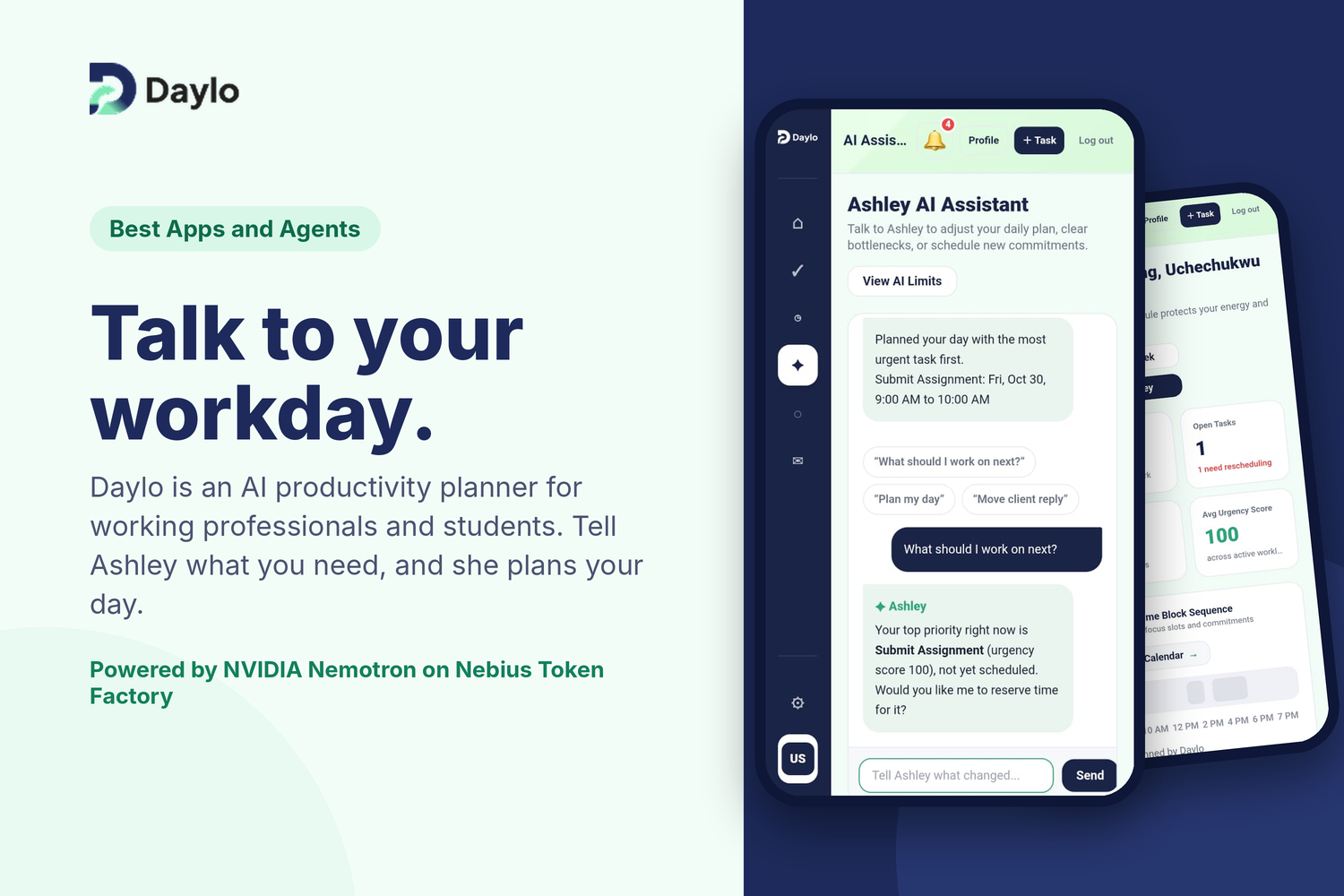
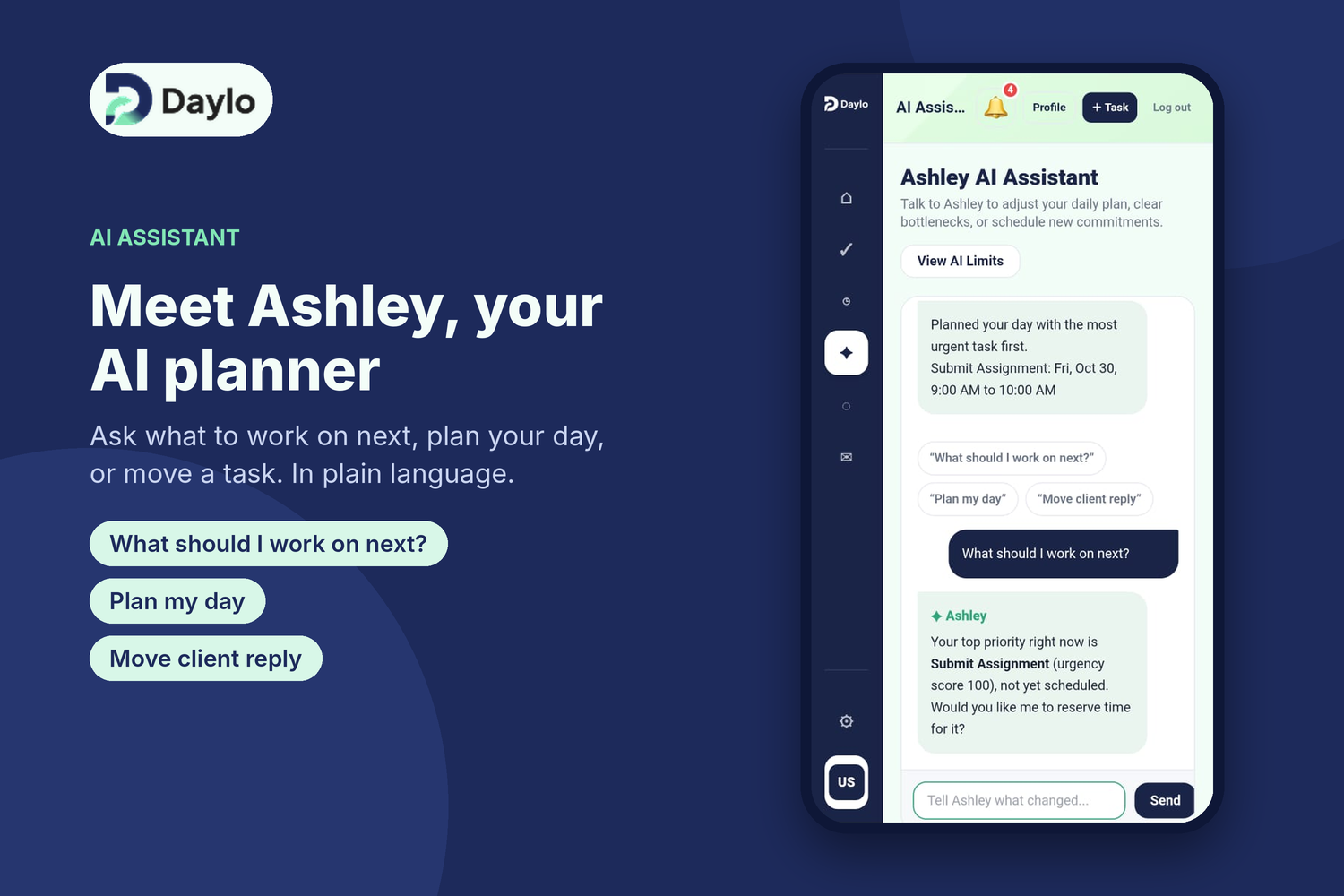
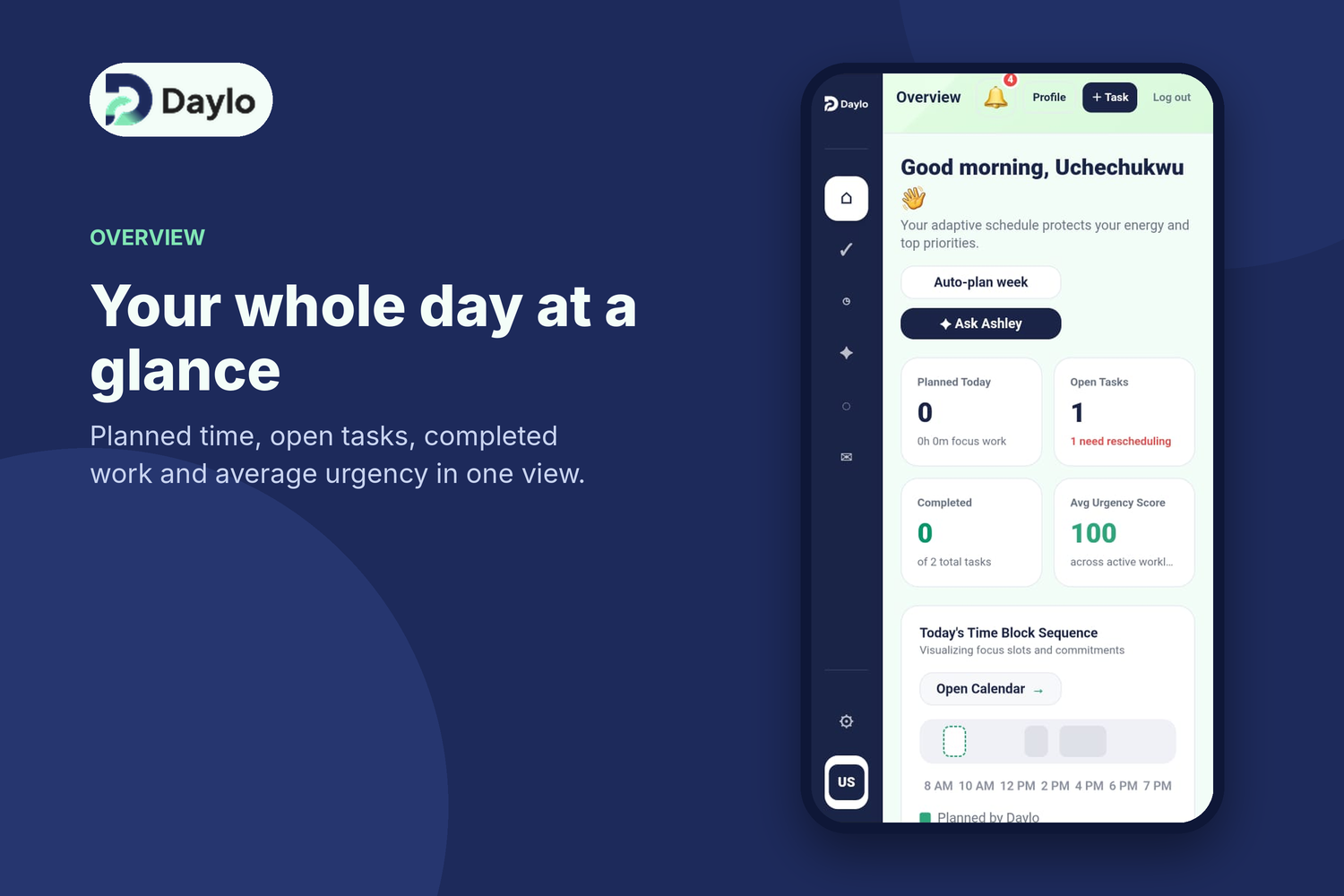
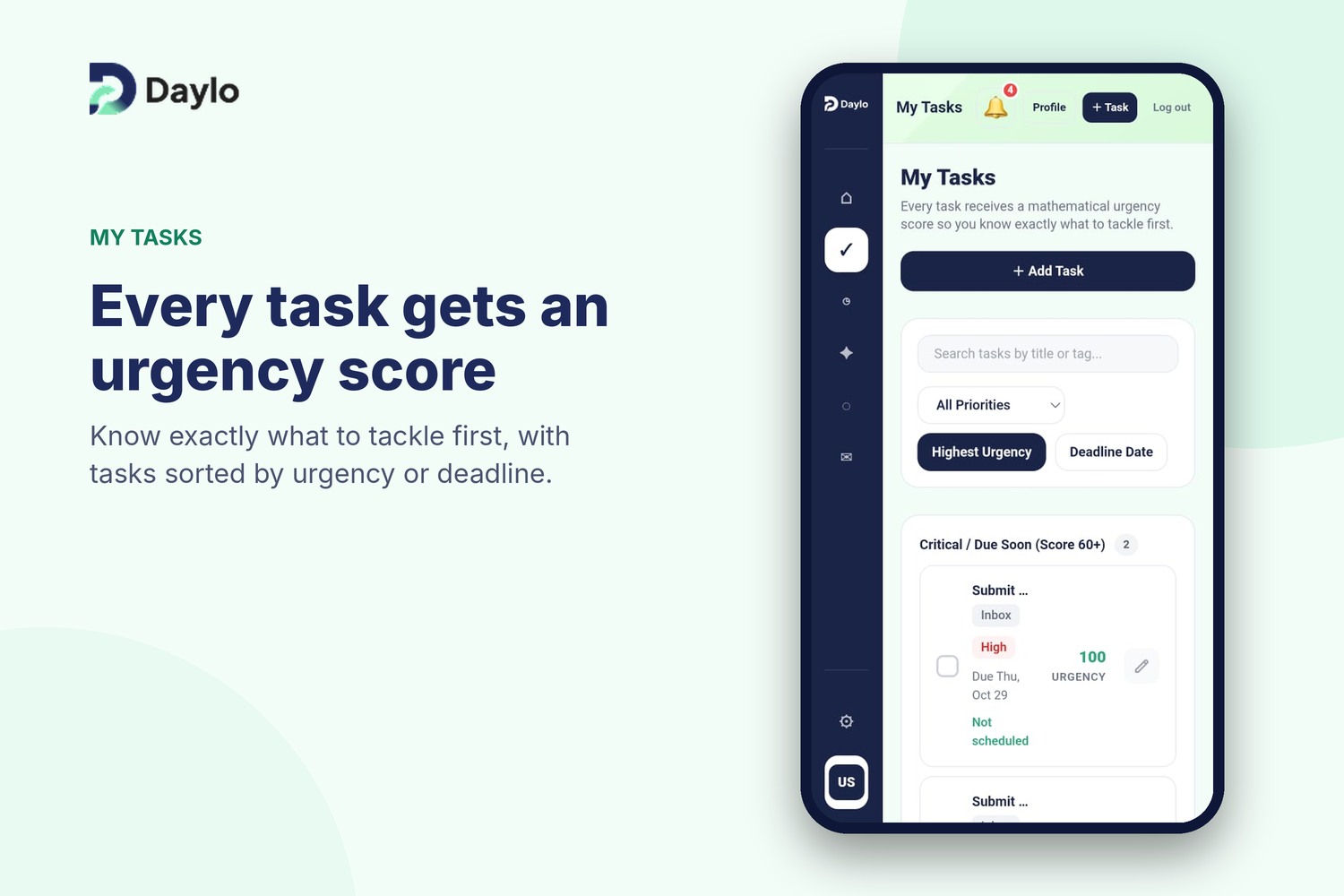
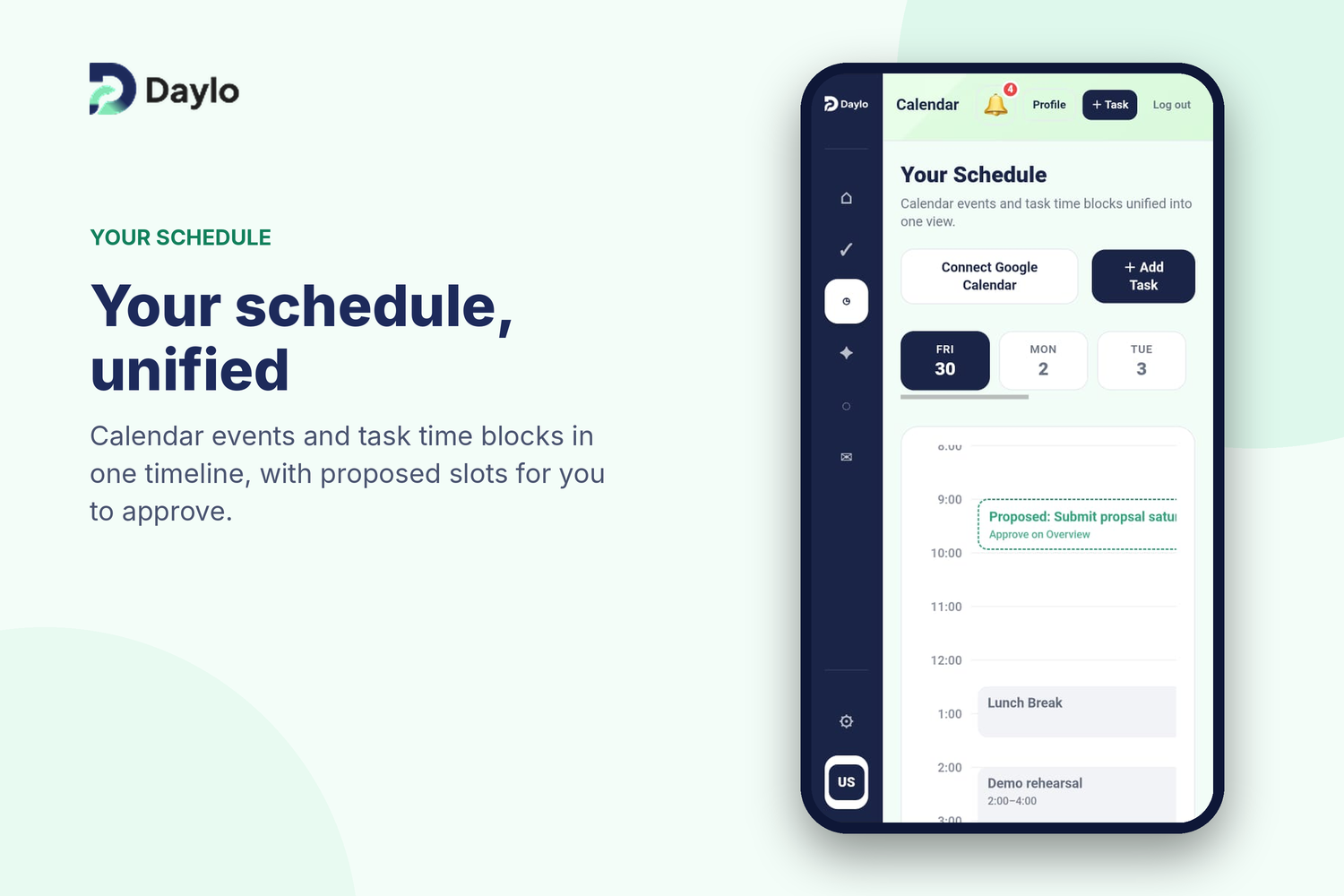
Daylo gives you one place for your tasks, your schedule and an urgency score for everything you owe. You talk to "Ashley", Daylo's AI assistant, in plain language:
- "Send the proposal to Mr. Okafor by Friday." Ashley saves it as a task, with the person and the due date worked out.
- "What should I work on next?" Ashley explains what is most urgent and why.
- "Plan my day." Ashley places your tasks into real time slots inside your work hours.
- "Move the client reply to tomorrow morning." Ashley finds a free slot and updates the task.
How we built it
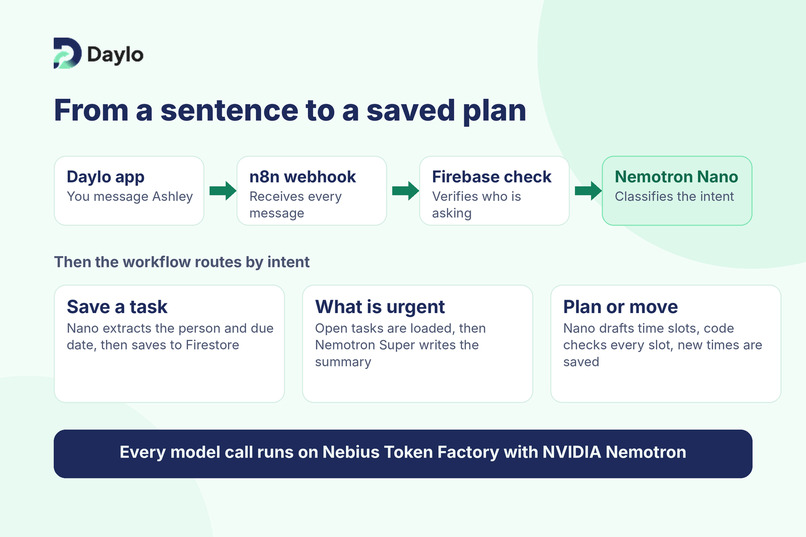
The brain of Daylo is an "n8n workflow" that runs on "Nebius Token Factory" with "NVIDIA Nemotron" open models, called through Nebius's OpenAI-compatible API.
- Nemotron 3 Nano 30B A3B handles the calls that happen on every message: classifying intent, extracting task details, drafting schedules and casual chat. It's small and fast, so replies stay quick and cheap.
- Nemotron 3 Super 120B A12B writes the urgency summaries, because that is the reply the user actually reads.
- Firebase handles sign-in and stores tasks in Firestore. The workflow verifies every request's Firebase token, and the user ID always comes from that token.
- The web app is hosted on Netlify and talks to the workflow through a webhook.
we used no fine-tuning. The classifier returns only a label, extraction and scheduling return strict JSON, and I kept temperatures low and turned reasoning off for speed.
Challenges we ran into
Models propose, code must check. A language model can suggest a schedule that overlaps another task, starts in the past or runs outside work hours. So we added a validation step: every slot the model proposes is checked, and any bad slot is replaced with the next free one before anything is saved. Planned time also gets padded, so a task estimated at $d$ hours is scheduled for $1.5 \times d$ hours.
Platform details: we got confused about which Nebius URL to use, since the docs show a general URL as well as regional ones, and I typed a model ID in the wrong case. Both were quick to fix once I found the cause, but a clearer copy-paste ID and URL in the docs would help newcomers.
Accomplishments that we're proud of
- We built and shipped a working AI productivity app: Daylo is live, you can sign in, and you can talk to Ashley to save tasks, check what's urgent, plan your day and move a task when plans change.
- It solves a real problem: Working professionals and students lose time remembering deadlines and re-planning when things shift. Daylo turns a sentence like "Plan my day" into real time slots on the schedule.
- The AI is reliable, not just clever: The model proposes a schedule, and my own code checks it for overlaps, past times and time outside work hours before anything is saved.
- We used the right model for each job: Nemotron 3 Nano 30B A3B handles the fast, frequent work, and Nemotron 3 Super 120B A12B writes the urgency summaries.
- Each user's data is protected: Every request is verified with Firebase sign-in, and the user ID comes from the verified token, never from what the browser sends.
- I built it solo, end to end: That covers the workflow design, the AI prompts, the API integrations, the app and the debugging, and I got it live within the hackathon. ## What we learned
- Use a small model for frequent, simple jobs and a larger one only where quality shows.
- Treat model output as a suggestion and validate it in code before saving.
- Nebius Token Factory's OpenAI-compatible API made it easy to use Nemotron models from n8n with plain HTTP requests.
What's next for Daylo
Daylo works today, and we built it using Nebius promotional credits. These are the steps that take it from a hackathon project to a product people can rely on:
- Google Calendar integration: Ashley will read your existing meetings so she never plans over them, and write planned blocks back to your calendar. This is the top priority, because most people already live in their calendar.
- Move to paid, production-grade model capacity: Moving from promotional credits to paid usage on Nebius Token Factory lets Daylo serve real users with steady speed and capacity. It also lets us test larger Nemotron models.
- A custom domain: Moving from a free Netlify address to a branded domain makes Daylo easier to trust, share and remember.
- Funding and early users: Investors and partners that can help to grow Daylo, starting with working professionals and students, and to cover model costs, hosting and further development.

Log in or sign up for Devpost to join the conversation.