-
-
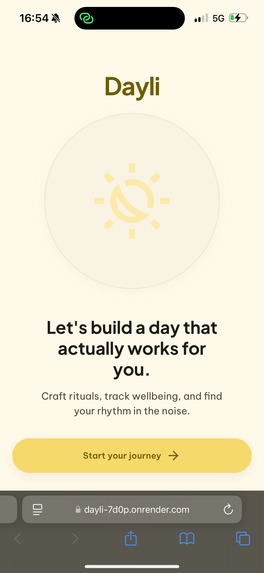
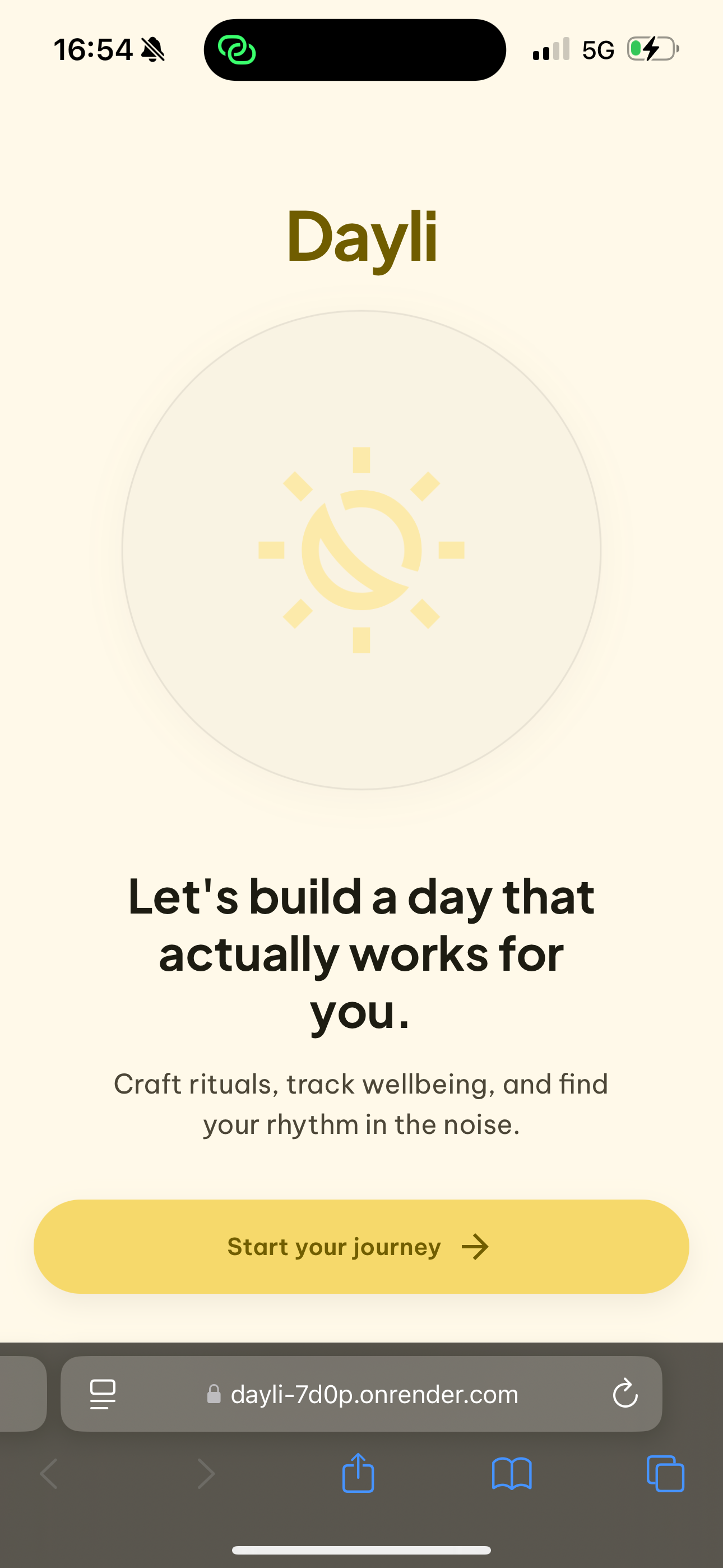
welcome to dayli
-
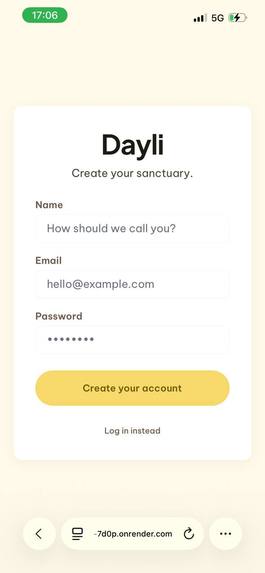
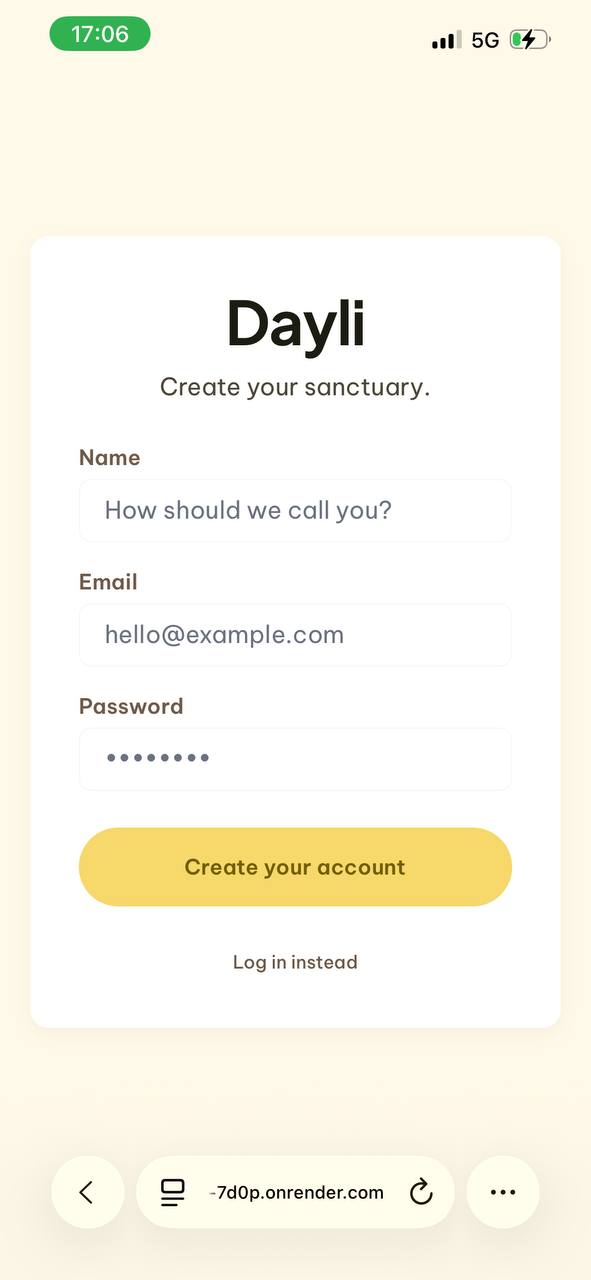
Sign up page
-
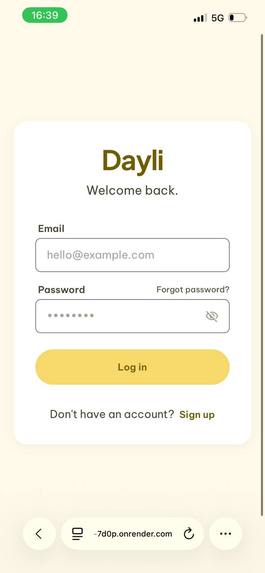
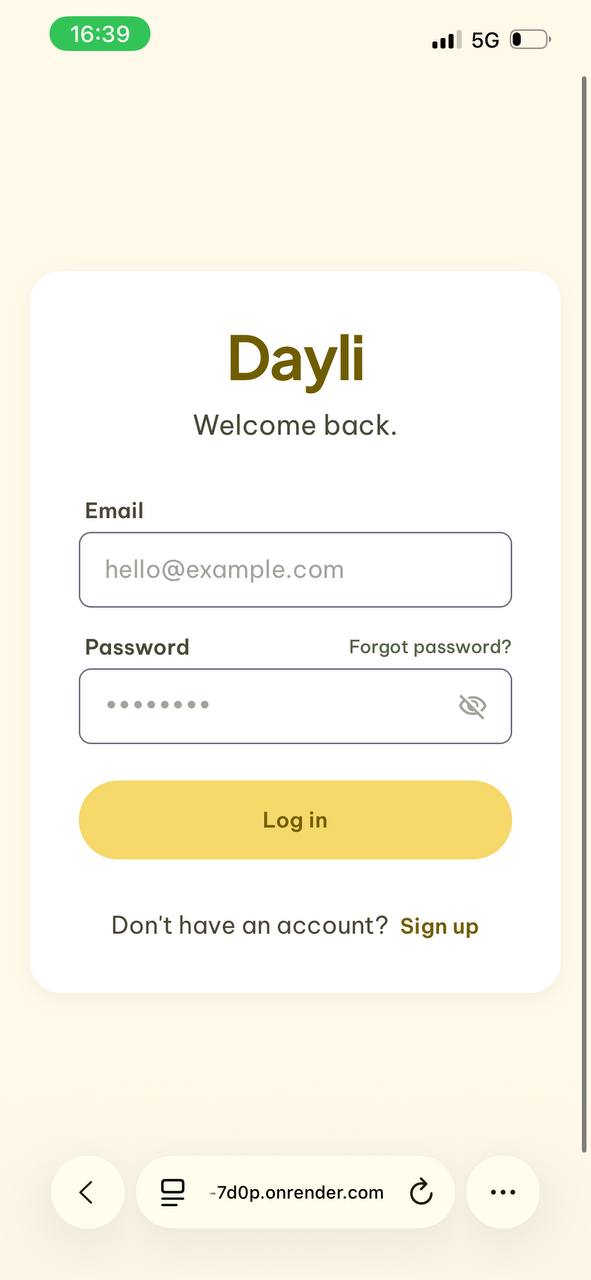
login page
-
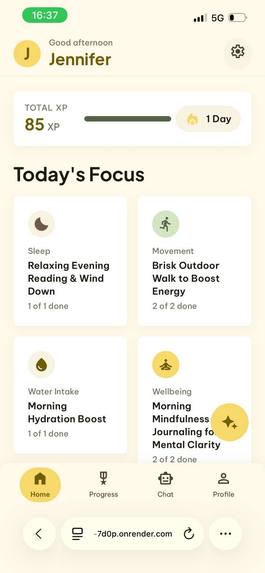
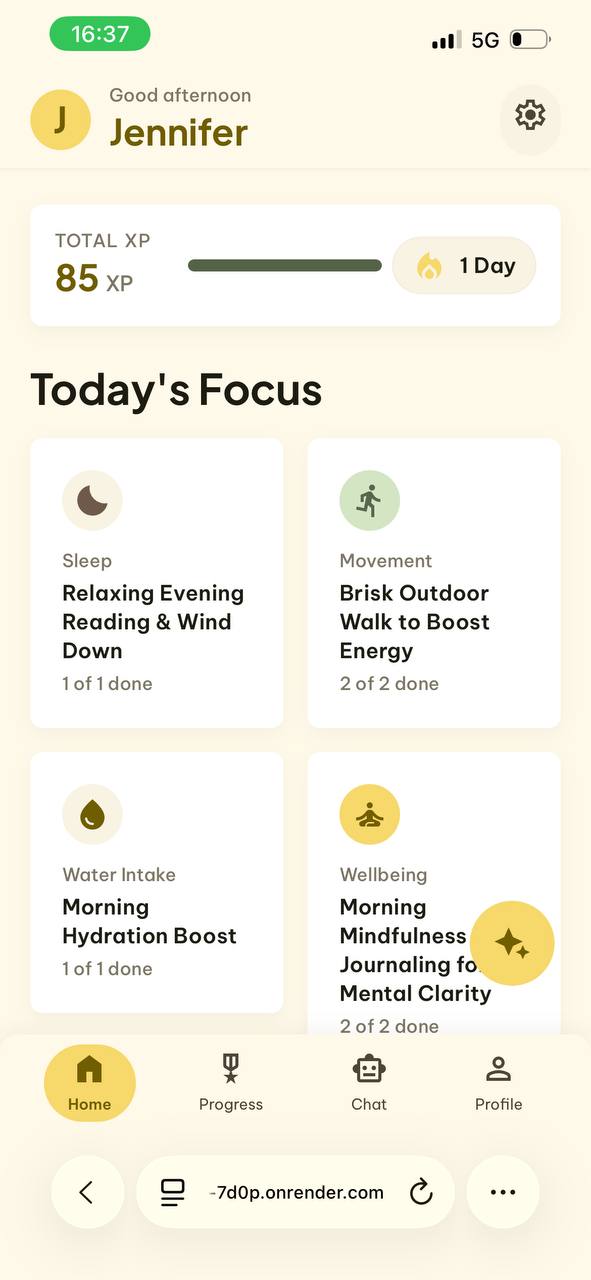
Home page
-
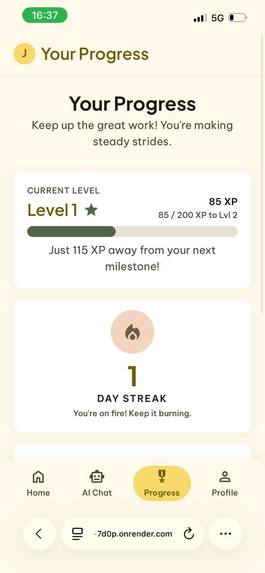
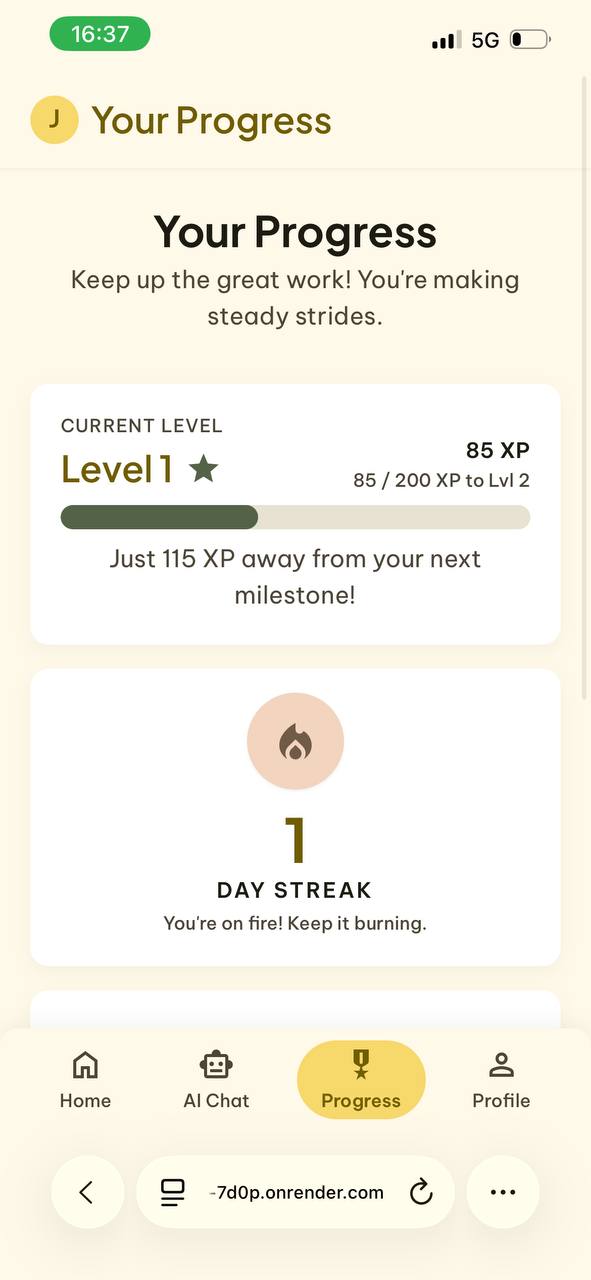
Progress page
-
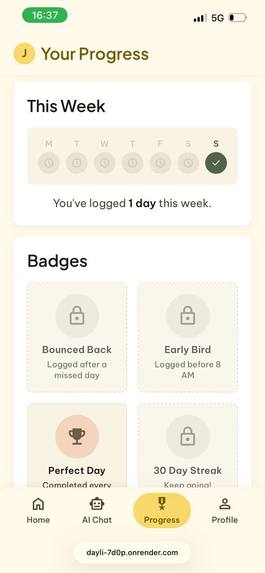
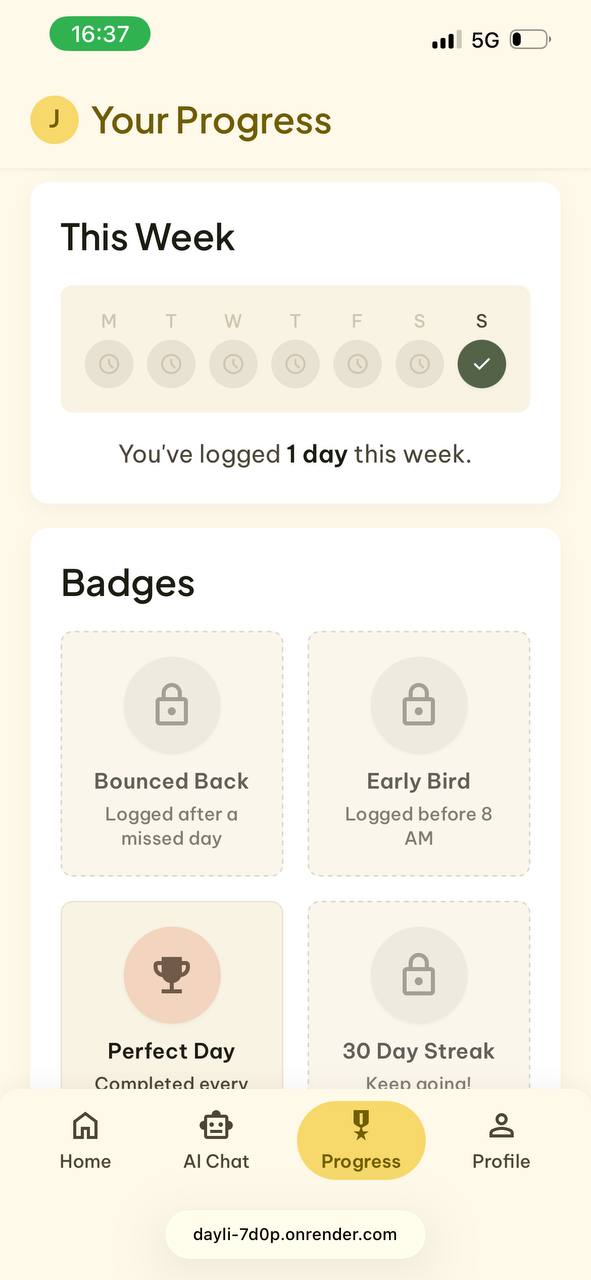
An extension of the progress page
-
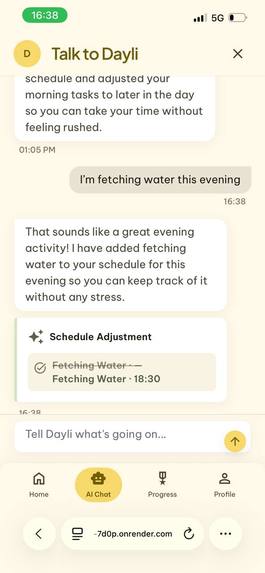
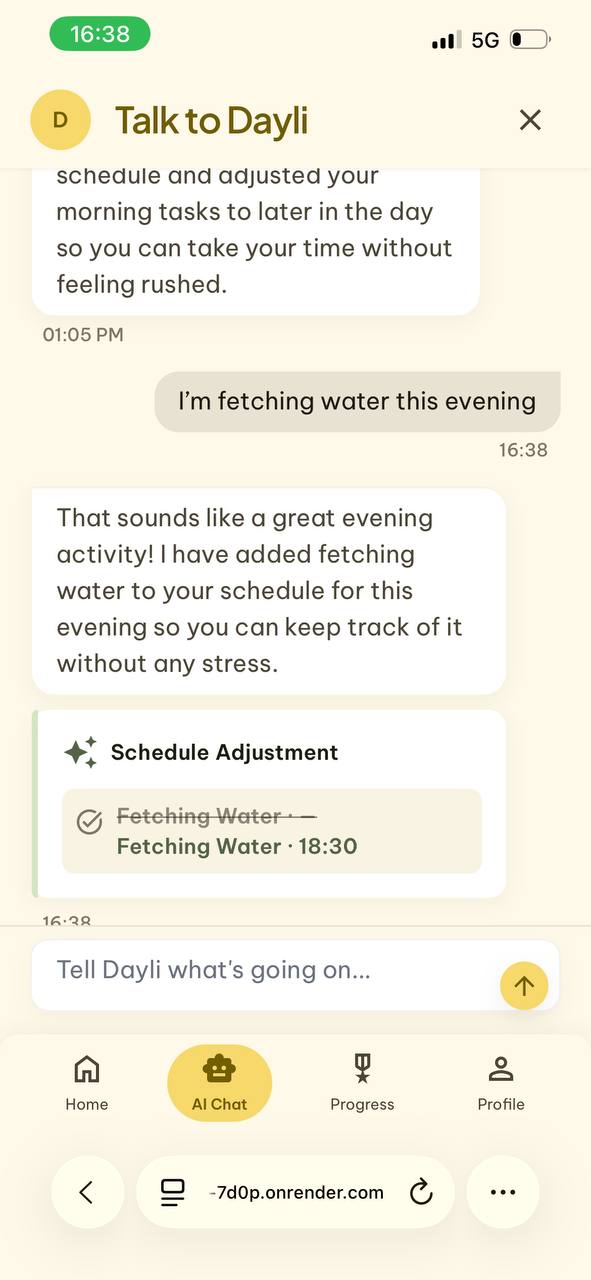
Dayli AI chat page
-
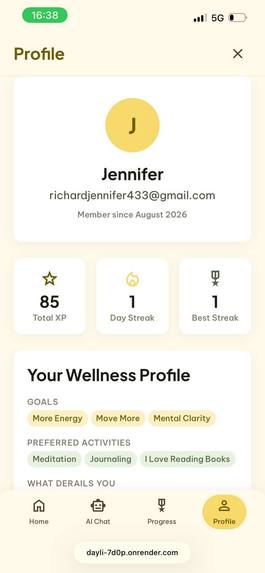
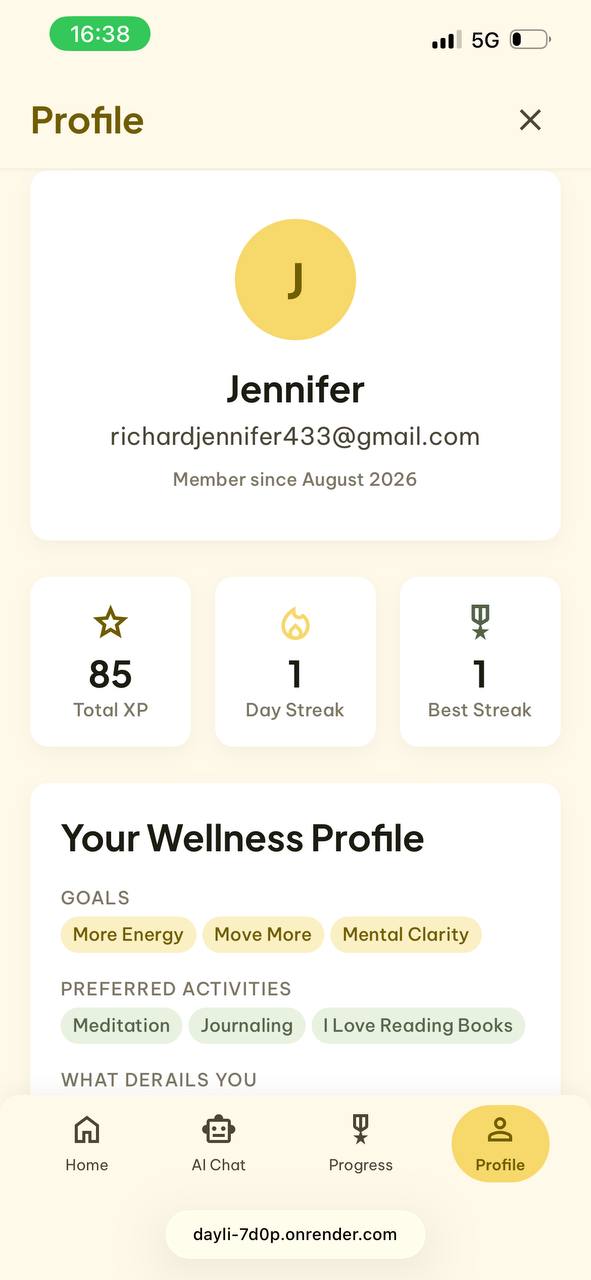
Profile page
-
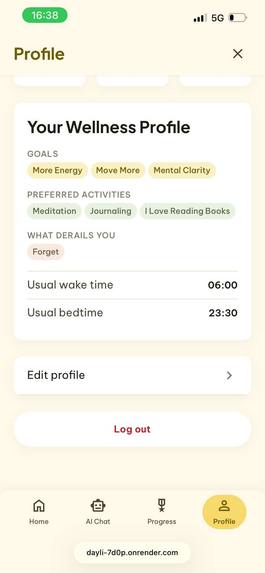
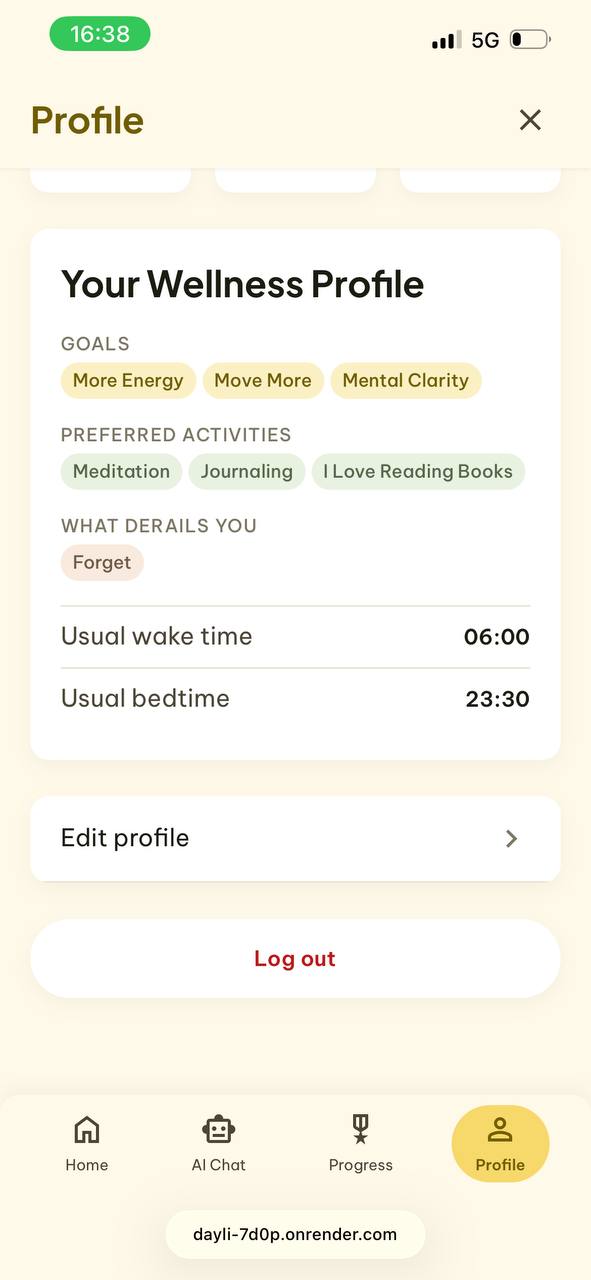
An extension of the profile page
Inspiration
Most wellness apps give you a fixed routine and expect you to stick to it no matter what. But real life doesn't work that way. You oversleep, something comes up, or you just don't have the energy. When that happens, most apps treat it as failure, and people just give up. We wanted to build something that treats life happening as normal, not a failure, and actually helps you adjust instead of guilting you.
What it does
Dayli is an AI wellness app that builds your day around your own goals, not a generic routine. When you sign up, it asks about your goals, your habits, your schedule, and what usually throws you off. It uses that to create your day. If something changes, you just tell Dayli in your own words, like "I have an event tonight" or "I woke up late." Dayli then changes your plan around it instead of just marking things as missed. It can shorten a task, move it to a different time, or even add a new task if you mention something new. You earn XP for completing tasks, build streaks, and unlock badges that are actually tied to what you did, not just decoration. You can also edit your profile anytime, and Dayli will update your day to match.
How we built it
We built the backend with Python and Flask. The database is PostgreSQL, hosted on Neon. For the AI, we used Google Gemini through the Gemini Student Pro plan, and we made it return structured JSON answers instead of plain text, so the app always knows exactly what changed and never breaks. The screens were designed in Google Stitch first, then we turned them into real working pages using Tailwind CSS, connected to live data from our database instead of just static designs. The whole app runs on Render as one service, and we use UptimeRobot to ping it so it doesn't go to sleep.
Challenges we ran into
Partway through building, the Gemini model we started with got cut off for new users, so we had to quickly switch to a newer model. We also had trouble getting our database driver working on an M1 Mac, and had to switch to a different version of it. At one point, we restructured the whole project into separate backend and frontend folders, which meant carefully checking that nothing broke.
Accomplishments that we're proud of
Getting the "tell Dayli what changed and it adjusts your day" feature to actually work, end to end, is what we're most proud of. Watching it genuinely reshape a real plan, and even add new tasks when someone updates their goals, is the moment that makes Dayli feel different from a normal habit tracker.
What we learned
Getting the AI to return clean, structured data instead of plain text made a huge difference. It meant we could trust what it sent back instead of hoping it was formatted right. We also learned that small details matter a lot, like showing real task names instead of generic numbers, or badges that are actually earned. Those small things made the app feel personal.
What's next for Dayli
We want to add reminders to check in with users, and build a weekly view so people can look back and see how their days changed over time. We will also add a feature that lets fellow Dayli users to connect with each other and keep streaks with other, acting as accountability partners, which will influence productivity with reduced pressure.
Built With
- flask
- gemini
- html5
- neon
- postgresql
- python
- tailwindcss


Log in or sign up for Devpost to join the conversation.