-
-
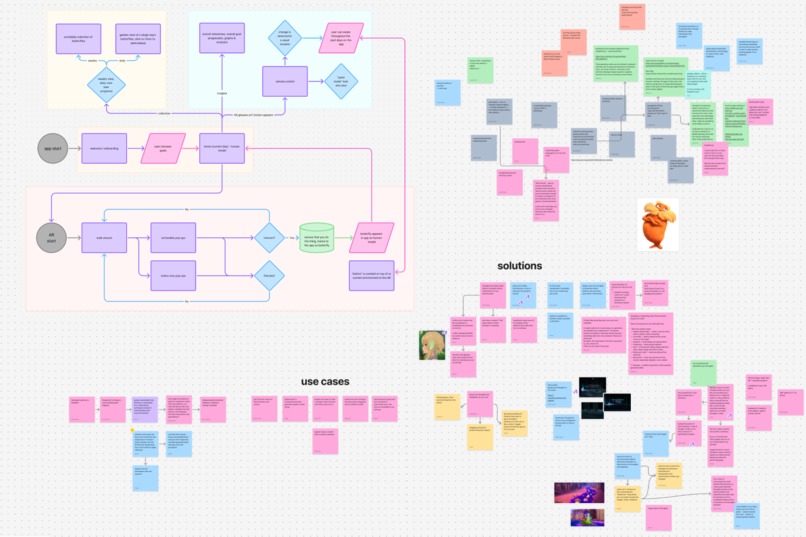
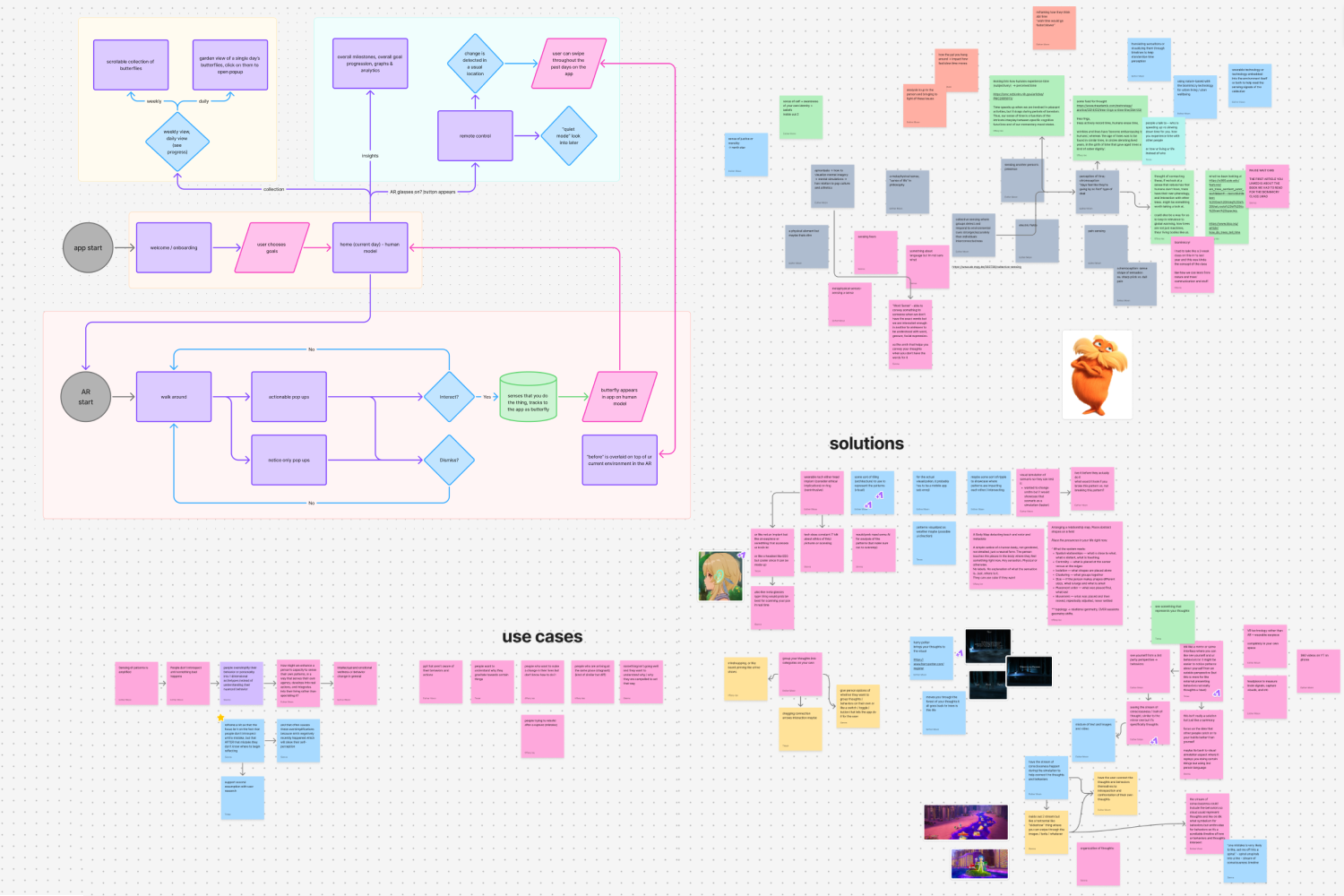
Problem space brainstorming, solution ideation, and user flow
-
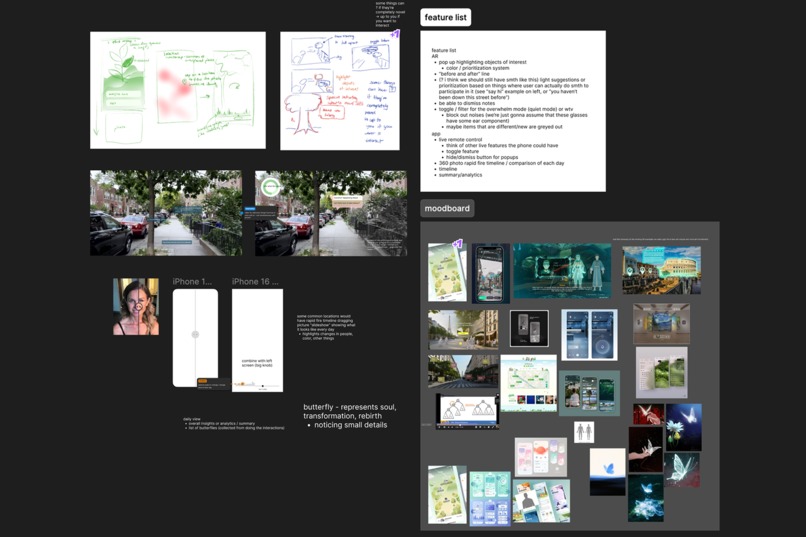
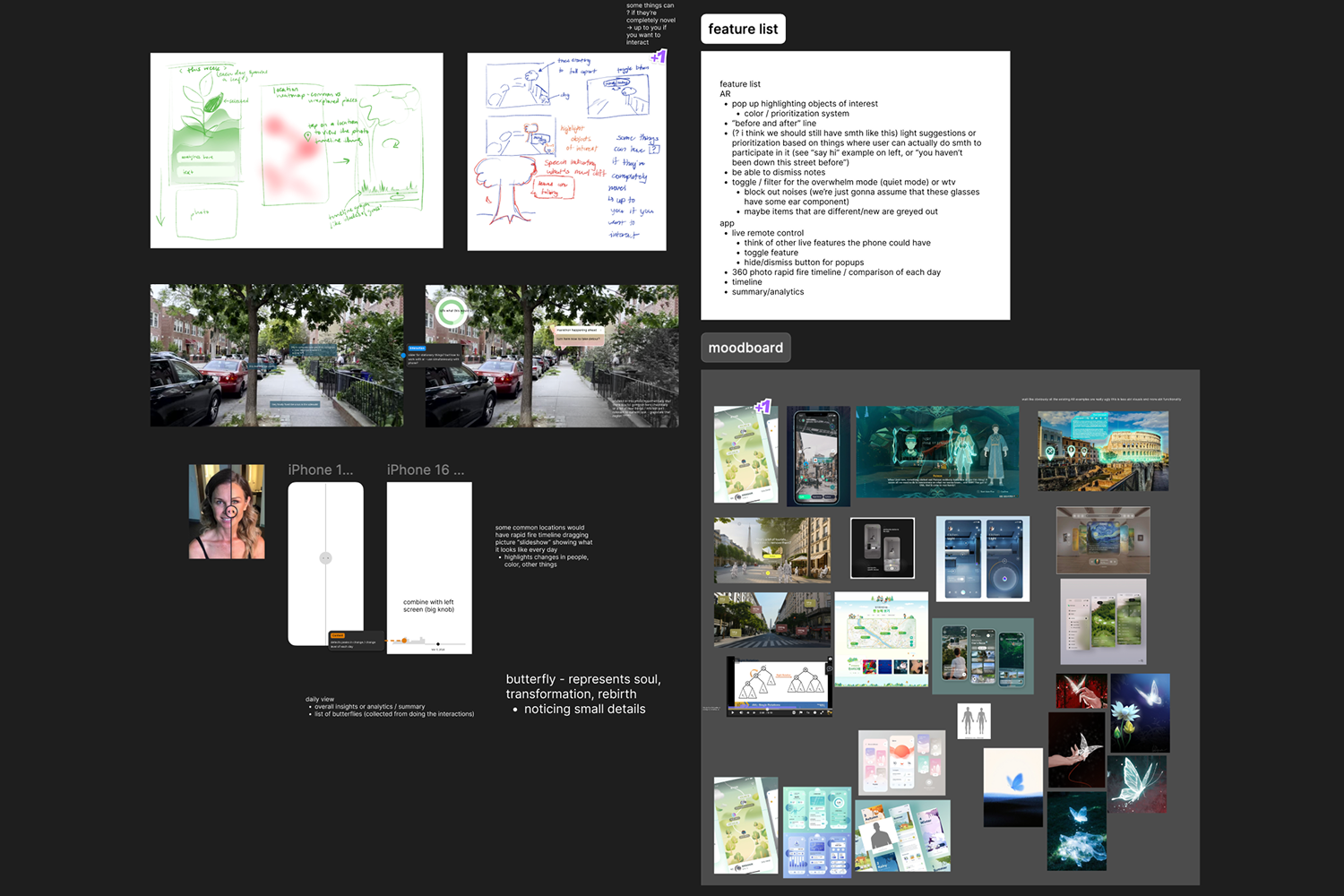
Moodboard and initial sketches + wireframes
-
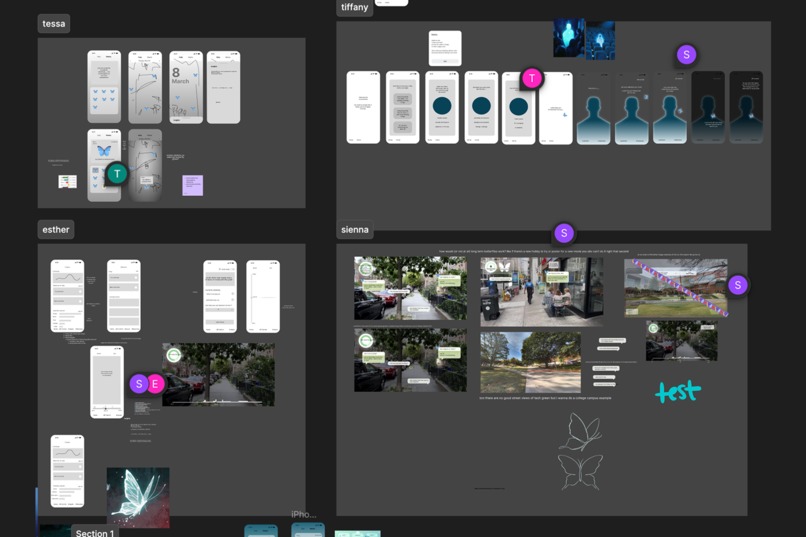
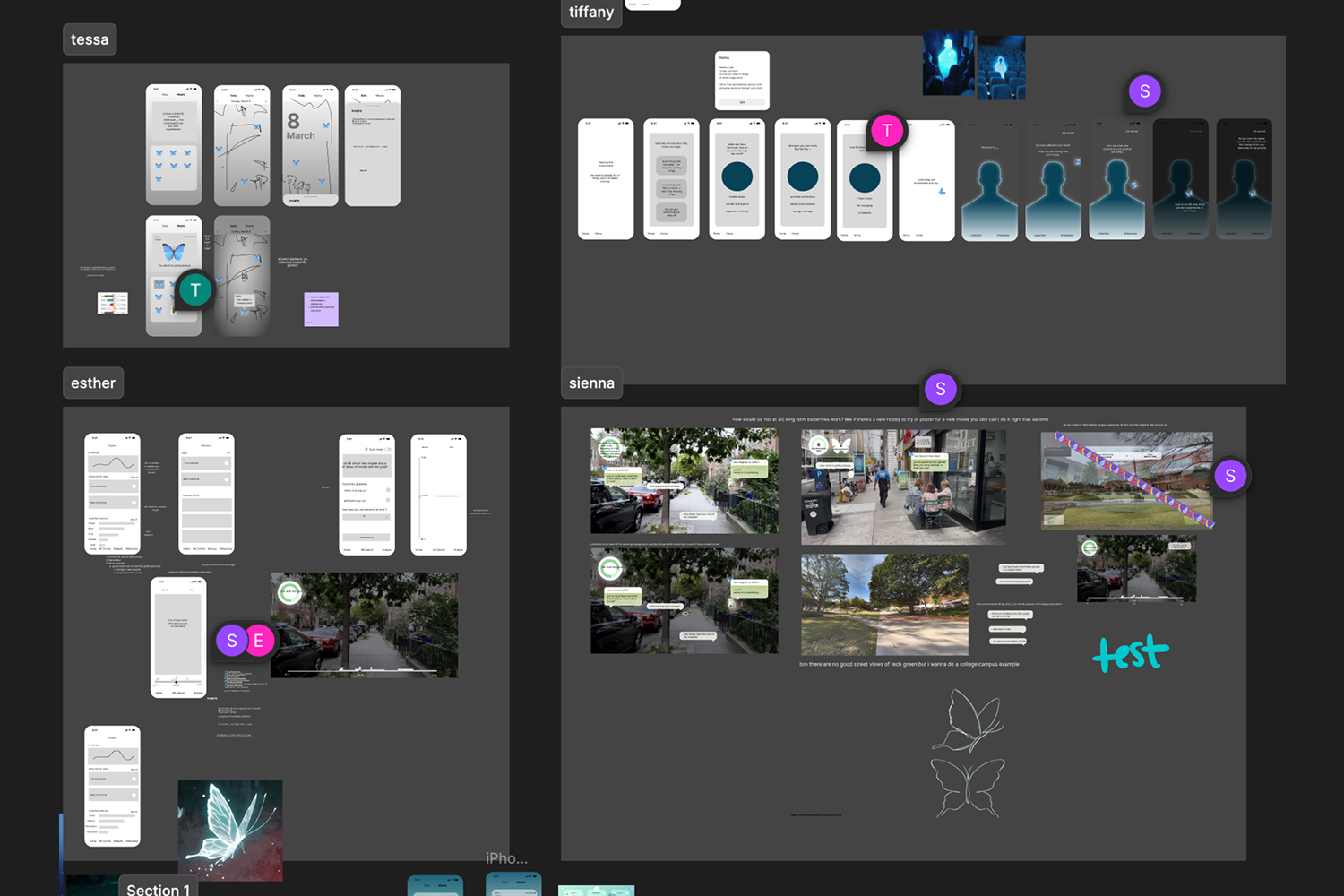
Low-fidelity screens
-
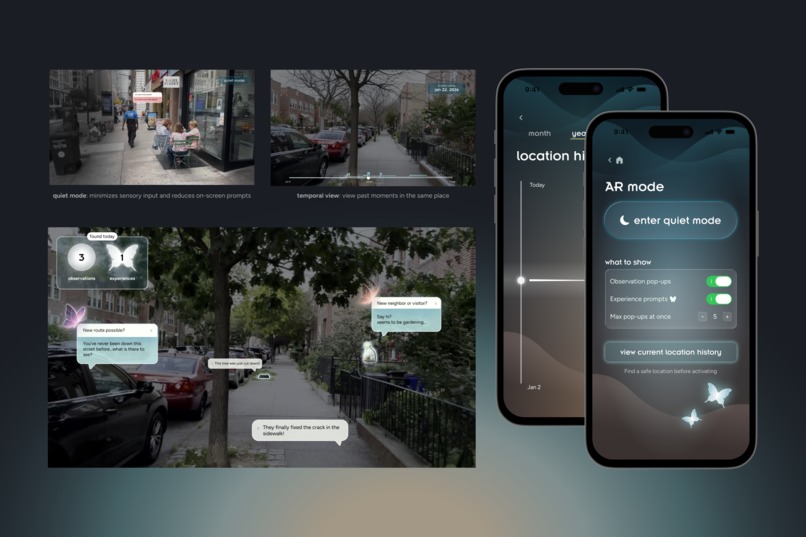
Final AR views
-
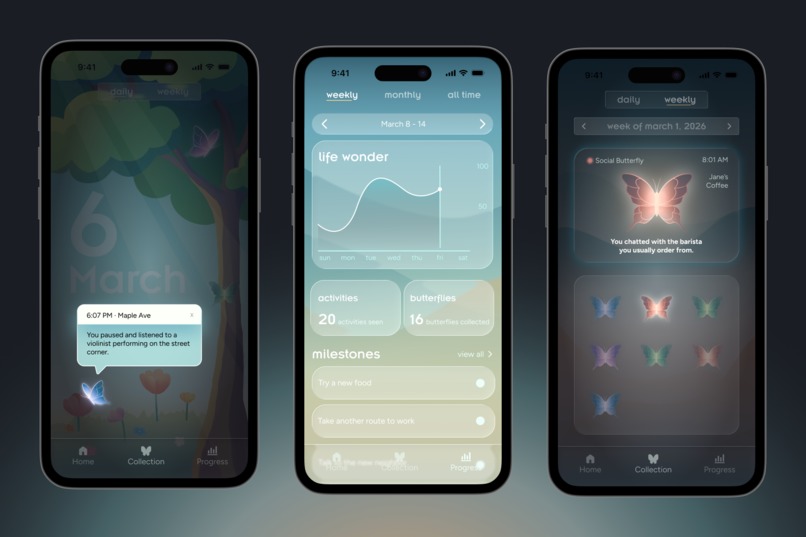
Final butterfly collection & progress insights screens
Daybreak
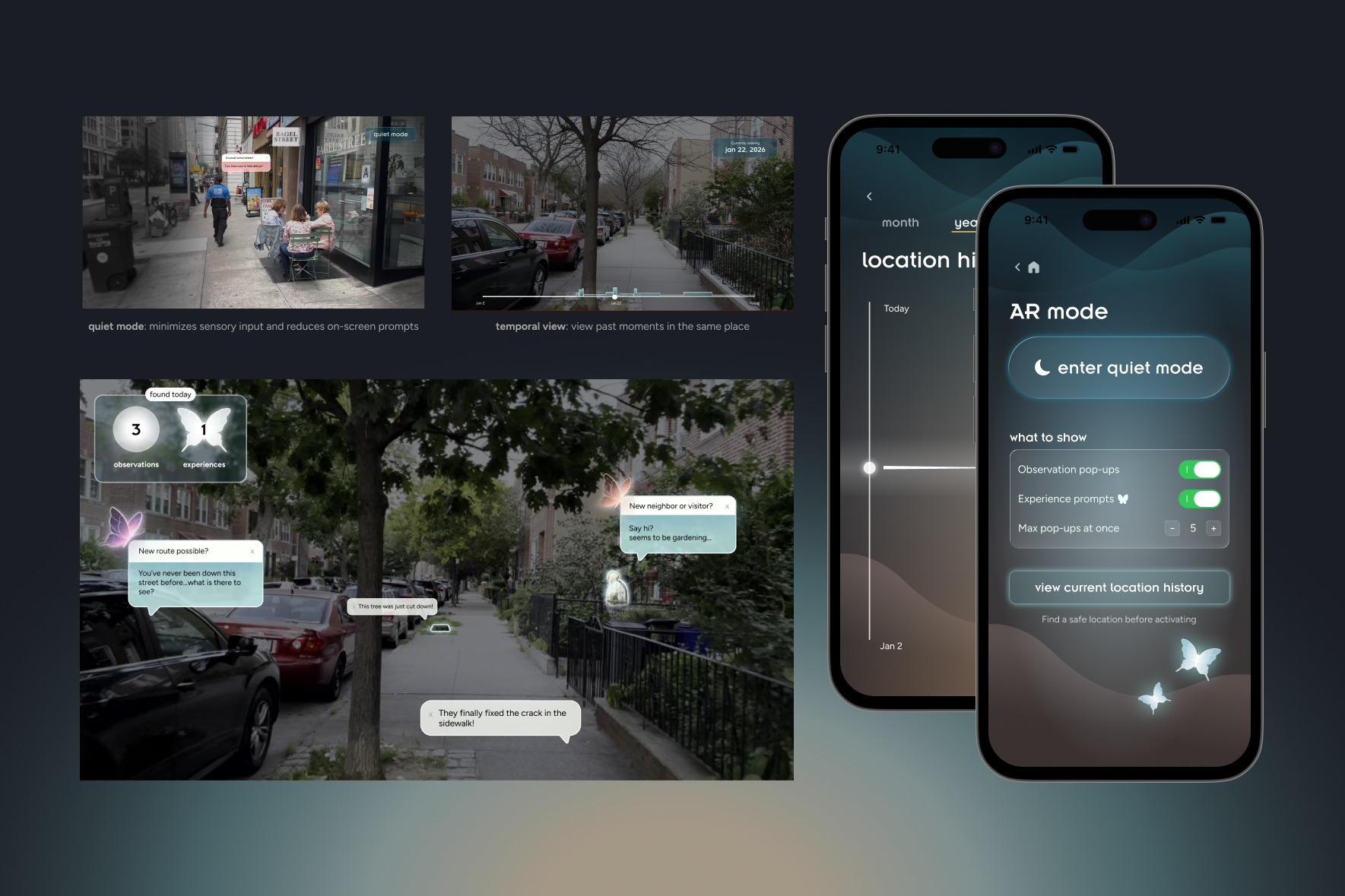
Daybreak is a dual-system AR + tracking app designed to restore the sense of novelty people gradually lose in the repetitive loop of their monotonous routines.
The Problem
For many students and workers, life follows a familiar rhythm: wake, commute, work, repeat. Commuting the same routes, visiting the same places, and following the same schedules can lead to sensory desensitization. Environments that were once engaging begin to feel predictable and routine. Over time, we slip into autopilot, overlooking small changes and moments of curiosity. When novelty fades, everyday life can start to feel monotonous and disconnected.
We explored an often-overlooked sense: the ability to perceive novelty in everyday life. Over time, familiar environments become predictable, which causes people to overlook subtle changes around them. We were interested in how humans naturally stop noticing things that remain constant in their environment. While this helps the brain conserve energy, it also means we can overlook moments of curiosity or small changes that could make daily life feel more engaging. We wondered if we could design technology that could help people notice those subtle changes again. So, we developed Daybreak, which introduces a new perceptual layer that helps users notice small environmental shifts and opportunities to keep familiar spaces feeling fresh and exciting.
Introducing Daybreak
AR Environment
- Real-time environmental differencing via camera feed comparison against stored reference model
- Object detection classifies butterfly type: Social Butterflies, Sensory Butterflies, Activity Butterflies, and Exploration Butterflies
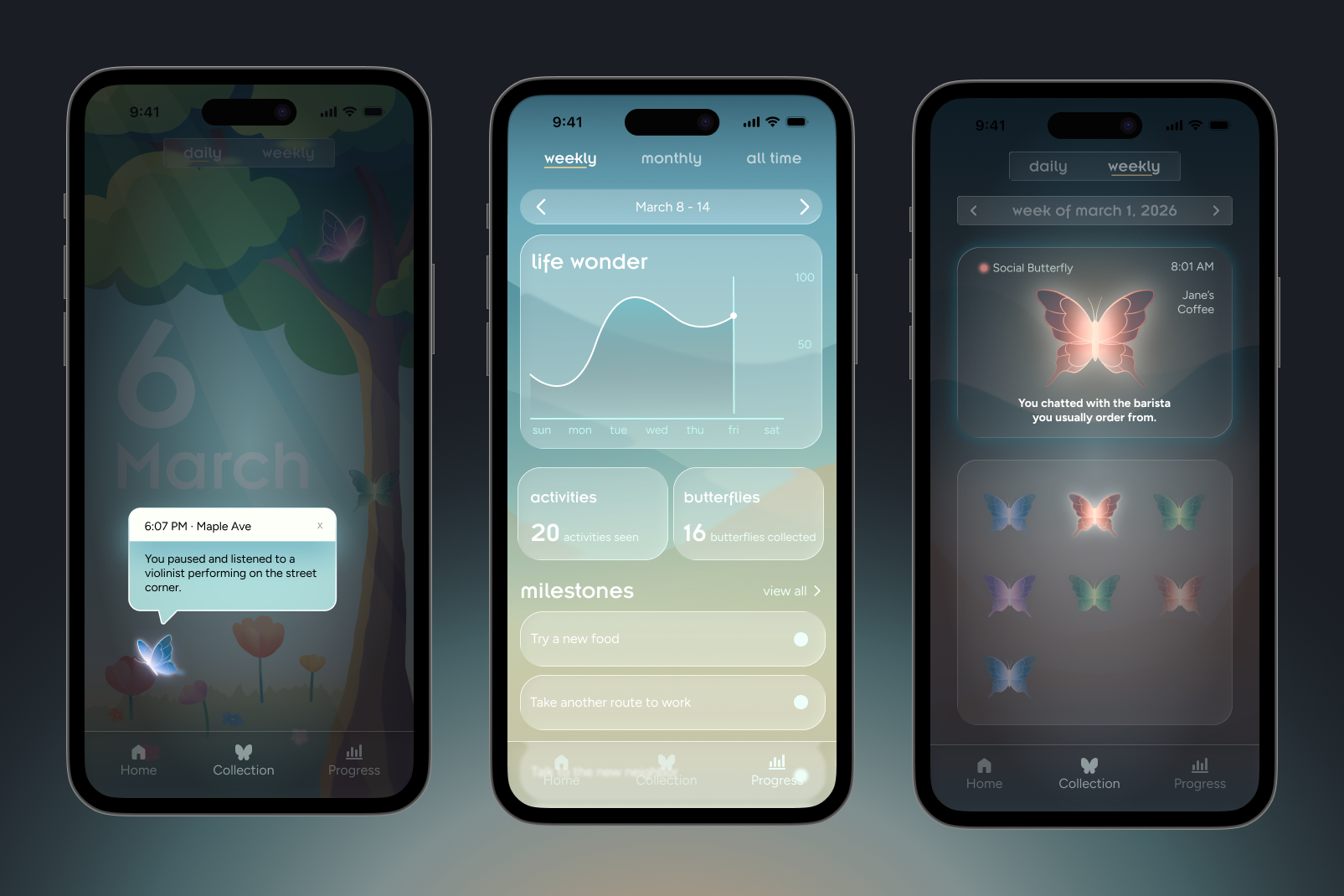
Companion Mobile App
- Human model accumulates butterflies as novel accomplishment logs
- Goal tracking maps progression towards onboarding intentions
- Insight generation surfaces behavioral patterns without prescribing behavior
- Garden view of previously collected butterflies
Process
- We began with secondary research on the importance of novelty in everyday life. For example, novelty boosts creativity, strengthens memory, and increases happiness source
- Then, we sent out a user survey and received 16 responses to understand how potential users feel about routines in their everyday lives.
- We mapped user flows, ideated on solutions, created low-fidelity wireframes, then rapidly worked them up to a high-fidelity prototype.
Challenges
- Balancing the novel experiences to be welcoming and appealing for the user but not forcefully pushing them into it, if they didn’t want to. We wanted it to be ultimately up to the user to make the change, and we gave them the tools to do so.
- Making sure that the pop ups weren’t too busy and in the way. Similar to the issue above, we aimed to make the AR experience not overwhelming for the user, especially since our survey data indicates that people tend to get overwhelmed when there is too much stimuli.
- Representing the “sense of novelty” in data and design was also a challenge in that it’s so abstract. We came up with many different ways to represent this idea and how to work around the design space.
Future opportunities
- Cocoons (save for later): Users may not always have time to complete a butterfly task right away (e.g., a local pottery class that just opened). They could save it for later as a cocoon, which later transforms into a butterfly once completed.
- Location Heatmap: A map that visualizes where users frequently go vs. rarely visit to encourage exploration outside their usual routines
- Friends System: Sharing discoveries with friends can inspire new ideas and encourage users to expand their sense of novelty together.
Built With
- figma


Log in or sign up for Devpost to join the conversation.