Dayavia - Every Skill. A Trusted Way Forward. Inspiration
Throughout more than 12 years working in supply chain and operations, I learned that even complex work becomes manageable when responsibilities, timelines, payments, and evidence are clearly recorded.
Outside formal organizations, however, everyday service work often still depends on scattered chat messages, verbal promises, cash, and memory. A gardener may finish a job without certainty of payment. A homeowner may pay without clear proof of what was agreed. A cleaner, handyman, tutor, cook, courier, or freelancer may complete hundreds of jobs but still have no portable record that proves their reliability.
Most marketplaces begin by helping strangers find each other. I started with a different question:
What if the customer and service provider have already found each other offline, but still need a trusted way to agree, transact, prove the work, and grow?
That question became Dayavia.
The name combines daya, an Indonesian word representing capability, strength, and human potential, with via, meaning a path or way forward. Its philosophy is simple:
Every skill deserves a trusted way forward.
What it does
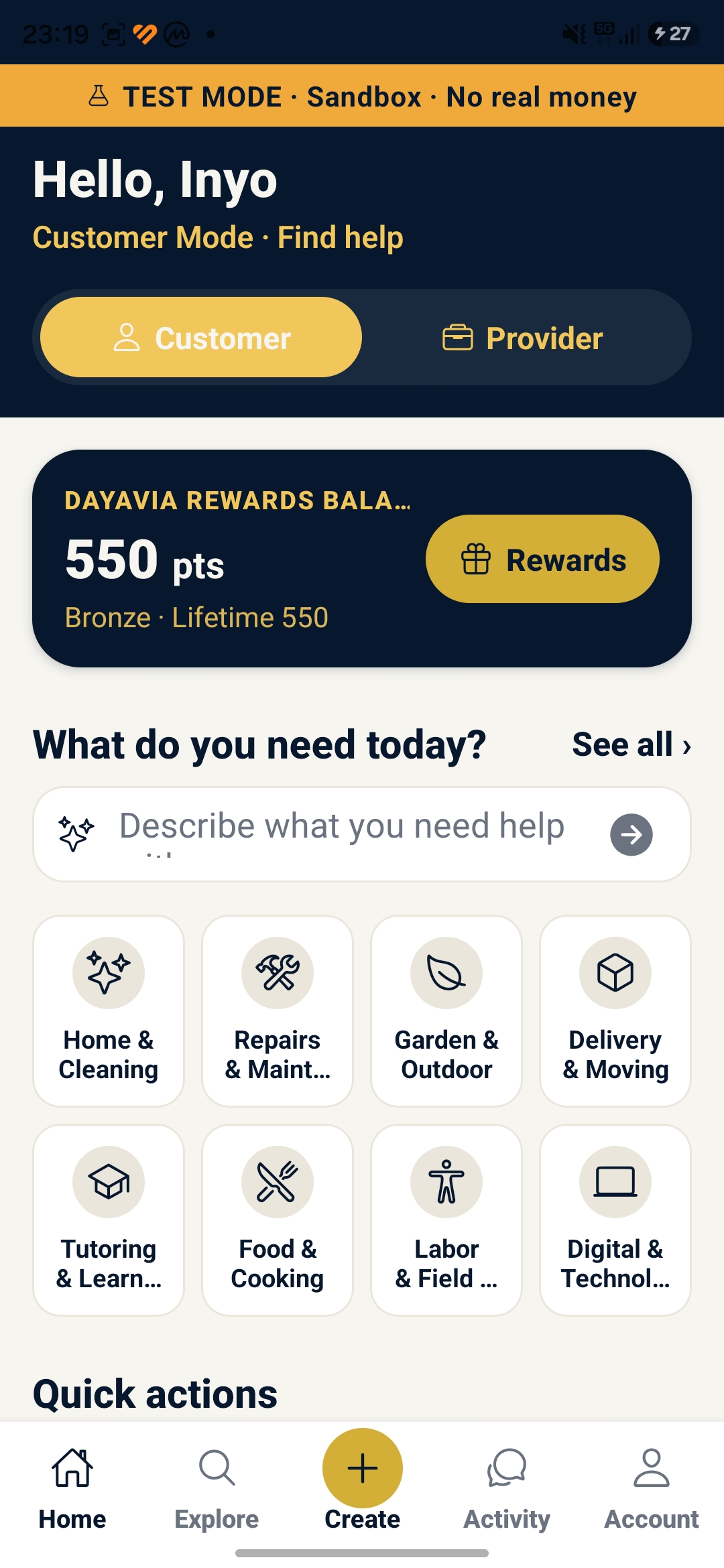
Dayavia is a human-service marketplace and transaction platform that turns everyday services into structured digital deals.
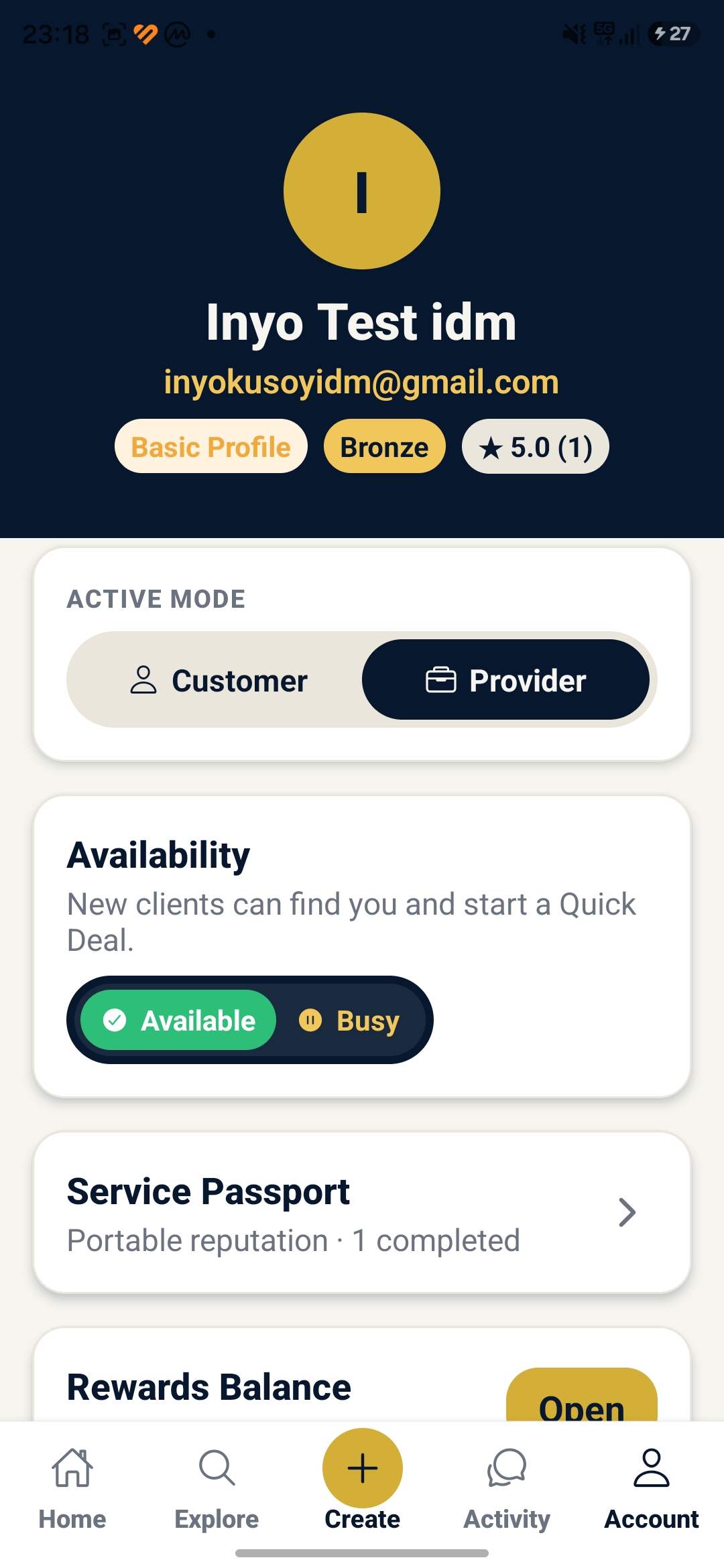
One person can use the same account as both:
a Customer looking for help; and a Provider offering a skill or service.
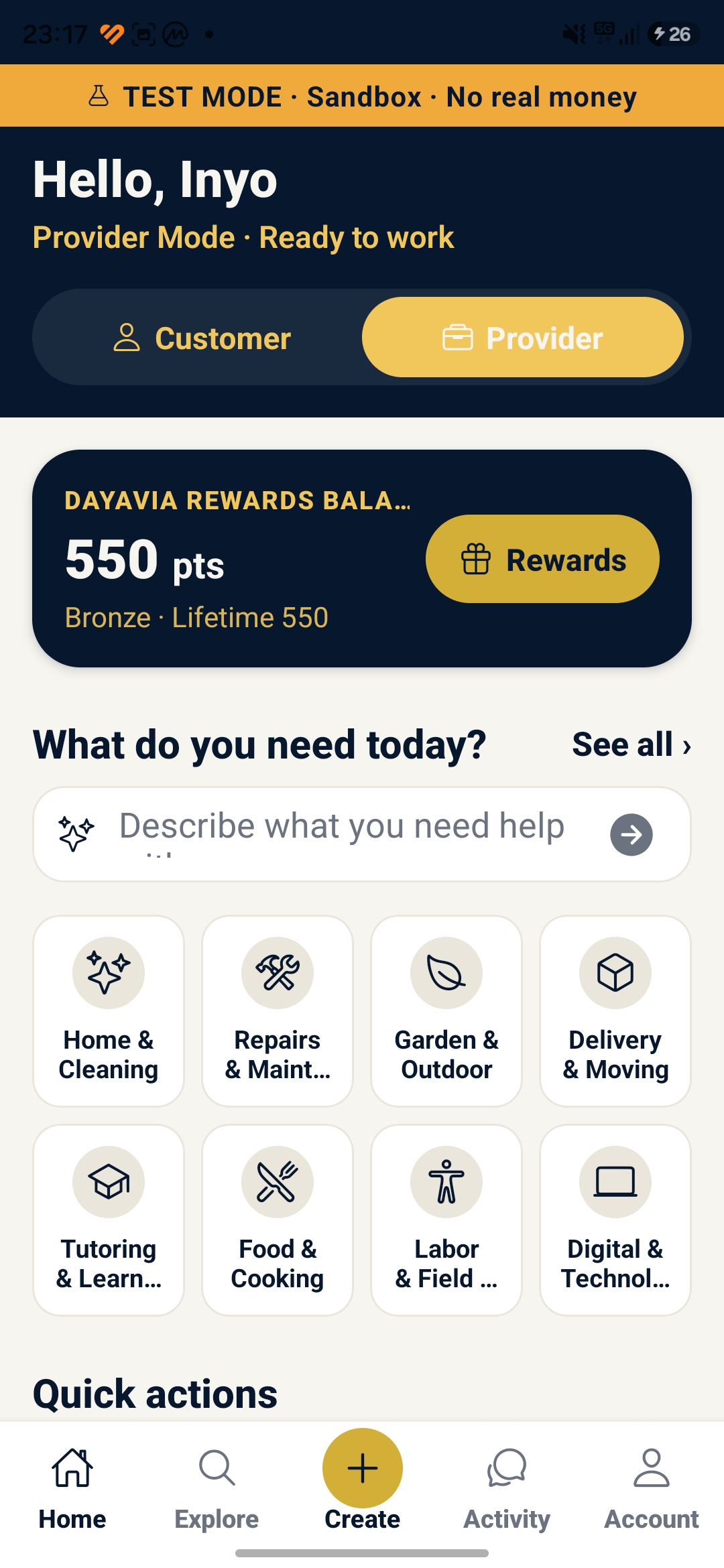
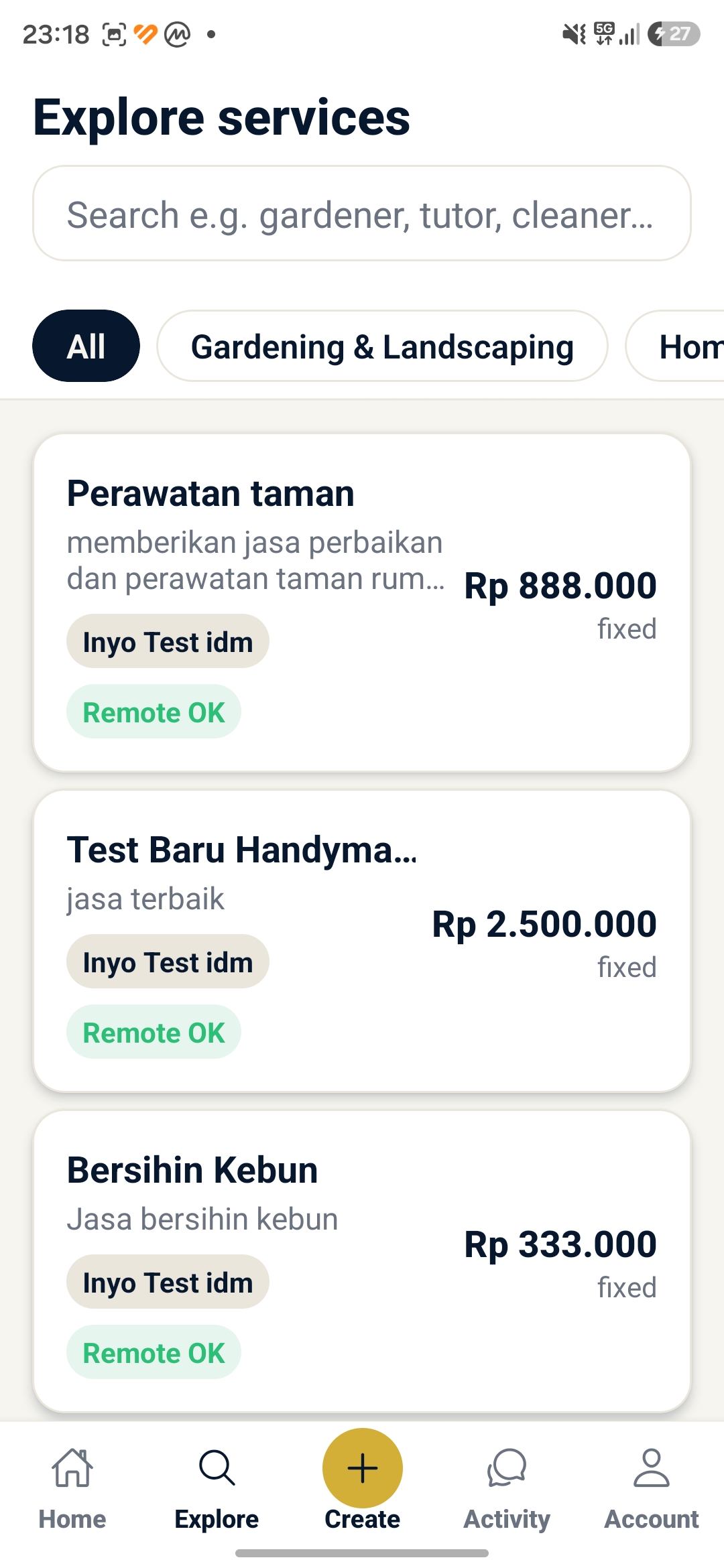
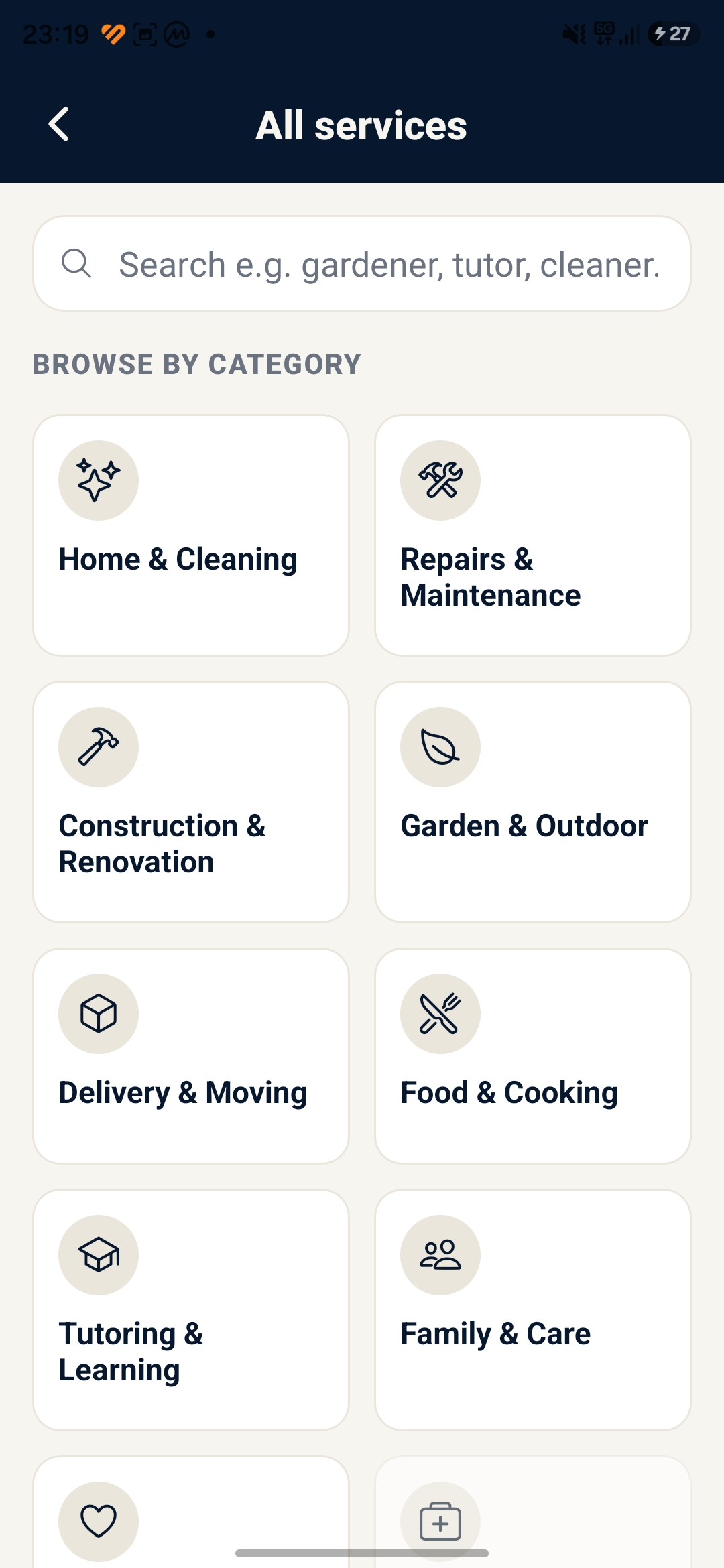
Users can discover services across 18 life domains, including home cleaning, repairs, gardening, delivery, cooking, tutoring, care, digital work, creative services, business support, and other everyday needs.
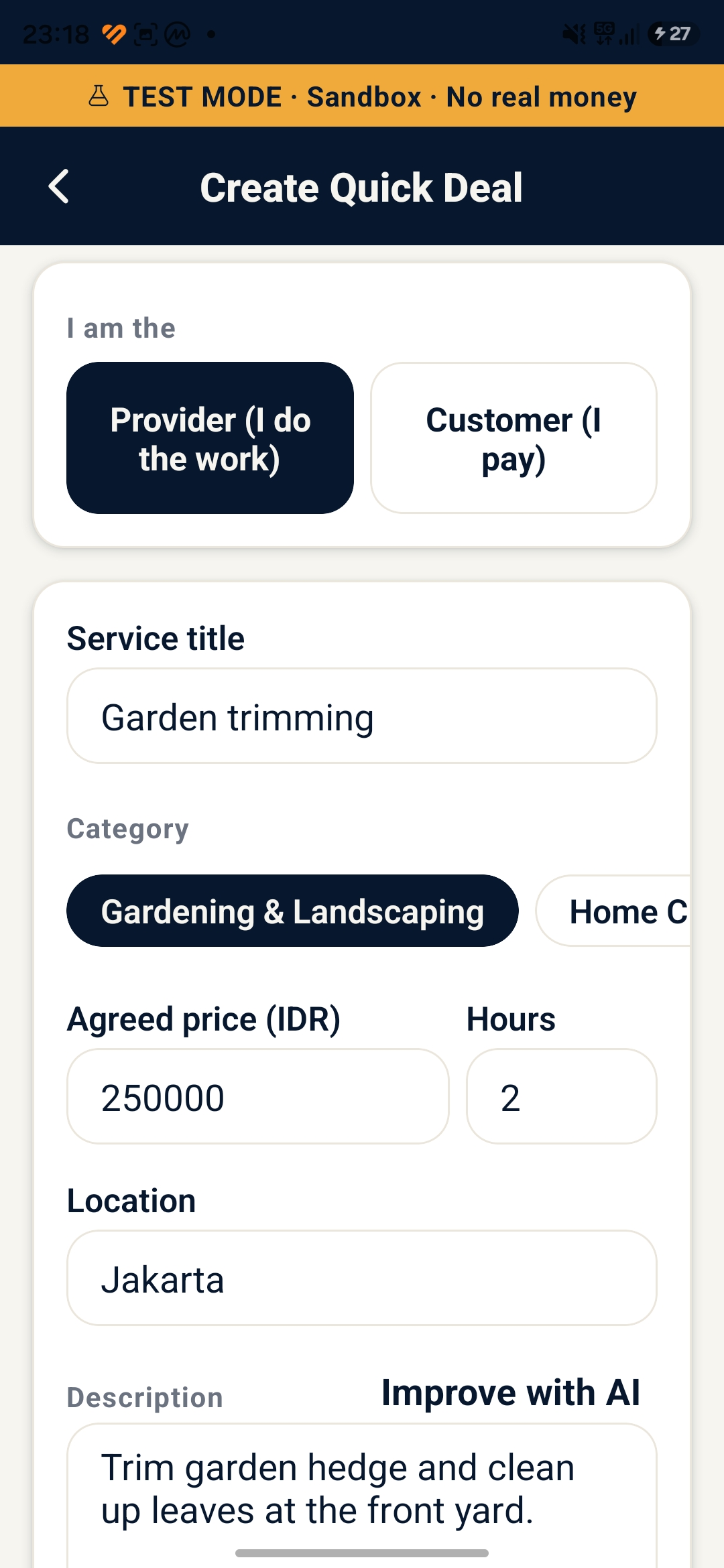
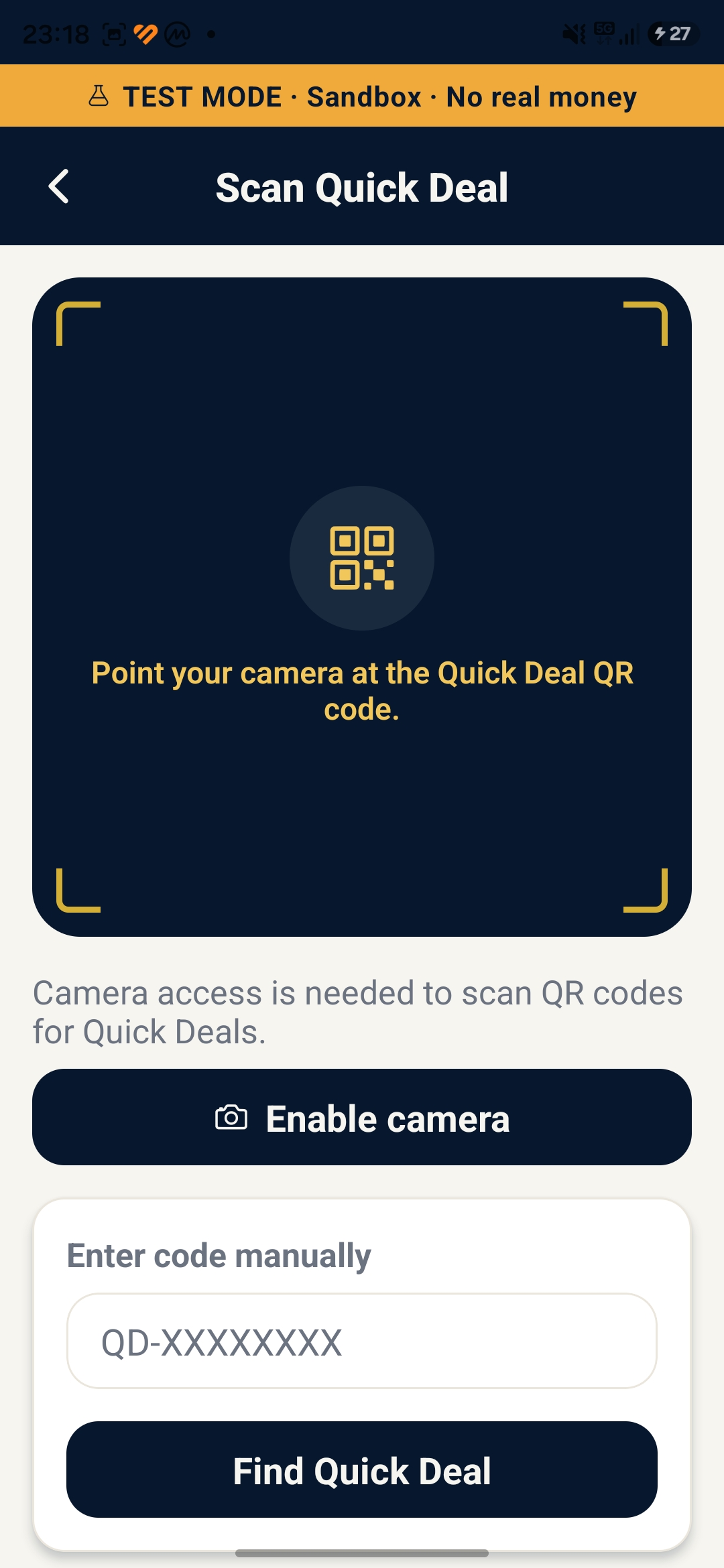
The core experience is Quick Deal. It allows an offline job to be brought into Dayavia using a QR code or short code. Both parties can then:
define the scope, price, and schedule; exchange or accept a proposal; create a recorded digital agreement; complete a sandbox payment; start and track the work; submit proof of completion; approve the result; earn points and leave a review; and build a shareable Service Passport.
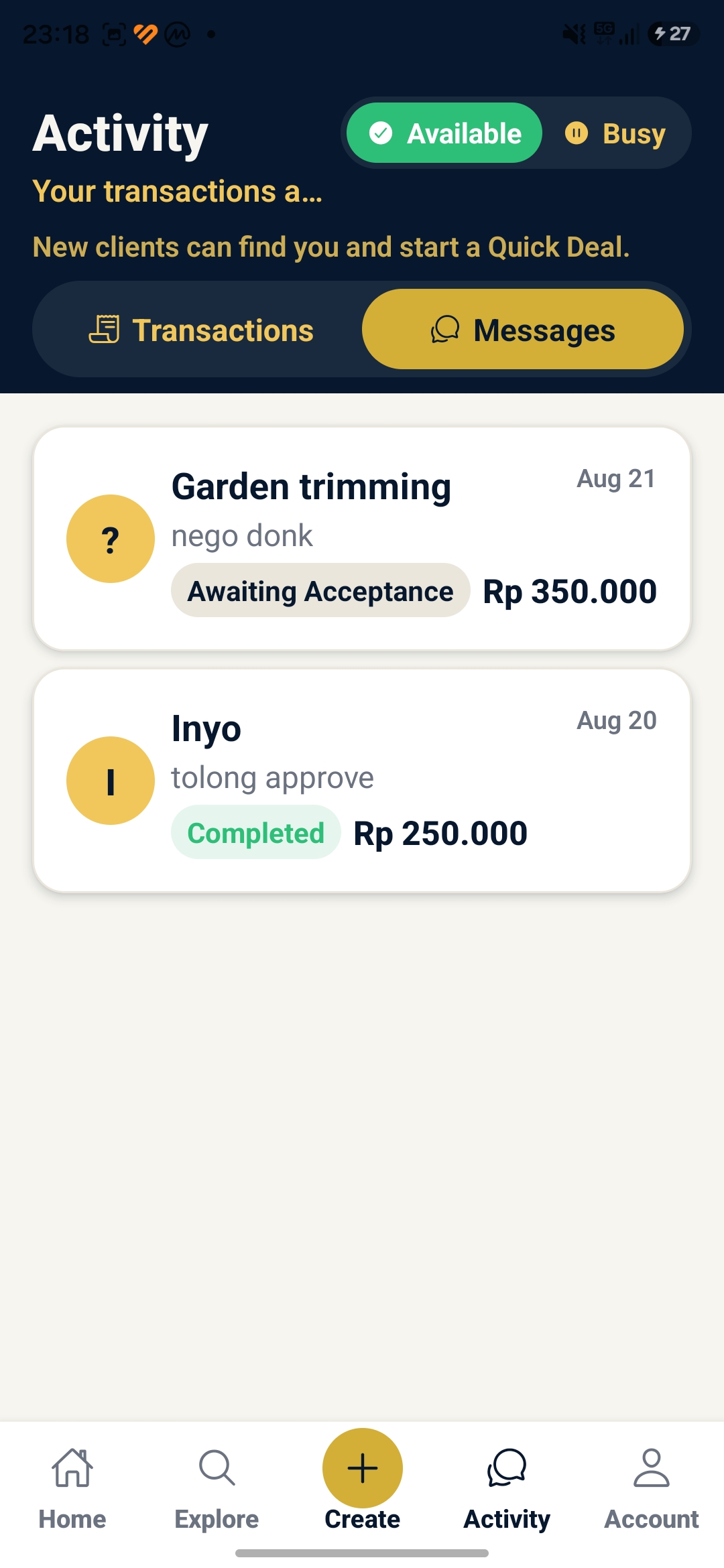
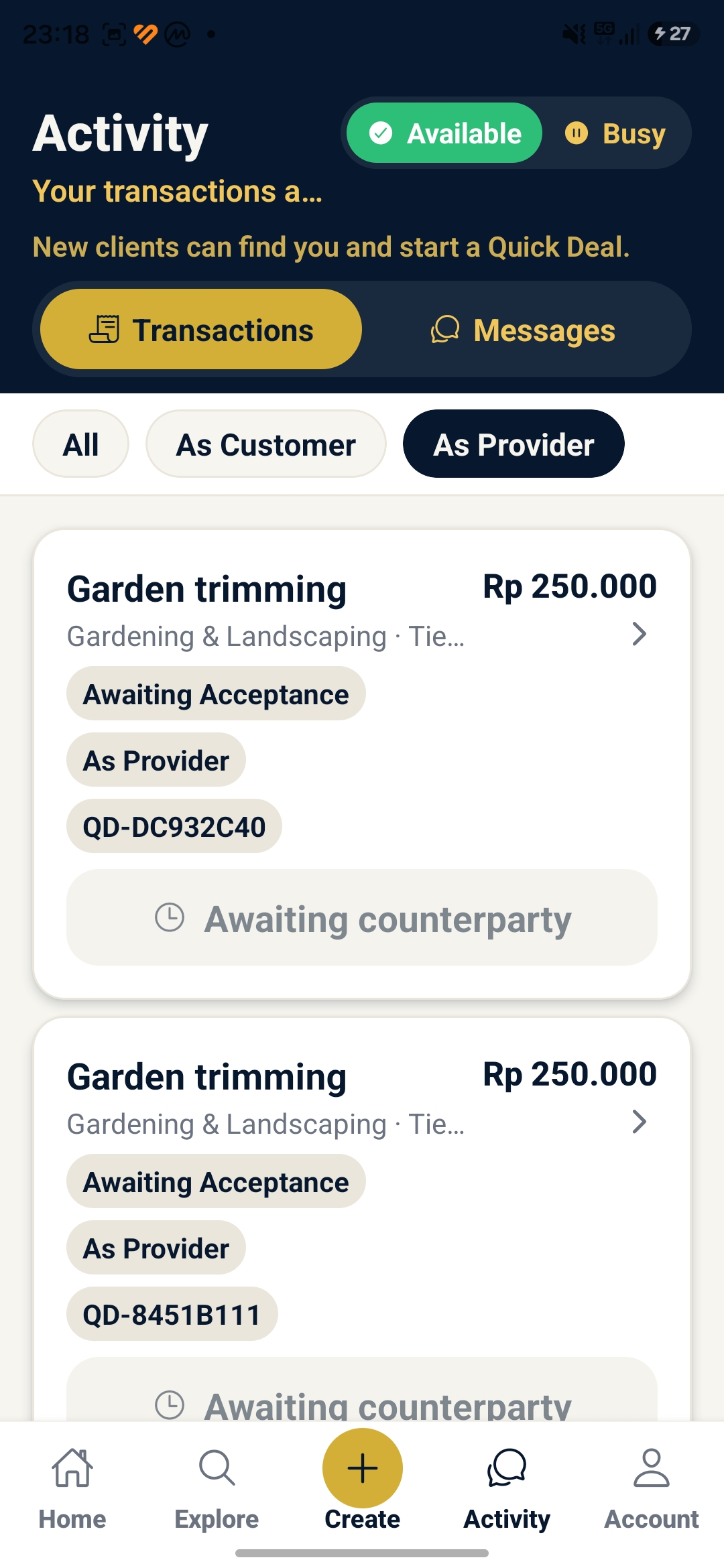
Every transaction has a contextual next action. Customers can see requests, proposals, payments, active work, and jobs waiting for approval. Providers can see offers received, proposals submitted, jobs ready to start, work in progress, and completed transactions.
Users do not need to search for or manually enter a contract number. Agreements, approvals, payments, and progress are connected directly to the relevant transaction.
Why Dayavia is different
Dayavia is not only a listing marketplace. It can also digitize service transactions that already begin through personal referrals, WhatsApp, local communities, or face-to-face conversations.
Its long-term differentiator is the Service Passport: a portable history of completed work, customer reviews, transaction records, and earned trust that stays connected to the individual.
The platform is designed so that reputation can travel with the worker, while language, currency, payment methods, regulated services, and compliance can adapt to each country.
Dayavia also includes a rewards system. Completed transactions generate points that can eventually be exchanged through marketplace and voucher partners. The goal is to give both customers and providers a reason to move informal transactions into a more transparent system.
Target users and initial market
Dayavia’s first target segment is:
independent and informal service providers; freelancers and individual workers; households looking for reliable everyday help; and people who already find each other offline but need a better transaction process.
The initial pilot will focus on Indonesia, beginning with household and local services in Jabodetabek such as cleaning, repairs, gardening, and tutoring.
After validating the model, Dayavia can expand to small businesses and additional markets through country-specific language, payment, verification, and compliance configurations.
The planned business model is a 0.5%–2% fee on completed transactions. Future financing or installment features would be introduced only through appropriately licensed payment and financing partners.
How I built it
I used Emergent to transform the product concept and detailed transaction requirements into a working full-stack MVP.
The application was built with:
Expo and React Native for the mobile and web experience; FastAPI and Python for the backend; MongoDB for application data; JWT and Argon2 for authentication and password security; Stripe Test Mode for sandbox payment flows; a double-entry sandbox ledger for transaction records; Claude-powered AI assistance for descriptions, proposals, and language support; QR codes and short codes for Quick Deals; a public, shareable Service Passport; country-aware internationalization; and a role-aware Activity Center for transactions and conversations.
The interface uses Dayavia’s deep-navy and gold visual identity. The rhythm “Work. Agree. Pay. Grow.” is reflected throughout the transaction journey.
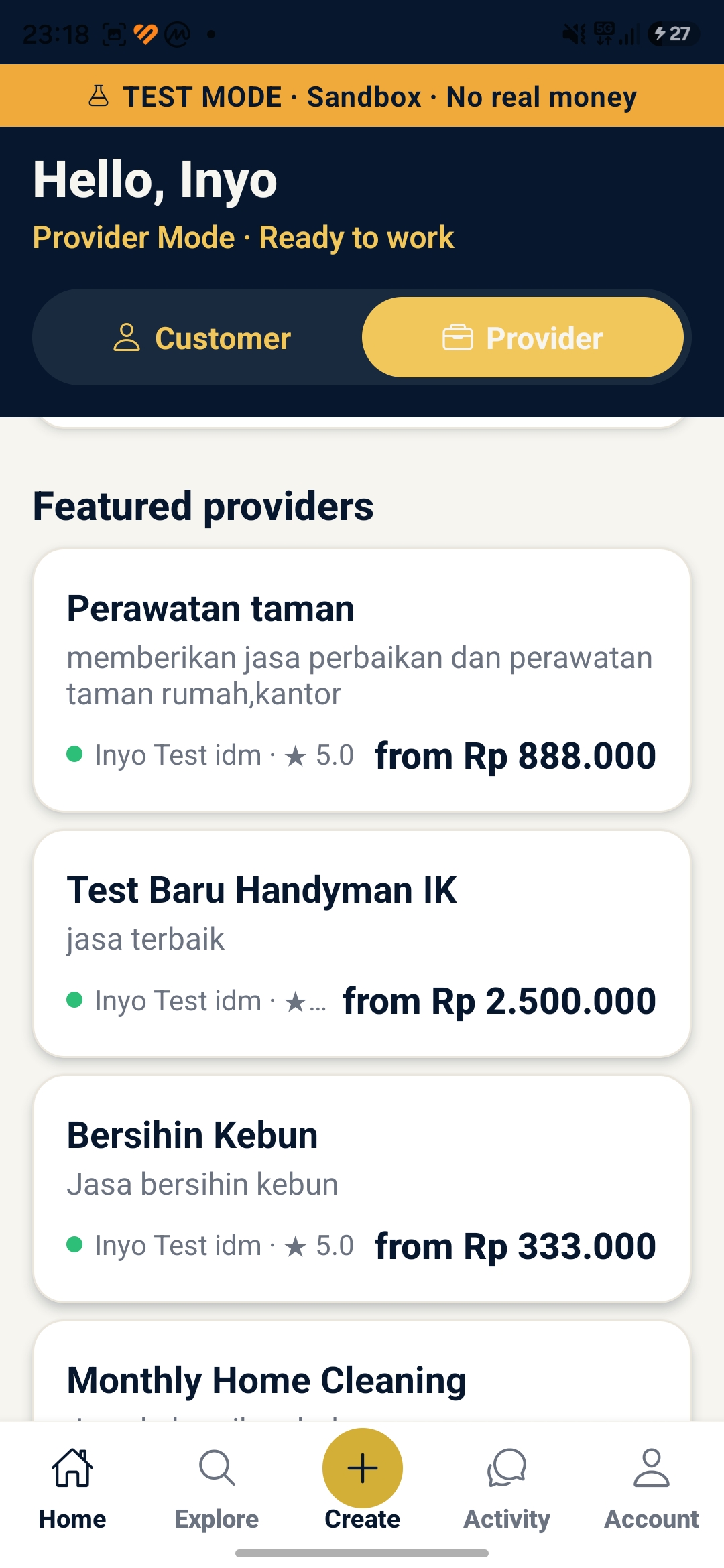
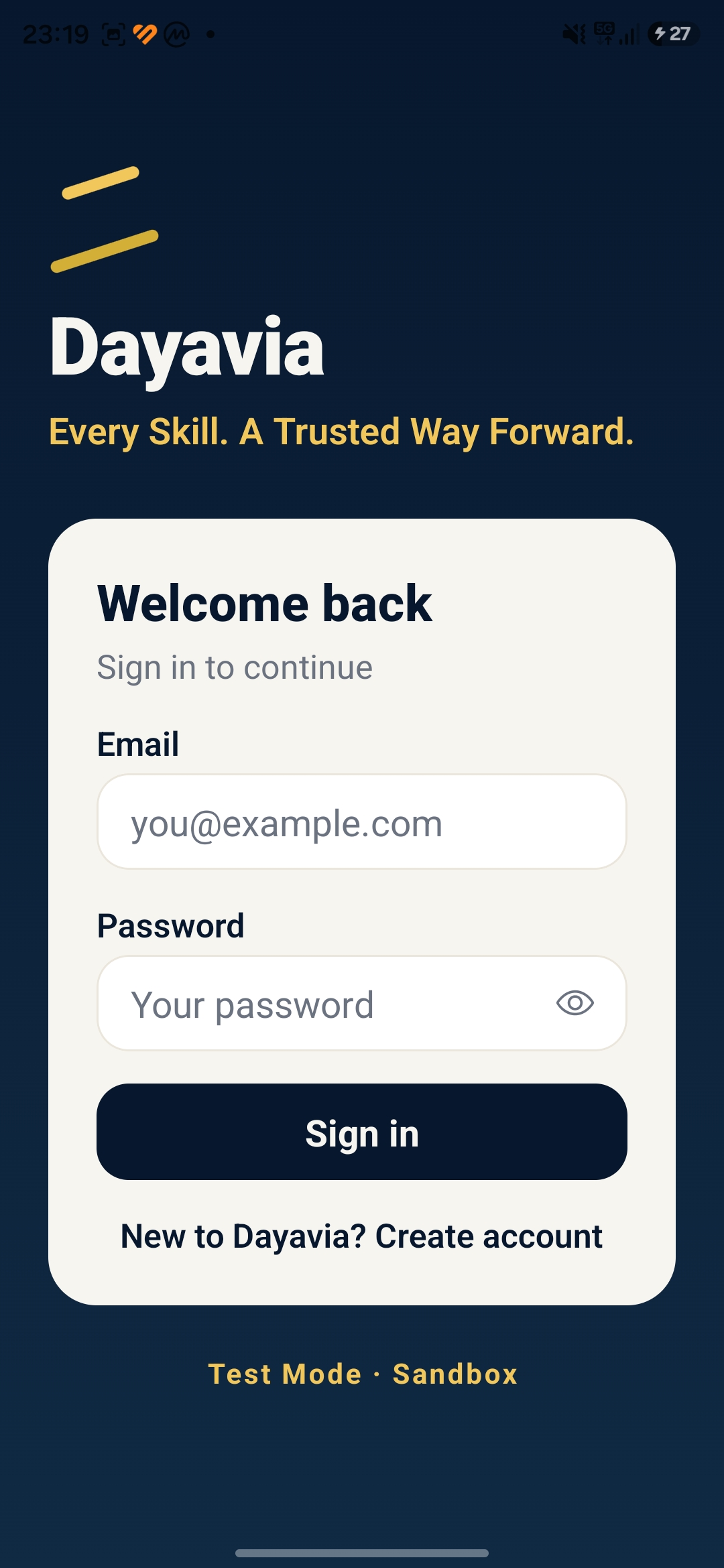
The current MVP deliberately displays TEST MODE · Sandbox on payment-related screens. No real money is moved in this competition version.
Challenges I ran into Turning informal work into a clear workflow
Everyday service transactions are flexible. A small gardening job may need only a photo and simple confirmation, while renovation or business work may require proposals, milestones, and detailed evidence.
The challenge was creating one journey that remains simple for small jobs without removing the structure required for larger transactions.
Supporting two roles without creating confusion
Many users can be customers today and providers tomorrow. Instead of forcing them to create separate accounts, Dayavia uses one account with Customer and Provider modes.
The transaction list, available actions, descriptions, and status information must change automatically according to the active role.
Making agreements fast but accountable
I wanted acceptance to feel immediate without making it careless. Dayavia therefore presents the scope, price, schedule, and terms in context before acceptance, while recording the agreement version, user, role, and timestamp behind the scenes.
Designing for multiple countries and languages
Country and language are not the same setting. A user in India may prefer English, Hindi, or another regional language. A user traveling abroad should not have their interface language unexpectedly changed.
Dayavia separates operating country, application language, currency, payment rules, and local service availability.
Handling web and native QR behavior
Camera scanning requires a supported mobile environment. Dayavia therefore provides native QR scanning while preserving short-code entry as a reliable fallback for the web preview.
Keeping the mobile interface readable
The application must work on small screens without overlapping cards, hidden buttons, or category names breaking in the middle of words. Building a responsive interface while supporting translated text required multiple layout and usability iterations.
Accomplishments I am proud of
The current MVP includes:
an end-to-end Quick Deal journey; Customer and Provider modes in one account; contextual transaction actions; digital agreement records; Stripe sandbox payments; a double-entry sandbox ledger; proof of work and customer approval; points, rewards, and reviews; a shareable Service Passport; service discovery across 18 life domains; multilingual and country-aware configuration; versioned proposals and in-app conversations; and QR and manual-code Quick Deal access.
The Phase 1 backend test suite passed 27 out of 27 tests, including the complete Quick Deal flow from creation through payment, completion, rewards, and review.
Most importantly, Dayavia has moved from an idea into a working MVP that can be demonstrated, tested, and improved with real users.
What I learned
The biggest lesson was that trust is not created by one feature. It is created through a sequence of small, understandable confirmations:
What work was agreed? How much will it cost? Has payment been recorded? Has the provider started? Was the result submitted? Did the customer approve it? What reputation was earned?
I also learned that building a global product does not mean forcing one experience everywhere. The vision can be universal, but the language, payments, regulations, and service availability must remain local.
Finally, working with AI development agents taught me the importance of precise scope, clear acceptance criteria, reusable systems, and focused regression testing.
What’s next for Dayavia
The next step is a controlled pilot with customers and independent service providers in Indonesia.
The pilot will measure:
Quick Deals created and completed; provider acceptance rate; payment and approval completion; repeat transactions; Service Passport sharing; customer and provider retention; and which rewards create meaningful engagement.
After validation, the roadmap includes:
production payments through licensed partners; stronger identity and provider verification; milestone payments for larger projects; evidence-based dispute resolution; notifications; additional human-reviewed translations; country-specific regulatory configurations; and partner-enabled financing for eligible transactions.
The long-term vision is for Dayavia to become the trusted transaction layer for everyday human work—helping skills become visible, agreements become clear, payments become accountable, and every completed job become a step toward greater opportunity.


Log in or sign up for Devpost to join the conversation.