-
-
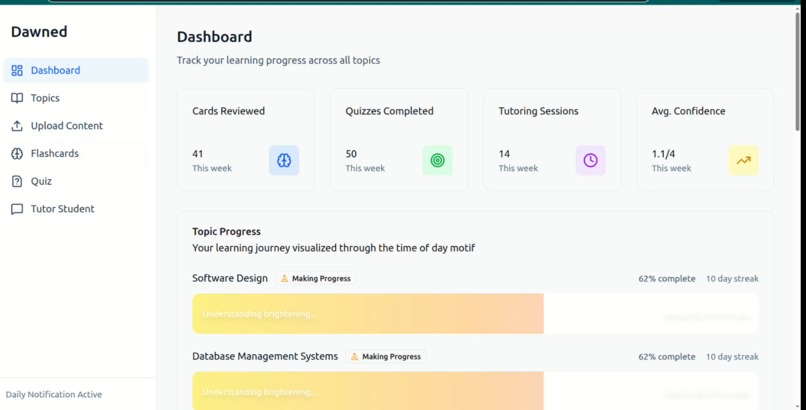
Analytics
-
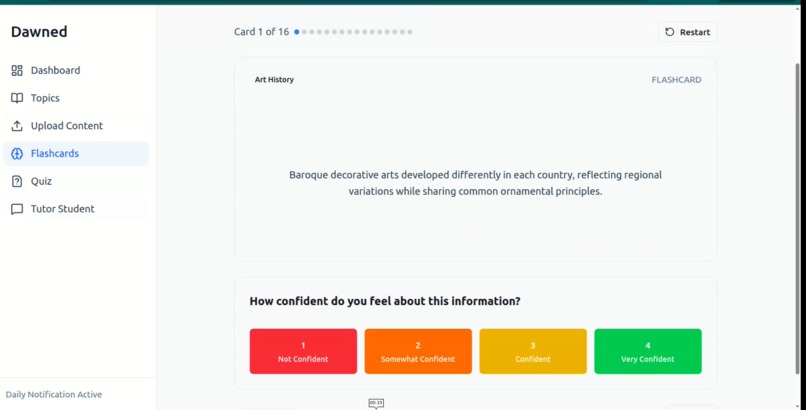
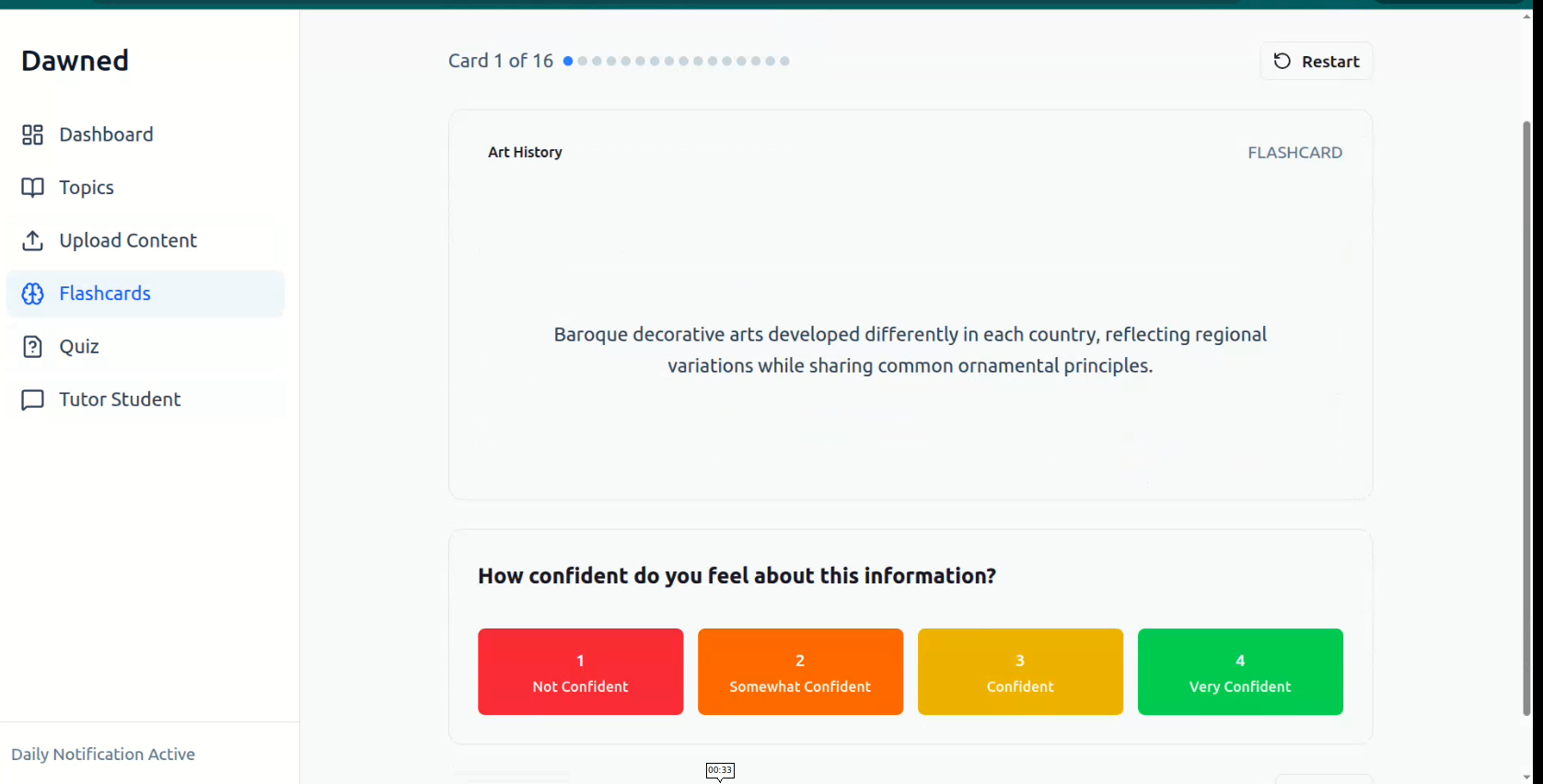
Flashcards with Rating
-
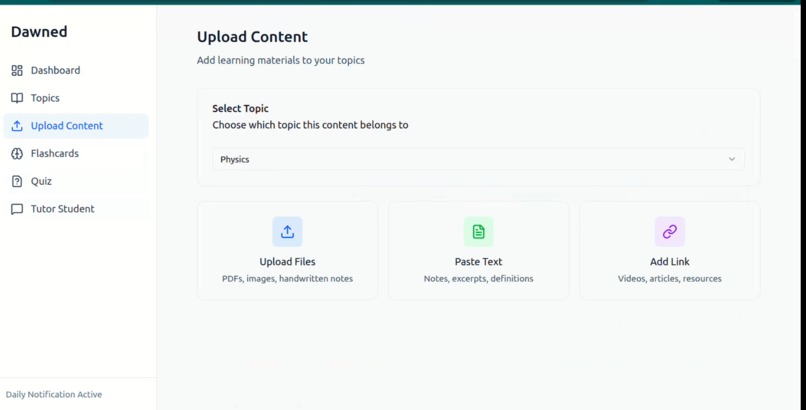
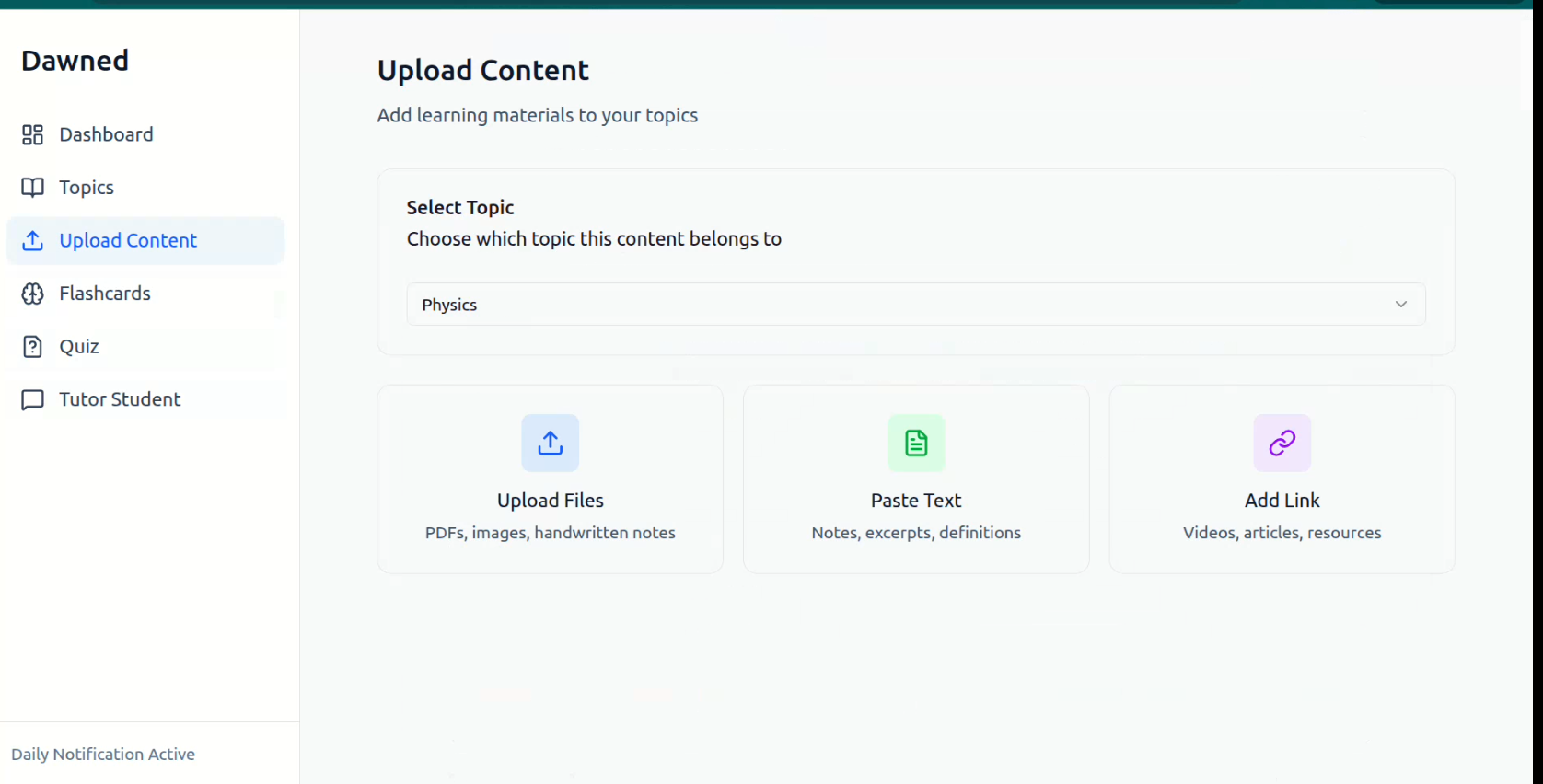
Upload content to generate flash cards off of
Inspiration
We’ve all had that “I used to know this” moment, whether it’s preparing for an interview, helping out a friend with homework, or revisiting a college topic we once mastered. Knowledge fades quickly without repetition, yet existing tools like flashcard apps don’t adapt well to richer learning media like lecture videos, articles, handwritten notes, PPTs, PDFs, and more. Dawned was born out of the desire to make knowledge retention effortless. It combines spaced repetition, AI-generated study content, and playful, periodic reminders that keep your learning “fresh,” long after you’ve finished a course.
What it does
Dawned helps you retain what you’ve already learned through smart, periodic micro-reviews. User Input: Upload your notes, PDFs, images, articles, or lecture videos into Tags (topics). Behind the scenes, an AI extracts and summarizes key ideas to create flashcards, quiz questions, and discussion prompts.
User Interaction: Each day, Dawned sends you a short “challenge,” which includes a mix of flashcards, quiz questions, and a “tutor-a-student” chat where you teach an AI student. Your confidence ratings and explanations drive a spaced repetition algorithm that adapts to your progress.
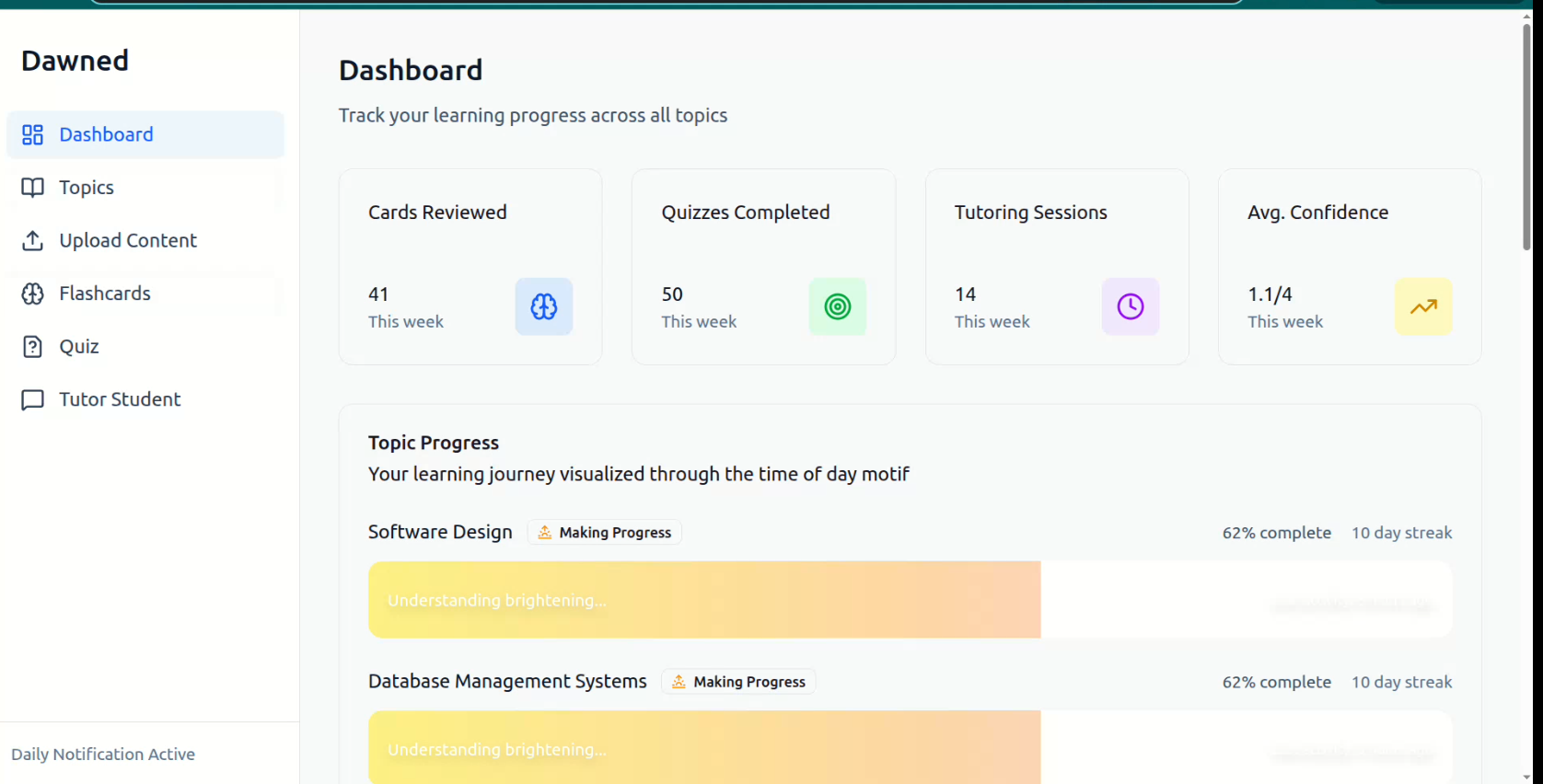
Analytics: A beautiful dashboard visualizes your mastery over time using a time-of-day motif, from twilight (foggy memory) to dawn (concept clarity). Weekly digests summarize how your knowledge is “dawning” across tags.
How we built it
- Frontend: Built with Vite, React, and TailwindCSS for fast, responsive, and elegant UI/UX.
- Backend: Node.js + Express REST API connected to a Supabase PostgreSQL database via Prisma ORM.
- Database Schema: Structured around User, Tag, QuizQuestion, Flashcard, Log, and UserInput models for seamless tracking of spaced repetition intervals and user progress.
- AI Generation: AI agents analyze uploaded materials (PDFs, text, YouTube links, etc) to auto-generate flashcards, quizzes, and discussion prompts using LLM-based question generation.
- Analytics: Data visualized as twilight-to-dawn gradients, representing the user’s growing retention.
Challenges we ran into
- Inconsistent WiFi connectivity
- Establishing a persistent database connection
- Integrating the frontend, backend, and middleware to work seamlessly
- Processing multiple input types (images, PDFs, YouTube videos, etc) and normalizing them into structured text for question generation.
- Building a cohesive experience across AI generation, spaced repetition, and analytics to ensure the system feels intelligent, not random.
Accomplishments that we're proud of
- Built a full end-to-end spaced repetition learning assistant within a weekend.
- Seamlessly connected Letta AI content generation
- Created an engaging visual motif (“twilight to dawn”) that turns analytics into a metaphor for learning progress.
- Designed an expandable system where users can plug in any learning material and immediately get actionable quizzes.
What we learned
- How to design a schema that supports temporal learning (tracking “next review dates” and retention intervals).
- The power of combining AI retrieval, question generation, and reinforcement in one feedback loop.
- How important UX metaphors (like “dawn”) are for motivation and retention.
What's next for Dawned
- Mobile App + Push Notifications: Bring the periodic “Dawned challenge” to your phone for true habit formation.
- Multi-modal AI Ingestion: Support lecture audio, screenshots, and course slide decks.
- Social Learning: Compare your “dawn levels” with friends or study groups.
- Open Education Integration: Create a browser extension to process learning materials directly from a university's LMS (such as Canvas)
- Automation: Integrated Postman Flows and Monitors to schedule daily review runs and weekly digest emails — turning Postman into a no-cron “brain” for our spaced repetition system.
- Email Notifications: Automated via Composio Tool router to deliver personalized “daily dawn” challenges and digest summaries.


Log in or sign up for Devpost to join the conversation.