Inspiration
After countless evenings spent scrambling to plan a romantic at-home dinner—researching recipes, matching wines, and juggling cooking times—I realized there was no simple, all-in-one tool for this. Couples deserve to focus on connection, not logistics, so I set out to build something that takes the stress out of creating intimate at-home date nights.
What it does
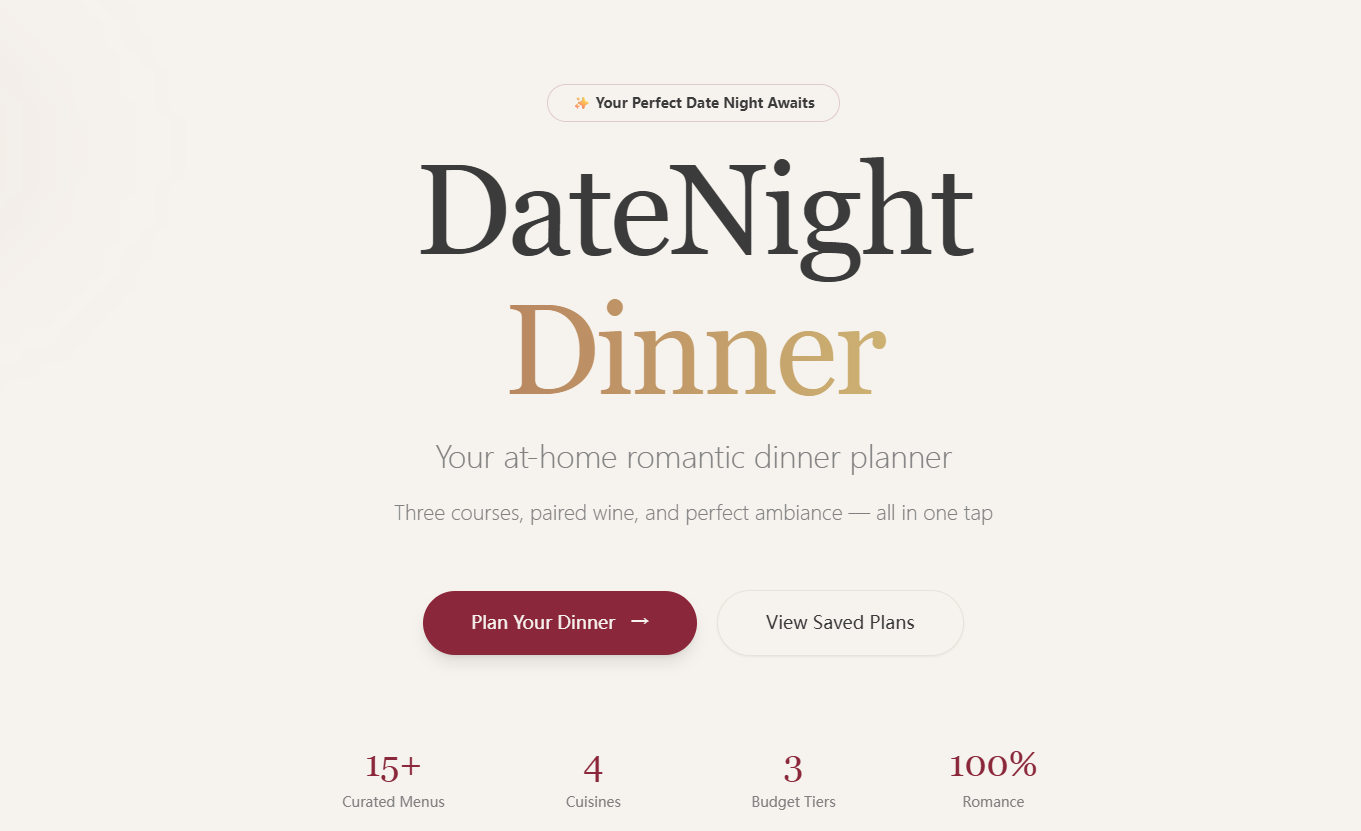
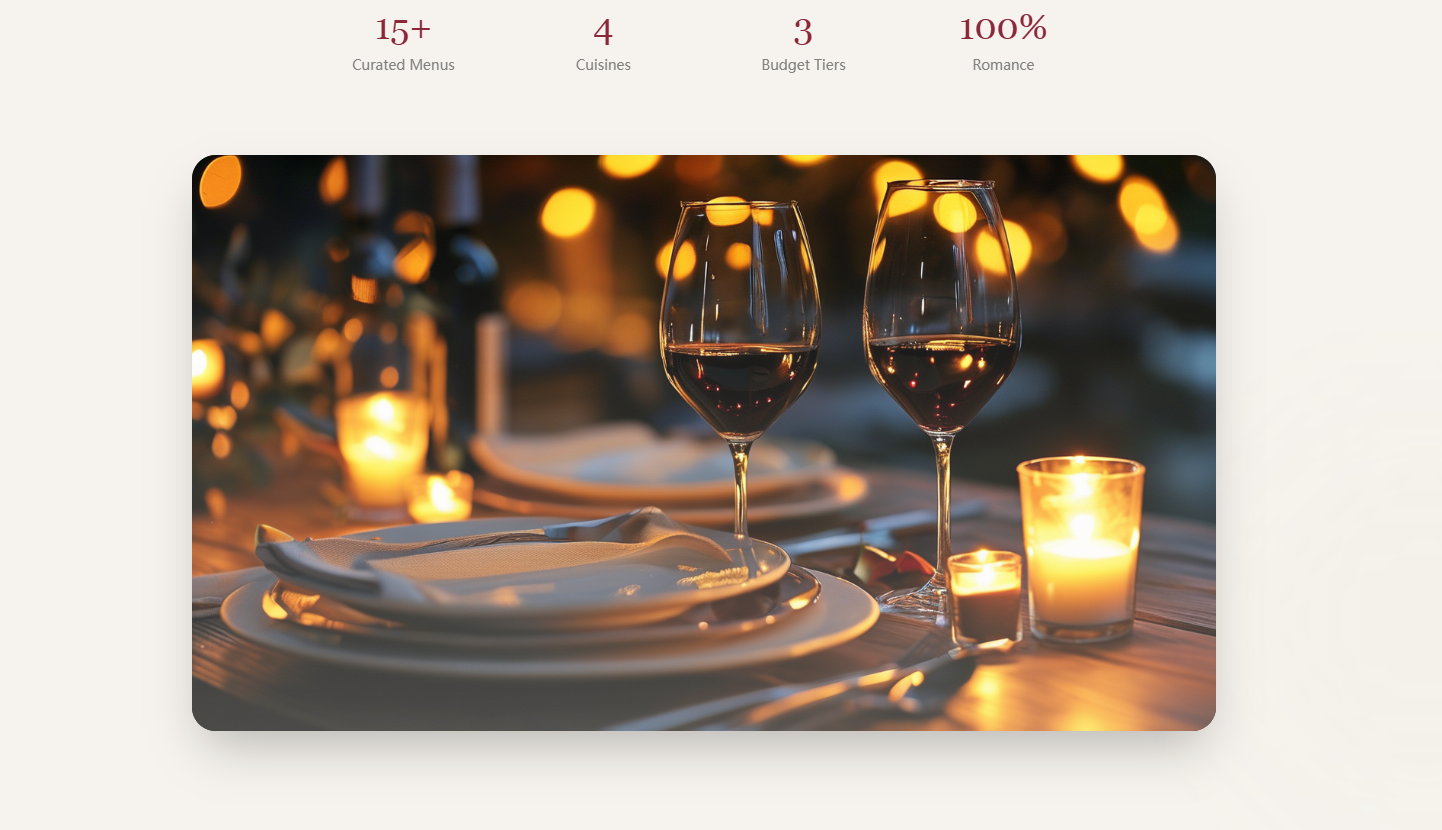
DateNight Dinner lets users craft personalized 3-course romantic dinner plans in minutes. Choose a budget tier (Budget/Standard/Premium), opt for a cuisine style (or skip), and get a complete plan: curated appetizer/main/dessert, a synchronized cooking timeline, wine (or non-alcoholic) pairings, and ambiance tips (lighting, music, table settings). Save plans to revisit later, or generate new ones while keeping your budget preferences.
How we built it
I started by mapping user flows (landing → budget → cuisine → plan display → saved plans) to ensure a seamless experience. Using Figma, I designed a warm, romantic UI with the specified color palette (Deep Burgundy, Soft Cream, etc.) and thin-line icons. The frontend was built with React for responsive design, while Node.js/Express powered the backend logic for menu generation, budget tier adjustments, and timeline synchronization. Firebase stored saved plans, and third-party APIs enriched recipe/wine data.
Challenges we ran into
The biggest hurdle was syncing the cooking timeline—ensuring prep/cooking tasks didn’t overlap, and food stayed fresh until serving. Balancing menu complexity (home-cook friendly but romantic) across budget tiers also took iteration, as did making wine pairings that matched each course’s flavor profile without being too niche. Additionally, designing for both mobile and desktop while keeping the UI minimal yet warm required careful tweaking.
Accomplishments that we're proud of
Creating a tool that truly simplifies the dinner planning process—users no longer need to piece together recipes, wine tips, and timing on their own. The responsive design works flawlessly across devices, and the saved plans feature lets couples revisit their favorite dinner ideas. Most importantly, the menu curation strikes the perfect balance between approachable home cooking and romantic presentation.
What we learned
I deepened my understanding of user-centric design—prioritizing simplicity over feature bloat was key. I also learned how to translate business rules (e.g., 3-course requirement, budget-driven ingredient selection) into functional code, and gained expertise in integrating external APIs to add value without overwhelming the core experience. Most importantly, I learned that solving small, everyday frustrations (like dinner planning stress) creates meaningful tools.
What's next for this project
First, I want to add dietary restriction filters (vegetarian, gluten-free) to make the tool more inclusive. Next, integrating a grocery list generator will help users shop efficiently, and cooking video tutorials for key steps will support beginner home cooks. I also plan to expand cuisine options beyond the initial four, and add a reminder feature to help users prep ahead of their date night. Eventually, a light account system (no login required—just email/phone sync) will make saved plans accessible across devices.
Built With
- express.js
- firebase
- node.js
- rest-apis

Log in or sign up for Devpost to join the conversation.