-
-
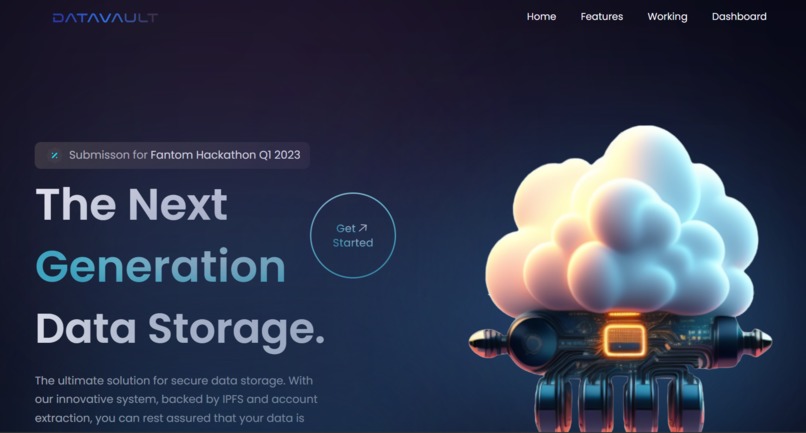
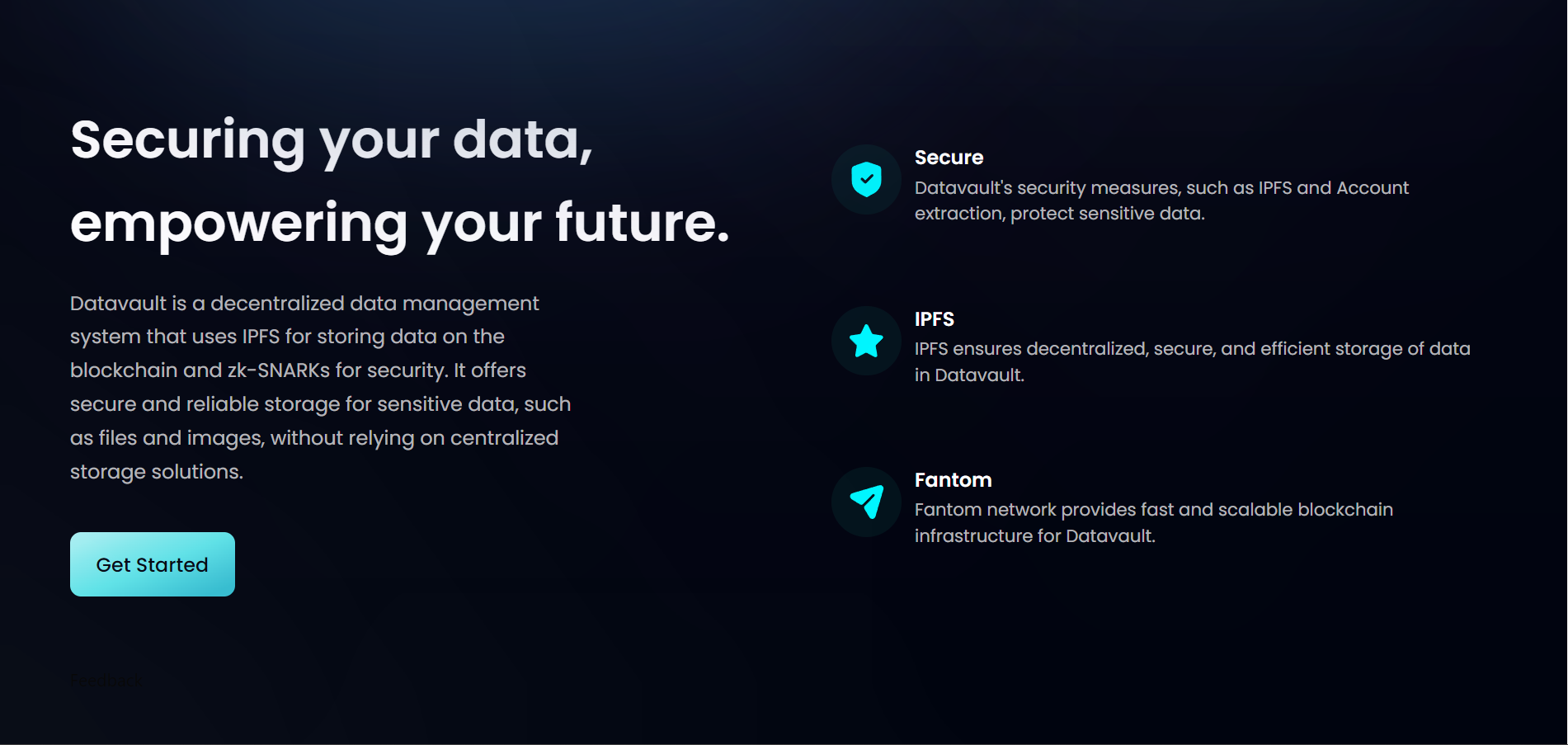
Landing page
-
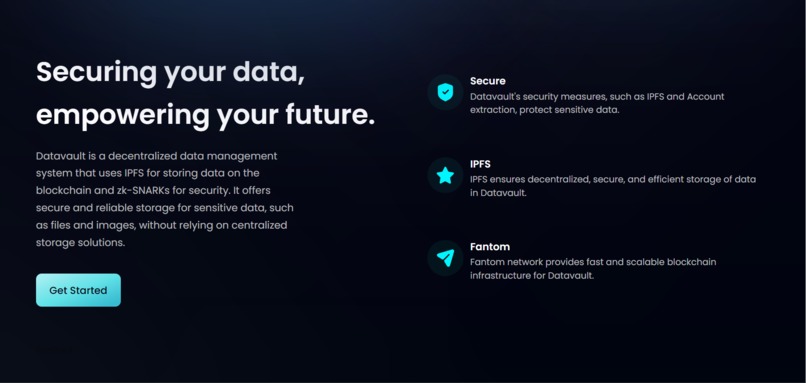
Features
-

Working
-

ipfs
-
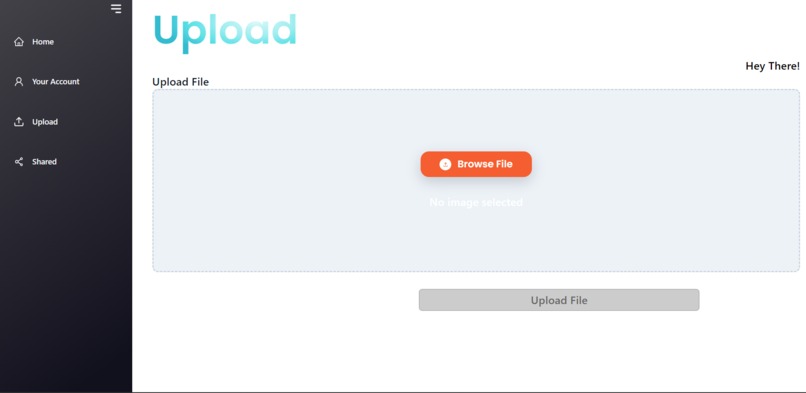
Dashboard
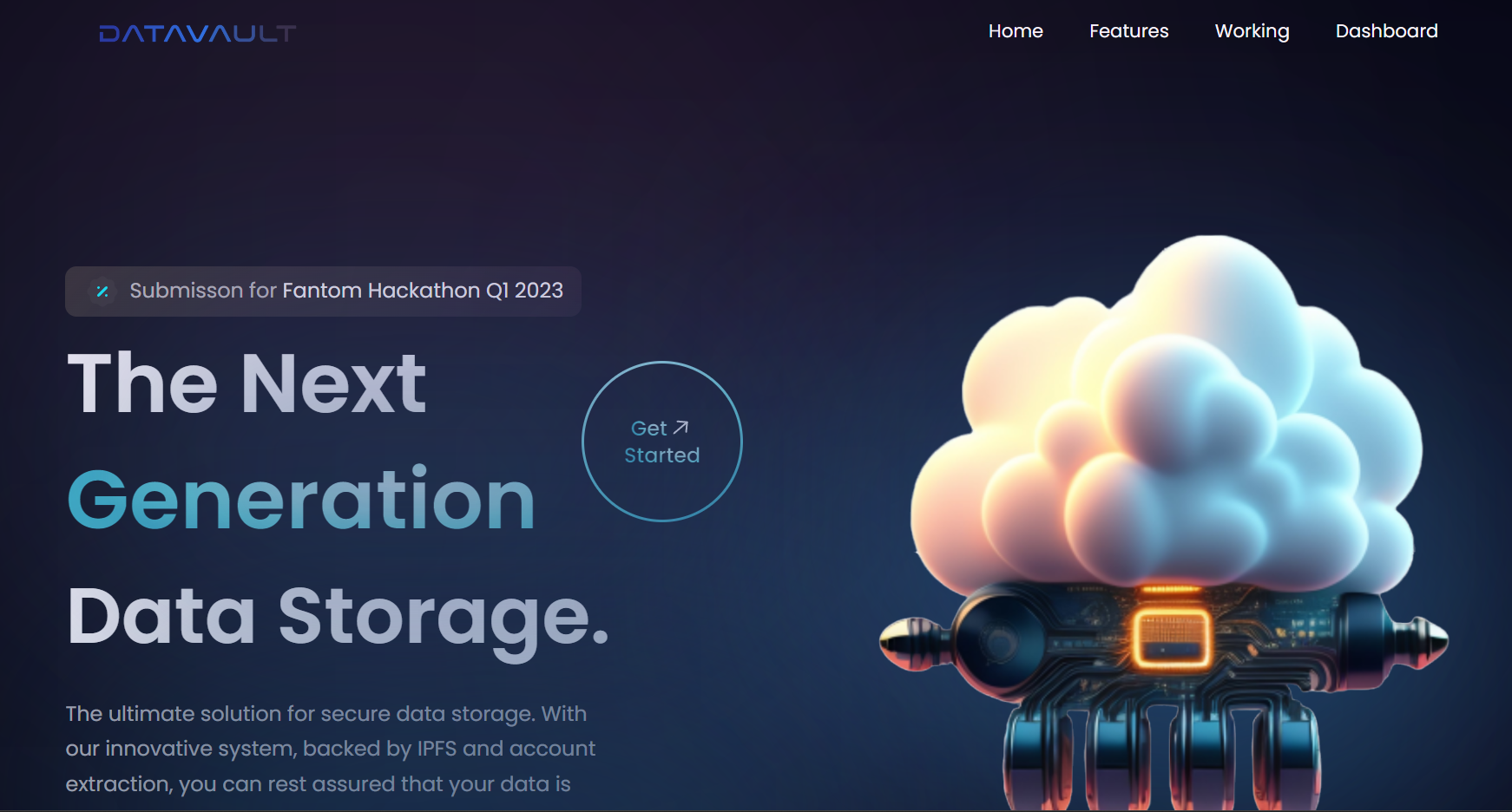


Inspiration
The inspiration for Datavault came from the need for a secure and decentralized platform for document sharing. With the rise of cloud storage and document-sharing platforms, there has been a growing concern about the security and privacy of user data.
Many existing platforms rely on centralized servers to store data, which makes them vulnerable to hacking and data breaches. In addition, these platforms often have complex permission settings that can be difficult to manage, leading to confusion and potential data leaks.
The creators of Datavault saw an opportunity to address these issues by creating a platform that uses a decentralized architecture and end-to-end encryption to ensure that user data is secure and protected from unauthorized access.
By using the InterPlanetary File System (IPFS) to store data, Datavault is able to distribute files across a network of nodes, making it more difficult for anyone to tamper with or delete them. In addition, the platform's permission settings give users granular control over who can access their documents, ensuring that sensitive information remains private.
Overall, the inspiration for Datavault came from the need for a more secure and decentralized platform for document sharing. With its focus on security and privacy, Datavault is a promising solution for anyone who needs to store and share documents securely.
What it does
Datavault is a decentralized document sharing platform that allows users to store and share documents securely. The platform uses the InterPlanetary File System (IPFS) to store data, which means that files are distributed across a network of nodes, making it difficult for anyone to tamper with or delete them.
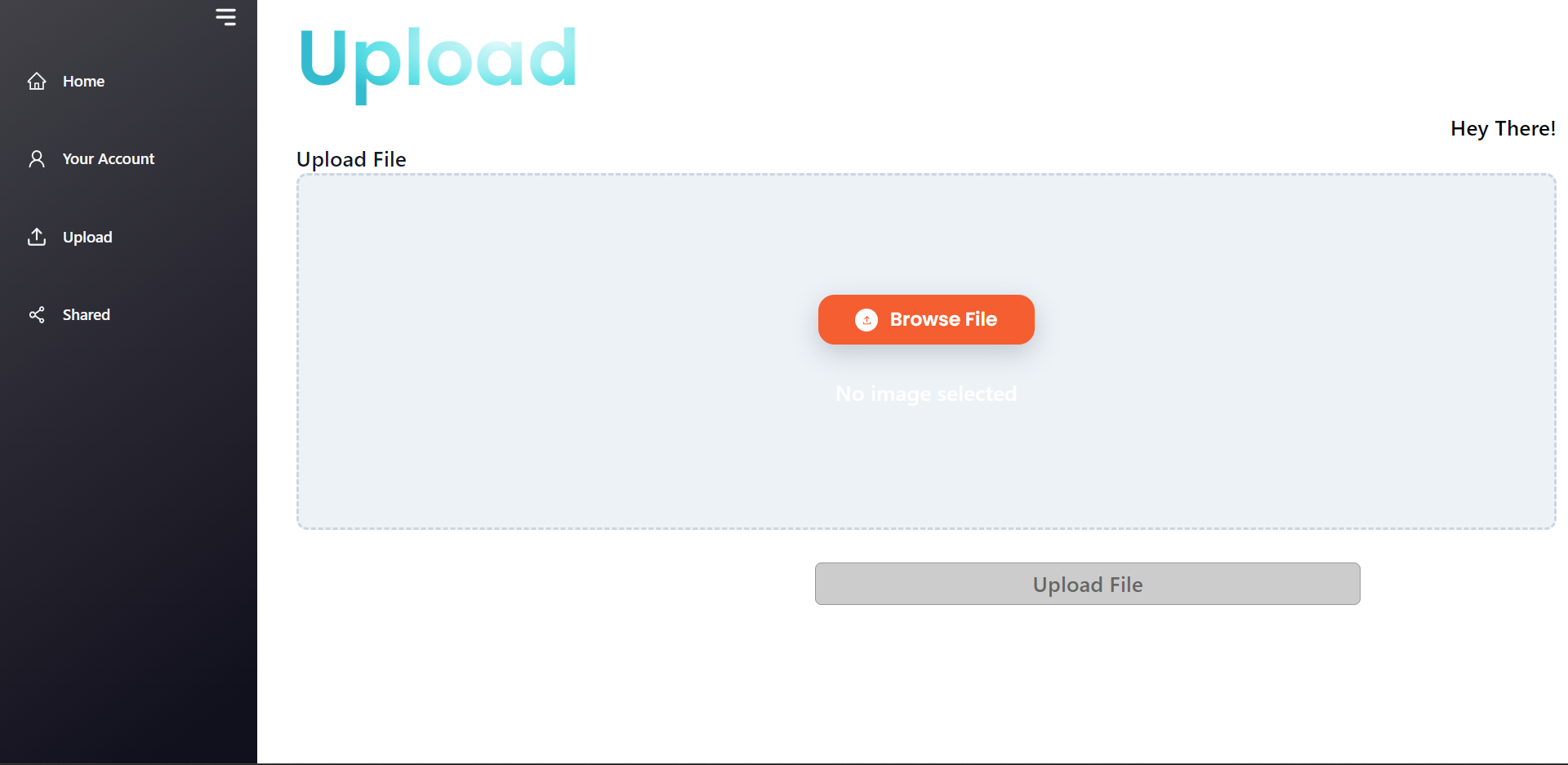
Users can upload documents to Datavault and choose who they want to share them with. The platform also allows users to set permissions for each document, so they can control who can view, edit, or delete them.
One of the key features of Datavault is its focus on security. The platform uses end-to-end encryption to ensure that data is secure both in transit and at rest. This means that data is encrypted on the user's device before it is uploaded to the platform, and it remains encrypted until it is accessed by an authorized user.
How we built it
Frontend
The frontend of Datavault was built using React, a popular JavaScript library for building user interfaces. React allowed the developers to create a responsive and intuitive user interface that is easy to use and navigate.
In addition to React, the developers also used Tailwind CSS, a utility-first CSS framework, to style the frontend of the platform. Tailwind CSS allowed the developers to quickly and easily create a consistent and visually appealing design for Datavault.
Backend
The backend of Datavault was built using Pinata IPFS Storage, a decentralized file storage platform that uses the InterPlanetary File System (IPFS) to store data. Pinata IPFS Storage allowed the developers to create a decentralized architecture for Datavault, which makes it more secure and less vulnerable to hacking or data breaches.
To ensure the security of user data, Datavault also uses account extraction, a security measure that requires users to provide two or more forms of identification before they can access their account. This helps to prevent unauthorized access to user data and ensures that sensitive information remains private.
Configuration
To configure the project, the developers used Hardhat, a development environment for building and testing smart contracts on the Fantom blockchain. Hardhat allowed the developers to quickly and easily set up the project and test its functionality before deploying it to the live network
Challenges we ran into
During the development of Datavault, the team faced challenges related to ensuring the security of user data, integrating Pinata IPFS Storage, and creating a user-friendly interface. However, they were able to overcome these challenges and create a functional and secure platform for document sharing.
Accomplishments that we're proud of
Firstly, we are proud of the security measures that we implemented in Datavault. The use of end-to-end encryption, multi-factor authentication, and account extraction ensures that user data is secure and protected from unauthorized access.
Secondly, we are proud of the decentralized architecture that we created using Pinata IPFS Storage. This architecture makes Datavault more secure and less vulnerable to hacking or data breaches.
Finally, we are proud of the user interface that we created for Datavault. The interface is intuitive and easy to navigate, and the permission settings are easy to manage and understand.
Overall, we are proud of the accomplishments that we achieved during the development of Datavault. We believe that the platform is a useful and secure solution for document sharing, and we are excited to see how it will be used in the future.
What we learned
The development of Datavault was a challenging process that taught us several important lessons. Here are some of the key takeaways from the project:
Prioritizing Security
One of the most important lessons we learned was the importance of prioritizing security when developing a platform that handles sensitive data. We implemented several security measures, such as end-to-end encryption, multi-factor authentication, and account extraction, to ensure that user data was secure and protected from unauthorized access.
Using Decentralized Architecture
Another important lesson we learned was the importance of using decentralized architecture to create a more secure platform. By using Pinata IPFS Storage, we were able to create a decentralized platform that is less vulnerable to hacking or data breaches.
Creating a User-Friendly Interface
Finally, we learned the importance of creating a user-friendly interface that is easy to navigate and understand. The intuitive interface and easy-to-manage permission settings make Datavault a useful platform for document sharing.
What's next for Datavault
As we continue to develop Datavault, we are planning to implement zero-knowledge proof (ZKP) technology to further enhance the security and privacy of user data.
ZKP is a cryptographic technique that allows users to prove the authenticity of their data without revealing any sensitive information. This technology will allow us to create a more secure and private platform for document sharing, as users will be able to prove the authenticity of their data without revealing any sensitive information.
In addition to ZKP, we are also planning to add more features to Datavault, such as the ability to share documents with multiple users and the ability to collaborate on documents in real-time.
Overall, we are excited about the future of Datavault and the potential for ZKP technology to enhance the security and privacy of user data. We believe that these developments will make Datavault an even more useful and secure platform for document sharing.
Built With
- hardhat
- ipfs
- javascript
- metamask
- node.js
- piniata
- react
- scss
- solidity
- tailwind
- yarn


Log in or sign up for Devpost to join the conversation.