-
-
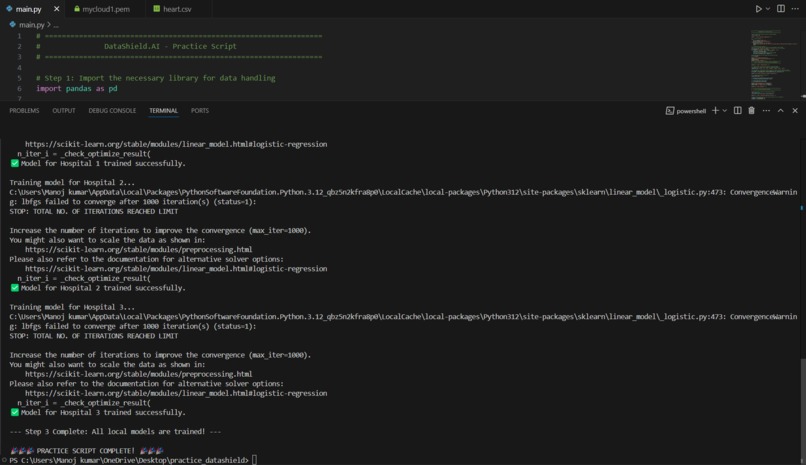
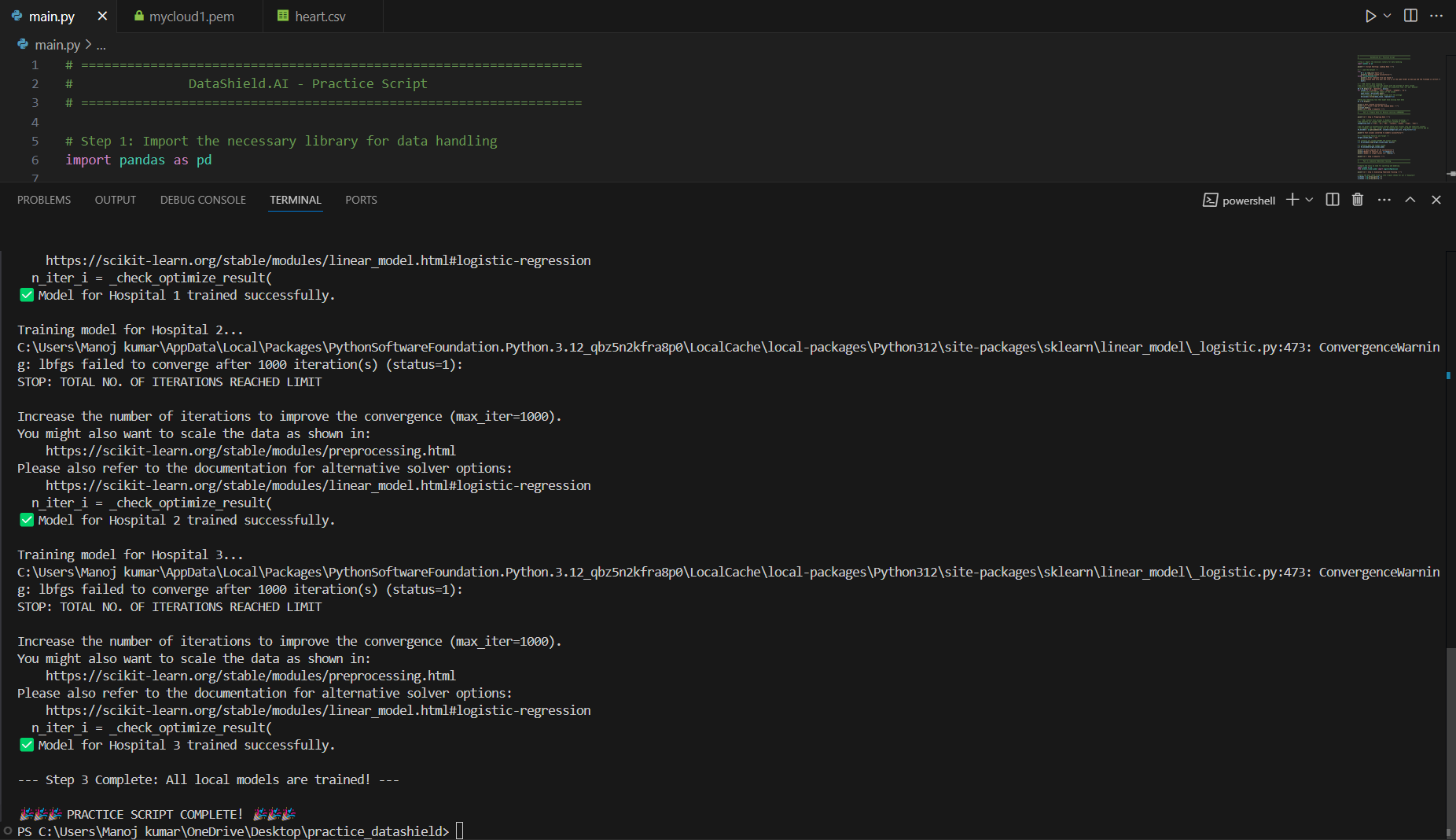
Model trained Succesfully
-
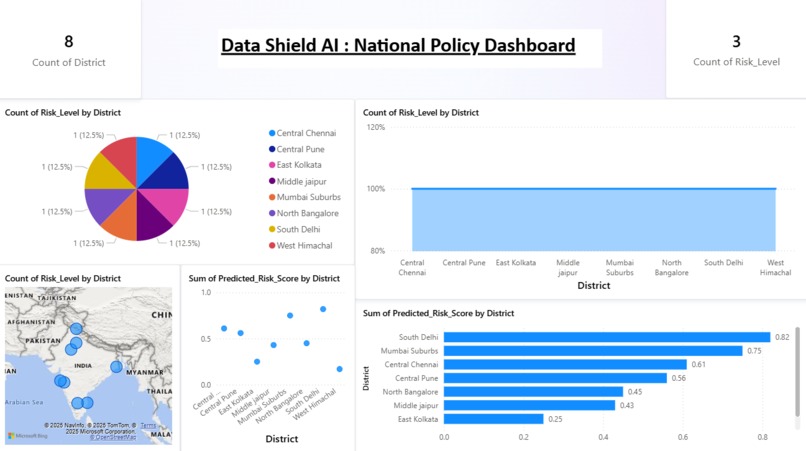
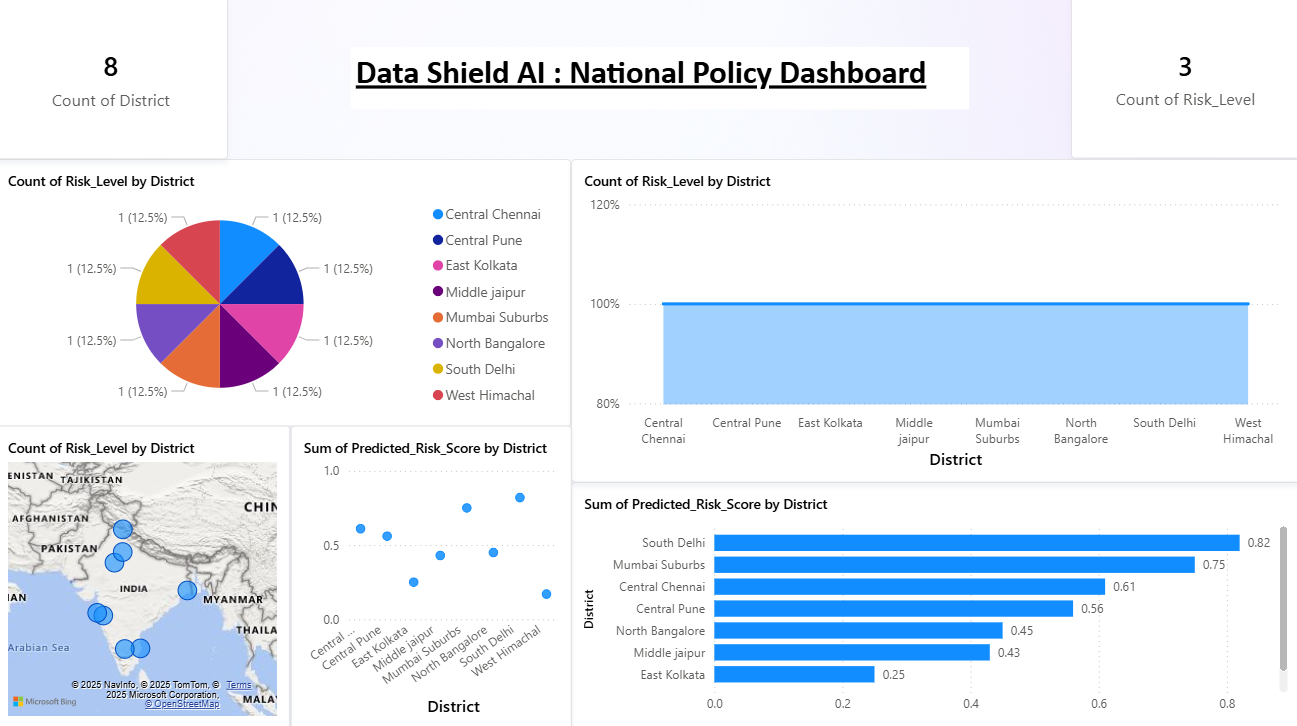
Data Visuualized Succesfully
Inspiration
In today's web, there's a constant battle between creating personalized user experiences and protecting user privacy. Websites want to use AI to offer better recommendations and services, but this often requires collecting vast amounts of user data, leading to privacy concerns. Our inspiration was to answer a simple question: Can we build a smarter, more collaborative web without sacrificing user privacy? We envisioned a future where the browser itself, like Google Chrome, acts as a guardian of user data, enabling powerful AI without ever exposing personal information.
What it does
Synapse AI is a proof-of-concept framework for privacy-preserving, collaborative AI directly in the browser. It's built on the principles of Federated Learning. Instead of websites collecting your data, the AI model training happens directly on your device, within your Chrome browser.
Here’s the flow:
- A base AI model is sent to the user's browser.
- The model trains locally, learning from the user's interactions on a specific website. The user's personal data never leaves their device.
- Only the anonymous, mathematical "learnings" from the model are securely sent to a central aggregator.
- The aggregator combines learnings from many users to build a powerful, global AI model that benefits all users with smarter recommendations and features, all while guaranteeing 100% privacy.
How we built it
For this hackathon, we built a robust proof-of-concept simulation in Python to validate the entire workflow.
- We used Pandas and NumPy to load, clean, and process a sample dataset.
- The core logic uses Scikit-learn to simulate multiple "clients" (representing individual Chrome browsers) training a machine learning model on their own isolated partition of the data.
- The script successfully proves that local training is possible and provides the foundation for a full-scale web implementation.
- Finally, we designed a Power BI dashboard to create a clear vision for how the aggregated insights from the global model would be visualized and used.
Challenges we ran into
Our biggest challenge was setting up the development environment. During a previous datathon, we faced significant hurdles with library compilation on a remote cloud server. This taught us a valuable lesson in adaptability. For this project, we pivoted to a robust local simulation, which allowed us to focus on perfecting the core logic of the federated learning process rather than losing time on complex environment configurations.
Accomplishments that we're proud of
We are incredibly proud of building a complete, end-to-end proof-of-concept that successfully demonstrates a complex AI principle like Federated Learning. Moving from a high-level idea to a working Python script and a professional dashboard that clearly communicates our vision was a massive achievement.
What we learned
We learned the immense importance of a solid development strategy and the power of simulation to prove a concept. We also gained a much deeper understanding of the practical steps involved in a federated learning workflow and how to effectively communicate a complex technical solution through clear, visual storytelling (our dashboard).
What's next for Synapse AI
The future is to bring this simulation to life in the browser. The next steps would be:
- Develop a JavaScript version using
TensorFlow.jsto enable true on-device training within Google Chrome. - Build a lightweight backend server (using Flask or FastAPI) to act as the secure model aggregator.
- Create a Chrome Extension to manage user permissions and demonstrate the learning process in real-time.
Built With
- federated-learning
- git
- numpy
- pandas
- power-bi
- python
- scikit-learn
- visual-studio-code

Log in or sign up for Devpost to join the conversation.