-
-
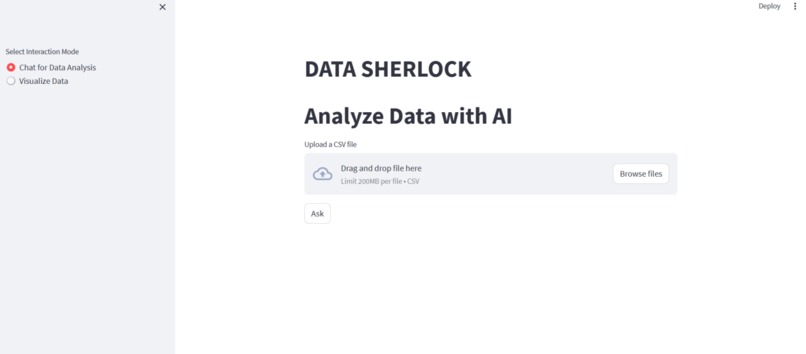
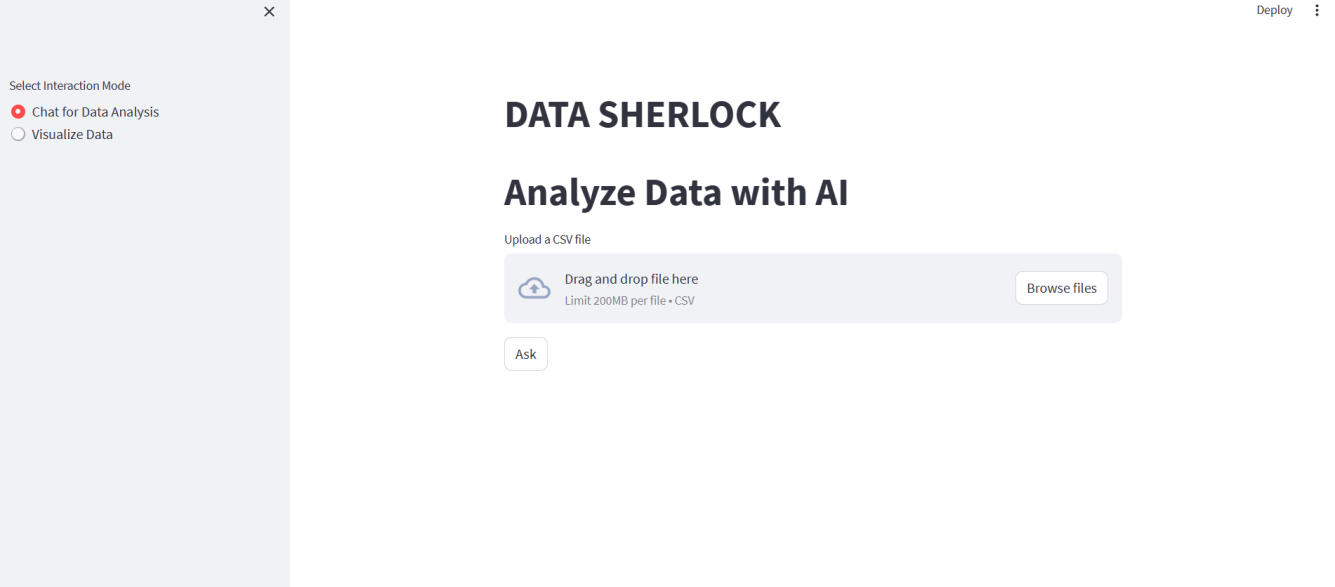
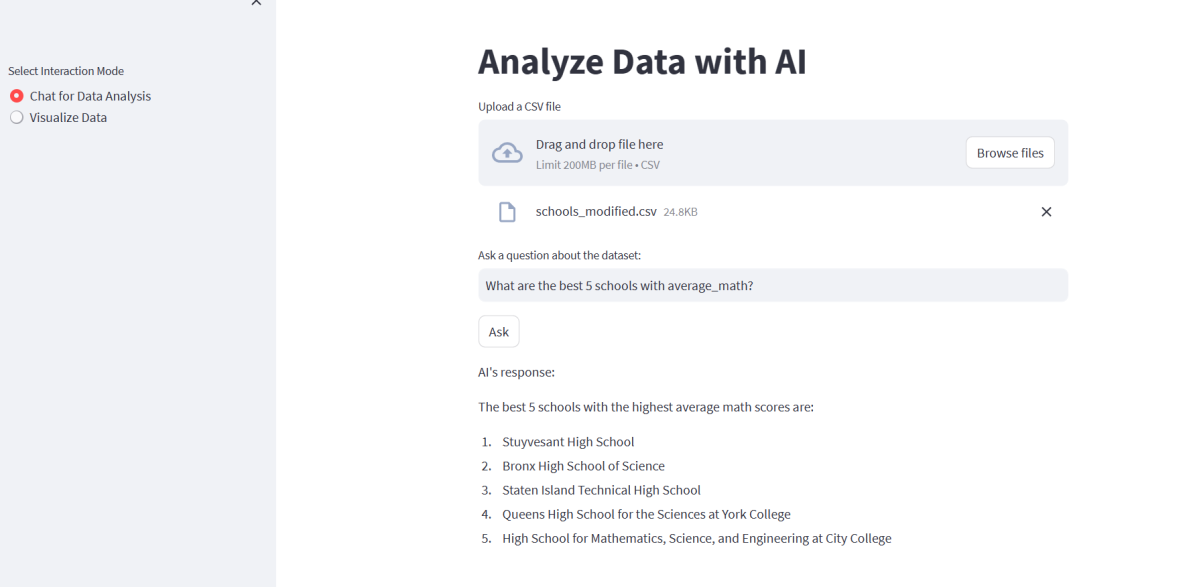
Analysis chatbot page
-
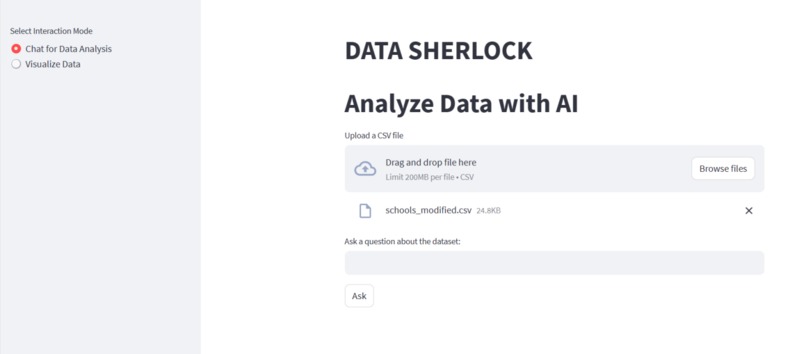
Upload dataset
-
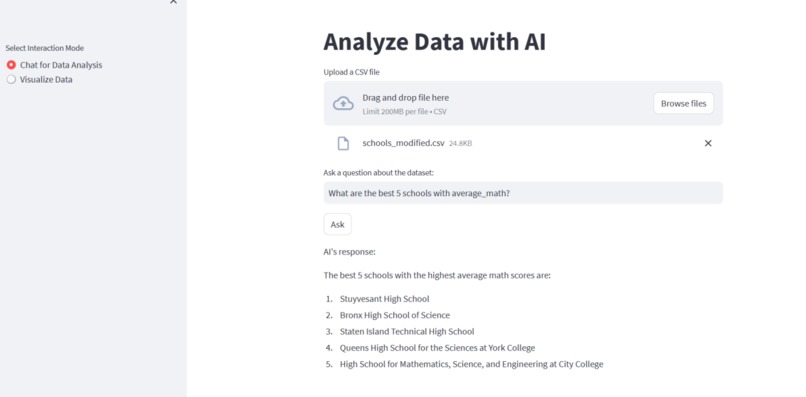
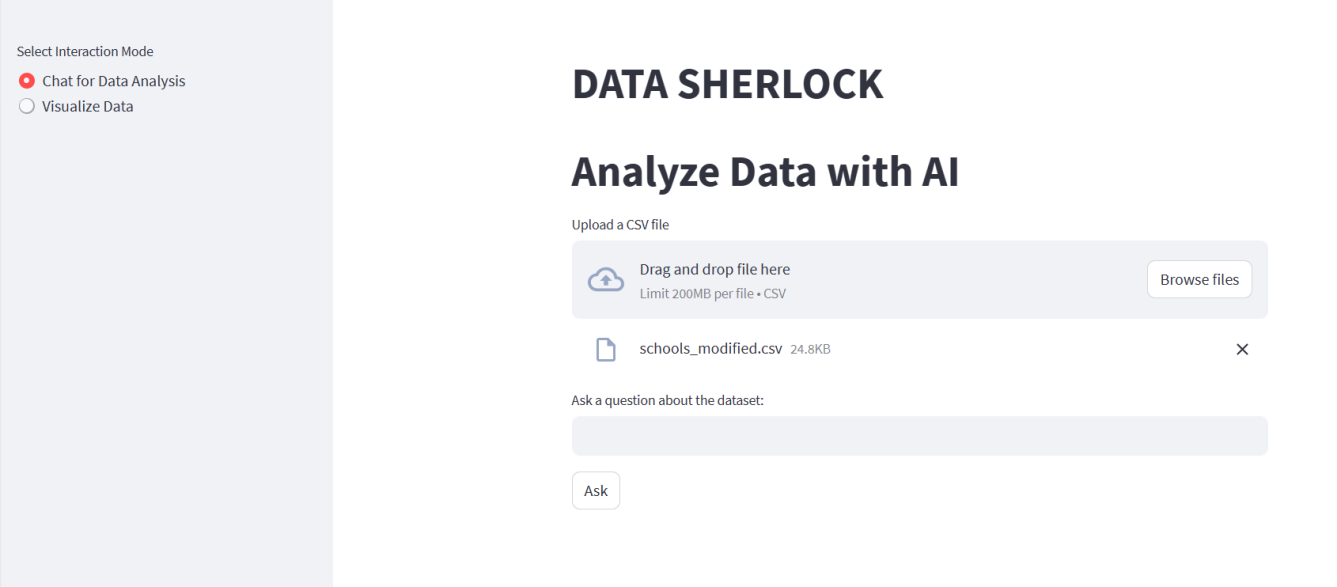
Ask question
-
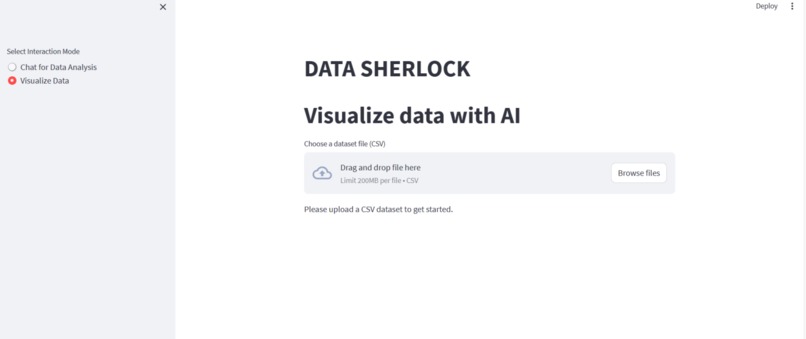
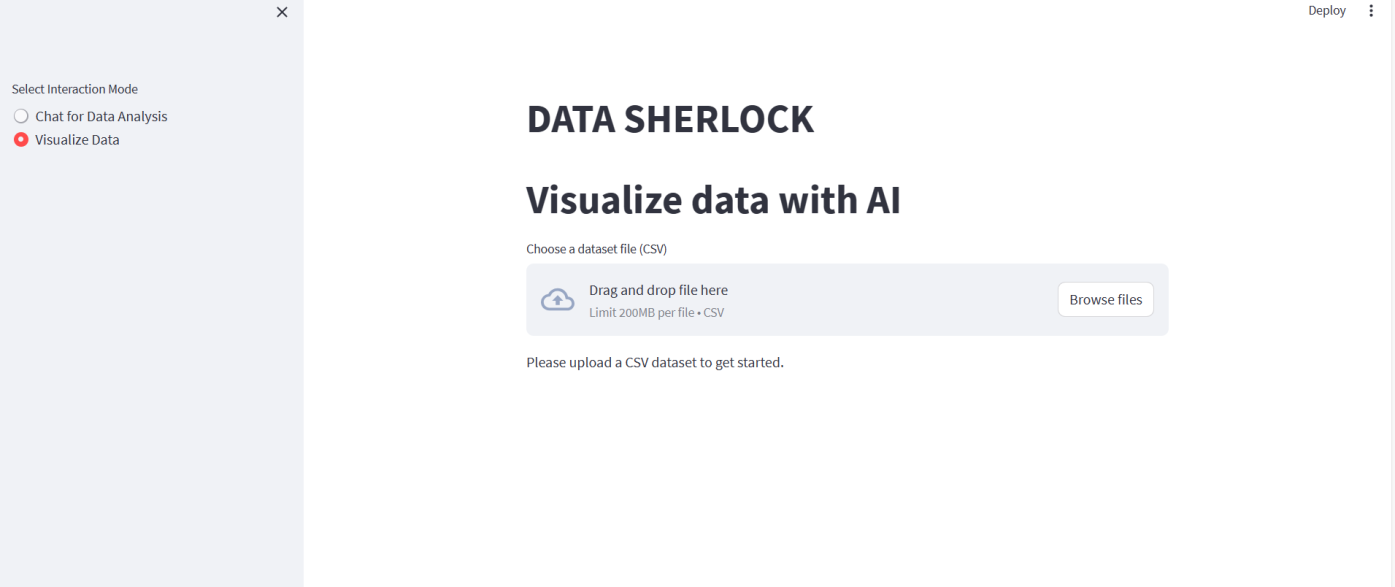
Visualization bot page
-
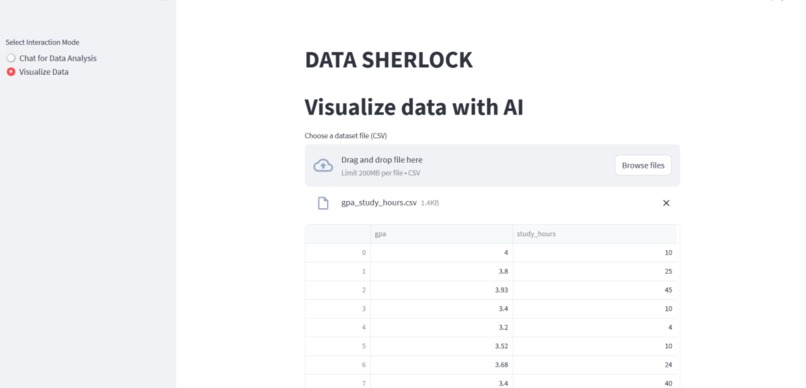
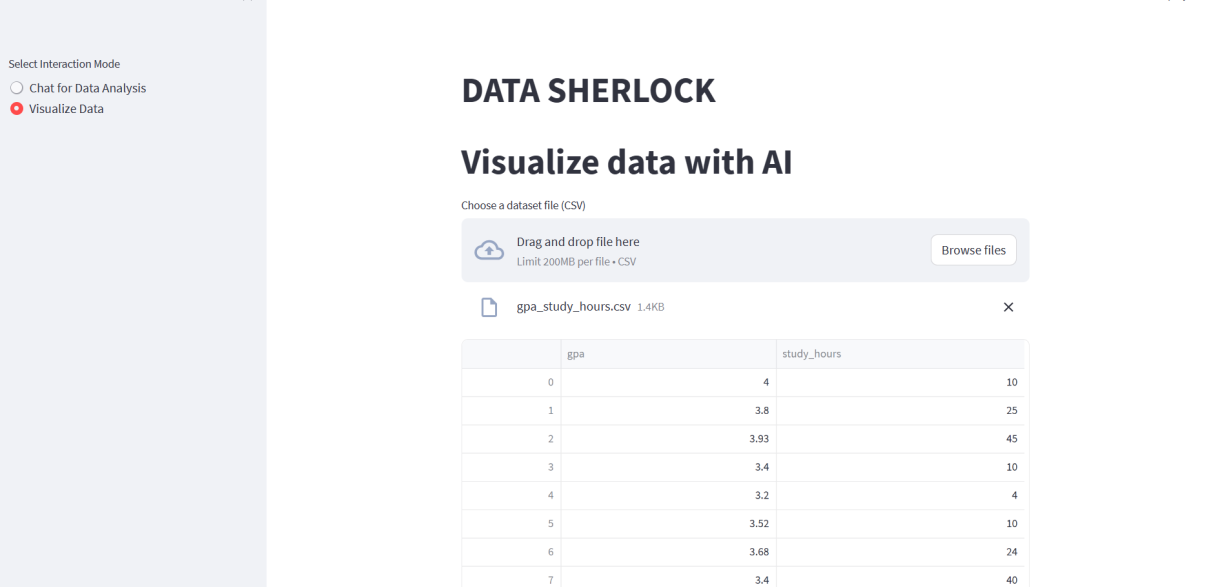
Upload dataset for visualization
-
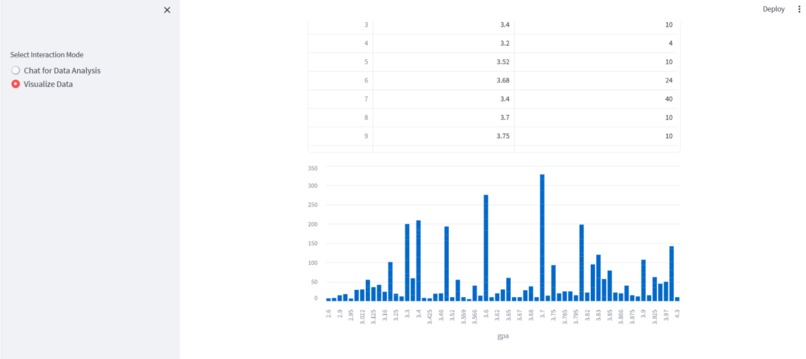
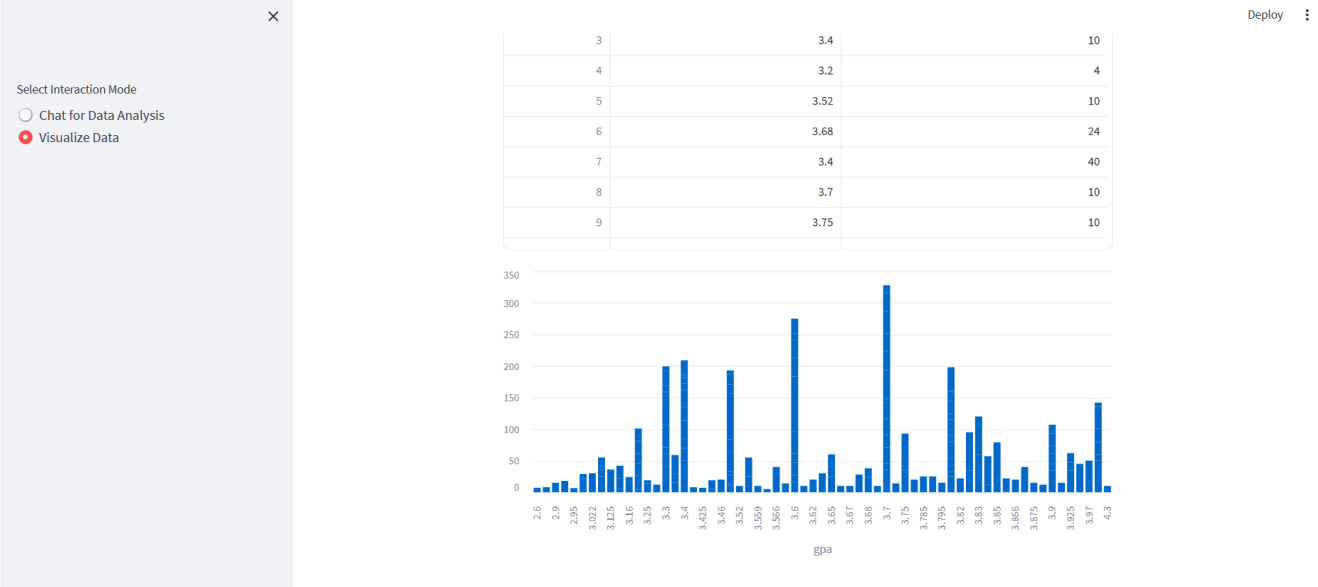
Interactive graph generated
Inspiration
The inspiration behind the DataSherlock came from a desire to make data analysis and exploration more accessible and interactive for users. We wanted to create a virtual assistant that could not only answer data analysis questions but also generate visualizations and insights, simplifying the process of deriving valuable information from datasets. The name DataSherlock Bot embodies the idea of being a detective of data, uncovering hidden insights with precision.
What it does
The DataSherlock Bot is your trusted companion in the world of data analysis. Here's what it does:
Data Loading: Users can upload their datasets in CSV format using the bot's user-friendly interface.
Interactive Data Exploration: Users can ask the bot questions about the data, such as correlations, trends, or specific insights. The bot uses AI-powered natural language processing to understand and respond to user queries.
Data Visualization: The bot creates informative visualizations, including charts, graphs, and interactive dashboards, to help users better understand their data.
Insight Generation: DataSherlock provides meaningful insights and explanations about the dataset, helping users uncover valuable information.
Whether you're a data enthusiast or a newcomer to the world of data analysis, DataSherlock Bot simplifies the process, making data exploration and insights accessible to all.
How we built it
DataSherlock was built using a combination of Python libraries and services:
We used Streamlit to create the user interface, making it easy for users to upload datasets and interact with the bot.
Pandas was used for data manipulation, enabling us to load and preprocess datasets.
We integrated OpenAI's GPT-3 to handle natural language interactions and answer questions about the data.
For data visualization, we utilized libraries like Matplotlib, Seaborn, and Plotly to create informative charts and graphs.
We implemented error handling to ensure the bot provides meaningful responses even when faced with unexpected queries.
Challenges we ran into
Building the DataSherlock Bot presented a few challenges:
Integration Complexity: Integrating multiple libraries and services, such as Streamlit, GPT-3, and data visualization tools, required careful coordination and troubleshooting.
Handling Diverse Data: Different datasets have unique characteristics, which required adaptable preprocessing and visualization techniques.
API Quotas: When using GPT-3, we had to manage API quotas and handle rate limits to ensure uninterrupted user interactions.
Accomplishments that we're proud of
We take pride in several accomplishments of the DataSherlock Bot project:
User-Friendly Interface: We designed an intuitive and user-friendly interface that allows users to easily upload datasets and interact with the bot.
AI-Powered Insights: The integration of OpenAI's GPT-3 enables the bot to provide intelligent and informative responses to user queries.
Data Visualization: The bot creates visually appealing and interactive data visualizations that enhance data understanding.
What we learned
During the development of the DataSherlock Bot, we learned several valuable lessons:
Integration of AI: We discovered how to seamlessly integrate AI models, like OpenAI's GPT-3, to enhance user interactions and answer questions about data analysis.
Streamlit for Web Apps: We explored the power of Streamlit for creating web applications with user-friendly interfaces. Streamlit allowed us to build an intuitive front-end for our chatbot.
What's next for DataSherlock Bot
Enhanced Interactivity: We plan to further enhance the bot's interactivity, allowing users to perform more advanced analyses and custom visualizations.
Integration with More Data Sources: We aim to expand the bot's capabilities by enabling it to fetch data from various sources, not just CSV files.
Machine Learning Insights: Incorporating machine learning models for predictive analytics and insights is a future goal.
Community Engagement: We look forward to building a community around the DataSherlock Bot, where data enthusiasts can collaborate and share their experiences.
Built With
- openai
- python
- streamlit


Log in or sign up for Devpost to join the conversation.