-
-
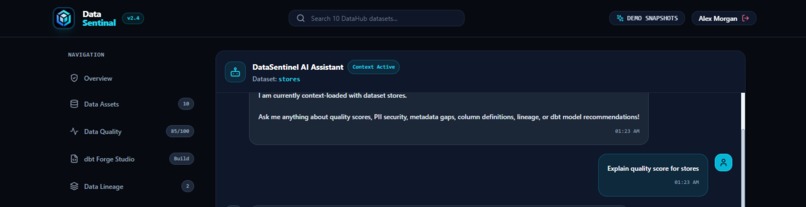
Assistant
-
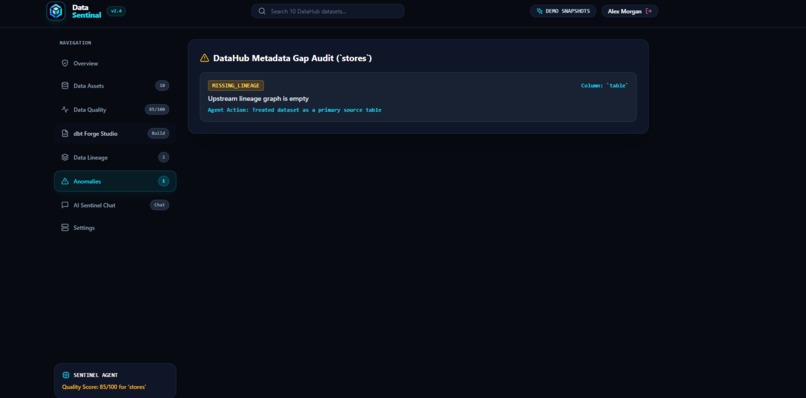
Pipeline
-
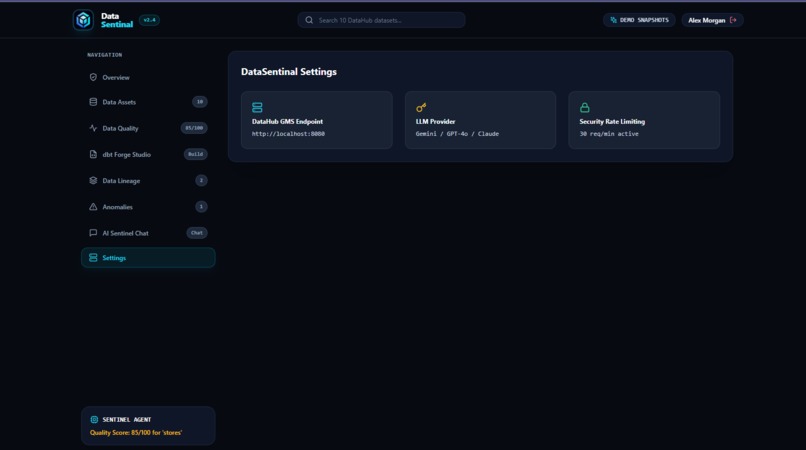
Settings
-
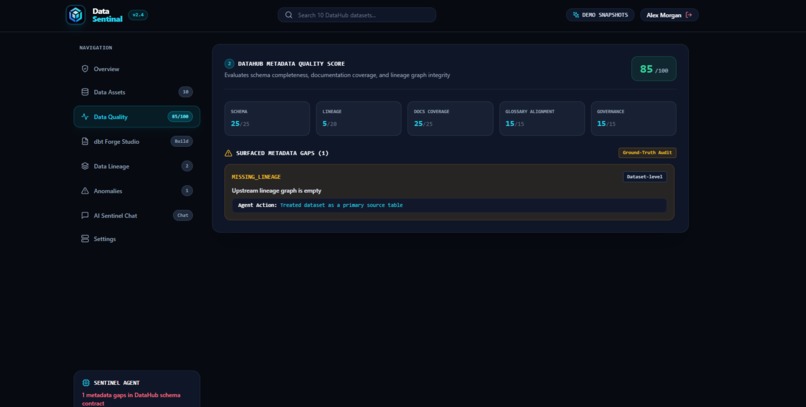
Overview
-
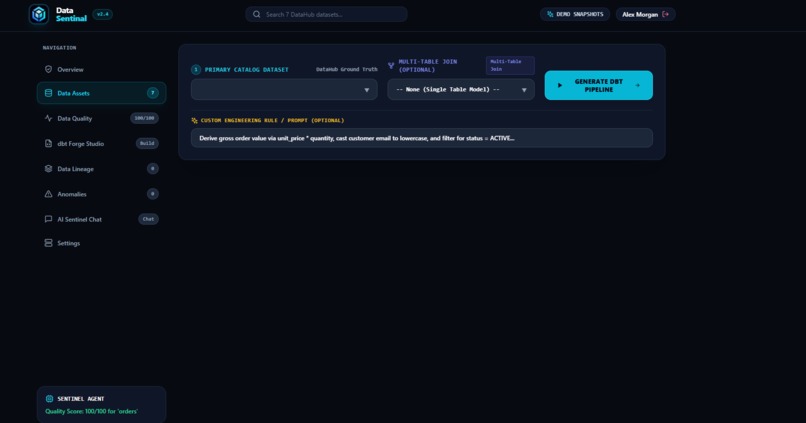
Assets
-
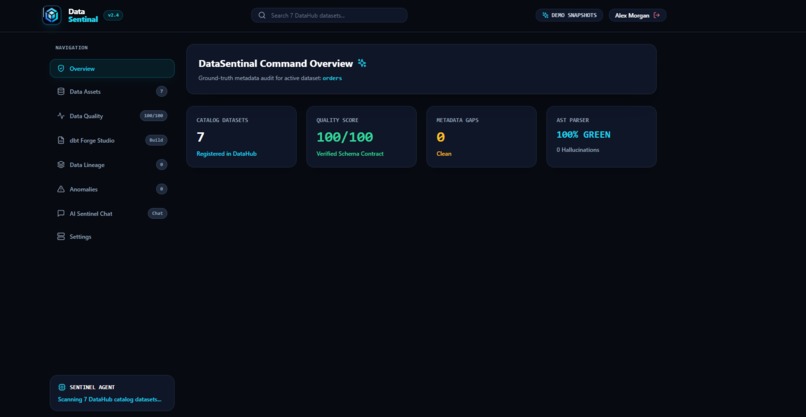
Dashboard
-
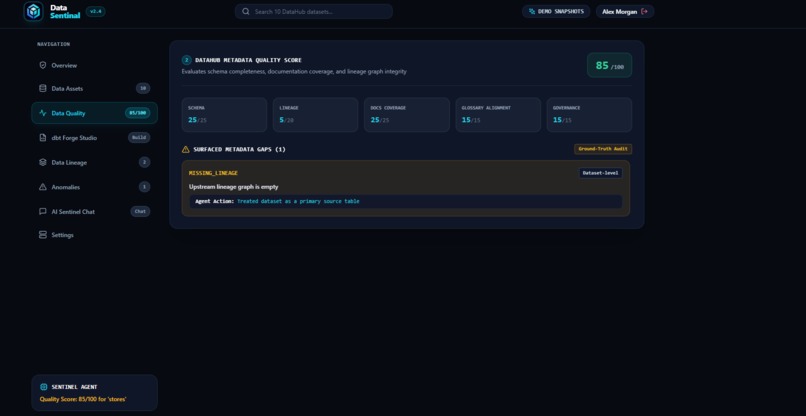
Lineage
-
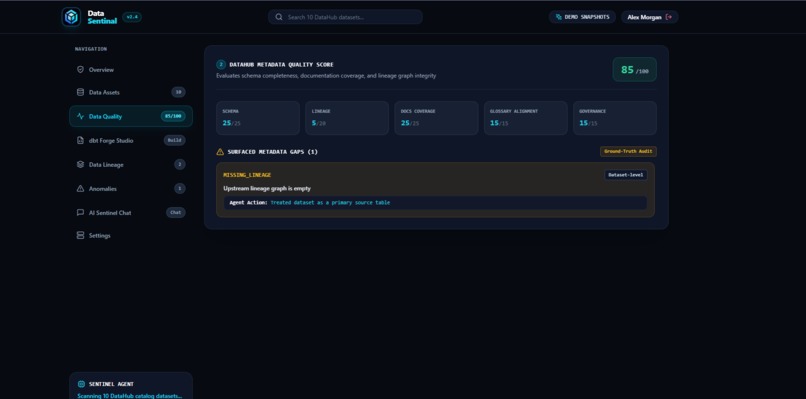
Quality
-
Security
-
Chat
-
Audit
-
Landing
Inspiration
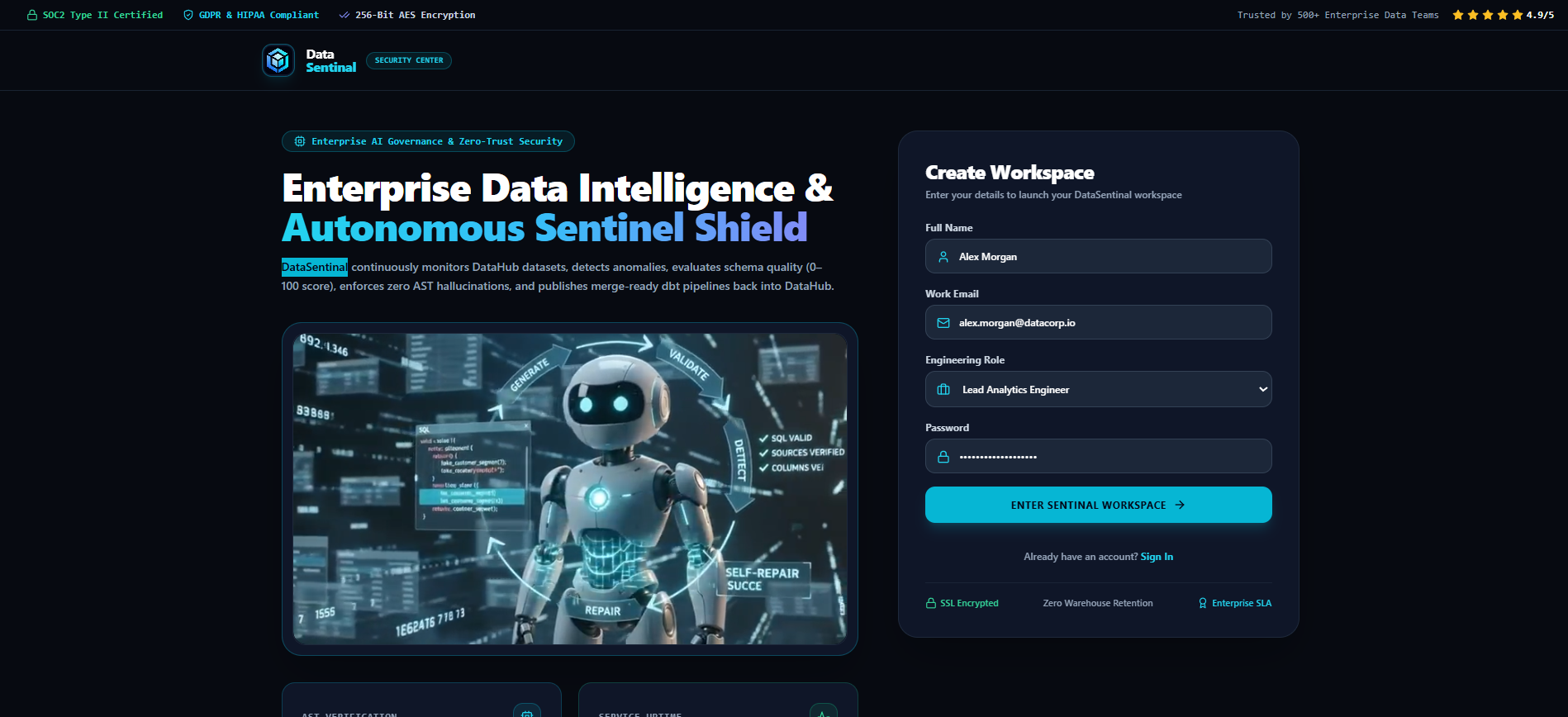
We were inspired by a simple but important problem: organizations have huge amounts of data, but often struggle to understand and govern it effectively. Sensitive information can be hidden across different tables and datasets, while data-quality issues and complex relationships make manual analysis slow and difficult. We wanted to build something that could act like an intelligent guardian for organizational data—helping users discover what they have, identify risks, understand quality, and make better decisions without requiring them to manually inspect every database.
What it does
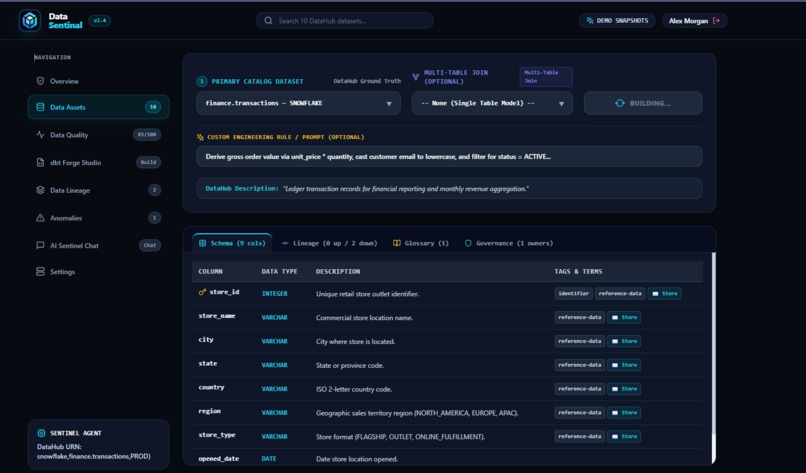
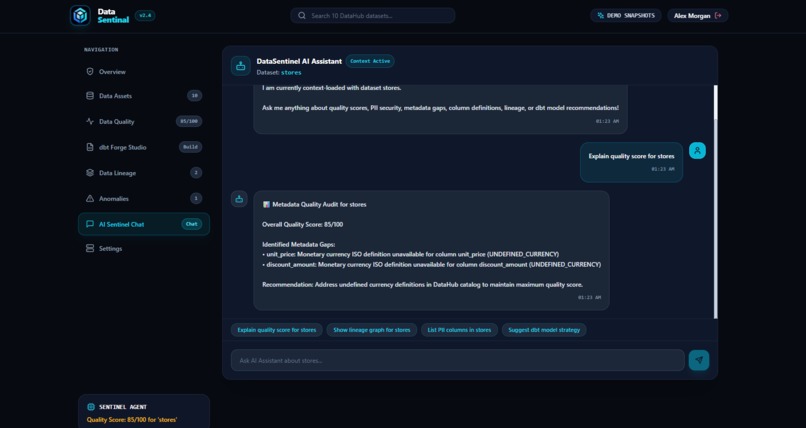
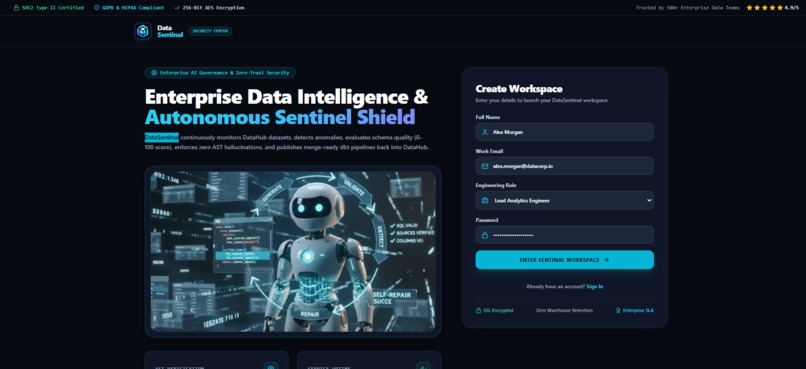
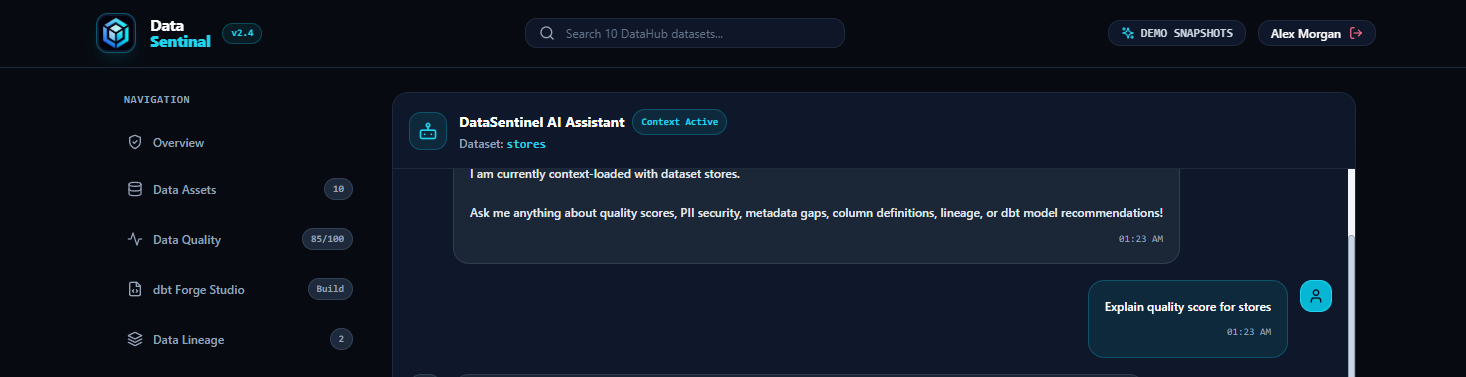
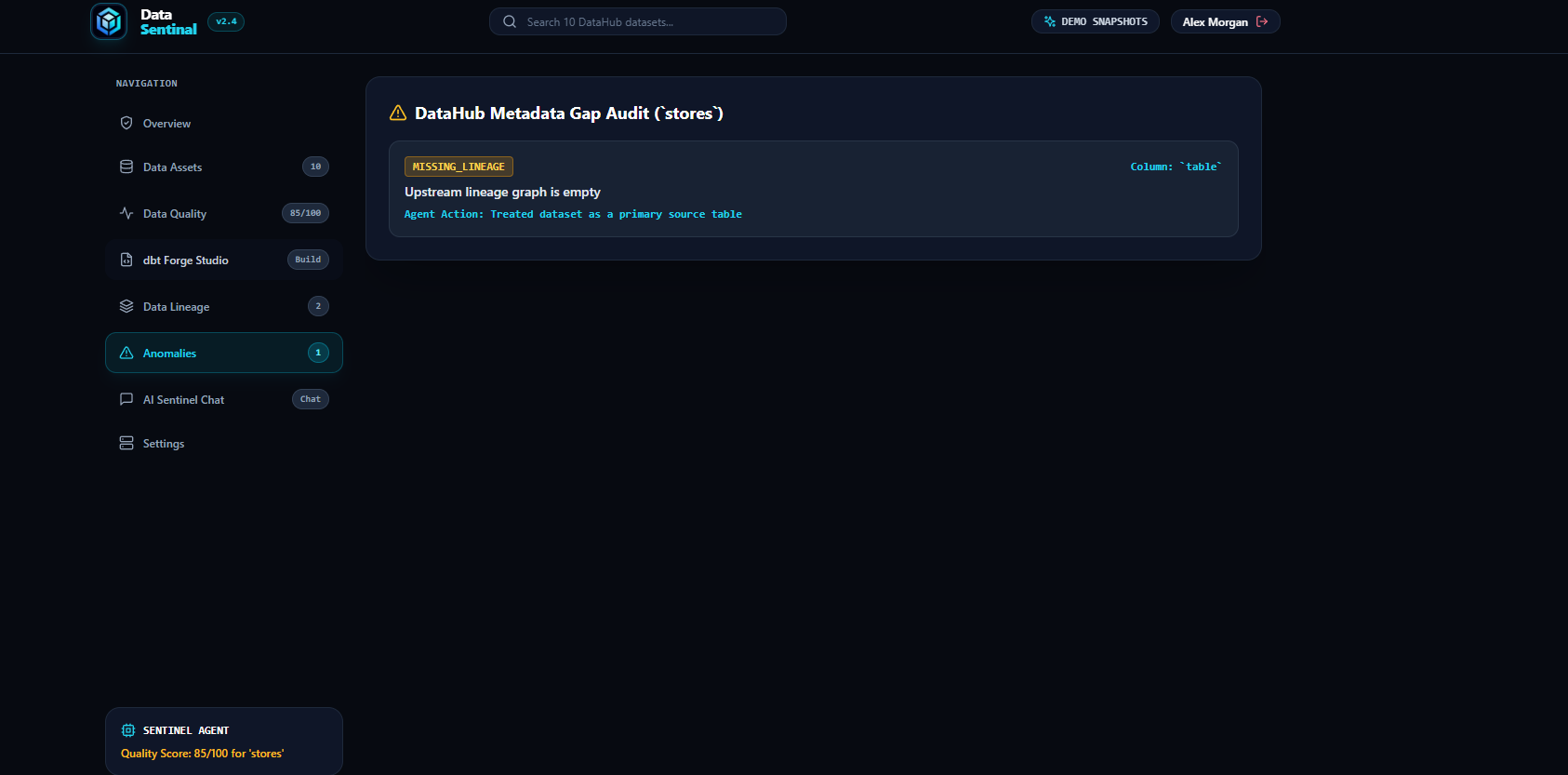
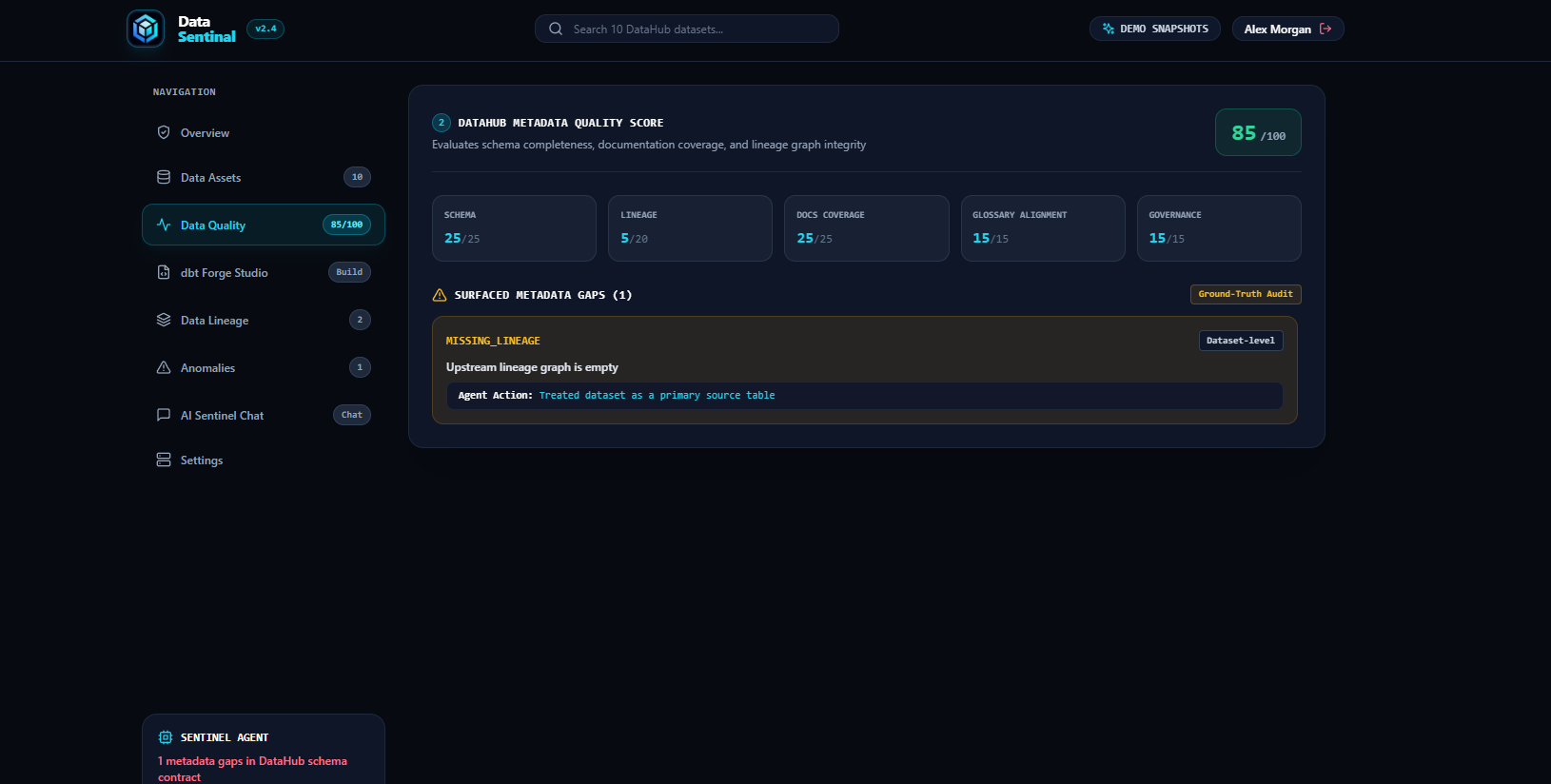
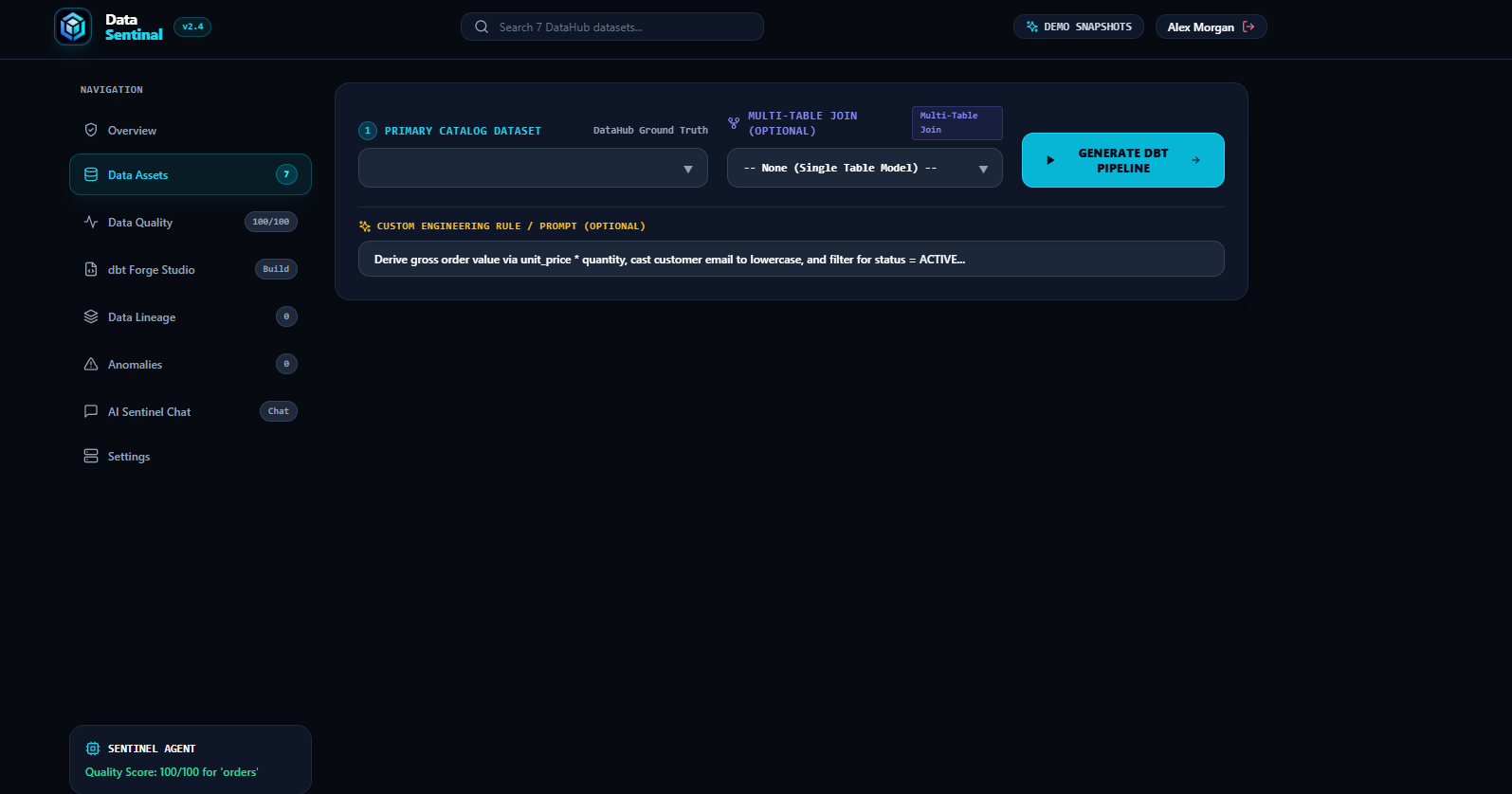
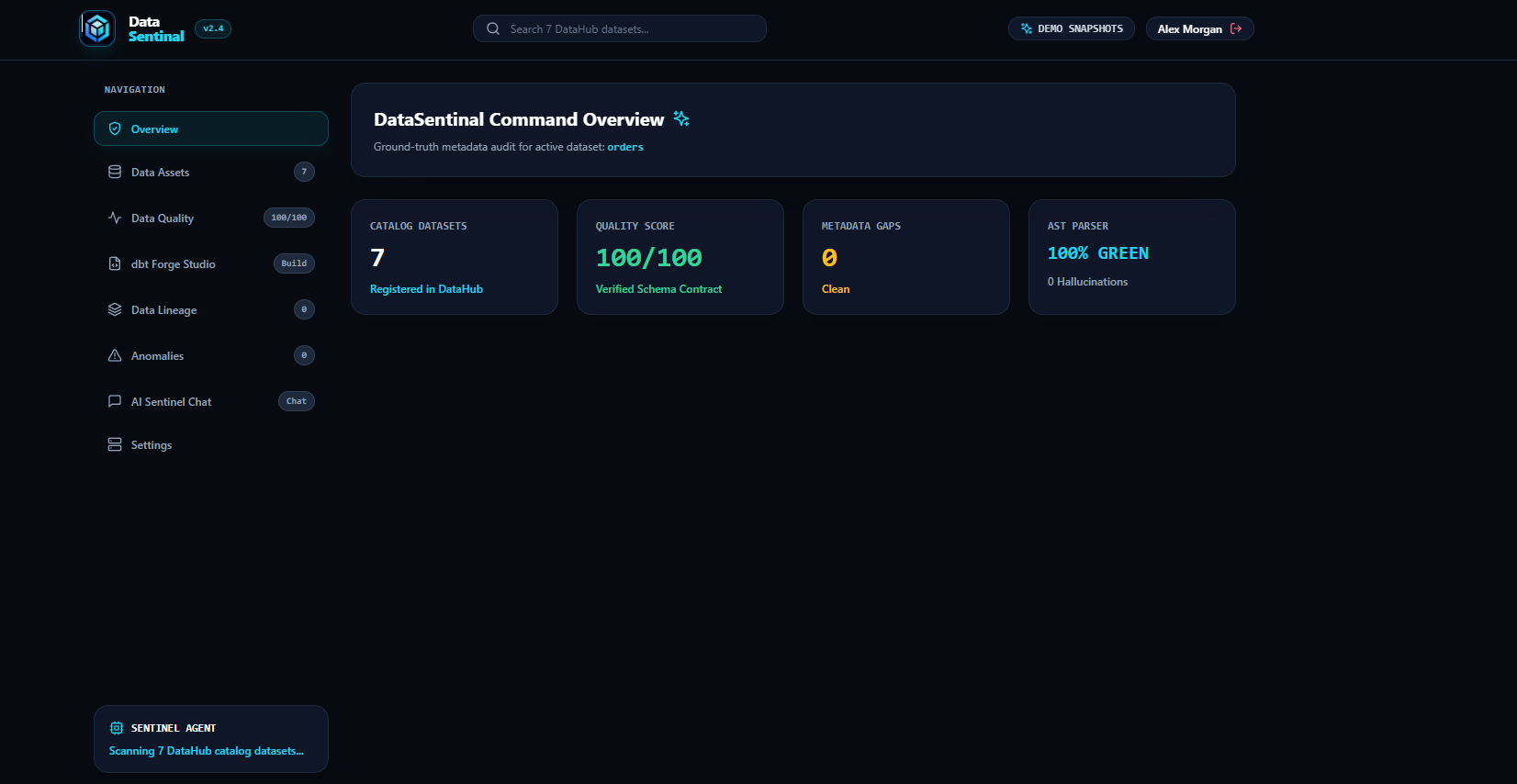
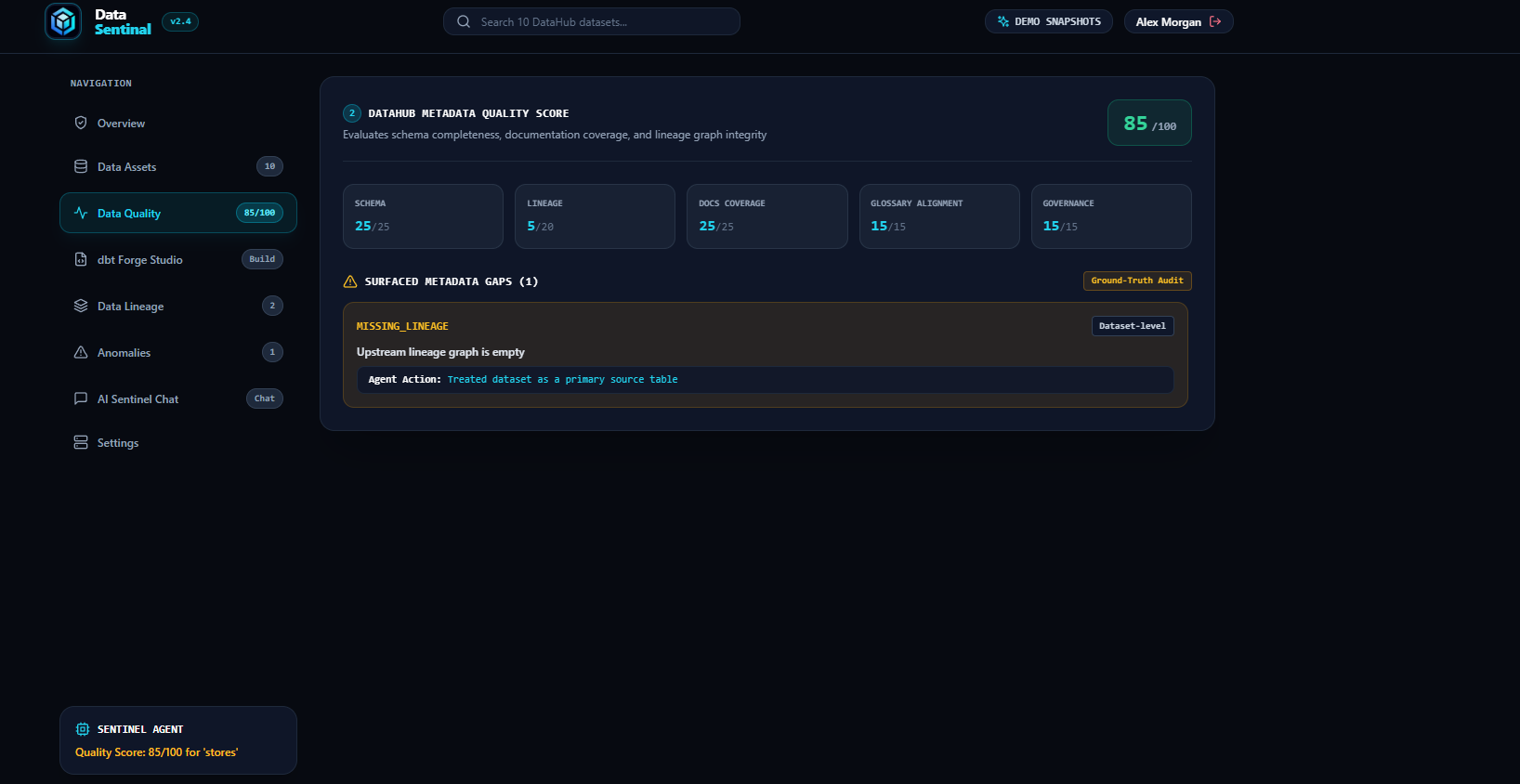
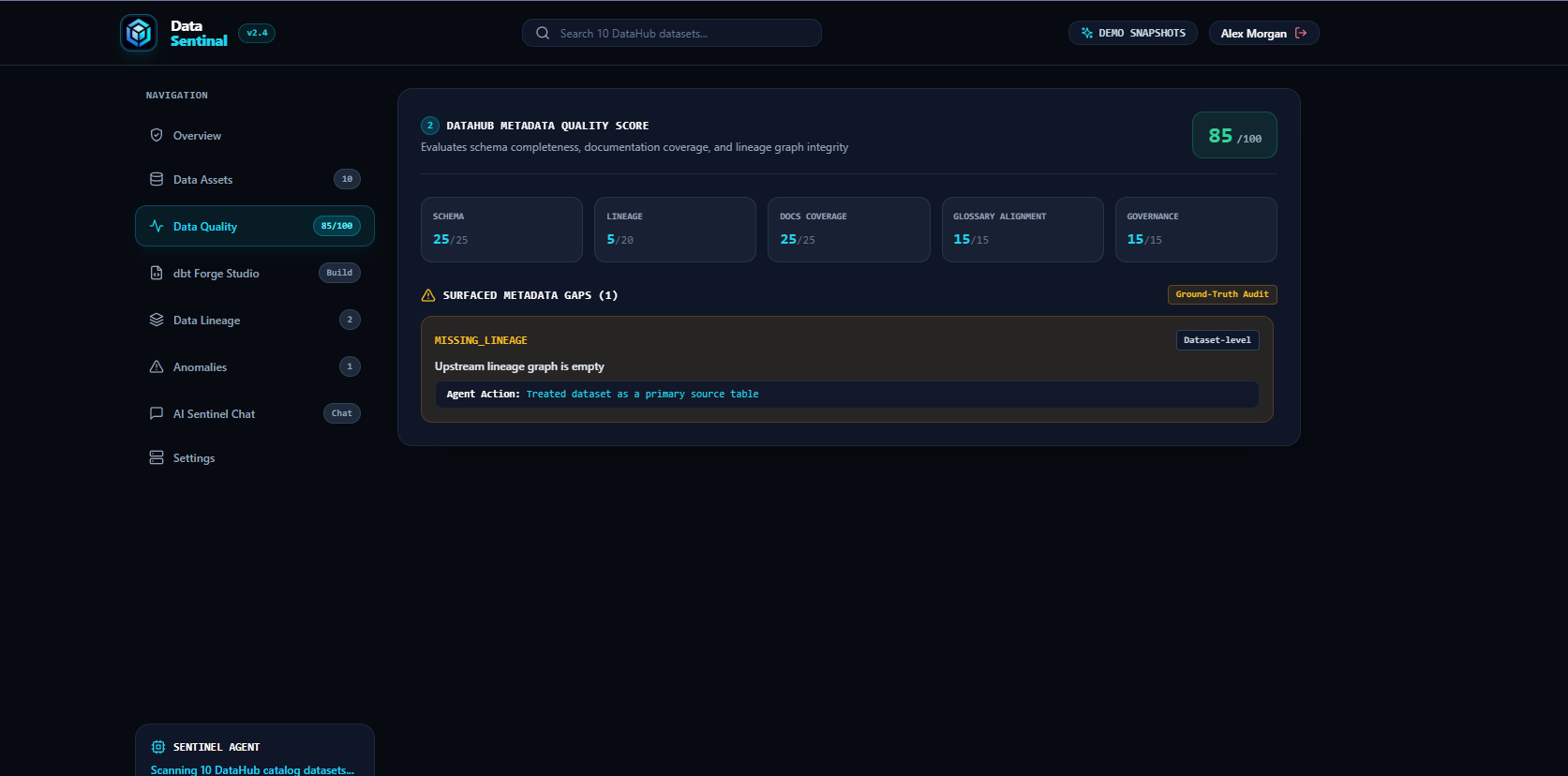
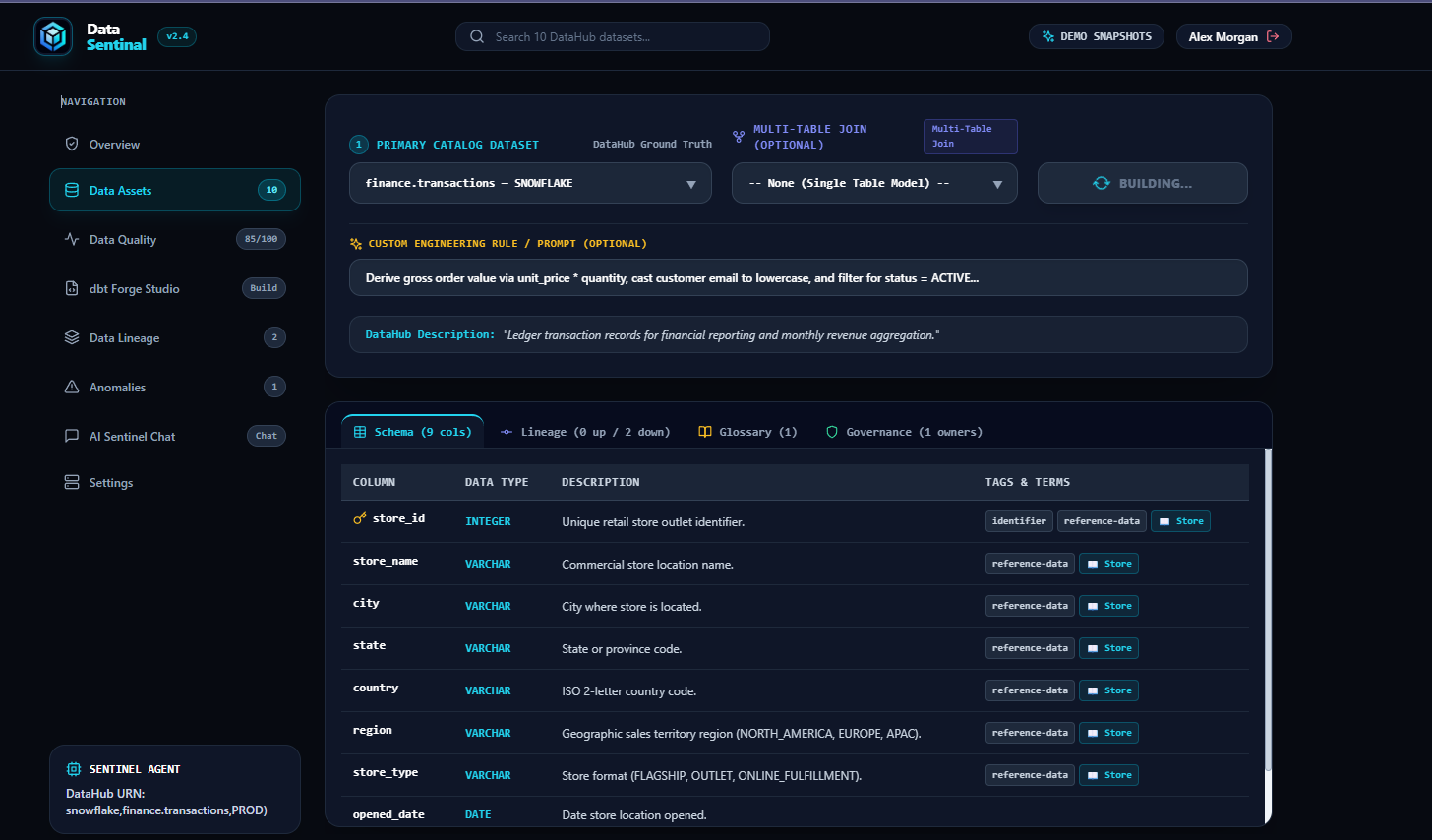
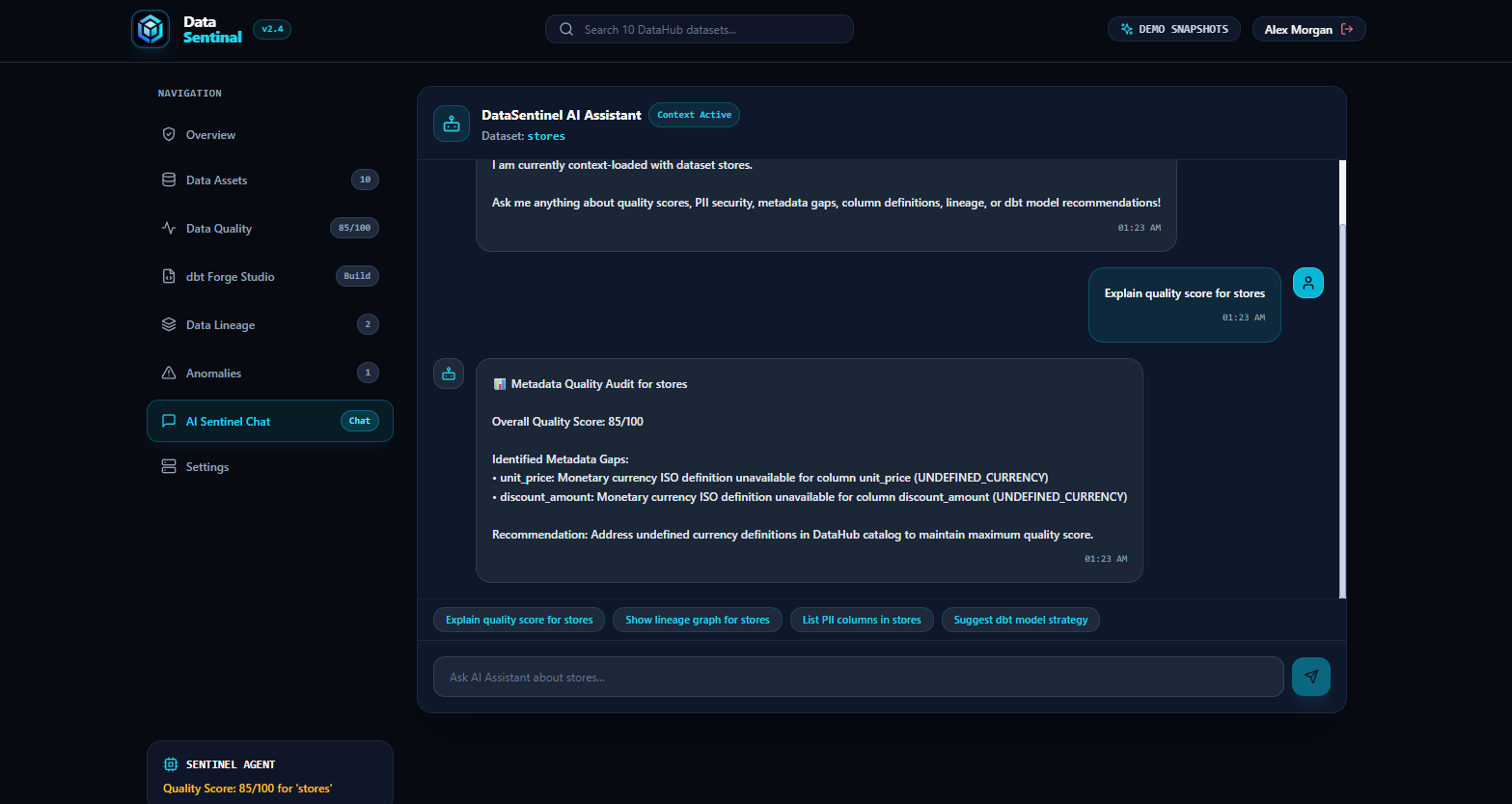
DataSentinel is an AI-powered data governance platform that analyzes datasets and database structures to provide meaningful insights. It helps detect sensitive and potentially personally identifiable information, identify data-quality issues such as missing or inconsistent values, understand relationships between different data entities, and present important findings in a simple and actionable way. Instead of requiring users to manually explore complex schemas, DataSentinel makes data governance more accessible through AI-powered analysis and natural-language interaction.
How we built it
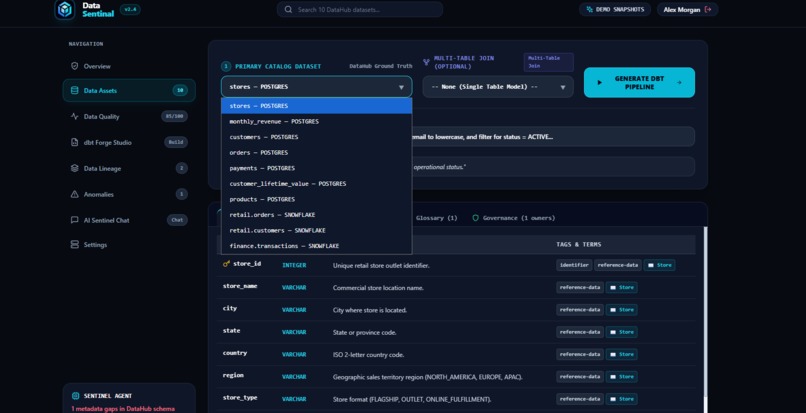
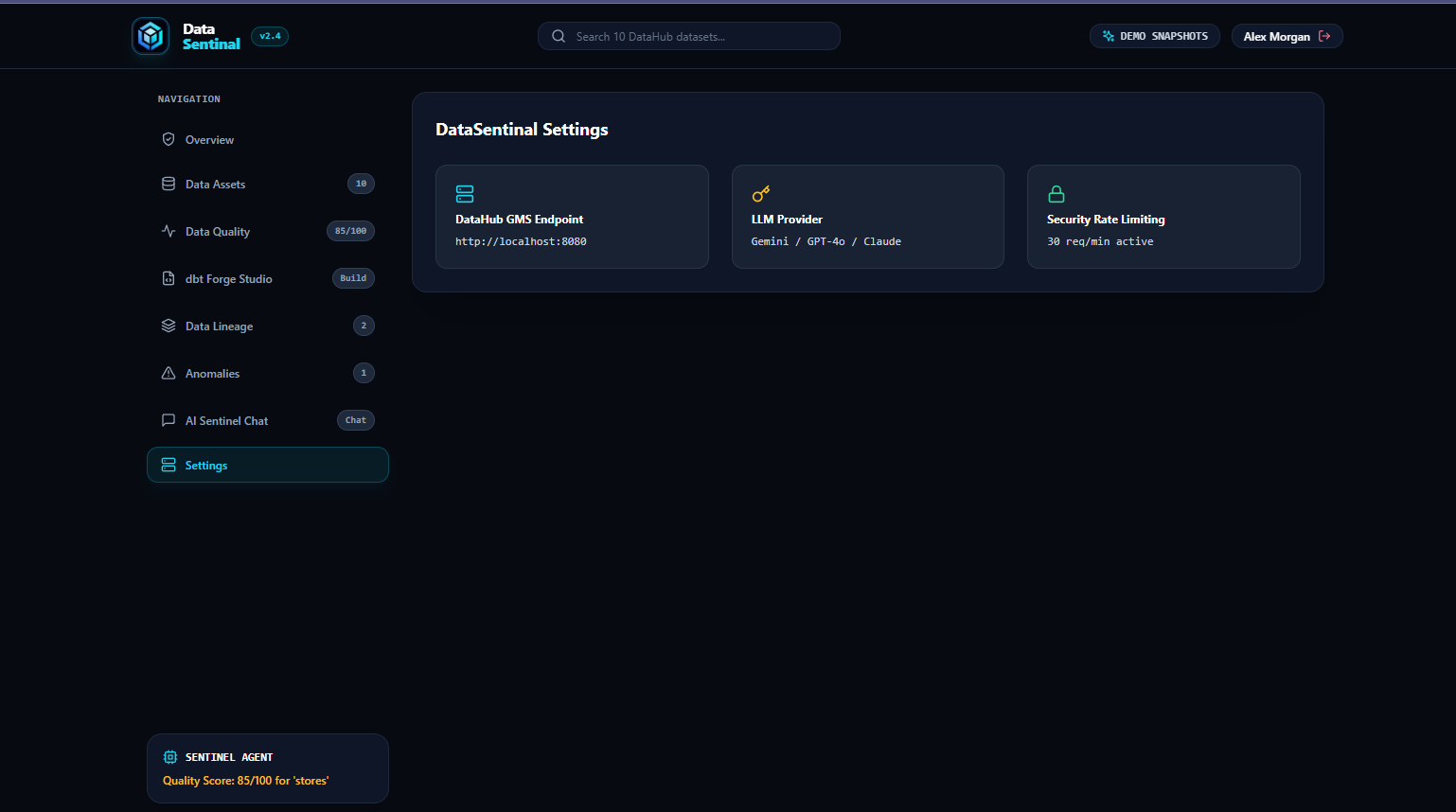
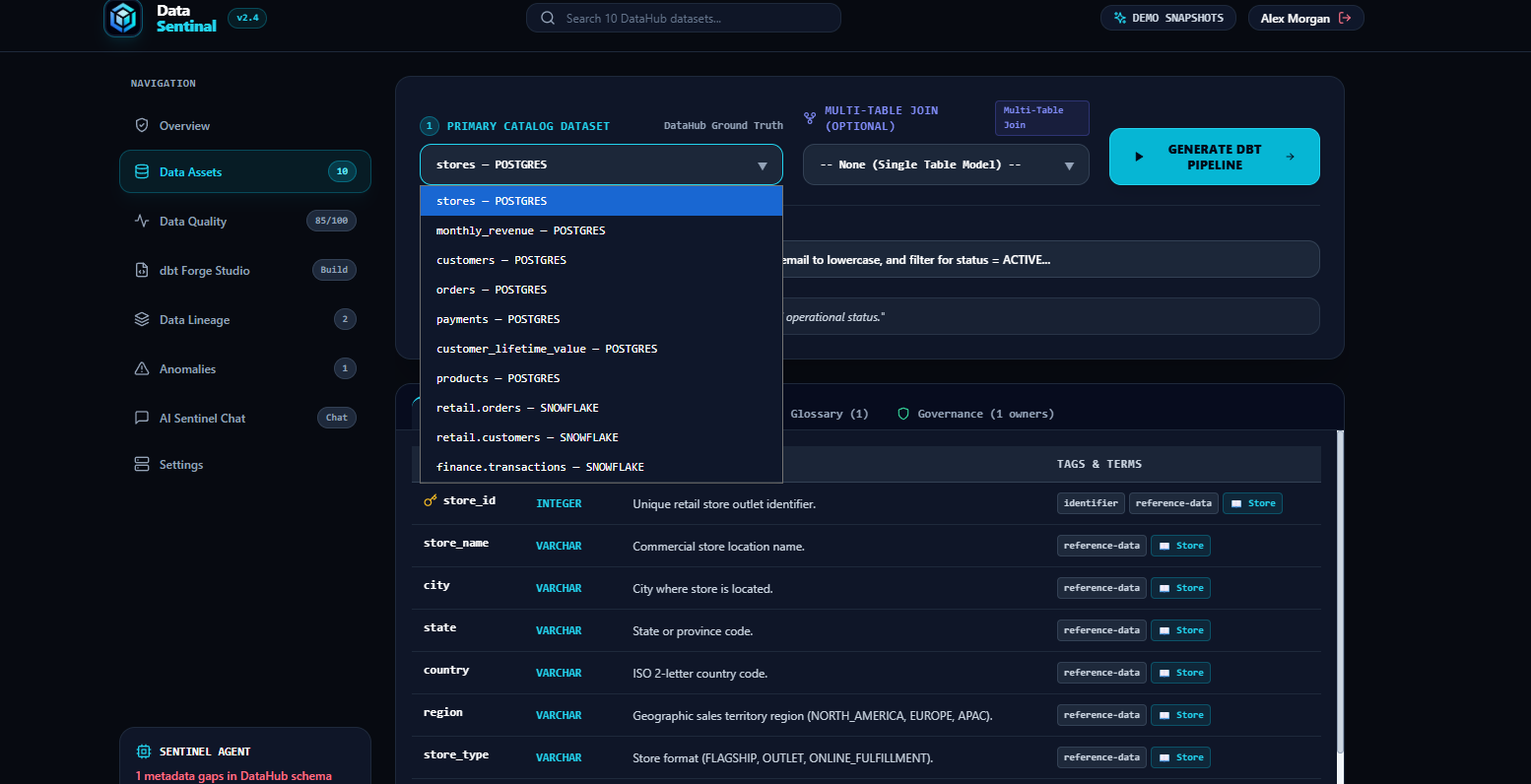
We built DataSentinel by combining a modern web-based interface with data-processing, analysis, and AI capabilities. The system takes structured data and metadata, analyzes columns, values, relationships, and quality characteristics, and then converts the results into useful governance insights. We designed the architecture around separate components for data discovery, sensitive-data detection, quality analysis, relationship understanding, and AI-powered interpretation. The frontend provides an intuitive dashboard where users can explore the results and interact with the system, while the backend and AI layer handle the analysis and generation of meaningful recommendations.
Challenges we ran into
One of our biggest challenges was turning complex technical data into information that is easy for humans to understand. Detecting sensitive information reliably across different datasets was another challenge because real-world data can have inconsistent formats, naming conventions, and structures. We also had to think carefully about how different analysis components could work together without overwhelming the user with technical details. Building a smooth interface while simultaneously handling data processing, AI responses, and governance insights required significant iteration and debugging.
Accomplishments that we're proud of
We are proud that DataSentinel goes beyond being a simple data visualization tool and focuses on intelligent data governance. We created a platform that brings sensitive-data detection, data-quality analysis, relationship understanding, and AI-powered insights together in one place. We are especially proud of making complex database information easier to understand for users who may not have deep technical knowledge. Most importantly, we transformed the idea of a traditional data-management dashboard into an intelligent system designed to help users discover, understand, and act on their data.
What we learned
While building DataSentinel, we learned that creating an AI-powered application is not only about integrating an AI model. The real challenge is designing the complete system around it—understanding the data, preparing it correctly, building useful analysis pipelines, handling edge cases, and presenting the results clearly. We also learned the importance of modular architecture, user-focused design, reliable data processing, and continuous testing. Most importantly, we learned that AI becomes much more valuable when it converts complex information into decisions that users can actually act upon.
What's next for DataSentinel
Our next goal is to make DataSentinel a continuous intelligent data guardian rather than a tool that users run only when needed. Future versions could include real-time data monitoring, advanced PII and sensitive-data classification, automated data lineage, compliance and policy checking, risk scoring, anomaly detection, multi-database support, AI-generated governance reports, and automated recommendations for fixing data-quality and security issues. We also want to expand the conversational AI so users can ask increasingly complex questions about their organization's entire data ecosystem. Ultimately, our vision is for DataSentinel to evolve from “understanding your data” to “continuously protecting and governing your data.
Built With
- ai
- data-governance
- data-quality
- machine-learning
- natural-language-processing
- next.js
- pii-detection
- python
- react
- rest-api
- tailwind-css
- typescript


Log in or sign up for Devpost to join the conversation.