-
-
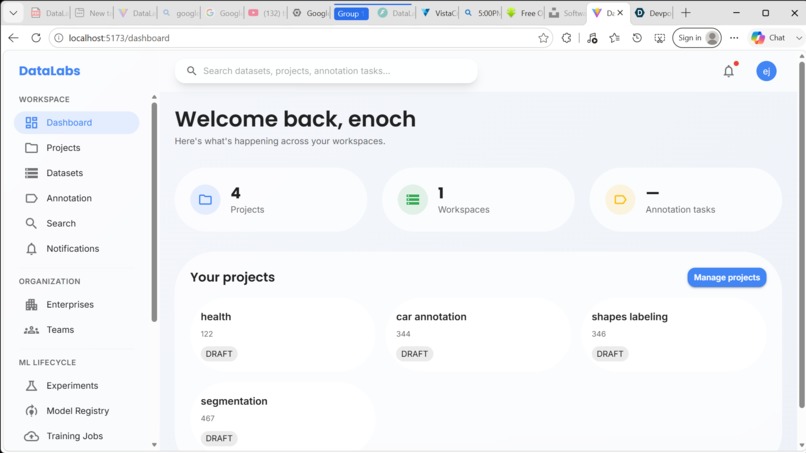
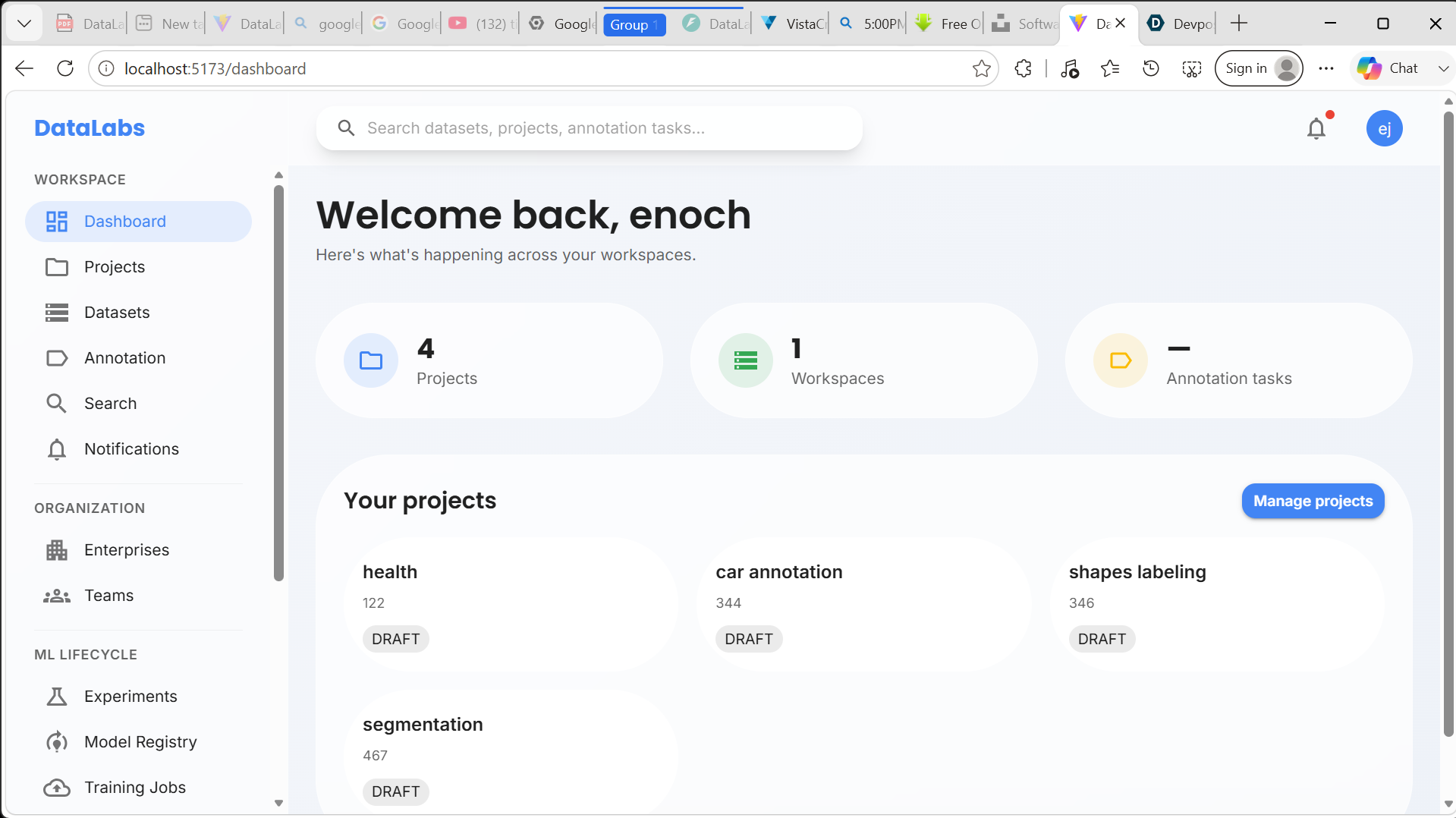
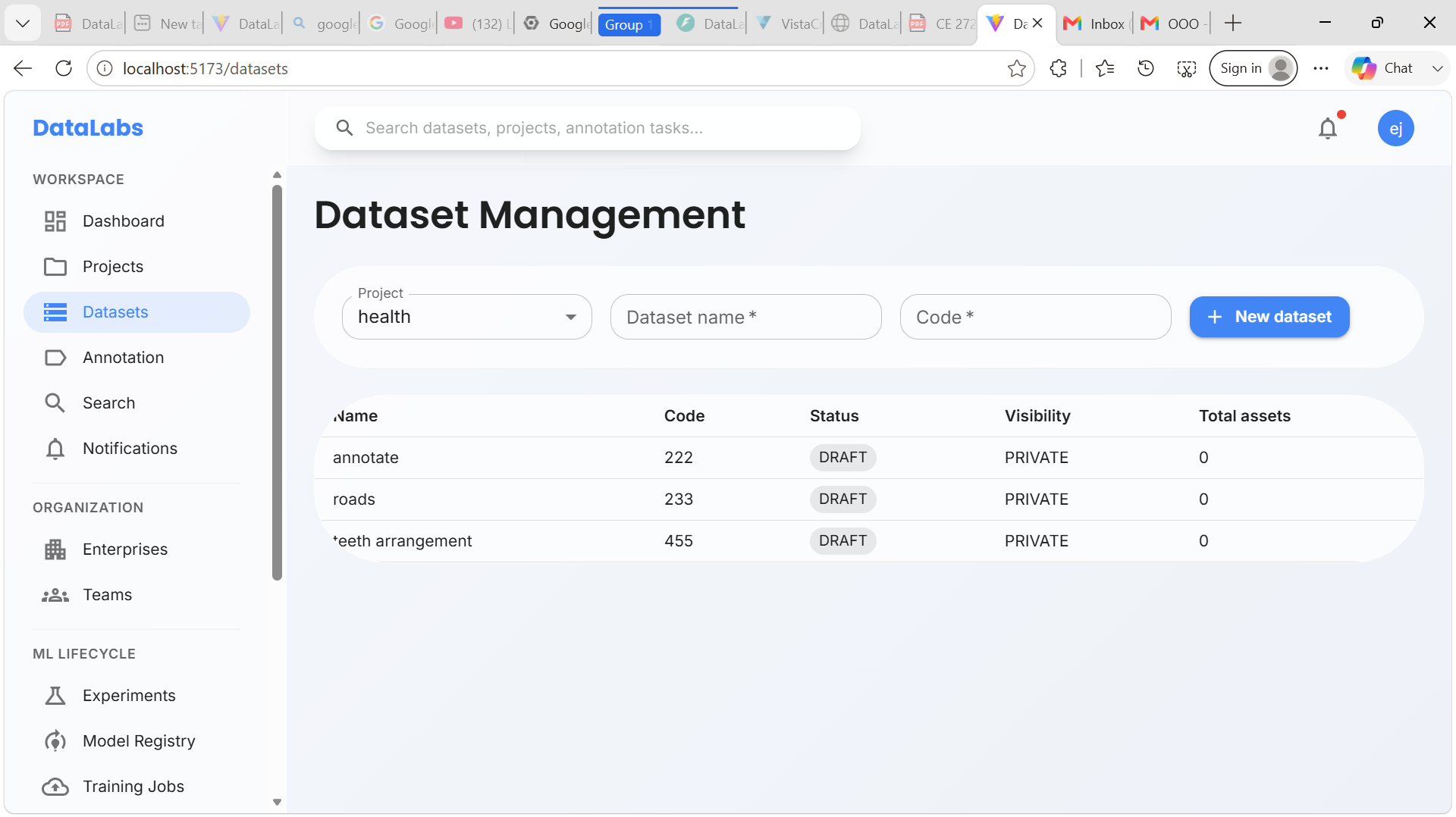
The platform UI
-
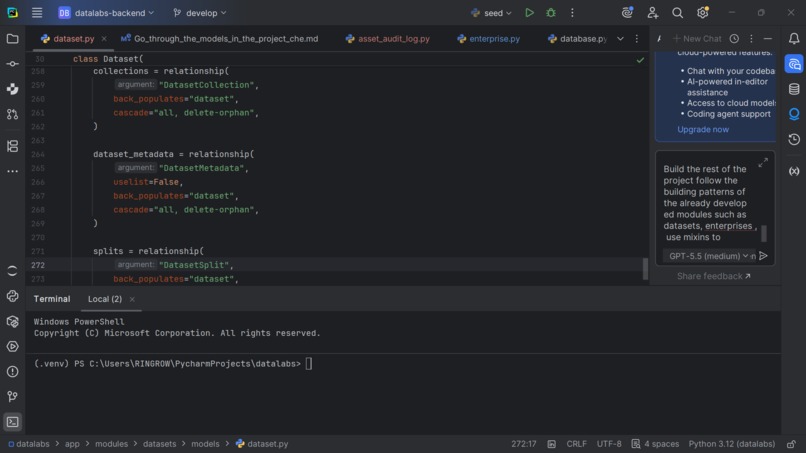
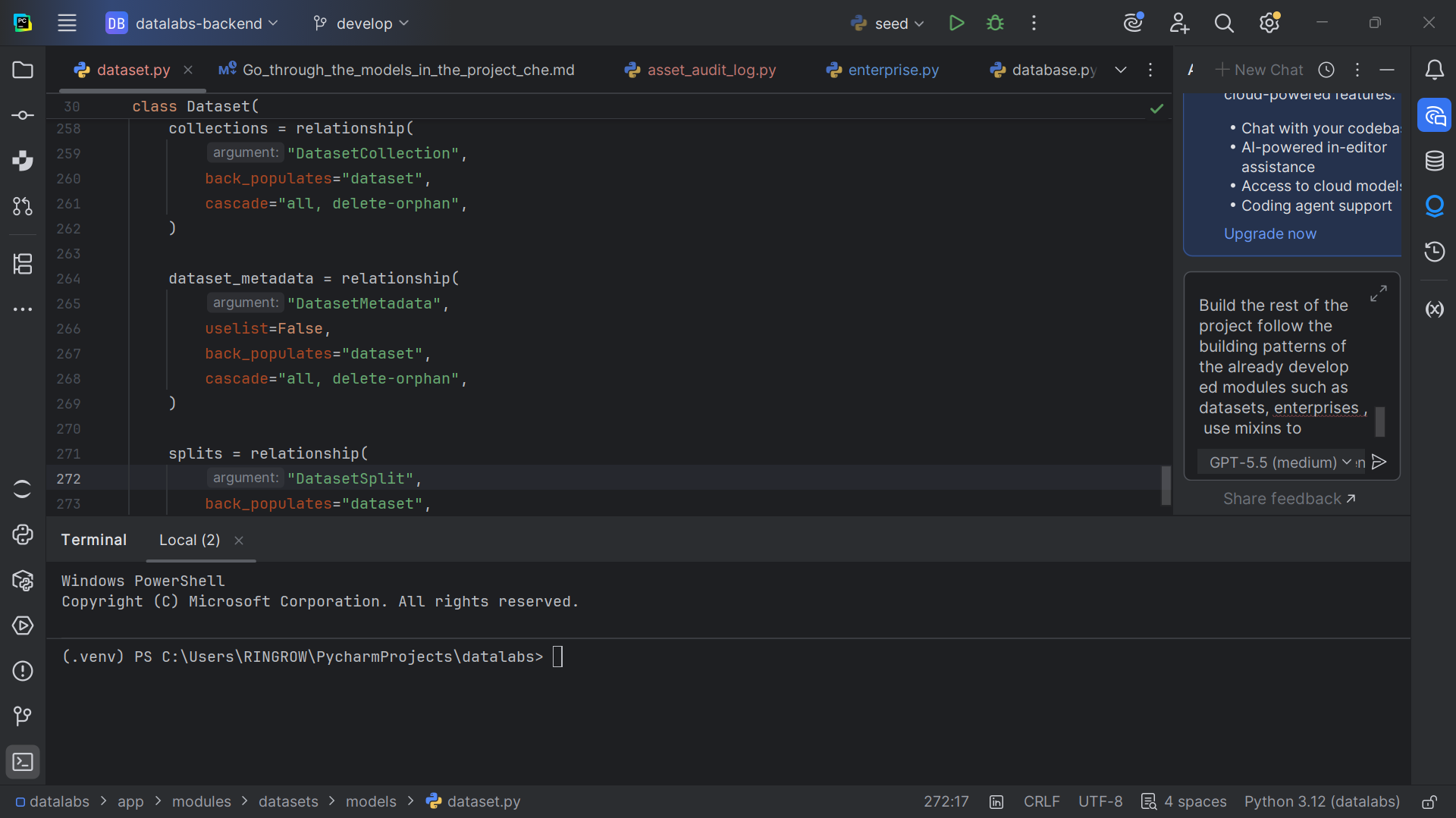
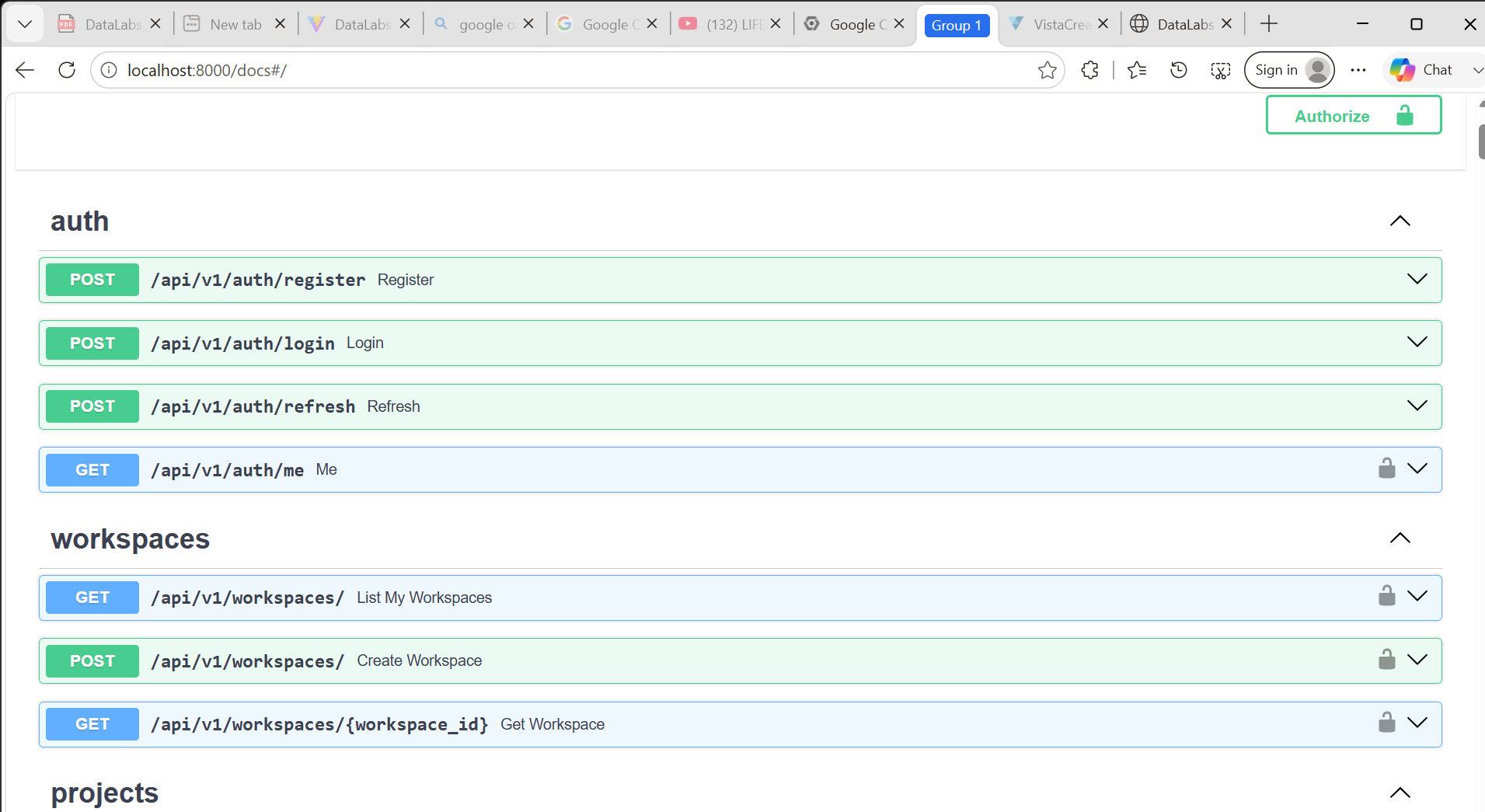
backend
-
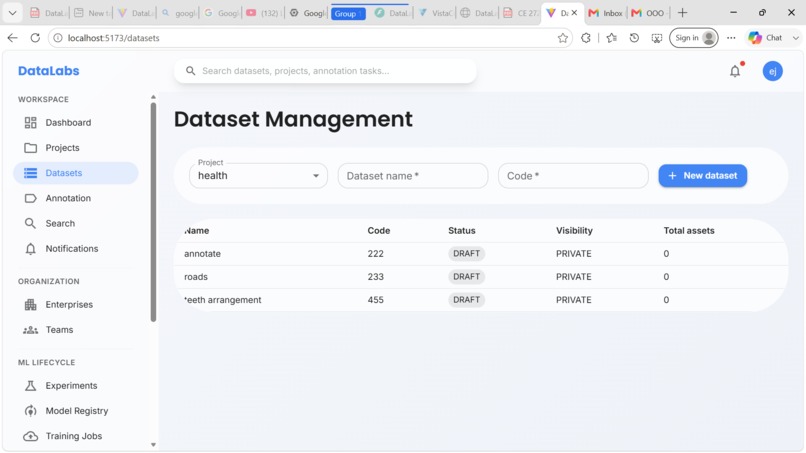
UI
-
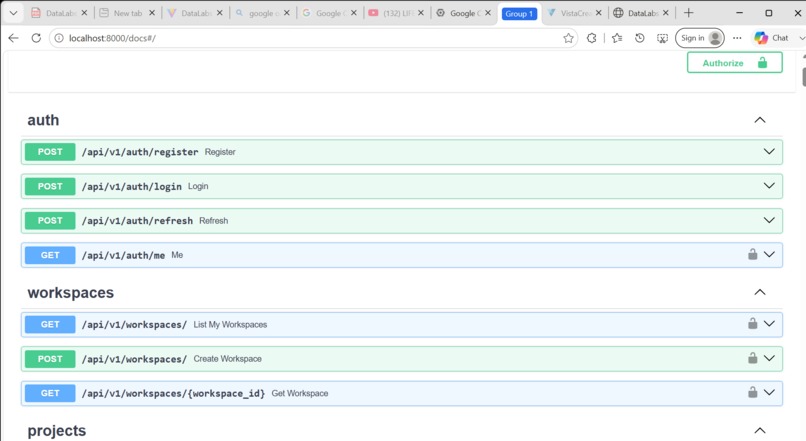
swagger UI
Inspiration
Artificial Intelligence development is often fragmented. Teams use one platform for storing datasets, another for annotation, another for experiment tracking, and yet another for deployment. This fragmentation increases complexity, reduces collaboration, and slows innovation.
DataLabs was inspired by the vision of creating a unified AI engineering platform where researchers, developers, students, and organizations can build intelligent systems from a single workspace. The goal is to simplify the entire AI lifecycle while providing an architecture that is scalable, secure, and production-ready.
What it does
DataLabs is an end-to-end AI development platform that streamlines the machine learning lifecycle.
The platform enables users to:
Organize datasets and projects. Manage AI workspaces and teams. Build scalable APIs for AI services. Create a foundation for data annotation, experiment tracking, model management, and deployment. Provide a collaborative environment for future AI workflows.
Although this Build Week submission focuses on the backend architecture and core platform foundation, it establishes the infrastructure required to support enterprise-scale AI applications.
How we built it
DataLabs was built using a modern full-stack architecture focused on scalability and maintainability.
Backend
FastAPI SQLAlchemy ORM PostgreSQL Redis Docker Alembic
Frontend
React Vite
GPT-5.6 and Codex played a significant role throughout development. Instead of only generating individual functions, they assisted in designing scalable project architecture, organizing modules, creating API routes, defining SQLAlchemy models, implementing schemas, and maintaining a consistent folder structure across the entire codebase. This allowed development to move much faster while preserving clean software engineering practices.
Challenges we ran into
One of the biggest challenges was balancing rapid development with production-quality architecture. Building a modular backend while ensuring consistency across schemas, routers, services, and models required careful planning.
Another major challenge occurred when the available Codex credits were exhausted during development. I requested the Build Week credits through Devpost, but unfortunately they had already been fully allocated. While this limited further AI-assisted generation, the existing architecture generated with GPT-5.6 and Codex established a consistent design pattern that made it possible to continue implementing the remaining modules manually without sacrificing code quality.
Accomplishments that we're proud of
Designed a scalable AI platform architecture from scratch. Built a modular FastAPI backend following production-ready design principles. Established a clean database architecture using PostgreSQL. Containerized the application with Docker for reproducible environments. Created a modern React frontend foundation. Successfully used GPT-5.6 and Codex to accelerate architectural design, backend implementation, and development workflow. Produced a codebase that is structured, maintainable, and ready for future expansion.
What we learned
This project demonstrated that GPT-5.6 and Codex can contribute far beyond code completion. They helped with architectural reasoning, backend design, API organization, documentation, debugging, and rapid prototyping.
We also learned the importance of establishing consistent engineering patterns early in development. Once a solid architecture was generated, extending the platform manually became significantly easier because every module followed the same conventions and structure.
What's next for DataLabs
This project represents the foundation of a much larger vision.
Future development includes:
Complete data annotation and labeling studio. Experiment tracking and model registry. AI model training orchestration. Model deployment and inference services. Authentication and role-based access control. Enterprise workspaces and collaboration features. AI-powered coding and automation assistants. Integrated MLOps pipelines. Cloud deployment and production infrastructure.
Our long-term goal is to evolve DataLabs into a comprehensive operating system for AI development, enabling researchers, students, startups, and enterprises to build, train, deploy, and manage intelligent systems from a single collaborative platform.
Built With
- alembic
- apis
- cloud-services
- css
- databases
- docker
- fastapi
- frameworks
- gpt-5.6
- jwt
- openai
- platforms
- postgresql
- pydantic
- react
- redis
- sqlalchemy
- tailwind
- typescript
- uvicorn
- vite


Log in or sign up for Devpost to join the conversation.