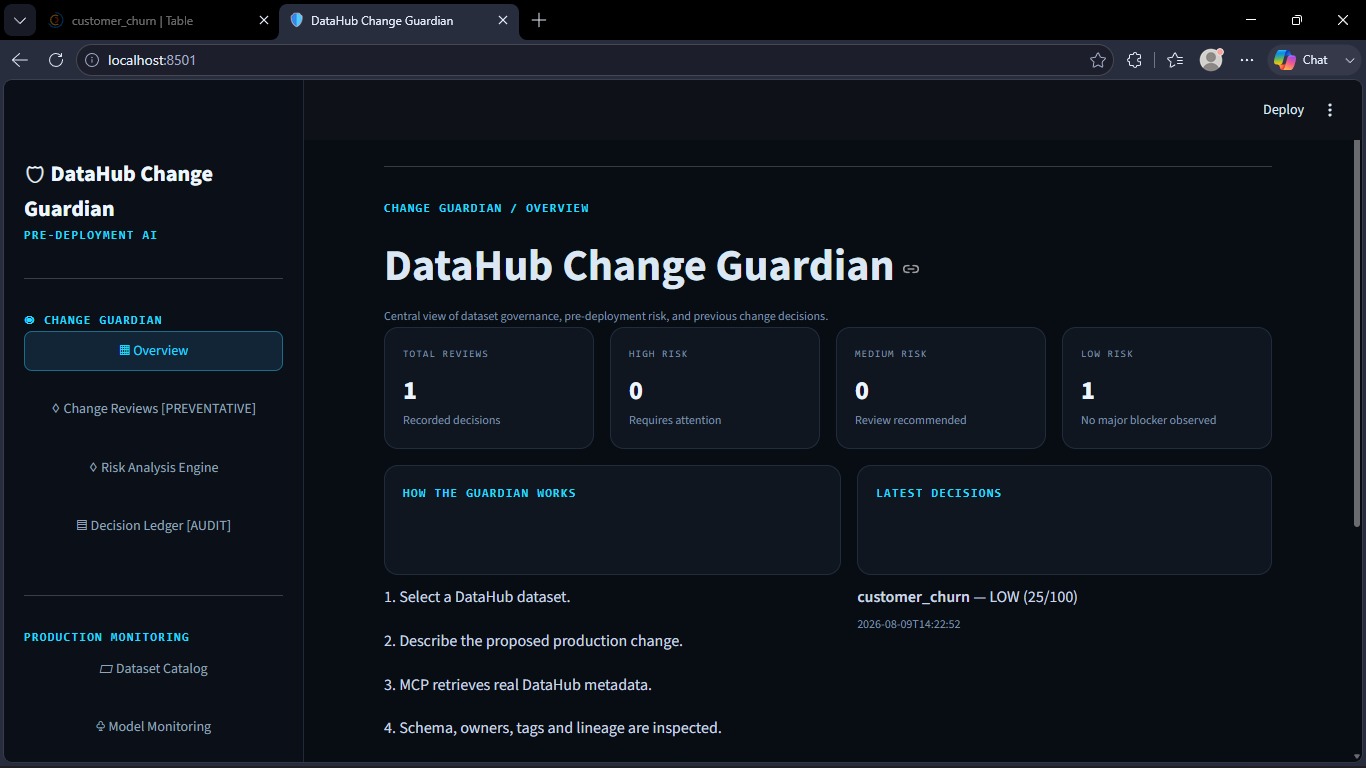
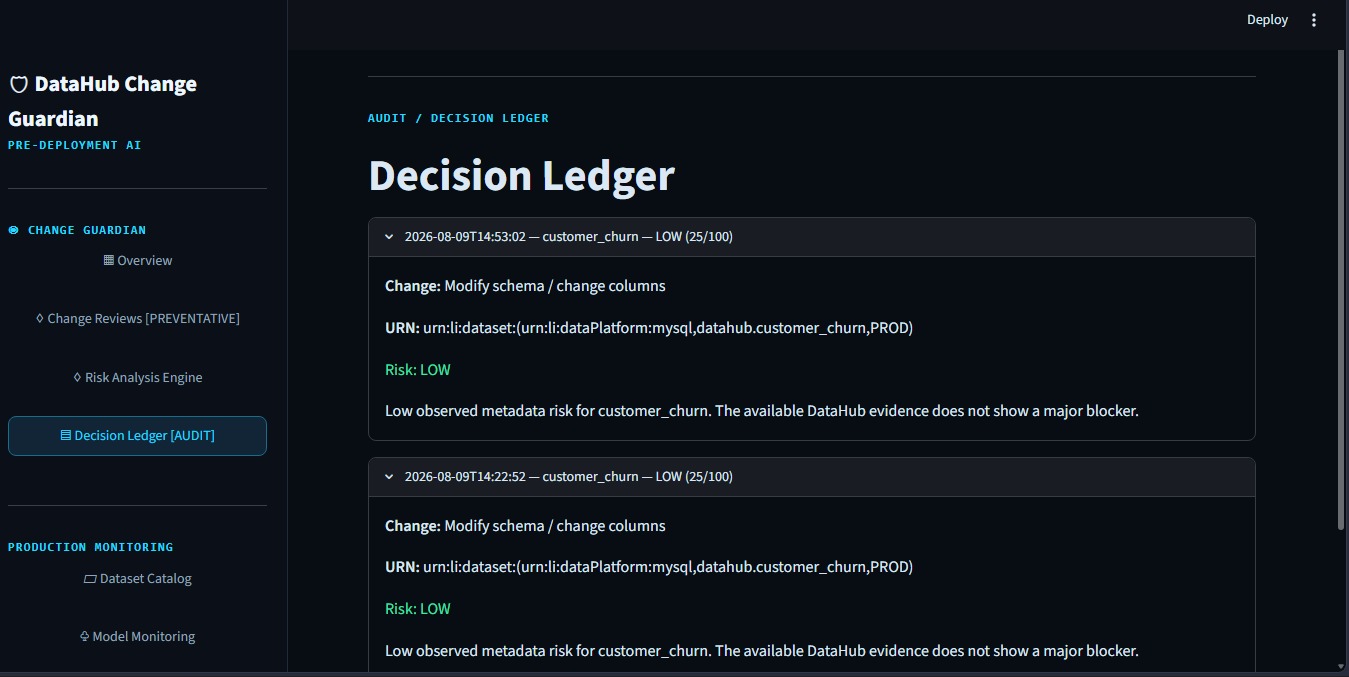
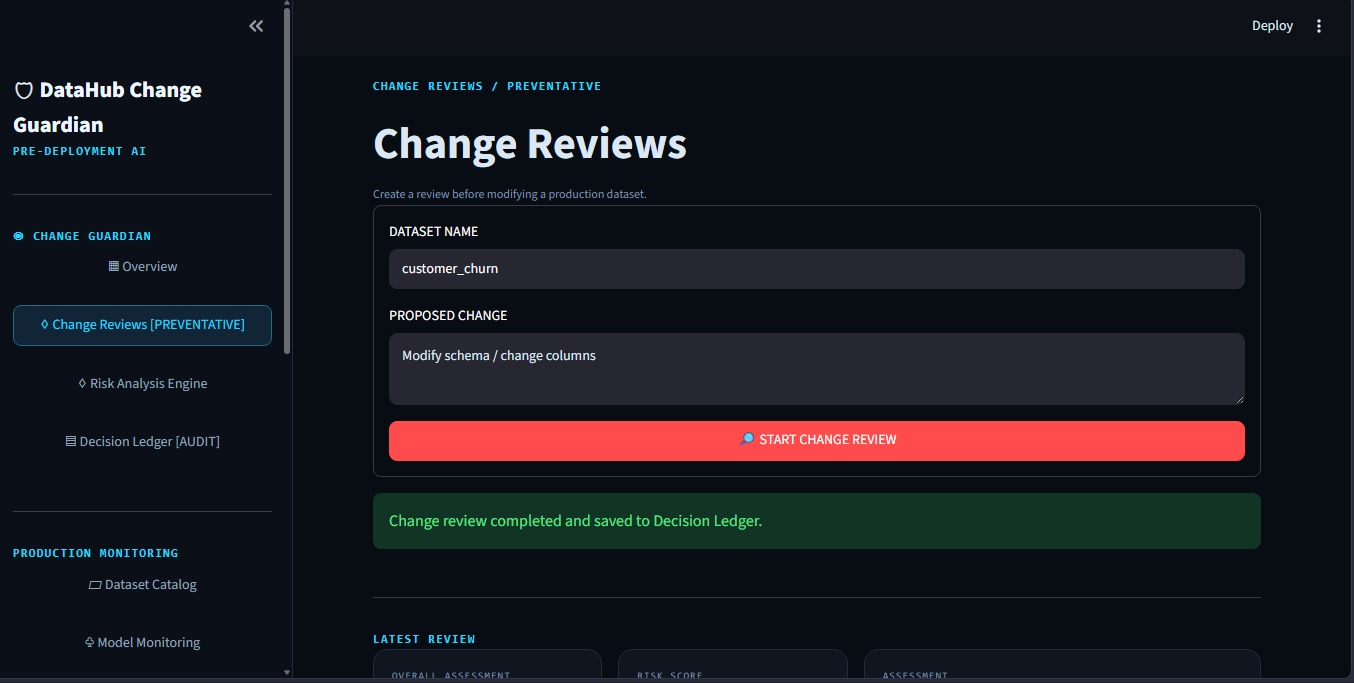
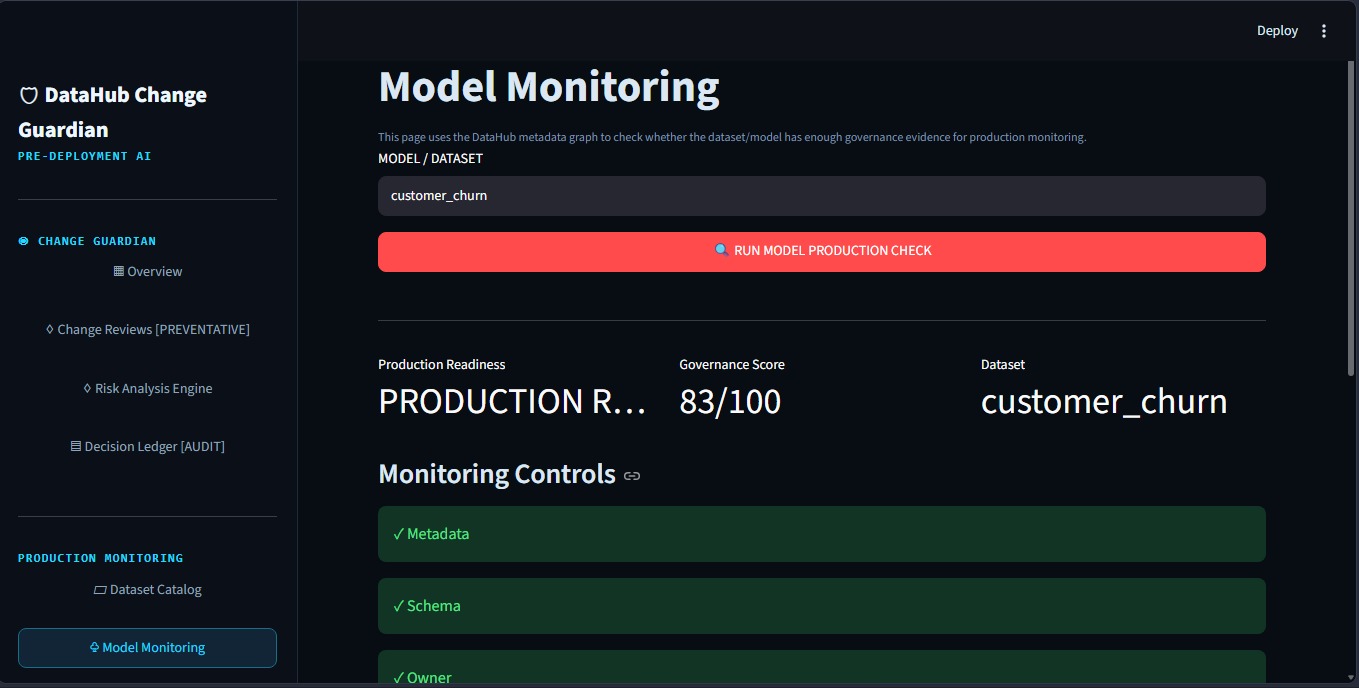
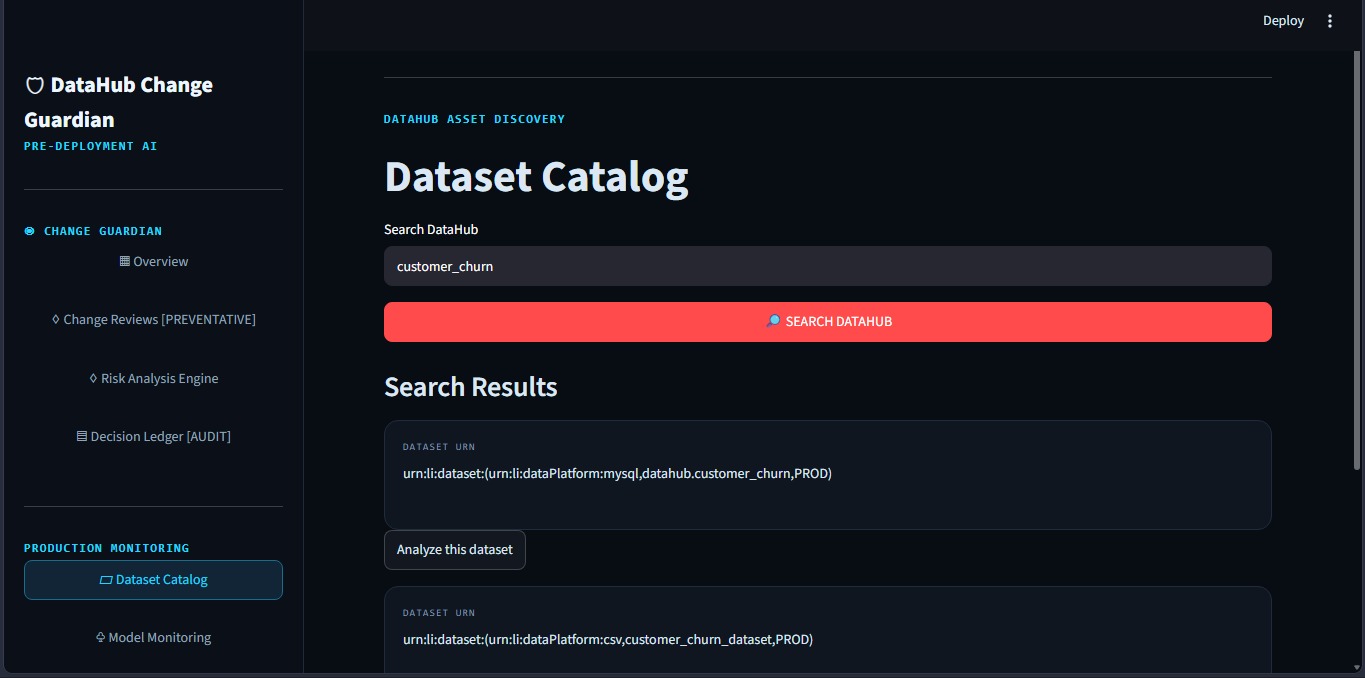
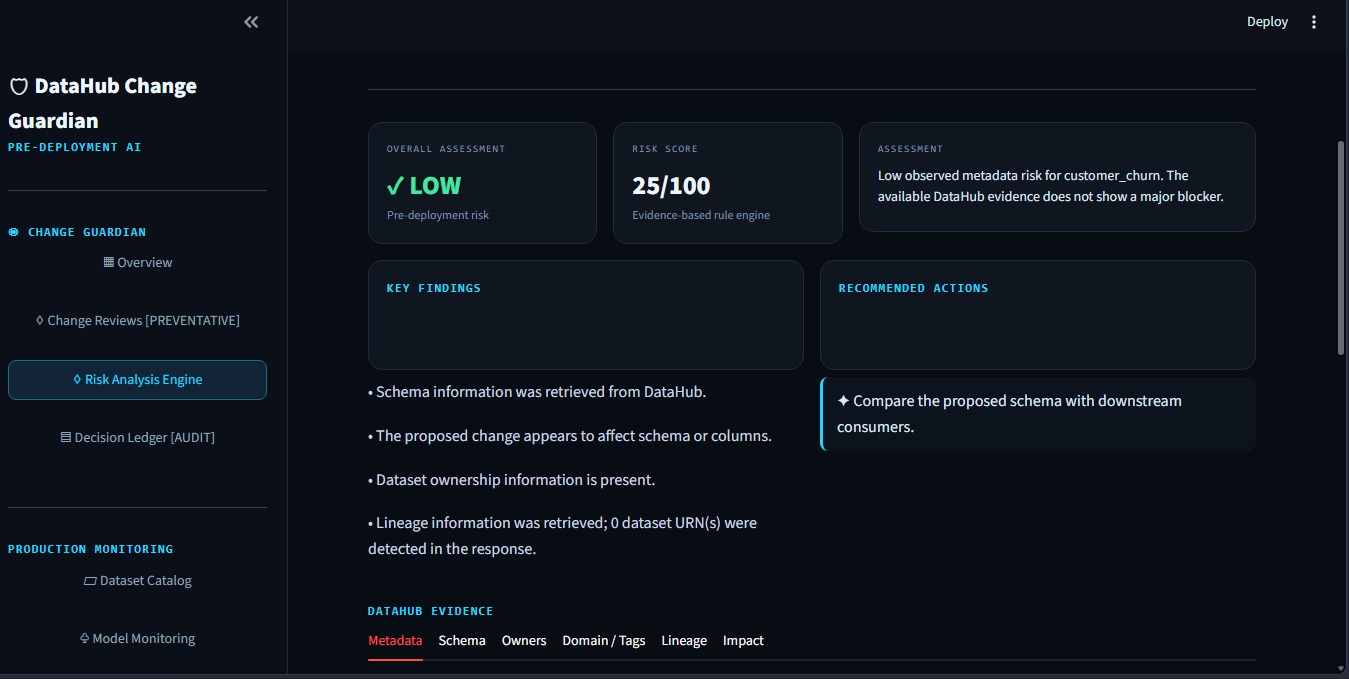
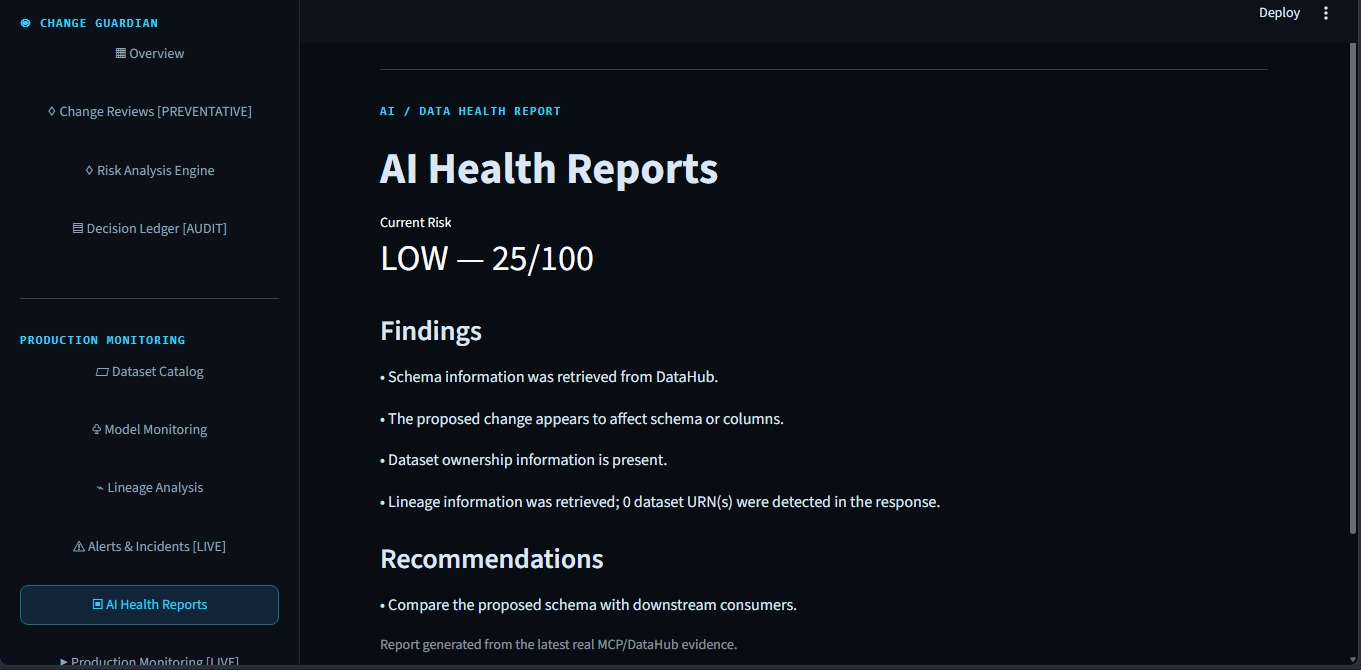
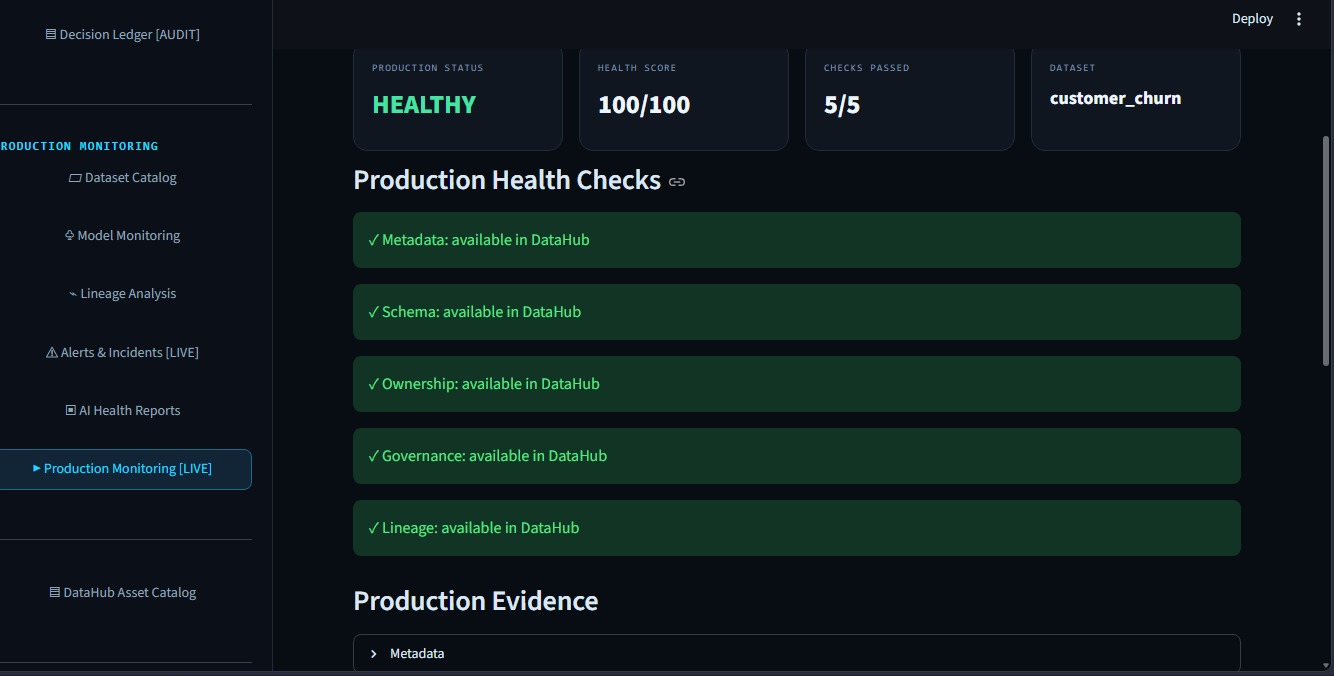
Inspiration Modern data systems depend on many datasets, models, applications, and downstream consumers. A small schema or data change can unexpectedly affect other systems. We were inspired by the idea of using DataHub's metadata and lineage as context for an AI agent. Instead of treating DataHub as only a metadata catalog, we wanted to make it an active change-safety layer that can help teams identify risks before a production change is made. Our goal was to answer a simple question: “Before I change this dataset, what could be affected and what should I do?” What it does DataHub Change Guardian is an AI-powered pre-deployment data governance and risk analysis system. A user selects a dataset such as customer_churn and describes a proposed change. The AI agent then uses MCP (Model Context Protocol) tools to retrieve relevant information from DataHub, including: Dataset metadata Schema Ownership Domains and tags Upstream and downstream lineage Impact information when available The system analyzes this context and produces: Risk level Risk score Key findings Potentially affected assets Recommended actions Decision history It also provides production monitoring, lineage analysis, alerts, and a decision ledger through the dashboard. How we built it We built the solution using a combination of DataHub, MCP, an AI agent, Python, Streamlit, and Gemini. The architecture works as: User ↓ Streamlit Dashboard ↓ AI Agent ↓ MCP Server ↓ DataHub ↓ Metadata + Schema + Ownership + Lineage ↓ Risk Analysis ↓ Risk Score + Findings + Recommendations The AI agent determines what information it needs and calls the appropriate MCP tools. The MCP layer acts as the bridge between the AI agent and DataHub, allowing the agent to work with real DataHub metadata instead of maintaining a separate manually-created metadata dataset. The Streamlit dashboard presents the analysis in an easy-to-understand governance interface, while the Decision Ledger maintains an audit history of reviews. Challenges we ran into One of our biggest challenges was integrating different versions of the MCP SDK with our AI agent. We initially encountered compatibility issues involving MCP server APIs, tool schemas, and client-server communication. We also faced: DataHub authentication and API connectivity issues MCP tool schema compatibility problems Gemini model availability changes Gemini API free-tier quota limitations Running MCP over STDIO on Windows Connecting the Streamlit interface to the MCP agent Ensuring the dashboard uses actual DataHub information instead of fabricated metrics These challenges forced us to understand the communication flow between the AI agent → MCP → DataHub instead of treating them as independent components. Accomplishments that we're proud of We are proud that we built a working pipeline connecting: DataHub → MCP → AI Agent → Risk Analysis → Streamlit Dashboard Our major accomplishments include: Built a custom MCP server for DataHub interaction Connected an AI agent to MCP tools Retrieved real dataset context from DataHub Implemented schema, metadata, ownership, tags, and lineage analysis Created a pre-deployment risk analysis workflow Built an interactive Streamlit governance dashboard Added risk scoring and recommendations Added a Decision Ledger for auditability Added production and governance health checks Designed the system so missing DataHub information is reported rather than replaced with invented data Most importantly, we transformed metadata from something users look at into context that an AI agent can reason over and act on. What we learned Through this project, we learned that building an AI agent is not only about connecting an LLM to an API. The agent needs: Reliable context Well-defined tools Structured tool outputs Clear decision rules Error handling Guardrails against hallucination We also learned how DataHub metadata and lineage can become valuable context for AI agents, and how MCP can provide a standardized way for agents to interact with external systems. Another important lesson was that a good governance system should clearly distinguish between known information, missing information, and AI-generated recommendations. What's next for DataHub Change Guardian Our next step is to evolve DataHub Change Guardian from a pre-deployment analysis tool into a more complete AI-powered data reliability and governance platform. Future improvements include: Real-time metadata change detection Automated schema-change impact analysis Continuous lineage monitoring Data quality and assertion integration ML model drift and performance monitoring Automated Slack/Teams alerts Approval workflows for high-risk changes More advanced downstream impact analysis Historical risk trends Integration with CI/CD pipelines Policy-based deployment gates Automated governance recommendations
DataHub Change Guardian
DataHub provides trusted metadata, MCP connects the agent to that metadata, and AI turns that context into preventive change-risk decisions.
Updates

Leave feedback in the comments!
Log in or sign up for Devpost to join the conversation.