-
-
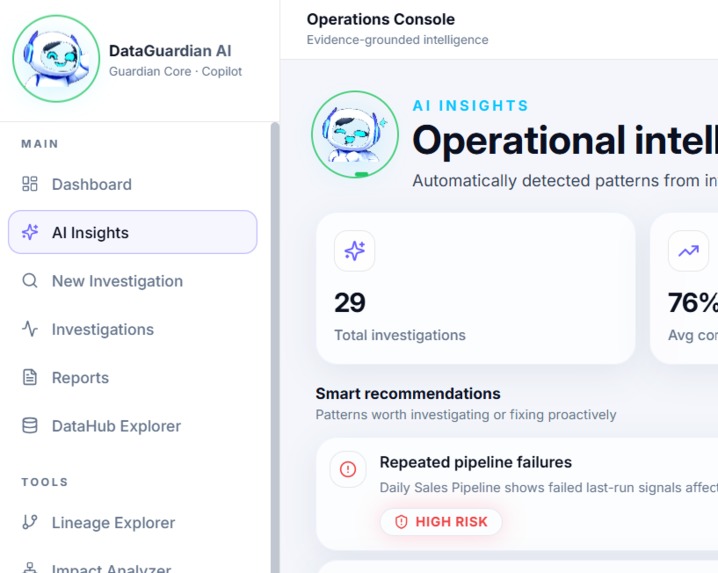
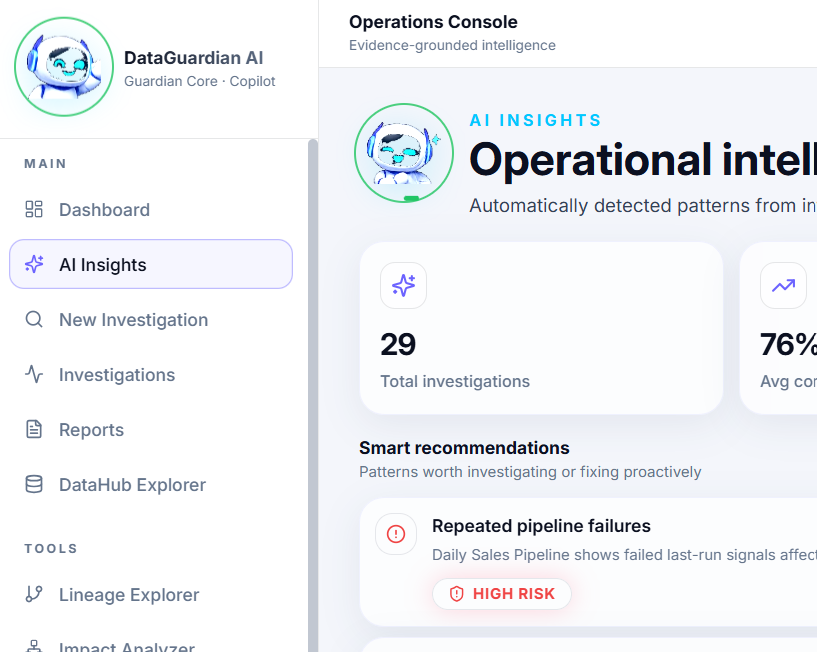
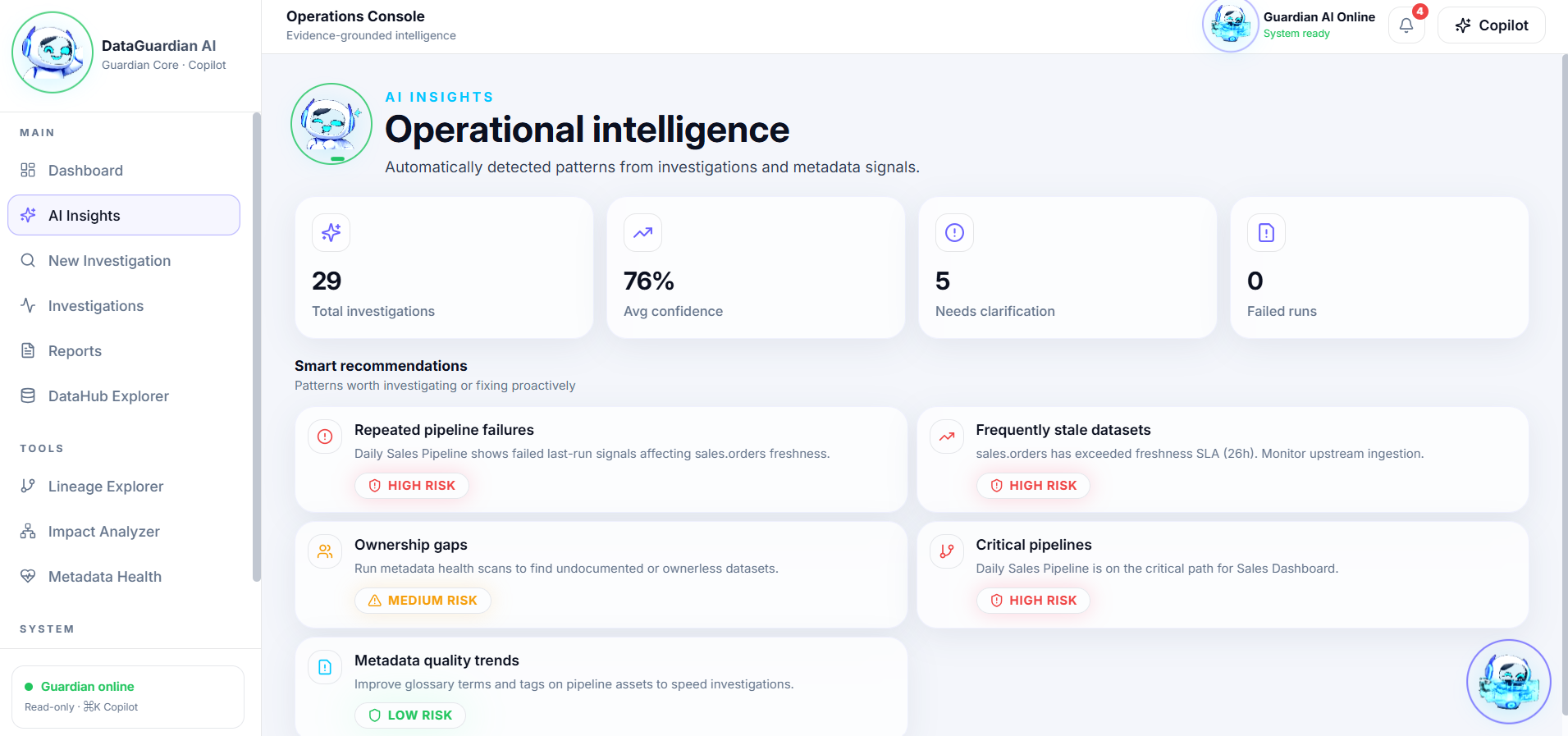
AI Insights — Detect important data issues and recommendations.
-
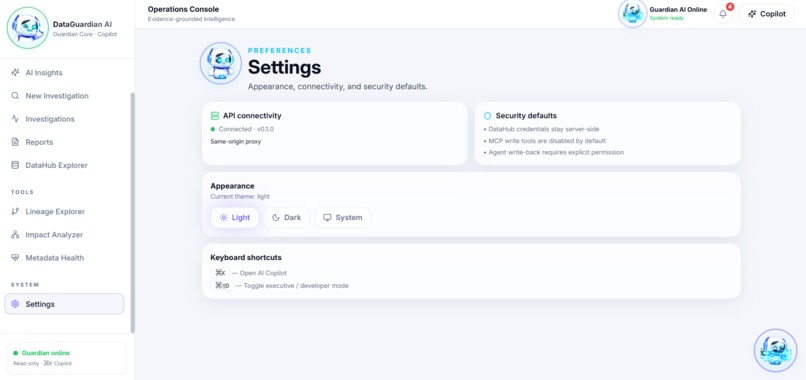
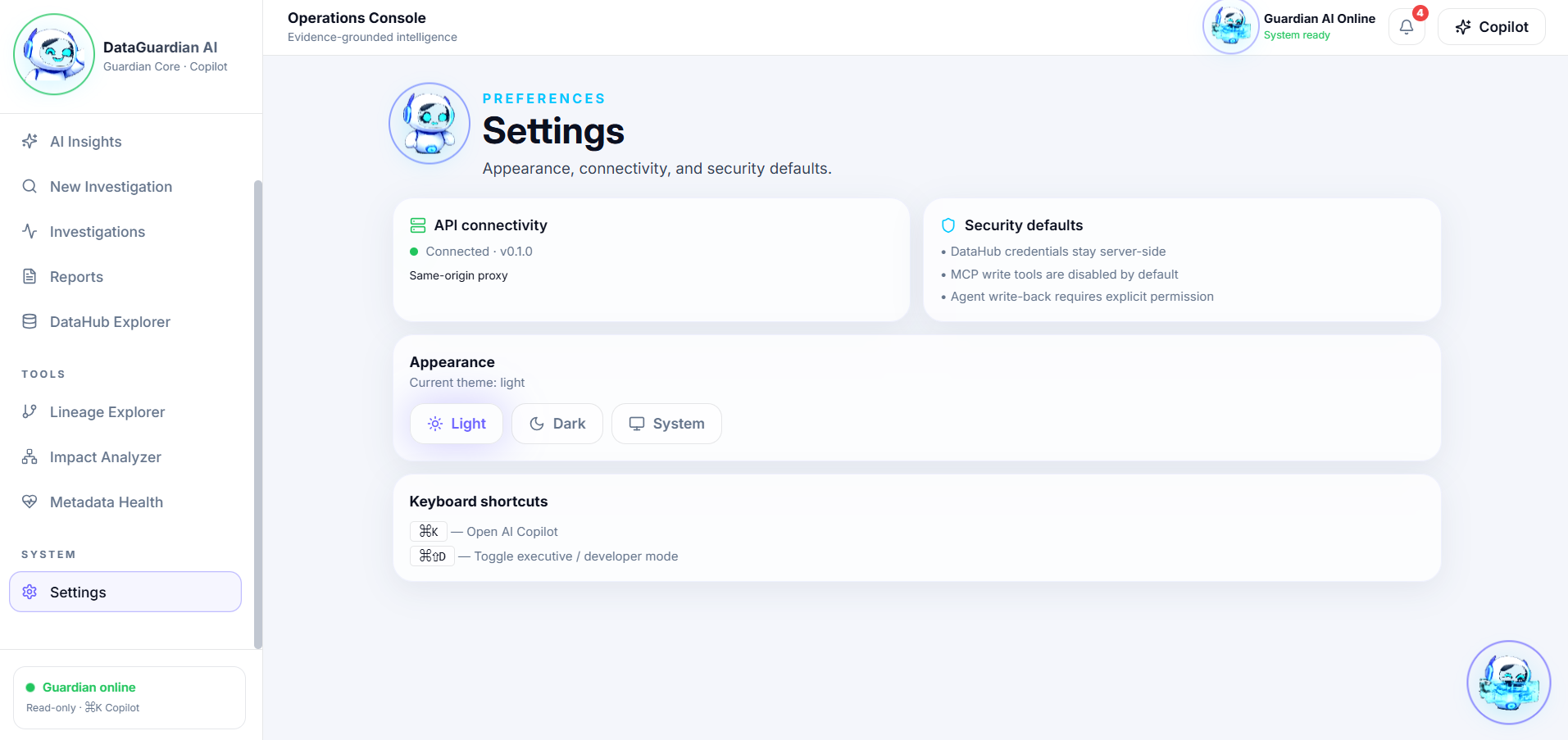
Settings — Manage connectivity, security, and preferences.
-
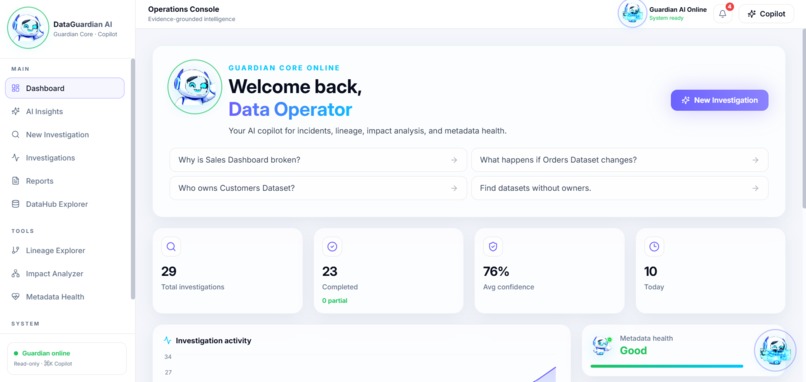
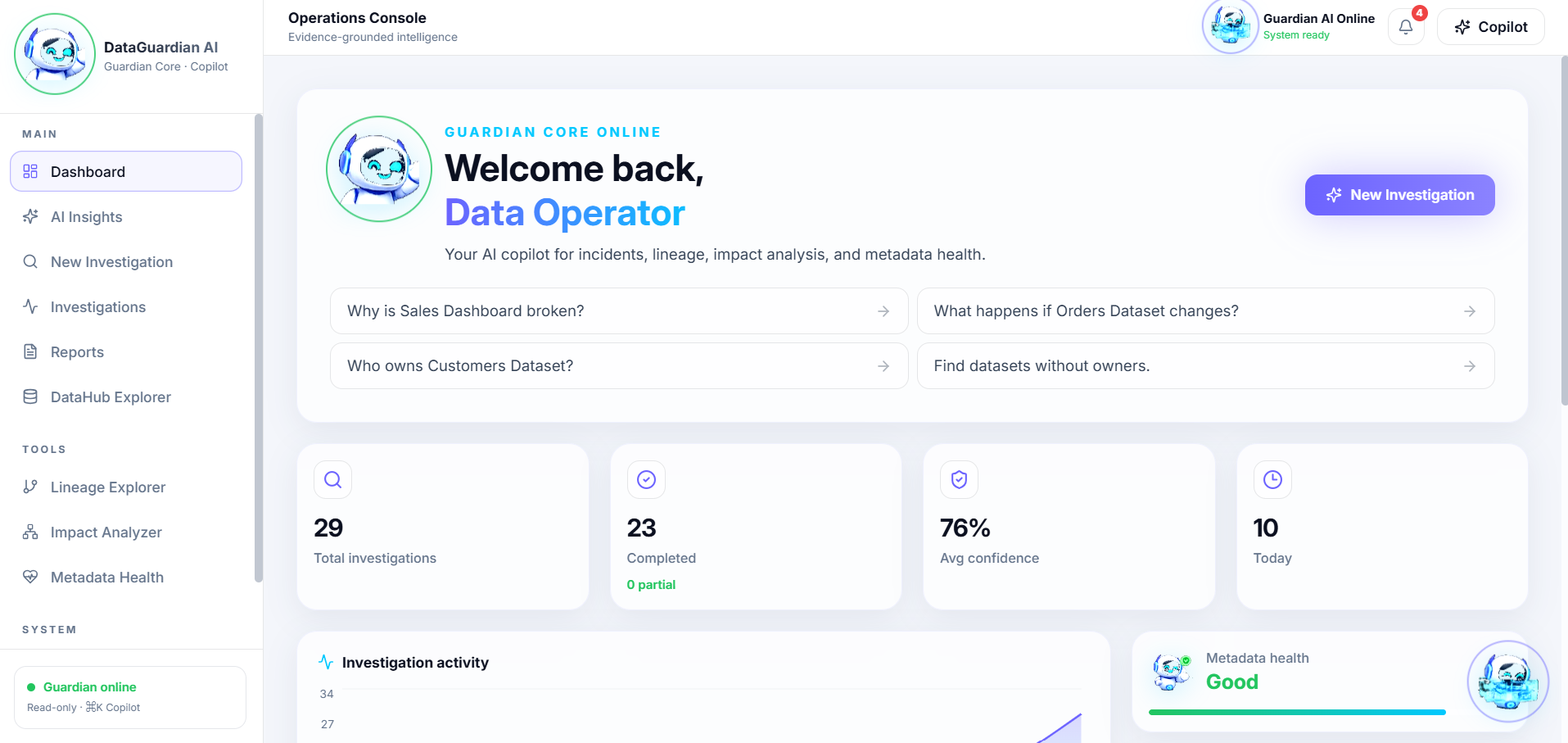
DataGuardian AI Dashboard — Central view for data investigations and health.
-
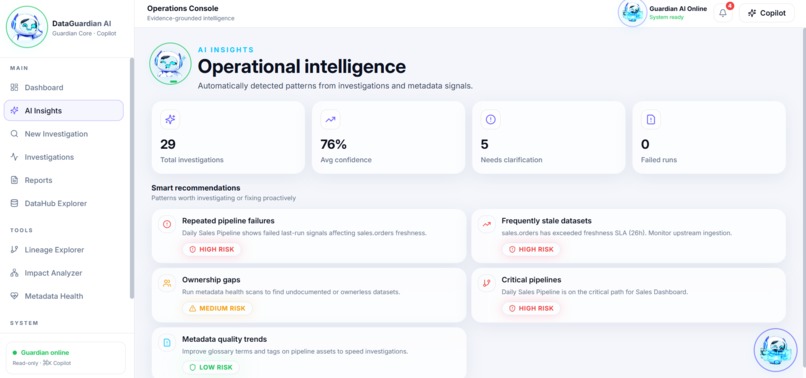
Operations Intelligence — A unified view of data issues, investigations, impact, and operational insights.
-
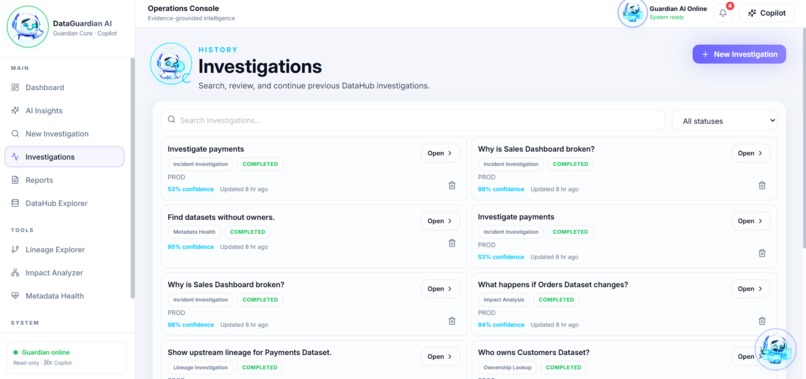
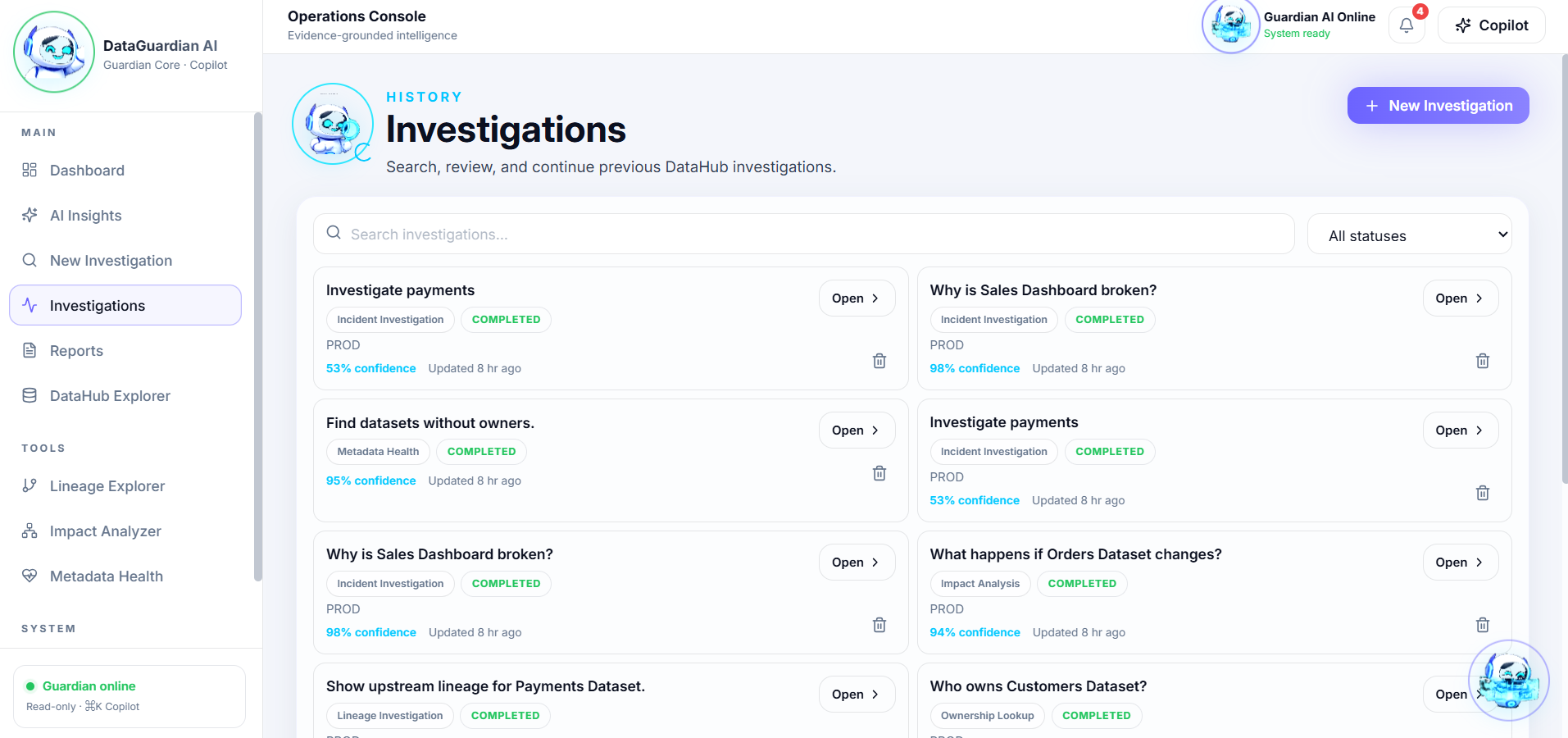
Investigations — Review and continue previous investigations
-
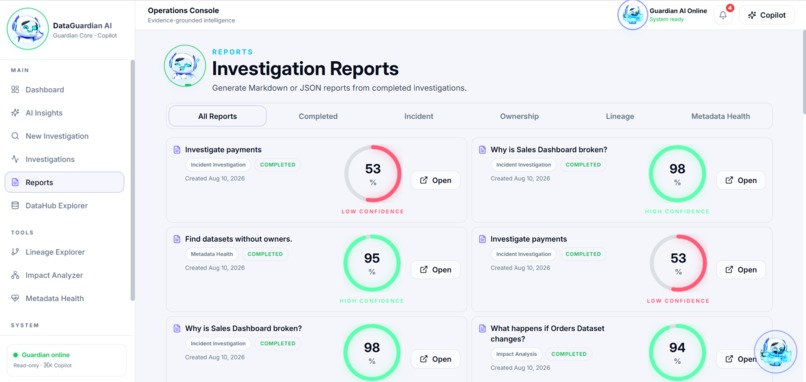
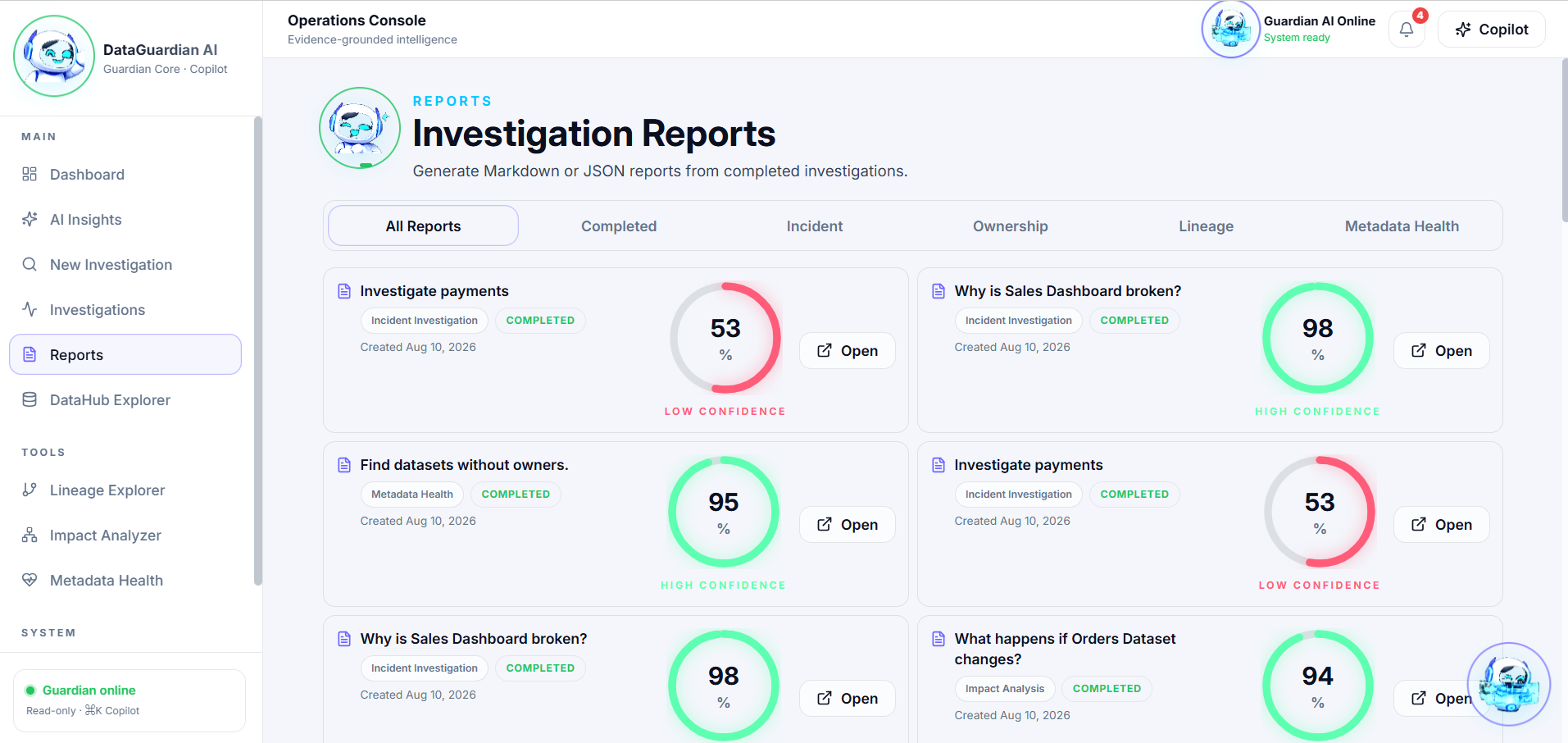
Reports — View completed investigation reports and confidence.
-
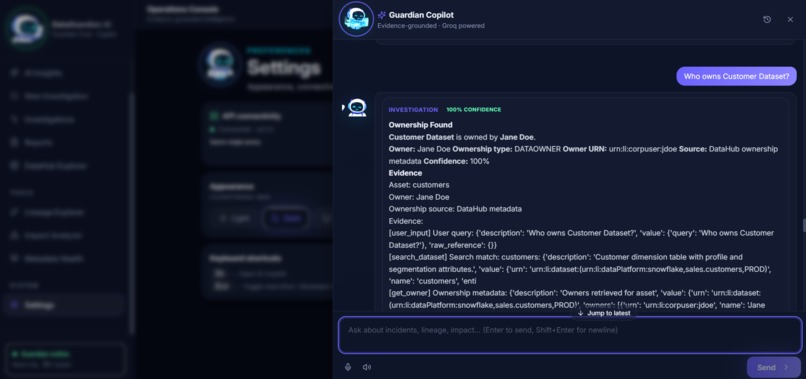
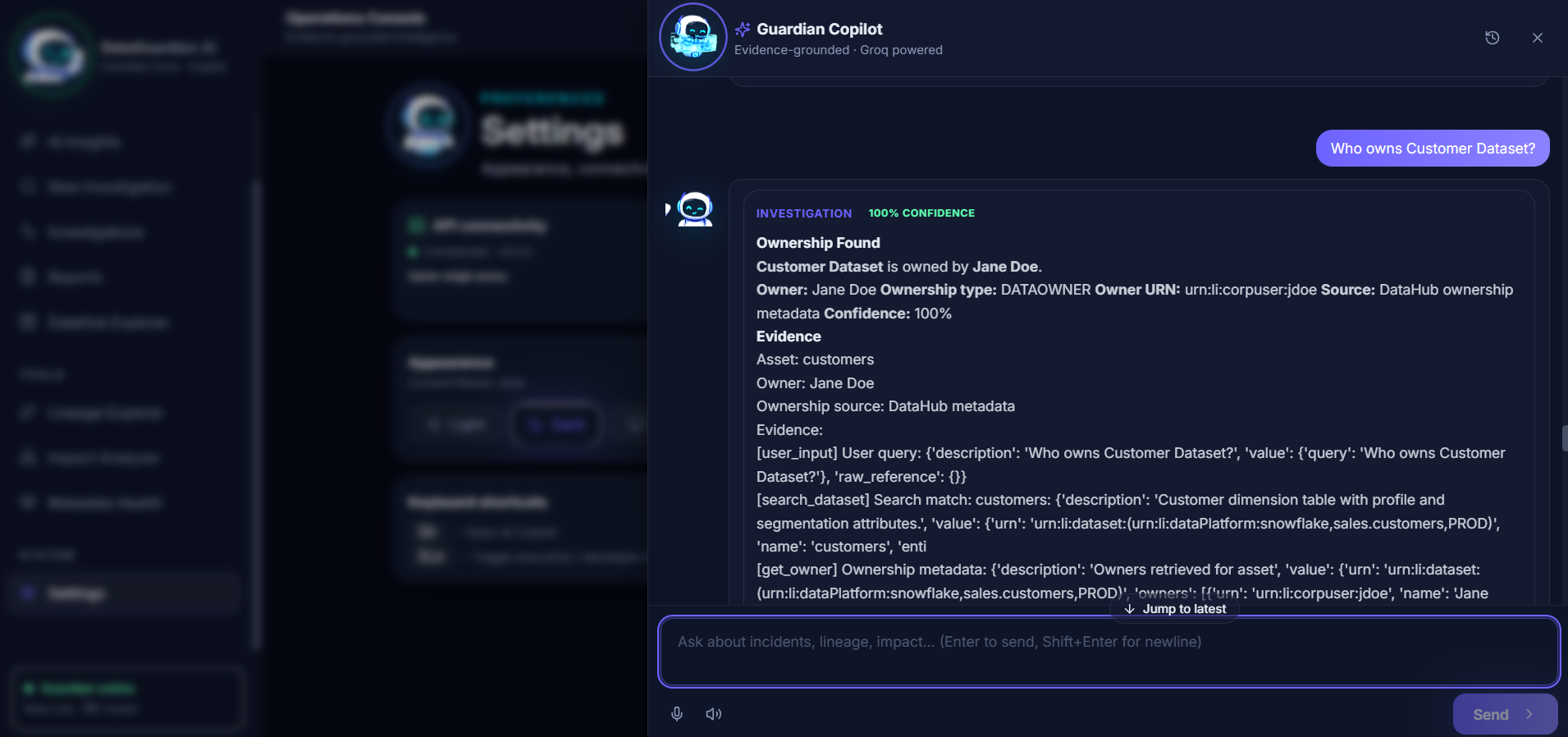
Guardian Copilot — Ask questions about datasets and get evidence-based answers.
-
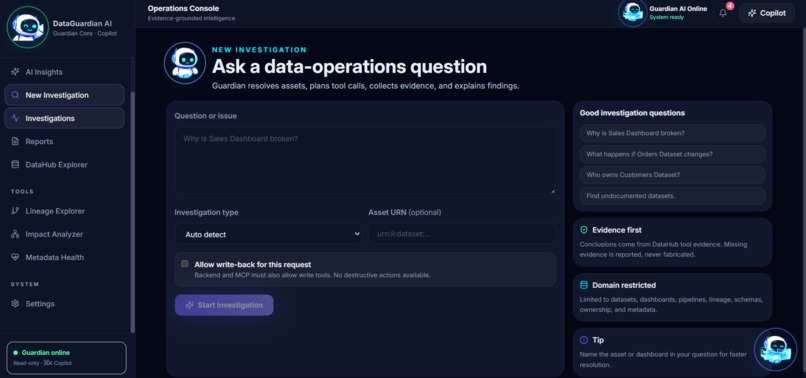
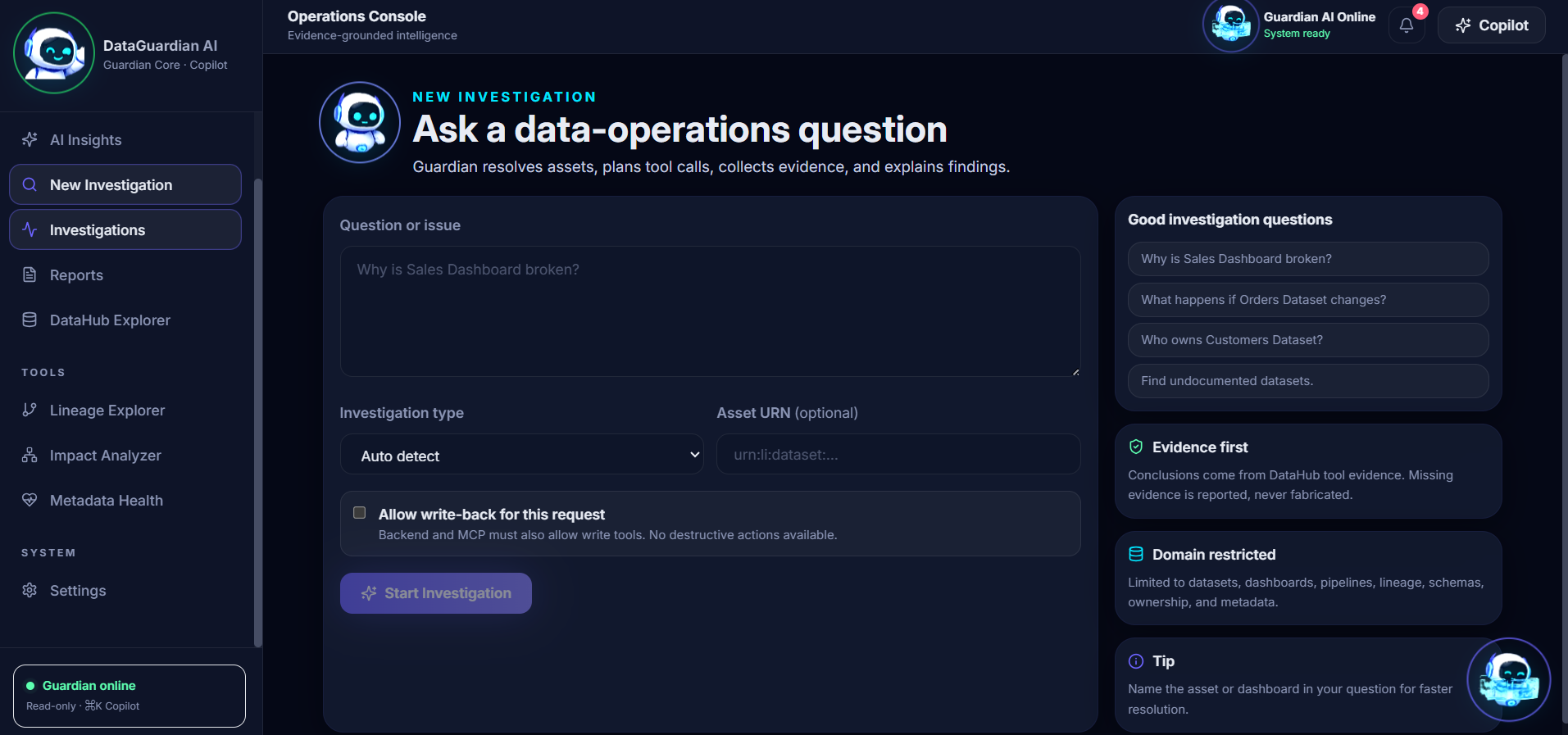
New Investigation — Start a new data investigation.
-
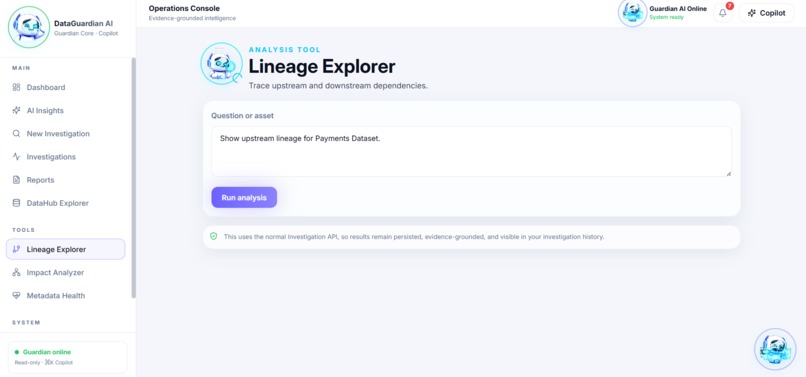
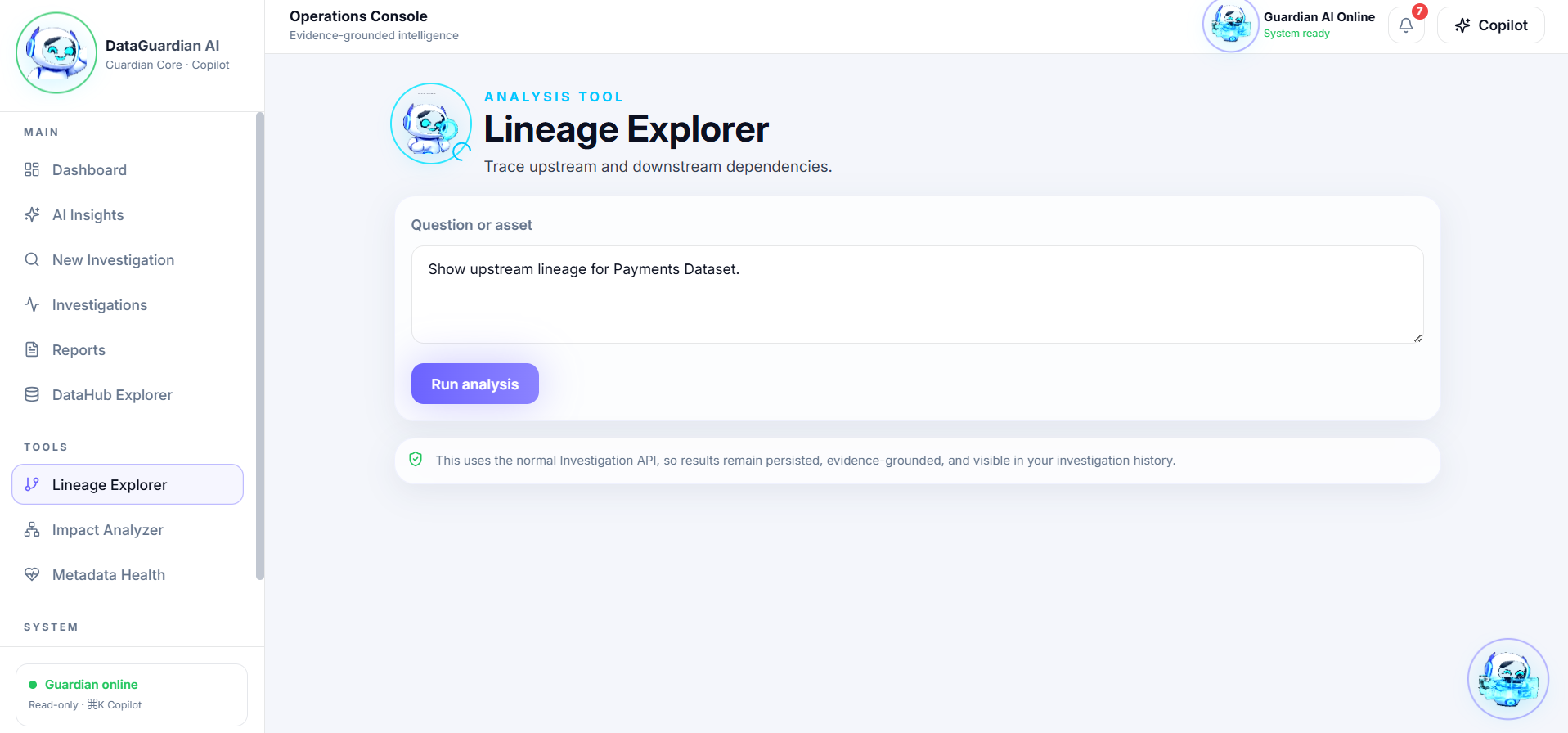
Lineage — Explore relationships between datasets.
-
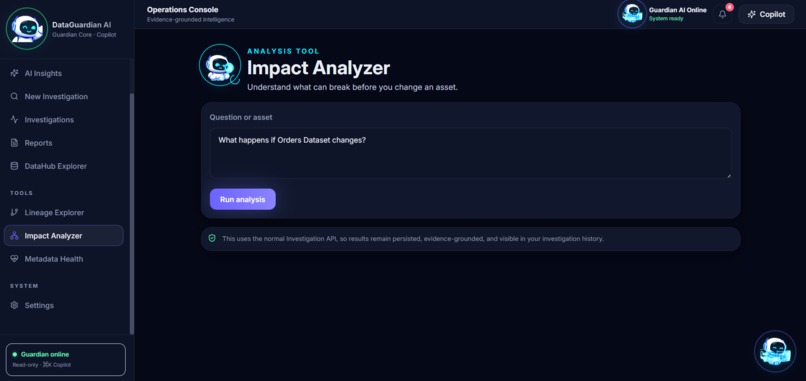
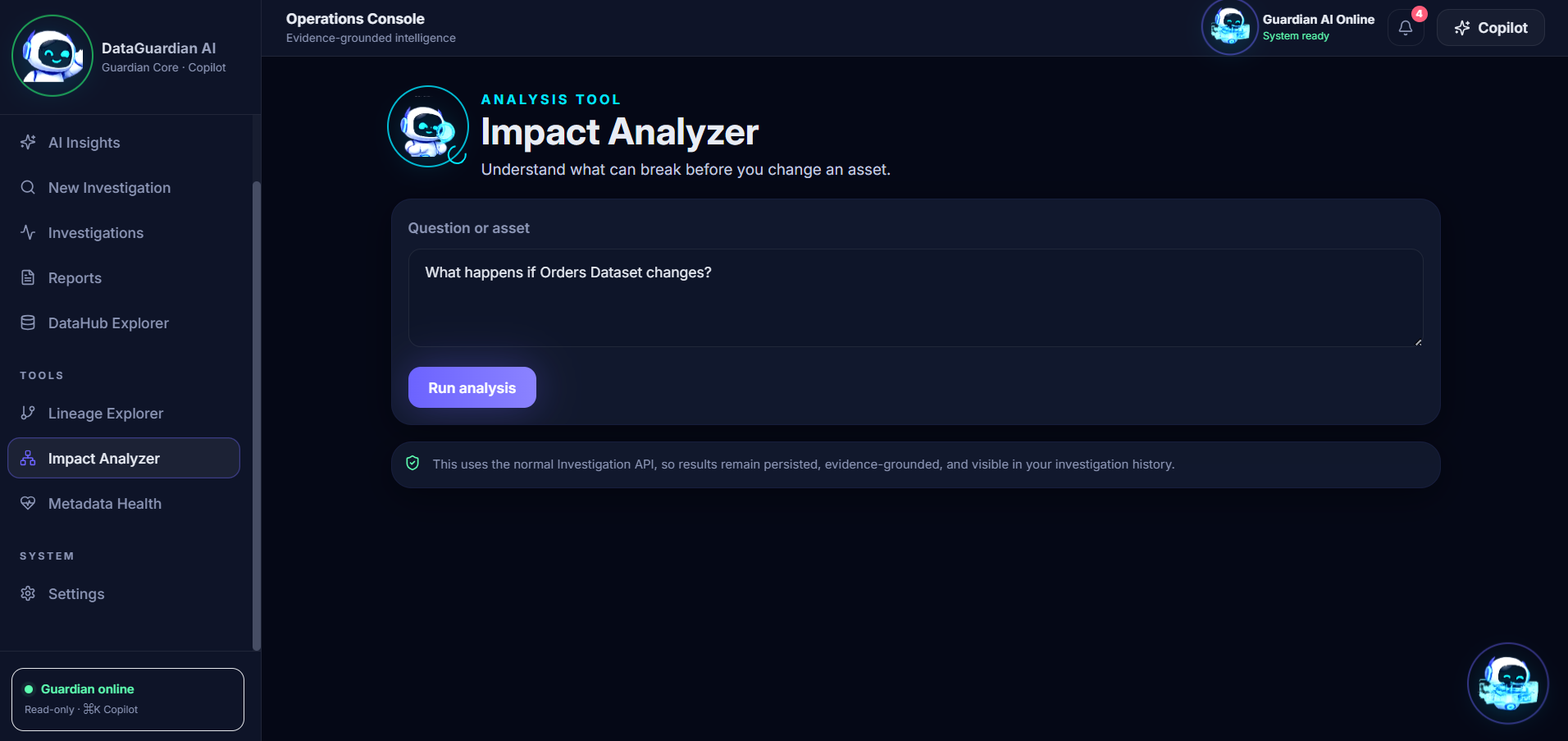
Impact Analysis — Understand the impact of dataset changes.
-
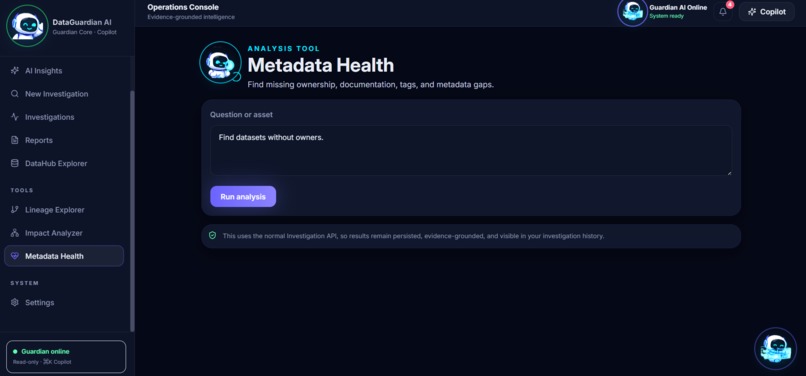
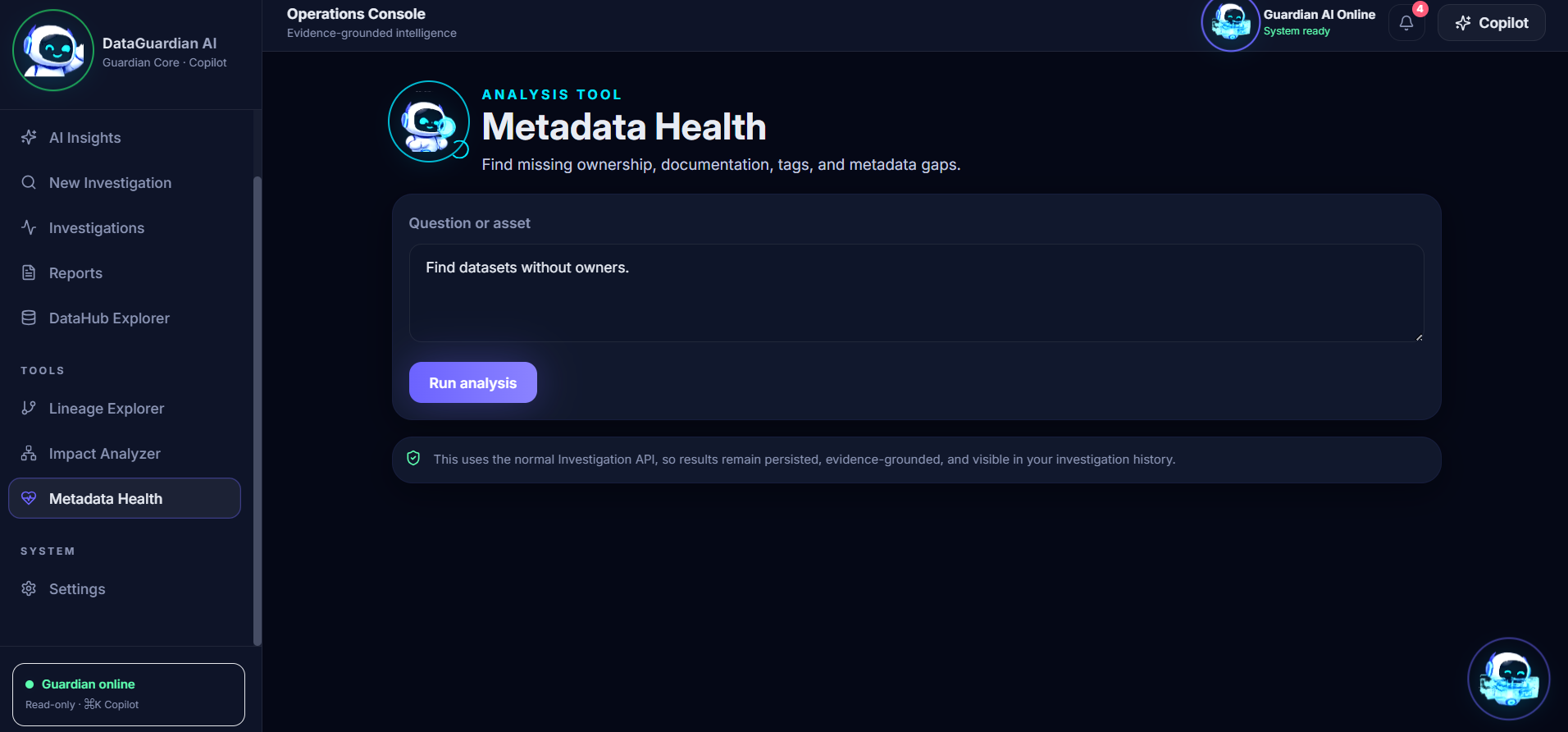
Metadata Health — Check dataset metadata quality.
-
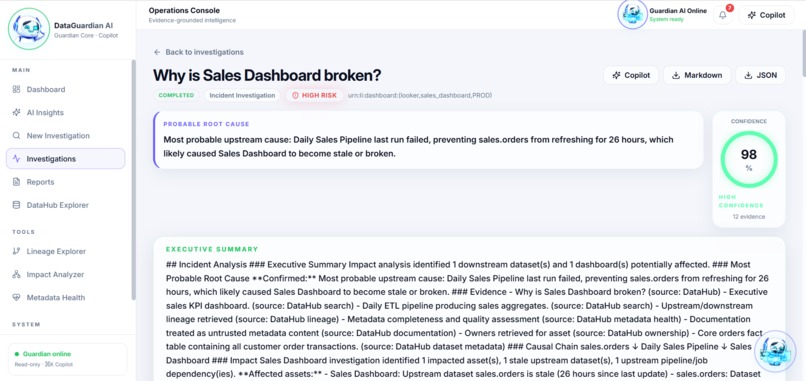
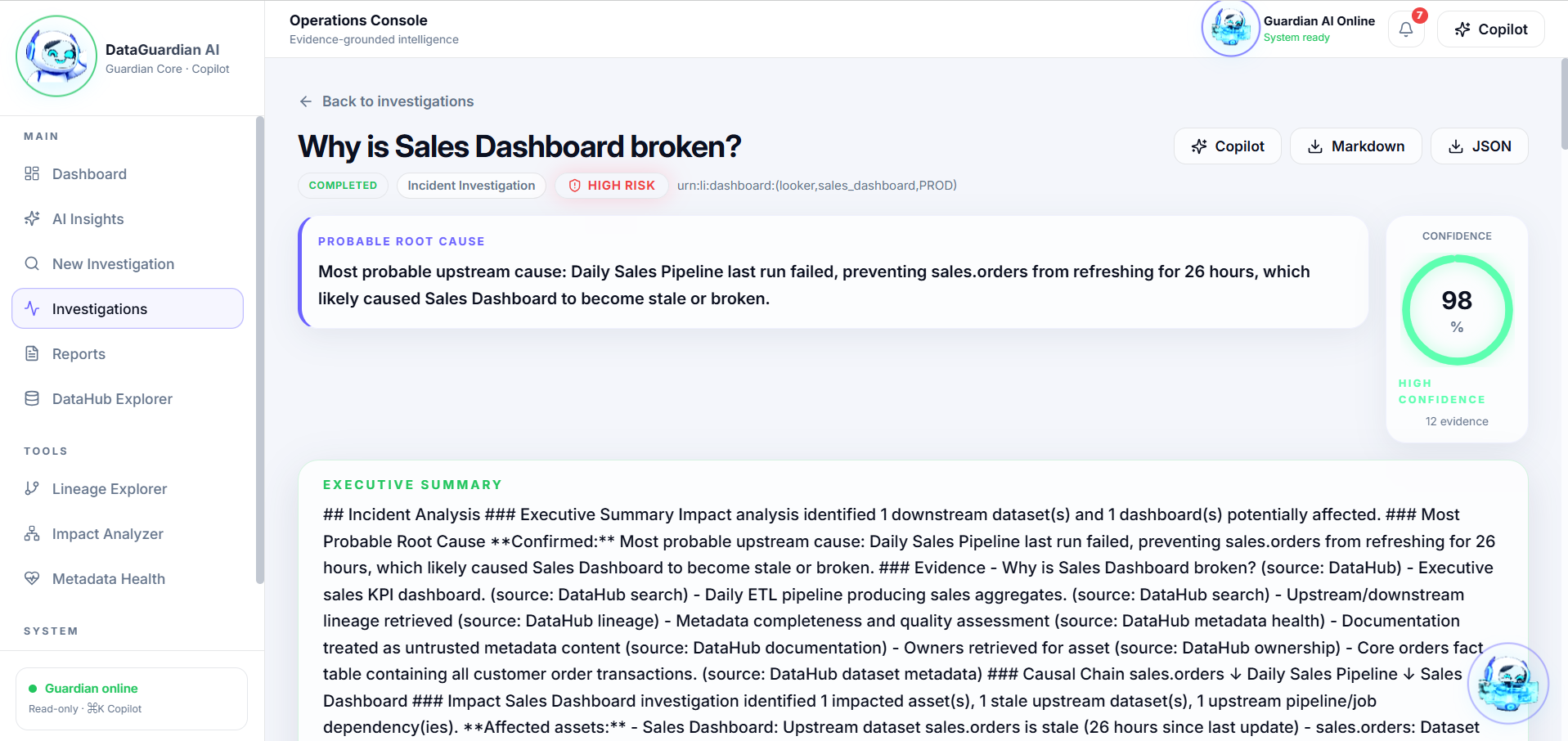
Investigation Result — View evidence and confidence for the result.
-
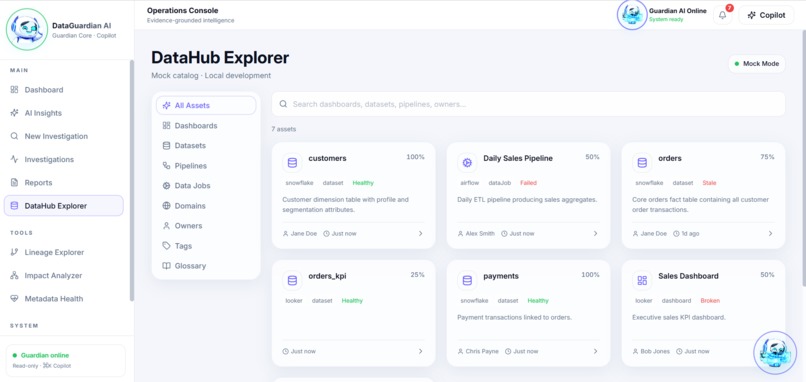
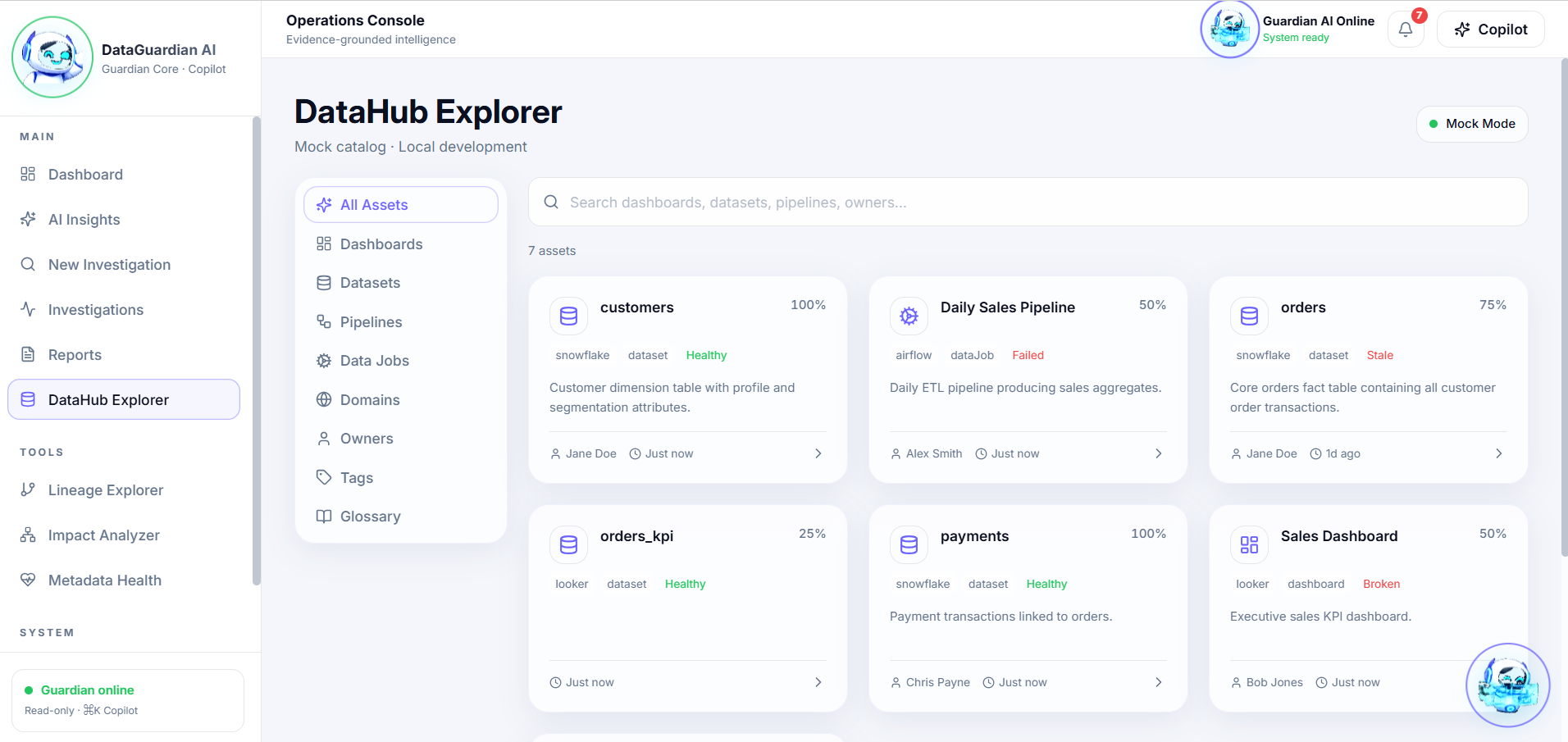
DataHub Explorer — Explore datasets and metadata.
-
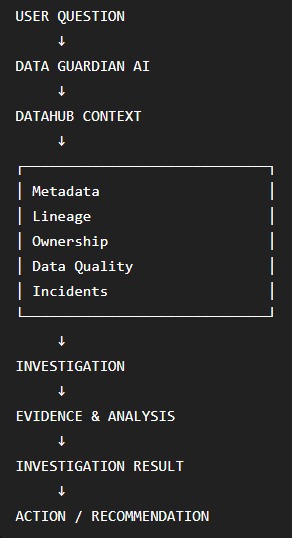
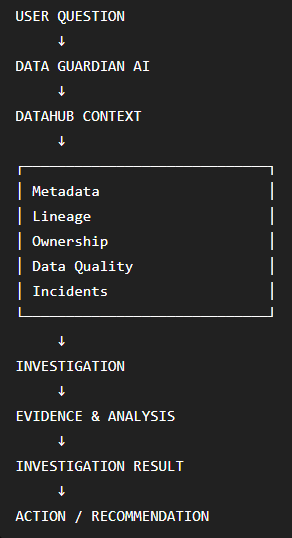
End-to-End Workflow — From data question to investigation result.
DataGuardian AI
DataGuardian AI is an evidence-grounded data investigation platform built to help teams understand and resolve data incidents faster.
When a dashboard, dataset, or data pipeline has a problem, finding the actual root cause can require checking multiple sources such as metadata, lineage, ownership, freshness, pipeline information, and downstream dependencies.
DataGuardian AI brings these signals together into one investigation workflow.
What it does
- Investigates data incidents such as stale datasets and broken dashboards.
- Uses DataHub metadata and lineage to understand relationships between data assets.
- Identifies upstream dependencies that may be responsible for an incident.
- Analyzes downstream impact to show which assets may be affected.
- Provides evidence supporting the investigation result.
- Shows ownership information for responsible teams or users.
- Provides a causal chain from the affected asset to its upstream dependencies.
- Generates recommended next steps for investigation and recovery.
- Provides an investigation report containing evidence, impact, recommendations, and confidence.
Example Investigation
A Sales Dashboard is reported as broken.
DataGuardian AI traces the dependency chain:
Sales Dashboard ↓ sales.orders ↓ Daily Sales Pipeline
The investigation identifies that sales.orders has not been refreshed and connects the stale dataset to the upstream pipeline dependency.
The result presents:
Root Cause → Evidence → Causal Chain → Impact → Recommendations → Verification
This makes the investigation easier to understand and gives the user a structured path toward resolving the incident.
DataHub Integration
DataGuardian AI uses DataHub as the source of data context, including metadata, lineage, ownership, and asset information.
Instead of treating a data problem as an isolated error, the application uses the relationships between data assets to understand what happened and what may be affected.
Key Features
Guardian AI Copilot Provides an investigation interface for asking questions and reviewing investigation results.
Evidence-Grounded Investigation Connects conclusions to collected evidence instead of presenting unsupported explanations.
DataHub Explorer Allows users to explore datasets, dashboards, pipelines, metadata, and related information.
Investigation Impact & Lineage Shows upstream and downstream relationships and identifies potentially affected assets.
Investigation Reports Organizes the investigation into a clear report containing evidence, root cause, impact, recommendations, and verification steps.
Why it matters
Modern data environments contain many connected datasets, pipelines, dashboards, and dependencies. When something breaks, understanding the relationship between these assets is often as important as identifying the initial error.
DataGuardian AI turns this investigation process into a structured workflow:
Detect → Investigate → Trace → Understand Impact → Recommend → Verify
The goal is to make data investigations faster, more transparent, and easier to act on.
Built With
- aiagent
- alembic
- api
- css
- datahub
- docker
- fastapi
- html
- javascript
- mcp
- postgresql
- python
- react
- rest
- sqlalchemy

Log in or sign up for Devpost to join the conversation.