Inspiration
Building a reliable AI assistant requires more than simply collecting documents. The real challenge is identifying which information is relevant, detecting duplicates, and preparing high-quality data without introducing unsupported answers.
What it does
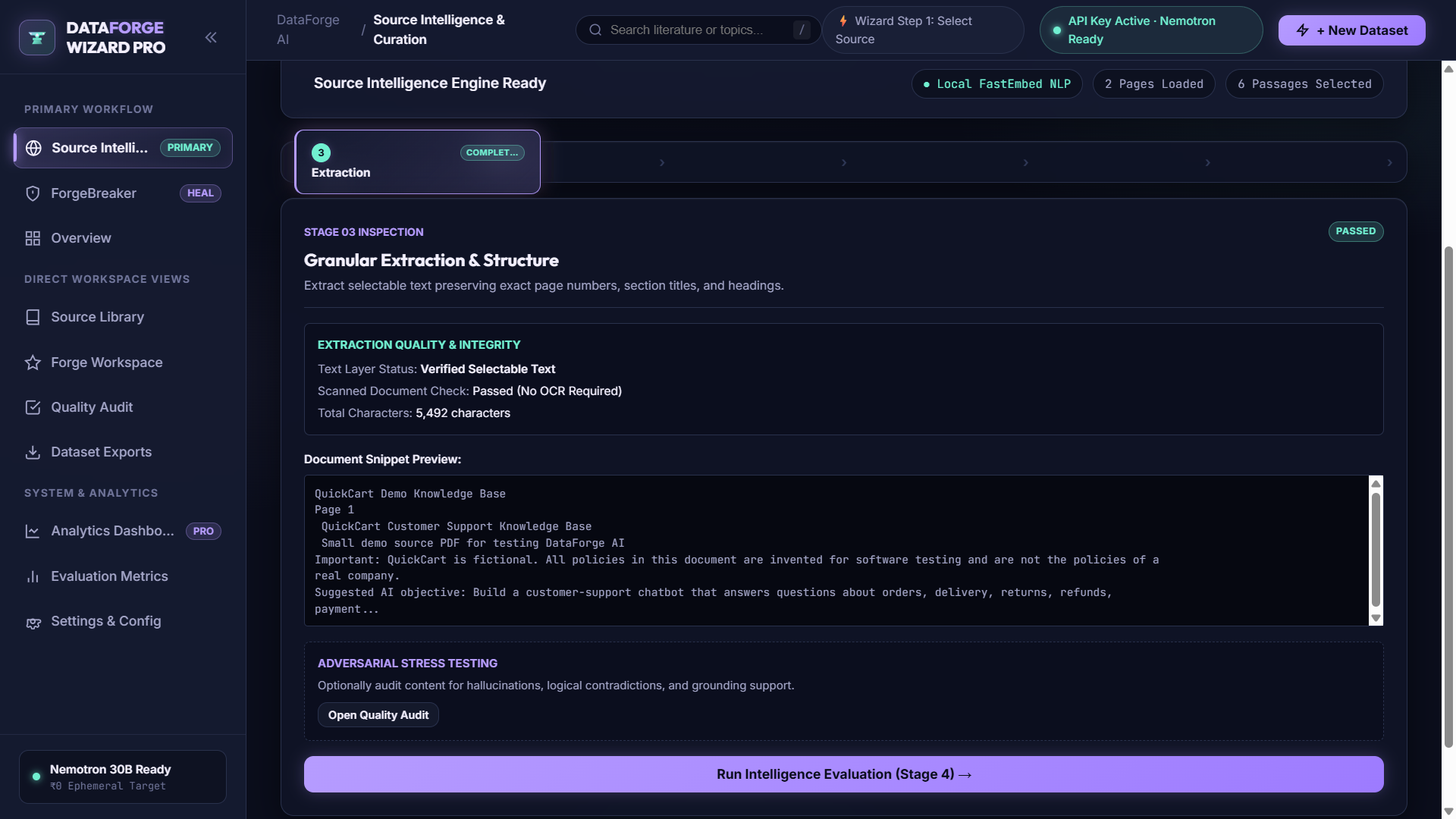
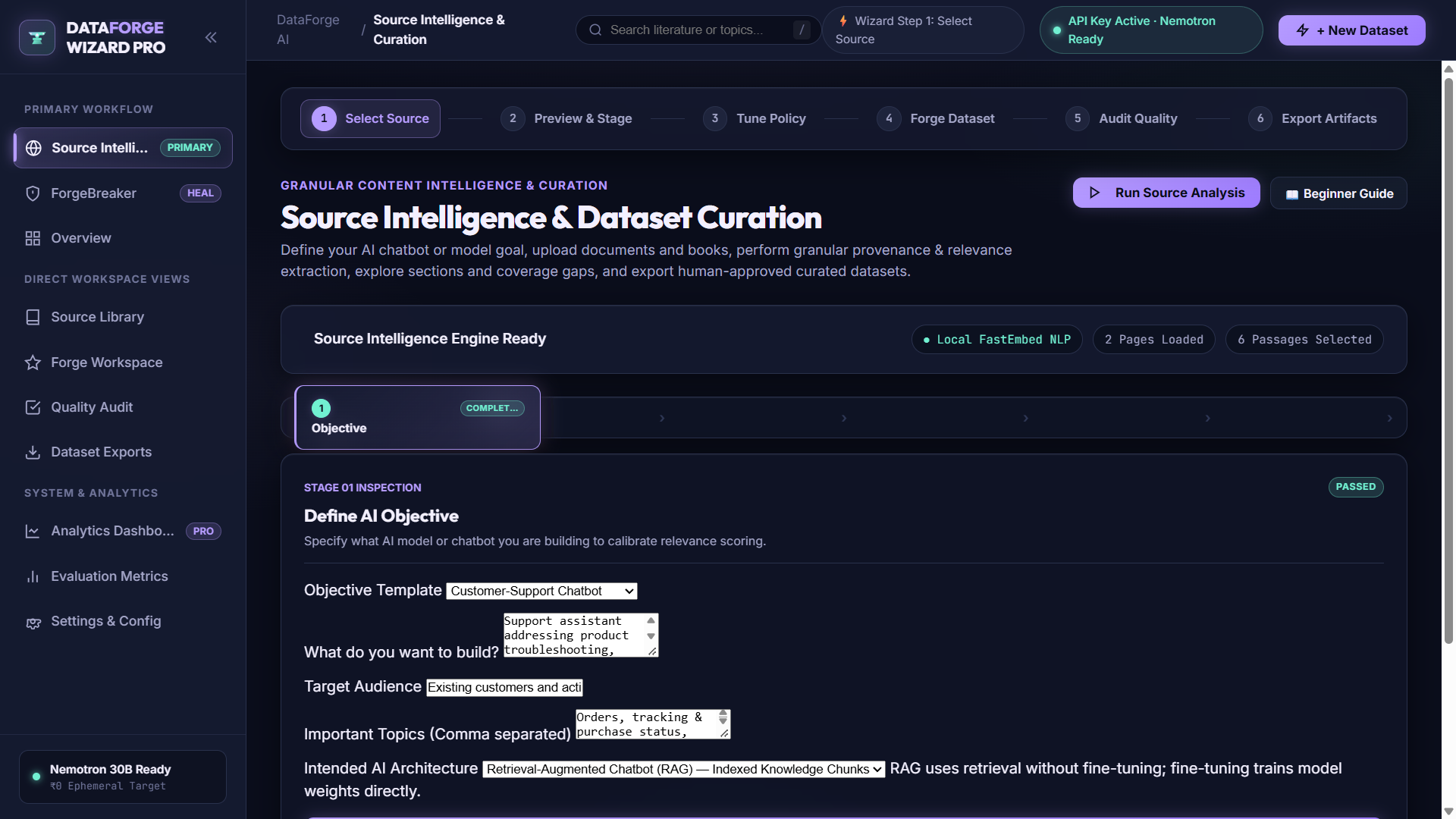
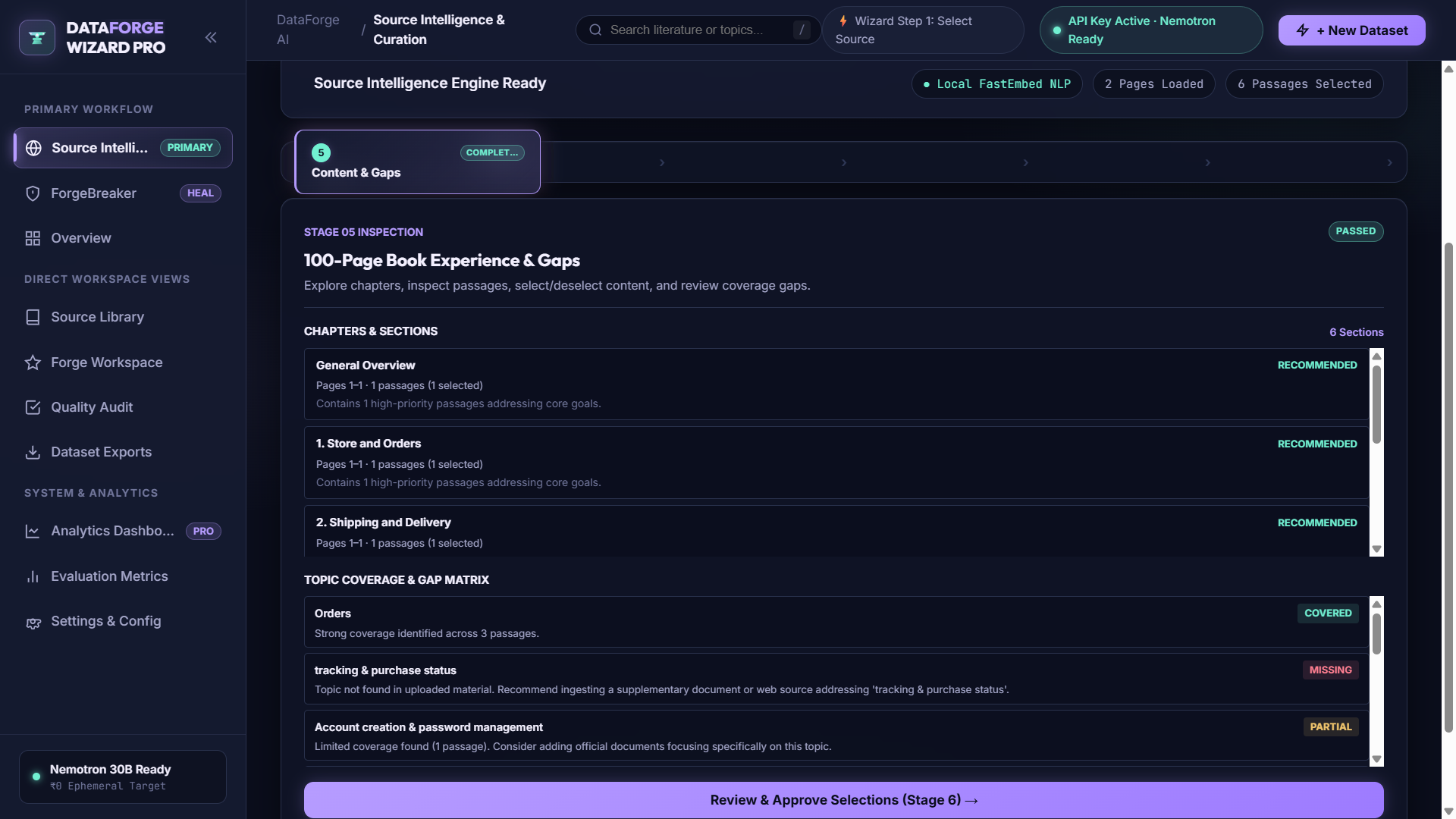
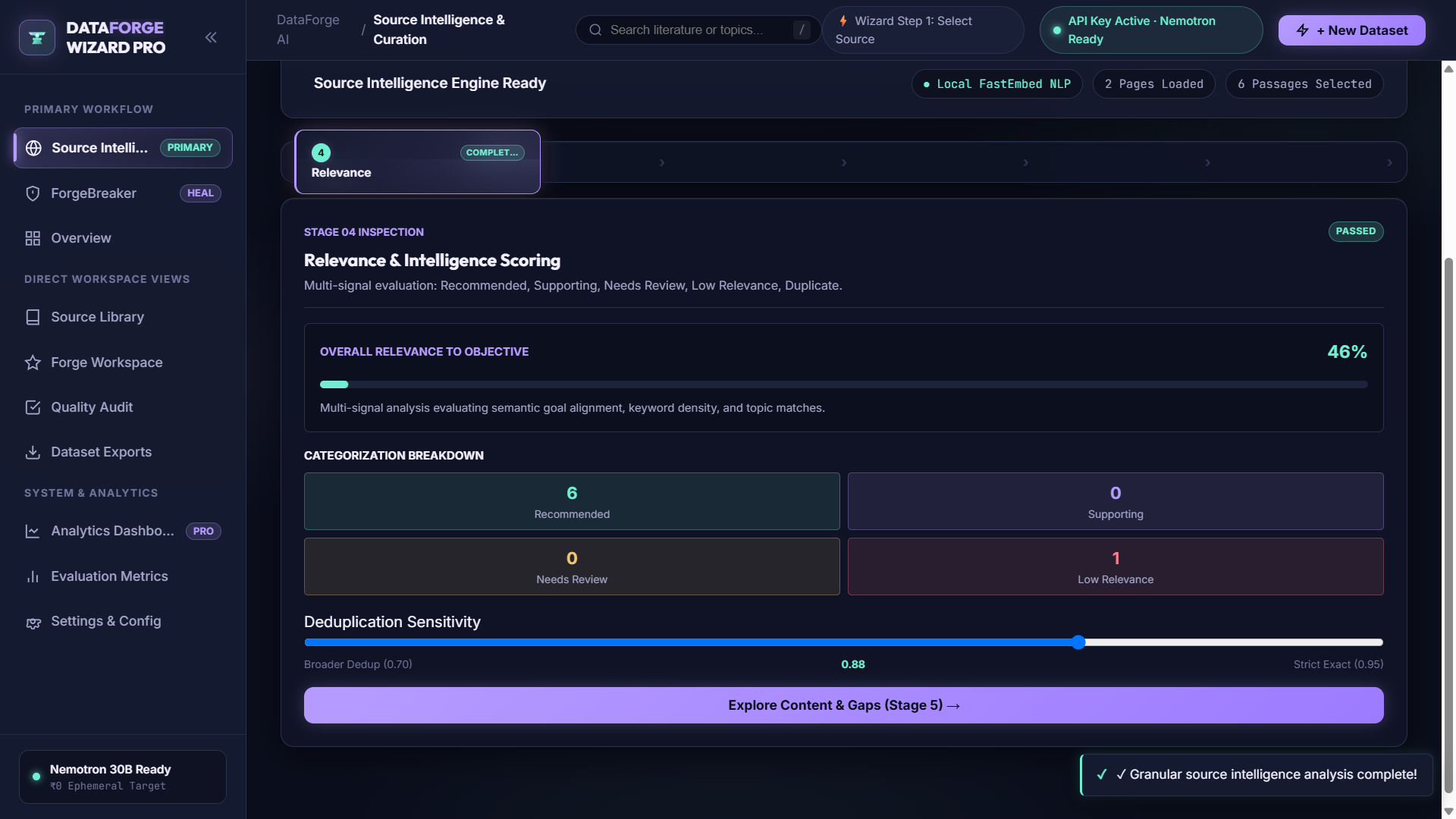
DataForge AI is an AI Source Intelligence and Dataset Curation Platform. Users define their AI assistant's purpose, upload documents, and analyze their contents at a granular level. The platform evaluates relevance, identifies coverage gaps and potential duplicates, supports human review, and prepares curated datasets for retrieval-augmented generation (RAG) or source-grounded question-and-answer workflows.
How we built it
We built DataForge AI using Python, a web-based interface, document parsing, local semantic analysis, relevance scoring, source-grounding validation, and dataset export tools. Our goal is to make dataset preparation easier to understand and more transparent.
Challenges we faced
One major challenge was making the workflow understandable for beginners while preserving source provenance and avoiding unsupported generated content. We focused on explaining relevance decisions, allowing users to review passages, and separating knowledge retrieval from model fine-tuning.
What we learned
We learned that useful AI systems depend on the quality and relevance of their source material. Transparent curation, human approval, and traceable source information are essential for preparing more reliable AI datasets.
What's next
We aim to improve evaluation quality, expand supported source formats, and make DataForge AI a more accessible workspace for preparing trustworthy datasets.
Built With
- css
- fastapi
- html
- javascript
- nvidianemotron
- python

Log in or sign up for Devpost to join the conversation.