Inspiration
We set out to make data analysis easy and intuitive for non-coders by combining AI and natural language querying with robust data management tools.
What it does
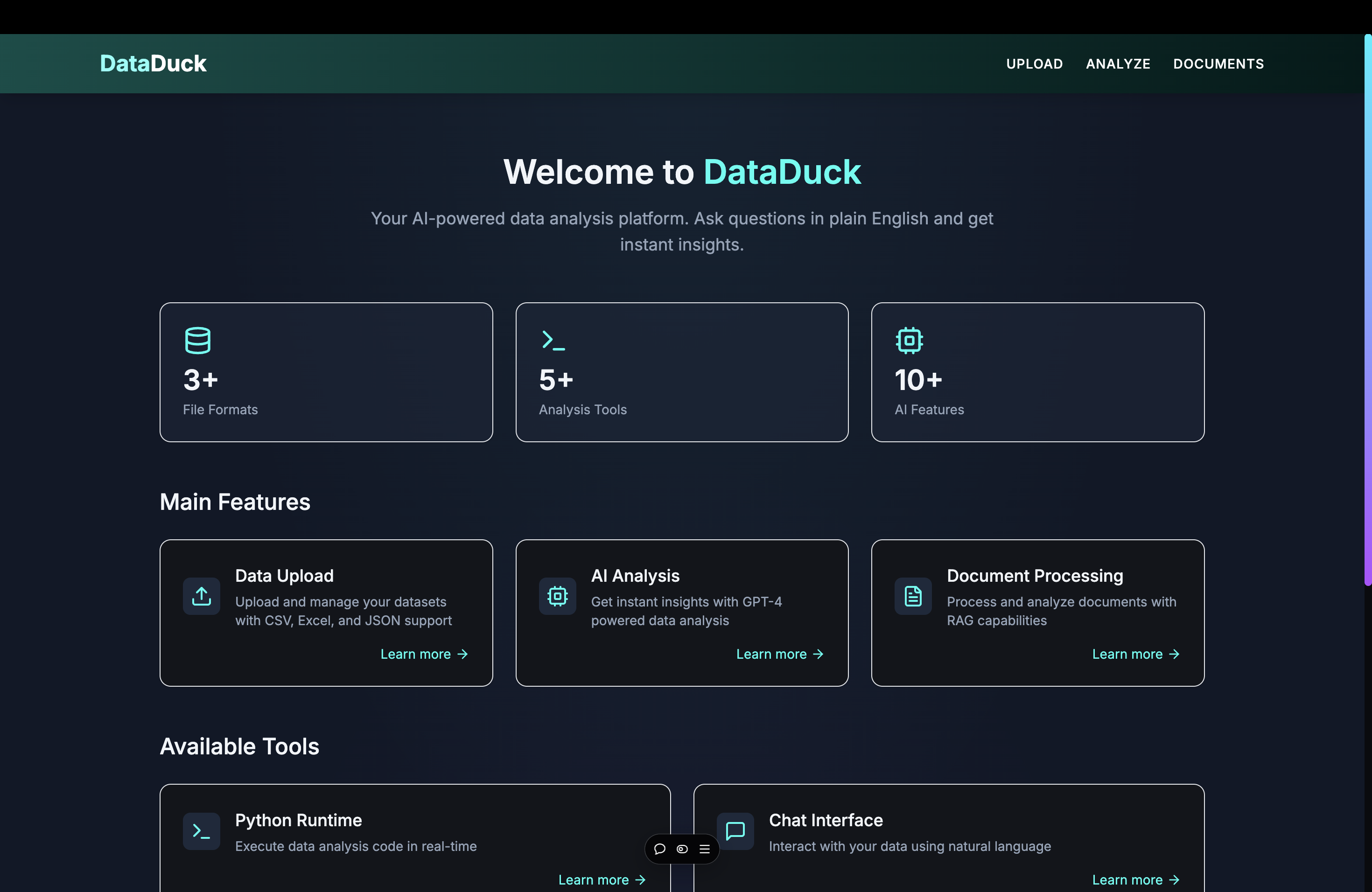
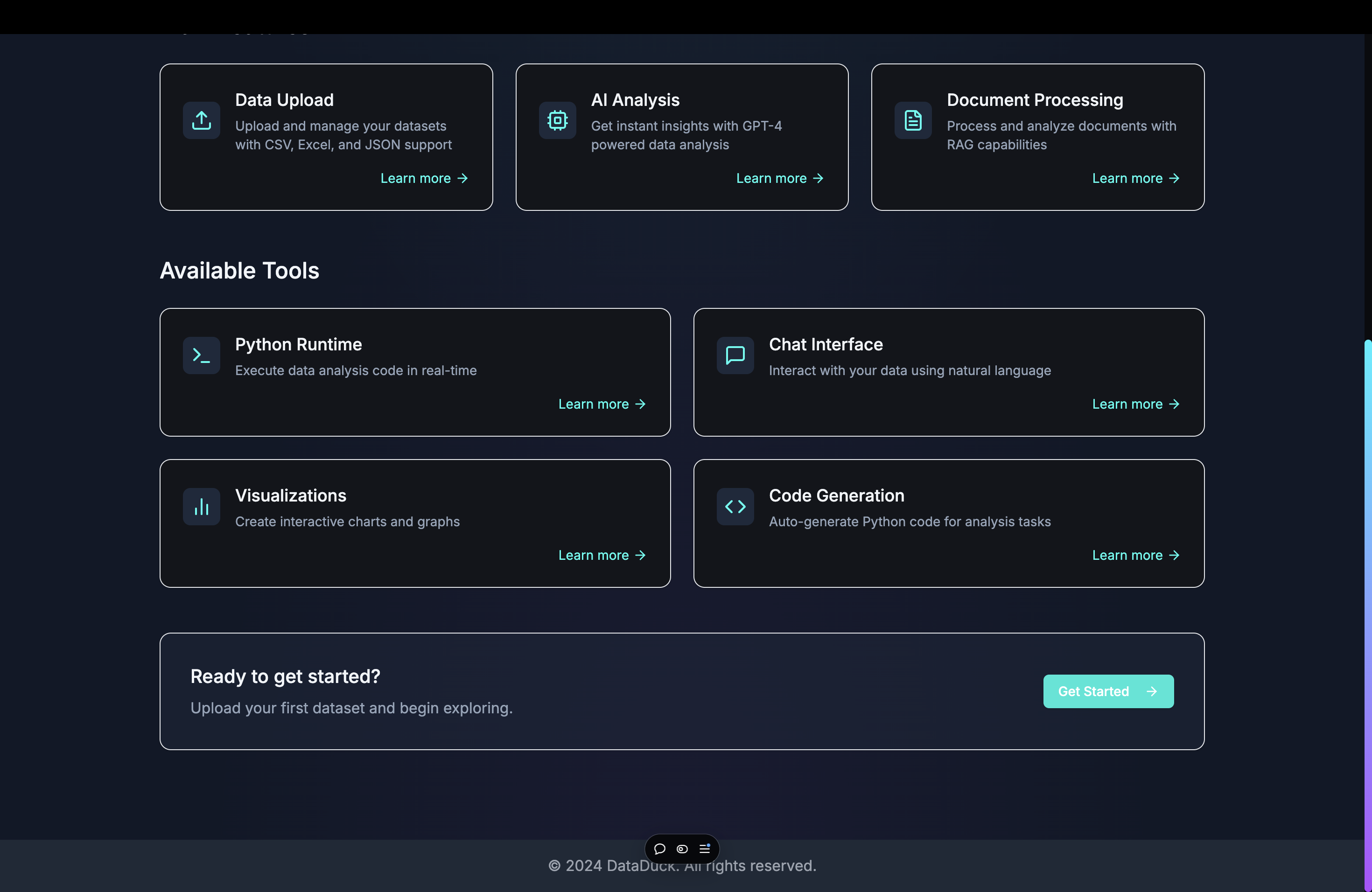
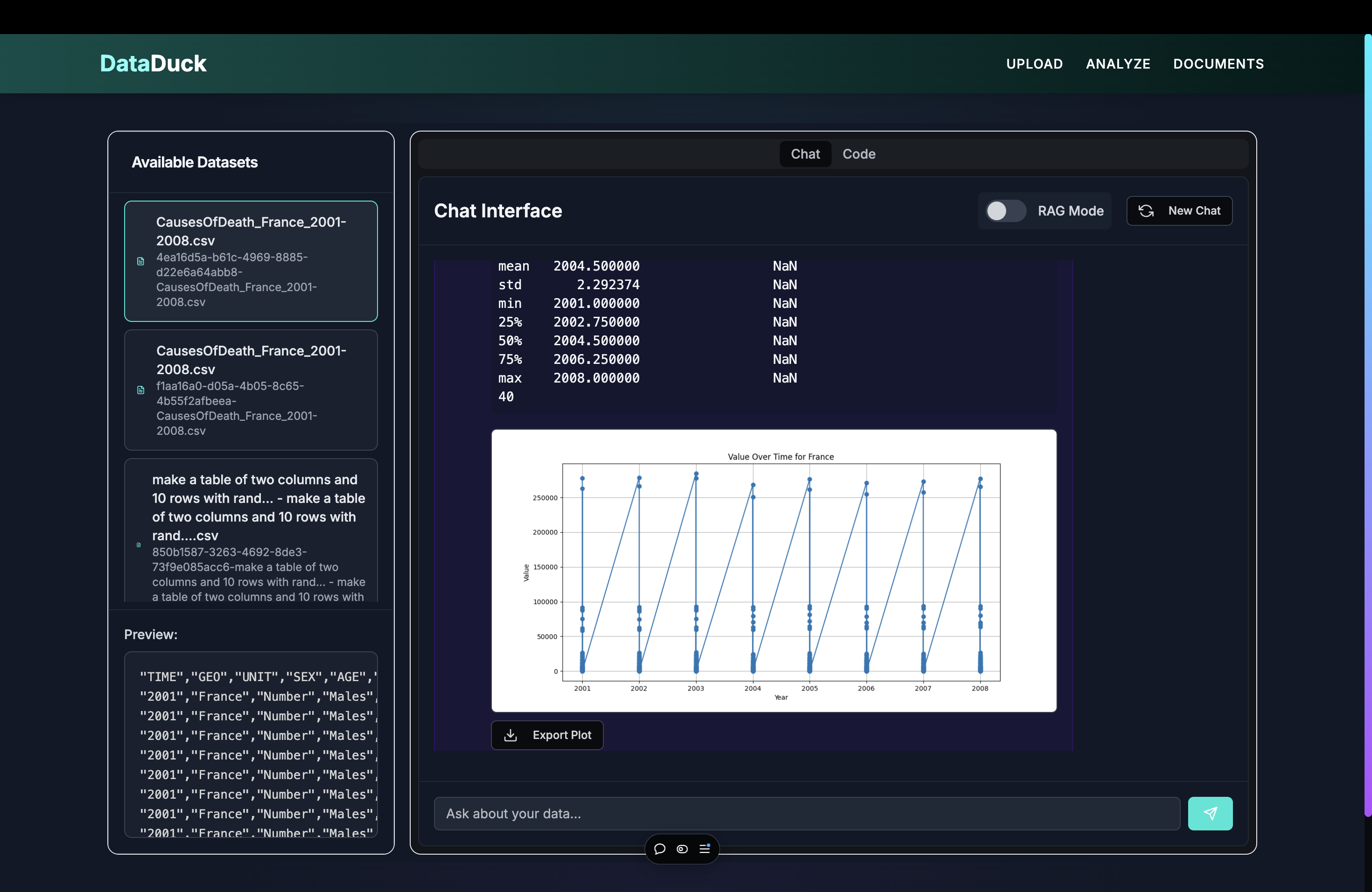
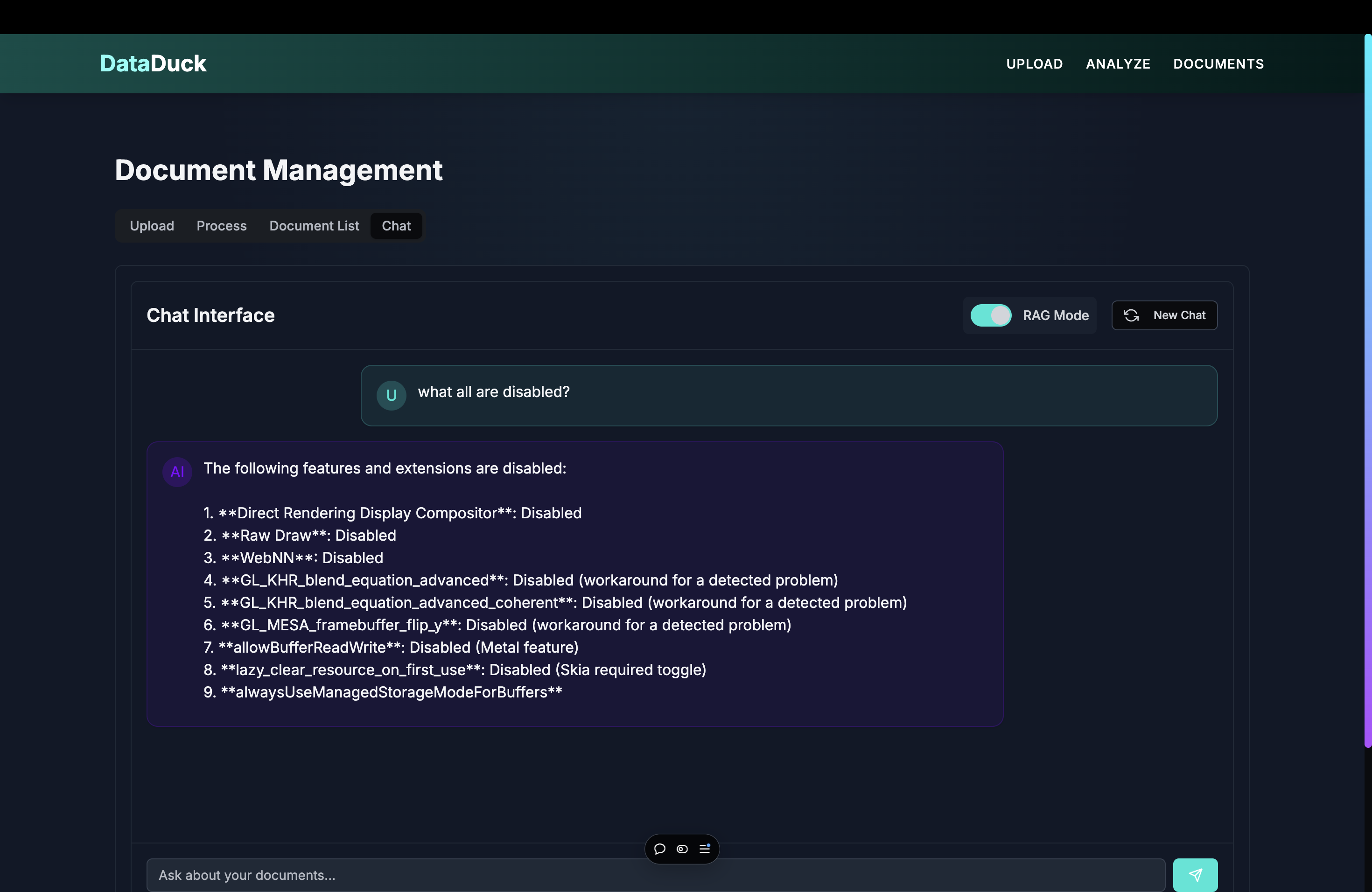
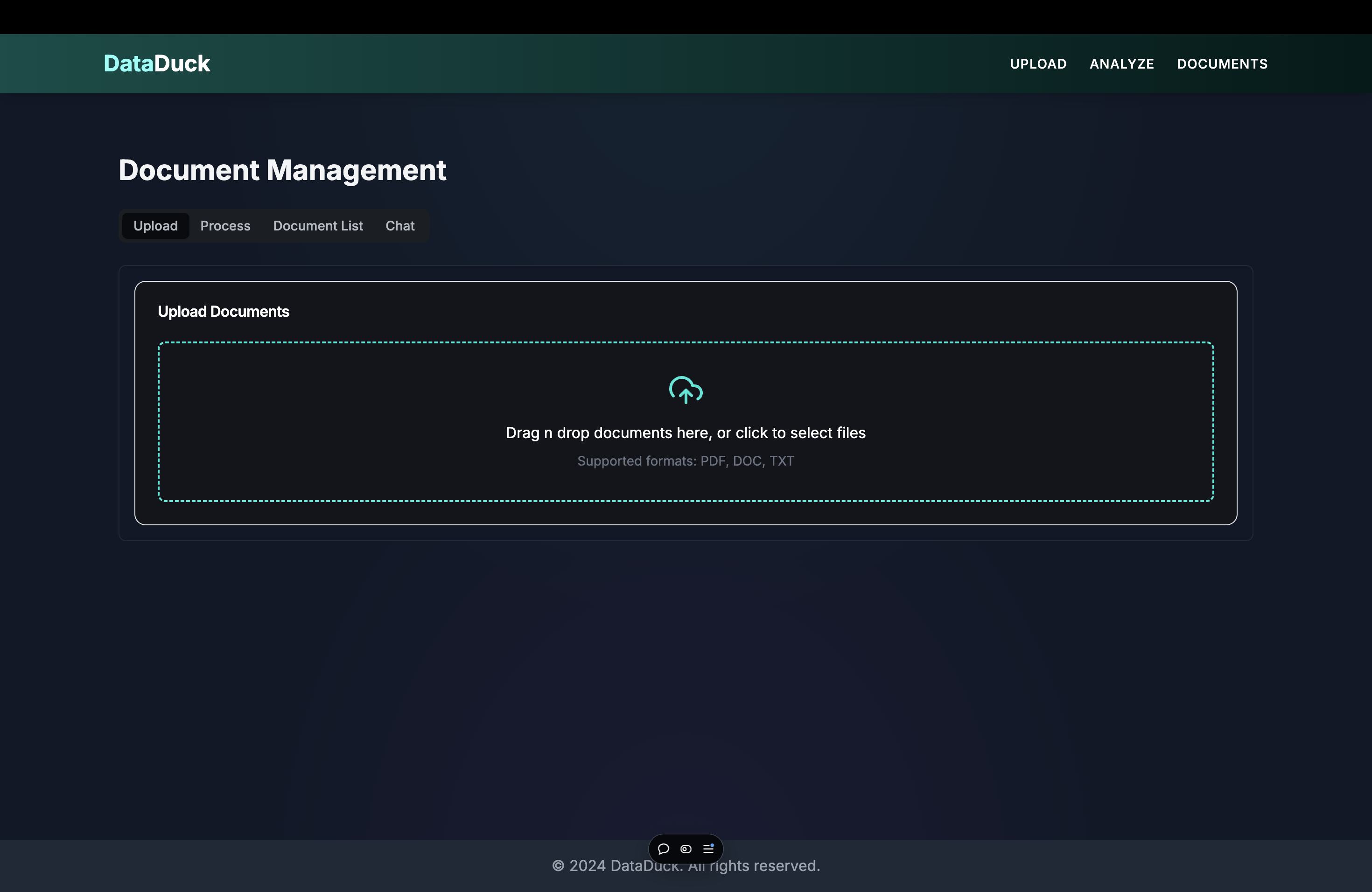
DataDuck allows users to upload datasets, ask natural language queries, and receive visualizations or code snippets instantly. It also features document management with RAG (Retrieval Augmented Generation) for extracting insights from PDFs, DOCs, and other files.
How we built it
We used Next.js for the front end, Pandas and NumPy for analysis, and GPT-4 to handle queries. Visuals are generated with Plotly and Matplotlib, while Pyodide supports in-browser code execution. RAG-enhanced search enables quick document-based responses.
Challenges we faced
- Ensuring query accuracy and meaningful AI responses
- Secure code execution with Pyodide without slowing performance
- Designing an interface that’s simple yet powerful
- Optimizing RAG for precise document retrieval
Accomplishments
We successfully integrated AI with data and document management, enabling users to interact with data conversationally and generate insights without coding.
What we learned
We gained experience with AI-powered querying, RAG-based retrieval, and secure browser-based code execution, improving both usability and technical performance.
What’s next for DataDuck
We aim to enhance visualizations, refine query precision, and expand collaboration features for teams while further streamlining the user experience.
Built With
- api
- css
- gpt-4o
- javascript
- matplotlib
- monaco
- numpy
- openai
- pandas
- plotly.js
- pyodide
- python
- react.js
- sdk
- tailwind
- typescript
- vercel

Log in or sign up for Devpost to join the conversation.