What it does
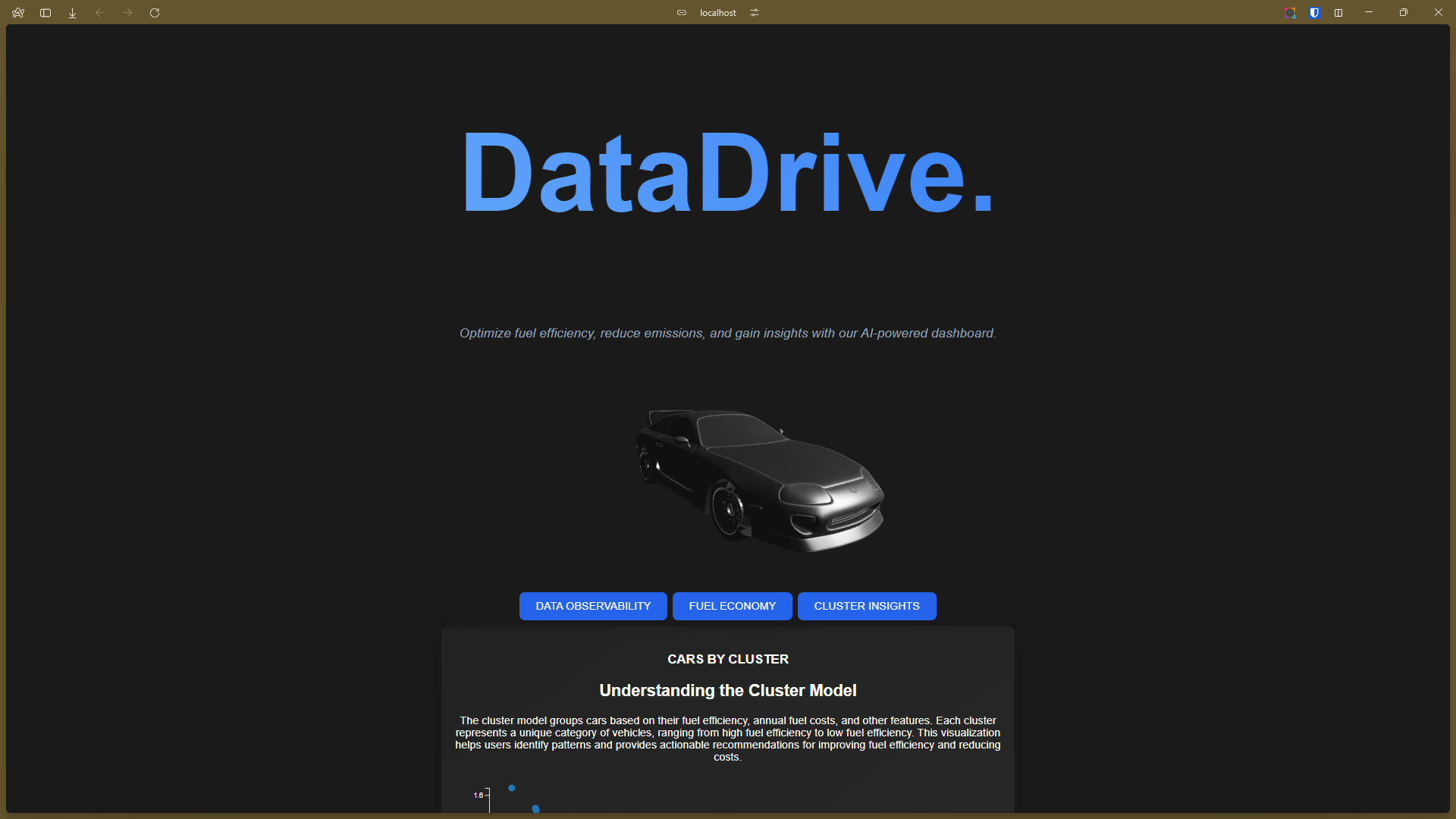
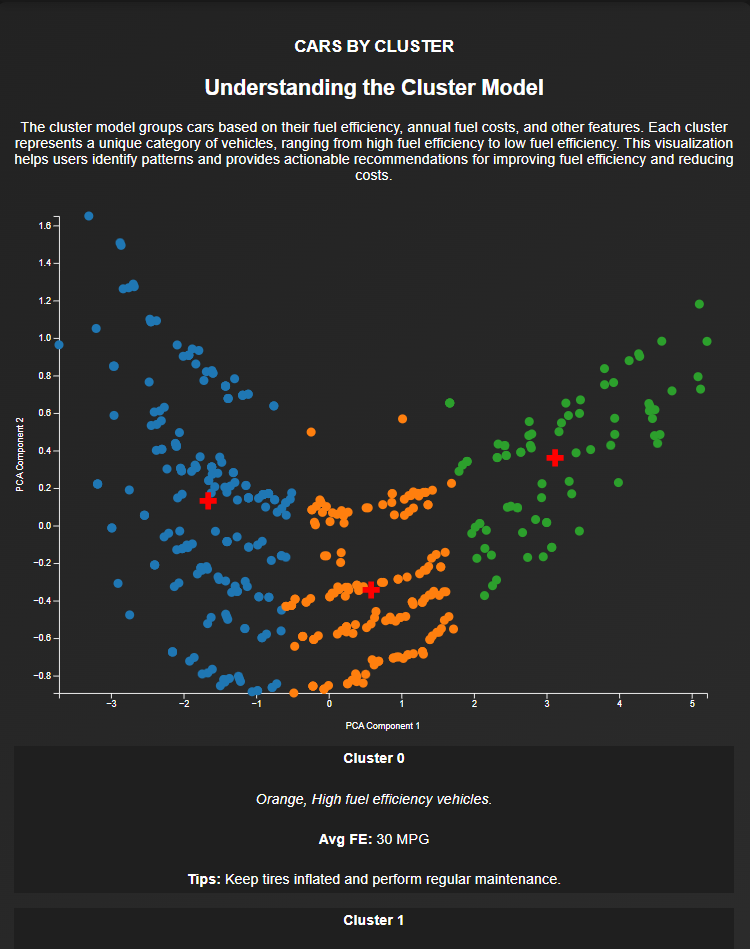
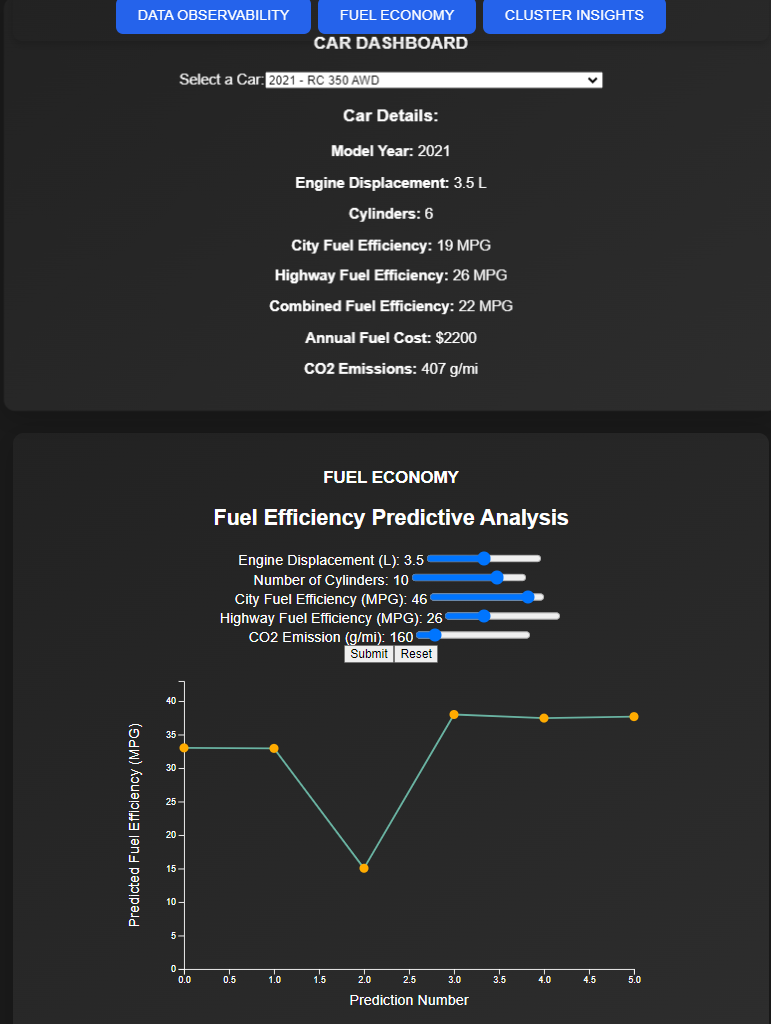
DataDrive provides a unified platform that empowers vehicle drivers and data managers alike by integrating real-time data analysis for fuel optimization with advanced machine learning insights. It delivers actionable recommendations to improve driving behavior, reduce fuel consumption, and lower carbon emissions. Additionally, it offers a streamlined data pipeline for effective tracking and reporting of vehicle performance metrics.
How we built it
We built DataDrive using a combination of modern front-end and back-end technologies. The frontend leverages Vite with React and TypeScript to create an interactive and user-friendly interface. For visualizing data, we used D3.js to present interactive graphs and insights. On the backend, we used Flask as our primary framework for effective data processing. For machine learning, we relied on Python and its extensive ecosystem of data science libraries, including Pandas for data manipulation, and Scikit-learn and TensorFlow for developing predictive models to optimize fuel efficiency.
Challenges we ran into
One of the major challenges we faced was ensuring the accuracy and reliability of our machine learning models. Predicting fuel efficiency involves accounting for a multitude of factors, such as driving habits, road conditions, and vehicle health. Finding and processing enough quality data for training our models posed a significant hurdle. Lastly, coordinating between different tech stacks (React frontend, Flask backend, and machine learning models) to create a cohesive user experience was also challenging.
Accomplishments that we're proud of
We are proud to have created a fully functional prototype that successfully combines data analysis with actionable recommendations to improve fuel efficiency. Our seamless integration of machine learning models to provide predictive insights marks a significant achievement. We're also proud of the beautiful, intuitive user interface that presents complex data in an accessible and engaging manner.
What we learned
Throughout this project, we learned a lot about balancing complex backend processes with a smooth frontend user experience. We also gained deeper insights into the importance of data integrity and transparency when dealing with potentially sensitive information like fuel usage and emissions. Our team learned to work across different tech stacks and integrate various APIs, and we also honed our skills in deploying machine learning models in production environments. The project highlighted the importance of user-centric design in making technical insights accessible.
What's next for DataDrive: Unified Insights for Data & Fuel Optimization
Moving forward, we plan to refine our machine learning models for even better accuracy by incorporating additional datasets, such as real-time traffic and weather conditions. We also aim to develop a mobile app to enhance accessibility for drivers on the go. Additionally, we plan to explore partnerships with fleet management companies to scale the impact of DataDrive to larger vehicle networks. Finally, we intend to work on integrating more secure and scalable blockchain solutions for data validation and trust-building across stakeholders.
Tech Stack
Frontend
- Framework: Vite (React + TypeScript)
- Styling: TailwindCSS, ShadCN
- Charts: D3.js for interactive visualizations
Backend
- Framework: Flask (Python)
- ML Models: Scikit-learn and TensorFlow for AI/ML

Log in or sign up for Devpost to join the conversation.