Inspiration
What it does
Tracks Track 1: Facility Trust Desk Question: Can this facility actually do what it claims?
Build an app that evaluates facility claims for capabilities such as ICU, maternity, emergency, oncology, trauma, or NICU. For each facility and capability, produce a trust signal such as strong evidence, partial evidence, weak or suspicious evidence, or no claim.
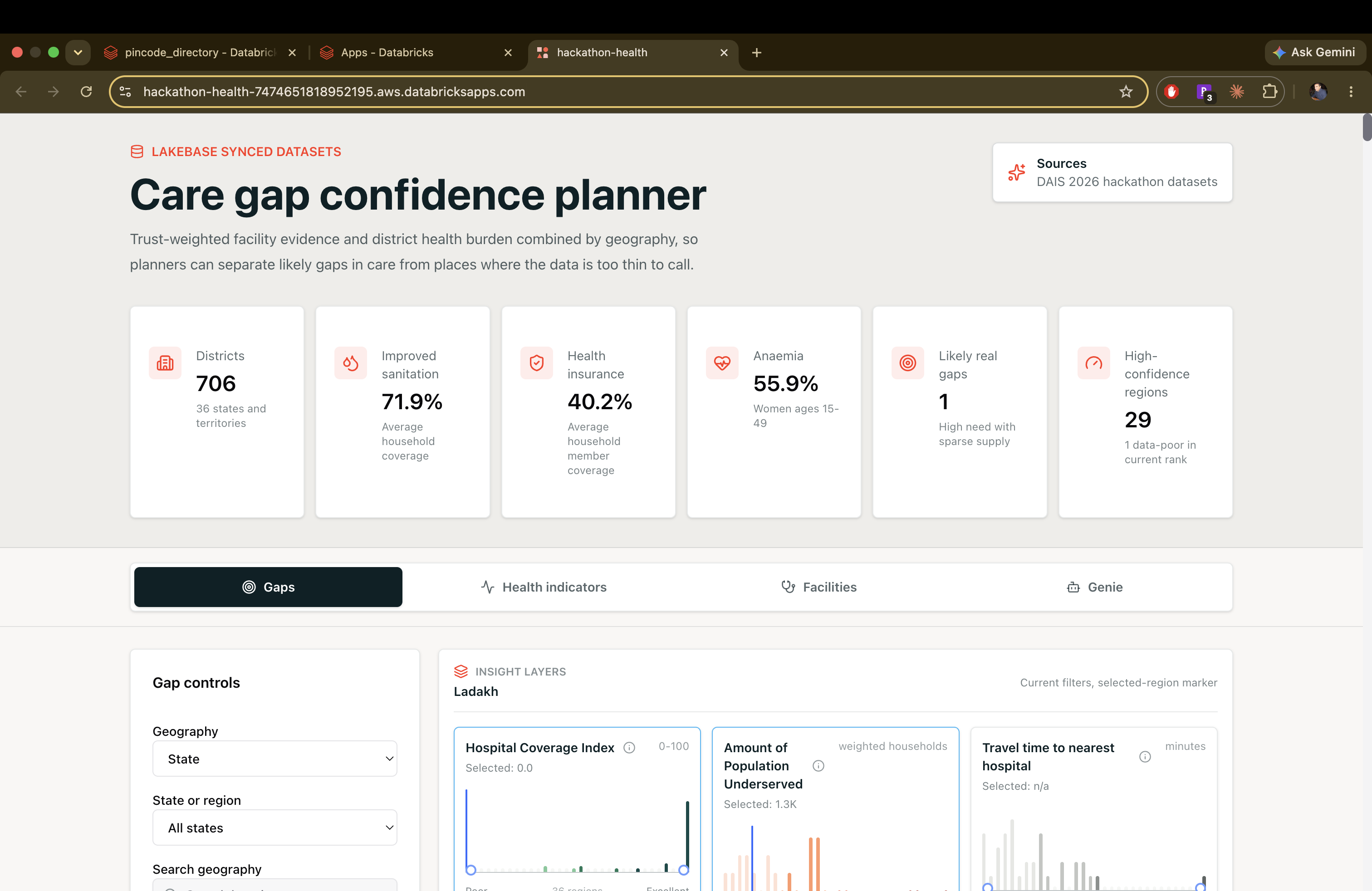
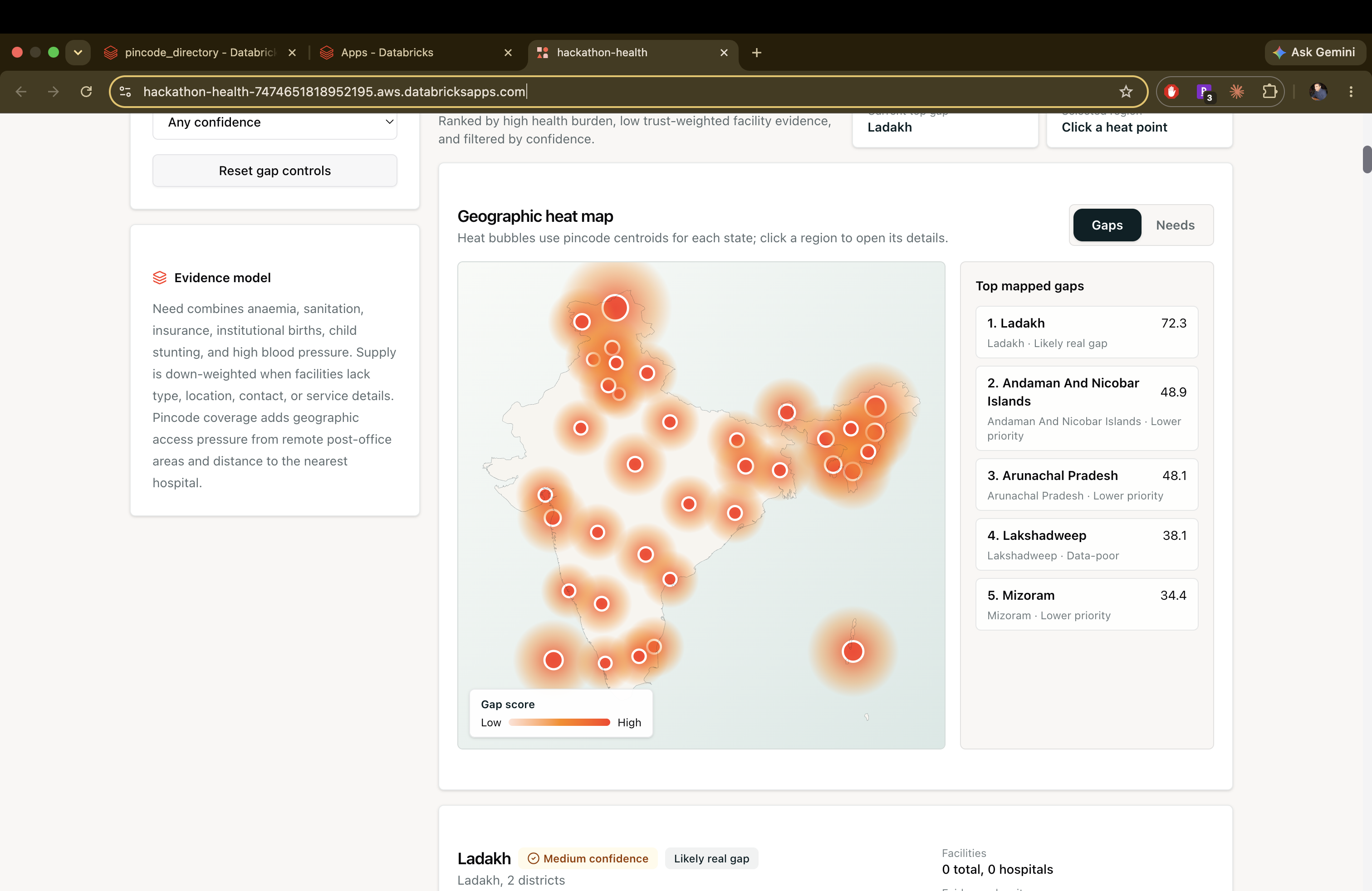
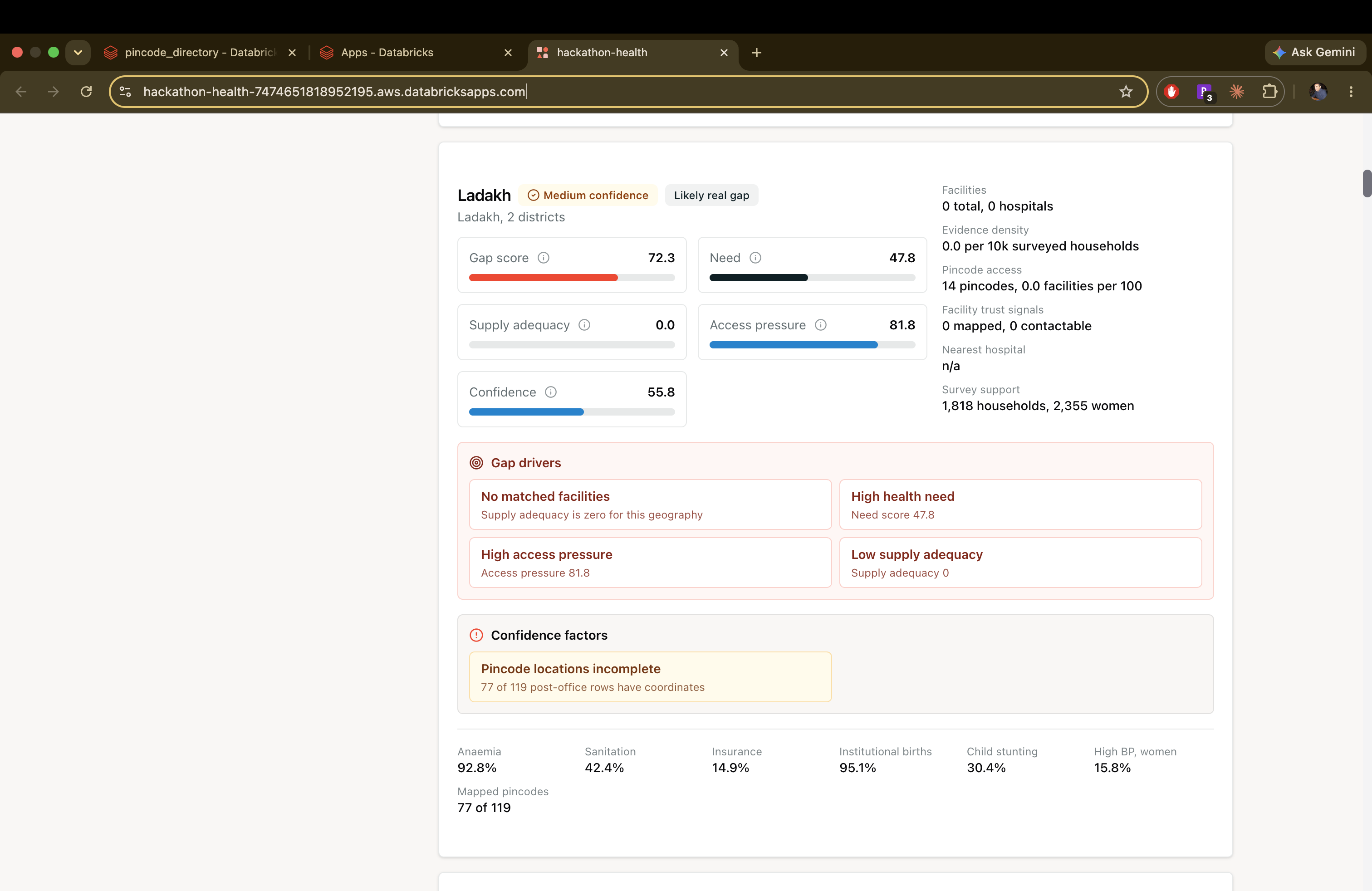
Track 2: Medical Desert Planner Question: Where are the highest-risk gaps in care, and how confident are we that those gaps are real?
Build an app that aggregates trust-weighted facility evidence across geography, such as state, city, district, or PIN code. Help planners distinguish real care gaps from data-poor regions.
Track 3: Referral Copilot Question: Where should a patient or coordinator actually go?
Build an app where a user enters a location and a care need, such as “dialysis near Jaipur” or “emergency surgery near Patna,” and receives an evidence-attached shortlist of candidate facilities.
How we built it
I used codex to build most of the application. We used genie and other tools to analyze the data, find data quality issues, and build normalized tables to be used by the UI.
Challenges we ran into
Data quality issues, vague assessment of confidence scores and gaps. Team members did their own thing. Had to go solo
Accomplishments that we're proud of
I was able to satisfy most requirements (tracks 1 2 and 3) with ease with the help of AI.
What we learned
Using AI tools is necessary to boost productivity
What's next for Databricks Apps & Agents for Good Hackathon 2026
AI
Built With
- agent
- bricks
- data
- genie
- lakes
- react
- typescript

Log in or sign up for Devpost to join the conversation.