Inspiration
This piece is inspired in cyber space and speed. Using Blender Python with AI I was able to create this virtual world scene inspired in Tron and No man Sky. Everything in this animation was created using code. I wanted to communicate how a “program” is booted up and boosted to the max and beyond. And by program. I mean a simulation of another reality. This is a conceptual piece giving a visual representation of data and code from my own artist point of view. Also the music was created using a python synth.
What it does
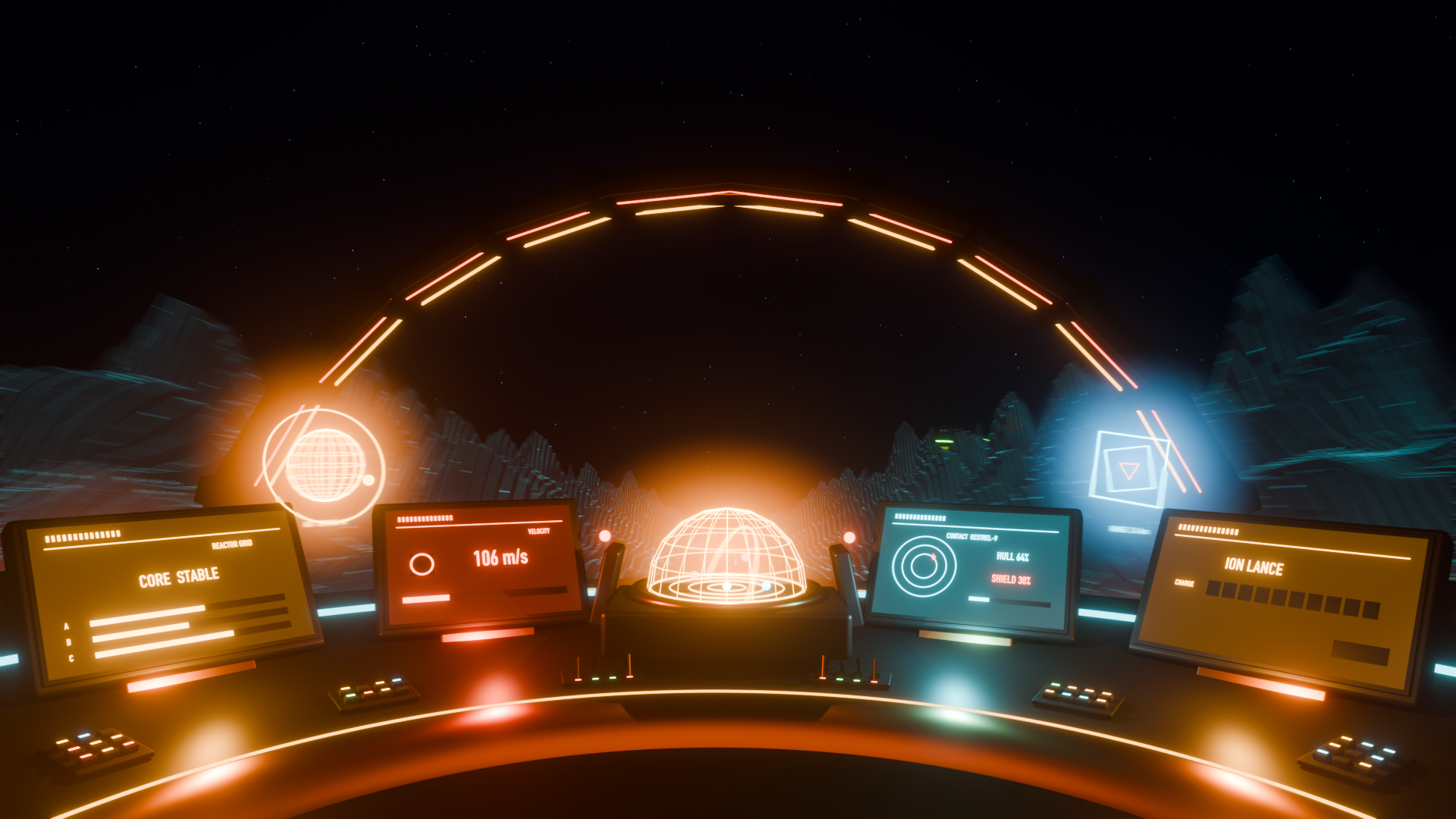
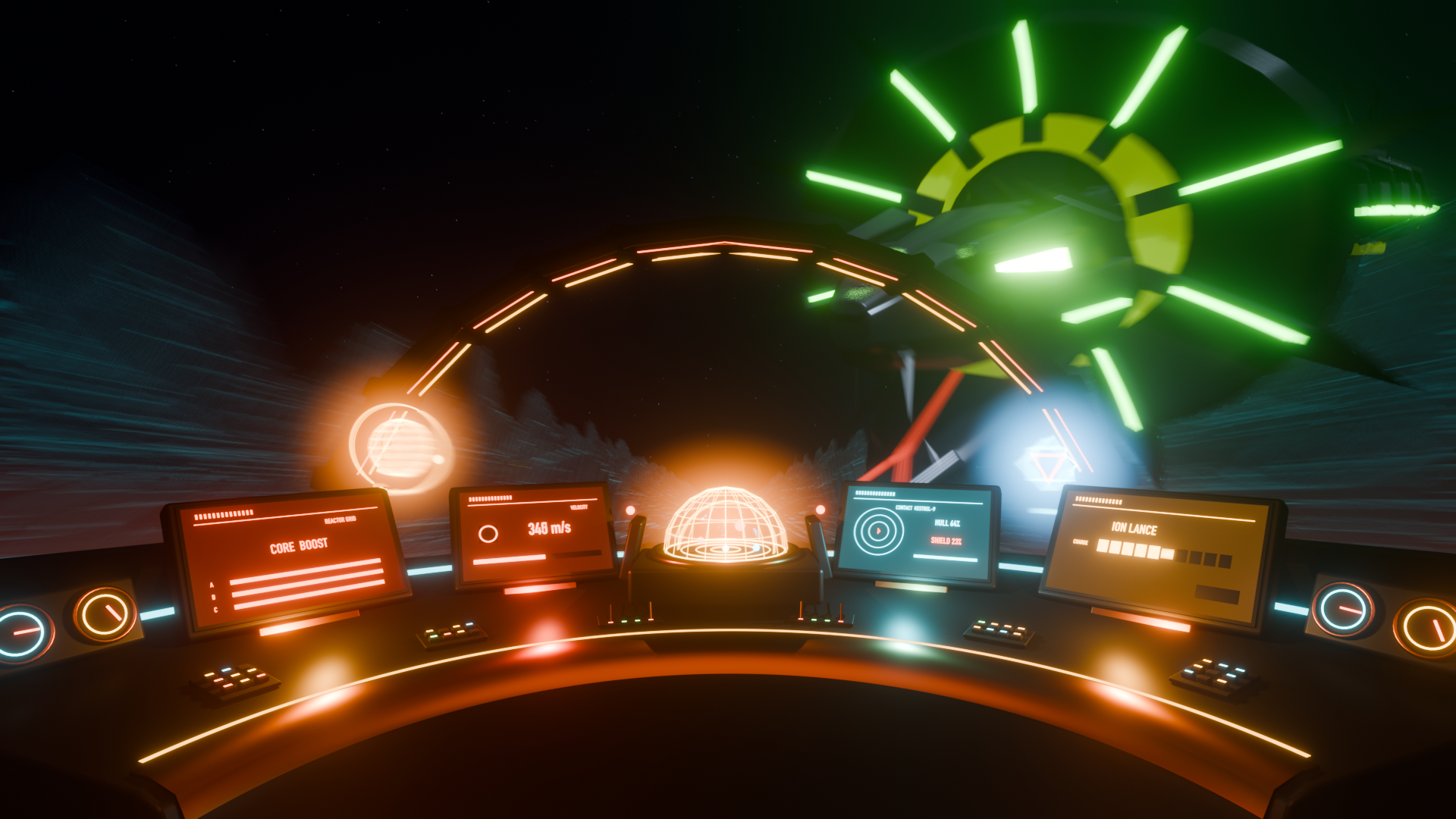
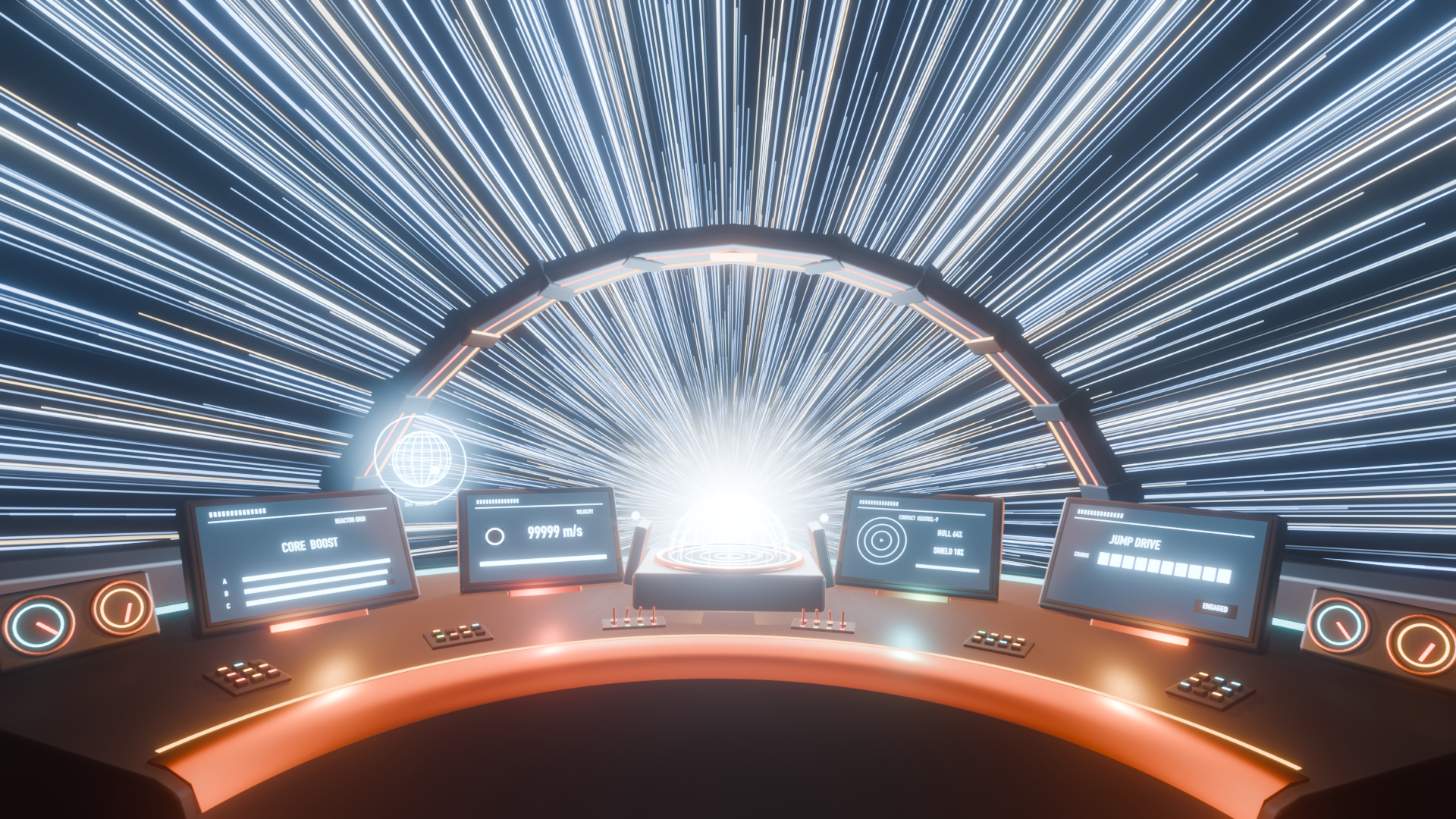
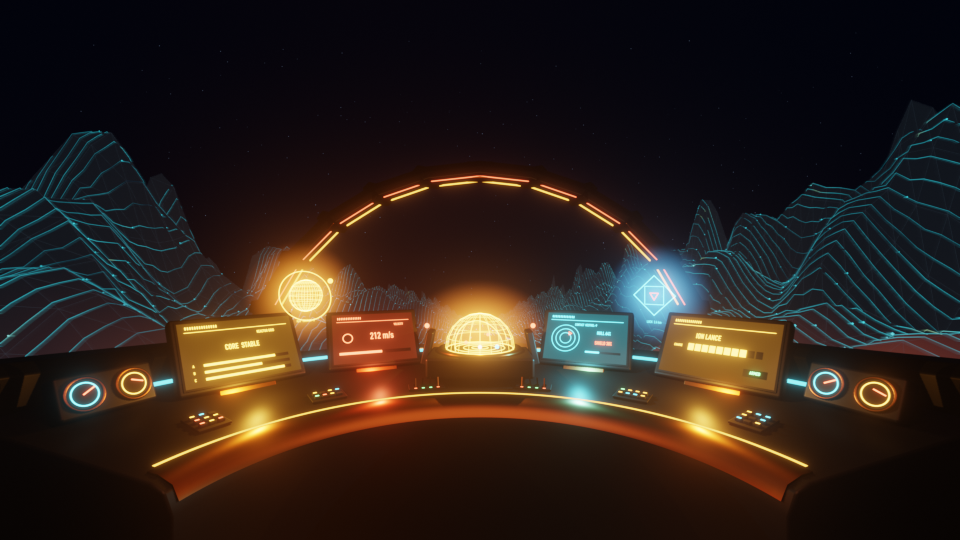
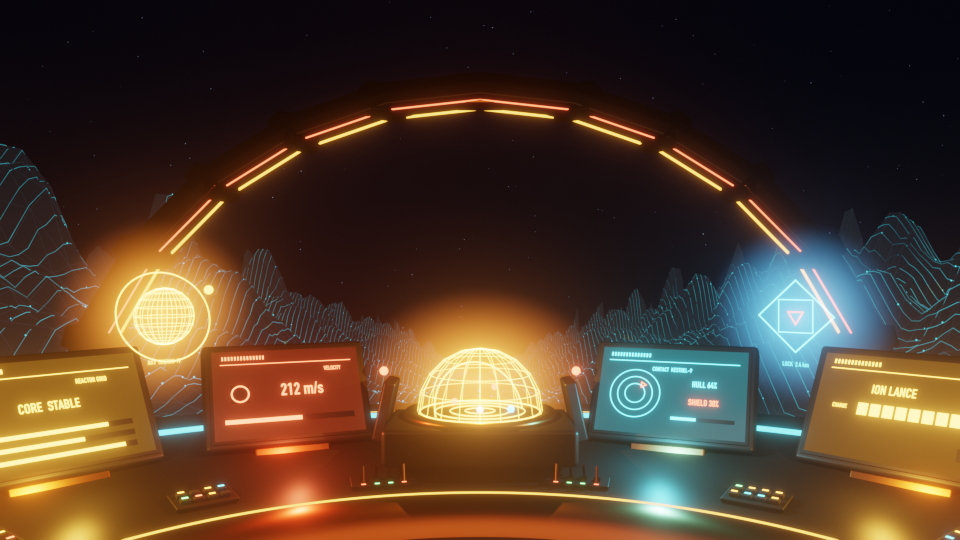
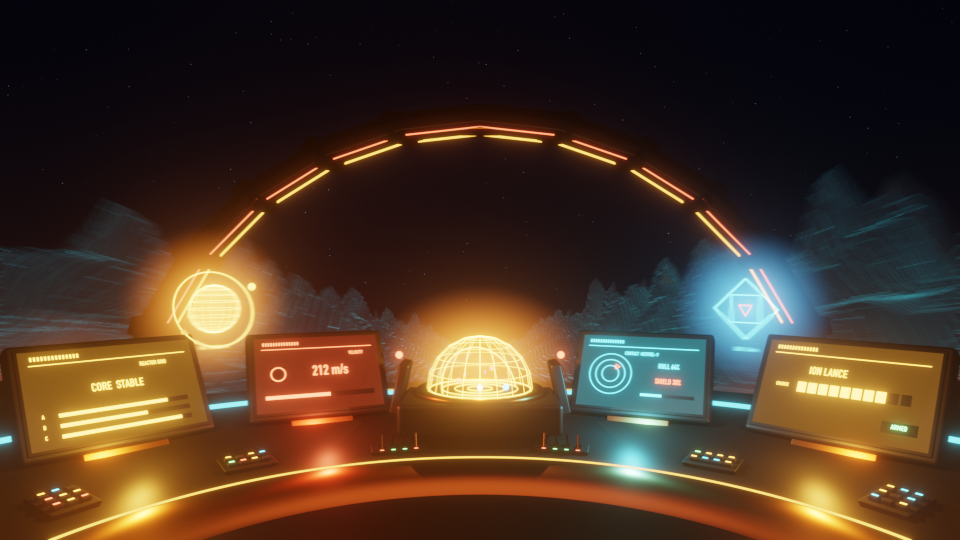
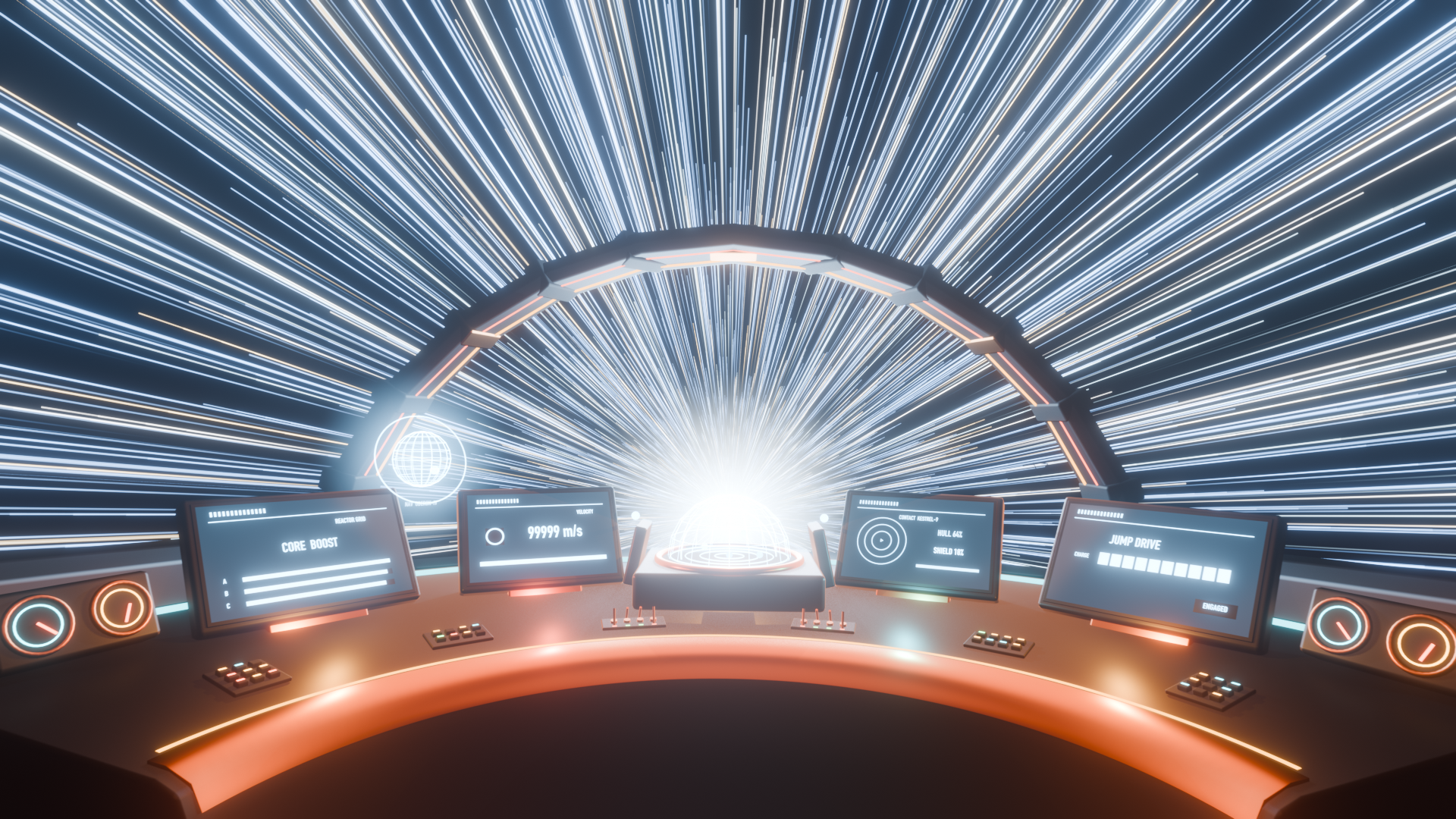
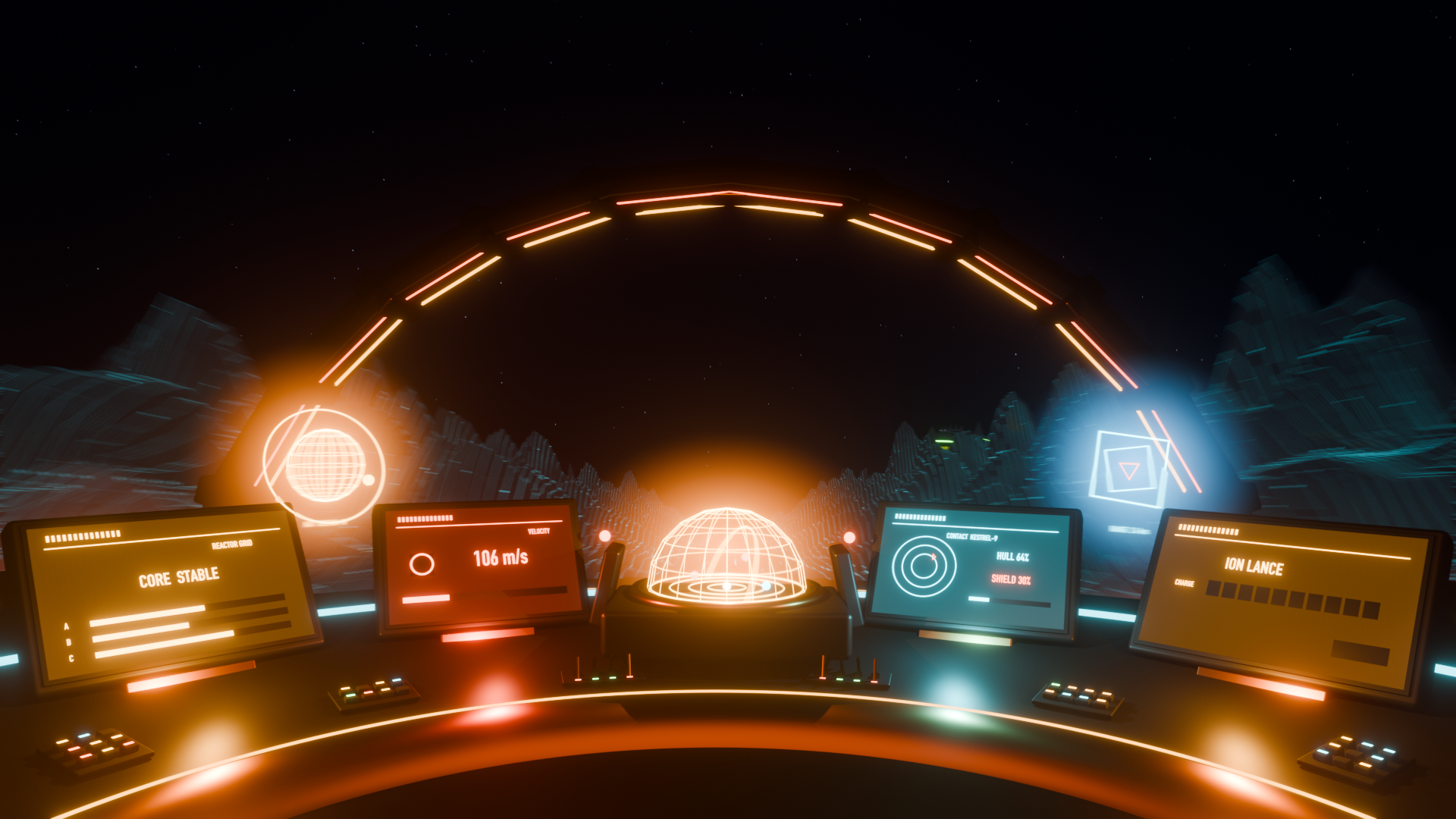
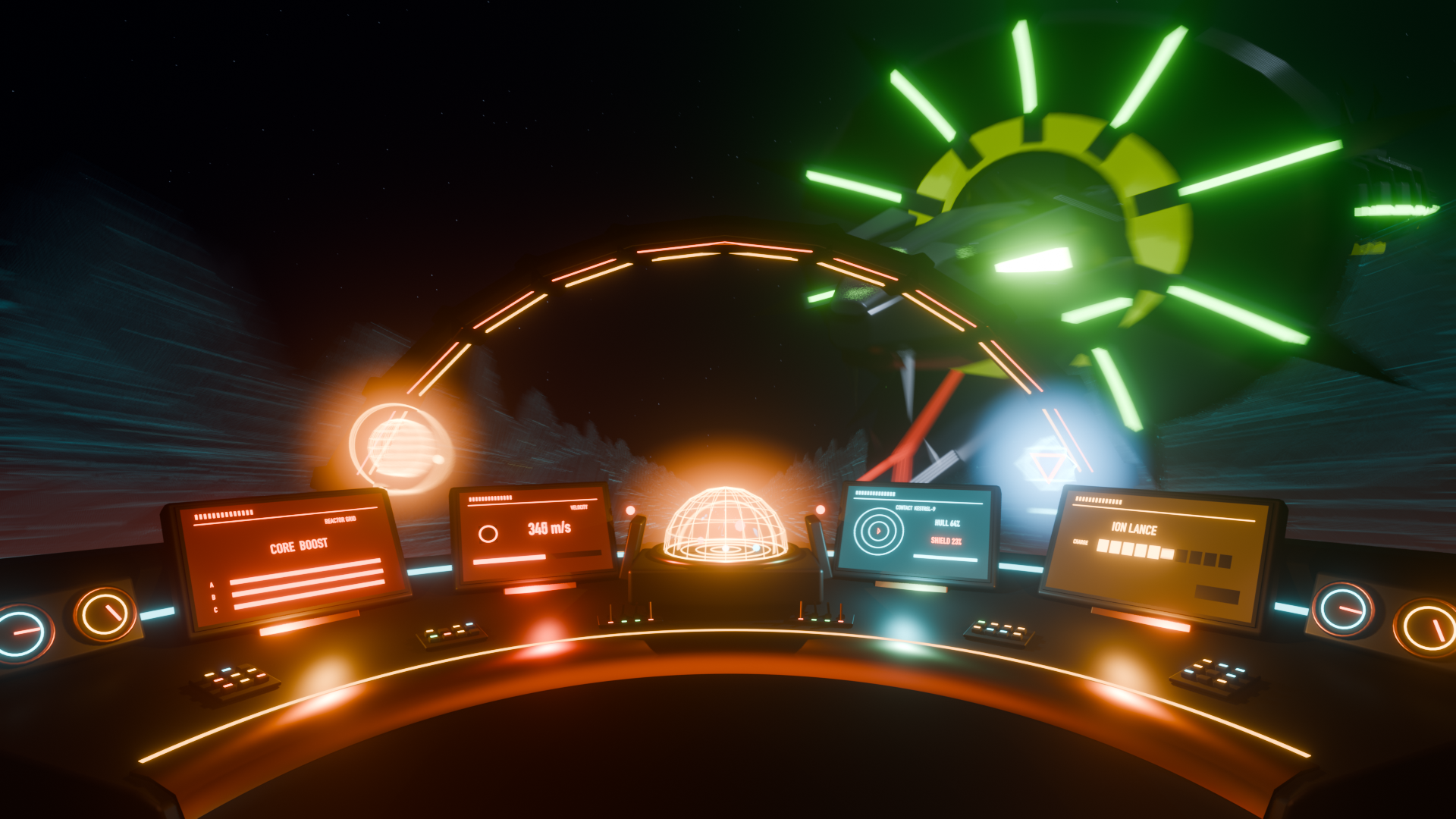
Data Stream – Contact Lost is a 25-second, 600-frame cinematic flight through a glowing wireframe valley, seen from inside a spaceship cockpit. The ship starts slowly, then speeds up to well over 5 km of travel. Data streaks race past, the mountains blur with speed, and the field of view widens as the ship hits full speed. Around the pilot, the cockpit stays alive: holographic radar, floating navigation and target-lock holograms, and glowing instrument screens, all moving and banking with the ship.
How we built it
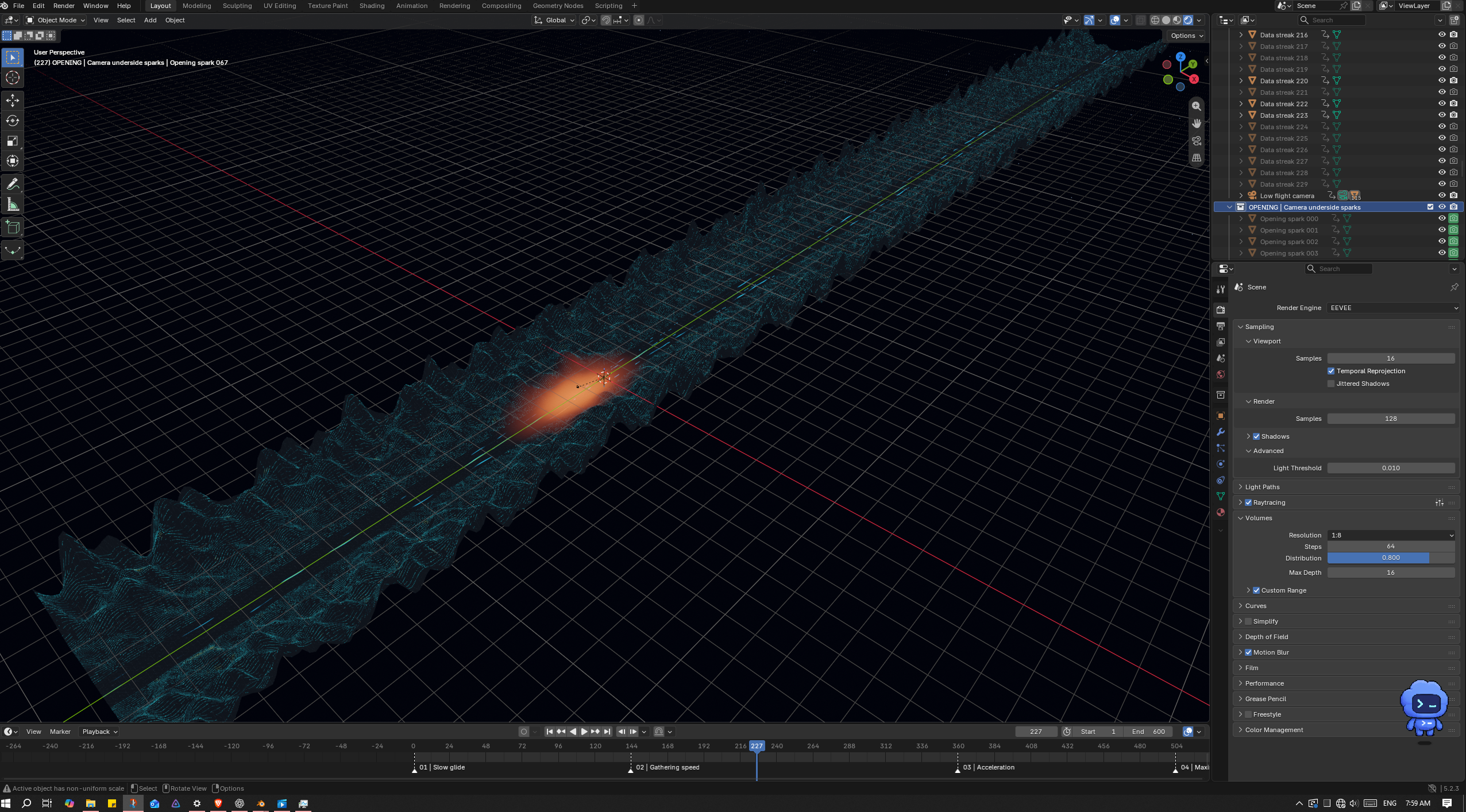
Everything was made in Blender and rendered with EEVEE.
The world: the camera doesn’t actually fly. Four 210 m terrain tiles loop past it on drivers, all controlled by one animated “travel” value. That lets the ship accelerate forever without the world ending. 230 data streaks and 115 opening sparks ride the same system. The camera sways and banks, and its lens animates from 29 mm to 16 mm to sell the speed.
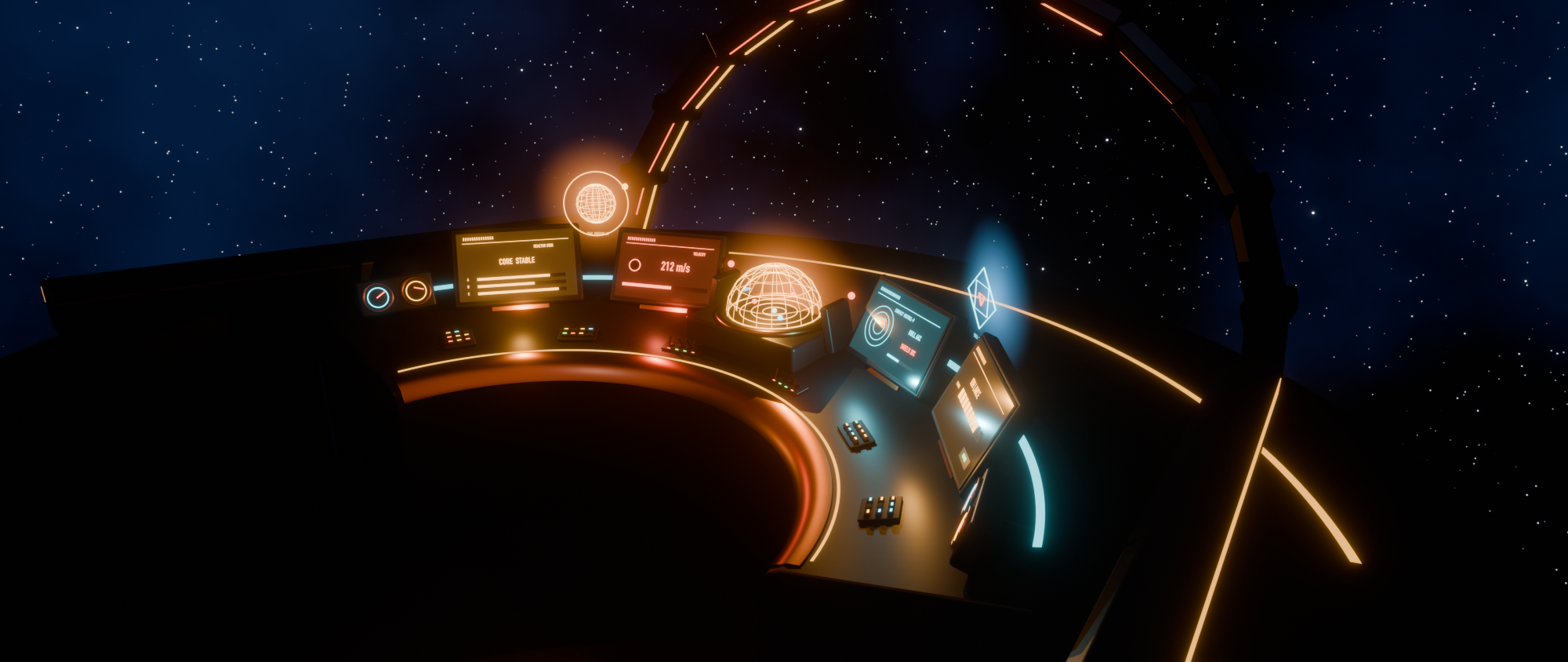
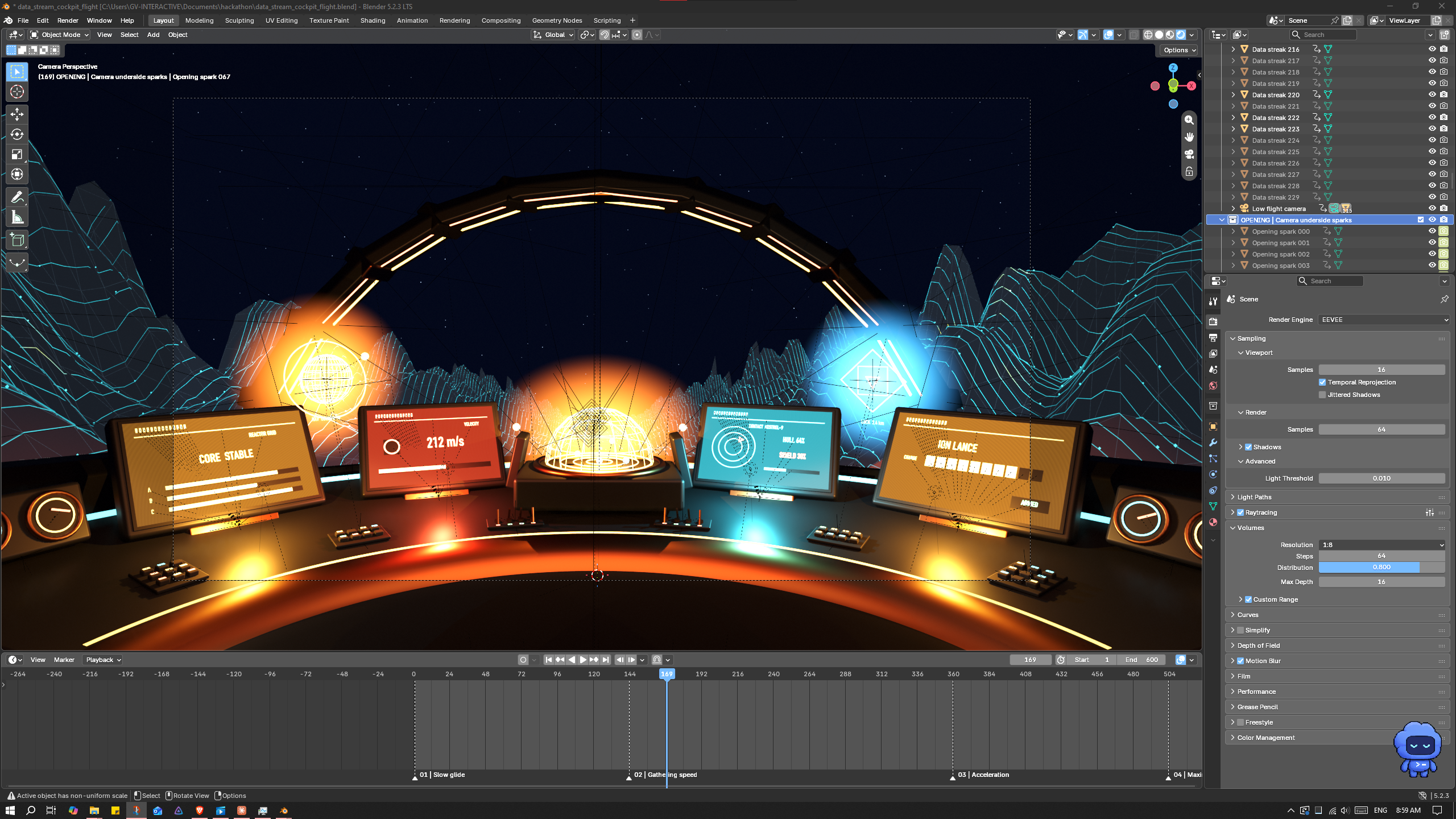
The cockpit: built entirely by a Python script using Blender’s API, with no hand modeling. It has about 340 objects: a faceted canopy arch, a curved dash, four display screens, a wireframe radar dome, holograms, keypads, toggle switches and gauges. We developed it with Claude, which wrote the script, rendered previews, reviewed them and refined the design over several passes.
Putting it together: the cockpit hangs from a single rig parented to the flight camera, so it moves exactly with the ship. A bloom pass in the compositor makes the cockpit lights and the terrain lines glow together.
Challenges we ran into
Fitting the cockpit to the camera: the cockpit was designed for a very wide view, but the scene camera uses a 27 mm lens. We moved the pilot’s eye about 0.7 m back so the arch and all four screens fit the frame.
The speed zoom: because the cockpit is locked to the camera, widening the lens makes the cockpit appear to pull back as the ship speeds up. We kept it as part of the acceleration effect.
Working on an alpha version of Blender (5.4): the compositor and bloom work differently from older versions, so we had to work out the new setup. Small visual bugs: glow halos rendered as flat rectangles, and the bar graphs sat behind the screen glass where nobody could see them.
Moving between Windows and Mac: the scene still pointed its video output at a Windows folder, so renders silently failed on the Mac. The terrain drivers also need Python auto-run enabled to animate.
Accomplishments that we're proud of
- The whole cockpit is procedural and reproducible: change a number, re-run the script, and you get a new cockpit.
- The illusion holds up. The cockpit stays sharp while the world blurs past, which reads as being inside the ship.
- The amber cockpit against the cyan terrain gives the piece its own look. ## What we learned
- The “moving world, still camera” trick is a powerful way to fake extreme speed.
- Parenting everything to one rig on the camera is the simplest way to build a convincing first-person vehicle shot.
- Writing a model as code makes it easy to iterate quickly with AI, since every change is a small edit followed by a new render.

Log in or sign up for Devpost to join the conversation.