
Inspiration
We were inspired by privacy issues. With technology becoming such an integral part of our lifestyle, it is important to consider how personal data is protected since the internet is not easily accessible by everybody.
What it does
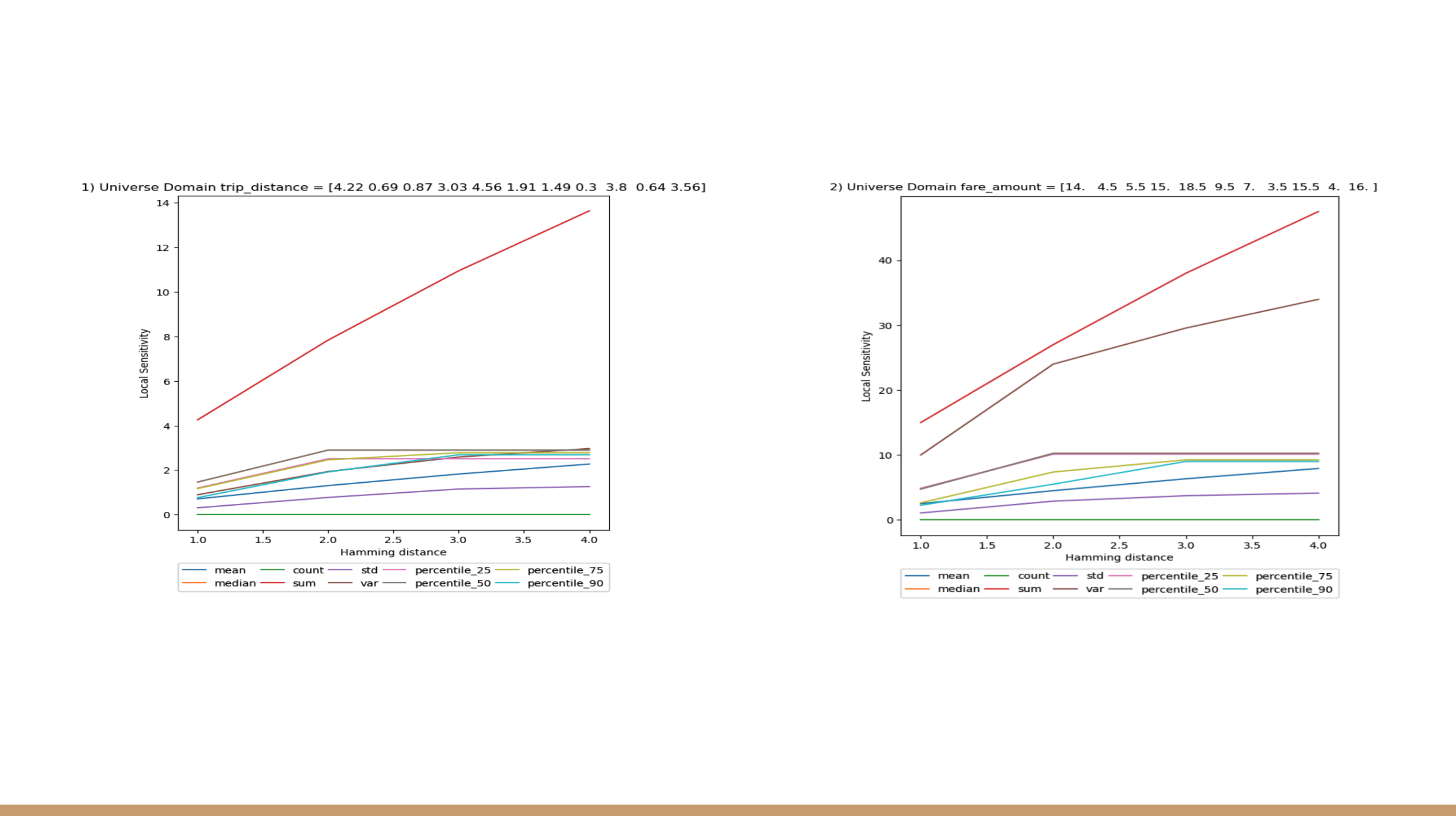
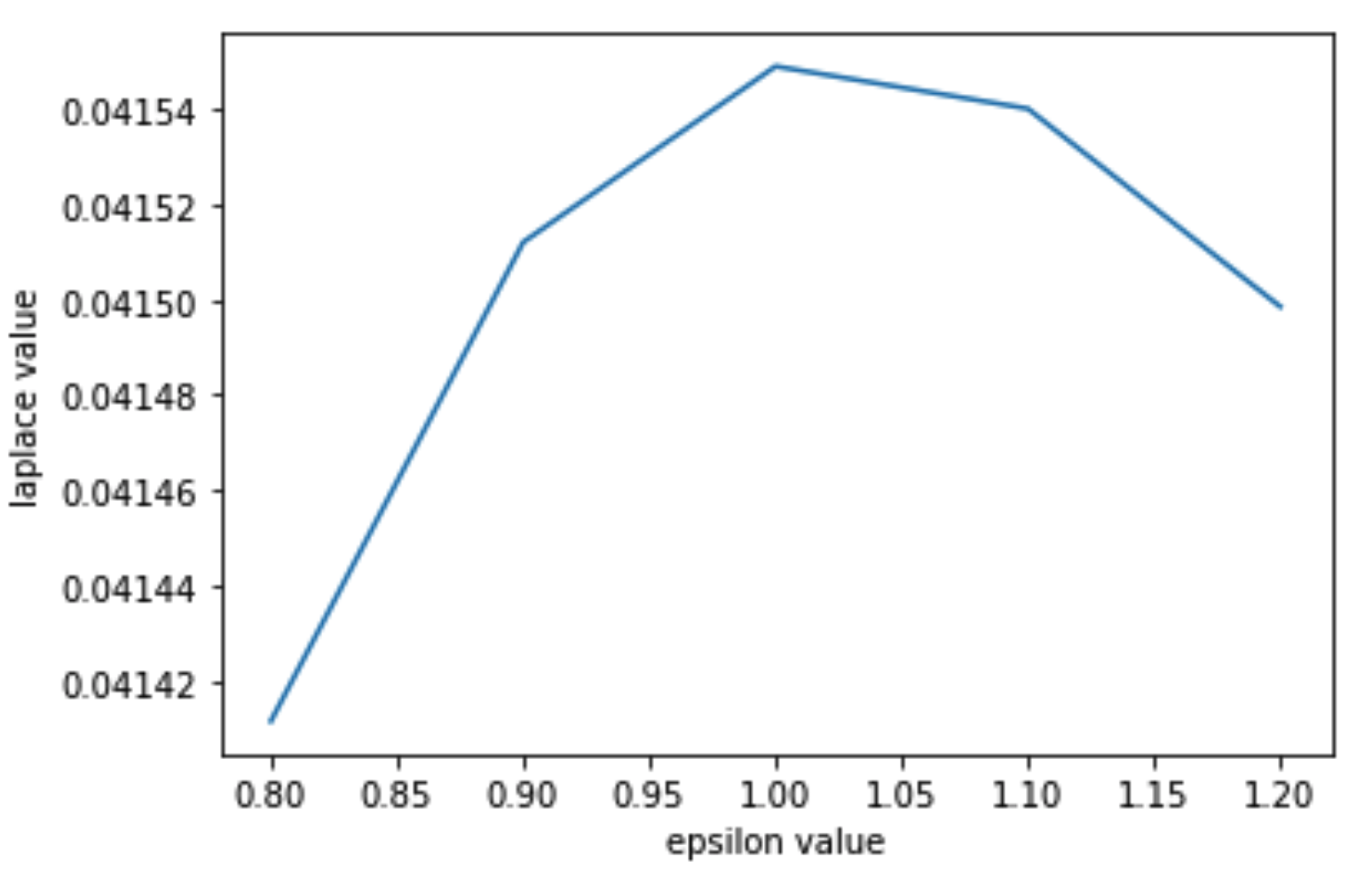
Our model optimizes the laplace distribution and epsilon to optimize accuracy while maintaining privacy.
How we built it
We utilized Jupiter Notebook, Spyder, and Google Collab to contribute individually and as a group. We did extensive research into differential privacy through research papers and articles.
Challenges we ran into
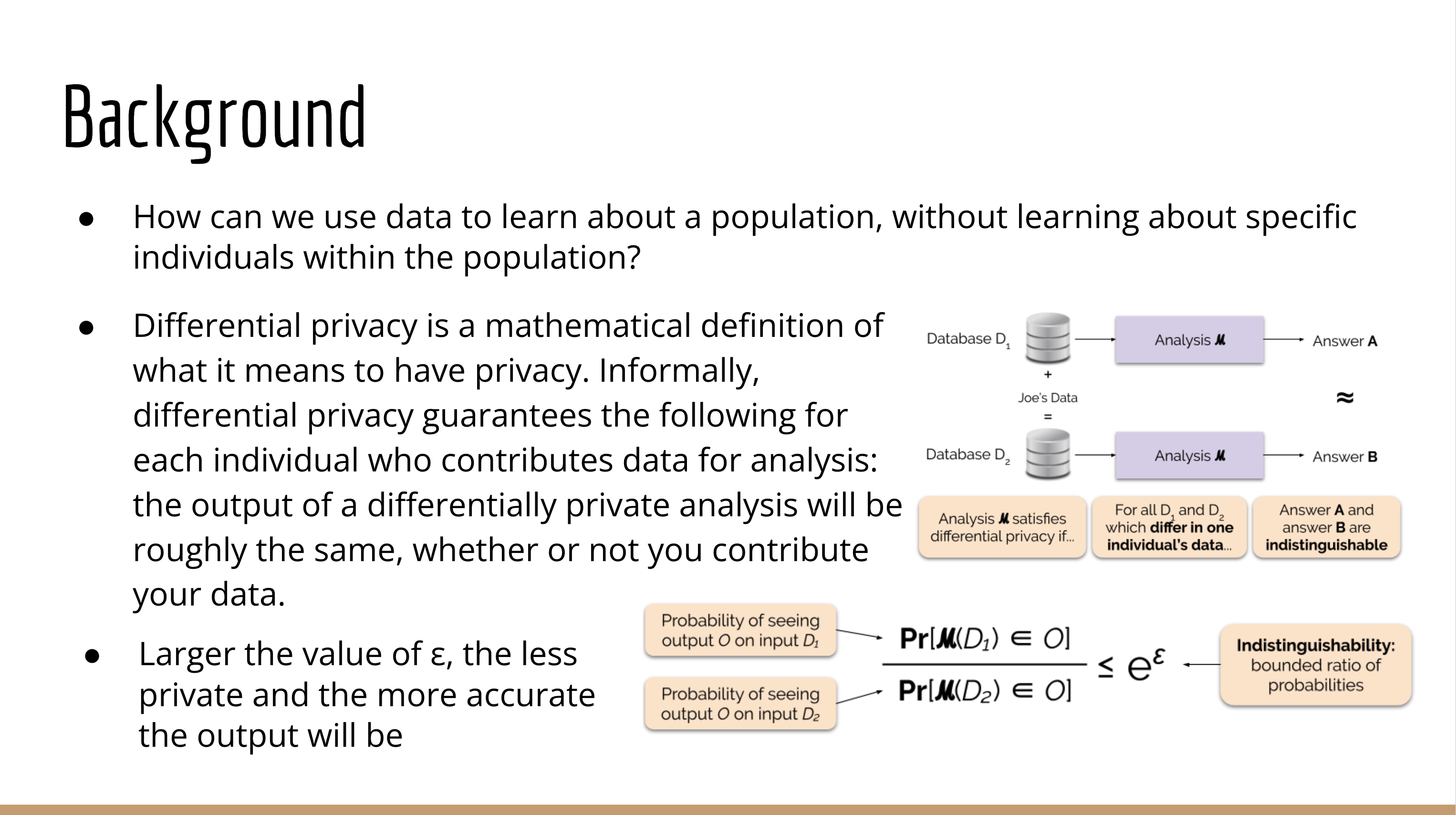
All of us had no prior experience with data privacy and little understanding of math modelling. First, we had to understand what differential privacy is and what its parameters are. Then, we had to understand the variables that affect privacy and accuracy. Finally, combining the background information that we quickly absorbed we were able to implement a model.
Accomplishments that we're proud of
We are proud of how quickly we were able to learn about data privacy, especially understanding the complex mathematics behind each variable and how it impacts accuracy and privacy. Additionally, applying Python to create a model in a short amount of time was extremely rewarding.
What we learned
We learned about differential privacy and factors that impact the balance between privacy and accuracy.
What's next for Data Privacy
As the understanding of mathematics and applications of computer science become more advanced, there will be greater advancements in the data privacy sector.

Log in or sign up for Devpost to join the conversation.