-
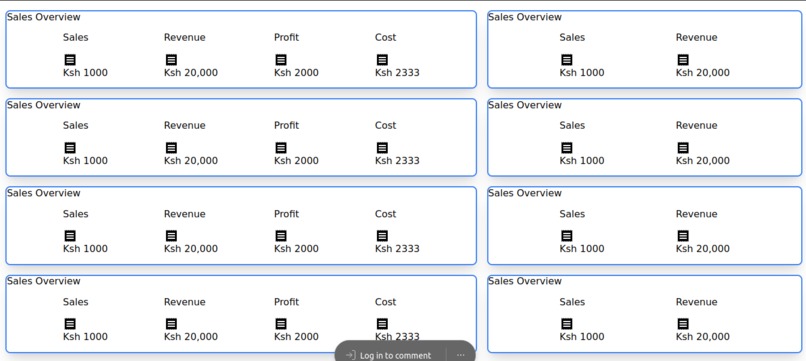
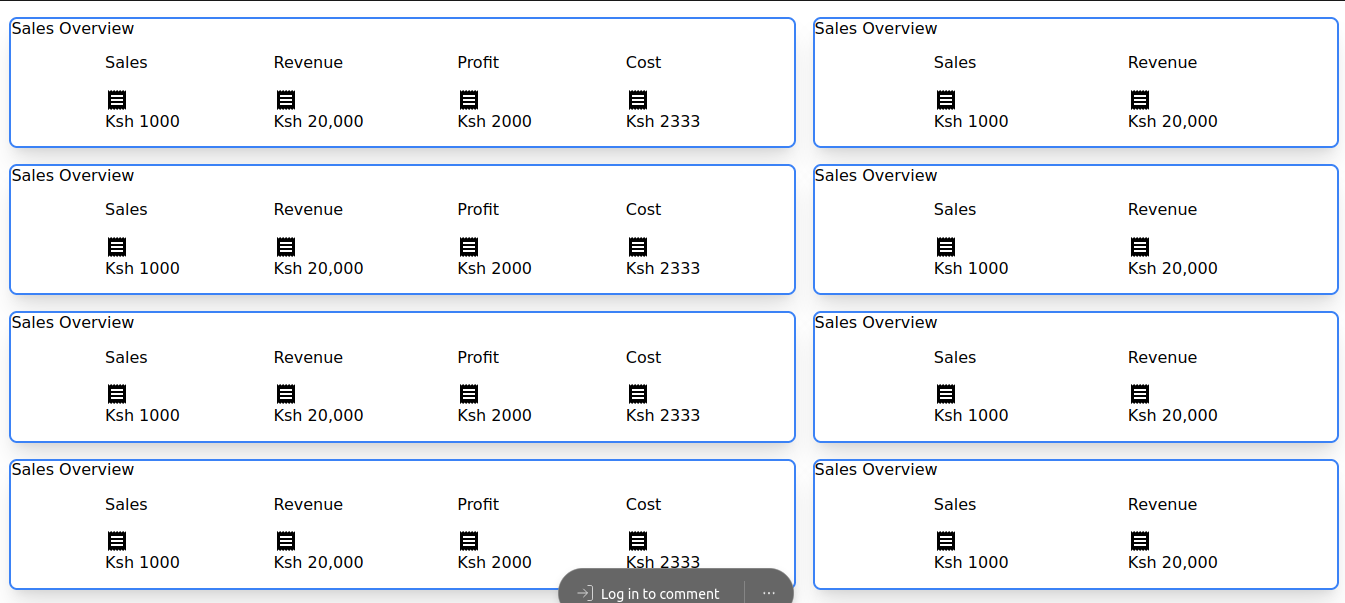
The dashboard seection
-
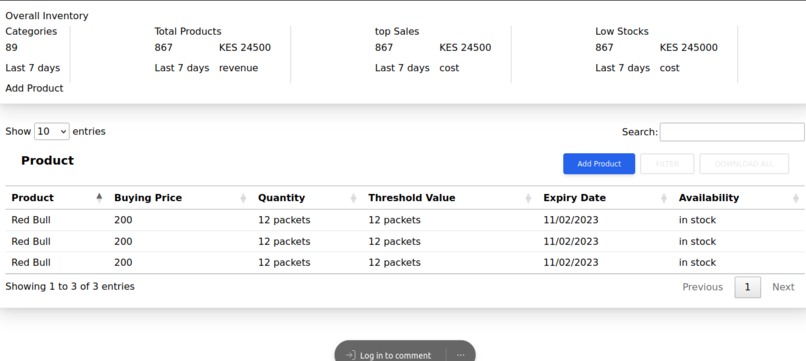
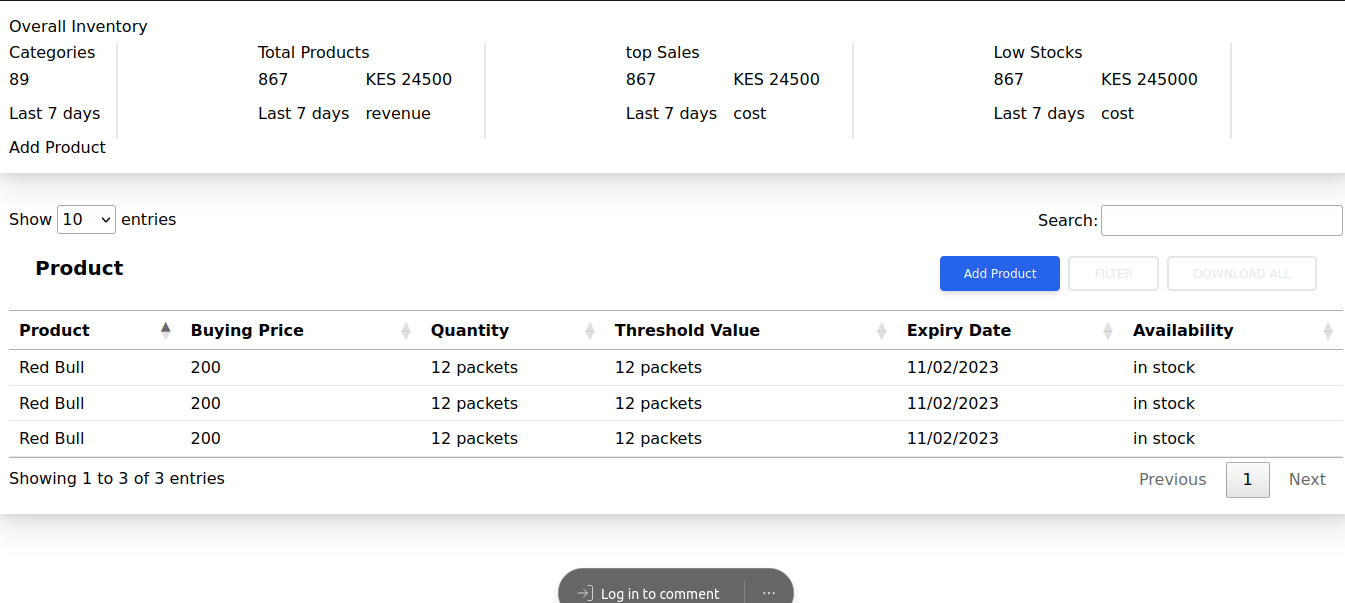
The inventory page
Inspiration
An inventory management system may be designed and developed using a variety of inspirations, but it's crucial to take the organization's requirements, the demands of the end users, and evolving technology into account.
Inspirational sources that we may have used to build and create an inventory management system. Here are some suggestions:
Current inventory management systems: Analyzing the features, user interfaces, and architecture of current inventory management systems can serve as a great source of ideas for creating a new system. Best practices, areas for development, and possible chances for innovation may all be found in this way. Emerging technologies: New and creative approaches to inventory management might be inspired by emerging technologies like Internet of Things (IoT) devices, blockchain, and artificial intelligence (AI). Use IoT sensors to monitor inventory levels in real-time, or AI to forecast demand and manage stock levels, as examples. User input and requirements: Whether they are workers, clients, or suppliers, the end users of the inventory management system should have their wants and preferences understood. Surveys, interviews, and focus groups can be used to collect user feedback, which can then be used to inform system design and development. Business objectives: The organization's business objectives might serve as a source of inspiration when creating an inventory management system. For instance, if cutting expenses is the main objective, the system could give higher priority to functions like maximizing stock levels and cutting waste. The system may place a higher priority on functions like quicker delivery times and real-time inventory tracking if the aim is to increase customer happiness. Industry-specific requirements: It may be quite helpful to draw inspiration from the particular requirements of the business or sector for which the inventory management system is being created. A manufacturing company may need a system that can monitor raw materials, work-in-progress, and finished items, while a retail shop may need one that can manage a high volume of products and transactions.
What it does
Organizations can use our inventory management system to streamline their inventory management processes, reduce costs, and improve the accuracy and efficiency of their operations. This can be accomplished in the following ways: Tracking inventory levels: The system tracks the quantity and location of inventory products in real-time, allowing companies to manage their inventory levels and minimize stockouts or overstocks. Handling purchases and sales: The system helps firms to manage their buy orders and sales orders, assisting in the maintenance of acceptable inventory levels. Predicting demand: The system can estimate future demand using previous data, helping firms to better manage their inventory levels and production schedules. Controlling inventory costs: The approach assists companies in lowering inventory holding costs by decreasing excess inventory and enhancing demand forecasting accuracy. Increasing accuracy: The system can employ barcode scanning or other automated data gathering methods to increase inventory data accuracy, lowering the risk of mistakes and boosting overall inventory management efficiency. Report generation: The system can provide reports on inventory levels, stock movement, sales, and other critical indicators, allowing enterprises to get useful insights into their inventory operations.
How we built it
We used Figma for design, Refine React and Rails for development, and a team of five people, including a product manager, full-stack developer, technical writer, and product designer, to create our inventory management system. We were able to develop an easy-to-use, scalable, and reliable solution for inventory tracking, optimization, and waste reduction thanks to our teamwork. We were able to deliver a solution that satisfied the particular requirements of businesses of all sizes thanks to the team's diverse skill set and experience.
Challenges we ran into
Generally, using the Refine React framework to create an inventory management system may be gratifying and demanding. To establish a strong, scalable, and user-friendly system that matches the unique demands of the business, thorough planning, design, and development are necessary.
Consider these potential difficulties when you plan, build, and create an inventory management system using the Refine React framework:
Security and access control: To prevent unauthorized access or alteration of inventory data, which might be sensitive and secret, it is crucial to install strong security and access control mechanisms. Role-based access control, user authentication, and encryption mechanisms may need to be implemented in order to do this. System performance and scalability may be affected by the massive amounts of data that inventory management systems generate. To make sure that the system can manage high traffic volumes and massive datasets, it is crucial to optimize the system architecture, database structure, and API performance. Integration with other systems: It is frequently necessary for inventory management systems to interface with additional platforms and data sources, including shipping services, accounting platforms, and customer relationship management platforms. Implementing intricate integration procedures, data mapping, and data transformation rules may be necessary for this. Testing and deployment: To make sure the Refine React framework-based inventory management system is dependable and error-free, thorough testing and debugging are required. In order to do this, it may be necessary to develop automated testing frameworks, do manual testing, and use debugging tools to find and correct problems. In order to reduce downtime and guarantee a seamless transition, the system deployment to production may also need meticulous preparation and execution. Validating data and managing mistakes: It's crucial to make sure that inventory data is accurate and consistent, and that errors are dealt with properly. Implementing complicated data validation criteria, error-handling systems, and data reconciliation procedures may be necessary for this. Inventory management's complexity: Managing inventories may be challenging, especially for businesses with extensive and varied inventories. As a result, developing an intuitive user interface, putting effective data management into place, and connecting with other systems and data sources may present difficulties.
Accomplishments that we're proud of
We're proud of a number of achievements related to coming up with the project name, planning, designing, and developing our inventory management system:
User-centered design: We placed a high priority on creating the system with the end-user in mind, which enabled us to produce an intuitive and user-friendly interface that suited the requirements of companies of all sizes. Collaboration: Throughout the design and development process, our team worked cooperatively. This allowed us to take advantage of one another's expertise and produce a high-quality product that satisfied the demands of our clients. Robustness: We designed the system to be both robust and resilient, meaning that it can withstand unforeseen errors, failures, and security threats without jeopardizing the data's integrity. Scalability: The system was created and developed with scalability in mind, which means that it can deal with a lot of inventory data, transactions, and users without compromising performance. All in all, we are proud of the achievements we made in designing and developing our inventory management system, and we are confident that it will be a valuable solution for businesses who are looking to optimize their inventory management processes.
What we learned
Developing an inventory management system project with Refine React framework can provide a great learning opportunity for individuals who are interested in web development and software engineering. Here are some of the things that someone can learn: React.js: Since Refine is built on top of the React.js framework, developers will gain knowledge of working with React components and using React hooks to handle state and lifecycle events. CRUD operations: To handle inventory items, the inventory management system probably needs to perform CRUD (Create, Read, Update, Delete) actions. The built-in CRUD operations in Refine can be used to implement these operations, or they can be customized for particular use cases. Design of the user interface: Refine offers a collection of reusable UI elements that may be altered to produce a cutting-edge and adaptable user experience for the inventory management system. Developers will learn how to use these components as well as how to leverage React and CSS to build unique UI components. Testing: Refine offers frontend and backend code testing tools, enabling programmers to create unit tests, integration tests, and end-to-end tests to validate the inventory management system's dependability and quality. Building backend APIs and integrating them with the front-end application are both made simple by Refine. The creation of RESTful APIs, handling API queries and answers, and controlling data flow between the front end and back end are all skills that developers will acquire. To guarantee that only authorized users may access and edit inventory data, the inventory management system will probably need to include some kind of authentication and authorization. Using Refine's built-in authentication and authorization tools or by extending them for particular use cases, developers will learn how to create authentication and authorization. An all-encompassing learning experience in web programming, software engineering, and application design may be obtained by using the Refine React framework to create an inventory management system project. Moreover, it may offer hands-on training in using cutting-edge web technologies and best practices for creating dependable and scalable apps.
What's next for Inventory Management System
Ultimately, your particular business needs, user input, and development objectives will determine the project's future phases for your inventory management system. Prioritizing the most essential features and improvements first is crucial. The system should also be regularly improved depending on user input and statistics. Adding new features: You could wish to include additional features in the inventory management system, such as support for different warehouses, connectivity with shipping companies, or interaction with accounting software, depending on user feedback and organizational needs. Improving user interface: To increase the usability and user experience of the inventory management system, you may think about improving the user interface. This can entail expanding the user interface (UI), enhancing the structure and style, and optimizing the system for mobile devices. Testing and debugging: To assure the inventory management system's dependability and stability, it is crucial to properly test and debug it. More test cases may need to be written for this, load testing may need to be done to mimic significant traffic, and debugging tools may need to be used to find and repair any problems. Deployment and hosting: When the inventory management system has finished being developed and tested, you must deploy it to a production environment and set up hosting. This can entail setting up a database, installing a server, and putting security measures in place to guard the system against unwanted access. Refactoring and optimization: To make the code for the inventory management system more performant, scalable, and maintainable, you may wish to do both after creating the initial version. Using best practices for code organization, minimizing redundancy, enhancing data validation and error handling, and streamlining API queries and answers are a few examples of what this may include.
Built With
- postgresql
- rail
- react


Log in or sign up for Devpost to join the conversation.