-
-
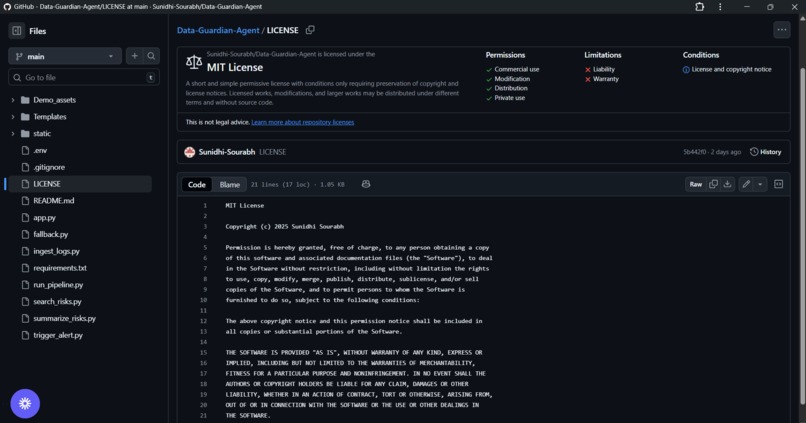
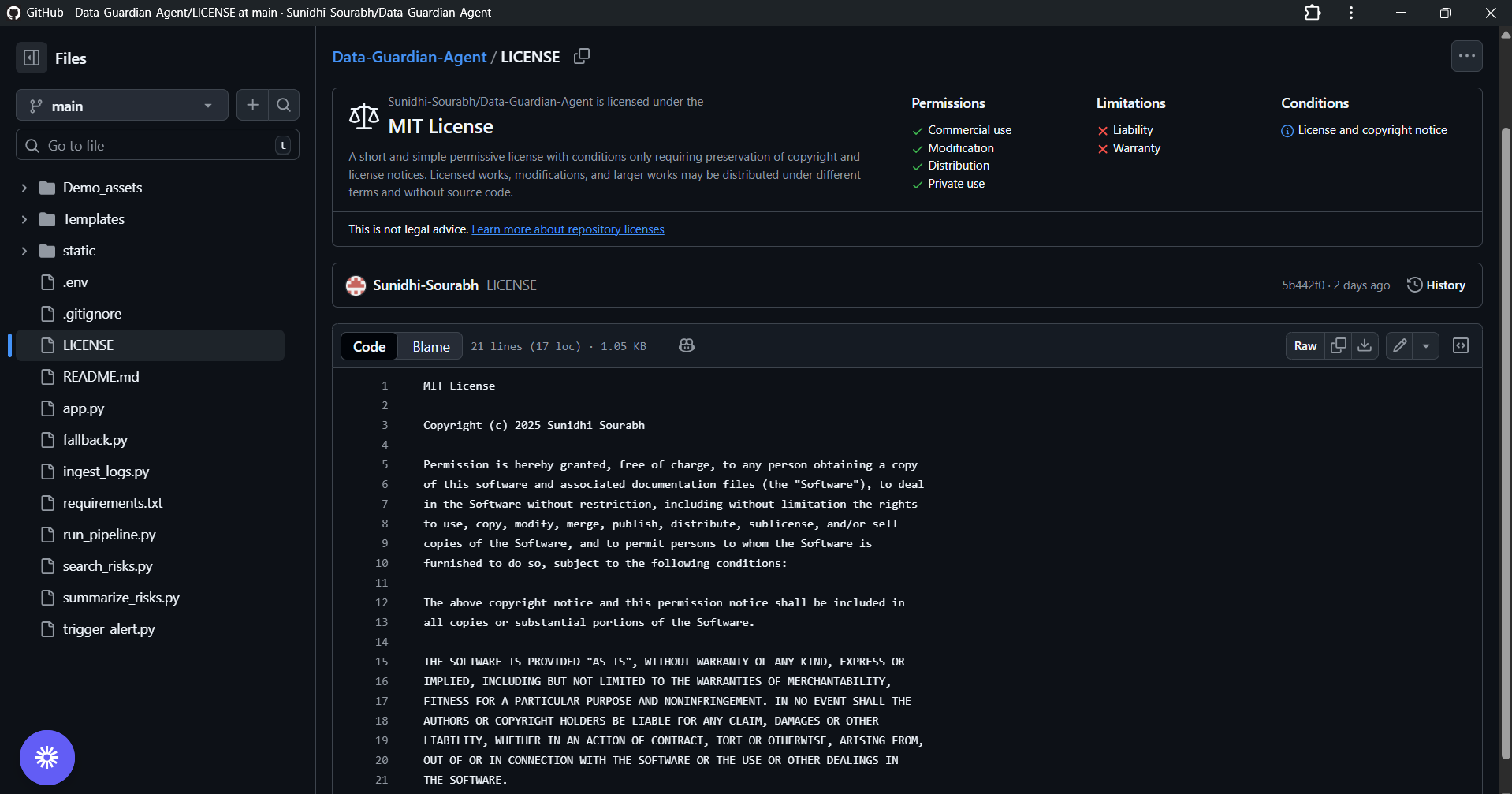
MIT_OSI_LICENSE
-
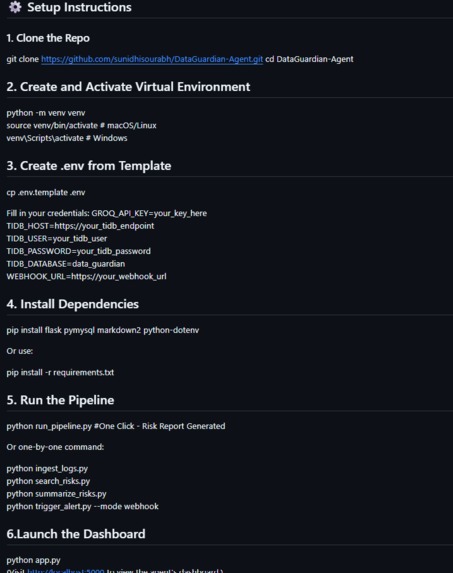
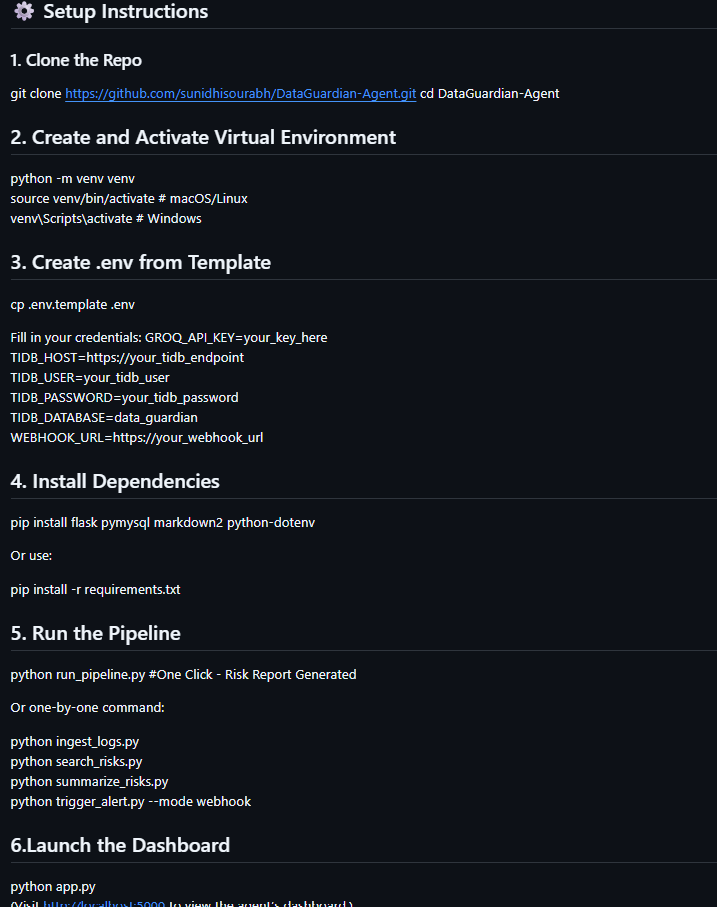
SETUP INSTRUCTIONS
-
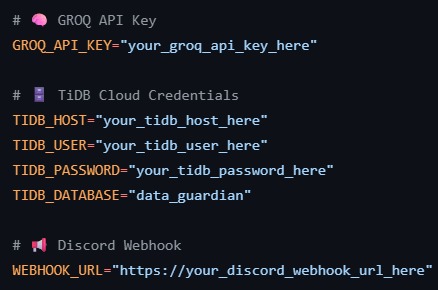
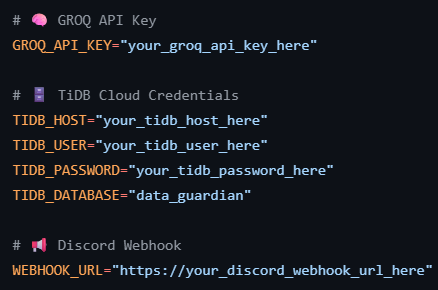
.ENV Template
-
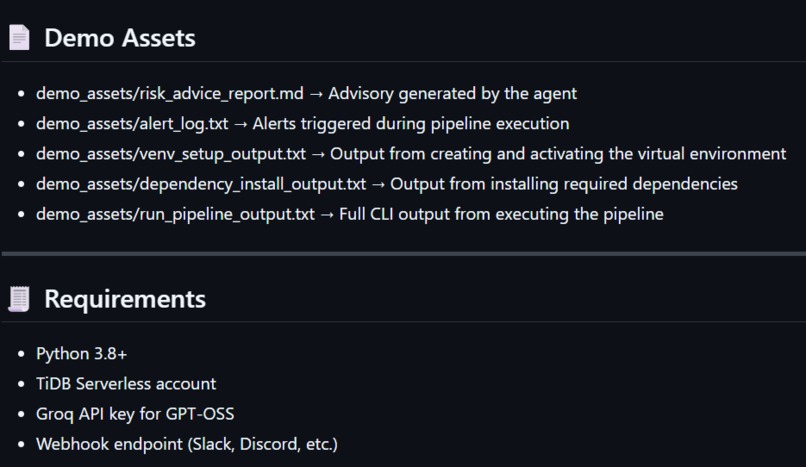
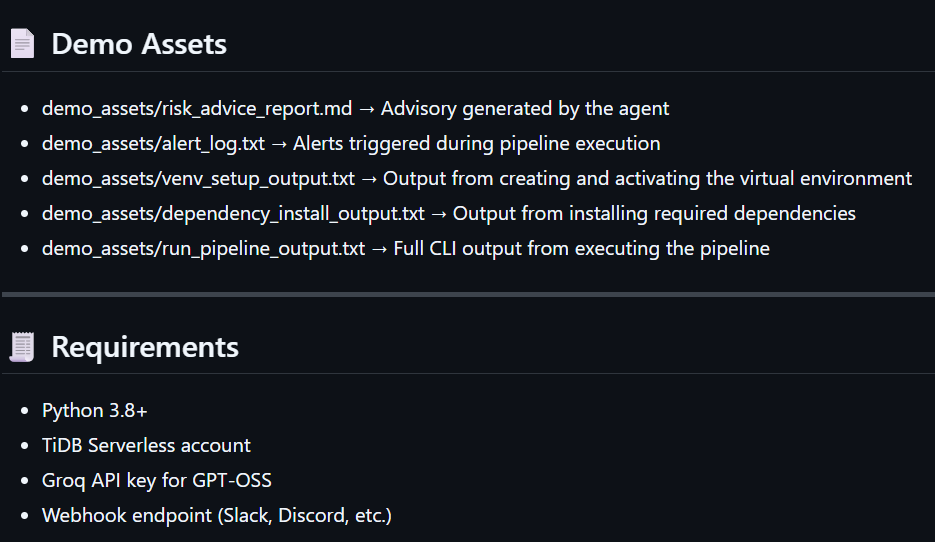
REFER DEMO ASSESTS
-
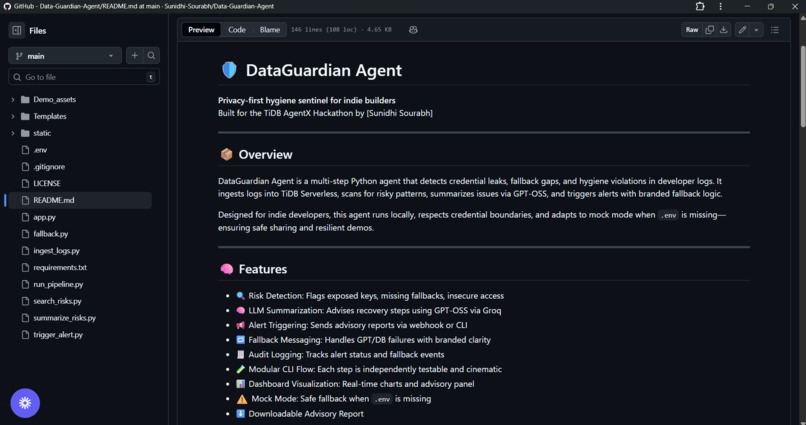
OVERVIEW+FEATURES
💡 Inspiration
As an indie developer, I’ve seen how often credentials get exposed—whether through rushed commits, missing .env files, or unclear fallback logic. I wanted to build an agent that doesn’t just detect leaks, but narrates them with clarity, advises recovery, and protects workflows without compromising privacy. DataGuardian Agent was born from that need: a tool that thinks like a founder and defends like a sentinel.
🔍 What it does
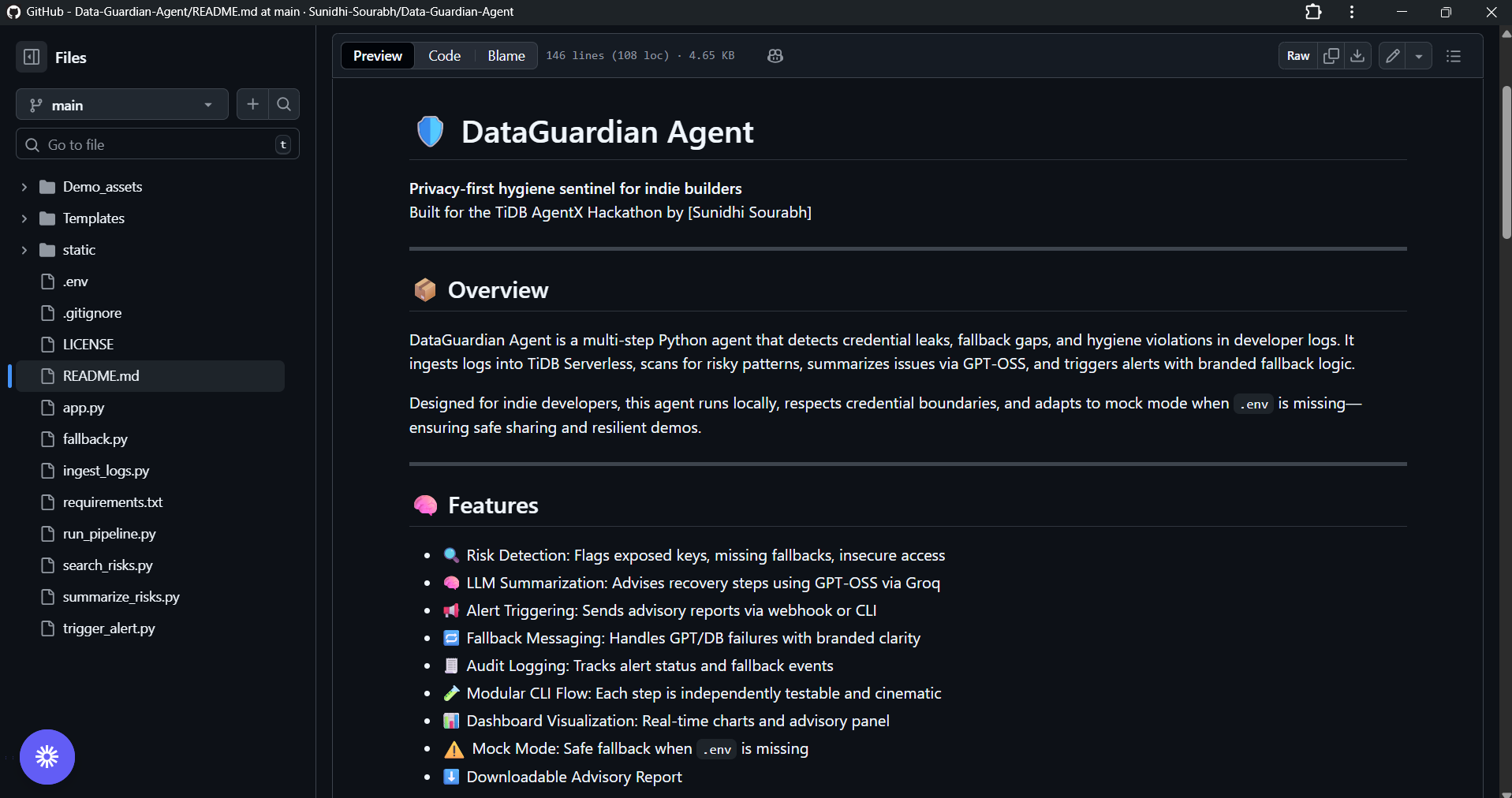
DataGuardian Agent is a multi-step Python agent that:
- Ingests developer logs into TiDB Serverless
- Detects credential leaks, fallback gaps, and hygiene violations
- Scores risks and matches patterns like api_key=, no fallback, open access
- Summarizes issues using GPT-OSS via Groq
- Triggers alerts via webhook or CLI
- Renders a dashboard with advisory, alert log, and real-time charts
- Runs in mock mode when .env is missing—safe for public demos
🧱 How I built it
I architected a modular pipeline that ingests logs, detects hygiene risks, and generates advisory reports—all while preserving privacy. Each module is independently testable, with fallback logic that narrates failure without breaking flow. The dashboard was built using Flask and Chart.js, styled for clarity and cinematic polish. I added mock mode to ensure the agent remains demo-ready even without credentials, and wrapped the experience in a custom logo and branded advisory download.
🧗 Challenges I ran into
- Designing fallback logic that feels branded, not broken
- Ensuring .env never leaks while keeping the dashboard functional
- Rendering advisory reports in Markdown and HTML
- Debugging TiDB connection logic across environments
- Balancing modular CLI flow with one-click orchestration
🔧 Integrated Capabilities
- 🔄 Real-time ingestion from GitHub Actions and CI/CD logs
- 🧠 Multi-agent advisory reasoning with Neurovere’s orchestration layer
- 🛡️ Hygiene badge system for developer dashboards
- 📊 Integration into Neurovere’s analytics surface for risk visualization
- 🔐 Encrypted credential scanning with opt-in privacy controls
- 🧩 Plugin-ready architecture for other Neurovere agents to collaborate
- 🌐 Launch on Neurovere’s site as a sentinel module for indie workflows
- 🎬 Animated intro and badge system for indie dev branding
- 🧠Future integration with Neurovere’s cognition layer for cross-agent insight
🏆 Accomplishments that we're proud of
- Built a fully local, privacy-first agent with real-time cognition
- Maintained credential hygiene throughout the build and submission
📚 What I learned
This build taught me the value of designing for resilience, not just functionality. I explored agentic workflows that adapt to missing credentials, visualized cognition in real time, and practiced disciplined credential hygiene throughout. It deepened my understanding of how indie agents can communicate risk with clarity—and how fallback logic can be a feature, not a flaw.
🚀 What's next for DataGuardian Agent
- 🔄 Real-time ingestion from GitHub Actions and CI/CD logs
- 🧠 Multi-agent advisory reasoning with Neurovere’s orchestration layer
- 🛡️ Hygiene badge system for developer dashboards
- 📊 Integration into Neurovere’s analytics surface for risk visualization
- 🔐 Encrypted credential scanning with opt-in privacy controls
- 🧩 Plugin-ready architecture for other Neurovere agents to collaborate
- 🌐 Launch on Neurovere’s site as a sentinel module for indie workflows
- 🧠 Future integration with Neurovere’s cognition layer for cross-agent insight


Log in or sign up for Devpost to join the conversation.