-
-
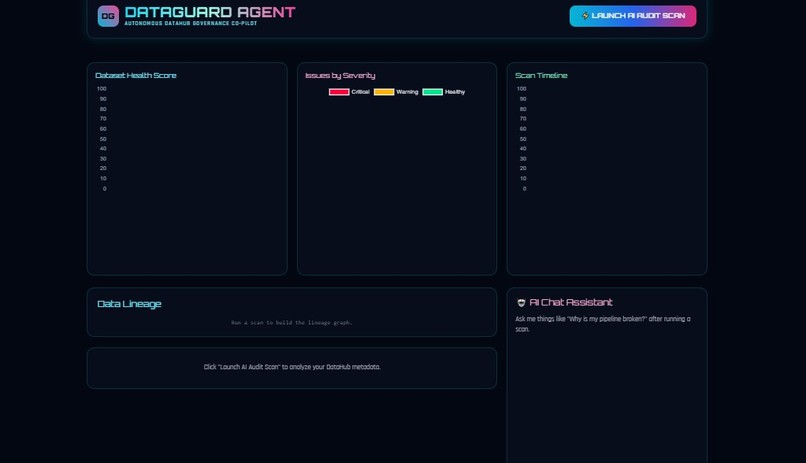
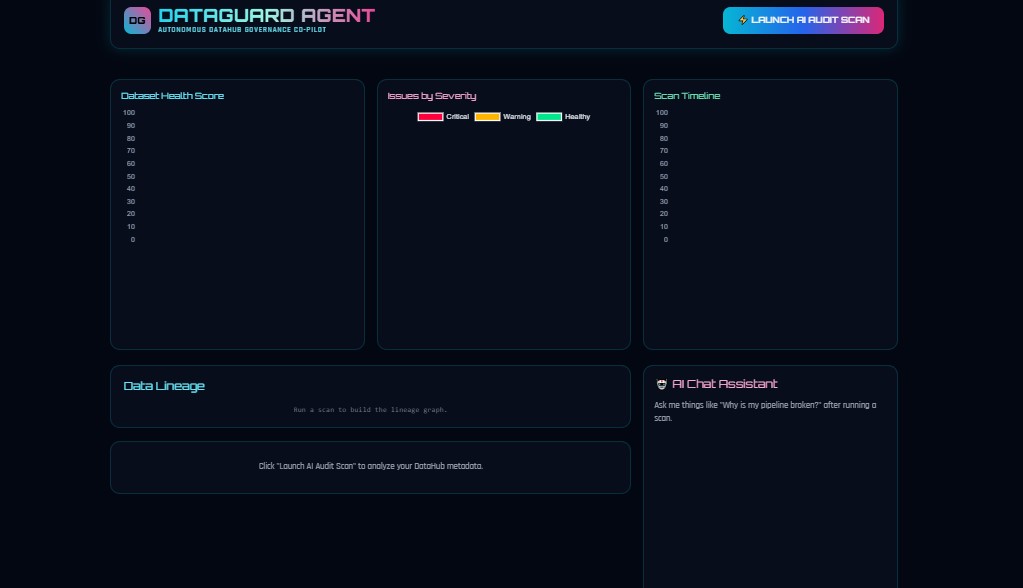
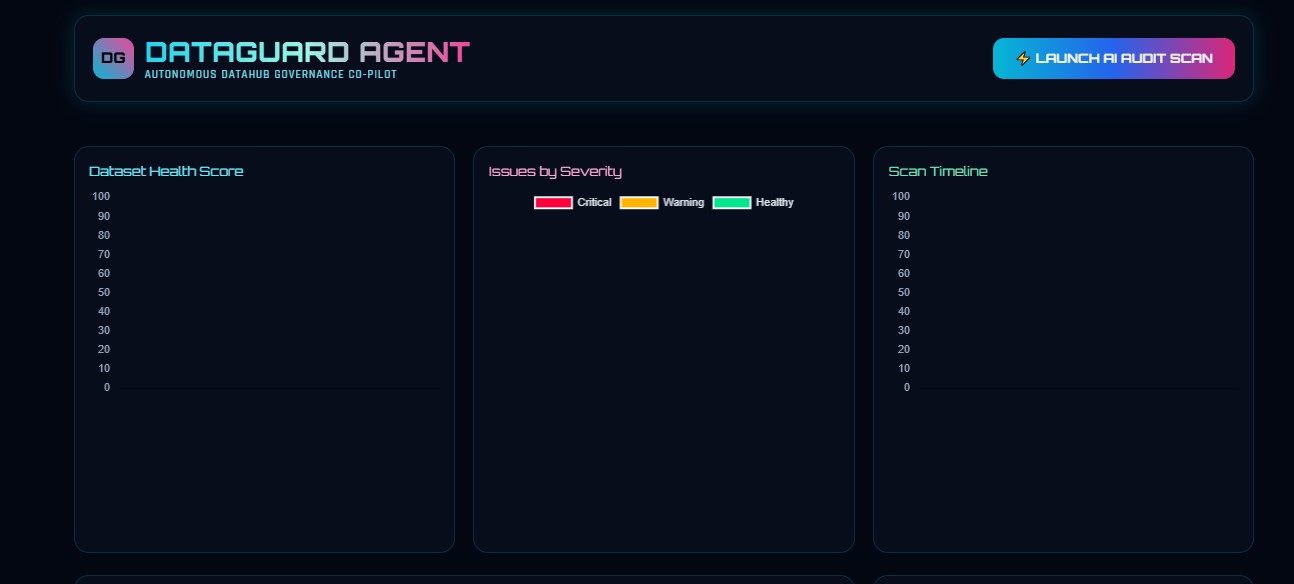
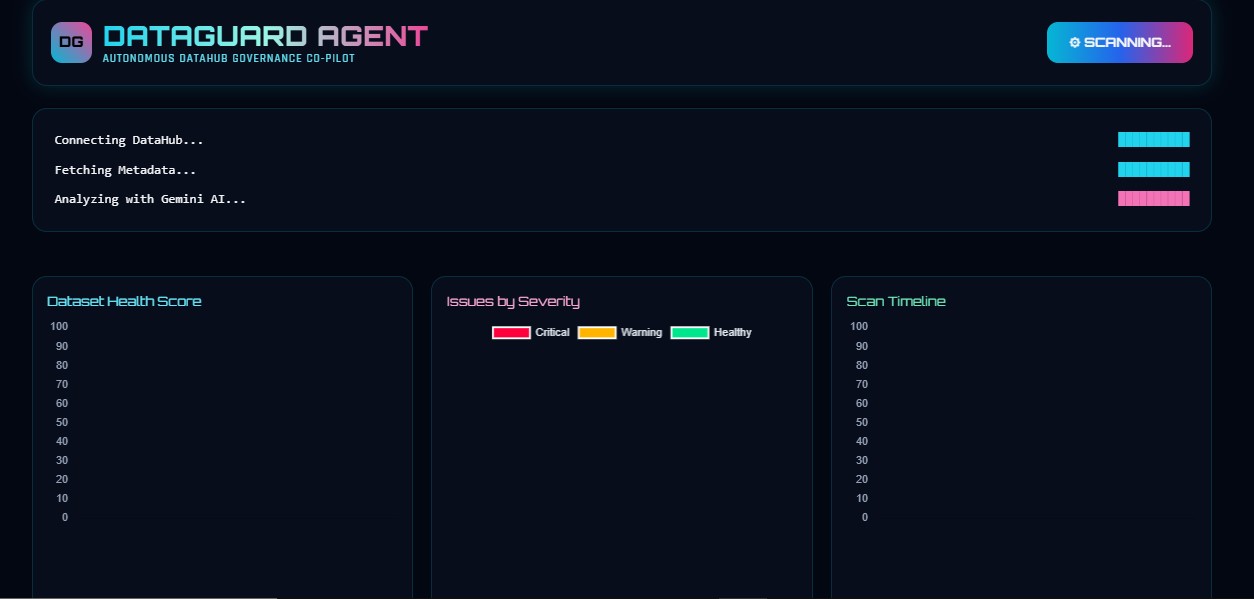
Dashboard Overview
-
Clean Analytics Dashboard
-
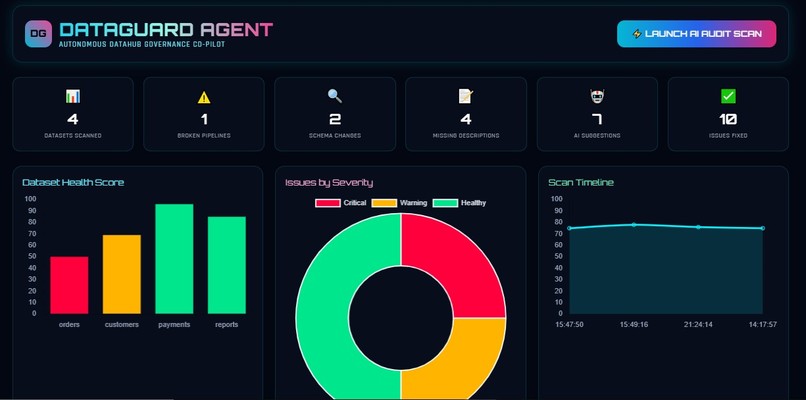
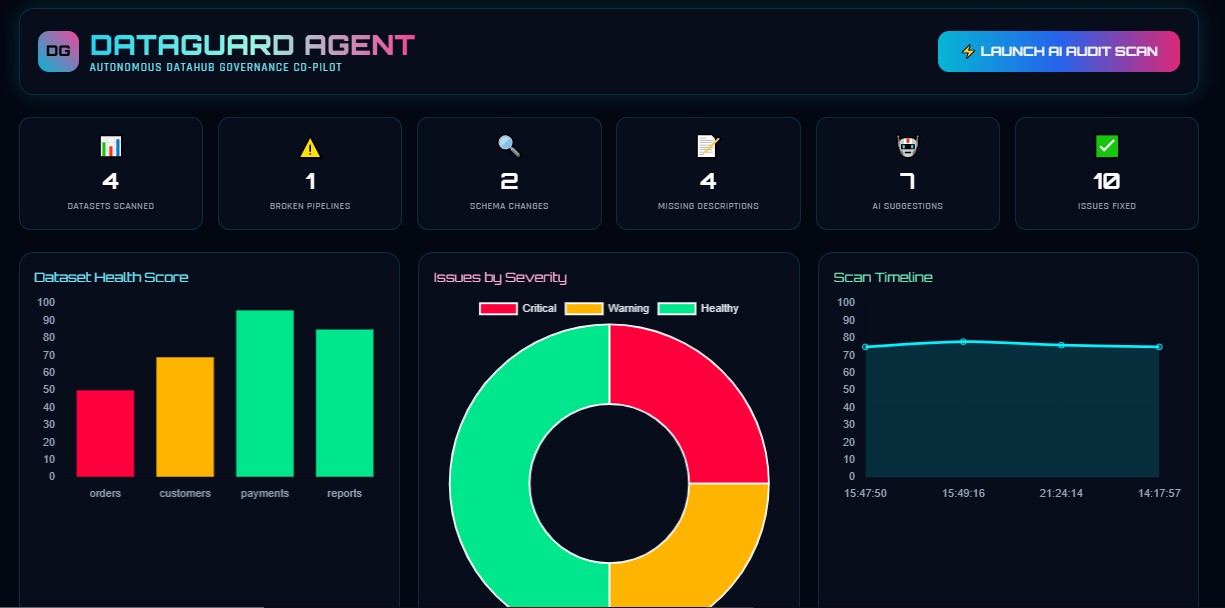
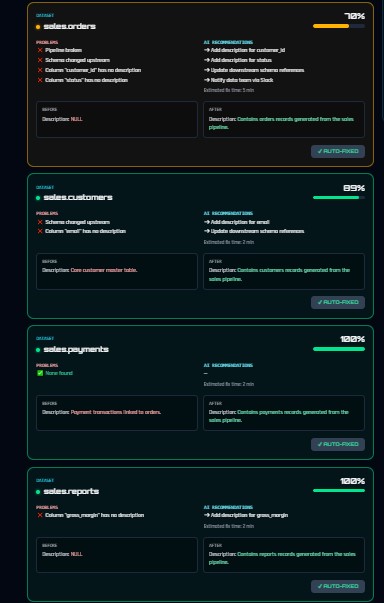
AI Audit Results
-
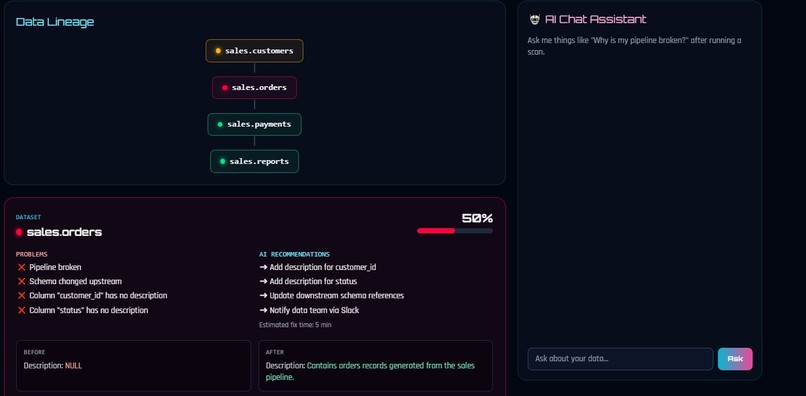
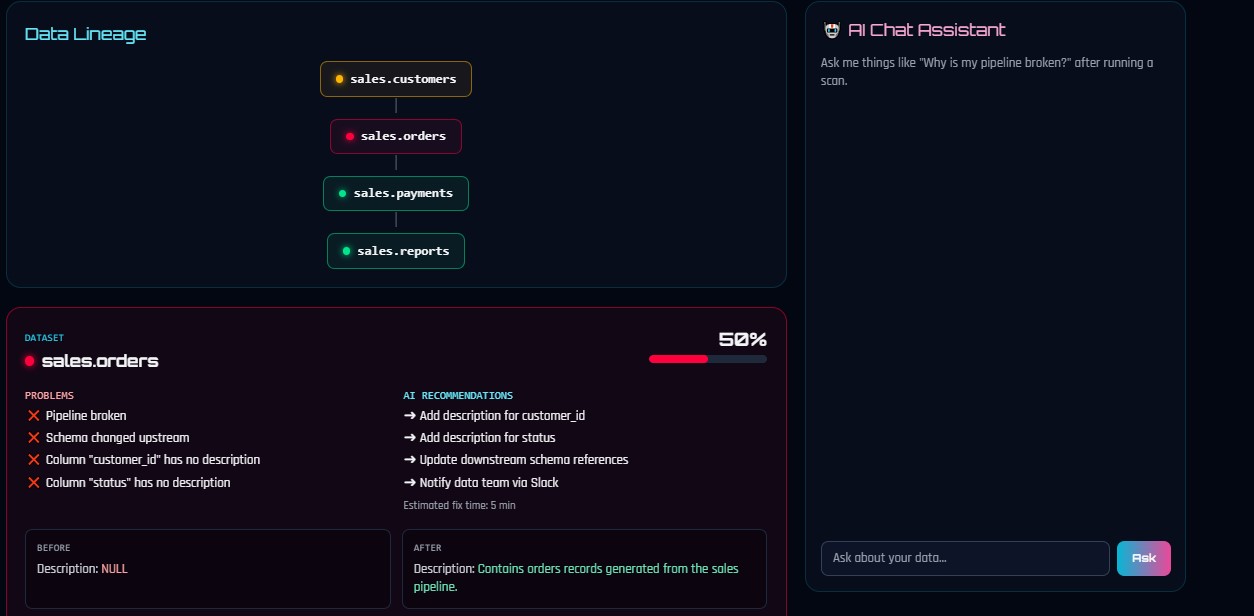
Data Lineage & AI Assistant
-
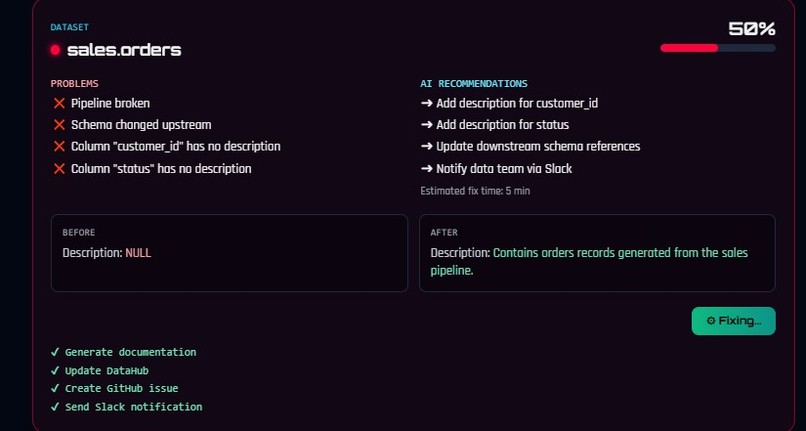
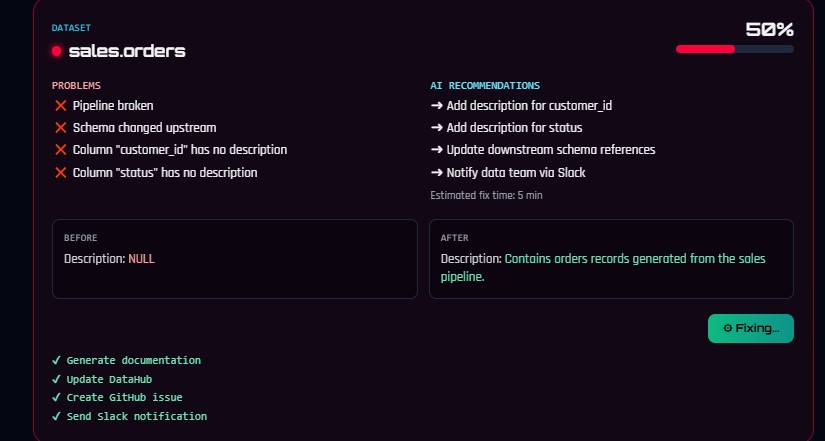
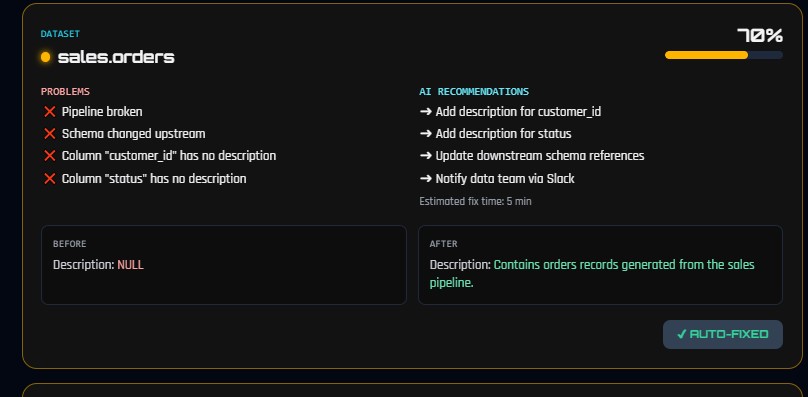
Autonomous Auto-Fix
-
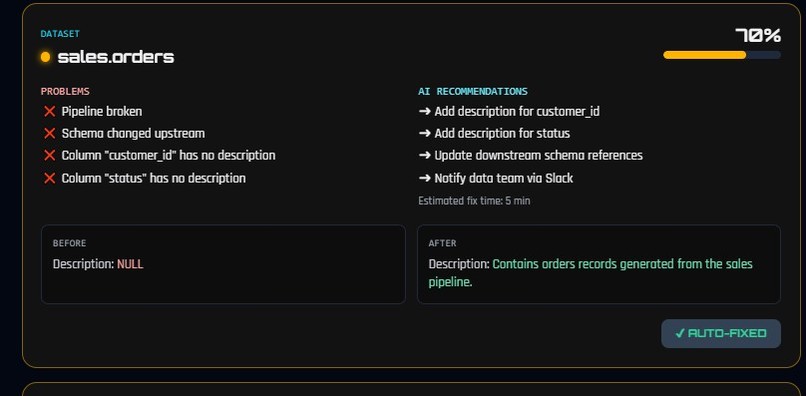
Issue Resolved
-
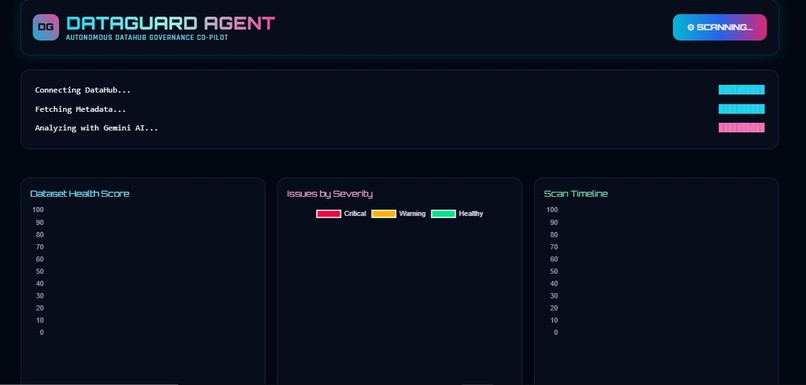
Live AI Scan
-
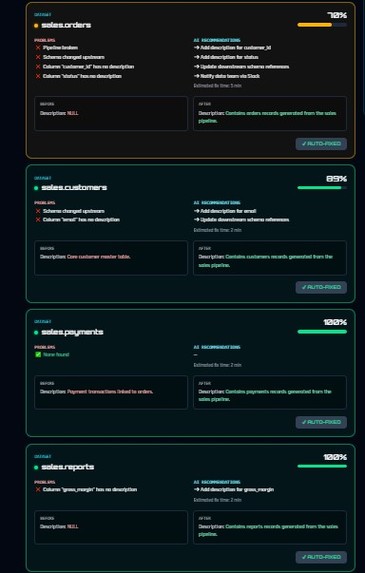
Dataset-Level Governance
Inspiration
Modern data teams rely on DataHub to understand their datasets, schemas, and data lineage, but governance problems can still be difficult to detect and resolve quickly. Missing documentation, schema changes, and broken pipelines can silently create downstream problems.
I built DataGuard Agent as an autonomous AI governance co-pilot that continuously analyzes DataHub metadata, identifies potential governance issues, explains their impact, and recommends actionable fixes.
What it does
DataGuard Agent can:
- Scan DataHub dataset metadata
- Detect missing column descriptions
- Identify schema changes and potential pipeline issues
- Calculate an AI-powered dataset health score
- Classify issues by severity
- Generate recommendations using Gemini AI
- Provide estimated fix times
- Send governance alerts through Slack
- Perform one-click simulated auto-fixes
- Provide an AI chat assistant grounded in the latest scan results
- Visualize dataset health and governance findings
How I built it
The backend is built with Node.js and Express. It communicates with DataHub through its API/GraphQL interface and uses the Google Gemini API to analyze dataset metadata and generate structured governance recommendations.
The frontend provides a visual dashboard where users can start a scan, monitor the analysis process, review detected issues, inspect dataset health, and interact with the AI assistant.
I also added fallback demo data so the core demonstration remains functional when an external DataHub instance or AI service is temporarily unavailable.
What I learned
Building DataGuard Agent taught me how to combine metadata platforms, APIs, AI reasoning, backend services, and a user-facing dashboard into one practical developer tool.
I learned how to structure AI responses as machine-readable JSON, connect AI analysis to real application workflows, handle external API failures, and design an autonomous governance workflow rather than simply building an AI chatbot.
Challenges
The biggest challenge was making the system reliable when multiple external services are involved. DataHub, Gemini, Slack, the backend API, and the deployed frontend all need to communicate correctly.
I solved this by adding error handling, fallback behavior, structured AI responses, and a workflow that keeps the demo useful even when an external service is unavailable.
Why DataGuard Agent?
Instead of waiting for a data engineer to manually discover governance problems, DataGuard Agent turns metadata into actionable insights.
The goal is simple:
Detect → Understand → Recommend → Fix → Notify
DataGuard Agent brings AI-powered governance closer to the actual data development workflow.
Built With
- ai
- api
- css
- data
- datahub
- express.js
- gemini
- governance
- graphql
- html
- javascript
- netlify
- node.js
- rest
- slack
- webhooks


Log in or sign up for Devpost to join the conversation.