-
-
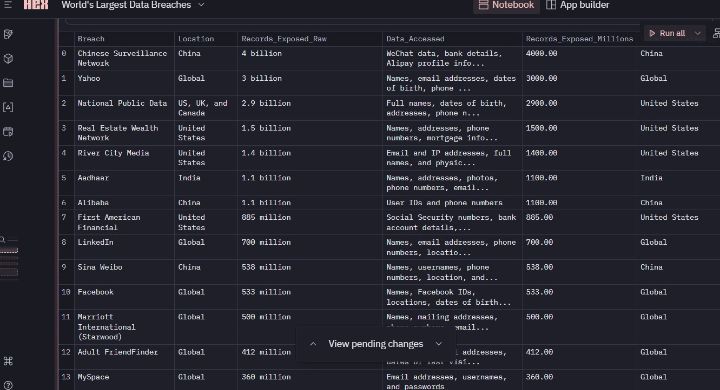
Hex notebooks to analyze historical data breach and compliance data, predict corporate data-leak risks, identify recurring patterns
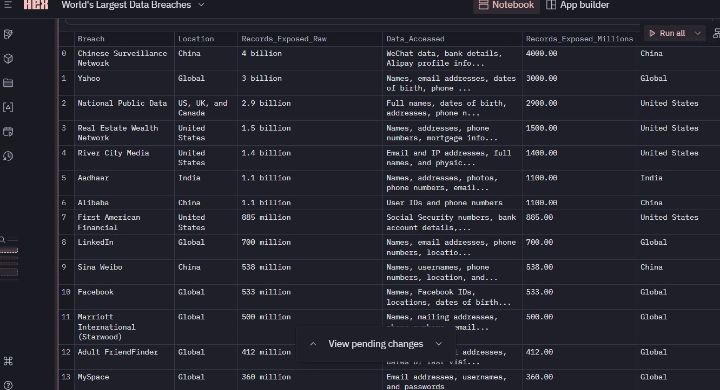
## Inspiration Poor data quality and weak data governance continue to impact organizations globally. Studies show that nearly 64% of organizations identify data quality as their top challenge, leading to an average 25% revenue loss due to inefficiencies like silos, duplication, and poor integration. At the same time, high-profile data breaches continue to expose millions of users’ personal information, raising serious privacy and trust concerns.
Problem Statement
Despite growing awareness, many organizations still struggle to identify early warning signs of data misuse and security failure. Fragmented data ownership, unrotated access credentials, and compliance gaps often remain unnoticed until a breach occurs. This project explores whether publicly avail…
Data & Methodology
The project analyzes: Historical data breach records Regulatory fines and compliance reports Industry-level security incident data Using exploratory data analysis and pattern recognition, the project identifies recurring signals such as: Repeated access mismanagement Delayed breach disclosures Industry-specific vulnerability trends These patterns are used to generate relative risk indicators, not accusations. ## Key Insights & Prediction Analysis shows that organizations with repeated compliance violations, long-standing credential exposure, and poor data ownership structures exhibit higher probabilities of future data misuse incidents. Rather than predicting exact breaches, the project highlights risk levels and early warning indicators that can help organizations and users make informed decisions.
Impact
This project aims to: Improve awareness of data privacy risks Encourage proactive data governance Support ethical, data-driven decision-making By shifting focus from post-breach reaction to predictive risk assessment, organizations can reduce exposure and protect user trust.
