-
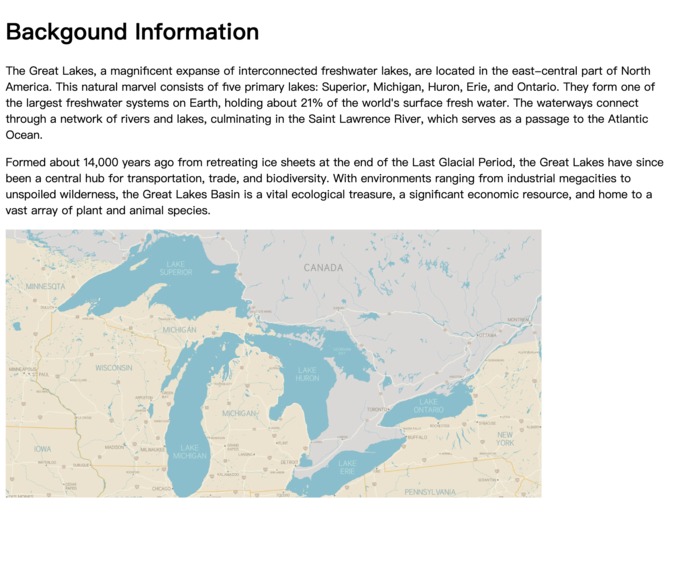
Background
-
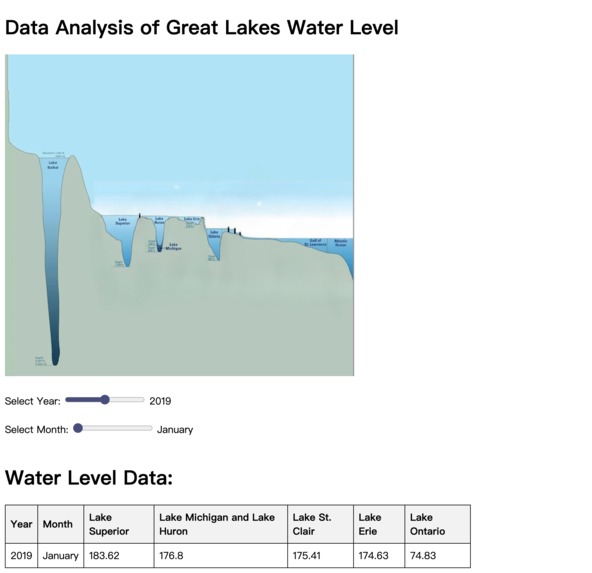
Slider
-
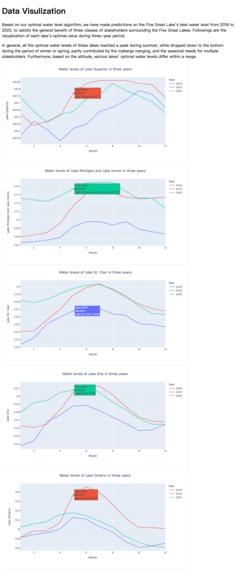
Visualization
-
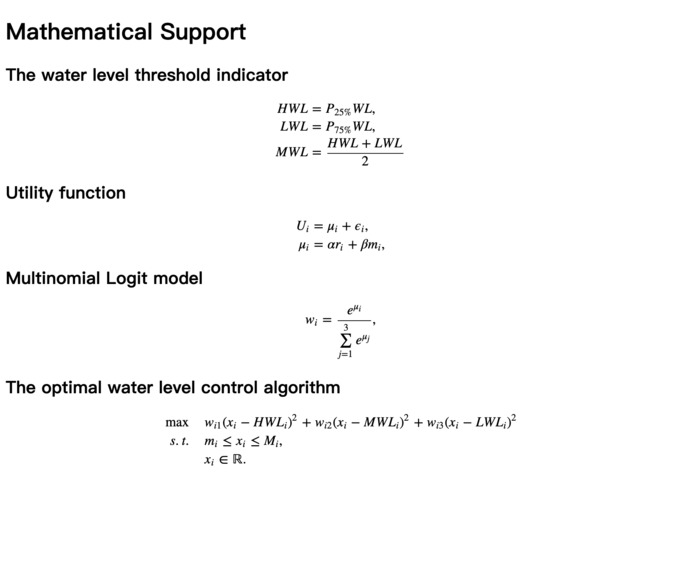
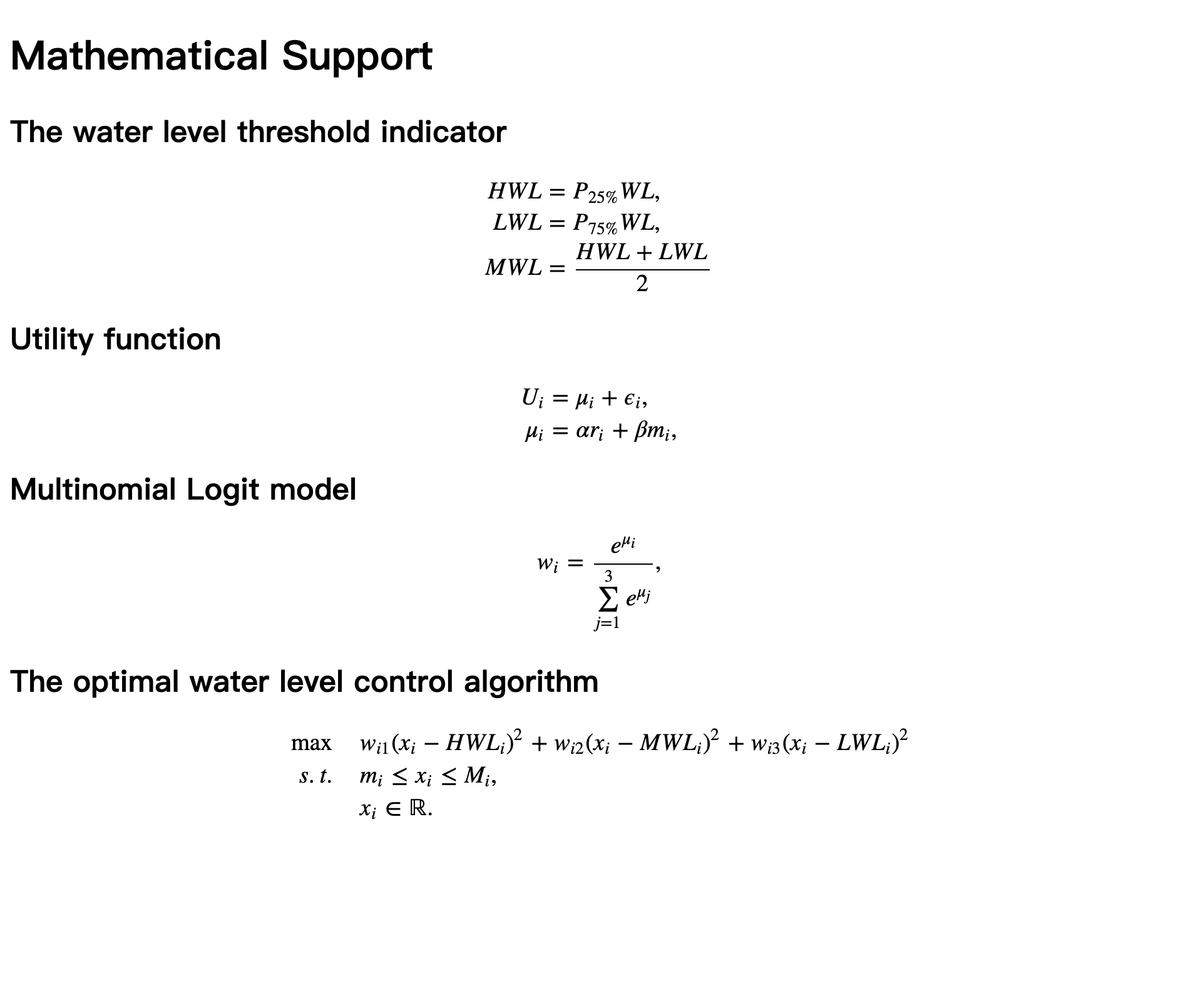
Mathematical Support
-
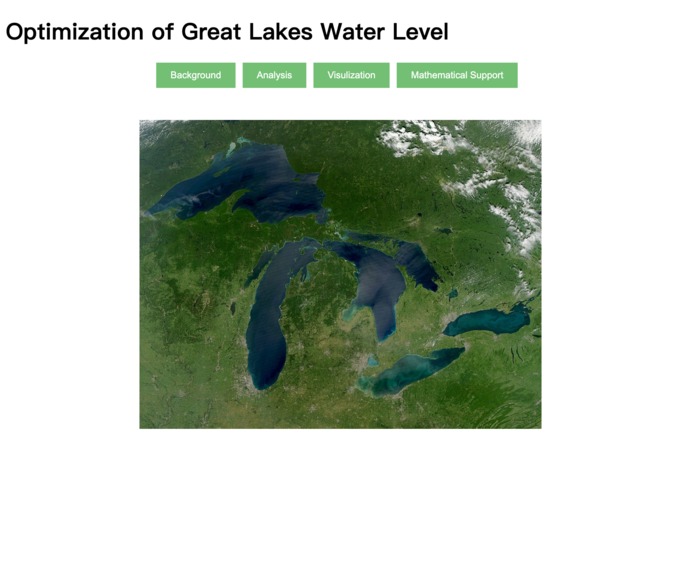
Homepage
Inspiration
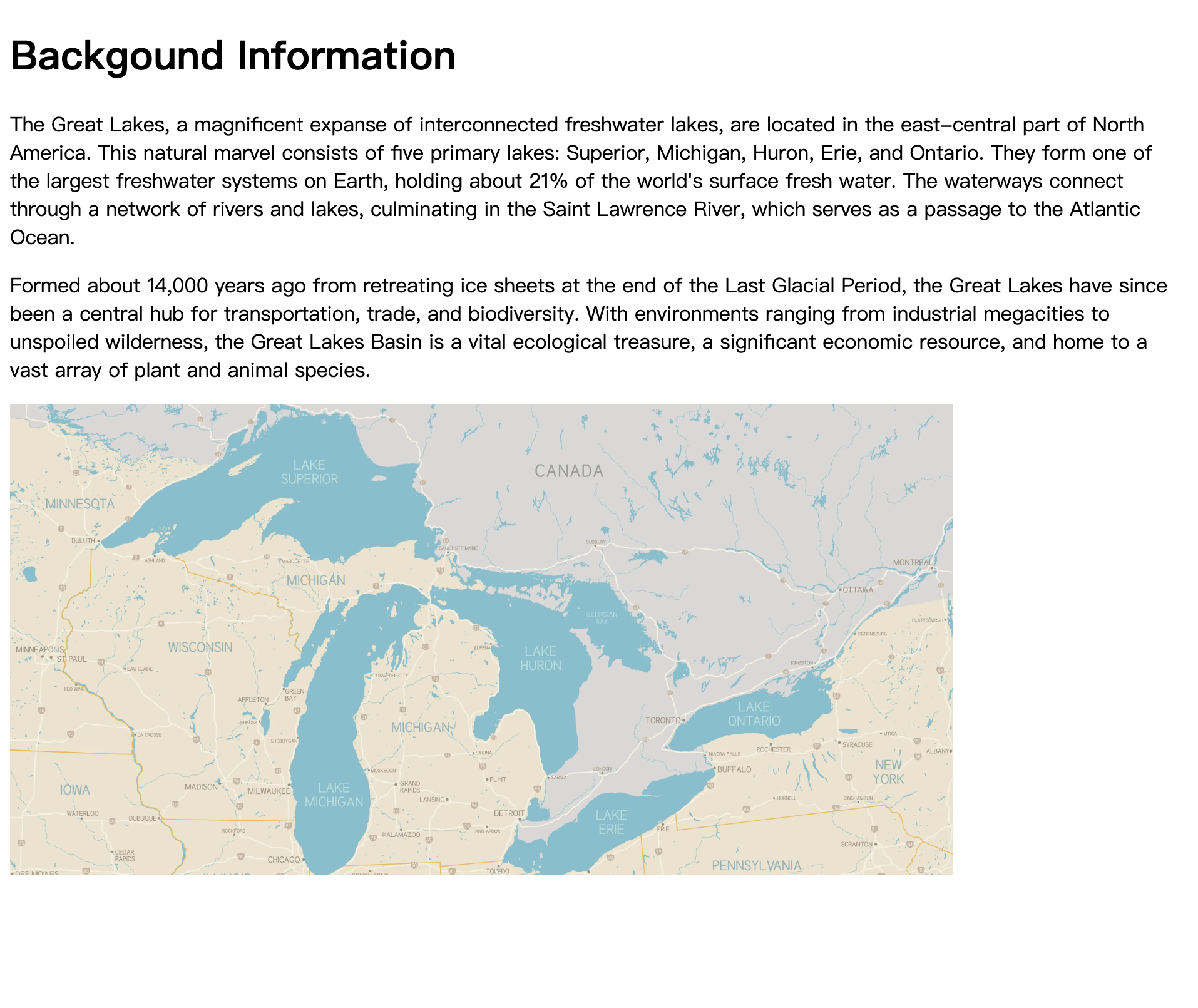
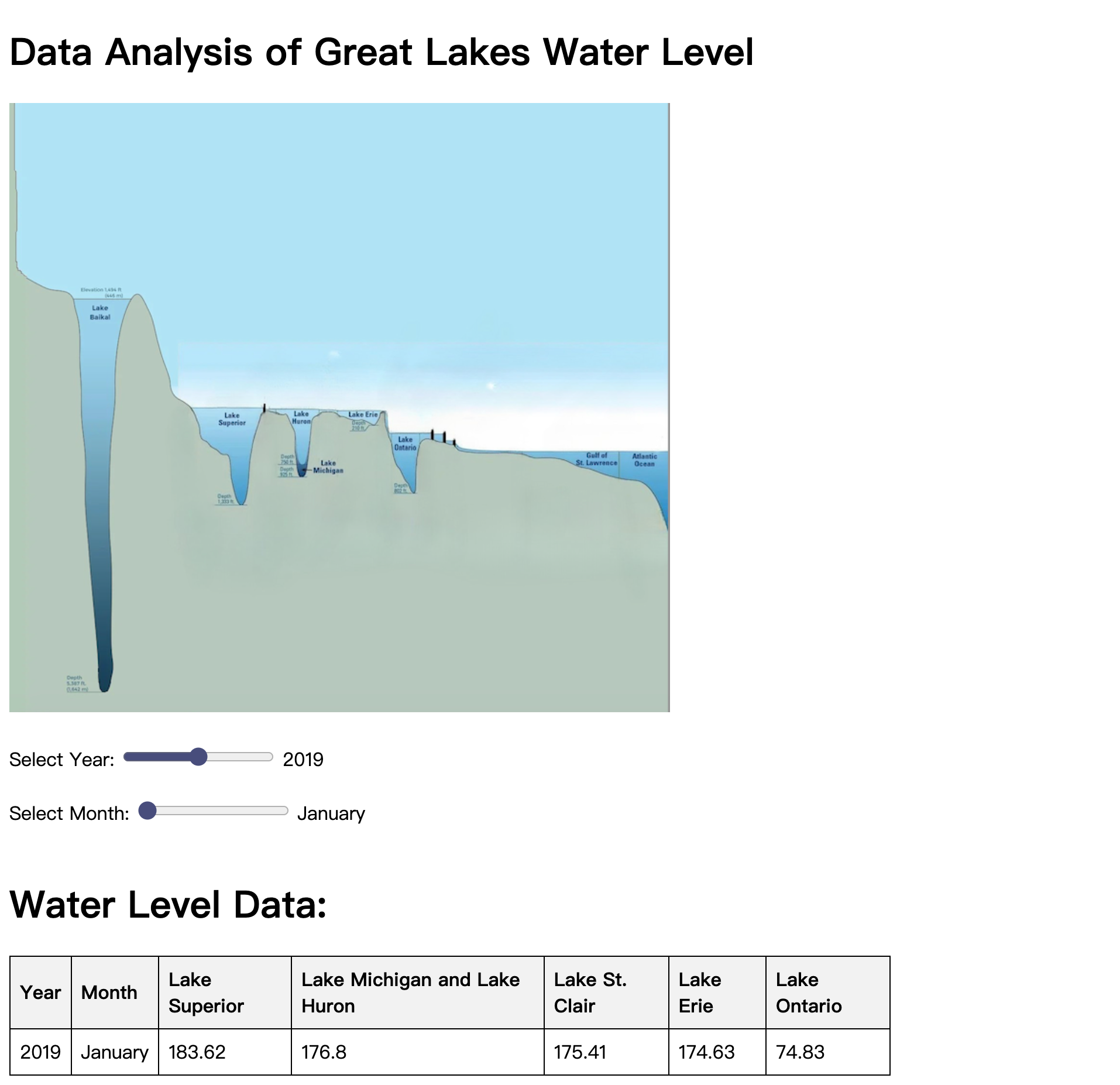
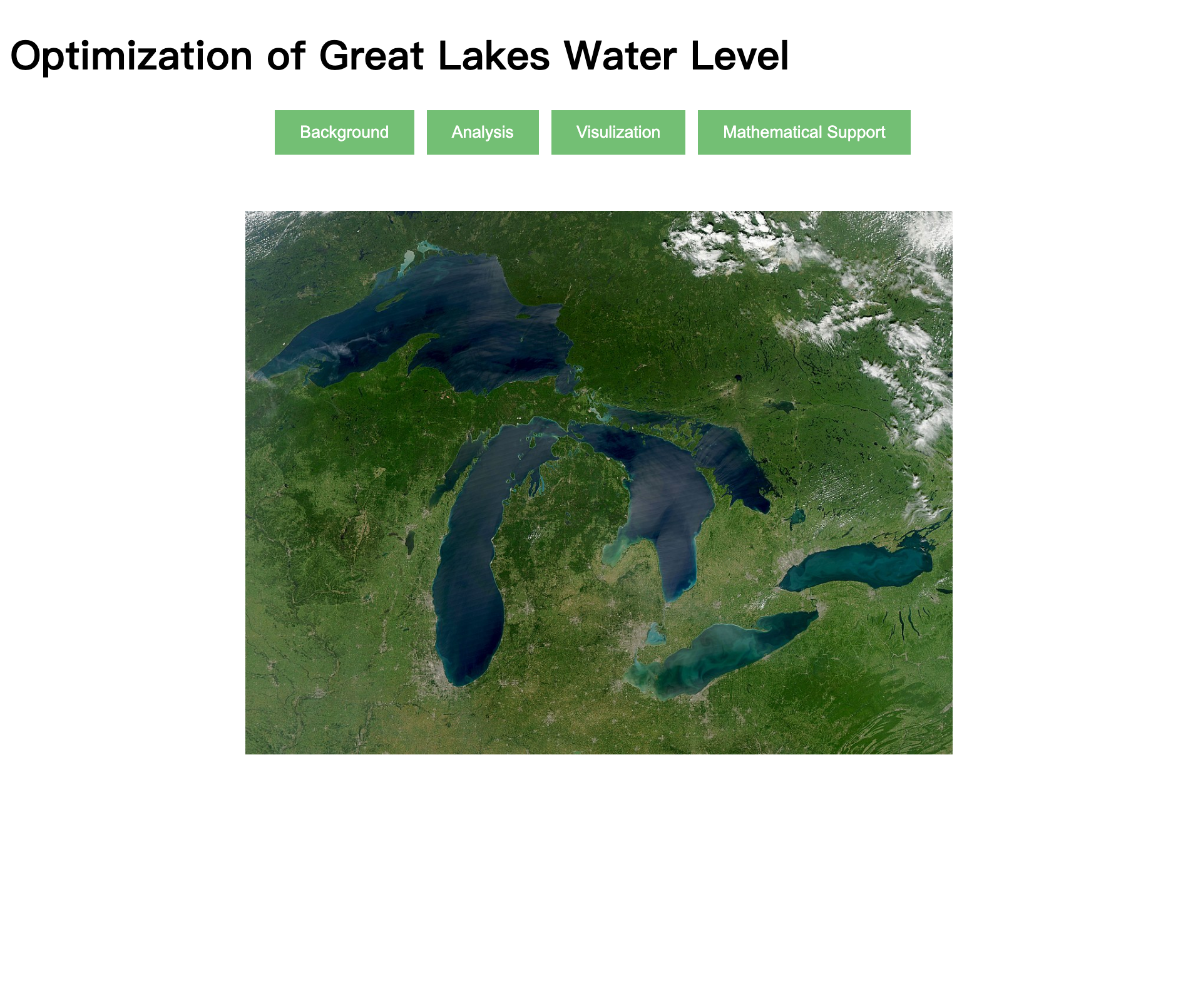
The Great Lakes are the largest group of freshwater lakes with connecting waterways. The water levels of these five lakes play a important role in influencing the stakeholders' benefits. For instance, if the water level is too low, it may lead to flooding thus jeopardizing the interests of shoreline houses and businesses. Since the water level can be regulated by controlling the dam, the challenge or the issue is how to optimize the water levels such that different classes of stakeholders can benefit.
What it does
To solve the problem, we propose innovative solution:
- Optimize the water level considering the stakeholders' interests by adding weights
- Build a website providing prediction data of water levels
How we built it
- Divide the surrounding stakeholders into three classes
- Calculate the required water level for different classes
- Determine class weight based on each class’ s annual gross output and employment rate
- Construct the optimal water level prediction model based on Step 2-3
Challenges we ran into
- Data of surrounding stakeholders
- Parameters of our model
Accomplishments that we're proud of
- Novel optimization model considering stakeholders’ interests
- Model connecting Great Lakes altogether
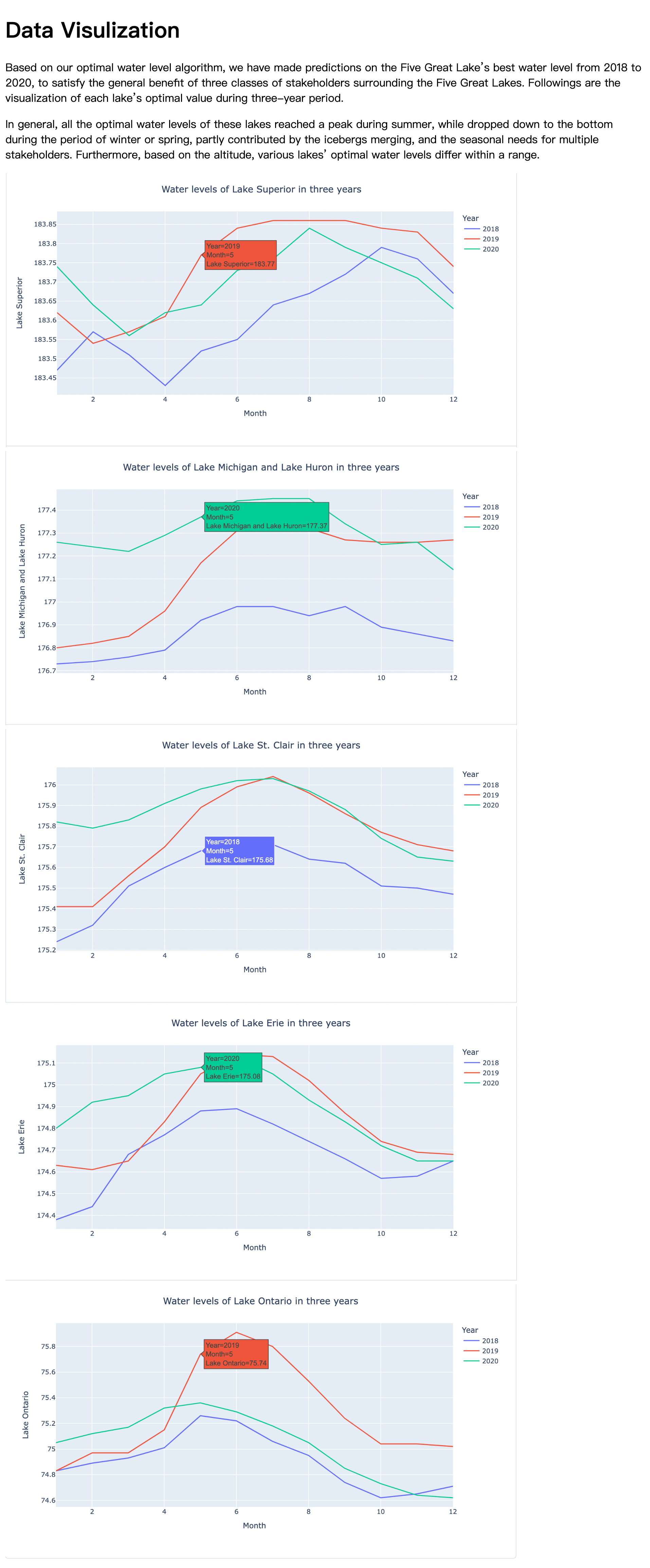
- Model prediction based on each month
What we learned
- Project planning 2 Weighed optimization
- Algorithm development
- Interdisciplinary integration
- Collaboration across disciplines
What's next for Data Analysis of Great Lakes Water Level
- Collect forecast data of Great Lakes
- Add Step 1 data into our model to make it more sensitive to environmental change

Log in or sign up for Devpost to join the conversation.