-
-
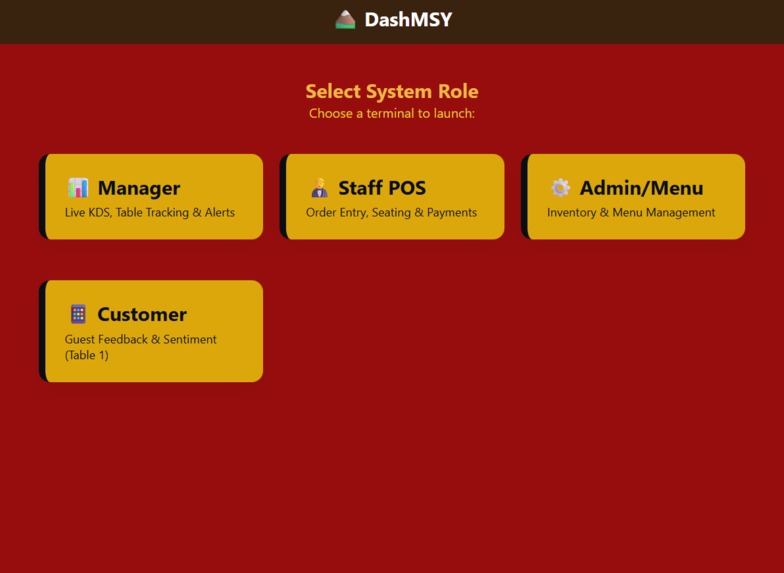
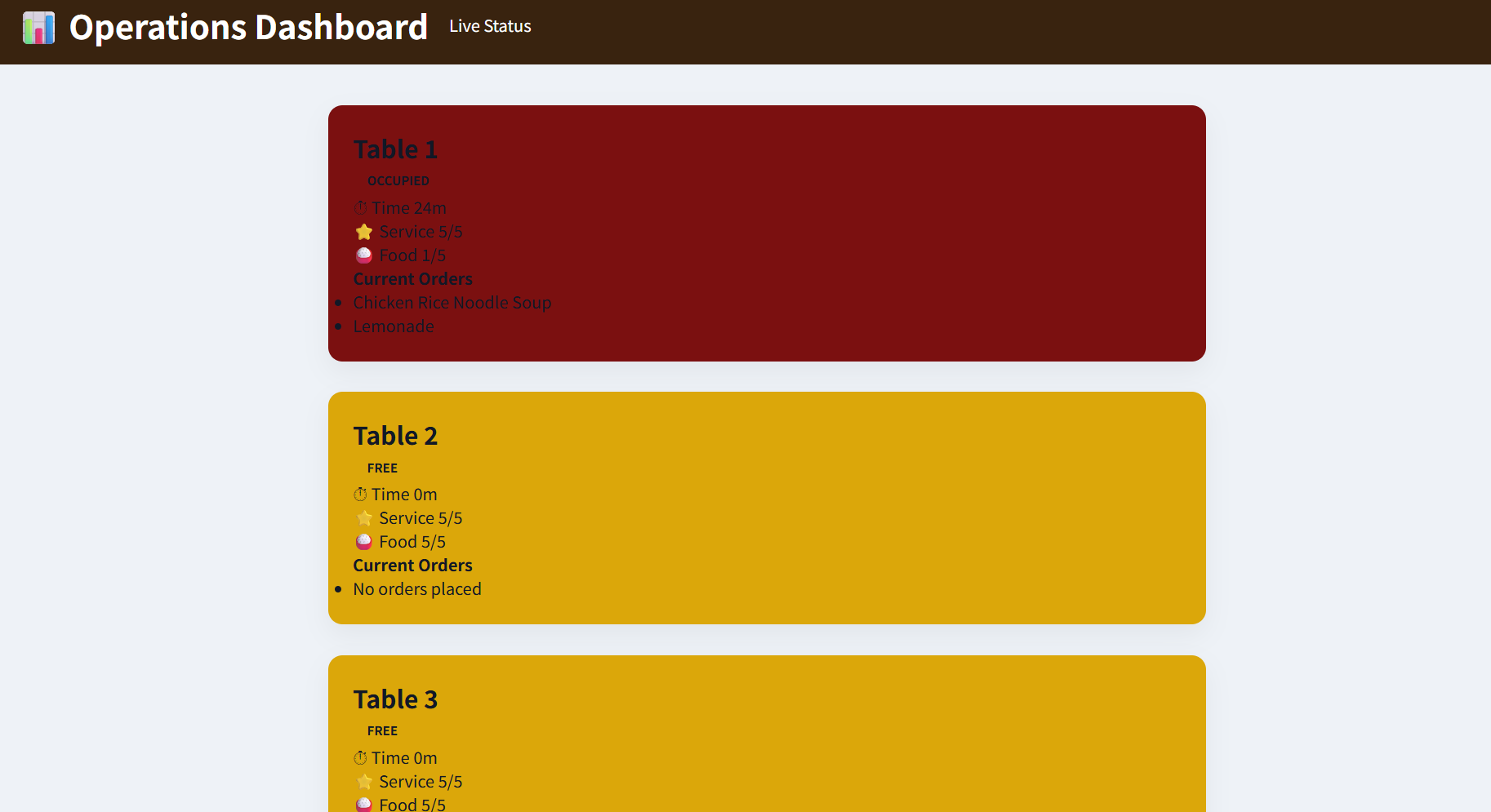
dashboard
-
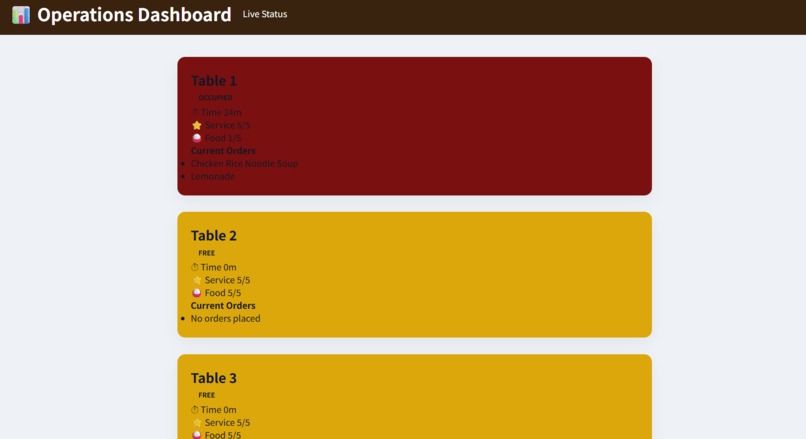
live tracking
-
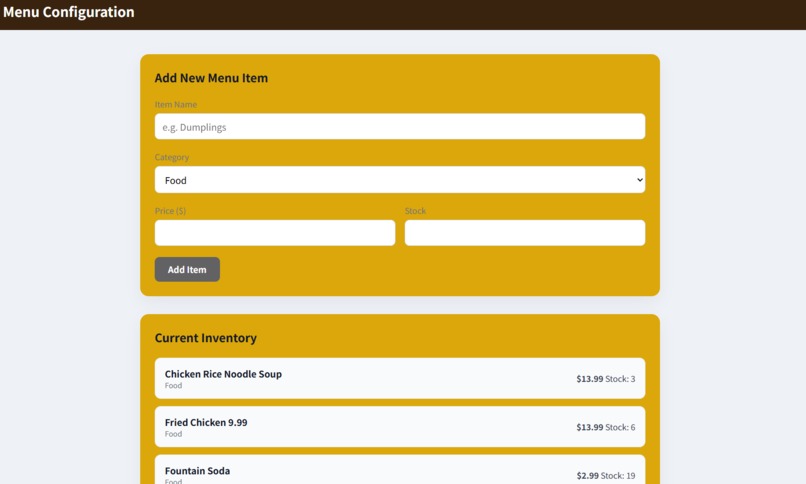
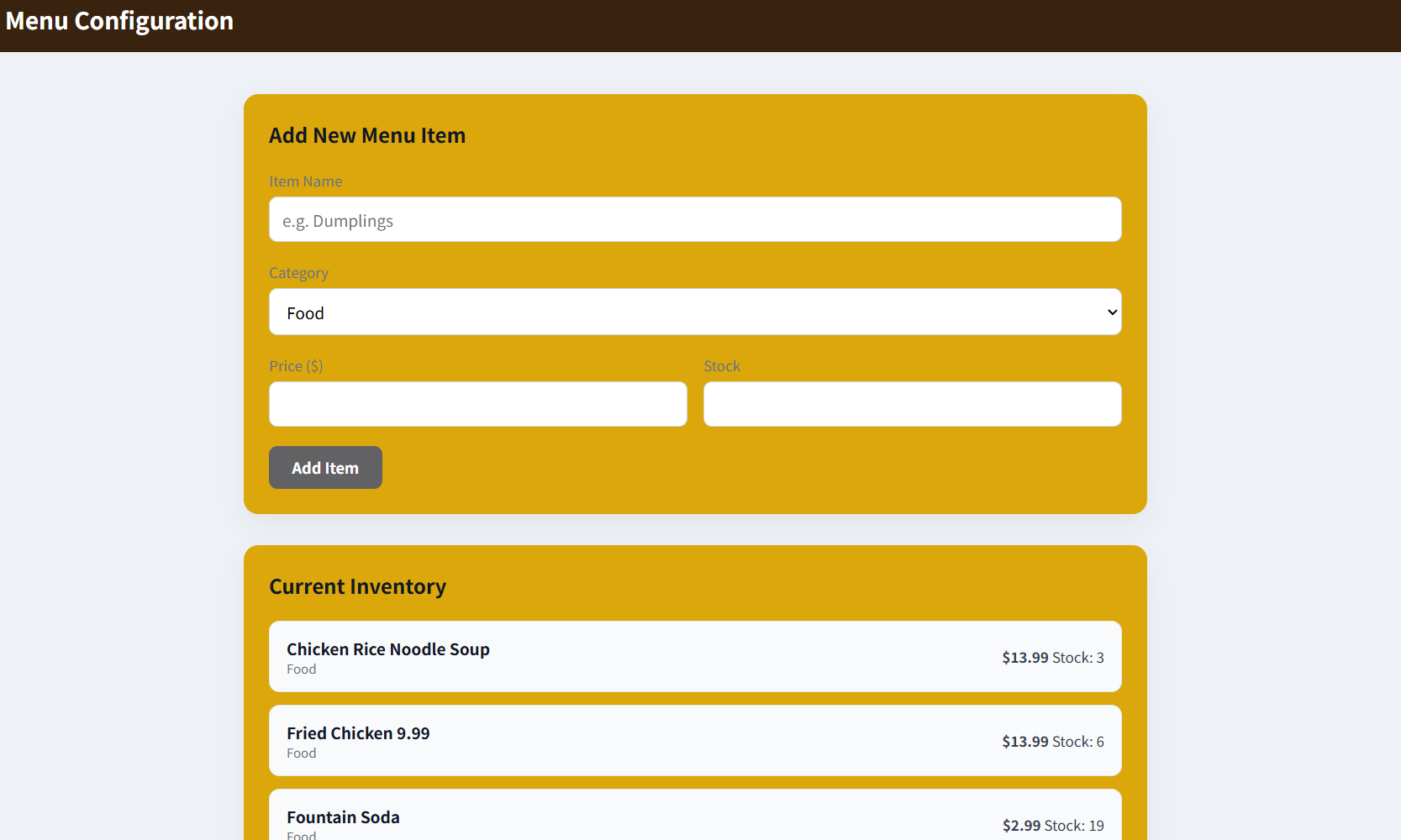
menuconfig + inventory
-
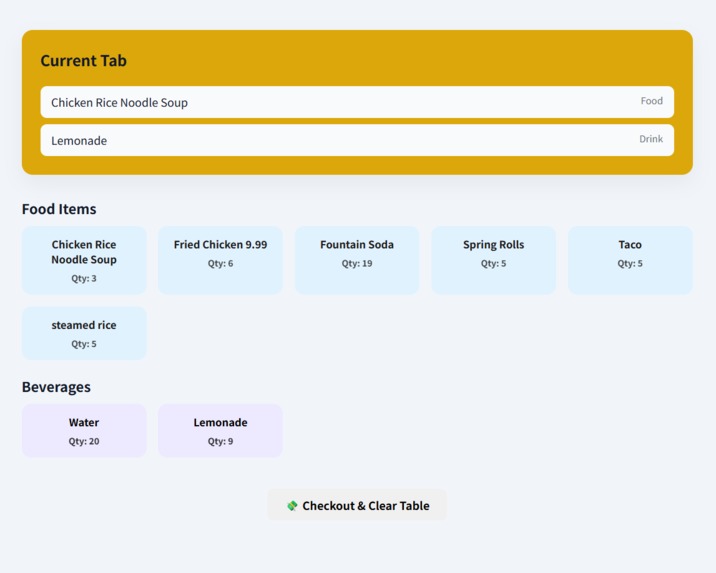
stock + employee interface
-
dashMSY
Inspiration
Information lag is a common issue in food restaurant establishments. Lack of communication between employees, efficiently managing orders, and effectively collecting consumer feedback poses a challenge for staff, especially during rush hours and busy shifts. We wanted to help mitigate this problem to not only improve satisfaction rates for customers, but ease the workflow and streamline communications for restaurant staff and operations.
Our solution - DashMSY
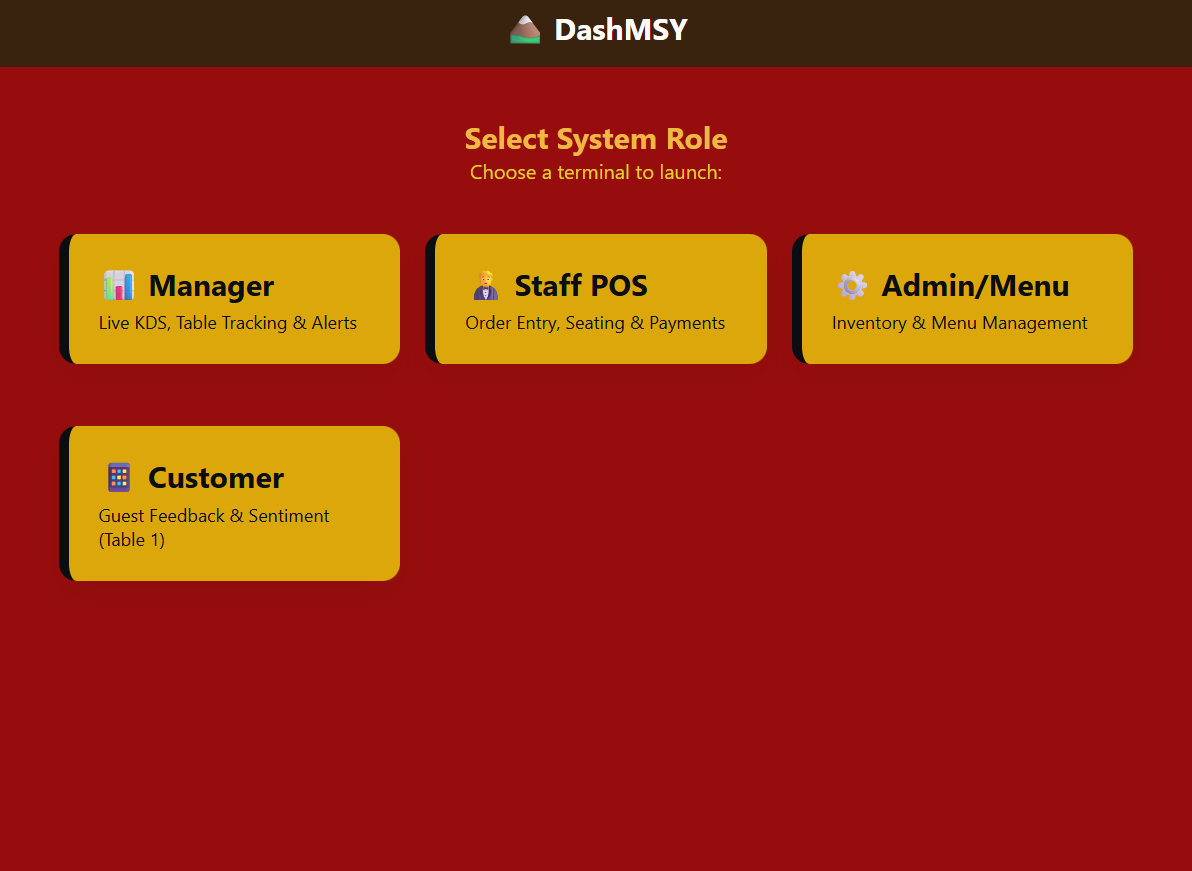
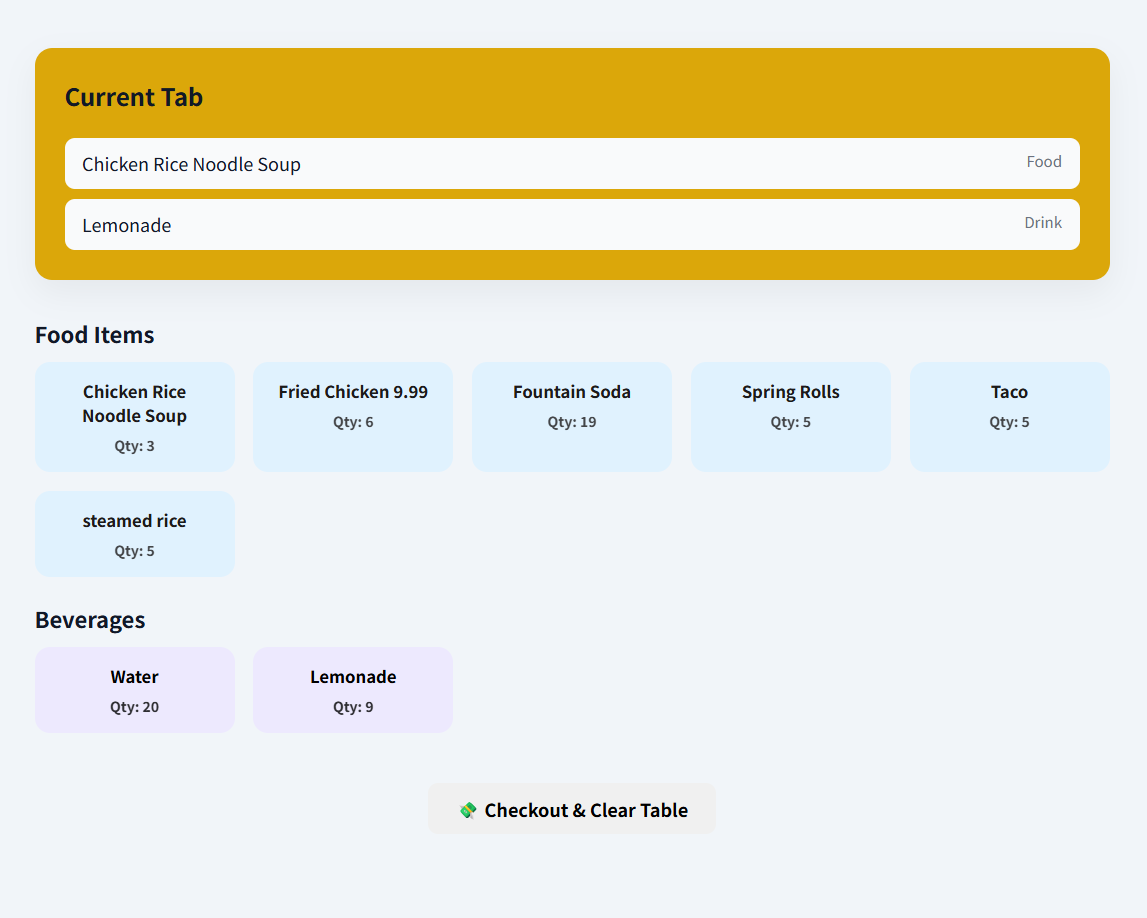
We created a real-time overview of restaurant operations without manually checking each table. It spans 4 main dashboards, each with it's own core functionality which further improves organizational efficiency.
- Manager Dashboard: Live table monitoring with alerts for slow service or low food ratings
- Staff POS: Employees can take orders, seat guests, and track table payments
- Menu Management: Track inventory, monitor stock, add/update menu items
- Customer Feedback: Instantaneous ratings for food and services for each table
How we built it
We began by creating a project outline, defining clear goals for what we aimed to solve. Then, we organized our project structure, clarified our tech stack, and jumped right into it! We began with the backend, organizing what data we wanted to collect, update, and change. From there, we organized the different functions for our REST API to create endpoints that successfully managed the data, then utilized HTML and CSS with Flask's Jinja2 engine to create a functional UI. We worked together to effectively create a cohesive design, (despite being simple boilerplate at first), then using generative AI (Gemini) to enhance our frontend's visual presentation.
Challenges we ran into
As our first hackathon, we ran into several challenges in learning how to collaboratively code using GitHub. Additionally, we needed to learn how to style our program, and our team primarily has experience working with Python + backend development. We initially focused on too many of the wrong things at first, without creating an actual demo for judges to see, then later transitioned to learning how to create an MVP (most viable product). While it was a challenge, we learned how to overcome it using a variety of different tools, thus creating DashMSY!
Accomplishments that we're proud of
We're happy to submit a product! Having a cohesive website that completes what we aimed to solve (albeit in its beginning stages) is something we're proud to achieve.
What we learned
We learned how to connect a backend to a frontend, style a website using HTML and CSS, and use GitHub for version control and collaborative code. Additionally, creating a MVP was essential in this process as it taught us how to reach our focused outcomes.
What's next for DashMSY
Using the application factory architecture, we want to improve our program by making it more scalable, reusable, and more effective for future use. We also want to add authentication and authorization for manager and employee permissions for practicality.

Log in or sign up for Devpost to join the conversation.