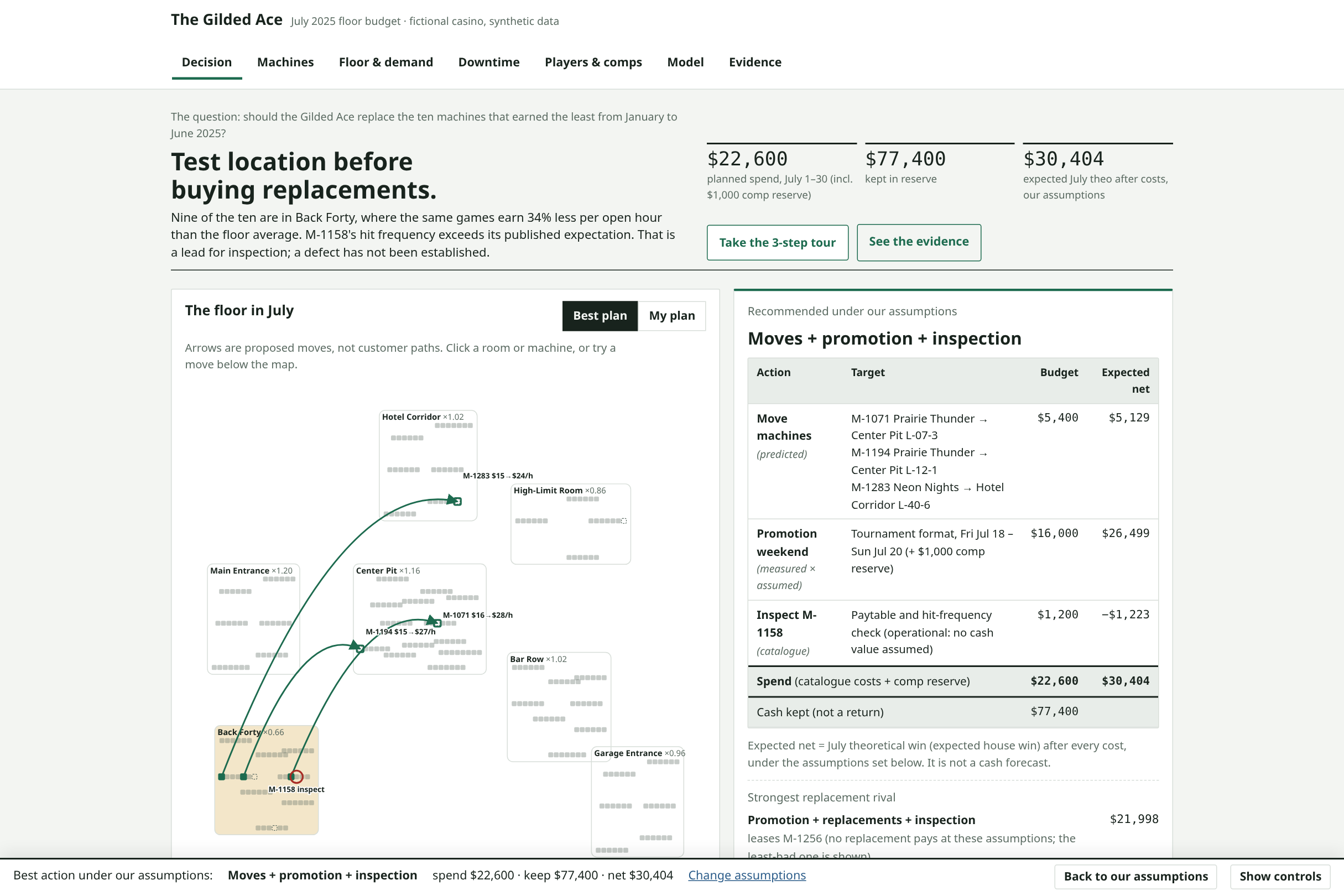
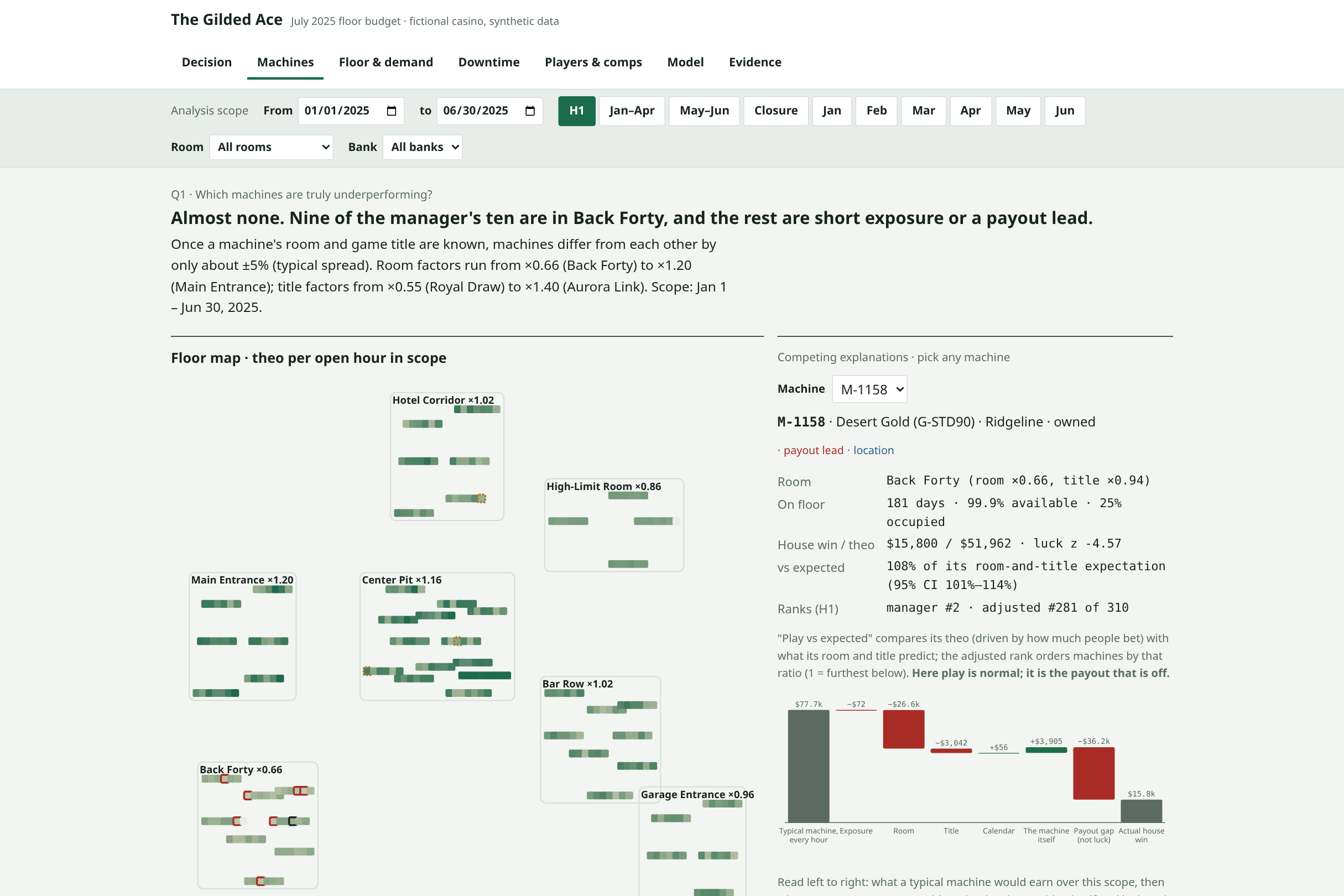
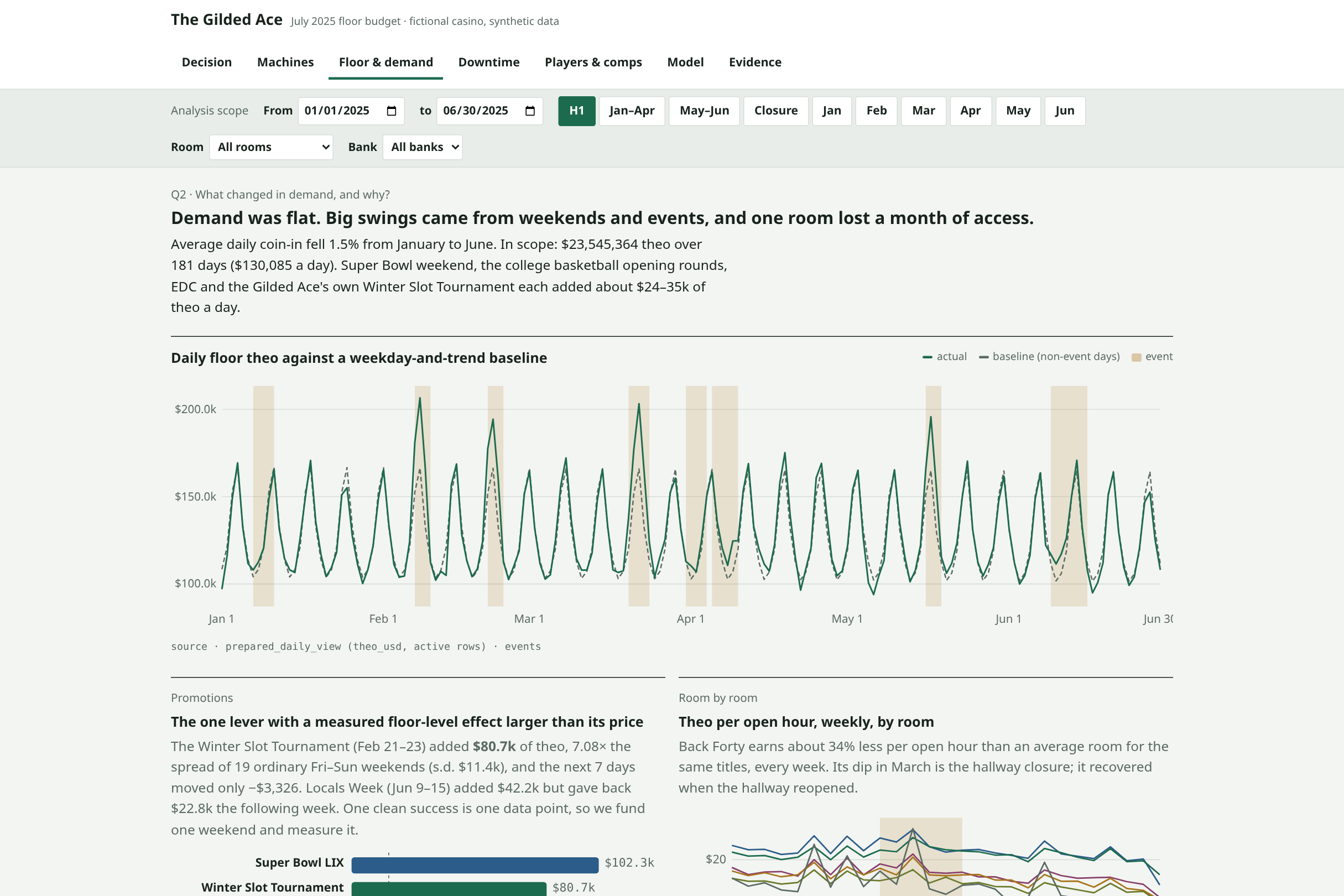
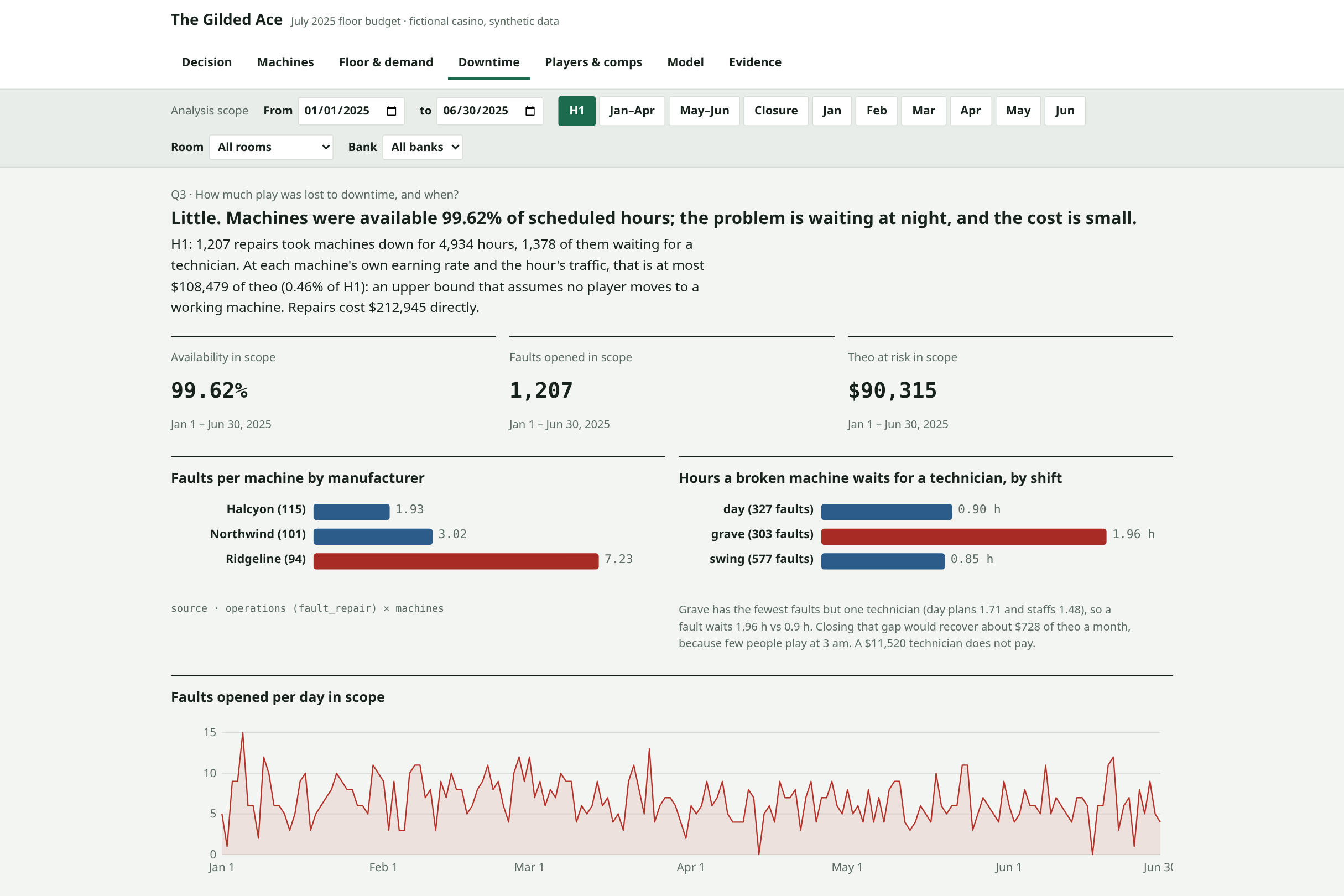
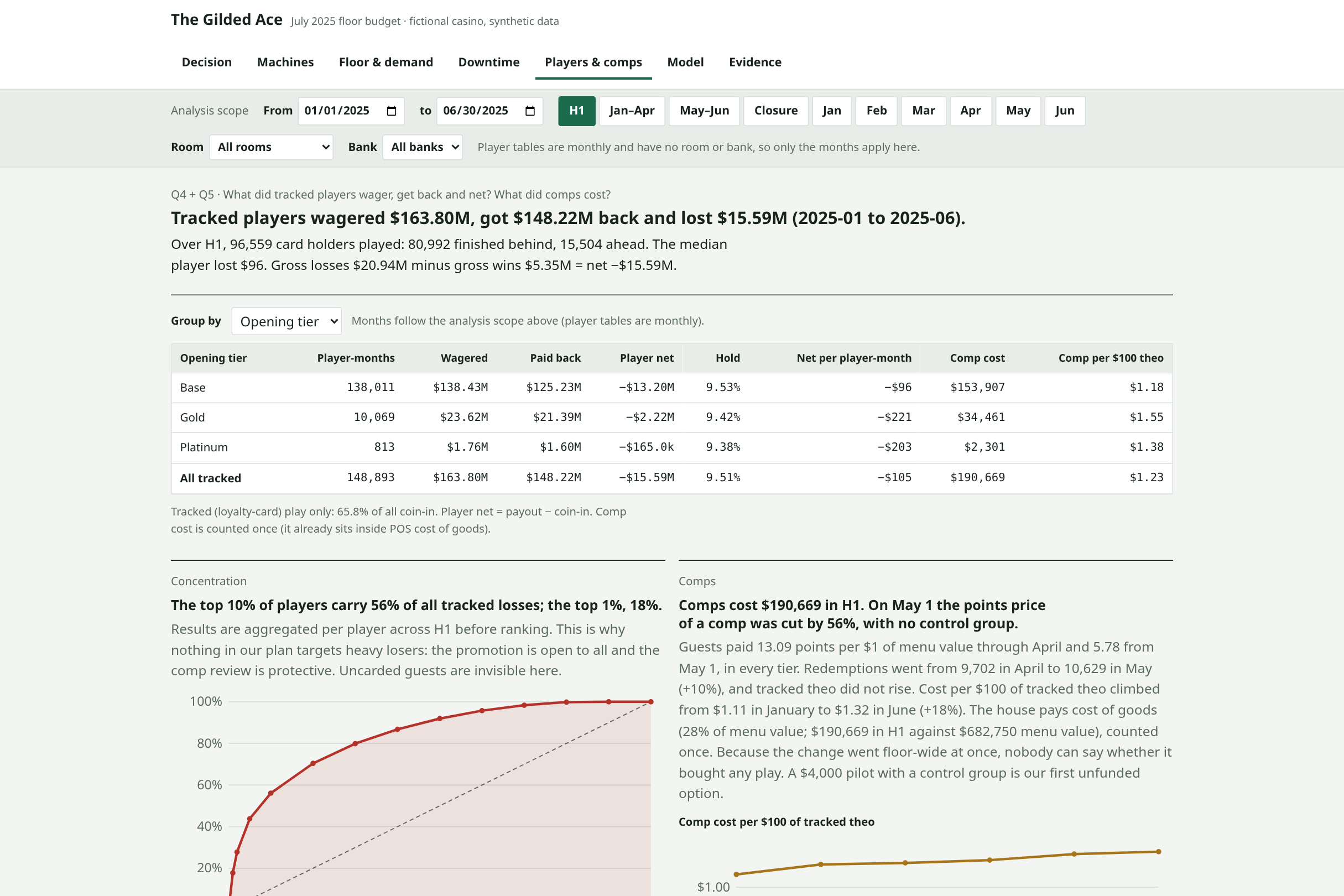
Inspiration The challenge began with a simple proposal: replace the casino’s ten lowest-earning machines. We wanted to test whether those machines were actually weak—or affected by location, downtime, limited exposure, or luck. That question became The Gilded Ace: luck, location, or a leak? What it does Our dashboard investigates six months of synthetic casino data, covering machine performance, demand, downtime, tracked-player outcomes, and loyalty costs.
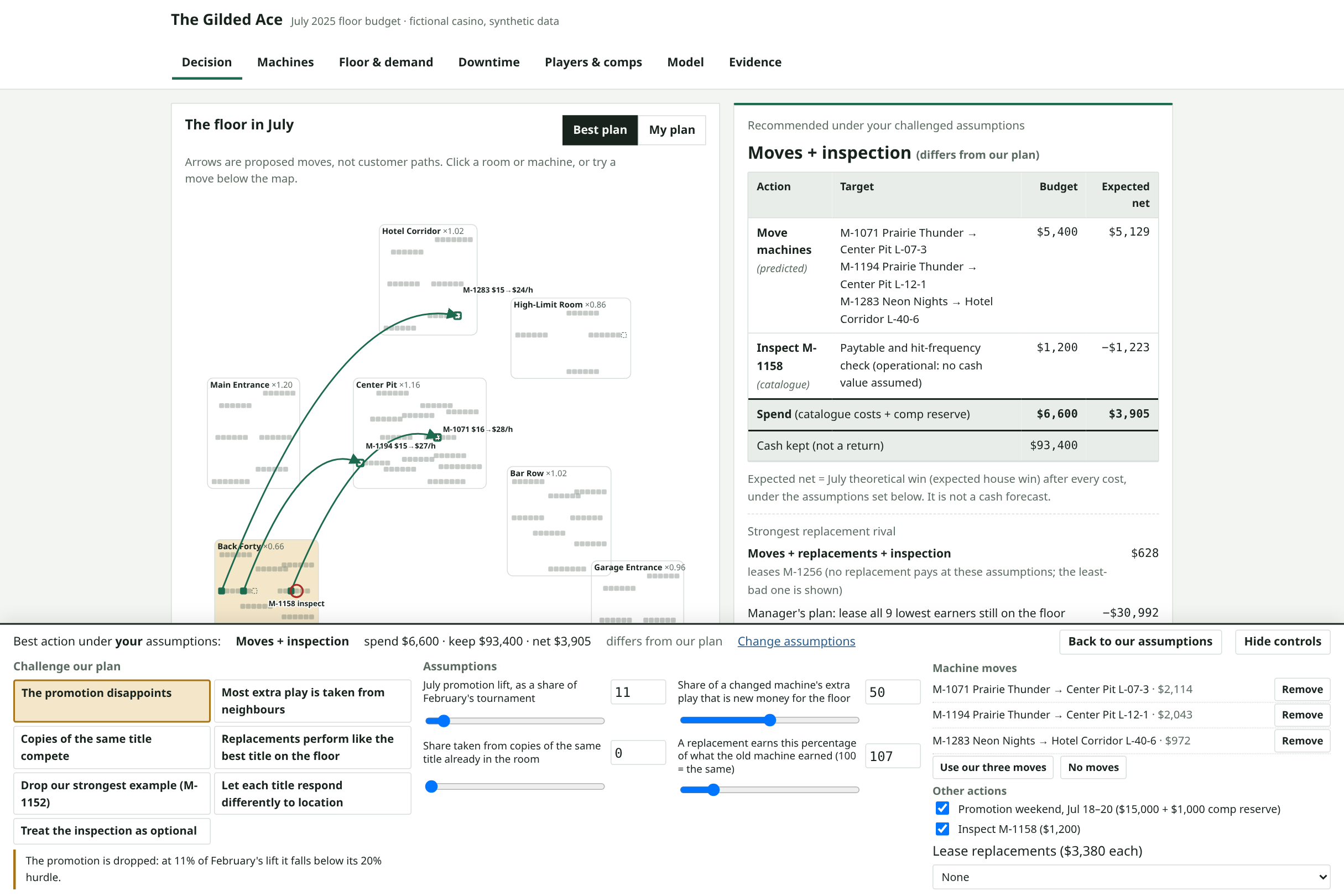
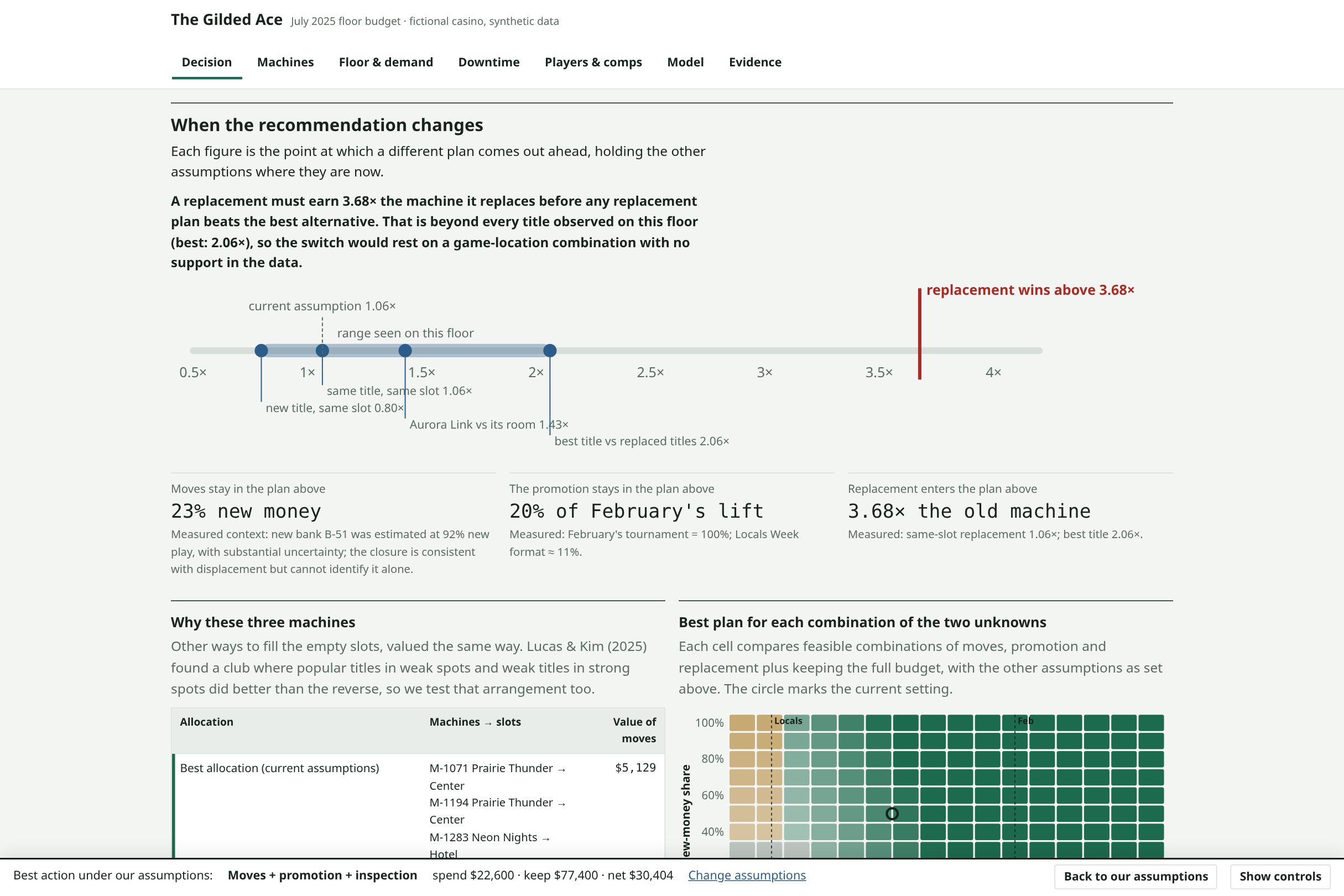
Its decision simulator lets managers challenge assumptions and compare priced actions. Our default proposal spends $22,600 on three machine moves, one inspection, and a measured promotion weekend, retaining $77,400. Changing assumptions changes the recommendation, including whether to keep the entire budget.
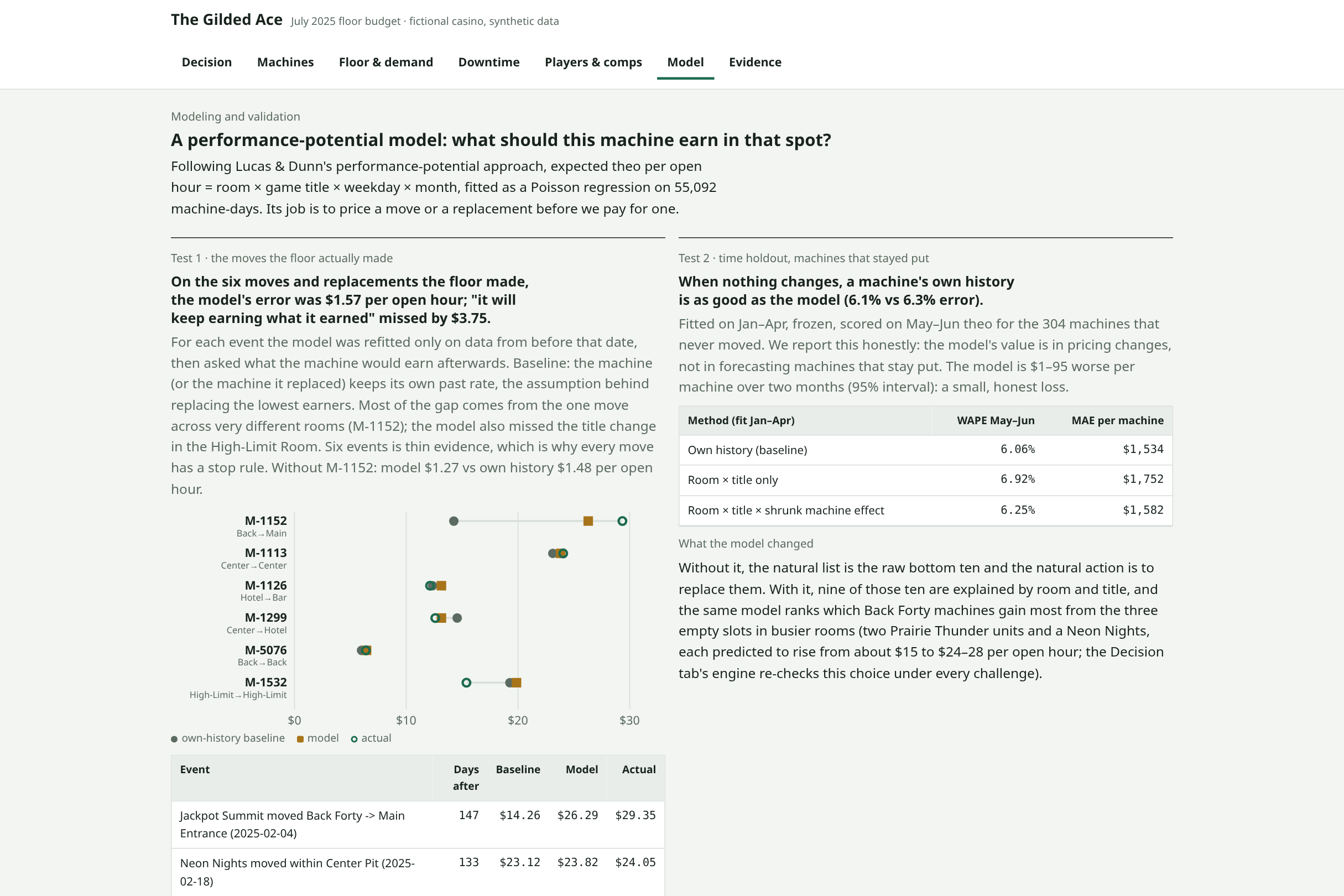
Every major finding links to its source, competing explanation, and limitation. How we built it We used Python, DuckDB, pandas, NumPy, and SciPy for data preparation and analysis. A performance-potential model separates room, game, calendar, and machine effects, supported by bootstrap uncertainty estimates and historical comparisons.
We evaluated models against simple baselines using temporal and pre-intervention holdouts. The interface uses HTML, CSS, and JavaScript, with embedded data for offline use.
Development was AI-assisted, with contributions documented in our appendix. Playwright supported browser testing and recording; ElevenLabs supplied the narration, with subtitles matched to the revised recording. Challenges we ran into We had to distinguish player results from whole-floor totals, handle changing placements and daylight-saving hours, and avoid counting comp costs twice.
The hardest challenge was separating association from causation. A successful relocation does not establish how much additional play is new rather than displaced from nearby machines. Accomplishments that we're proud of We built an inspectable decision tool with 32 passing Python tests, 36 browser checks, and a captioned walkthrough under two minutes.
The simulator exposes uncertainty through assumptions and switching thresholds instead of presenting modeled returns as guarantees. What we learned A model can remain useful even when a simple baseline predicts better. Honest validation, clear accounting, and explicit uncertainty matter more than complexity. What's next for Dashboard royale We would strengthen validation with more intervention cases, evaluate the proposed pilots against matched controls, measure displacement and promotion transfer, and conduct real-user and screen-reader testing.
