-
-
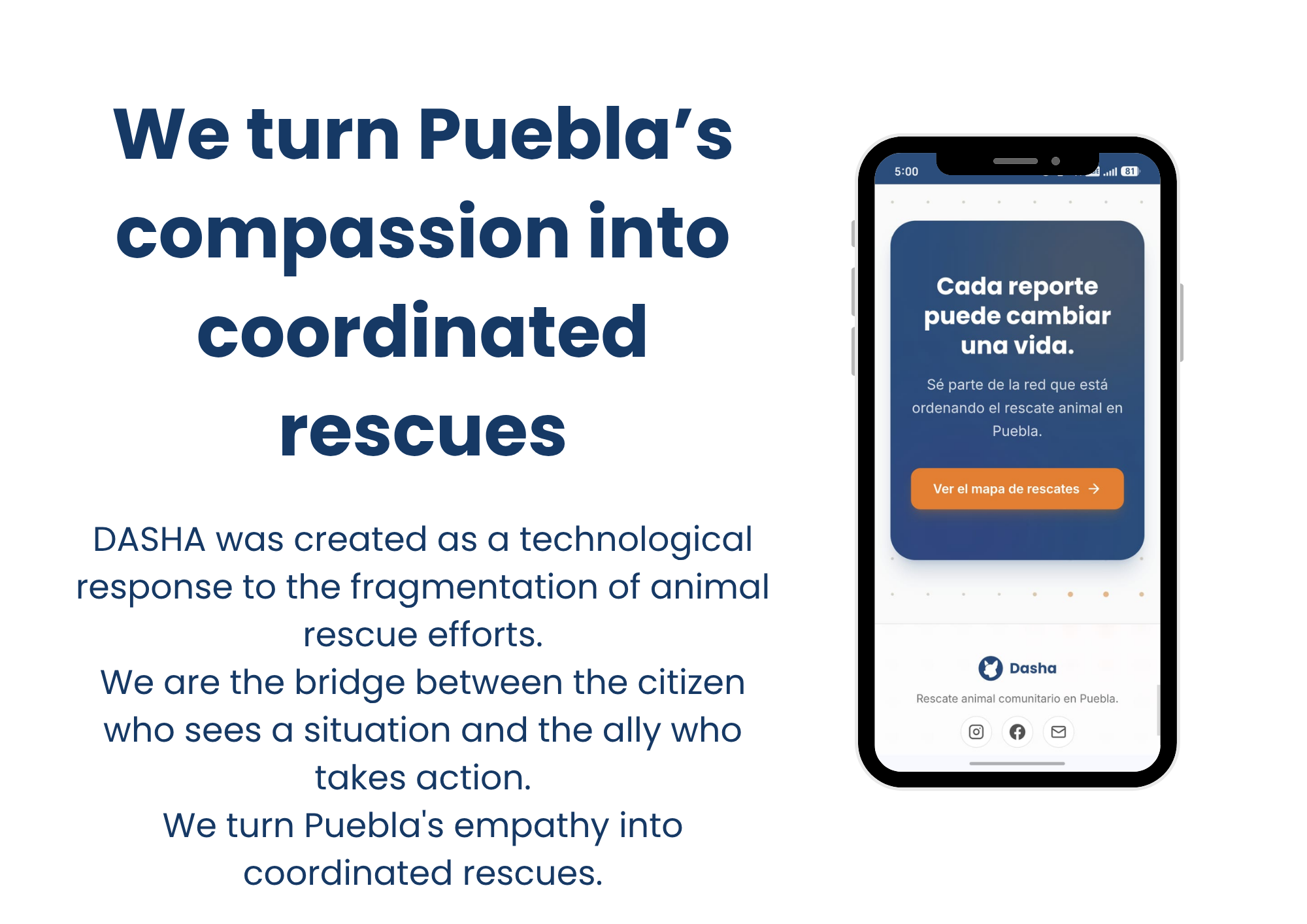
Dasha turns Puebla's compassion into coordinated rescues, connecting citizens, volunteers and partners.
-
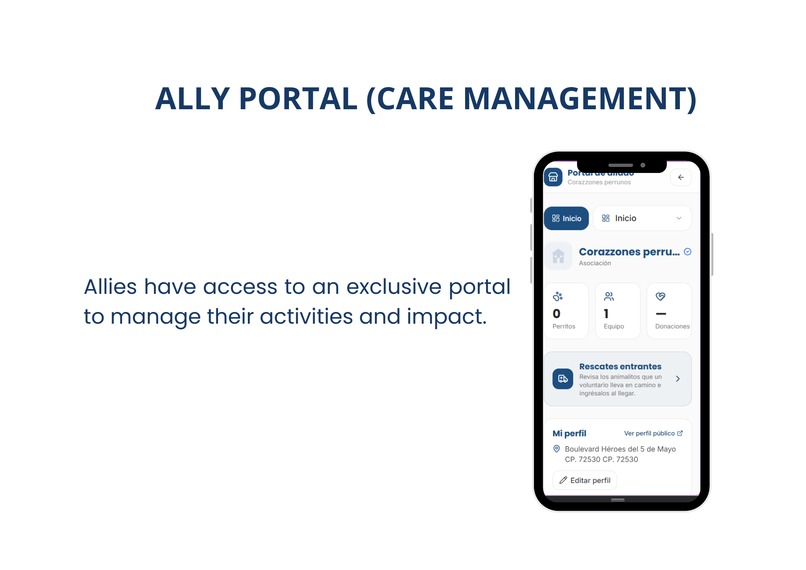
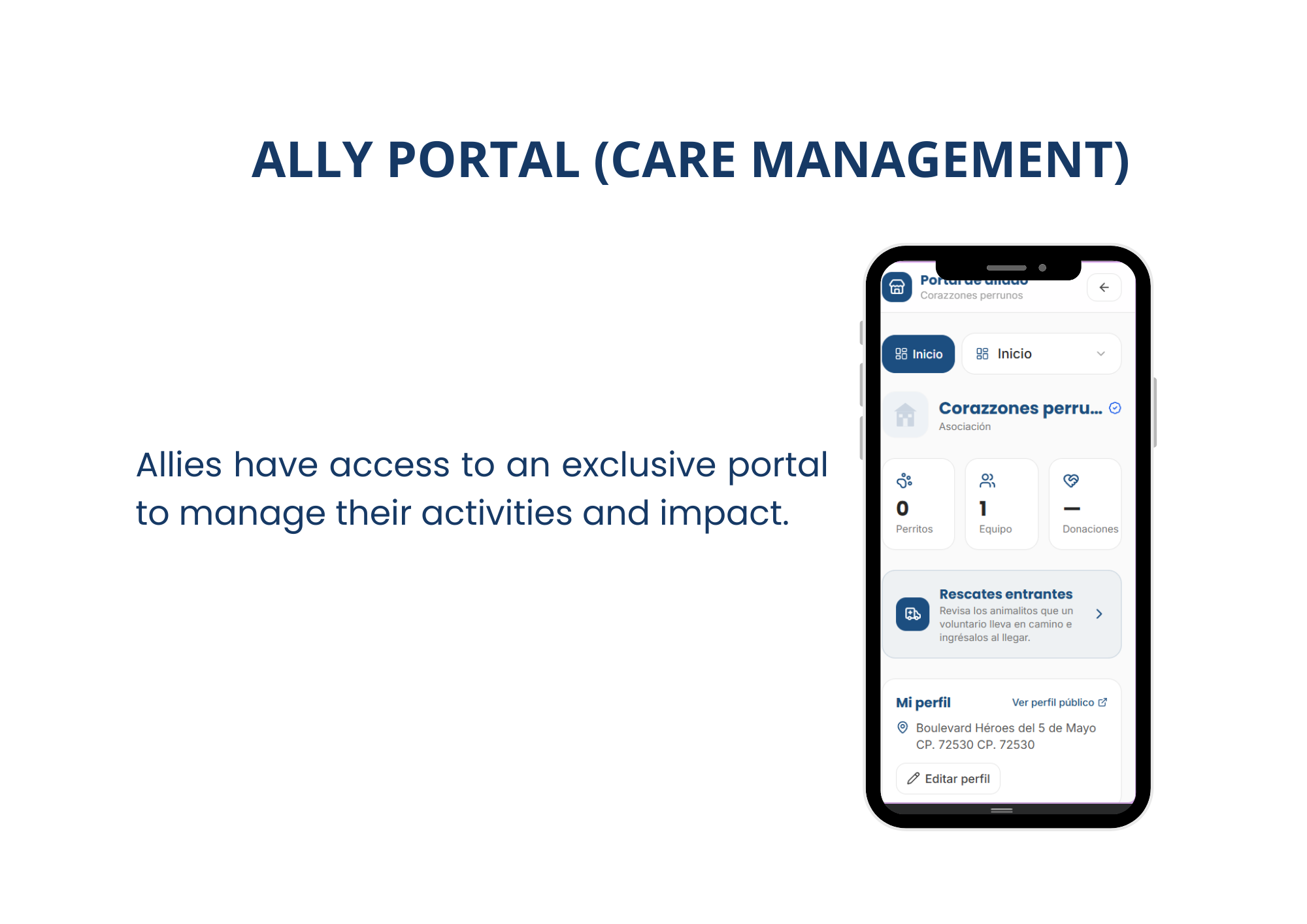
Partner shelters and clinics manage their animals, team, donations and incoming rescues in one portal.
-
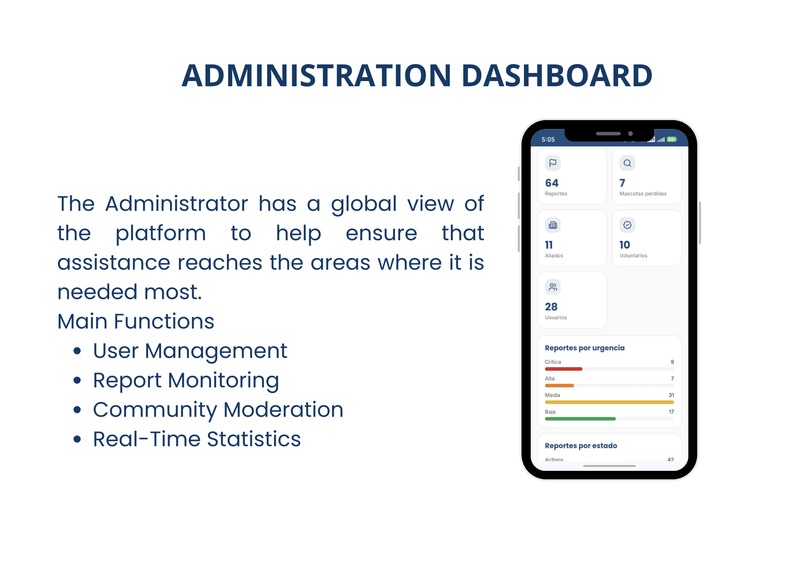
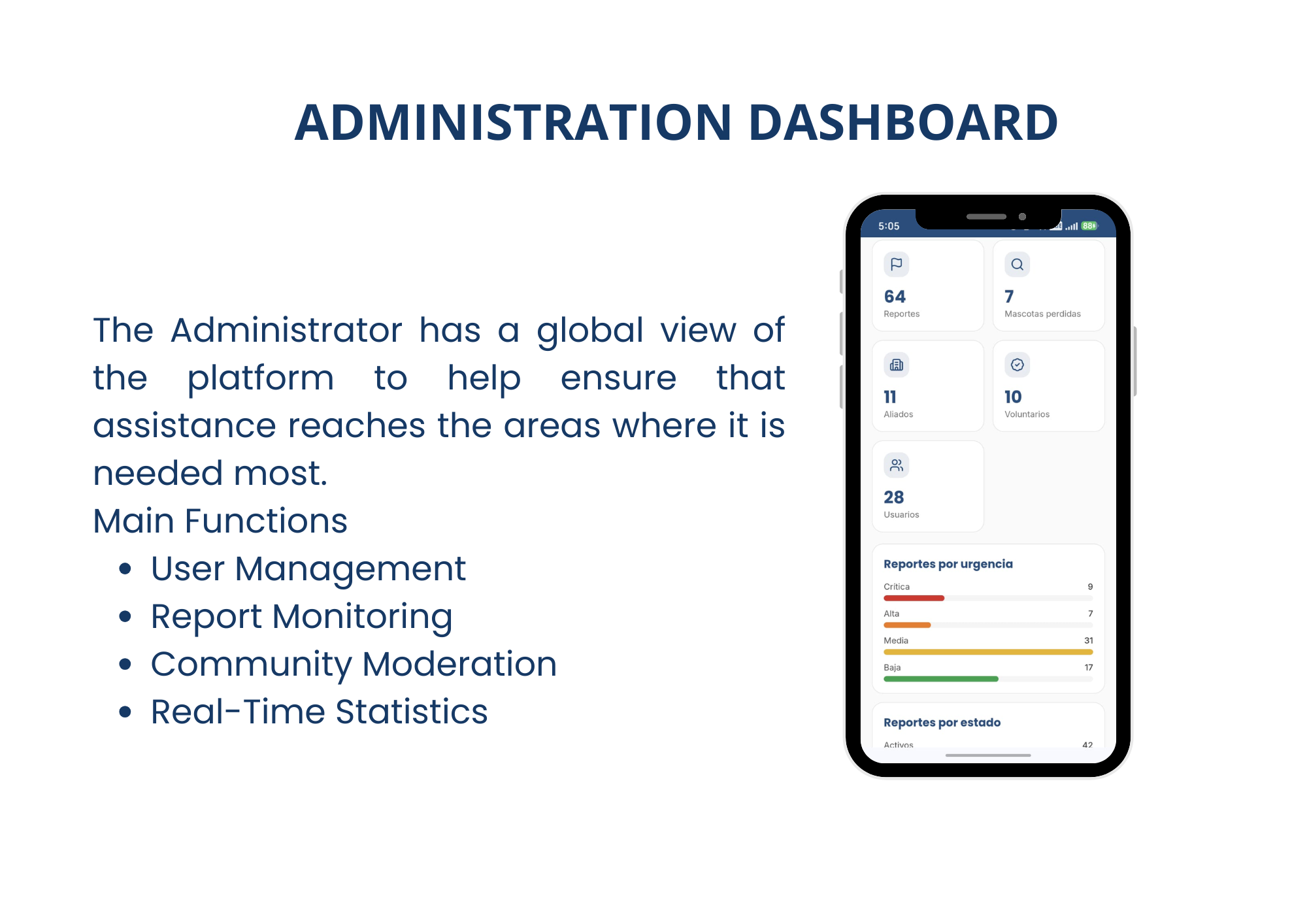
A global view for admins: real-time stats, report monitoring and community moderation.
-
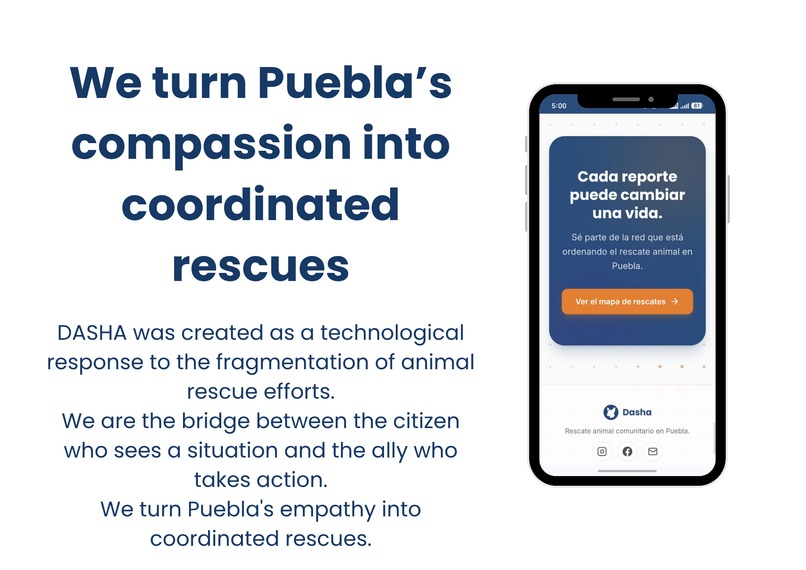
Coordinating animal rescue in Puebla, from the street to a home.
-
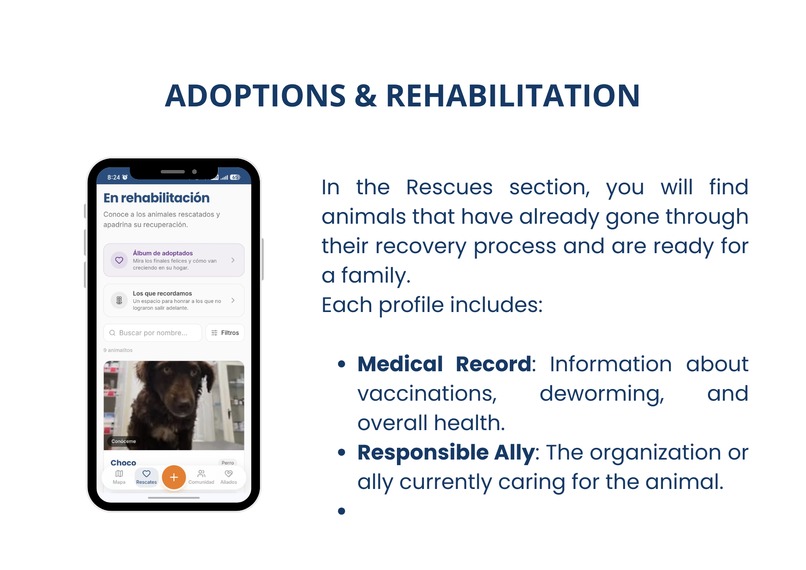
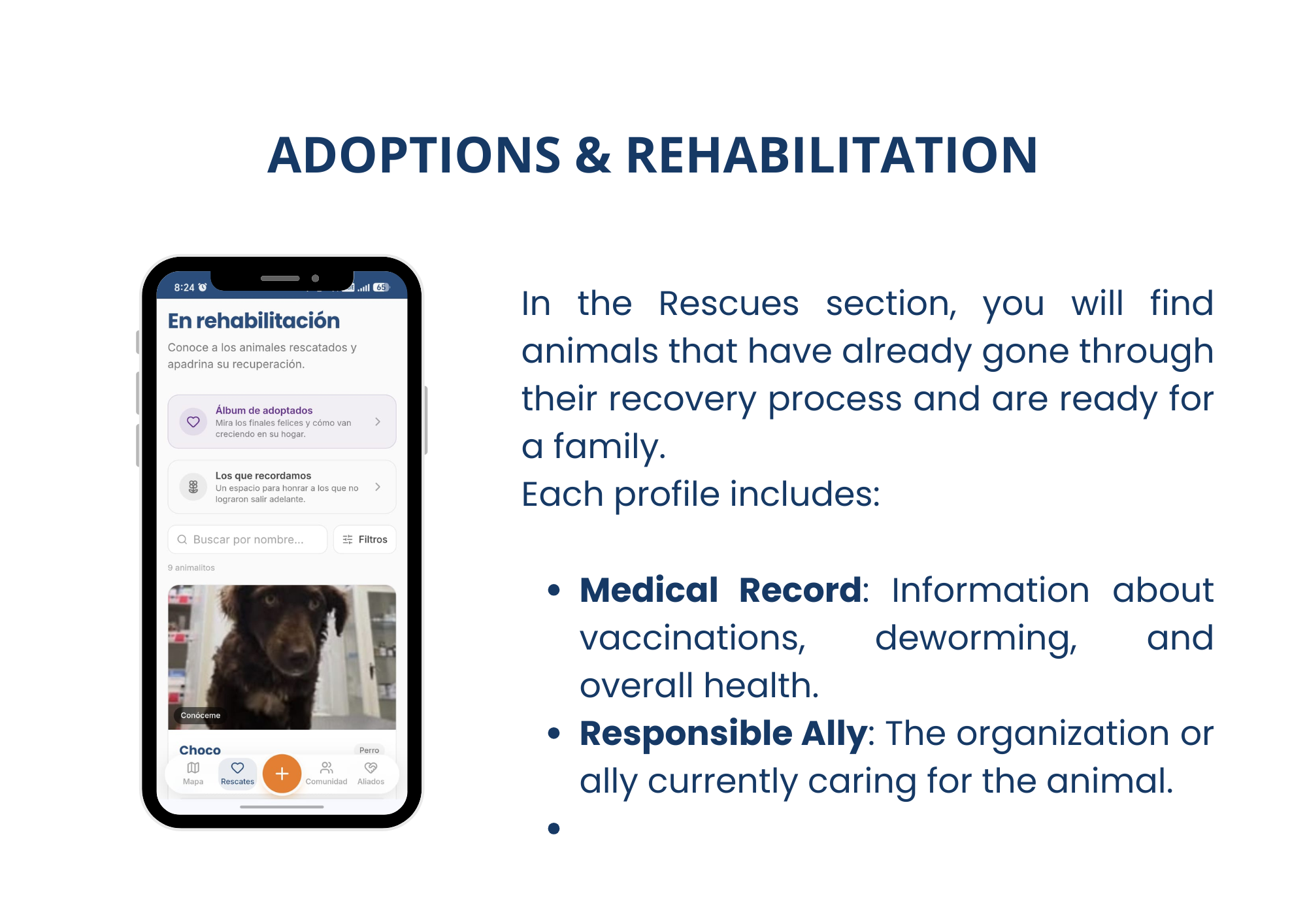
Every rescued animal gets a profile with its medical record and the partner currently caring for it.
-
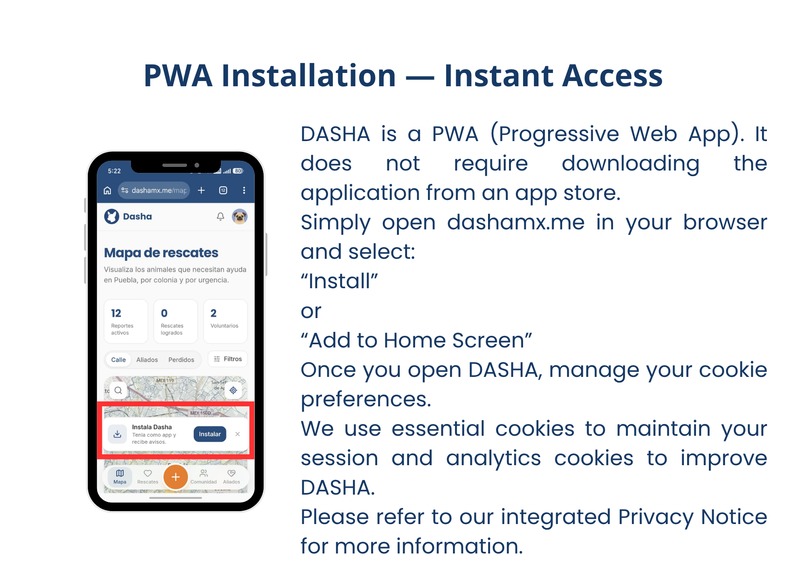
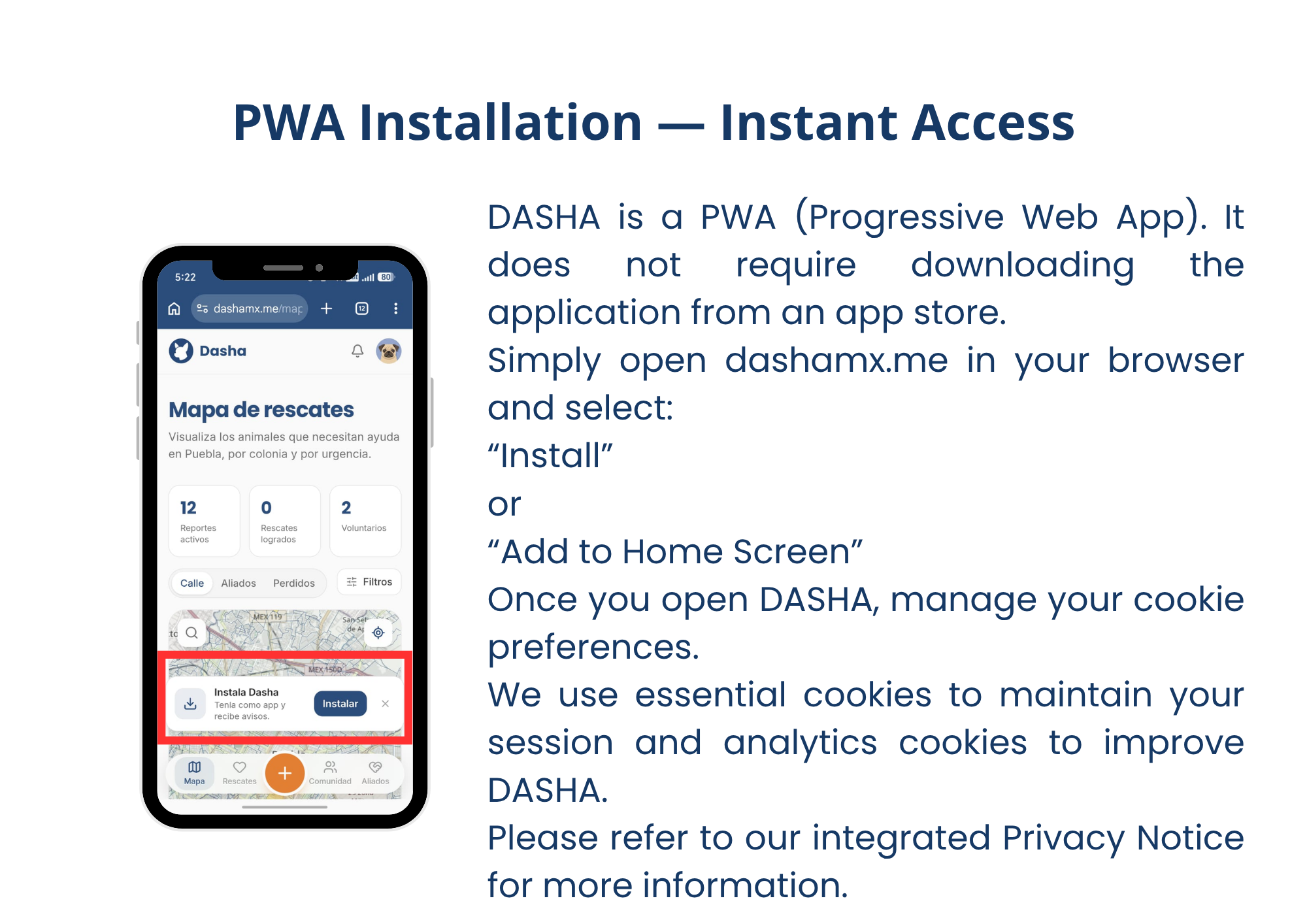
Install Dasha straight from the browser (no app store needed).
-
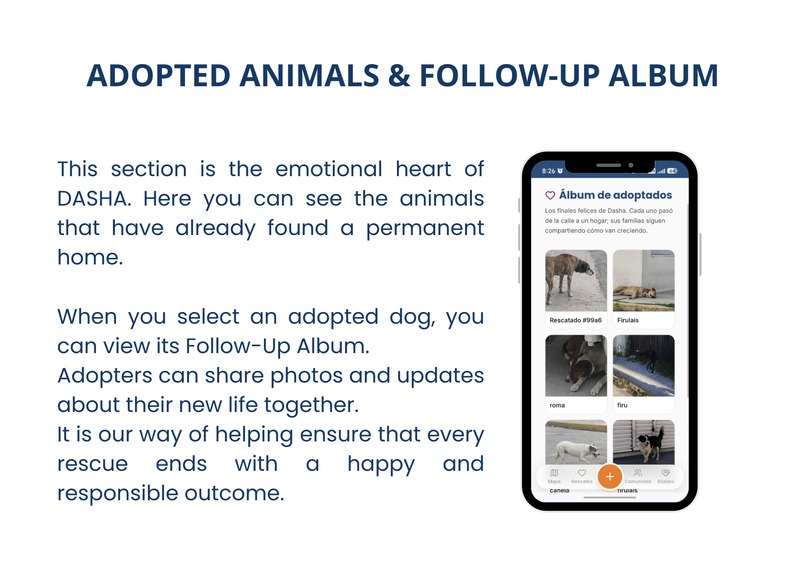
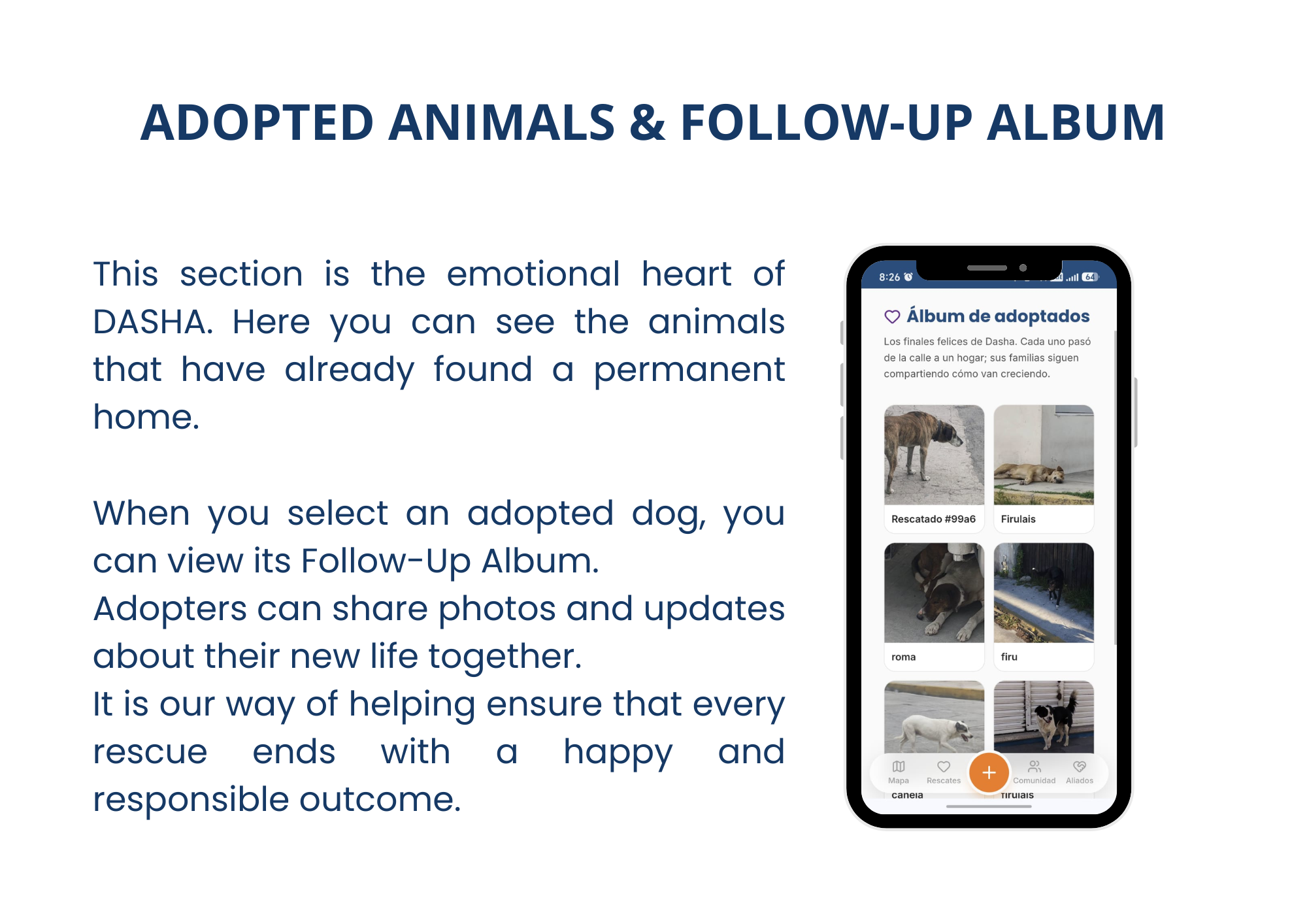
Happy endings: adopters keep sharing how each rescued animal grows up at home.
-
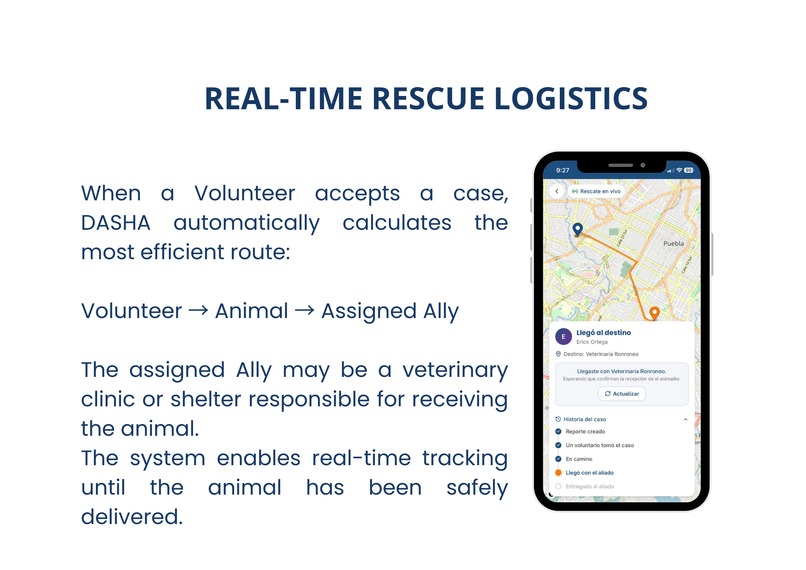
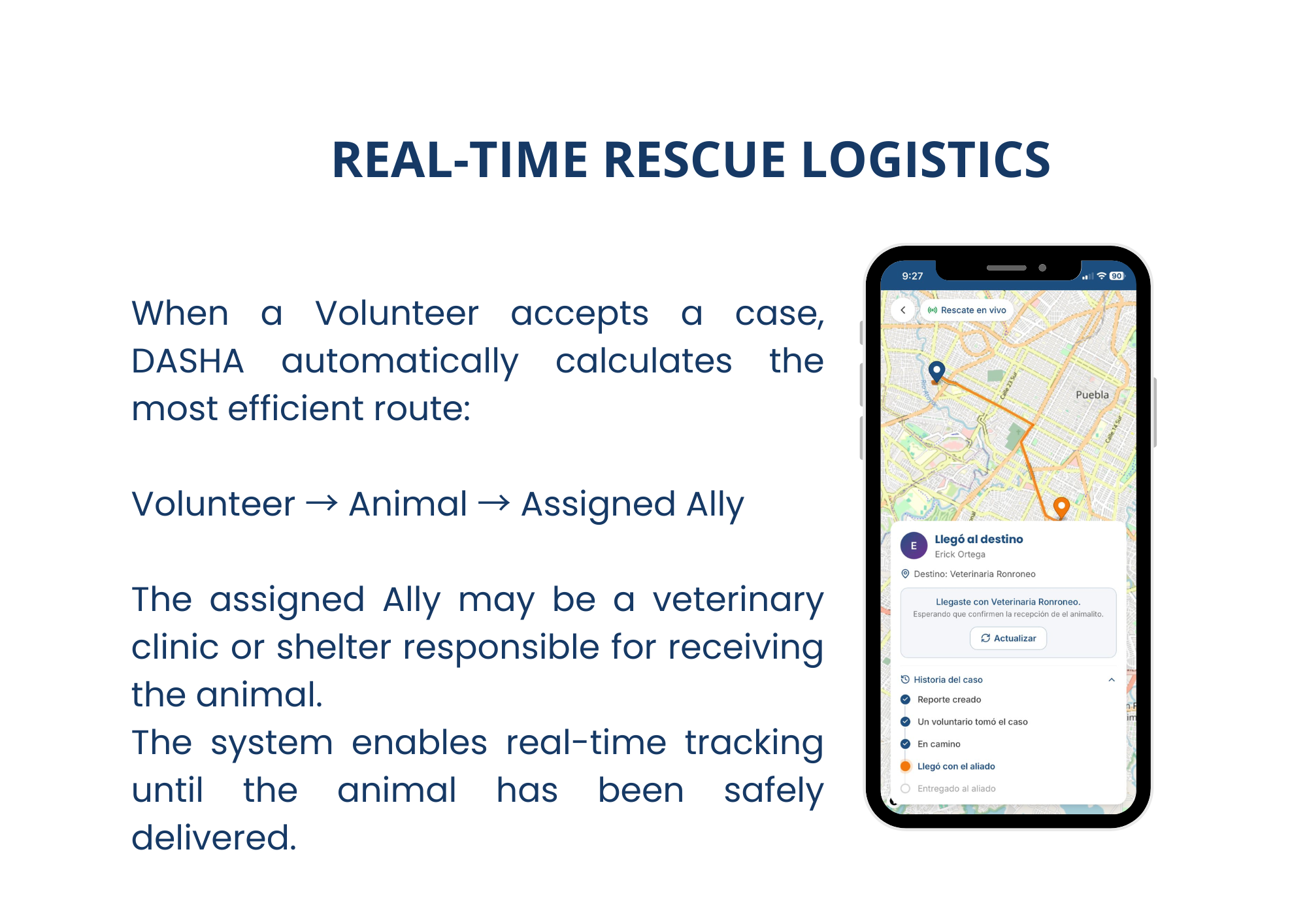
Live tracking of the volunteer's route to the partner clinic, like a ride-hailing app.
-
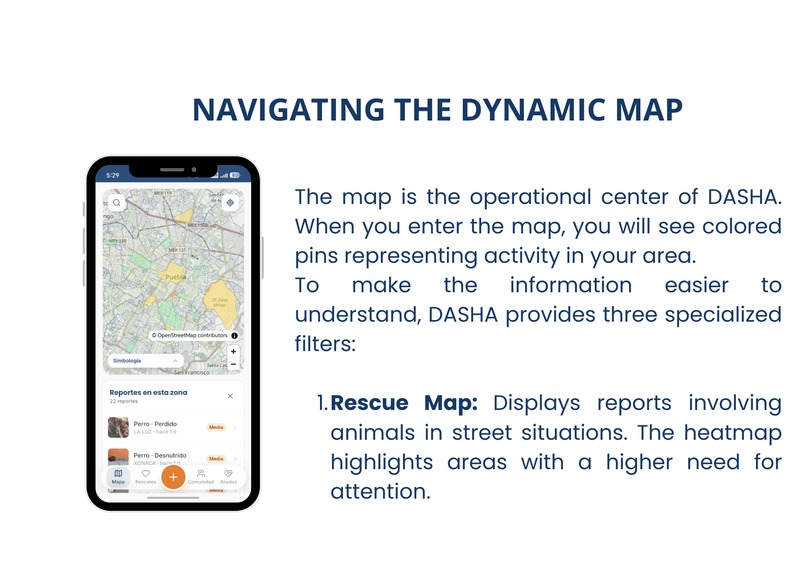
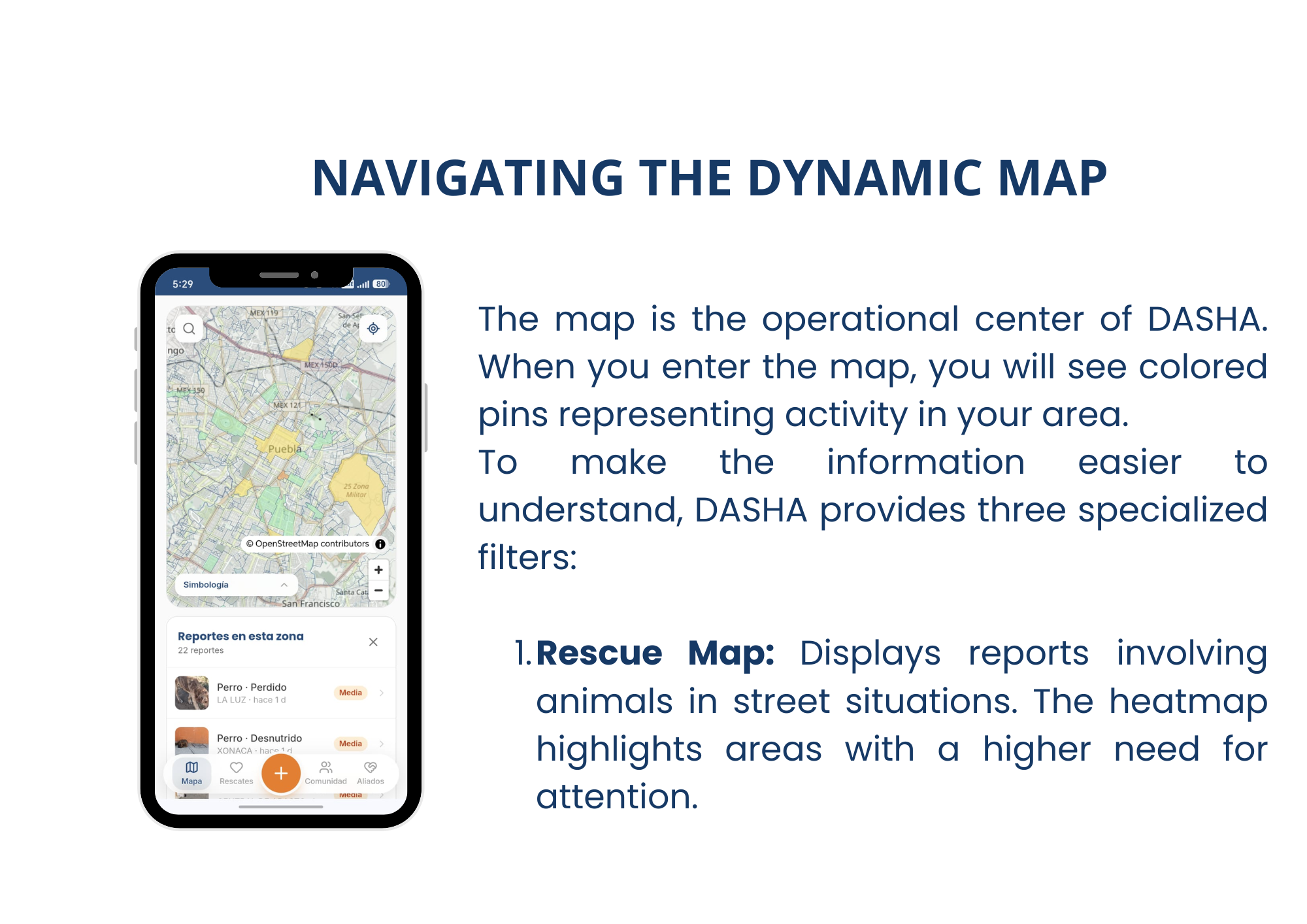
The live map of Puebla: reports by neighborhood and urgency, with a heatmap of the areas that need help most.
Inspiration
In our city, when someone finds an injured or lost animal, they usually take a photo and post it on social media (where it gets buried) and help never arrives. People who want to help, people who can rescue, and clinics that can heal are never connected. We built Dasha to fix exactly that.
What it does
Dasha structures the full rescue cycle in real time:
- Report: Citizens report a street or lost animal with a photo and location; an on-device AI checks the photo really contains an animal.
- Rescue: The nearest volunteer accepts the case and shares their route live, like a ride-hailing app, so everyone can see help is on the way.
- Rehabilitate: Partner shelters and vet clinics receive the animal, open a medical record, and track its recovery.
- Adopt: Once recovered, the animal is listed for adoption; the community can sponsor and donate.
- New life: Adopters share the animal's new story, closing the cycle.
It also includes a live geospatial map, a partner portal, a needs board, push notifications by proximity, and a community forum with events.
How we built it
- Frontend: React + TypeScript, mobile-first, installable as a PWA (Vite, TailwindCSS).
- Backend: Node.js + Express (REST API) with real-time tracking over Socket.IO.
- Data: PostgreSQL + PostGIS for geolocation (finding volunteers within 1 km is solved in the database).
- AI: TensorFlow.js (COCO-SSD) in the browser to validate report photos, plus Google Gemini on the server.
- Media & notifications: Cloudinary and Web Push (VAPID).
- Deployment: In production on Vercel + DigitalOcean/Docker + Caddy, with security by design (HttpOnly cookie sessions, input validation, rate limiting).
Challenges we ran into
Coordinating four different user roles in a single, simple flow; running geolocation efficiently (we moved proximity queries into PostGIS); keeping AI fast and free by running it on-device; and validating with real shelters and citizens instead of guessing.
Accomplishments that we're proud of
Dasha is not a mockup, it is live and used by real people: 14 partner organizations, 101 dogs up for adoption, and 5 already adopted through the platform. In a single week we saw 228 active users, 227 new users, and around 4,900 recorded actions. We validated the idea with 80 people (94% said they would use it) and won 1st place at FEPRO 2026.
What we learned
That leaving the classroom changes everything: working with real shelters and real cases taught us more about the problem and about building software people actually use, than any assignment could.
What's next for Dasha
Deeper forum moderation (including AI image review), proximity-based event notifications, an online donation gateway, load testing for a metro-wide rollout, and onboarding more shelters and cities.
Built With
- cloudinary
- digitalocean
- docker
- express.js
- google-gemini
- node.js
- postgis
- postgresql
- prisma
- pwa
- react
- socket.io
- tailwindcss
- tensorflow.js
- typescript
- vercel
- vite
- web-push


Log in or sign up for Devpost to join the conversation.