-
-

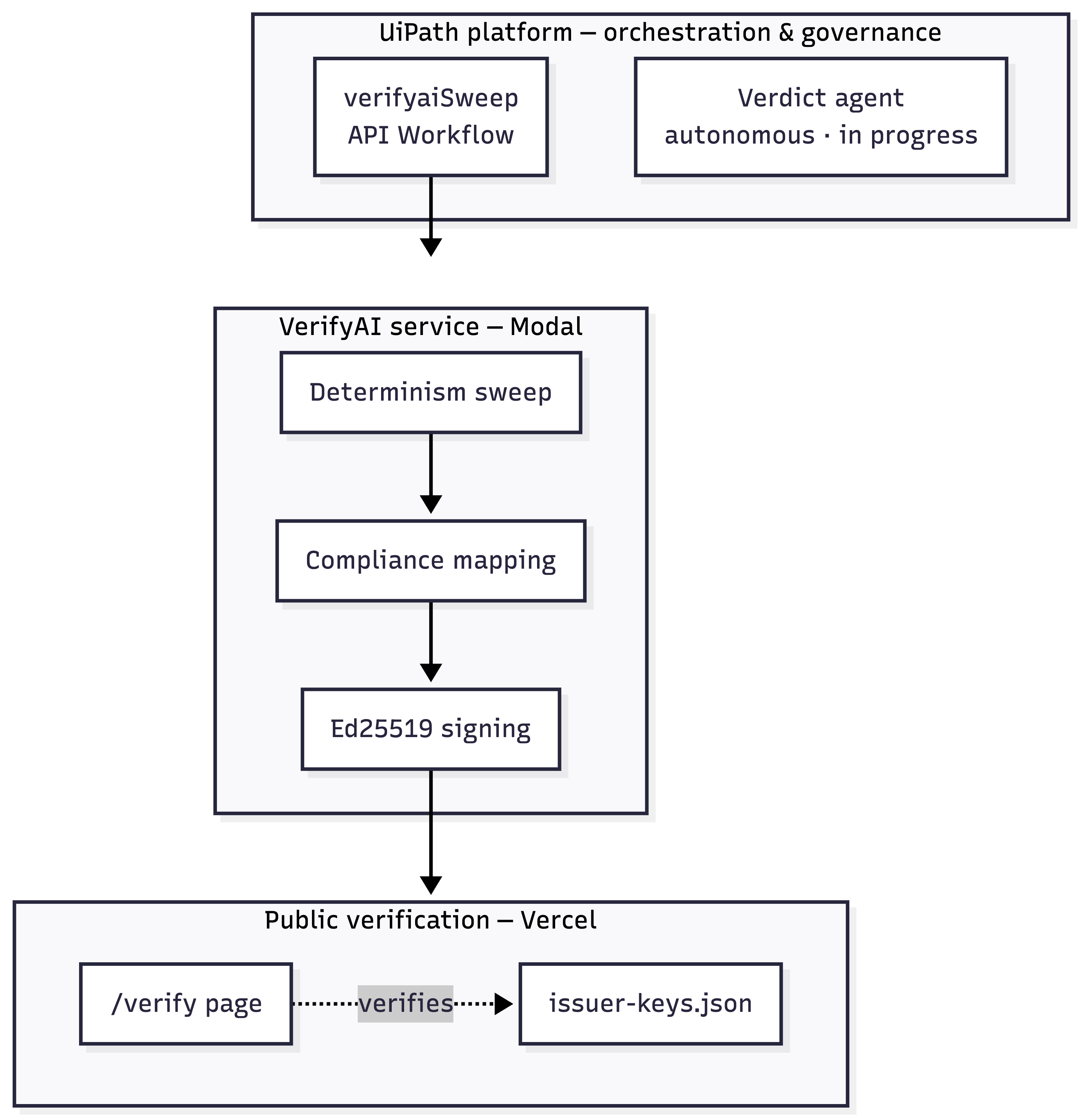
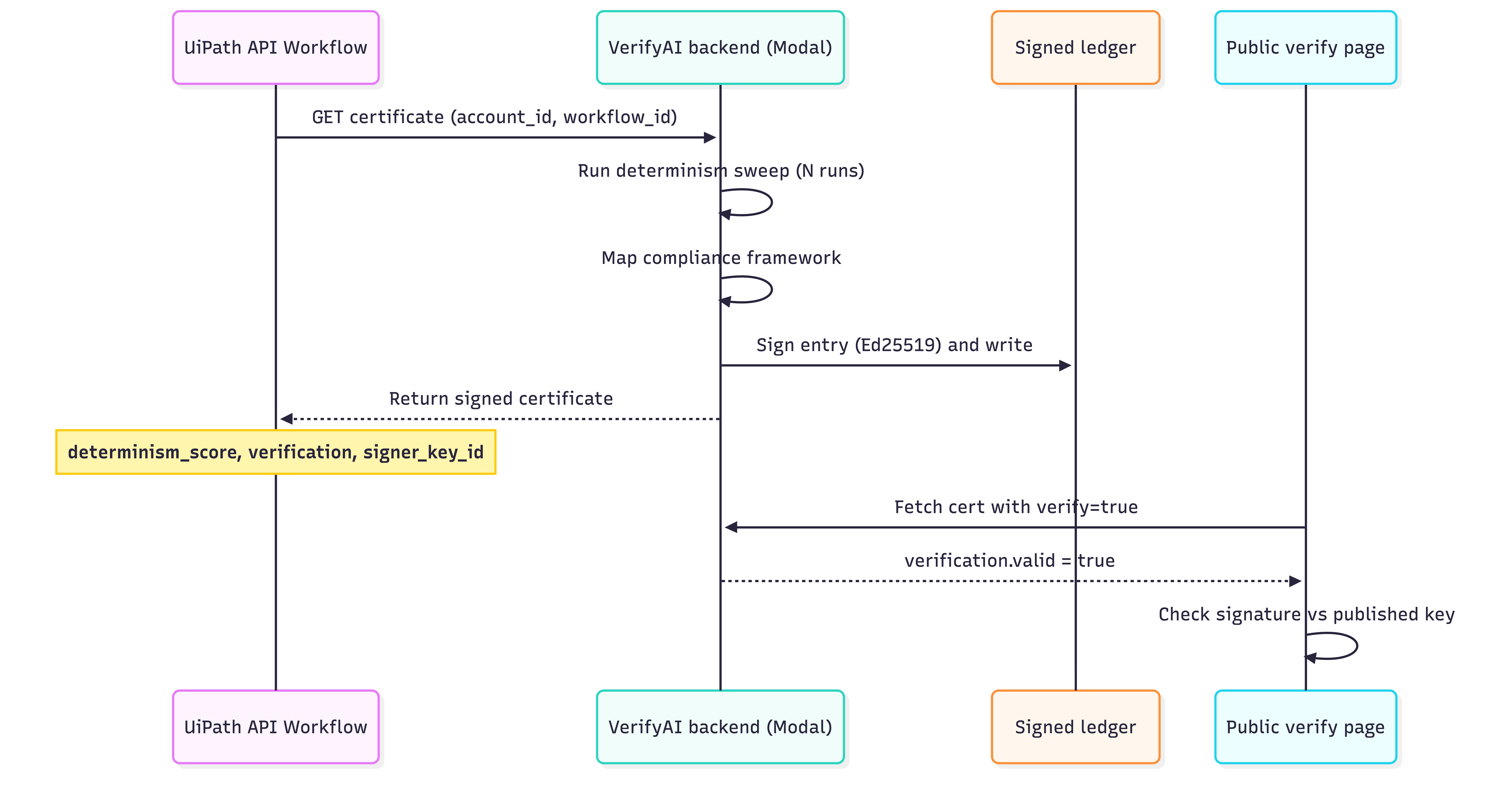
a request enters through UiPath, gets scored and signed by the VerifyAI backend, and is independently verifiable on the public page.
-
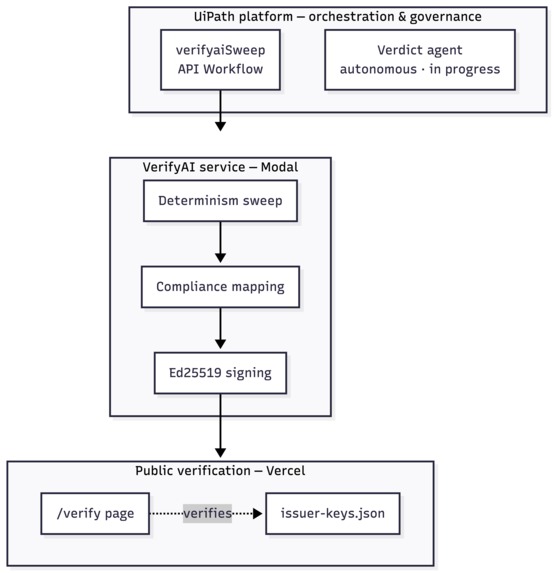
VerifyAI stays orchestrator-agnostic. UiPath is one orchestrator it fits to; the integration is 1-way reversible and not coupled to UiPath.
-

Claude Code, loaded with UiPath skills, drives the platform from the terminal: enumerates feeds, lists packages, deploys the workflow.
-
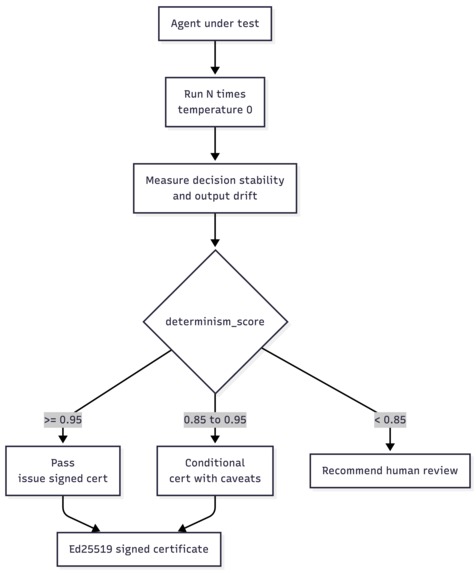
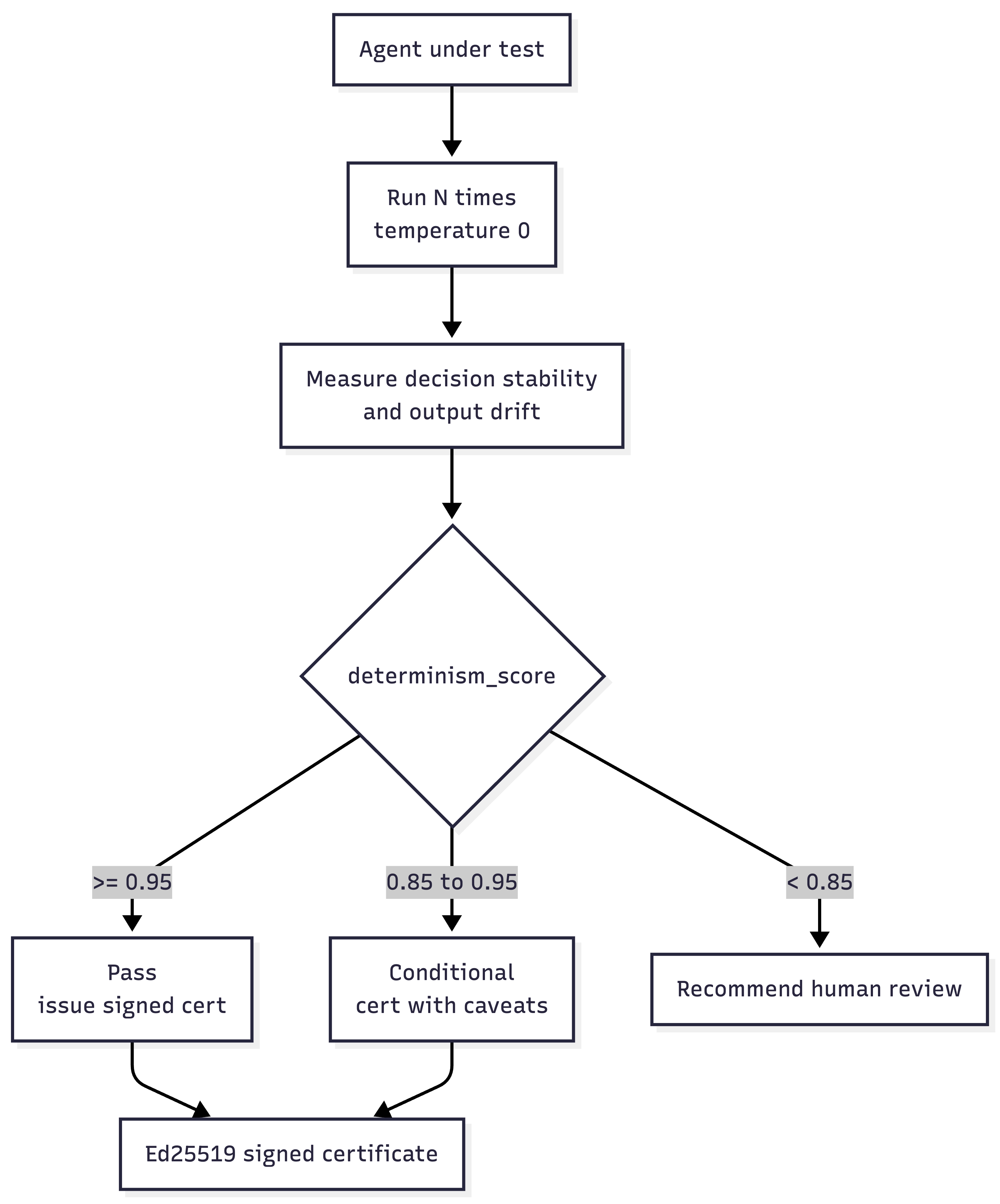
No fixed outputs — VerifyAI runs the agent N times and scores decision stability and output drift.
-
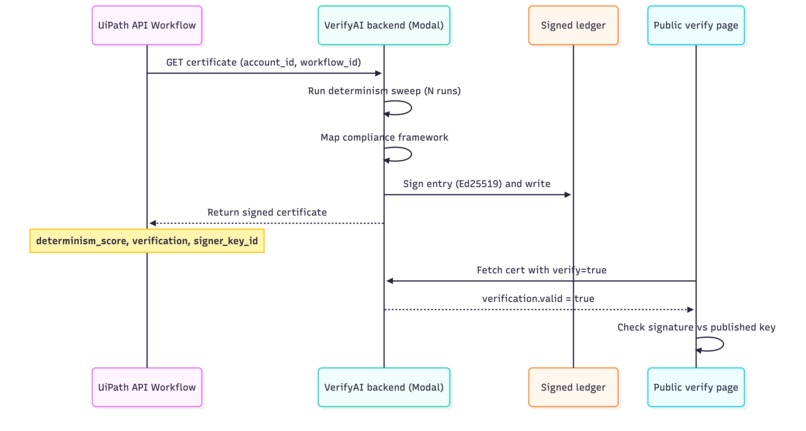
UiPath sends account and workflow to VerifyAI. It runs the determinism sweep, signs the cert, and returns it for public verify.
-

API Workflow as orchestration layer
-
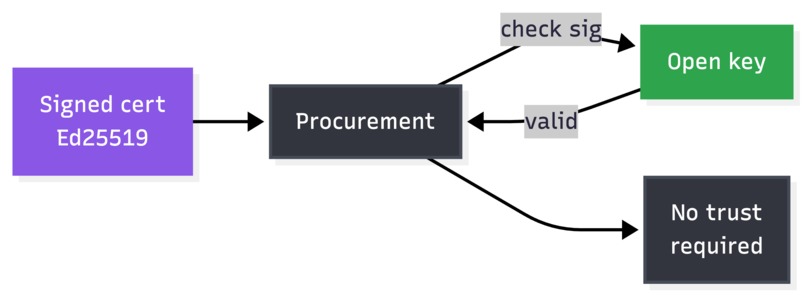
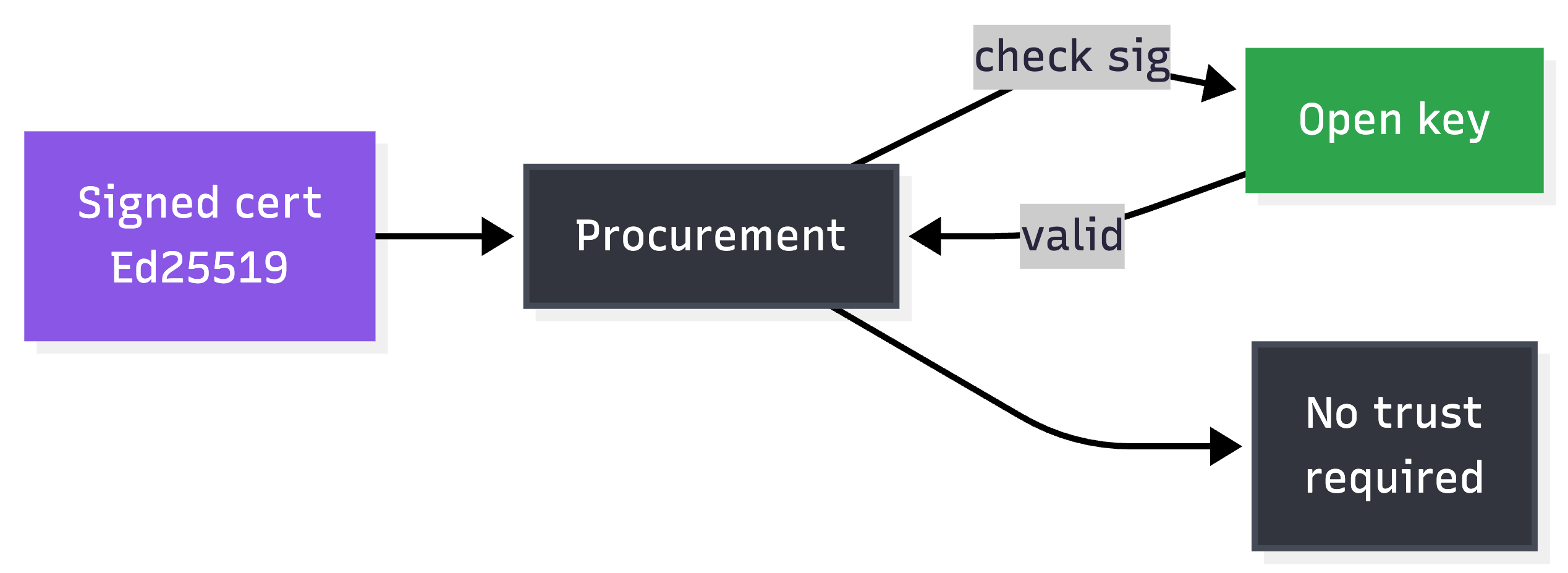
Signed and publicly verifiable
-

UiPath for Coding Agents




Inspiration
AI agents are going into regulated, high-stakes workflows. Financial summaries. Compliance decisions. Customer-facing output. None of them ship with proof of how they behave. Self-attestation does not clear enterprise procurement and it does not satisfy underwriters. There is no Underwriter's Lab mark for AI agents.
We built VerifyAI to be that mark. An independent, issuer-paid certification authority that tests an agent and issues a cryptographically signed certificate anyone can verify. UiPath is where it runs.
What it does
VerifyAI tests AI agents for determinism and compliance per real user workflow, then issues an Ed25519-signed certificate. Instead of asserting fixed outputs, which non-deterministic agents will never satisfy, it runs the agent N times and scores decision stability and output drift. It maps the result against a compliance framework like GLBA. Every certificate is signed at write time, and the public key is published openly so verification does not depend on trusting VerifyAI or the vendor.
On UiPath, a parameterized API Workflow takes an account and workflow ID, calls the VerifyAI backend, and returns the signed certificate into the platform. The point is optimal-agent-per-workflow recommendations backed by signed evidence, not vendor claims.
How we built it
The backend runs on Modal with FastAPI. Determinism sweeps, compliance mapping, and Ed25519 signing on every ledger entry at write time. The verification surface is on Vercel, a public verify page plus a well-known issuer key manifest.
The UiPath layer is a parameterized API Workflow built in Studio Web. It takes account_id and workflow_id, fires an HTTP request to the backend, and uses a Response activity to return the full signed certificate. We added an Autonomous agent on top to read the certificate and write a compliance verdict.
For the coding-agents bonus we installed UiPath's full skill catalog into Claude Code with uip skills install --agent claude, authenticated to our tenant, and drove the platform from the terminal. Claude Code enumerated Orchestrator feeds, listed published packages, and diagnosed deployment state using native UiPath fluency.
Challenges we ran into
The hard part was not VerifyAI. It was the agent-to-workflow binding inside Studio Web. The API Workflow worked perfectly in standalone Debug, returning the full signed certificate with a determinism score of 0.9892. But when the agent called it, the workflow kept returning null.
We traced it methodically. First the query parameters were passing literal expression text instead of resolved values. Then the inputs were undefined at debug time. Then the workflow had no output defined, so we added the output schema and a Response activity. Then the output type did not match what Response returned. Each fix was correct and the standalone workflow kept improving, but the agent kept failing.
The root cause turned out to be deeper than any single setting. The agent was bound to a frozen debug-build snapshot in the personal workspace, not to the fixed workflow. Every debug run and every manual job pulled the same stale package. We confirmed this with Claude Code driving uip, which listed the feeds and showed the only published API Workflow was a 1.0.0 debug build with no Response activity. This is how we fixed it.
Accomplishments that we're proud of
Real cryptography, not a mock. Ed25519 signing on every sweep, round-trip tested to reject tampering and reject the wrong key. A public verification page where anyone, including judges, can paste an account and workflow and verify our certificates against our published key. A working UiPath API Workflow that returns the signed certificate live. And a coding-agents integration that is genuine, with Claude Code operating the platform through UiPath's own skills rather than just being used somewhere off to the side.
What we learned
The whole value of a certification authority is that the buyer trusts the mark, not the vendor's word, so the signing and the public key have to be verifiable by anyone. We learned to test non-deterministic systems by measuring stability and drift across runs instead of asserting fixed outputs.
What's next for Darwin UiPath VerifyAI
Expand compliance mapping beyond GLBA to SOC 2 and the NIST AI RMF. Add Maestro orchestration for intake, probe, and human review on low scores. And take the issuer-paid model to more design partners beyond Echelor, so VerifyAI becomes the certification gate that regulated enterprises require before an agent ships.

Log in or sign up for Devpost to join the conversation.