darkwire
My project, named Darkwire, is my submission for the Bitcoin 2025 Official Hackathon, focused on enabling censorship-resistant communication and Bitcoin transactions independent of the internet.
Inspiration
The project was born out of the belief that while the internet may be optional in certain circumstances, freedom is not. The inspiration stems from real-life scenarios where traditional internet and financial systems fail or are subject to control and surveillance:
- Evan - A priest from Zimbabwe: Experienced severe hyperinflation where physical currency lost value rapidly. He used Bitcoin to bypass the crumbling financial system, demonstrating a need for an alternative, decentralized method of exchange for survival, built purely out of necessity.
- Lezhi - A Chinese Programmer: Used the Ethereum blockchain to embed cryptic messages about Chinese corporate mind control operations, smuggling truth in code when other communication avenues were blocked due to censorship.
These stories highlight the fragility and potential for control within existing communication and financial infrastructures, underscoring the need for a system that operates outside of these dependencies.
What it does
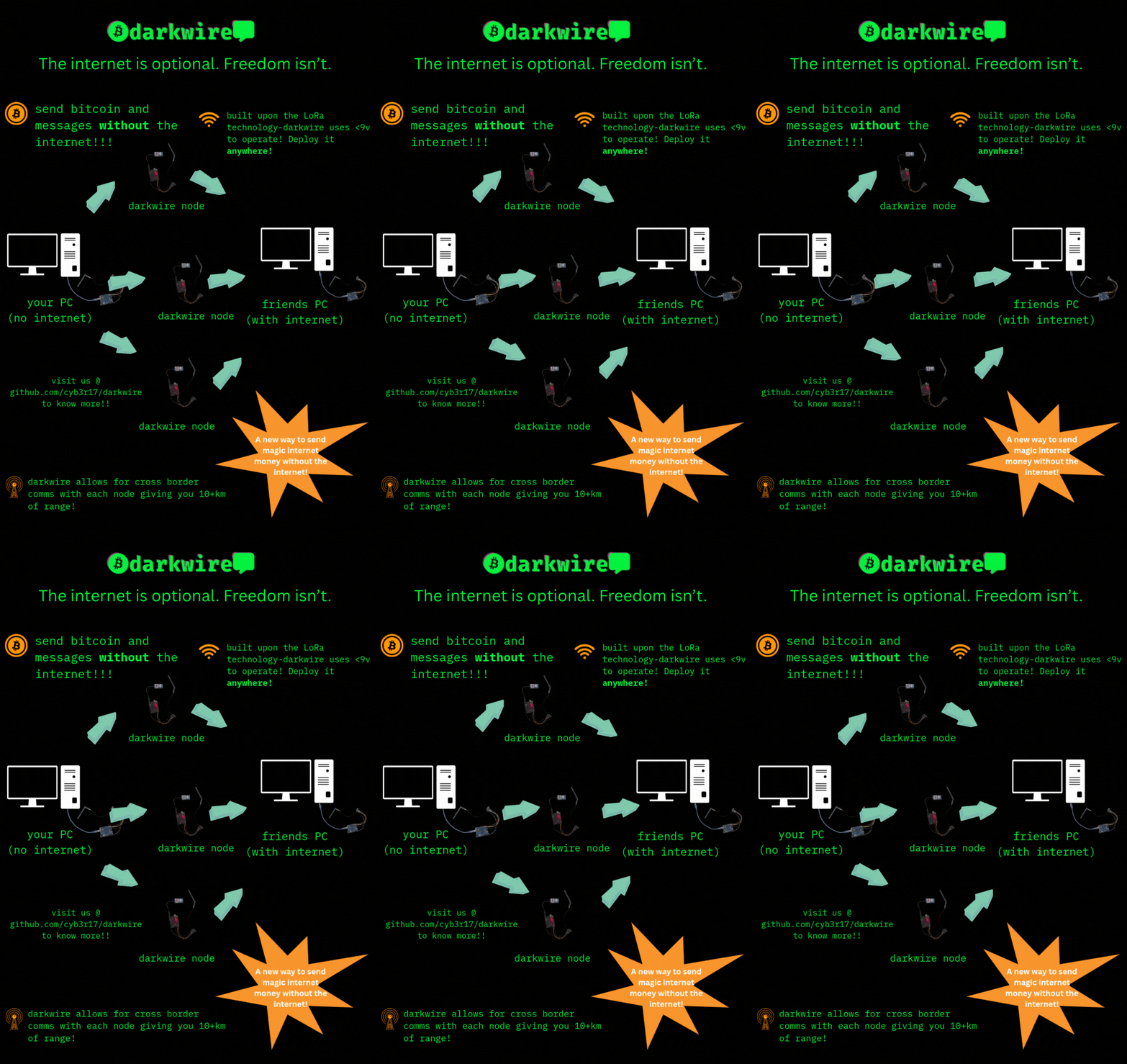
Darkwire provides a method for sending encrypted data packets, specifically designed initially for Bitcoin transactions and simple text messages (likened to tweets), without relying on conventional internet connectivity (like Wi-Fi or satellite internet). It operates by routing these packets through a mesh network of simple, affordable hardware nodes using LoRa radio technology.
- Off-Internet Communication: Enables sending messages and data in environments where internet access is restricted, censored, or unavailable.
- Bitcoin Transaction Relay: Allows signed Bitcoin transactions to be broadcast and relayed through the mesh network until a node with internet connectivity can push it to the Bitcoin network.
- Censorship Resistance: By avoiding traditional internet infrastructure for most hops, it bypasses typical points of surveillance and control.
- Decentralized Network: Forms a peer-to-peer network where nodes relay messages for each other, making it resilient against single points of failure or shutdown switches.
How we built it
Darkwire is built upon a network of low-cost hardware nodes communicating via LoRa radio transceivers.
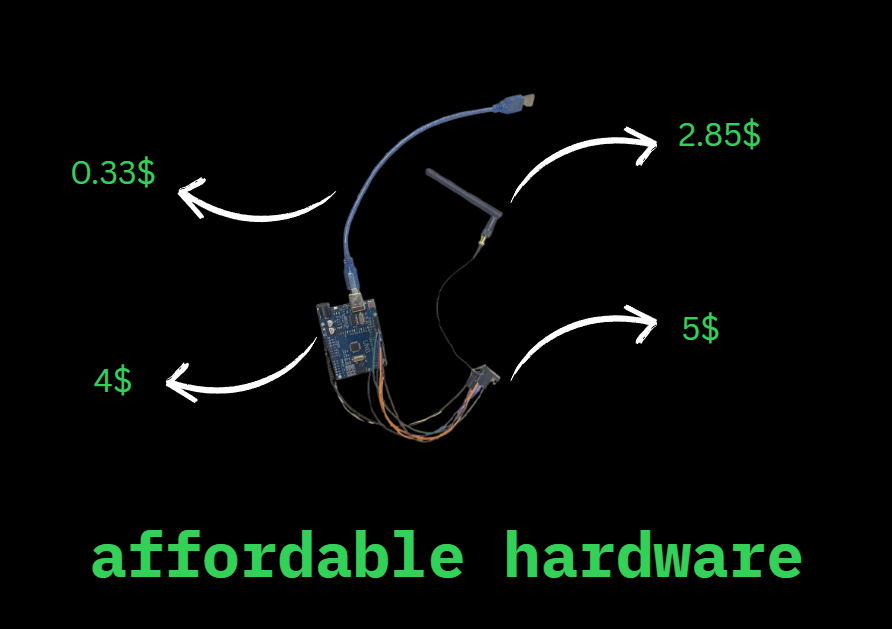
- Each node typically consists of a microcontroller (like an Arduino UNO), a LoRa transceiver module (e.g., RA-02), an antenna, and a power source (which can be simple like batteries or solar).
- Data (messages or signed Bitcoin transactions) is signed, fragmented into smaller packets, and then sent wirelessly from one Darkwire node to another using LoRa.
- These packets 'hop' across the mesh network from node to node.
- The network requires at least one node to have traditional internet connectivity to relay the accumulated packets (like broadcasting a Bitcoin transaction to the blockchain) to the external world.
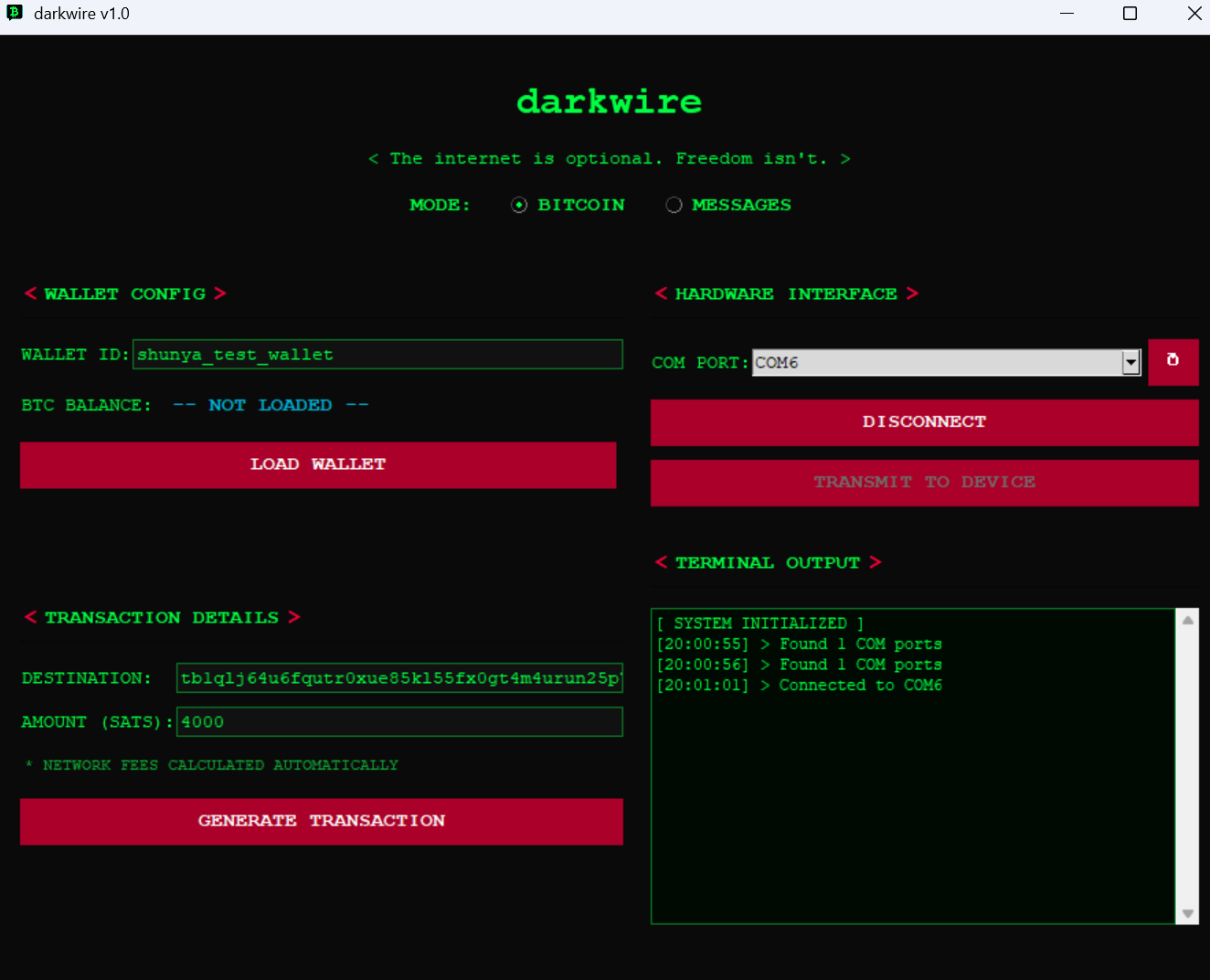
- The system logic for packet signing, fragmentation, routing (multi-hop relay), and eventual reconstruction and external relay is implemented in software running on the microcontrollers and potentially connected devices (like a PC).
- The focus was on using affordable, widely available components and resourceful design principles.
Challenges we ran into
Developing Darkwire involved several technical challenges:
- Limited Bandwidth of LoRa: LoRa is designed for long-range, low-power communication, which means it has limited bandwidth. Effectively fragmenting and transmitting data, especially larger Bitcoin transaction data, within these limitations was a challenge.
- Network Routing and Reliability: Designing a robust multi-hop mesh network that ensures packets reliably reach their destination across potentially lossy radio links and through multiple hops is complex. Handling packet loss and reassembly is critical.
- UTXO Retrieval: The initial Bitcoin functionality requires manual updating of UTXOs (Unspent Transaction Outputs), which is necessary to construct valid transactions but typically requires internet access to check the blockchain. Automating this process over the constrained LoRa network is a significant challenge for achieving complete off-internet financial freedom.
- Range Variability: LoRa range is highly dependent on the environment (rural vs. urban, line-of-sight). Building a network capable of covering significant areas reliably required considering these environmental factors in deployment strategies.
- Hardware Reliability: Ensuring the simple, affordable hardware is robust enough for various deployment environments (weather, physical security) poses practical challenges.
Accomplishments that we're proud of
Despite the challenges, the project achieved several key accomplishments:
- Functional Prototype: Successfully built a working system that demonstrates both off-internet text messaging and the relay of Bitcoin transaction data using a LoRa mesh network.
- Validated Core Concept: Proved the feasibility of bypassing traditional internet infrastructure for critical communications and financial transactions using low-power radio mesh networks.
- Affordable and Accessible Design: Created a system using inexpensive, off-the-shelf hardware, making it accessible for individuals and communities worldwide, especially in resource-constrained environments.
- Open Source: Released the project as completely open source (FOSS), allowing anyone to inspect, build upon, and deploy the technology, fostering decentralization and transparency.
- Inspired by Real Needs: Created a solution directly addressing real-world problems of censorship and financial vulnerability, driven by necessity rather than just abstract ideology.
What we learned
The development process provided valuable lessons:
- Practical LoRa Mesh Design: Gained hands-on experience in building and managing data flow over LoRa mesh networks, understanding the trade-offs between range, bandwidth, and reliability.
- Data Handling for Offline Networks: Learned how to effectively structure, fragment, and relay different types of data (simple messages vs. complex financial transactions) across a multi-hop radio network.
- Bitcoin's Infrastructure Dependencies: Deepened understanding of Bitcoin's reliance on internet connectivity for tasks like UTXO validation and transaction broadcasting, highlighting the specific points that need to be addressed for truly offline operation.
- Importance of Open Hardware/Software: Reinforced the value of open-source principles for developing resilient, community-driven technologies that are resistant to central control.
- Necessity as a Driver for Innovation: Confirmed that critical needs in challenging environments can drive innovative solutions using readily available tools.
What's next for darkwire
The future plans for Darkwire aim to enhance its capabilities and robustness:
- Automated LoRa-based UTXO Retrieval: A primary goal is to develop a method for nodes to retrieve necessary UTXO information over the LoRa network, eliminating the need for manual updates and achieving complete internet independence for Bitcoin transactions.
- Support for Additional Cryptocurrencies: Explore and implement support for other cryptocurrencies like Ethereum (ETH) and Monero (XMR), broadening the system's utility for different types of decentralized transactions and privacy needs.
- Improved Hardware Design: Move beyond basic circuit diagrams to provide professional PCB schematics, enabling the creation of more reliable, compact, and potentially weatherproof hardware nodes.
- Enhanced Messaging Features: Improve the robustness and features of the text messaging component, potentially allowing for longer messages, different data types, or group communication within the mesh.
- Wider Deployment & Community Building: Focus on documenting the project clearly and building a community around it to facilitate wider deployment and development, especially in target areas like border regions and censored environments.


Log in or sign up for Devpost to join the conversation.