-
-
cover
-
in-the-headset
-
web-viewer
-
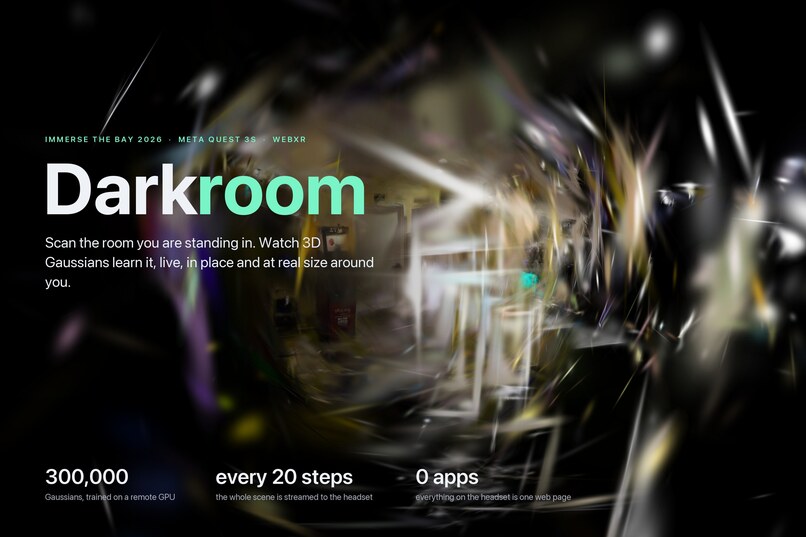
photo-vs-gaussians
-
one-view-through-training
-
how-it-works
Inspiration
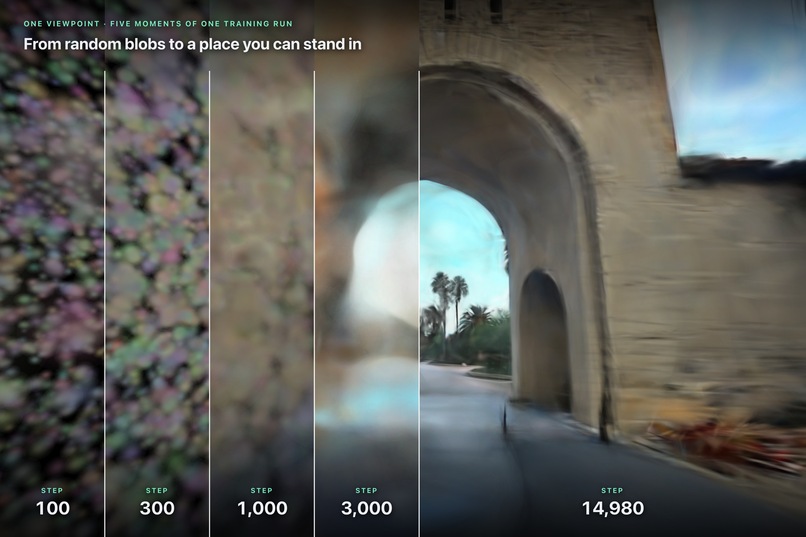
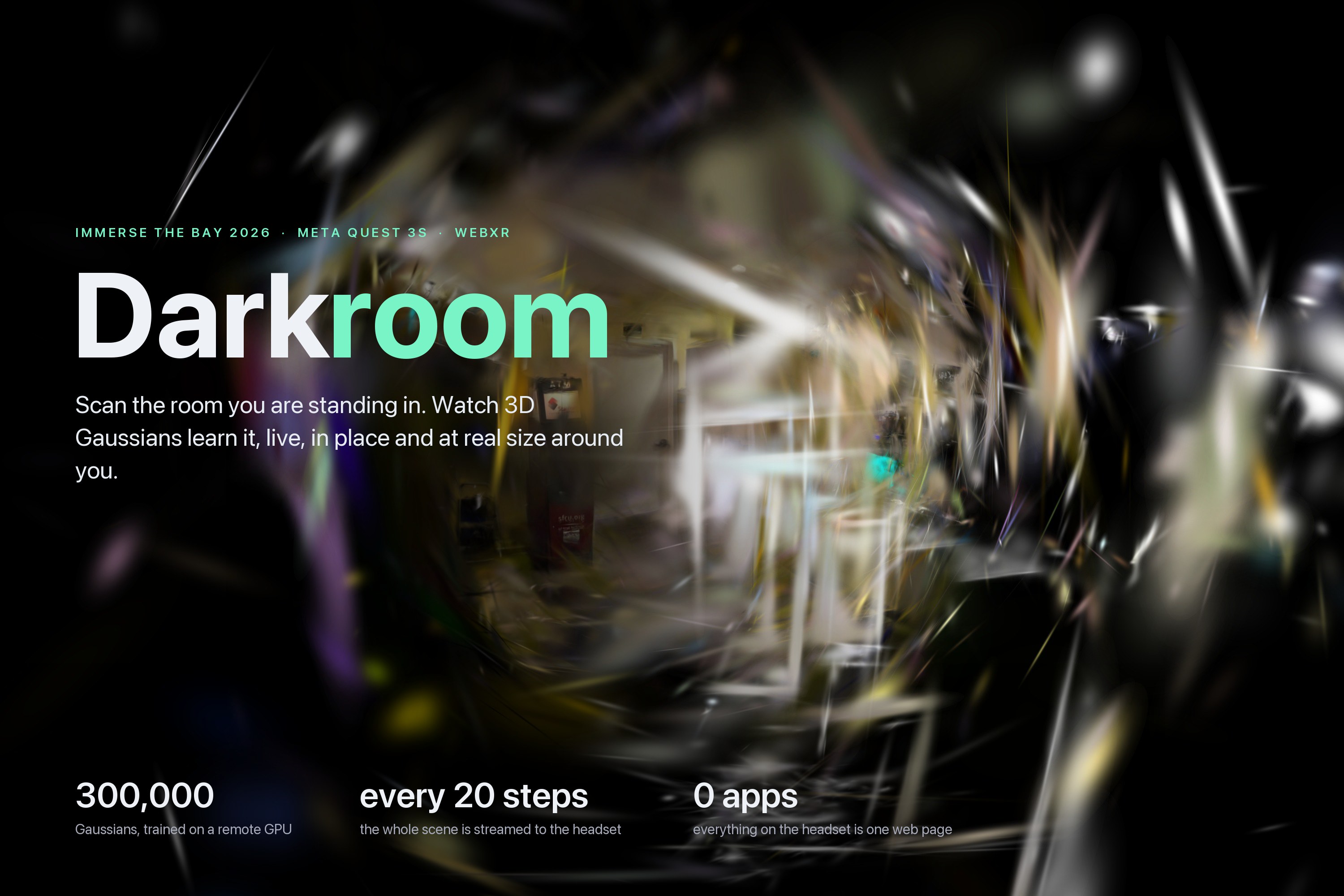
Gaussian Splatting is currently the most prominent method for 3D reconstruction. People often focus solely on the final reconstruction results, overlooking the reconstruction process itself, which is a truly fascinating endeavor. Flickering and shifting, the Gaussians drift like galaxies evolving across the cosmos, like a half-remembered dream slowly coming into focus. There is no better place to witness this evolution than in MR. Through this project, we hope to help people understand how Gaussian Splatting works, and to show the quiet beauty of a world being visually reconstructed.
What it does
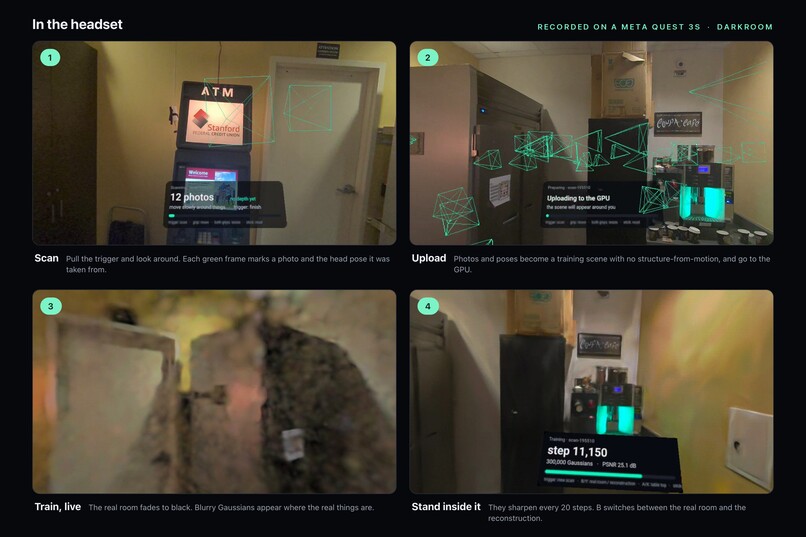
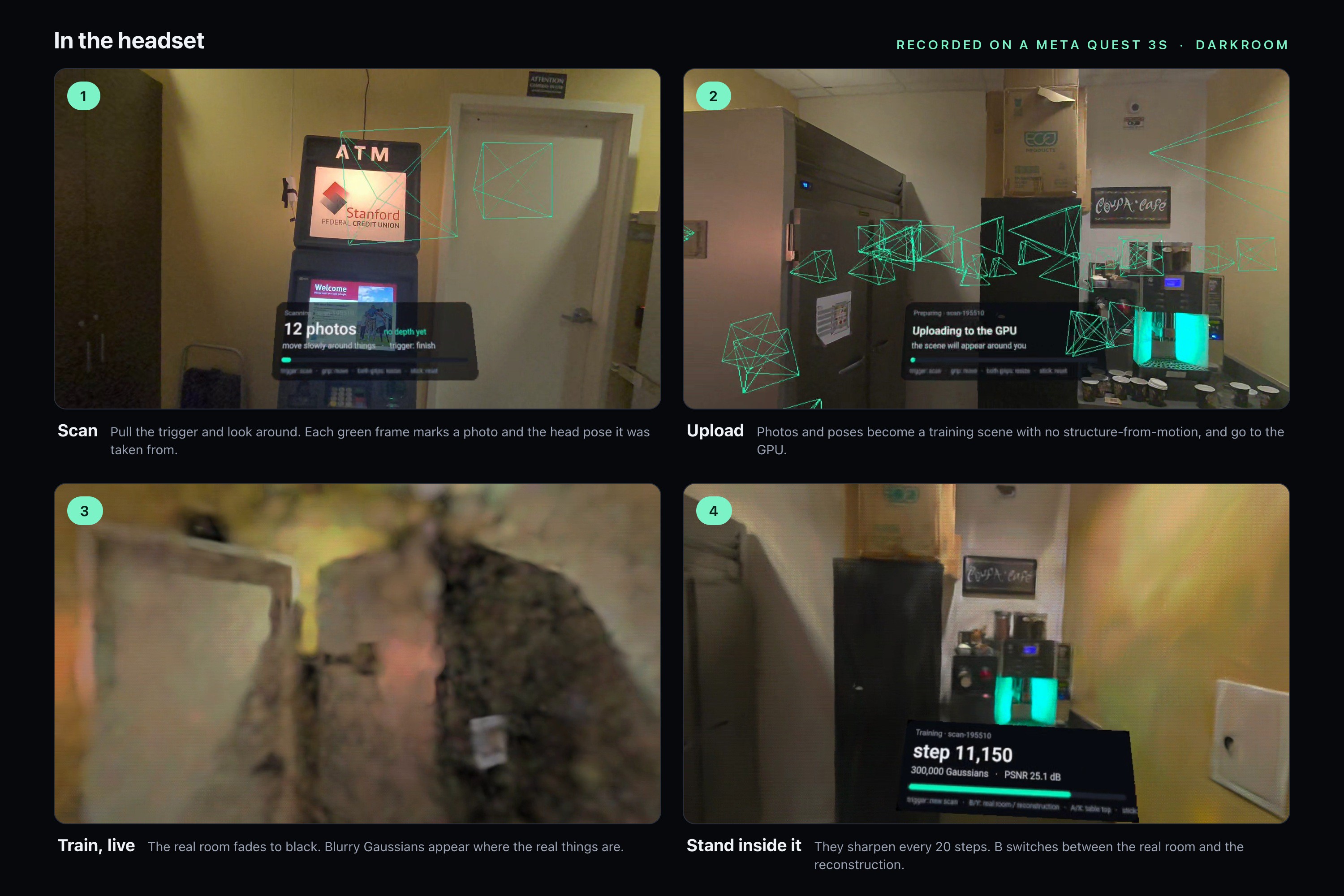
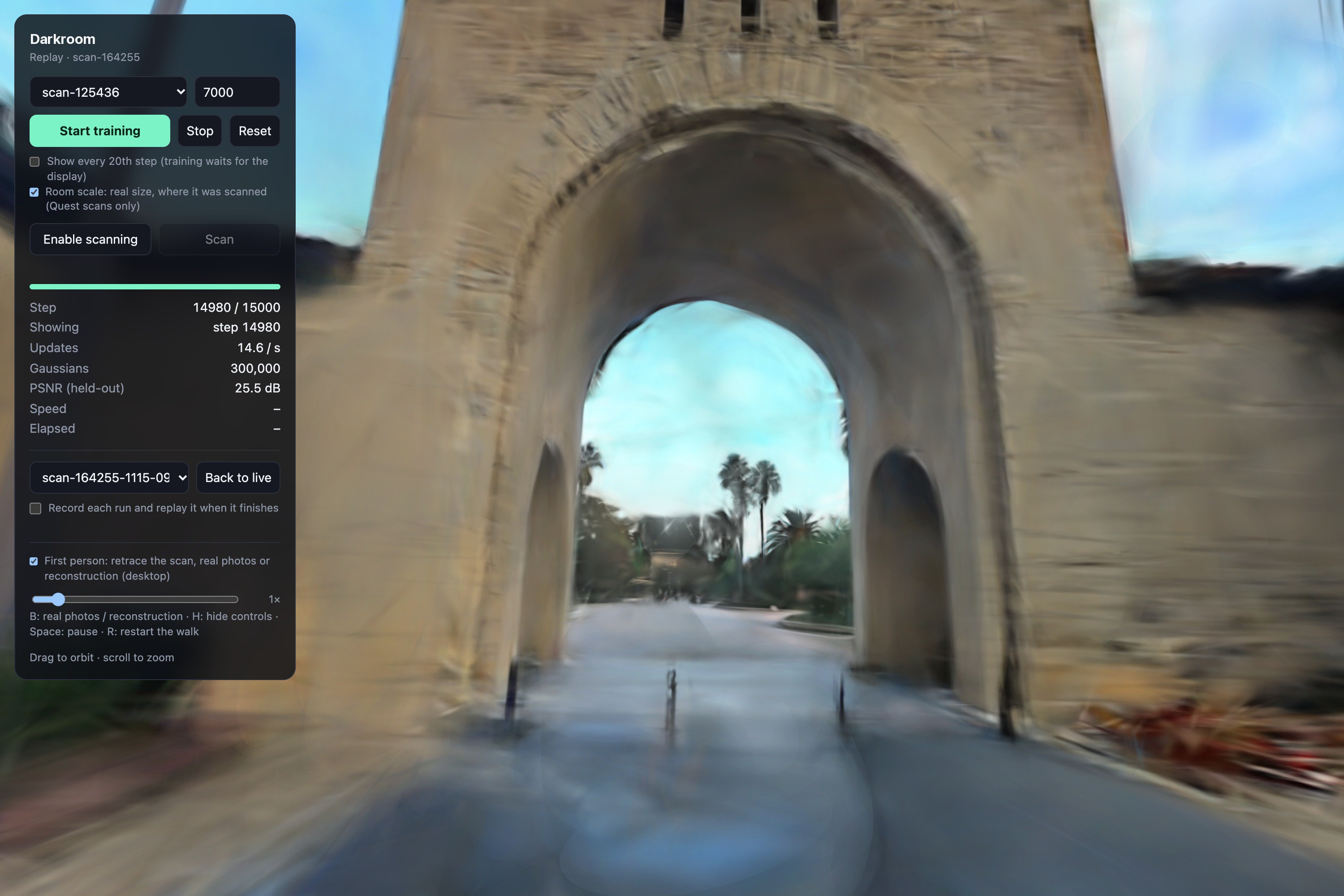
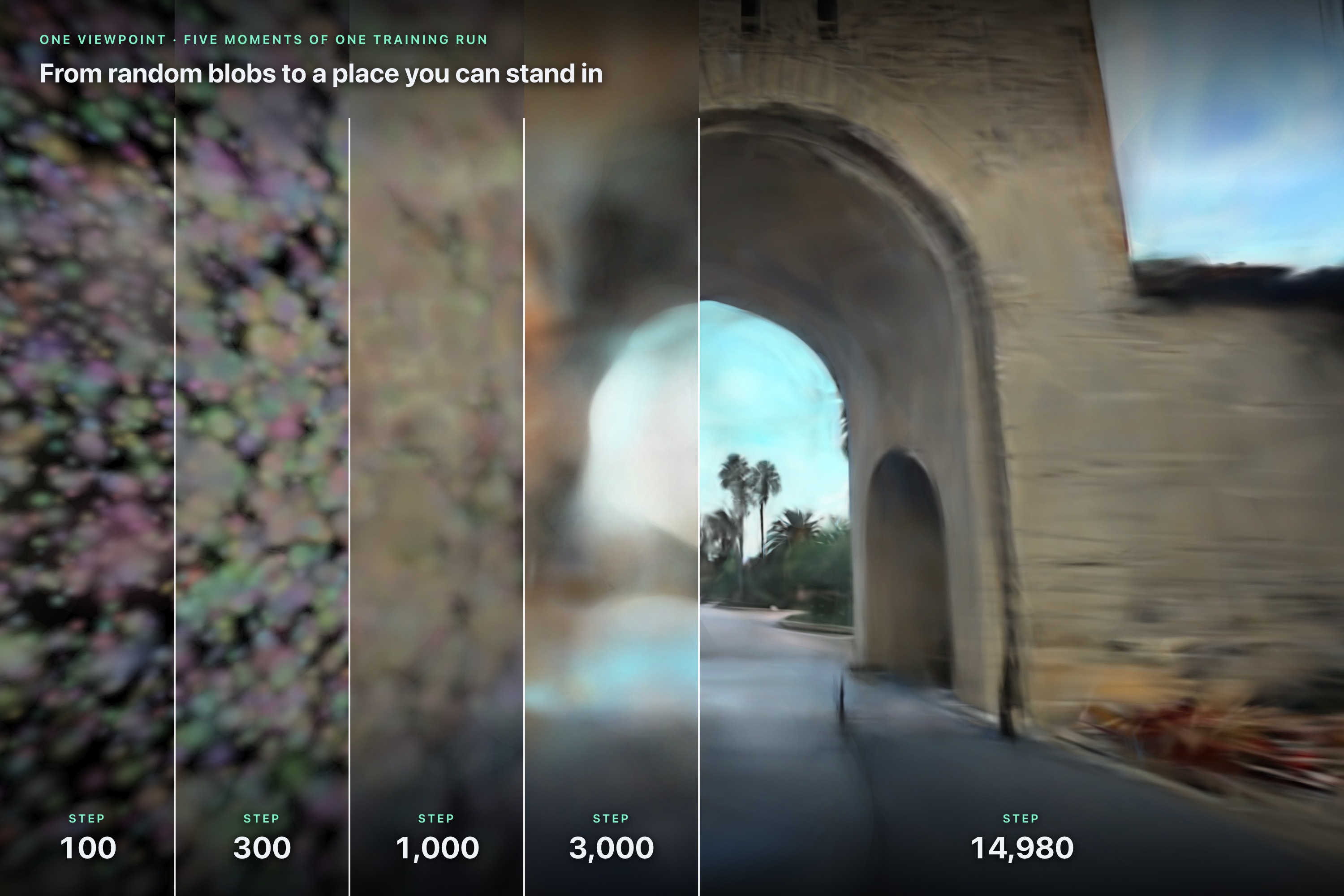
Users move freely through a scene, photos from various perspectives are automatically generated. The Gaussian reconstruction process takes place in real time on a server. While the model trains, the server streams what it sees back to your headset, live. At first it’s a cloud of blurry points. Then the blobs move, grow and change color, and the scene slowly comes into focus around you.
How we built it
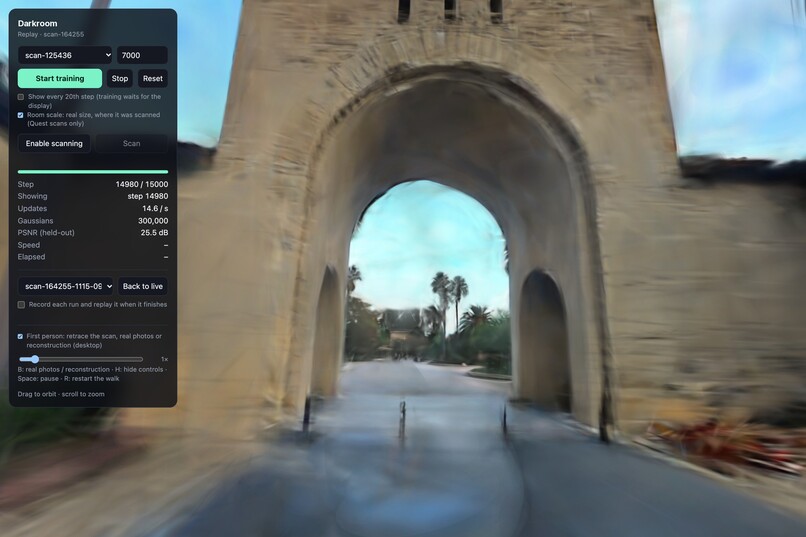
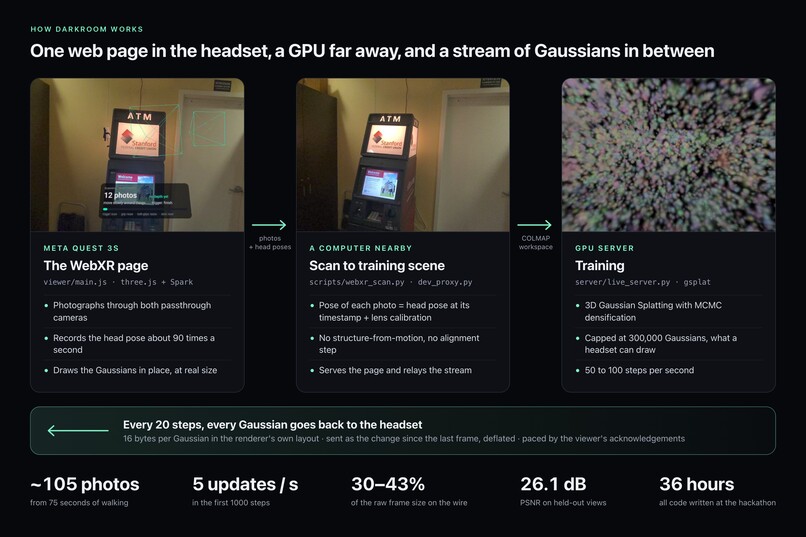
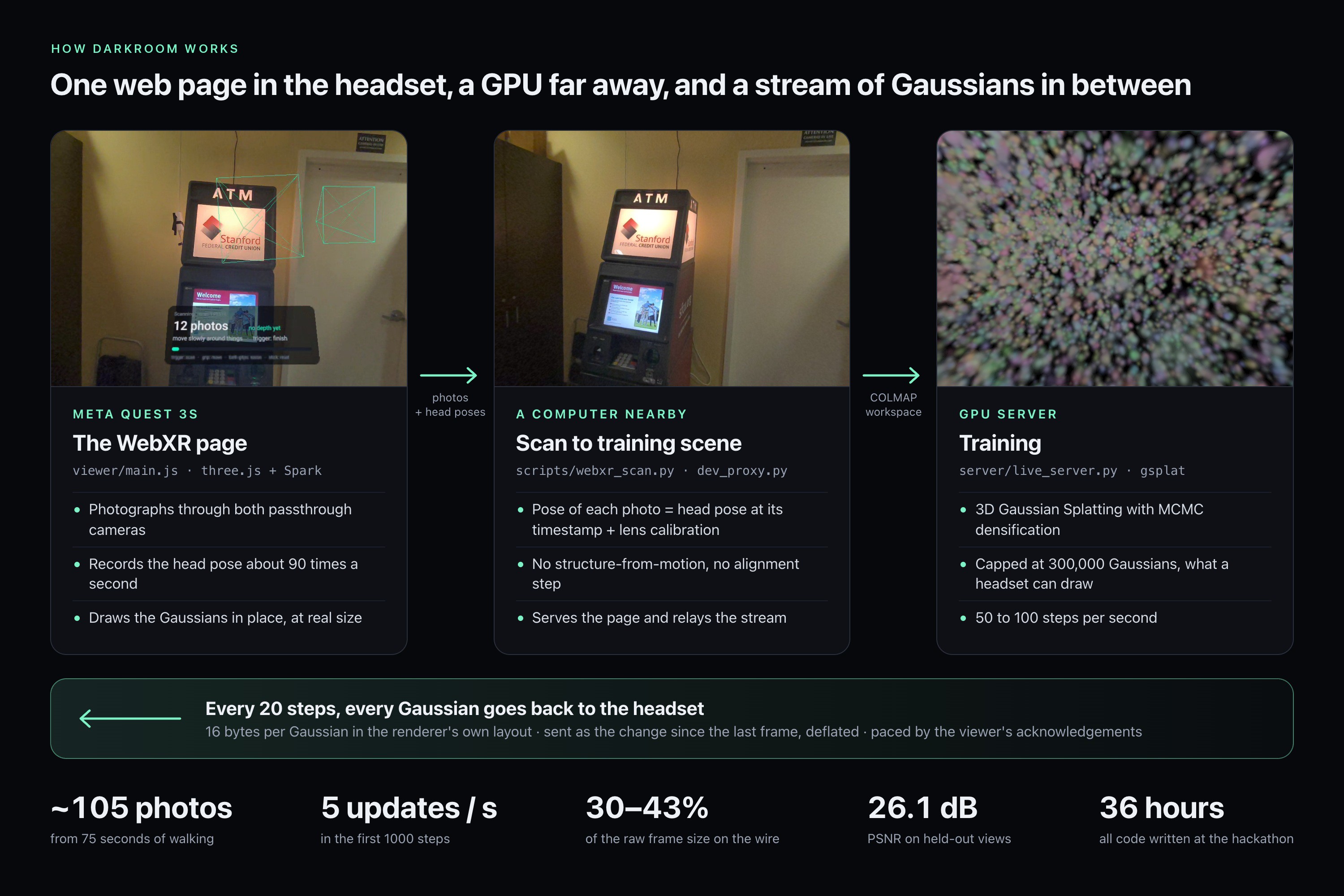
In the demo, we use a WebXR web page built with three.js as the viewer that captures passthrough camera frames, head poses and depth on the Quest3s. We skip slow structure-from-motion and send the scan straight to a GPU server because the headset already knows where each photo was taken. There, gsplat trains up to 300,000 Gaussians at about 100 steps per second. Every 20 steps the server streams the changed Gaussians back to the headset
Challenges we ran into
The hardest part was bandwidth. A single frame of Gaussians is almost 5 MB, but our link to the headset carried only about 1.2 MB/s. We solved it by sending compressed deltas and using acknowledgment-based flow control, which skips stale frames instead of letting them queue up. Skipping structure-from-motion meant our camera poses had to be exact. We measured a 15 ms camera delay and read each lens’s mounting position from the headset itself, and we converted carefully between WebXR and COLMAP coordinates.
Accomplishments that we're proud of
We built the full online loop in one weekend, woooo!!! The headset captures the scene, a GPU reconstructs it with 3D Gaussian Splatting, and the result streams back to the headset as it trains, all live and with no offline step in between. We are proudest of how we treated the wait: what is usually a progress bar became the experience itself. Instead of asking people to wait for a finished model, Darkroom invites them to watch the reconstruction develop, and to see the process as the most beautiful part. We overlap every stage: photos upload while you scan, training starts without structure-from-motion, and Gaussians stream back every 20 steps while training continues. Each update is packed on the GPU in the renderer’s native 16-byte format, sent as a compressed delta, and written into the same buffer on the headset, so you see the room develop within seconds, at a steady frame rate.
What we learned
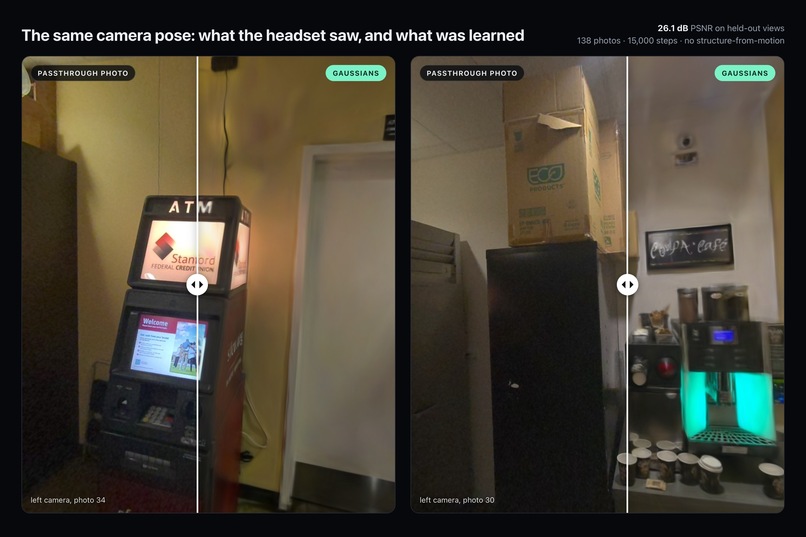
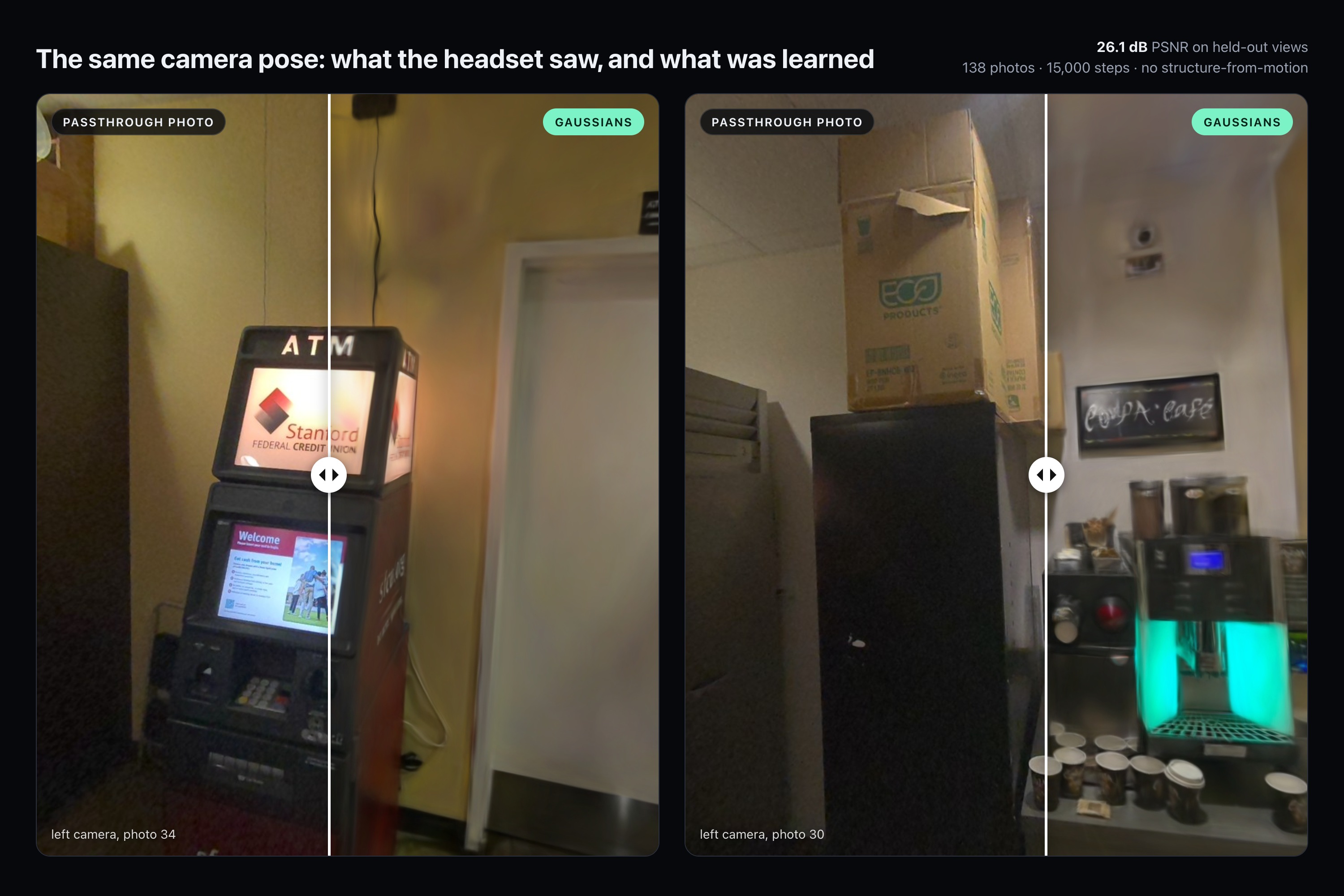
We learned that a headset’s own tracking is accurate enough to replace structure-from-motion. Once the cameras are calibrated, the slowest step of 3D reconstruction simply disappears. We learned that a live system lives or dies by latency, not throughput. Showing the newest frame matters more than showing every frame, and the model can update only once or twice a second while the headset keeps rendering smoothly at full rate. Most of all, watching the optimization unfold in front of us taught us more about Gaussian Splatting than any paper: thousands of blurry blobs drift, split and sharpen until they agree with every photo at once.
What's next for Darkroom
1.Our reconstructions still carry noise: stray Gaussians that float in empty space and add nothing to the scene. We want to design a filter that detects and removes these meaningless Gaussians during training, so the scene develops into something cleaner and sharper.
2.We plan to guide people through the capture with on-screen cues, showing where to look next and when they are moving too fast.
3.We are supposed the development a soundscape, with sound that shifts as the Gaussians drift, split and settle, so you hear the room coming into focus as well as see it.
