The Journey Behind Darb
Darb means “path” or “road” in Arabic. For us, it represents more than the name of a project: it represents the journey we chose to take together, regardless of whether we reach our final destination exactly as planned.
Our Inspiration
We are a group of computer science students who decided to take a step beyond studying theory and completing academic assignments. We wanted to build something real—something that could grow into a startup and reflect our abilities, curiosity, and ambition.
Our original team consisted of eight students: five boys and three girls. Each person had a different technical track and a specific area of strength. We began our first project, SkillUpscale, with enthusiasm, energy, and a genuine desire to create something meaningful together.
At the beginning, our motivation came from the idea of transforming a shared vision into a real product. We were excited by the possibility of learning from one another, combining different technical skills, and building a startup from the ground up. More importantly, we were inspired by the team itself: our friendship, our shared goals, and the belief that we could achieve more by working together.
The First Challenge: Losing Team Members
As the workload increased and the pressure became more difficult to manage, our journey began to change. The first member of our team decided that he could no longer continue. He had been responsible for the front end of the website, so his departure created an immediate technical and organizational challenge.
After that, one of our female teammates also decided to leave. She had been preparing to take responsibility for the front end after the first member’s departure, but his decision made the task feel much more difficult for her. Although these departures were understandable, they affected the team’s momentum and made us question whether we could continue.
For a while, we continued with a smaller team consisting of two Flutter developers, two penetration-testing specialists, one back-end developer, and one AI specialist. Since none of us was a professional in every area required to build a complete startup, we began learning outside our primary fields. We used AI as a learning and productivity partner to help us explore areas such as marketing, front-end development, user-interface and user-experience design, content creation, and other tasks outside our specializations.
However, the challenges did not stop there. One day, the teammate who was working with Flutter and learning marketing decided to leave. Soon afterward, the teammate responsible for the back end also left. At that point, what remained of the project felt like an idea without a clear structure or a practical path forward. We felt discouraged, and for a short time, we were unsure whether the project still had a future.
Choosing Not to Stop
Despite everything that had happened, we decided not to give up.
Four friends remained: Ahmed, Hamdy, Abdelgawad, and Mohamed. Each of us was working in an area that was, in many ways, outside our original specialization. We had to learn quickly, make decisions with limited experience, and support one another through every stage of development.
This was the turning point. Instead of viewing our lack of specialization as a weakness, we decided to treat it as a reason to collaborate more closely and learn more efficiently. We used AI to guide us through unfamiliar tasks, explain concepts, suggest solutions, improve our work, and help us move from one challenge to the next.
We did not continue because the journey was easy. We continued because stopping would have meant abandoning everything we had already learned together.
Rebranding the Project
Our first major decision as the new team was to completely rebrand the project. We changed its name from SkillUpscale to Darb.
The name felt right because it captured the meaning of our experience. A path is not defined only by its destination. It is also defined by the steps taken, the obstacles faced, the lessons learned, and the people who walk it with us.
For us, Darb represents the road we are traveling together. Whether we reach every goal exactly as planned or discover a different destination along the way, we believe that the journey itself has value. As long as we continue together, we can learn, improve, and enjoy the process.
How We Built Darb
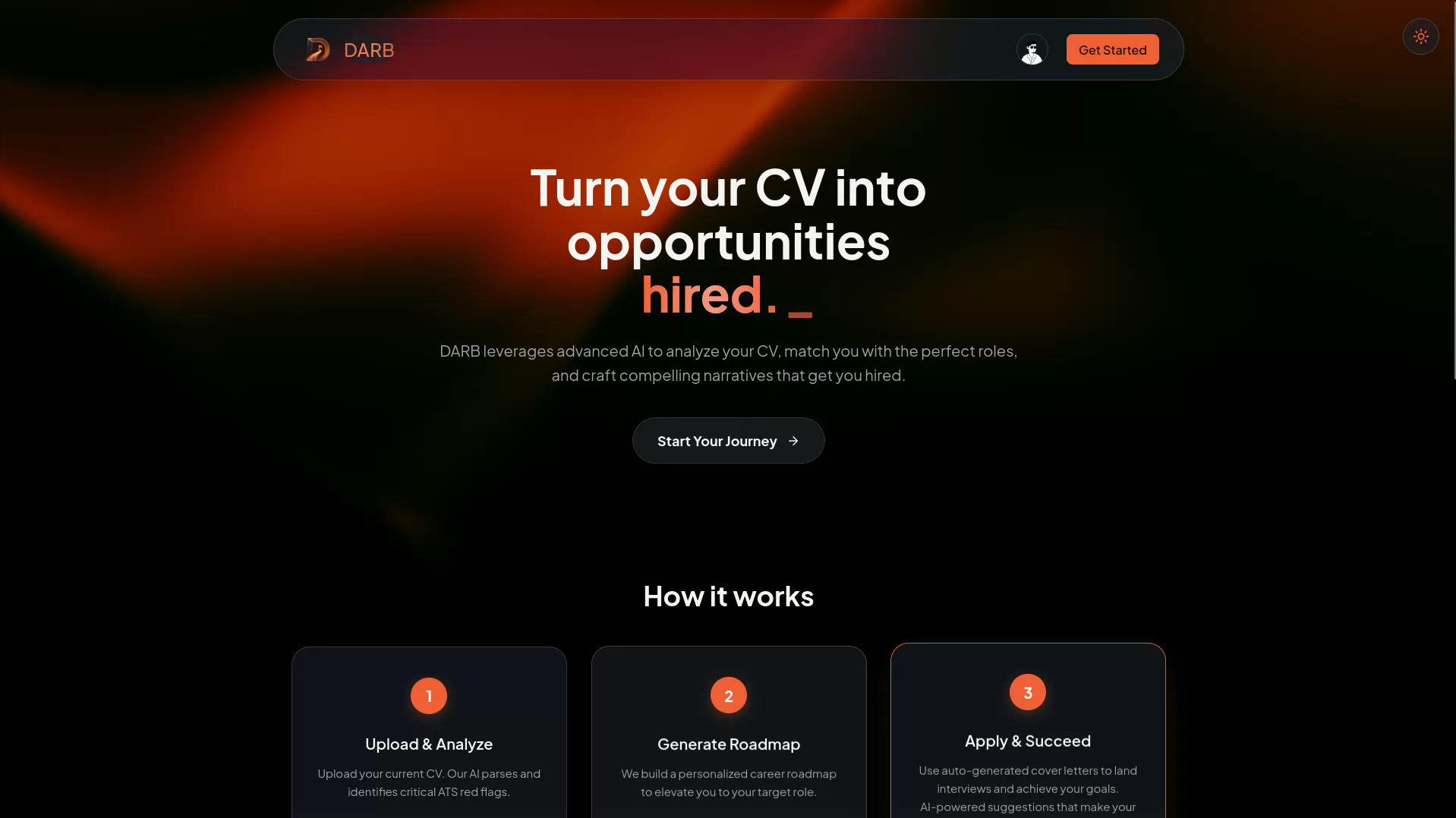
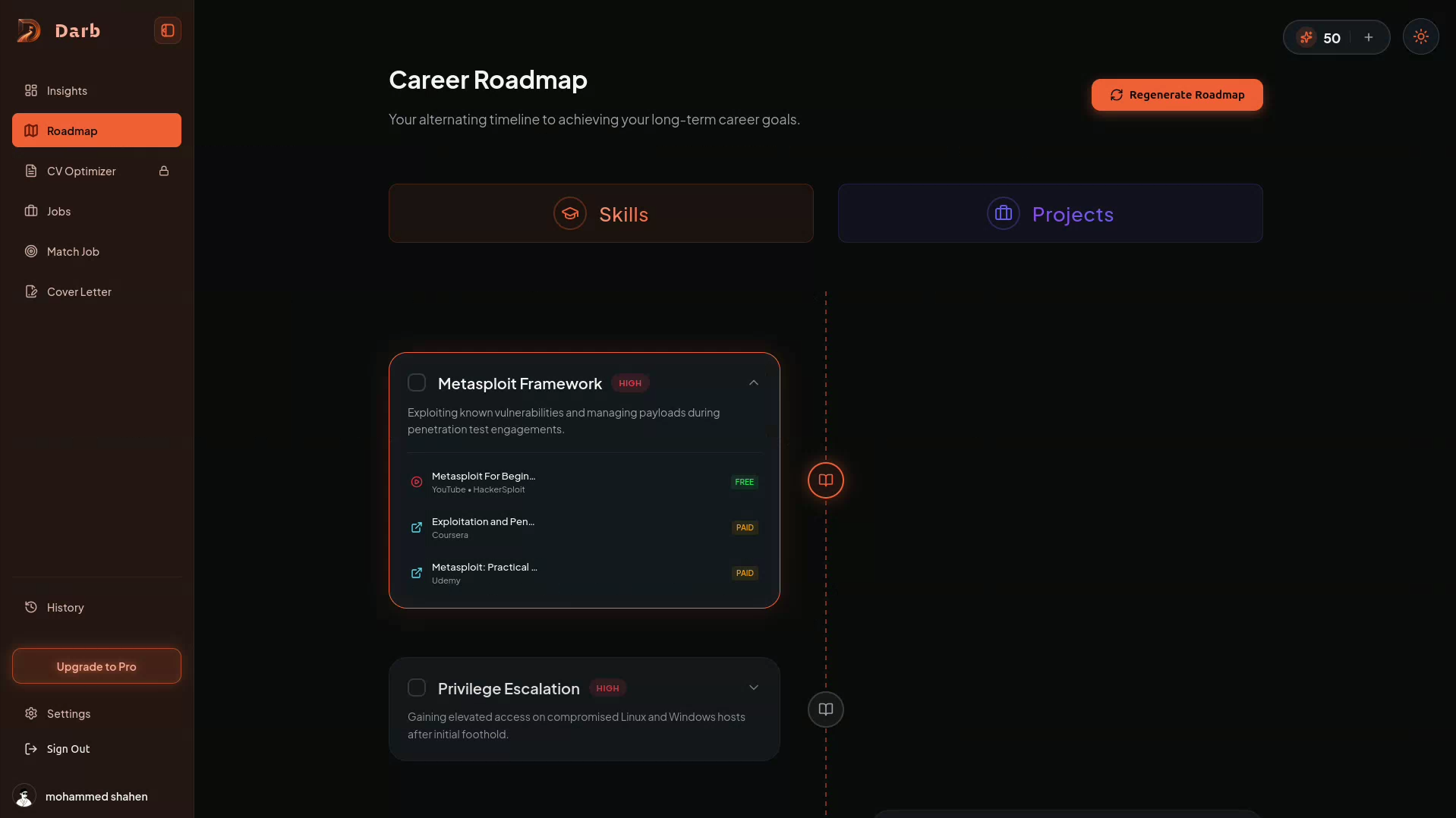
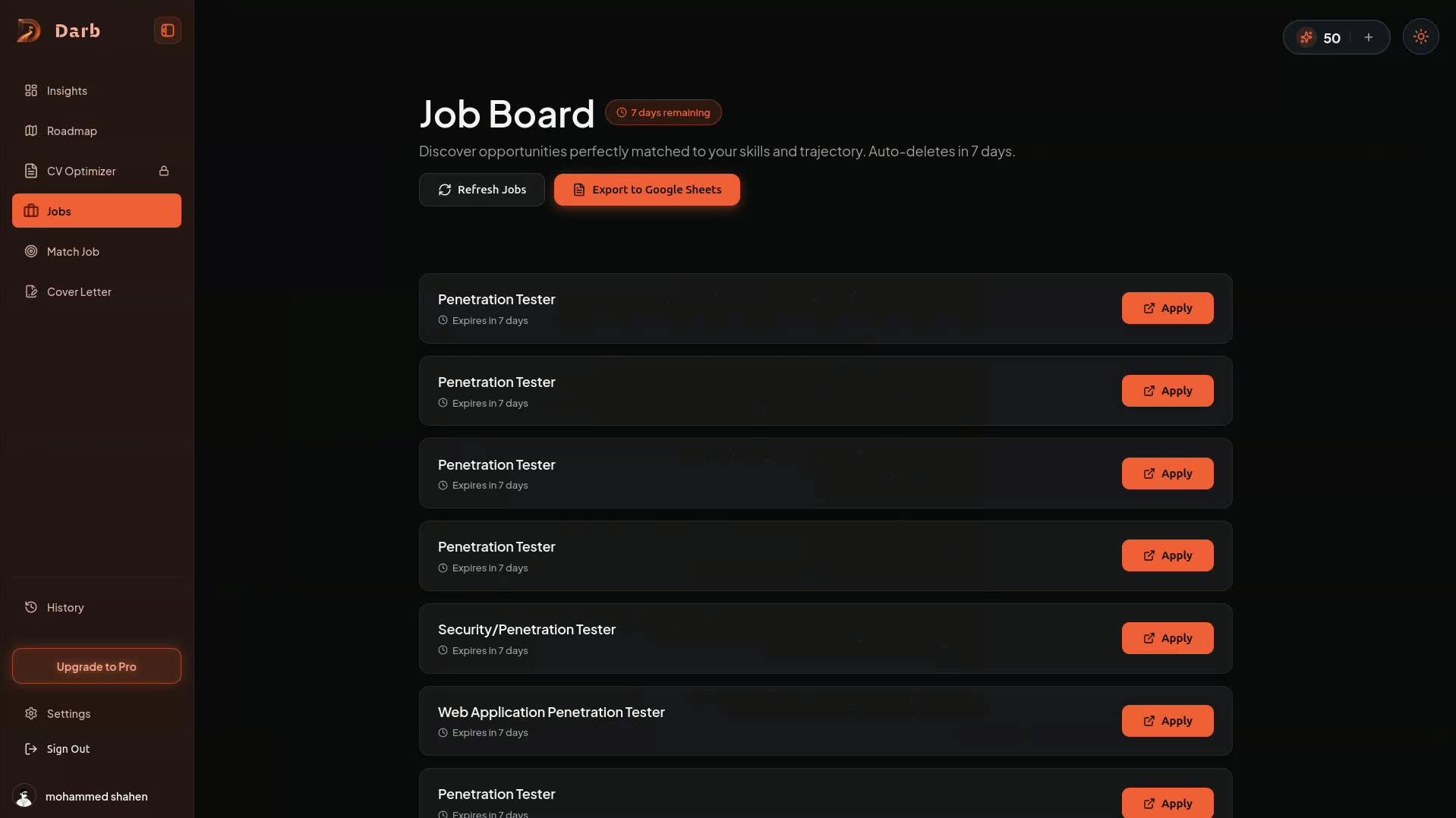
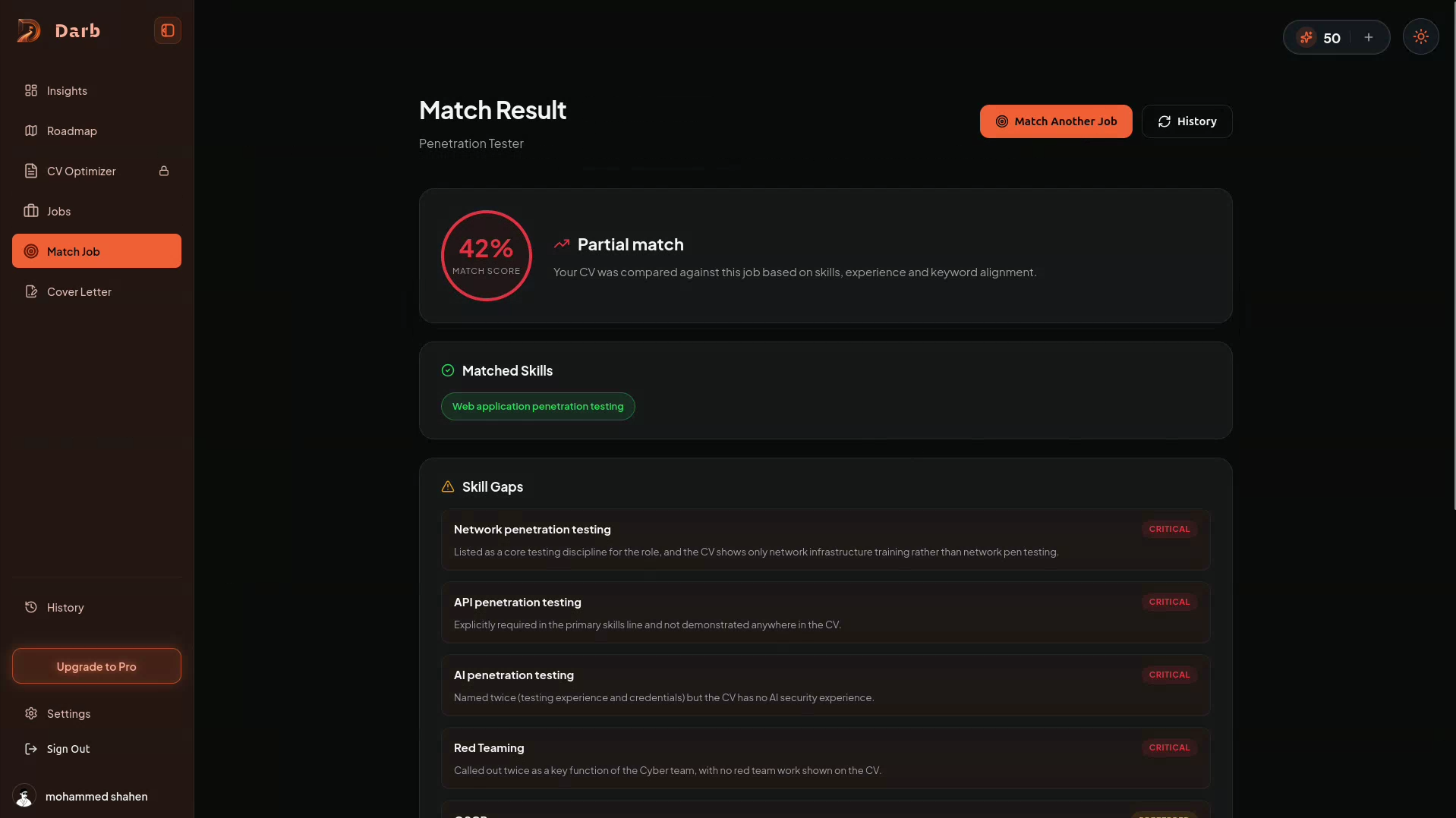
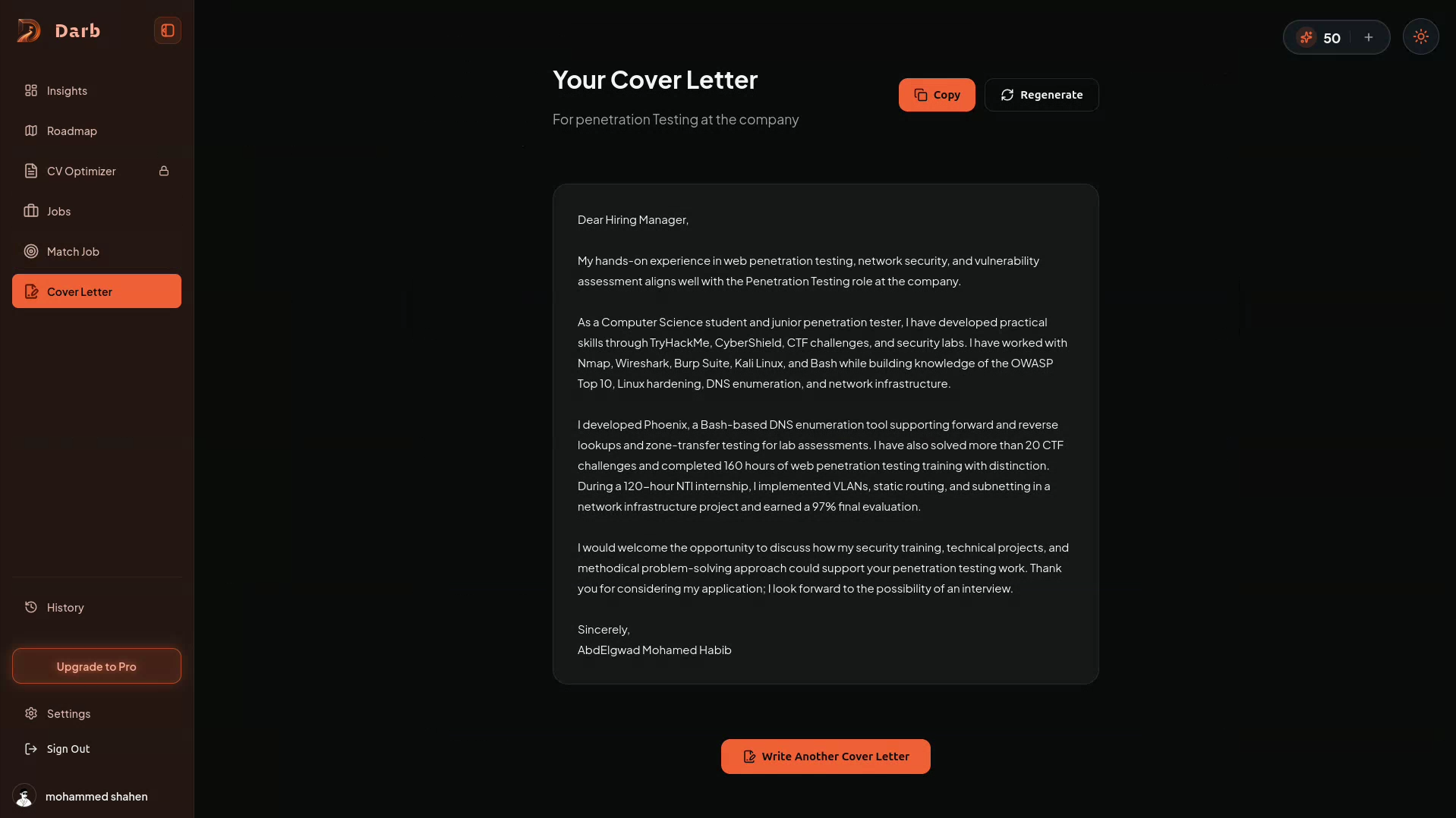
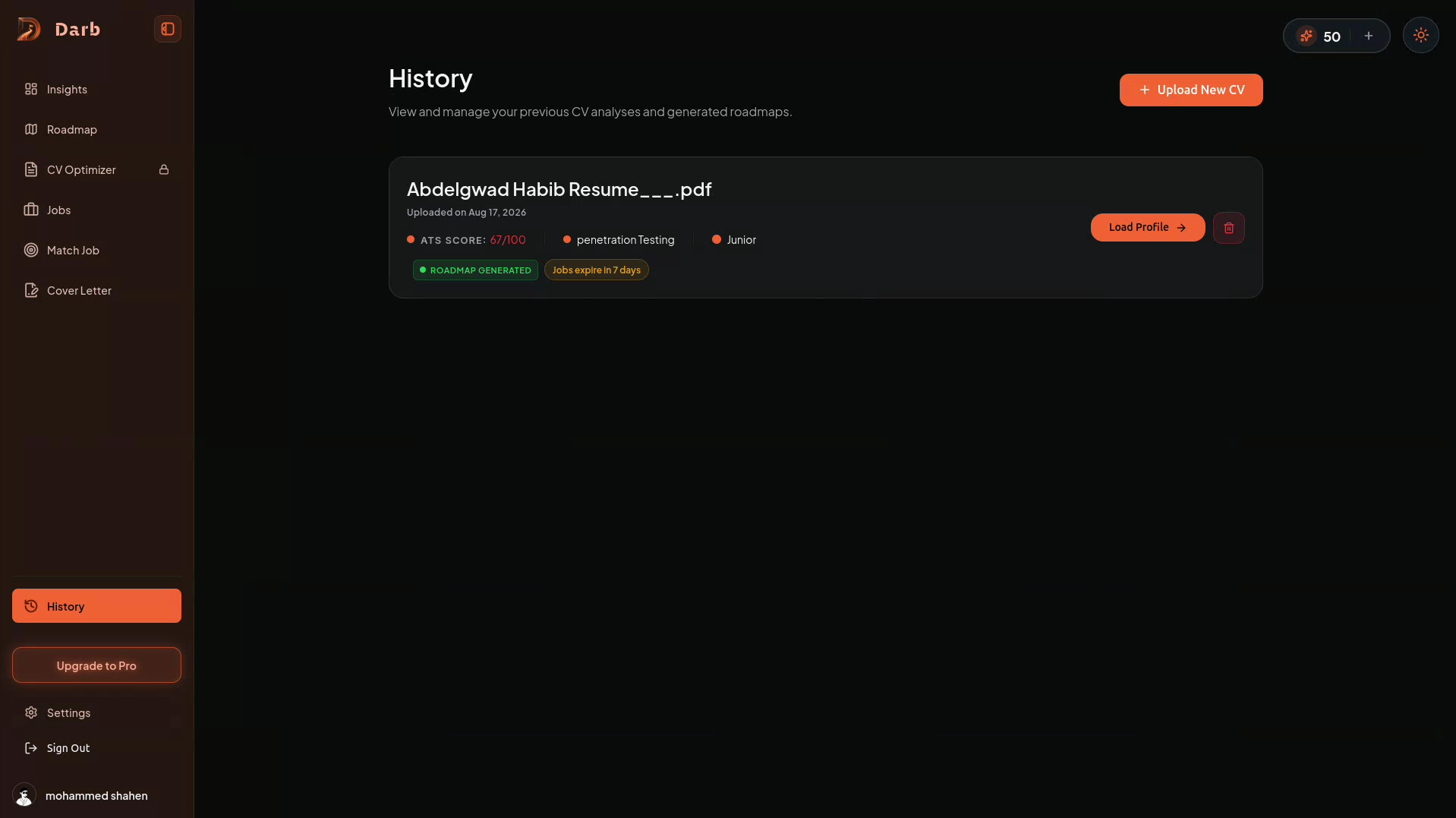
We began by redesigning the project’s identity and creating a new visual direction. We worked on the website design and tried to establish an interface that reflected the meaning of Darb: clarity, progress, direction, and movement.
After finalizing the initial design, we decided to use a vibe-coding approach for the front end. One of us took full responsibility for implementing the interface and continued working until the result reached a level that satisfied the team. This stage required experimentation, fast learning, frequent revisions, and continuous communication among all four members.
When the front end started to take shape, we faced a new concern: the support we were receiving from AI could not replace the need for a complete back-end system. We began asking ourselves an important question: Who would build the back end?
The answer was simple: all of us would.
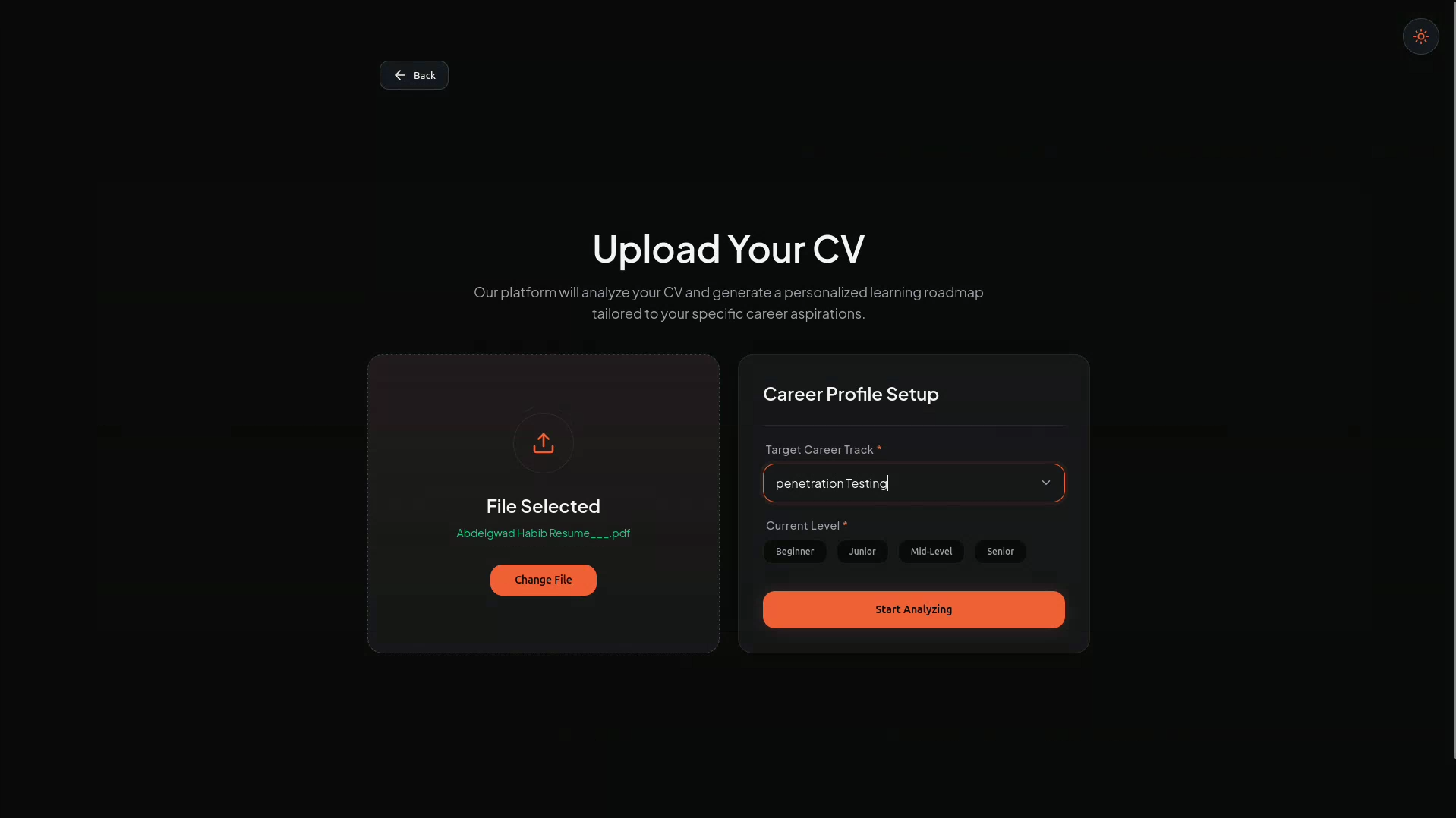
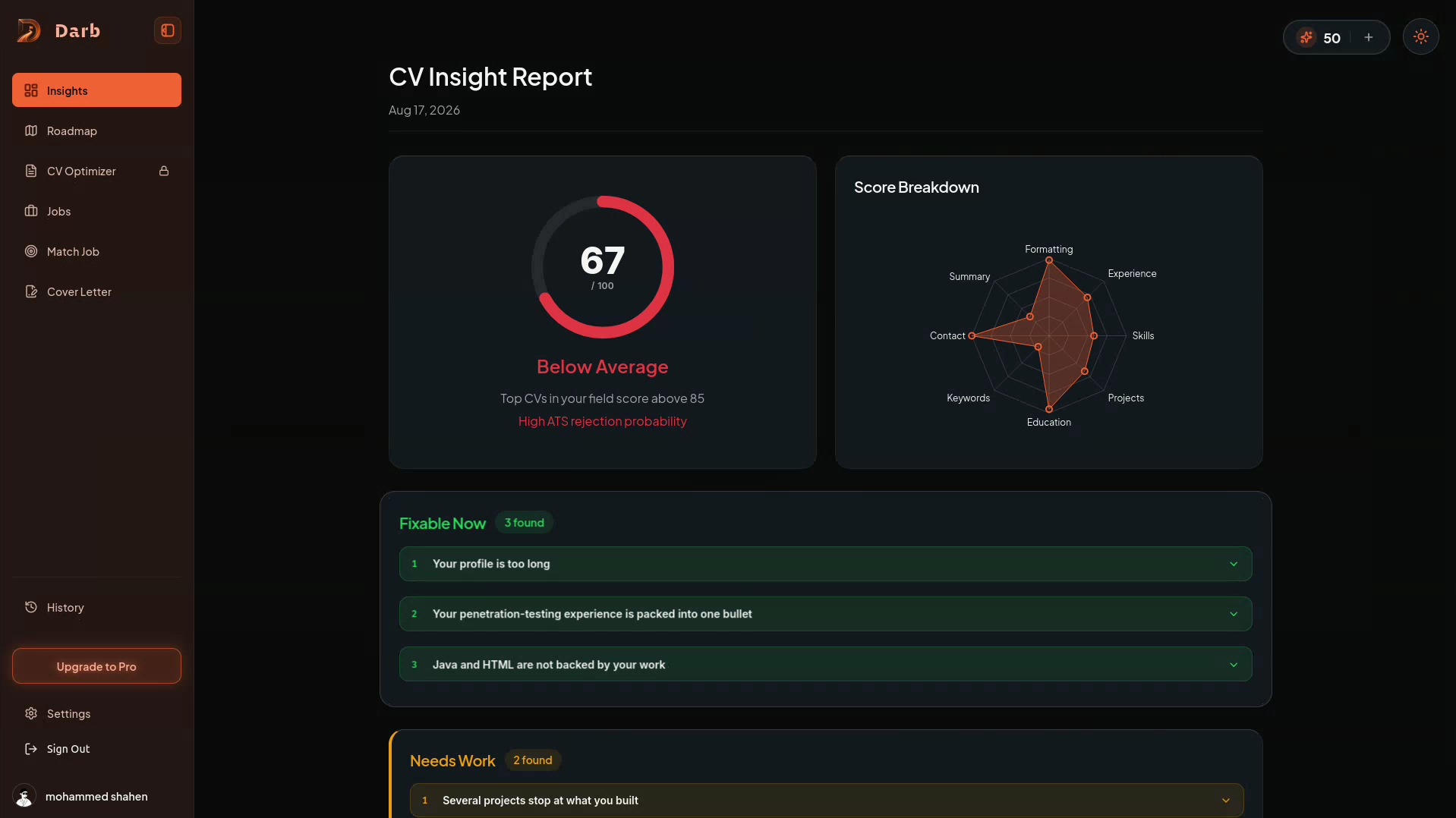
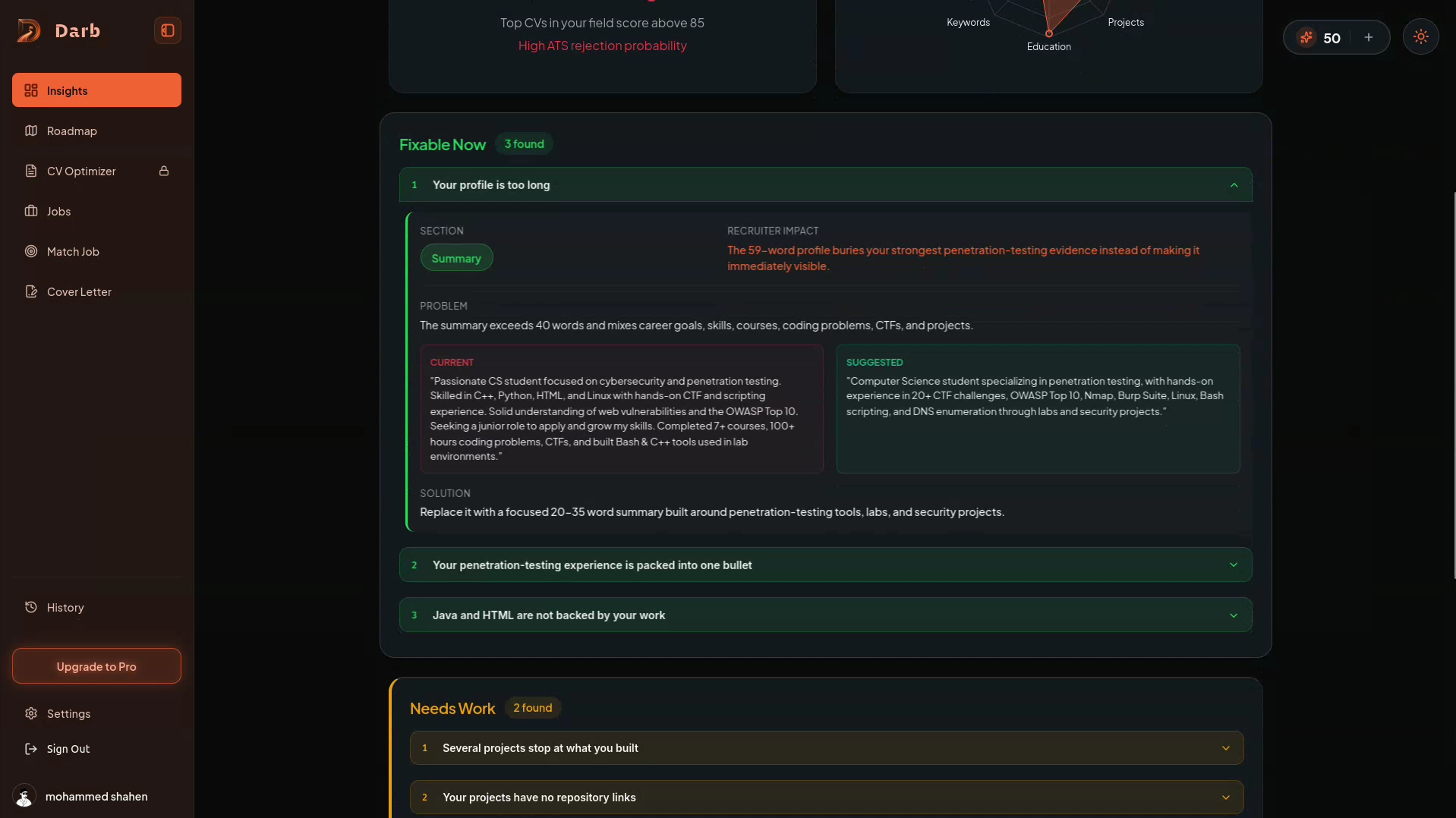
We worked together to learn the required concepts, divide the tasks, connect the systems, and build the back end as a team. It was the first time we saw the project functioning as a real product rather than just an idea on paper. That moment gave us an incredible sense of achievement and helped us forget much of the exhaustion and uncertainty we had experienced earlier.
After that, we continued improving the project and started thinking about the next stages: deployment, content creation, communication, and marketing. Building the product was only one part of the journey. We also had to learn how to present it, explain its value, reach potential users, and prepare it for the real world.
What We Learned
The most important lesson we learned is that a team does not need to begin with perfect expertise in every required field. It needs commitment, communication, adaptability, and the willingness to learn.
We also learned that unexpected changes can completely reshape a project. Losing team members was painful and created serious gaps in our development process. However, those changes forced us to become more independent and flexible. We learned to take responsibility for unfamiliar tasks instead of waiting for someone else to solve every problem.
AI also became an important part of our workflow. We used it not as a replacement for our effort, but as a tool that helped us learn faster and work beyond our academic tracks. It supported us with front-end development, marketing, UI/UX, research, debugging, writing, and many other tasks. The final responsibility, however, always remained ours: we had to understand the output, evaluate it, adapt it, and make decisions as a team.
The project also taught us the importance of resilience. A startup journey is not only about writing code or designing screens. It is about continuing when the original plan no longer works, rebuilding after setbacks, and finding a new path when the old one disappears.
The Challenges We Faced
Our challenges were both technical and personal. We had to deal with team members leaving, a growing workload, pressure from our studies, unfamiliar technologies, and uncertainty about whether the project could survive.
The biggest challenge was maintaining our motivation after the team became smaller. The project had started with eight people, but it eventually continued with only four. This change meant that each remaining member had to take on responsibilities outside their original role.
Another major challenge was the lack of specialization in some areas. We were not all front-end developers, back-end developers, designers, marketers, or product managers. We had to learn these roles while building the product itself. This required patience, self-learning, and a strong willingness to ask for help from AI and from people we trusted.
We also faced the challenge of transforming an incomplete idea into a working system. There was a significant difference between having a concept and seeing that concept operate in reality. Reaching the first working version required us to coordinate our efforts, solve technical problems, and remain focused despite repeated uncertainty.
Where We Are Today
Today, we are proud to say that four friends—Ahmed, Hamdy, Abdelgawad, and Mohamed—built Darb in a remarkably short time. We worked on tasks that were far outside our original areas of expertise, used AI to support us at every stage, and benefited from the encouragement and assistance of people we care about.
Darb is not only a software project. It is evidence of what can happen when people choose to continue learning and working together after their original plan breaks down.
Conclusion
Our story began with a team of eight students and a startup called SkillUpscale. It passed through uncertainty, departures, technical gaps, and moments when the project seemed to have lost its meaning. Nevertheless, four friends decided to rebuild the idea instead of abandoning it.
We gave it a new name: Darb. We redesigned it, learned new skills, built its front end and back end, and prepared to take the next steps toward deployment, content, and marketing.
The future of Darb is still being written, but the meaning of its name will always remain at the center of our work. We are walking a path together. We may not know exactly where it will lead, but we know that every challenge has taught us something, every setback has made us stronger, and every step has brought us closer to becoming better developers, teammates, and founders.
Darb is our project, but the journey is our real achievement.
Written by the Darb team: Ahmed, Hamdy, Abdelgawad, and Mohamed.
This story is based on the team’s personal experience while building Darb.
References
No external references were used. This document is a narrative based on the personal experience shared by the Darb team.
Optional Mathematical Notation
The team’s experience can be summarized as a simple idea:
$$ \text{Progress} = \text{Persistence} + \text{Learning} + \text{Collaboration} $$
This equation is not a scientific measurement. It expresses the principle that guided us throughout the journey: progress became possible when we combined our determination with continuous learning and teamwork.
The same idea can also be represented as:
$$ \text{Darb} = \text{Vision} + \text{Adaptability} + \text{Shared Effort} $$
For us, the value of the project is not measured only by the final product, but also by the growth we achieved while building it.


Log in or sign up for Devpost to join the conversation.