-
-
Dante Network is a World Tree of Web3
-
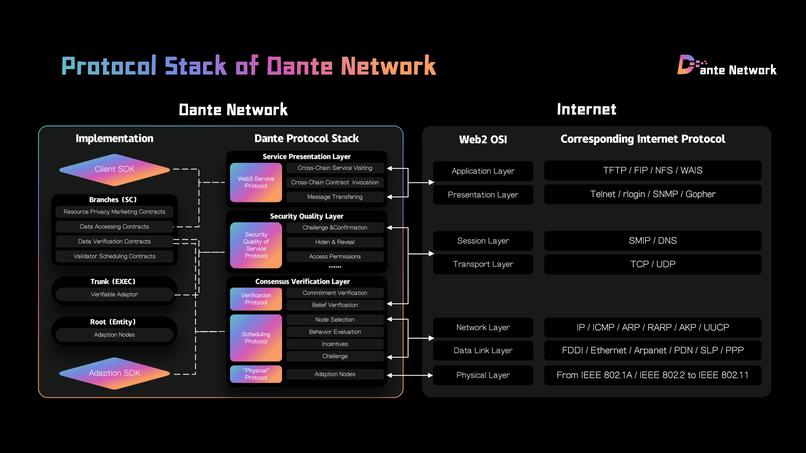
World-Tree Protocol Stack
-
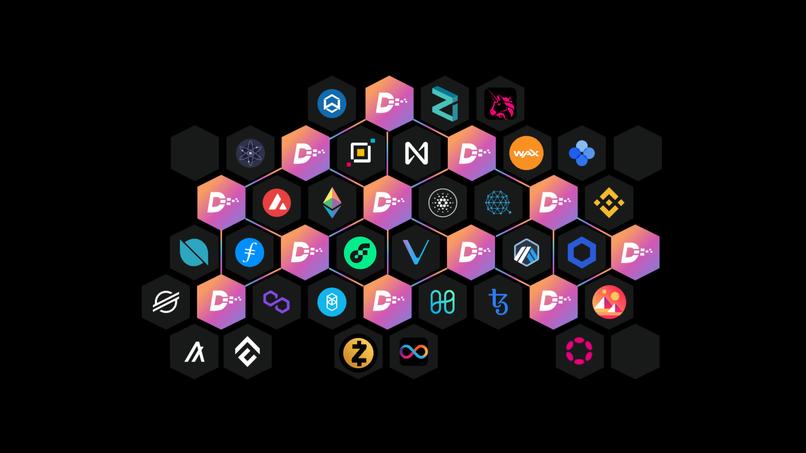
Value Proposition in the web3 world
Inspiration
Blockchain brings new possibilities to the development of the Internet due to its decentralization, transparency, and tamper resistance, along with unique features like open-source and DAO. All these promote Web3 gradually from concept to reality. Inevitably, as does any innovation, blockchain has also raised new concerns for Web3 in terms of connectivity and communication. Web3 is currently in a state similar to that of computers prior to the Internet, when they were either isolated or had a limited range of connectivity. Equivalently, blockchains are not widely and effectively connected to one another, and data are isolated from one another as well. This isolation is a natural consequence of blockchain's technical architecture. To ensure a reliable consensus in a trustless context, a blockchain only records and validates transactions that occur within its network. However, this mechanism ignores other transactions that occur outside of the native chains, thus, isolation happens. This isolation has restricted the Web3 composability and complementary between multiple blockchain ecosystems. We believe that in years to come, we will realize the need for a protocol stack for Web3 connections, just as an "Internet protocol stack" is for today's Internet.
What it does
The World-Tree protocol stack is a multi-ecosystem collaboration protocol stack for the Web3 world. Dante Network as an implementation of it is a middleware that will enable the collaboration between multiple ecosystems of Web3. The middleware will consist of a protocol stack containing a series of multi-chain interoperability protocols and a network which is the instance of the protocol stack. For developers, this middleware will make it easier for them to achieve diverse composability of business across multiple blockchains, allowing them to focus more on business development itself rather than basic and cumbersome issues such as data communication. For users, this middleware will assist them to move freely between multiple ecosystems, regardless of which ecosystem their current assets and identity are created.
How we built it
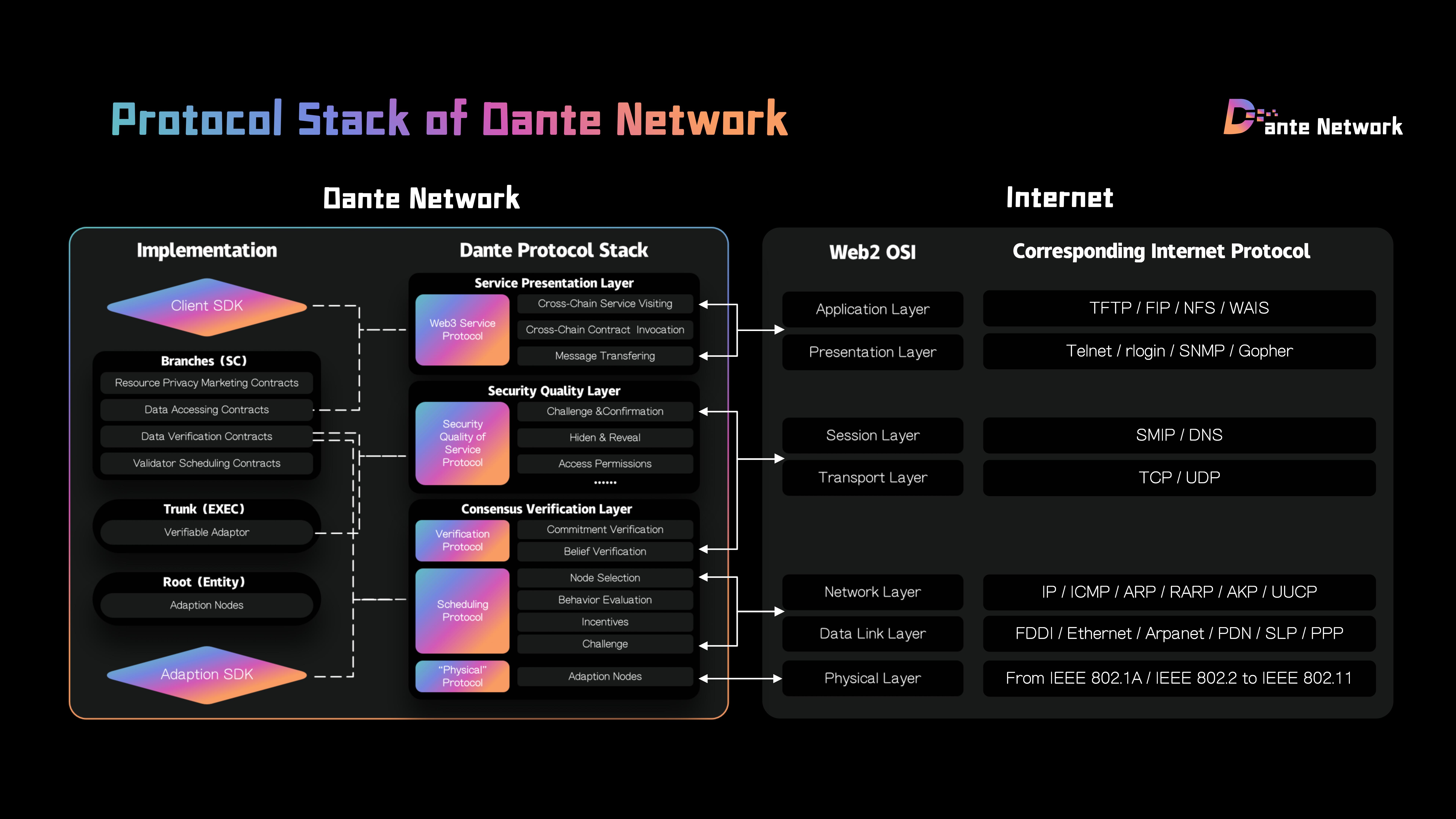
The World-Tree protocol stack, similar to the Internet protocol stack, attempts to define a basic, common and universal standard framework that can help interconnect various public chain ecosystems in the web3 world. The protocol stack is divided into three layers: service presentation layer, security quality layer, and consensus verification layer.
- Service presentation layer
The service presentation layer can be compared to the application and representation layers in the Internet OSI model, which contains standard protocols for coding and decoding a range of service-related information such as data ontologies, data descriptions, service execution models, data validation, and information verification standards, and secure quality-of-service configuration information.
- Security quality layer
In Dante Network, we formally propose Secure Quality of Service (SQoS). This protocol specifically defines the collaboration model of the web3 multi-chain ecosystem. From a functional point of view, this is similar to the session layer in the OSI model, as well as to some of the capabilities of the transport layer. With different SQoS configurations, users can choose flexibly between security, scalability, and decentralization according to the characteristics of their business, which is a very flexible way to cope with the blockchain trilemma in distributed systems.
- Consensus verification layer
Blockchain itself is a distributed and trustless system. These features are systematically considered for any cross-chain solution. In this regard, we plan a consensus verification layer to handle this problem, in which we will build a multi-node collaborative consensus protocol stack. The consensus verification layer is similar to the transport layer, network layer, data link layer, and physical layer in the OSI model. Its protocol stack contains the following main design aspects.
Challenges we ran into
Security is quite an important thing in this field. As we all know, there's no absolute security, but we can make higher and higher security levels with the relative cost of efficiency and payment. As we are building a communication infrastructure, we need to provide more flexibility to support different situations. So the most difficult thing we met is how to make a suitable balance between security and scalability for concrete situations because of the Blockchain trilemma.
We've created SQoS mechanisms to solve this problem, and now we are working hard to achieve it step by step.
Accomplishments that we're proud of
In the process of developing the Dante Protocol Stack, we encountered countless problems as well as great challenges, we're proud we're had overcome all the difficulties and finally came up with a complete set of product systems.
What we learned
We learned the mechanism of Internet computing protocol(ICP). We are now much more capable and knowledgeable Internet computer developers than we were at the start of the hackathon and hope to share the experience we've picked up with the rest of the community.
What's next for Dante Protocol Stack for ICP
Our next step will be to collaborate with many application-based projects to iterate our SDK for developers based on their requirements, in order to make web3's multi-chain interaction easier. At the same time, as we use our protocol stack, we will continue to improve and update. More SQoS items to provide security are already in the planning stage. We will invite more project parties, developers, and end-users to participate and provide their valuable feedback. As security is very crucial in this industry, the Dante protocol stack will be fully tested on the testnet. And there will also be some targeted hackathon events related to security. Dante Network will be a long-term project because our final goal is to provide a simple, easy-to-use, and secure infrastructure. At that point, the interactions between most chains in web3 will be as convenient as the interactions with terminal devices in web2 through the internet.


Log in or sign up for Devpost to join the conversation.