
Dandi
Inspiration
PCOS affects an estimated 175 million women worldwide, yet the diagnostic journey remains broken. 1 in 2 women see 3+ doctors before receiving a diagnosis, and 70% have insulin resistance without even knowing it. We met Queenie: she had irregular periods, stubborn acne, and a gut feeling something was wrong for years. She was dismissed, misdiagnosed, and left without answers. Dandi was designed to make the body’s hidden signals visible so women like her can finally see what’s happening inside their bodies.
What it does
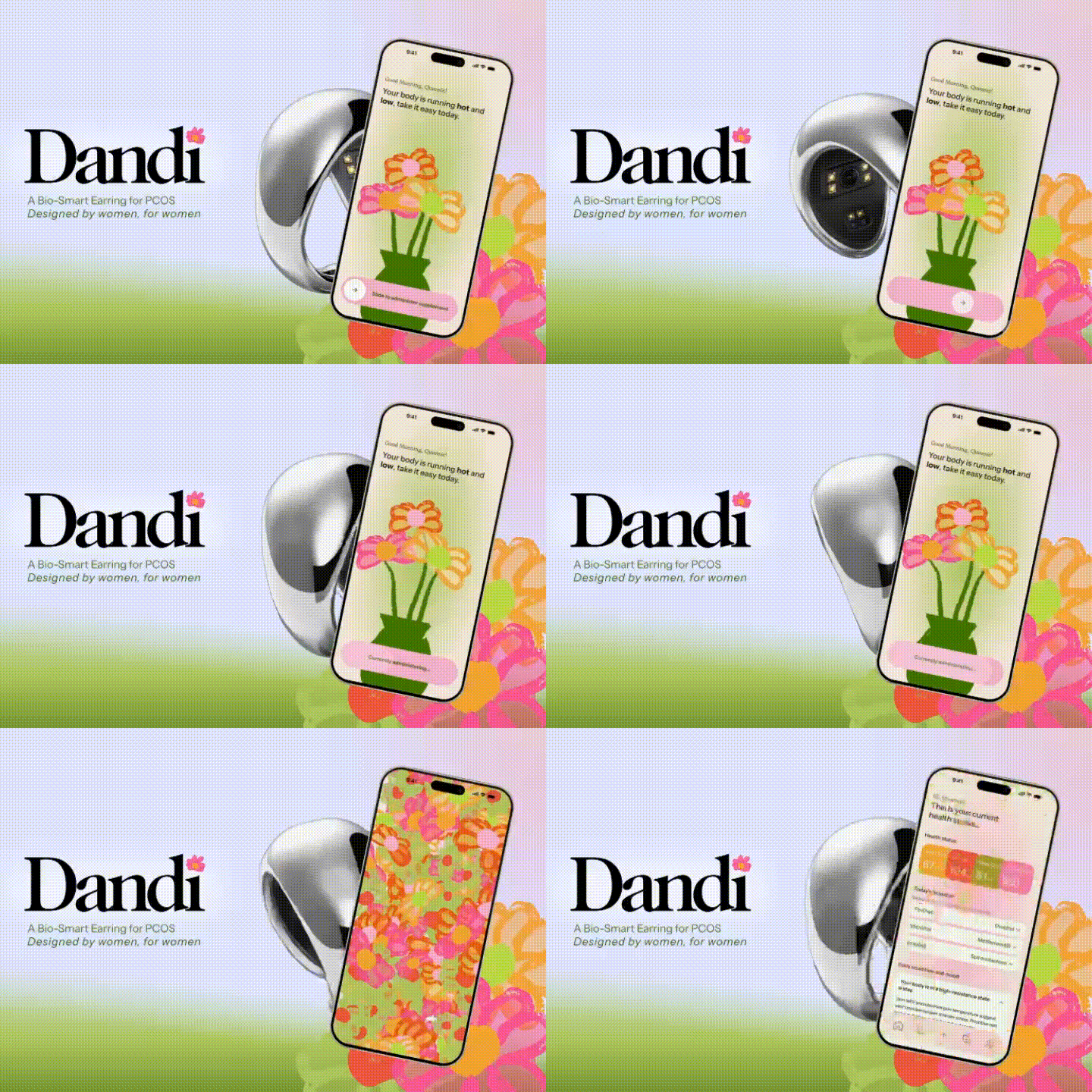
Dandi is a speculative bio-smart wearable and companion app that makes the invisible signals of PCOS legible. The wearable earring continuously reads HRV, skin temperature, blood glucose, and cortisol, then connects those scattered data points into patterns the user could never see on their own. The app translates those patterns into easy-to-understand language: "Your fatigue spikes every 3rd day after poor sleep and high-carb meals" instead of raw numbers. When the system detects a hormonal imbalance or glucose spike, it automatically releases micro-dosed supplements — Inositol, Berberine, Zinc, Magnesium — through the skin, no pill-swallowing required. It also generates exportable doctor reports so patients can walk into a 10-minute appointment with 6 weeks of evidence instead of 2 years of "I just feel off."
How we built it
We designed Dandi as a wearable bio-smart ear cuff that passively tracks hormones, stress and cortisol patterns, blood glucose levels, and sleep quality. The companion app ‘Dandi’ visualizes this data through an ambient, emotionally resonant interface with a built-in AI assistant, making chronic health management feel human rather than clinical. Supplements are delivered automatically based on real-time readings.
Challenges we ran into
The hardest problem was data legibility: how do you surface complex, interrelated biomarkers (glucose, cortisol, sleep cycles) without overwhelming someone who already feels alienated by medical systems? We also grappled with the form factor. The device needed to function as a meaningful health monitor while still looking like something someone would comfortably wear every day.
Accomplishments that we're proud of
Over four intense days, we turned a big idea into a working concept. We collaborated closely, played to each other’s strengths, and built something that reflects the kind of health tech we wish existed for us.
What we learned
Building at the intersection of feminine technology, biosensing hardware, and UX forced us to confront how little mainstream health tech centers the female body. We learned that trust is a major design challenge, especially for users who have often felt dismissed by medical systems. Designing for empathy and clarity became just as important as the technology itself.
What's next for Dandi
Clinical validation is the first priority. Partnering with endocrinologists and gynecologists to test whether signal-based cycle prediction actually outperforms calendar-based apps for irregular cycles. We want to run a 12-week pilot with diagnosed PCOS patients to measure whether pattern visibility alone changes behavior before supplement delivery is even activated. Longer term, we see Dandi expanding beyond PCOS to any condition where the body signals continuously but the patient can't decode it such as endometriosis, thyroid disorders, and perimenopause. The underlying design principle stays the same: your body is already talking. We just need better tools to listen.
Built With
- css
- figma
- react
- typescript


Log in or sign up for Devpost to join the conversation.