-
-
-
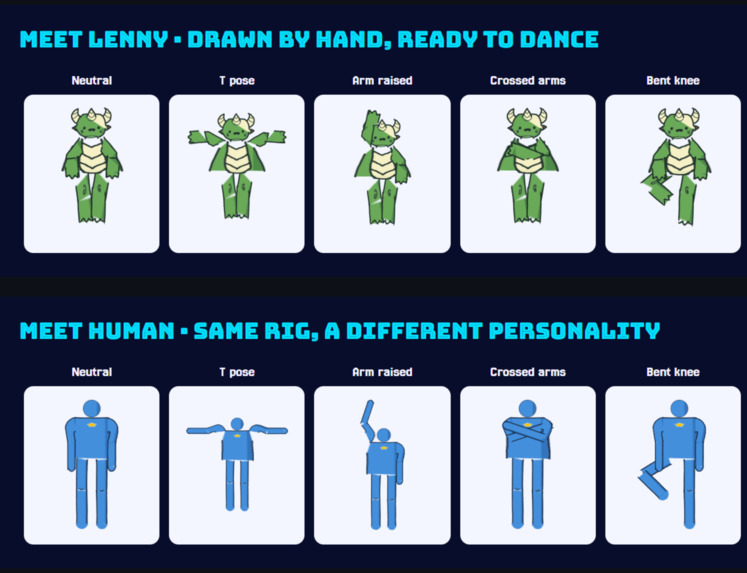
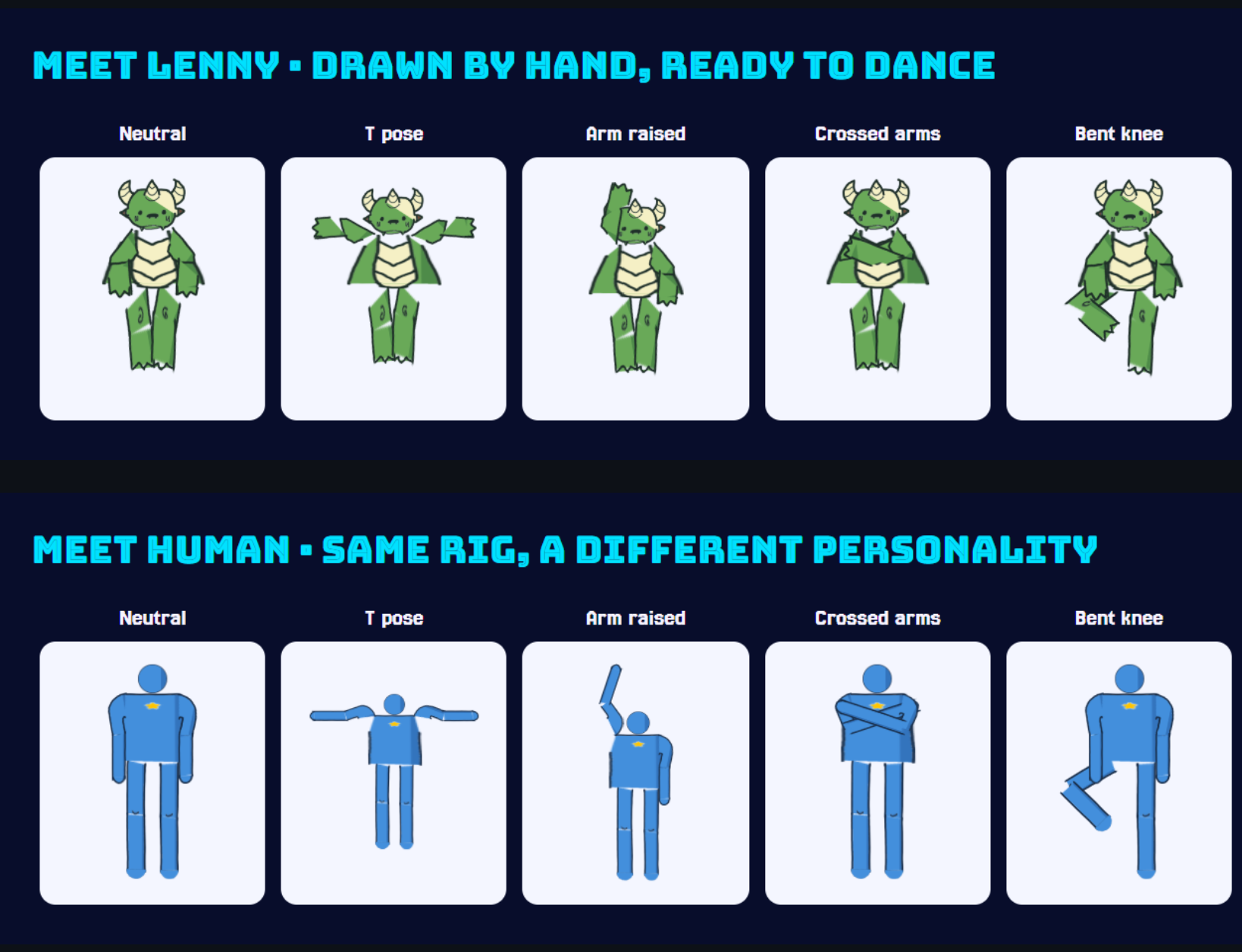
Hand-drawn limbs were used to create the generative pictographs without the use of AI.
-
Inspiration
We wanted to play Just Dance, but we didn't have a Wii, so we had to follow along on YouTube instead. Because of the lack of feedback, it was hard to know whether or not our dances were correct, and it was becoming frustrating. But not just that, we also thought the same thing about dances on other platforms, like TikTok and Instagram.
That's how Dancify was born! We envisioned a platform where anyone could turn their favorite dance videos into personalized, interactive games, making learning choreography feel less like practice and more like play.
What it does
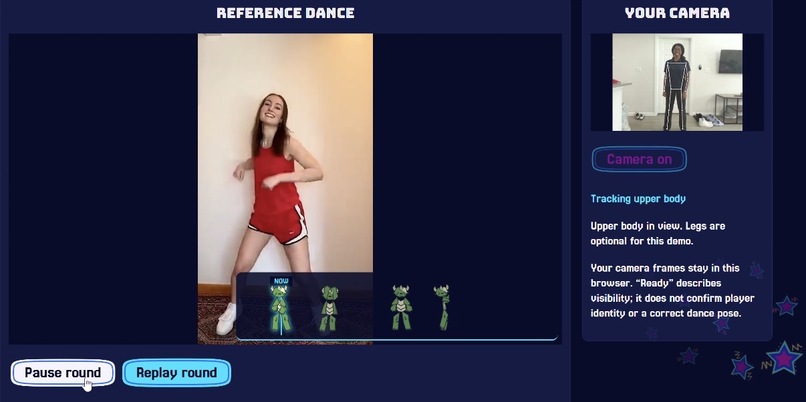
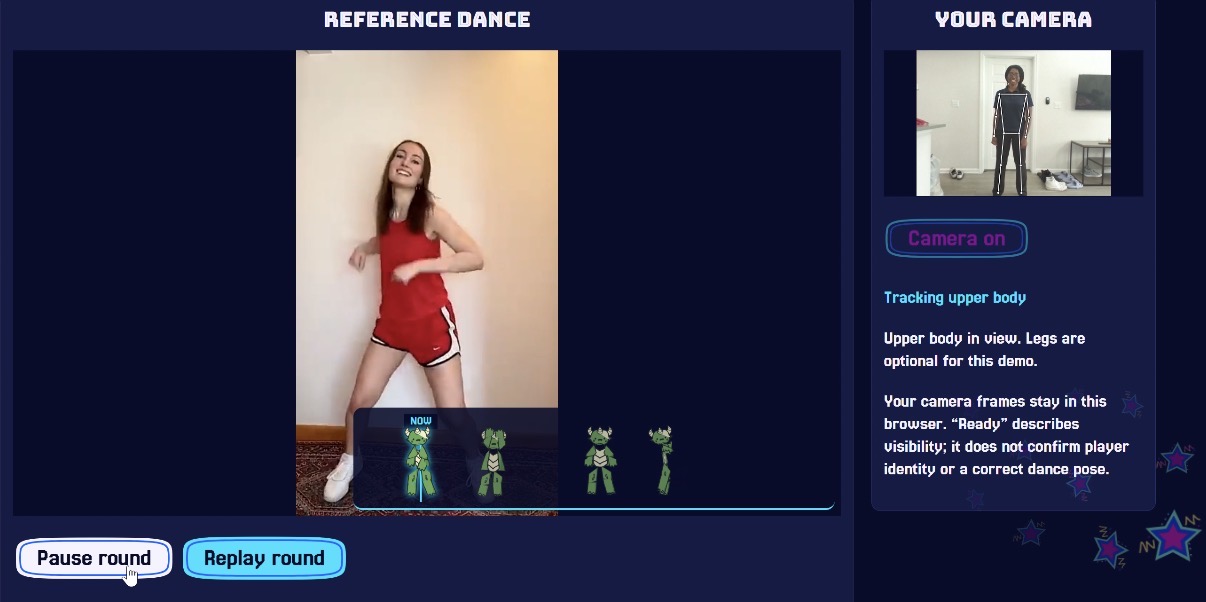
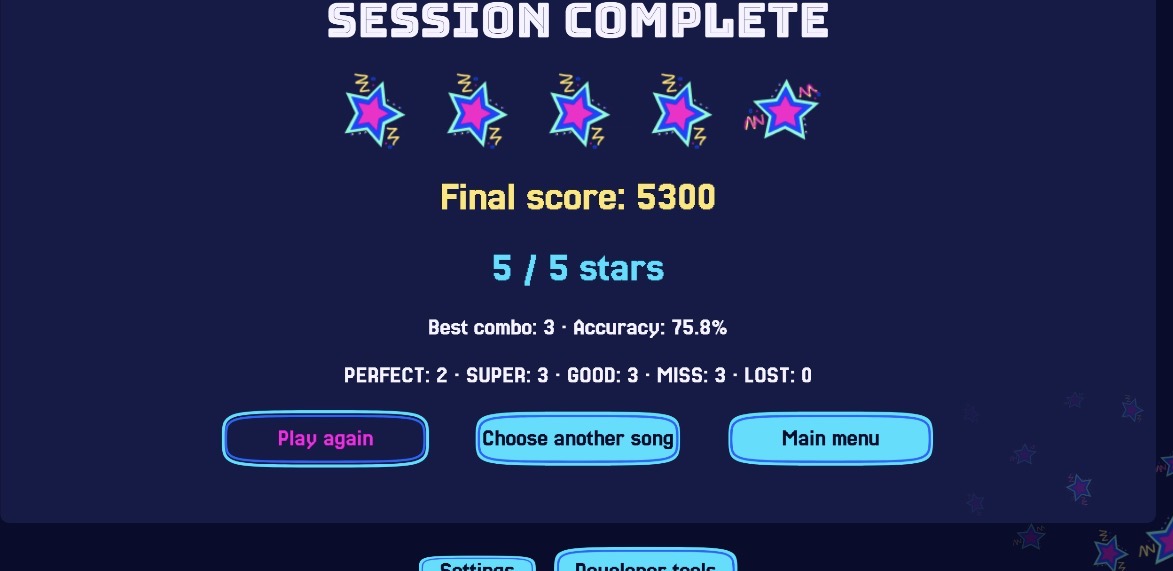
Dancify transforms any dance video into an interactive dance game. Users can upload a video of their choice and follow along with the choreography while the game tracks their movements and evaluates their performance.
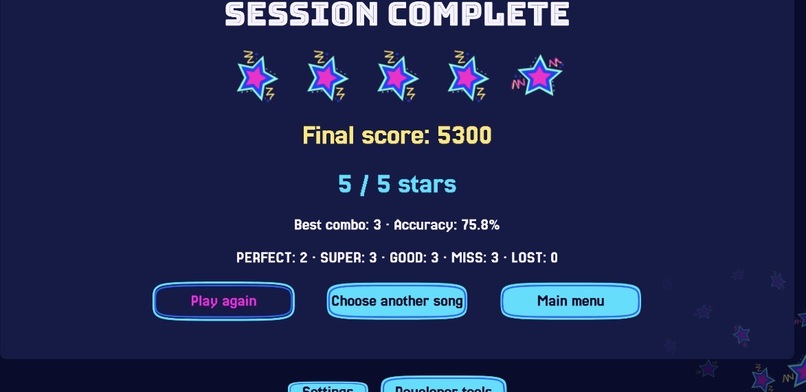
By combining movement tracking with interactive feedback, Dancify encourages users to improve their dancing while having fun. Whether you're learning a viral dance, practicing choreography, or jyst having plain fun, Dancify gives that opportunity to play, learn, and improve.
How we built it
We built Dancify by combining computer vision and joint tracking to transform ordinary dance videos into interactive gaming experiences.
We used Python alongside OpenCV to process uploaded videos and analyze individual frames. MediaPipe enabled us to identify and track body landmarks, allowing us to interpret choreography as a sequence of movements that could be compared against a player's performance.
For the frontend, we used React and TypeScript to develop an interactive interface that allows users to upload videos, learn choreography, and receive performance feedback. We also used Figma to design and prototype a visually engaging user experience.
By integrating these technologies, we developed the foundation for a platform that transforms virtually any dance video into a personalized, interactive choreography-learning experience.
Challenges we ran into
One of our biggest technical challenges was translating dance movements from a two-dimensional video into something that could be accurately compared with a player's real-time movements. Differences in camera angles, body proportions, timing, and movement speed can make evaluating choreography difficult.
Another challenge was designing an experience that balances accuracy with enjoyment. We wanted Dancify to reward players for their effort without making the game overly strict or discouraging, especially for beginners.
Accomplishments that we're proud of
We have many accomplishments that we are proud of when it comes to this project, but there is one that really stands out, which is our 3D-printed wearable with a built in metronome used to help assist clients align with the beat to be able to match the dance with practice.
What we learned
Building Dancify taught us how computer vision and motion tracking can bridge the gap between digital entertainment and physical movement.
We also gained a greater appreciation for the challenges involved in evaluating human motion, particularly when accounting for differences in body types, movement styles, and skill levels.
Beyond the technical aspects, this project reinforced the importance of designing technology around the user experience. An effective dance game isn't just about tracking movements accurately, it's about making people excited to keep dancing.
What's next for Dancify
Our vision for Dancify extends beyond a single dance game. We want to build a platform that makes learning choreography more accessible, social, and personalized.
Future improvements could include real-time movement feedback, adaptive difficulty levels, multiplayer dance battles, leaderboards, and personalized recommendations based on player performance.
Ultimately, we envision Dancify becoming a platform where anyone can discover new dances, learn choreography, challenge friends, and express themselves through movement all through the videos they already love.


Log in or sign up for Devpost to join the conversation.