-
-
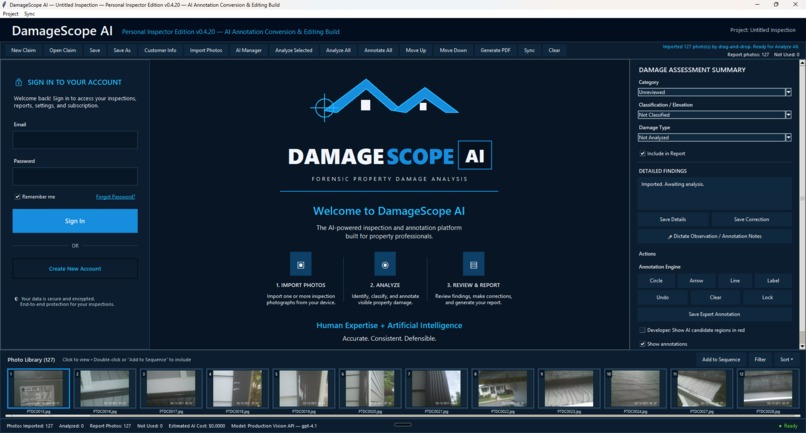
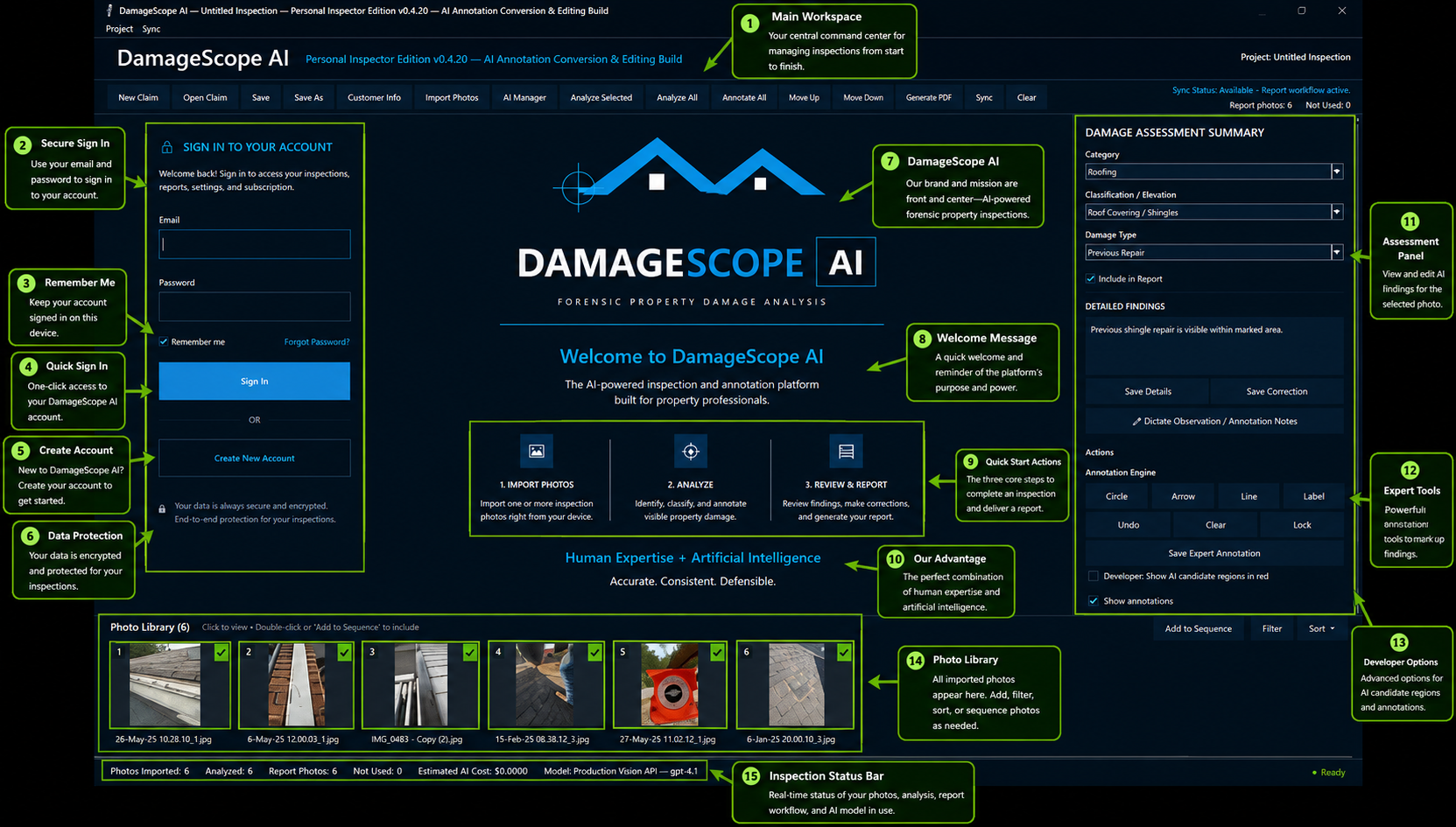
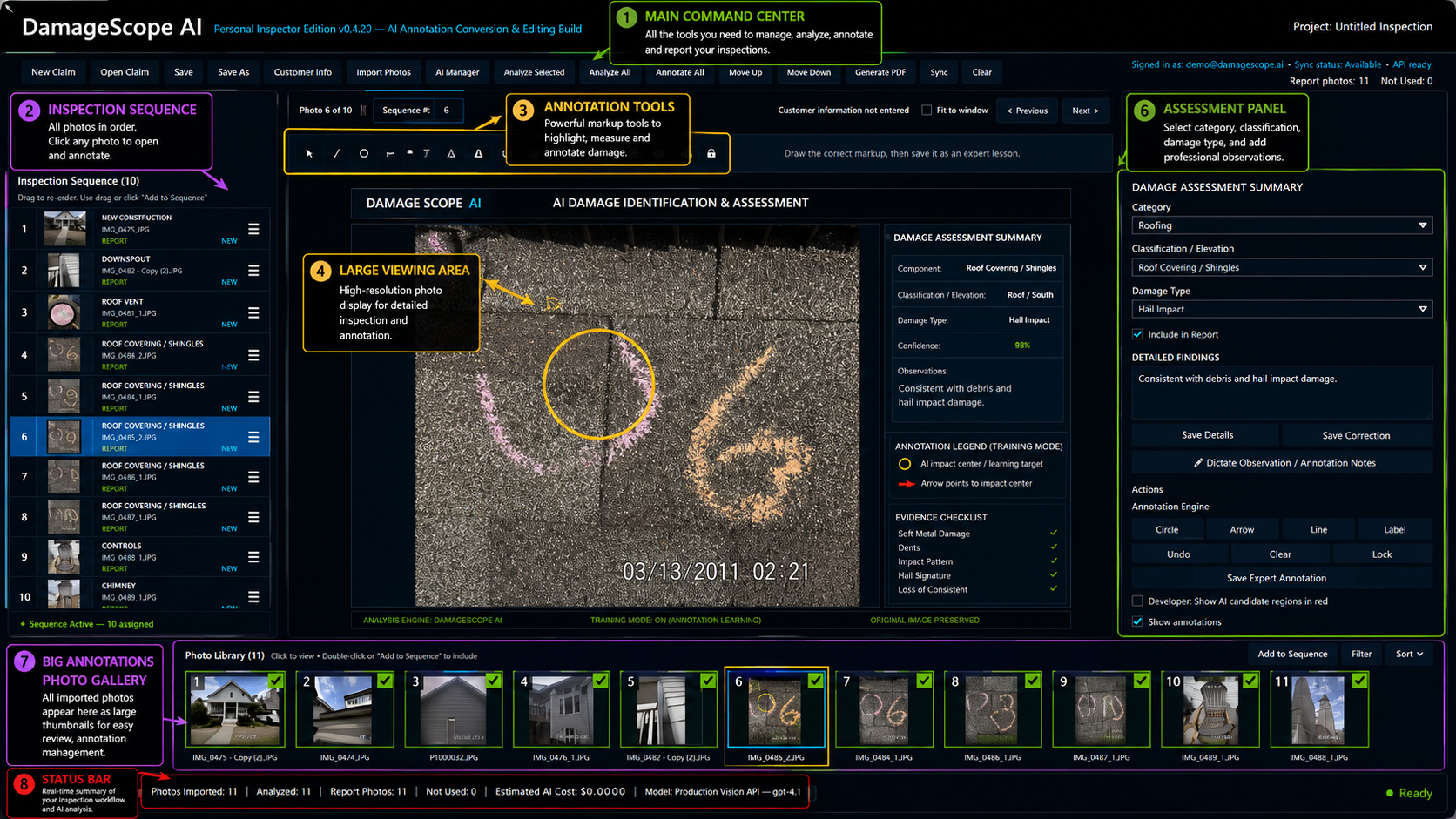
Main workspace.
-
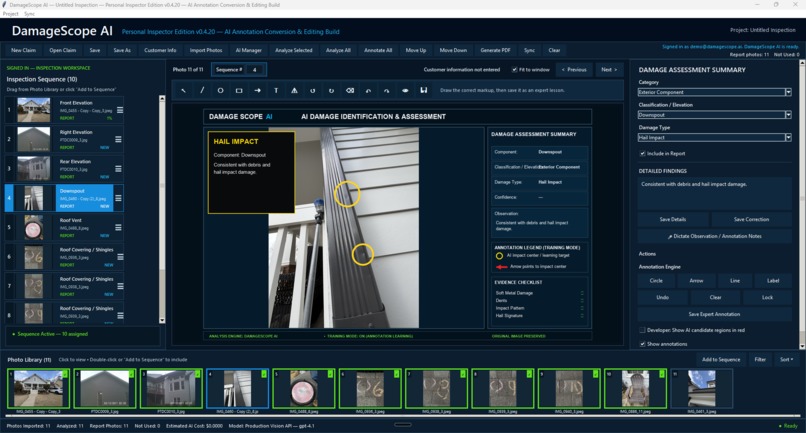
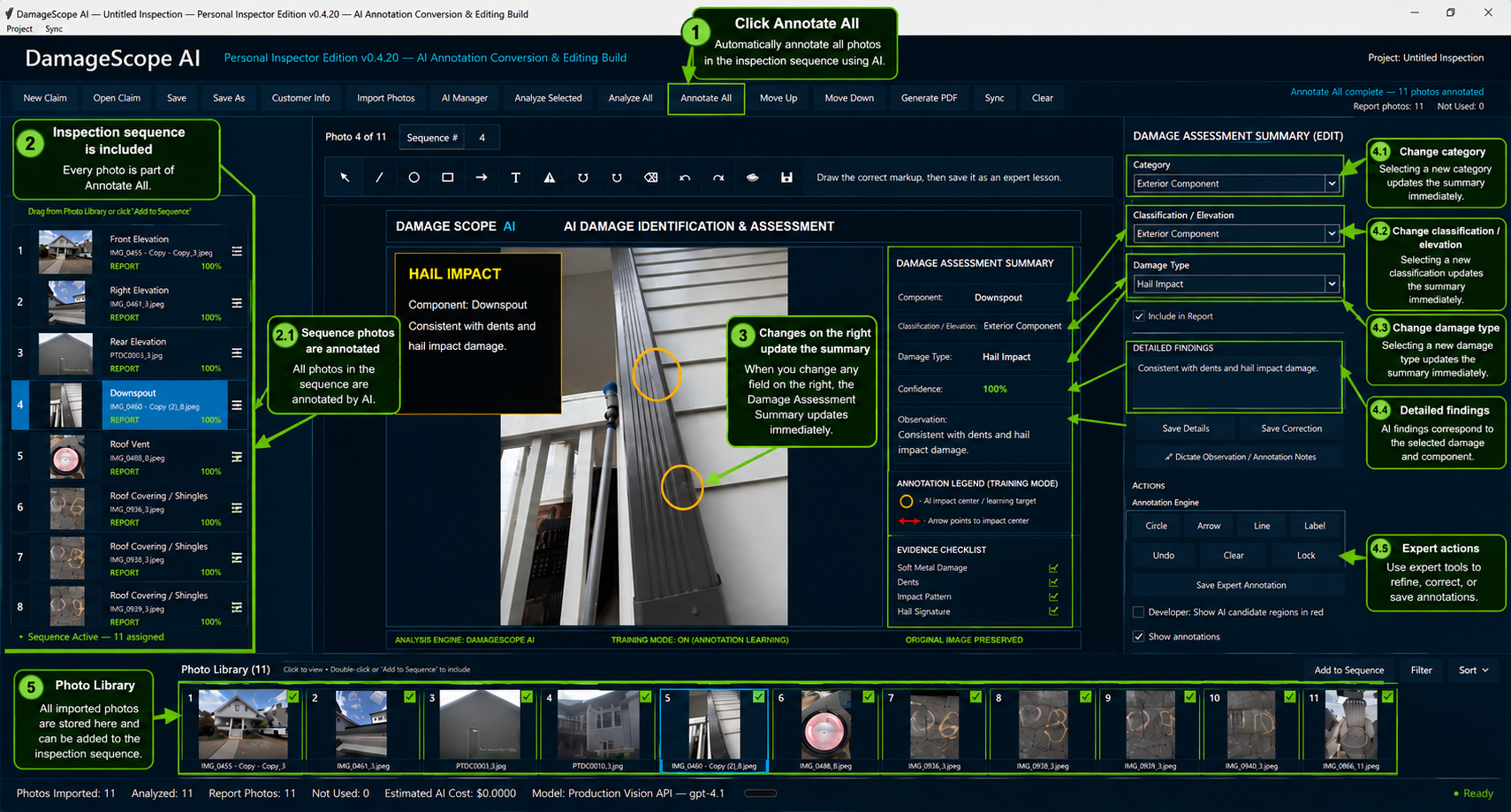
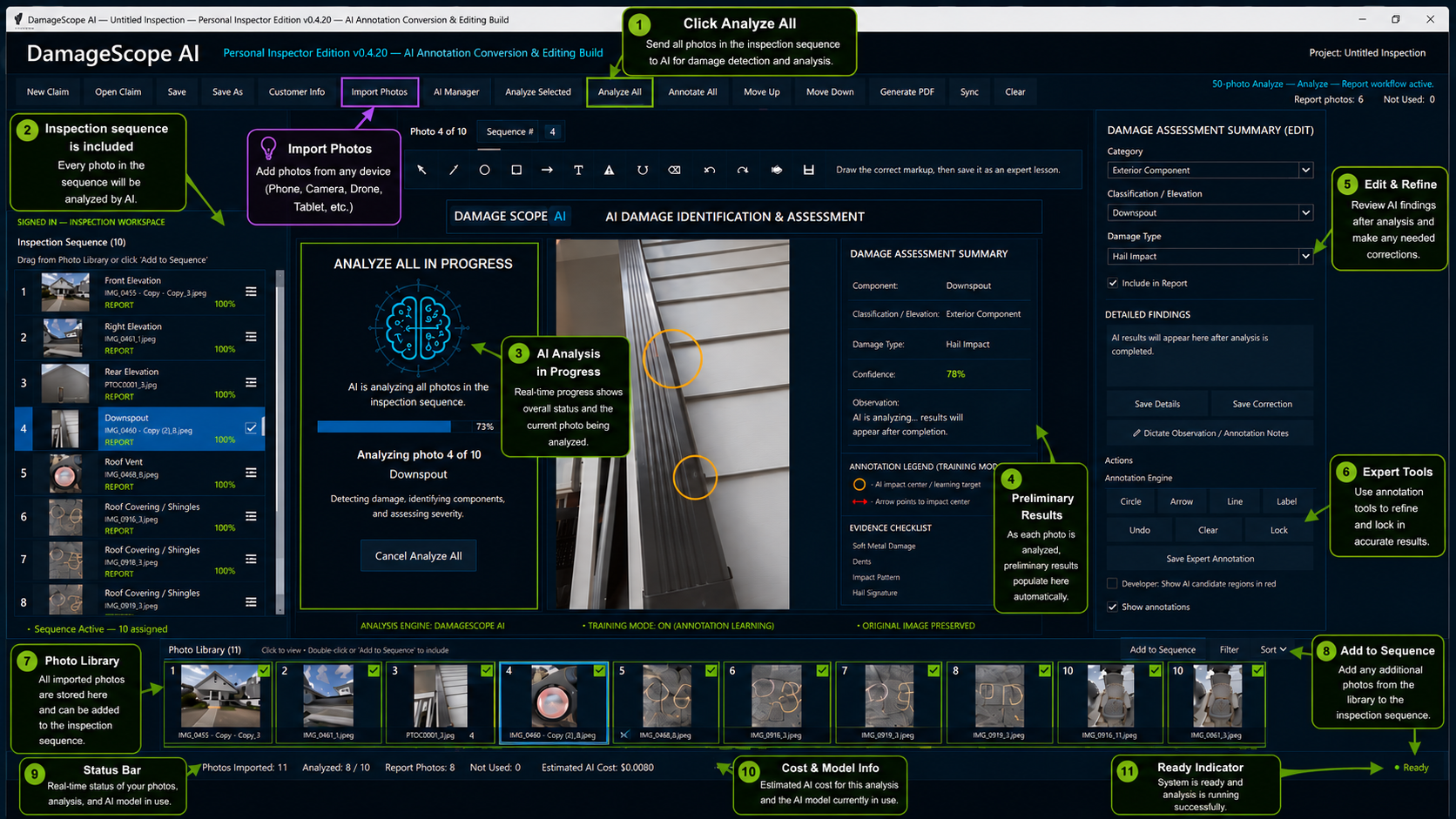
AI analysis
-
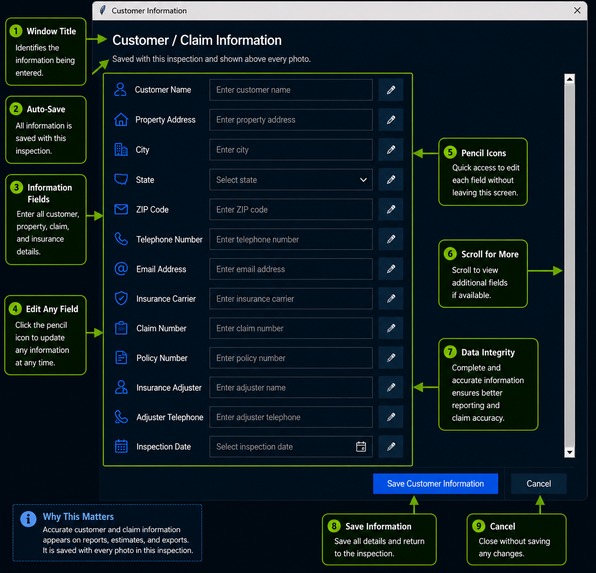
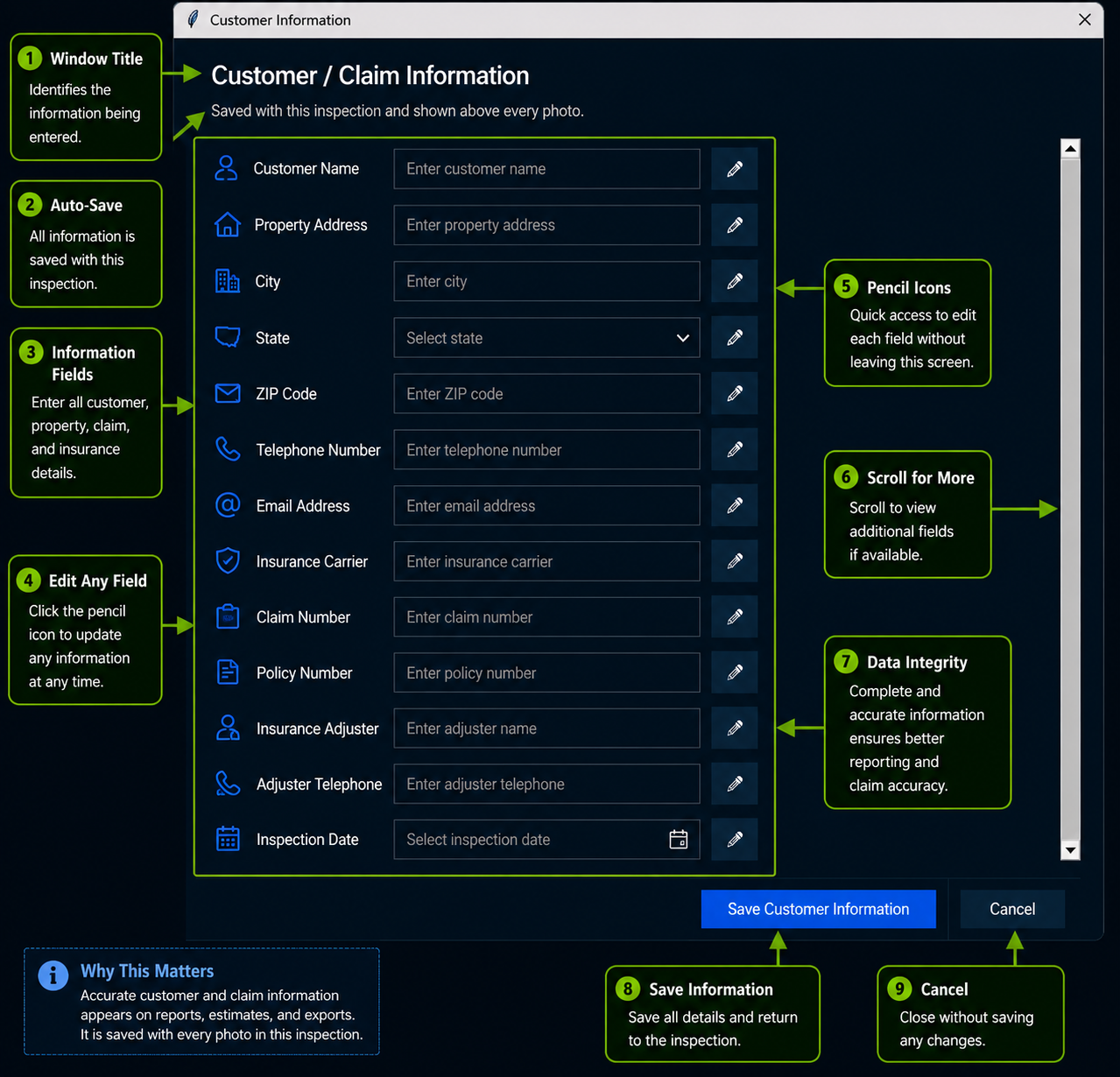
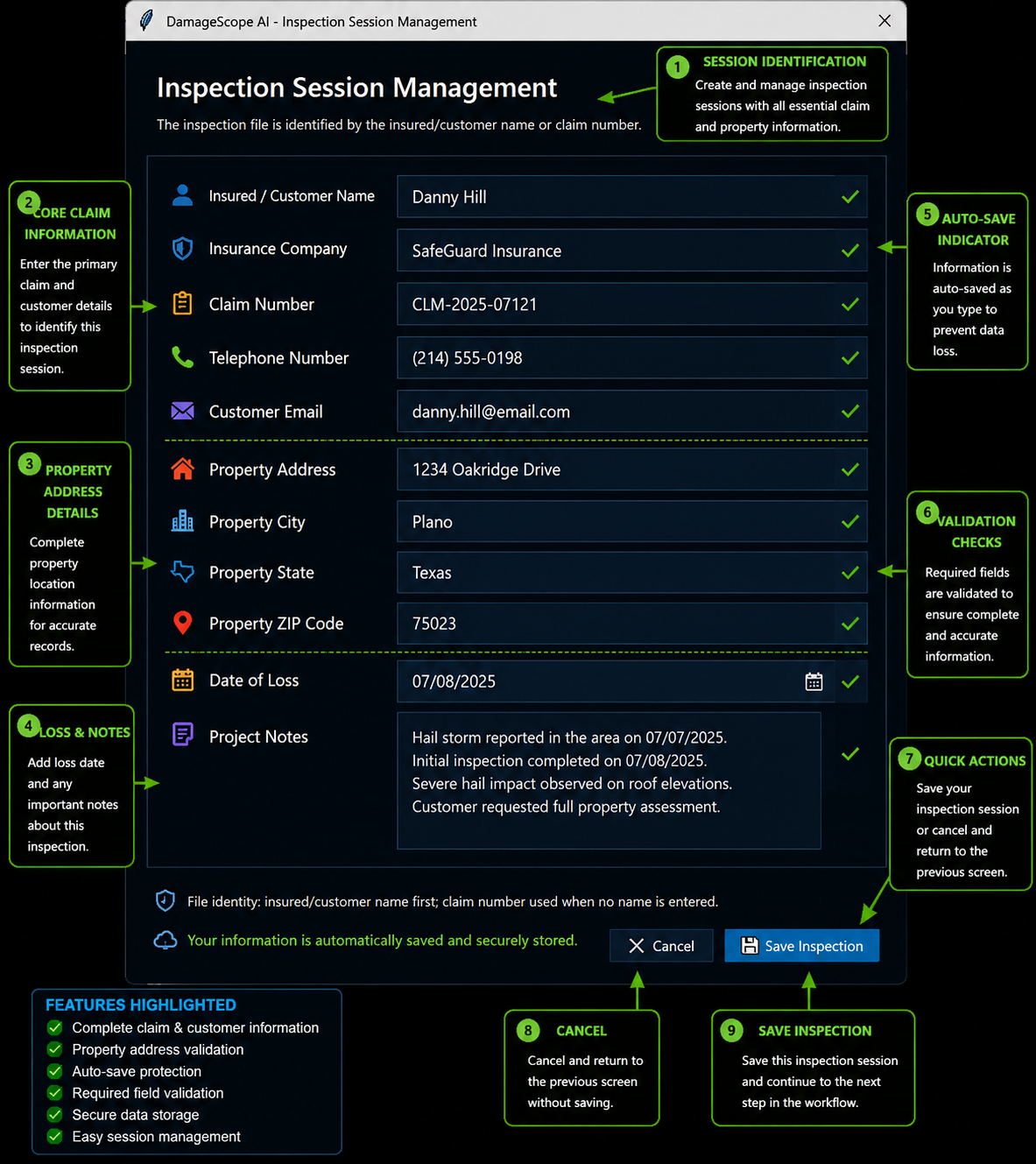
Customer Information
-
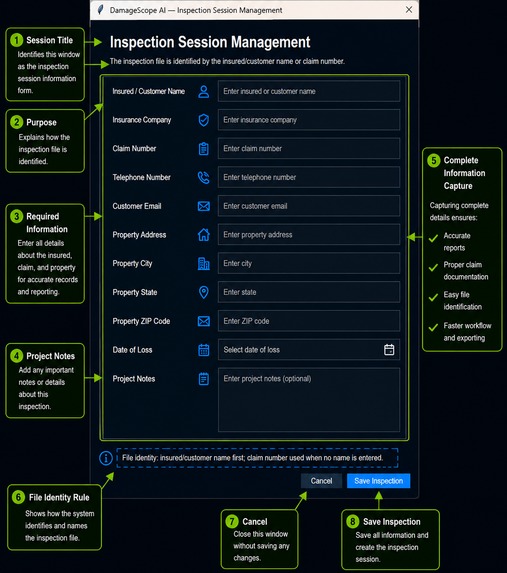
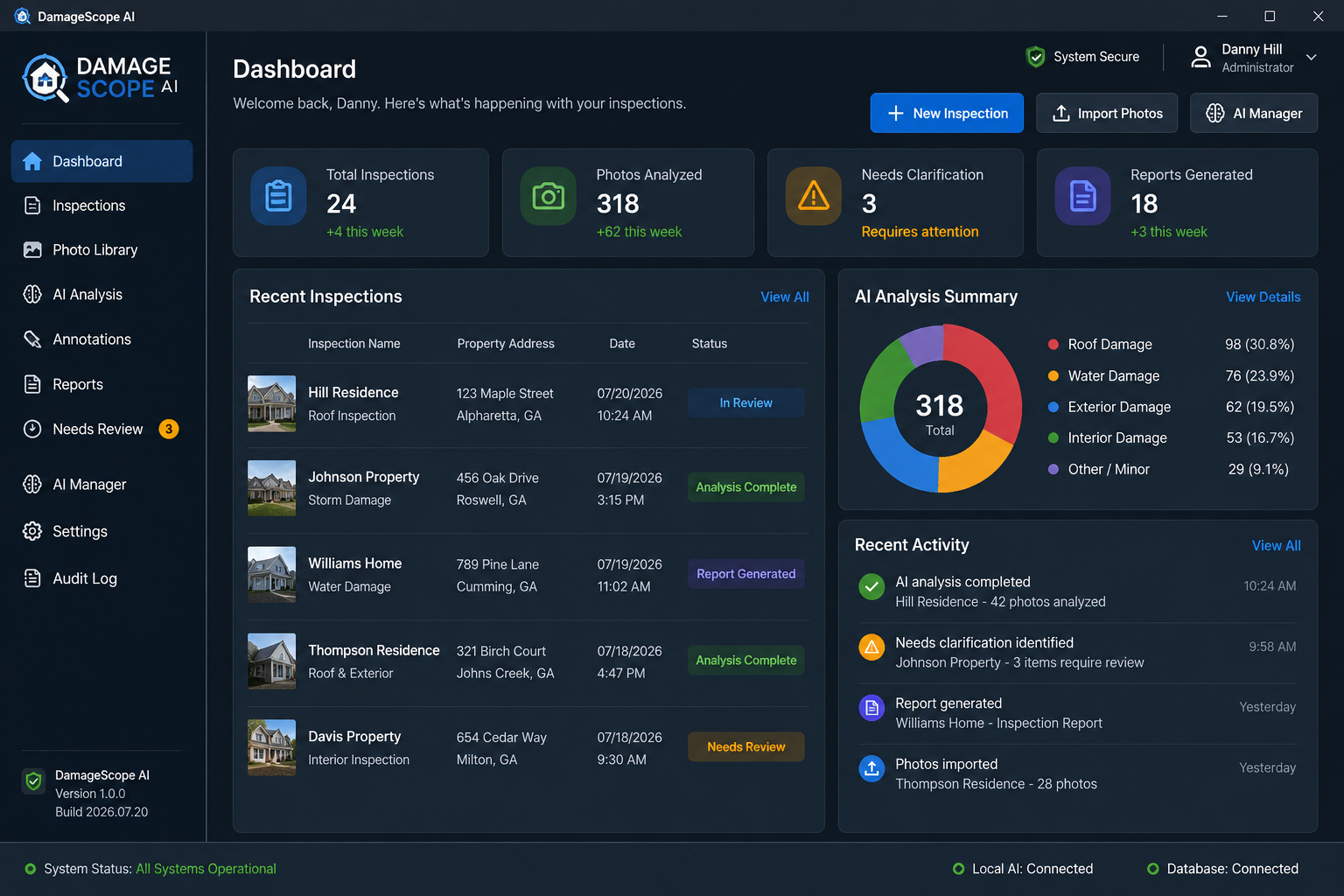
Inspection Dashboard
-
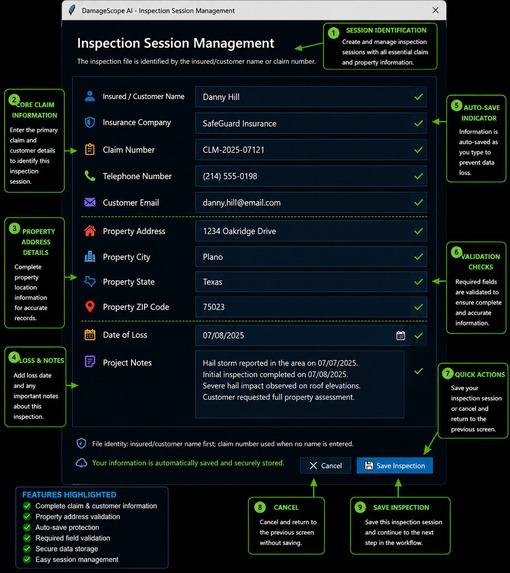
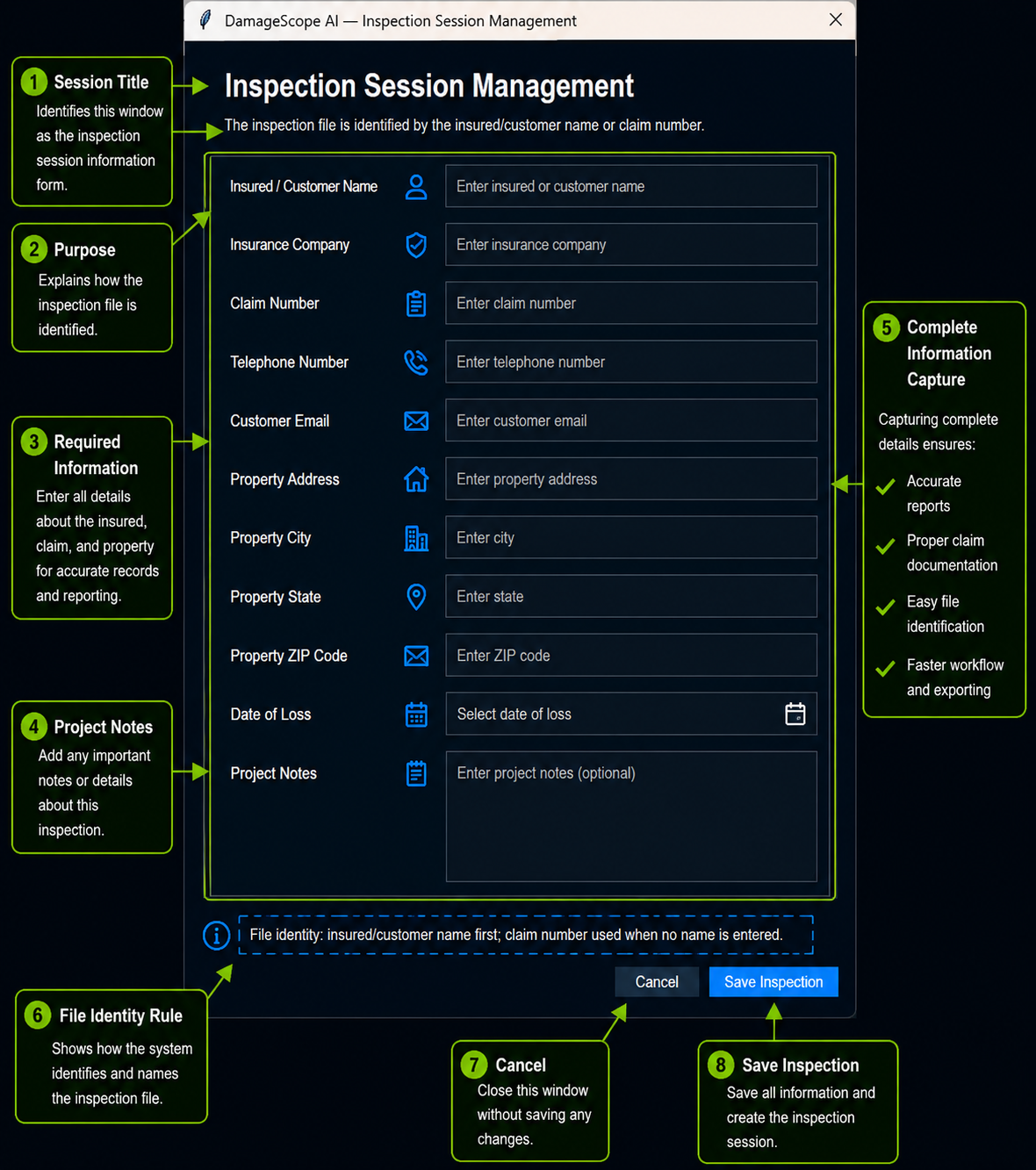
Claim management
-
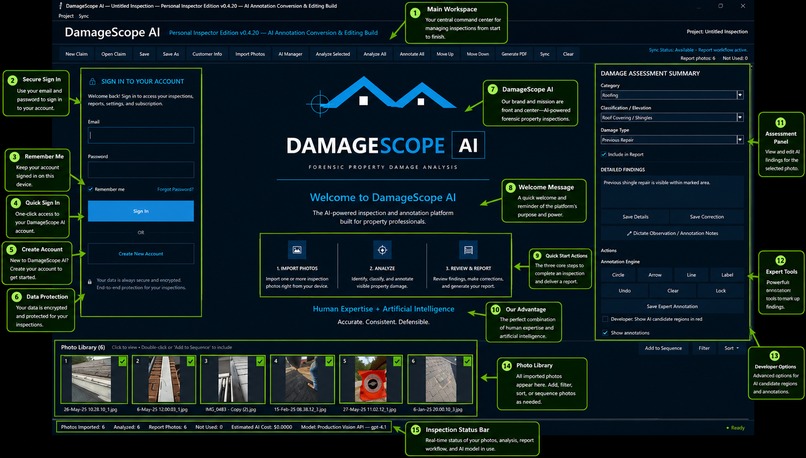
Project manager.
-
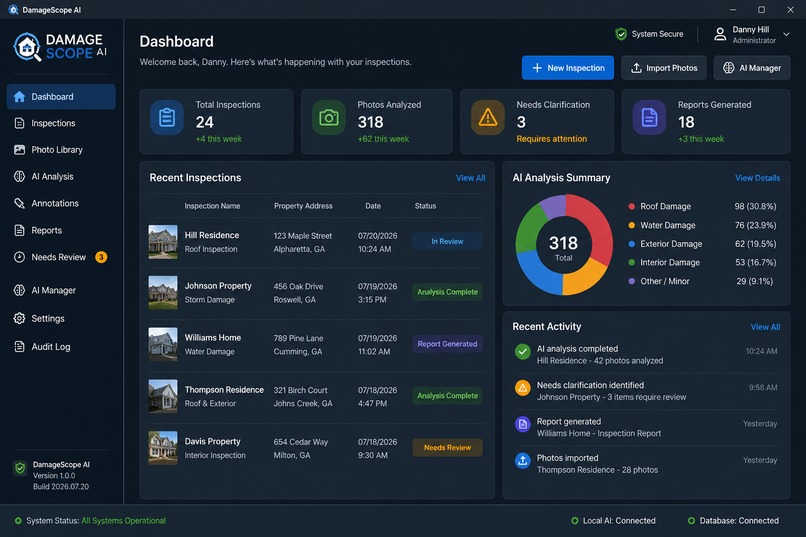
Dashboard.
-
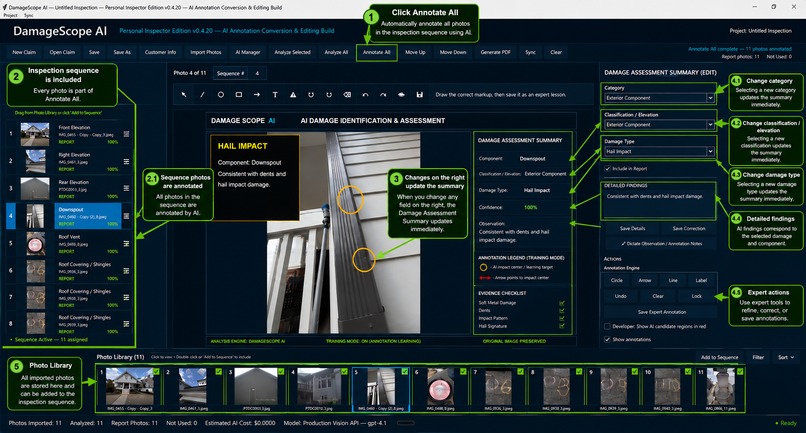
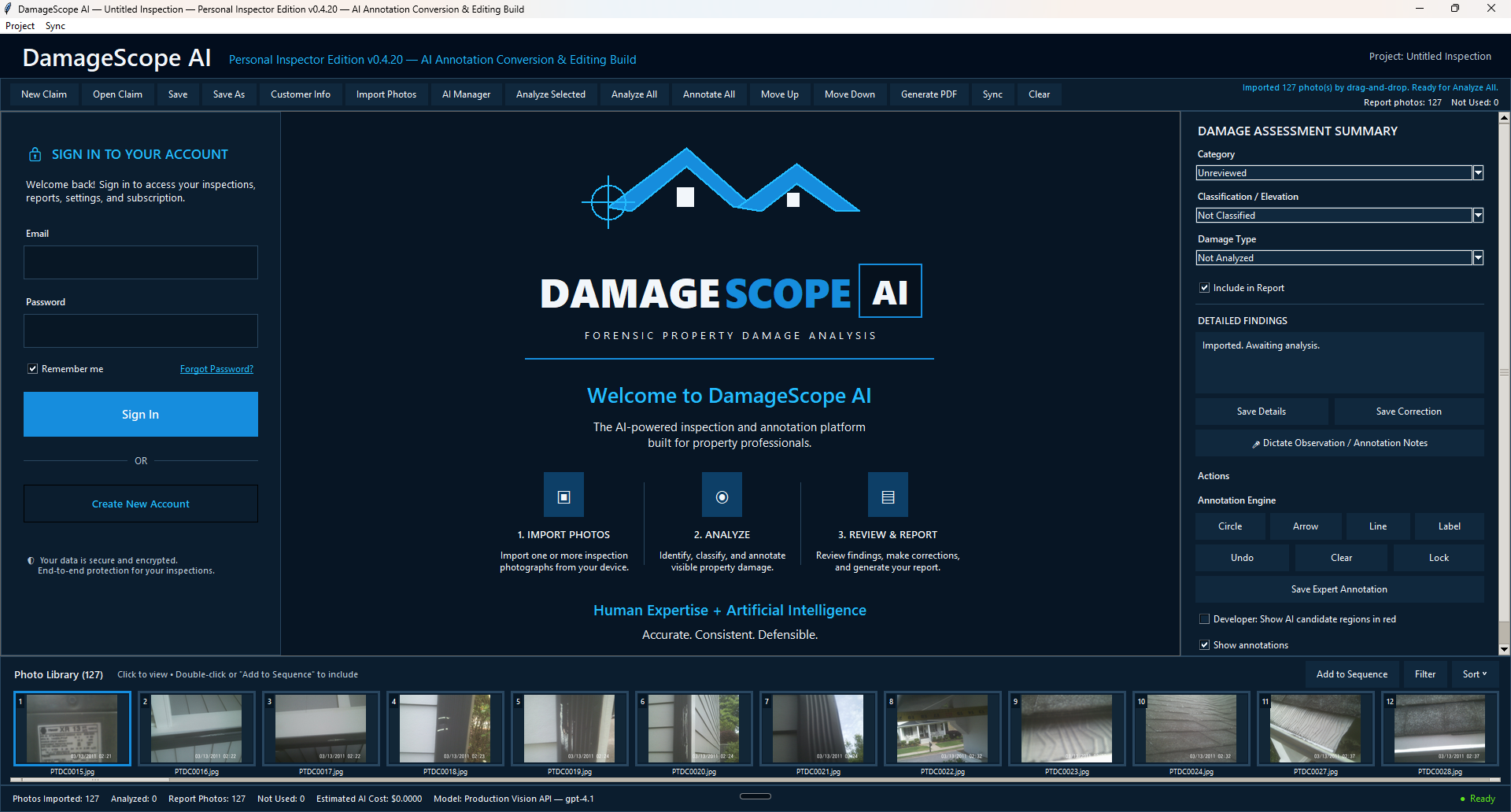
Damage Ghost Interface I.O.
-
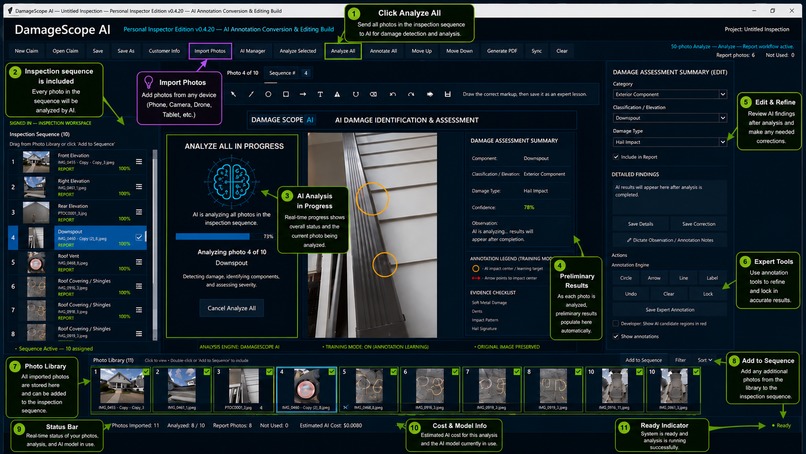
AI analysis.
-
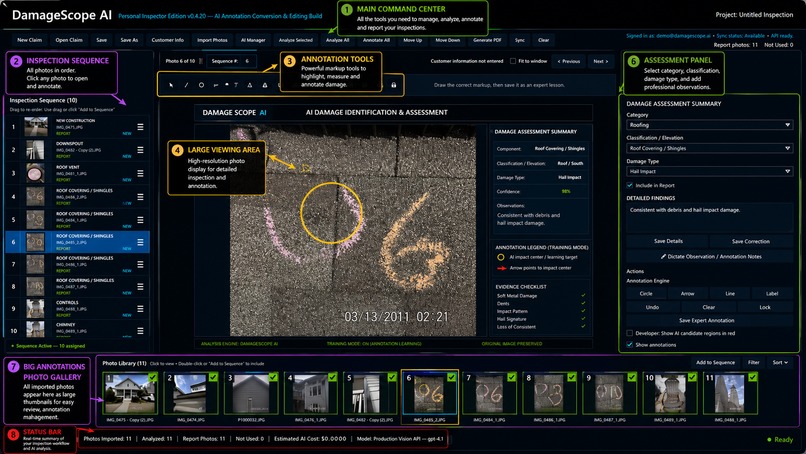
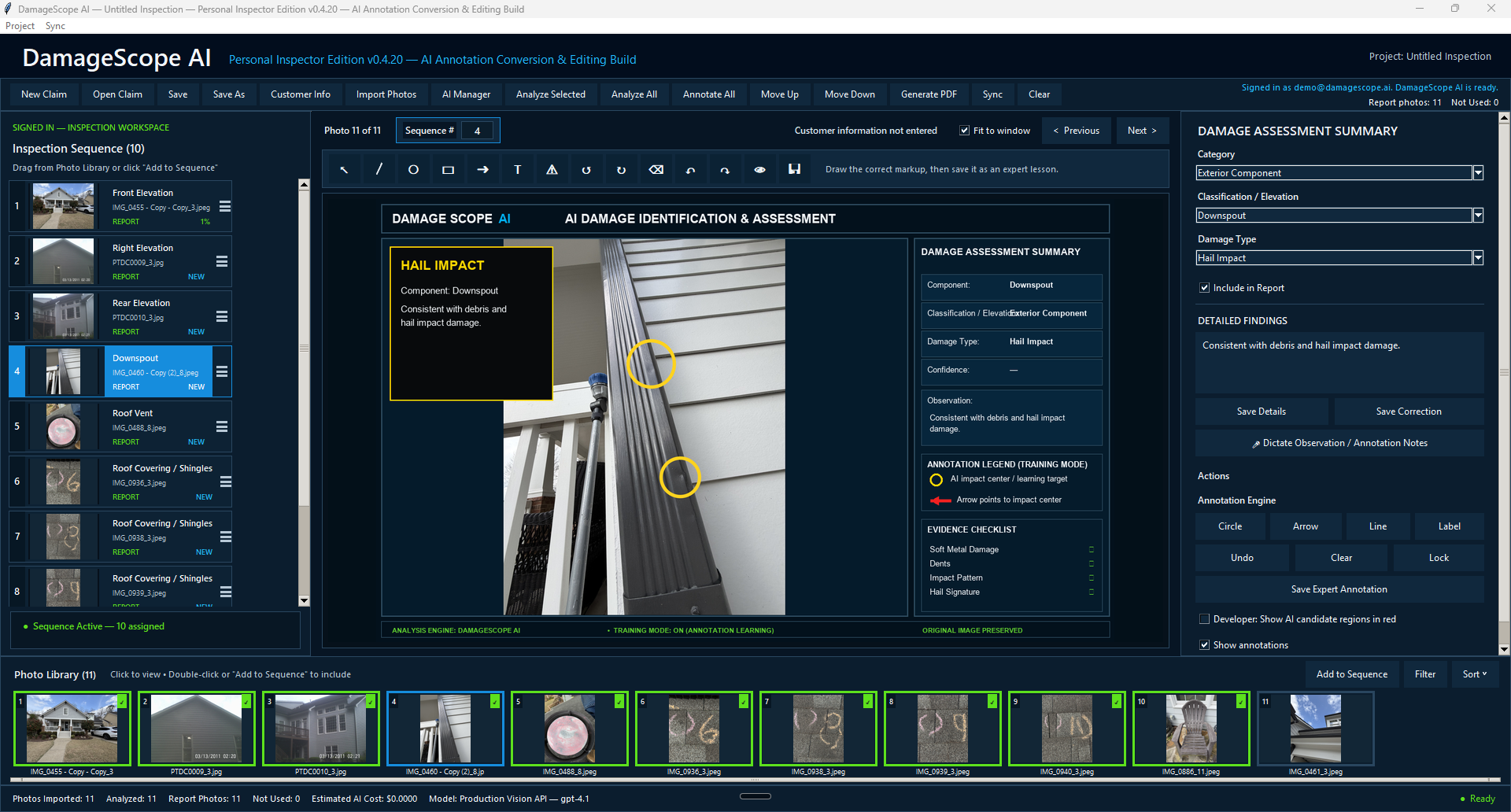
Custom Annotation
Inspiration
Every property inspection tells a story, but too often that story is buried in hundreds of photographs, handwritten notes, and hours of report writing. After more than three decades in property inspections and insurance adjusting, I watched experienced professionals spend more time organizing evidence than analyzing it. Important details could be overlooked, documentation varied from inspector to inspector, and producing a thorough forensic report was incredibly time-consuming.
DamageScope AI was born from one simple question:
What if an AI could become a forensic inspection partner instead of just another software tool?
The vision was never to replace inspectors. It was to preserve their expertise, eliminate repetitive work, and allow them to focus on making better decisions.
What it does
DamageScope AI is an AI-powered forensic property inspection platform that helps inspectors analyze photographs, identify potential damage, organize evidence, generate professional inspection reports, and maintain a complete chain of documentation throughout an inspection.
Rather than simply labeling images, the system is designed to reason through an inspection the way an experienced professional would—connecting photographs, observations, locations, and supporting evidence into one coherent investigation.
How we built it
I brought decades of field experience in property inspections, restoration, and insurance adjusting. Using OpenAI's models, I worked through thousands of design decisions, prototypes, and revisions to transform that real-world knowledge into software.
The project combines Python, Flutter, computer vision, OCR, AI-assisted development, and structured forensic workflows. Every feature was refined through continuous testing against real inspection scenarios, with AI accelerating development while human expertise guided the reasoning behind every decision.
Challenges we ran into
The hardest challenge wasn't writing code—it was teaching software to think like an experienced inspector.
Real inspections rarely provide perfect photographs or obvious answers. DamageScope AI had to learn how to organize evidence, recognize context, and support human decision-making without pretending to replace professional judgment. Building that balance required countless iterations and constant refinement.
Accomplishments that we're proud of
In a short development period, DamageScope AI evolved from an idea into a working AI-assisted inspection platform capable of organizing inspections, assisting with forensic analysis, generating professional reports, and demonstrating how modern AI can meaningfully improve the property inspection process.
What we learned
One of the biggest lessons from building DamageScope AI is that AI is not here to replace people—it is here to enhance what people are capable of accomplishing.
Throughout this project, I taught the AI how experienced property inspectors think, evaluate evidence, and make decisions. At the same time, the AI helped accelerate software development, organize ideas, solve technical problems, and turn decades of field experience into working software.
The relationship became a partnership. I learned from the AI, and the AI learned from my expertise and corrections. That continuous collaboration produced a better result than either could have achieved alone.
DamageScope AI represents that philosophy: human judgment remains at the center, while AI serves as a powerful tool that helps professionals work faster, more consistently, and with greater confidence.
What's next for DamageScope AI
The roadmap includes expanding forensic reasoning, improving computer vision, supporting additional property types, integrating industry workflows, enhancing mobile capabilities, and continuing to build an AI platform that helps inspectors produce faster, more consistent, and better-documented inspections.


Log in or sign up for Devpost to join the conversation.