-
-
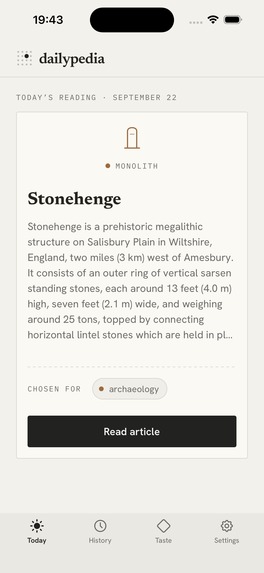
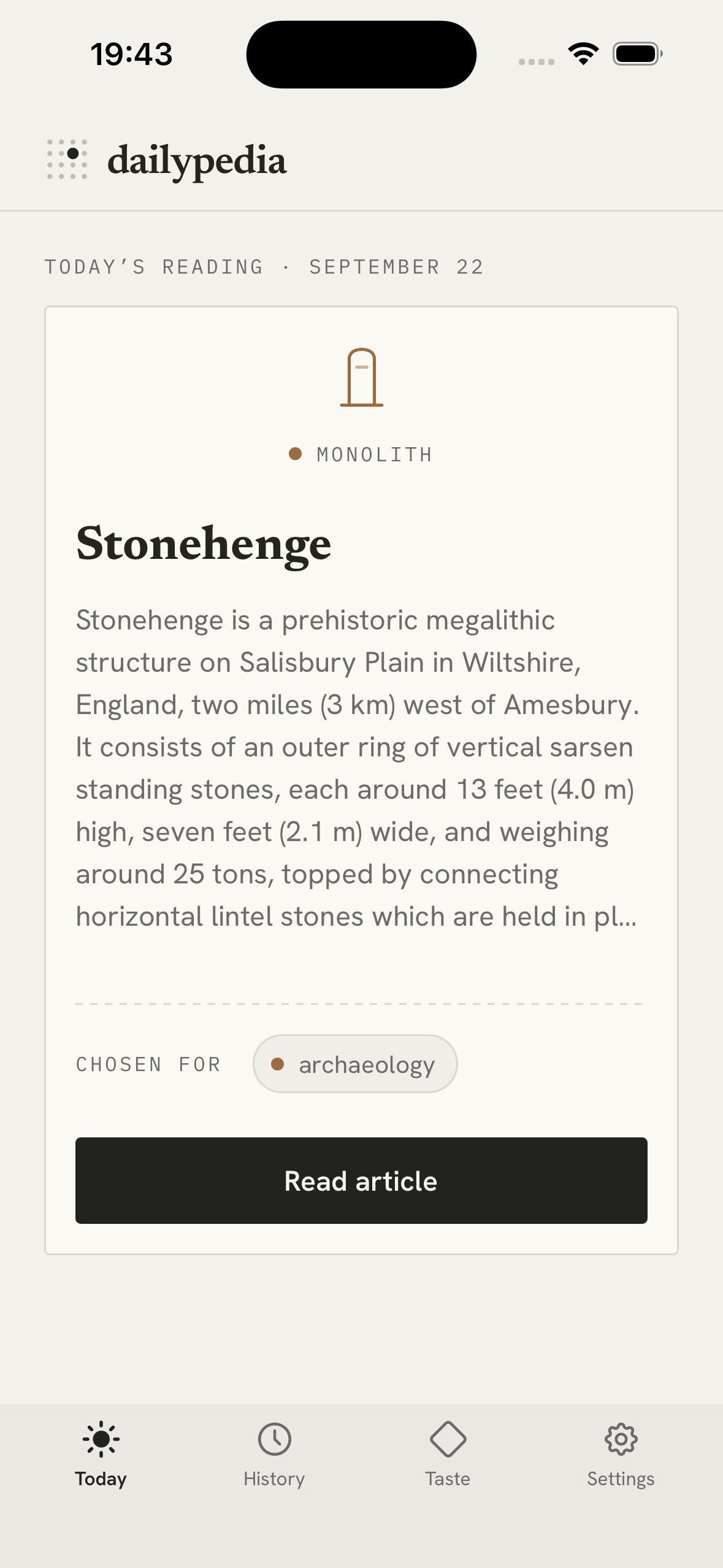
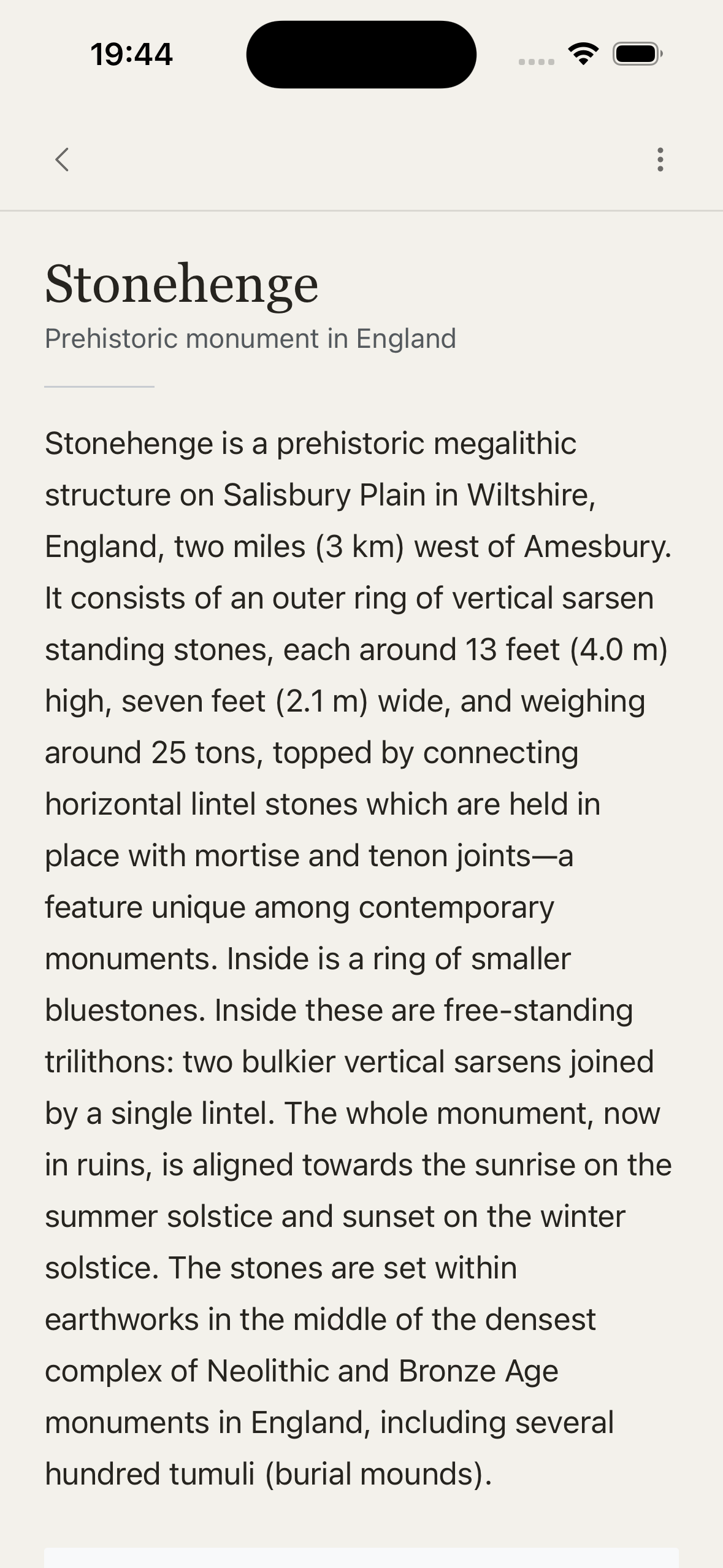
01 - The Today screen presents one personalized article each morning.
-
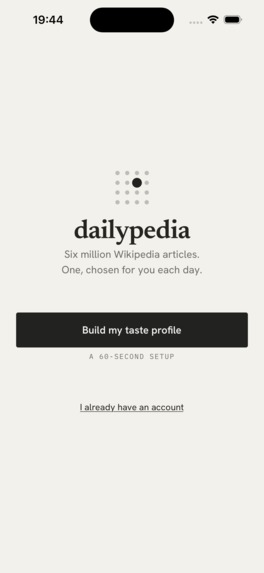
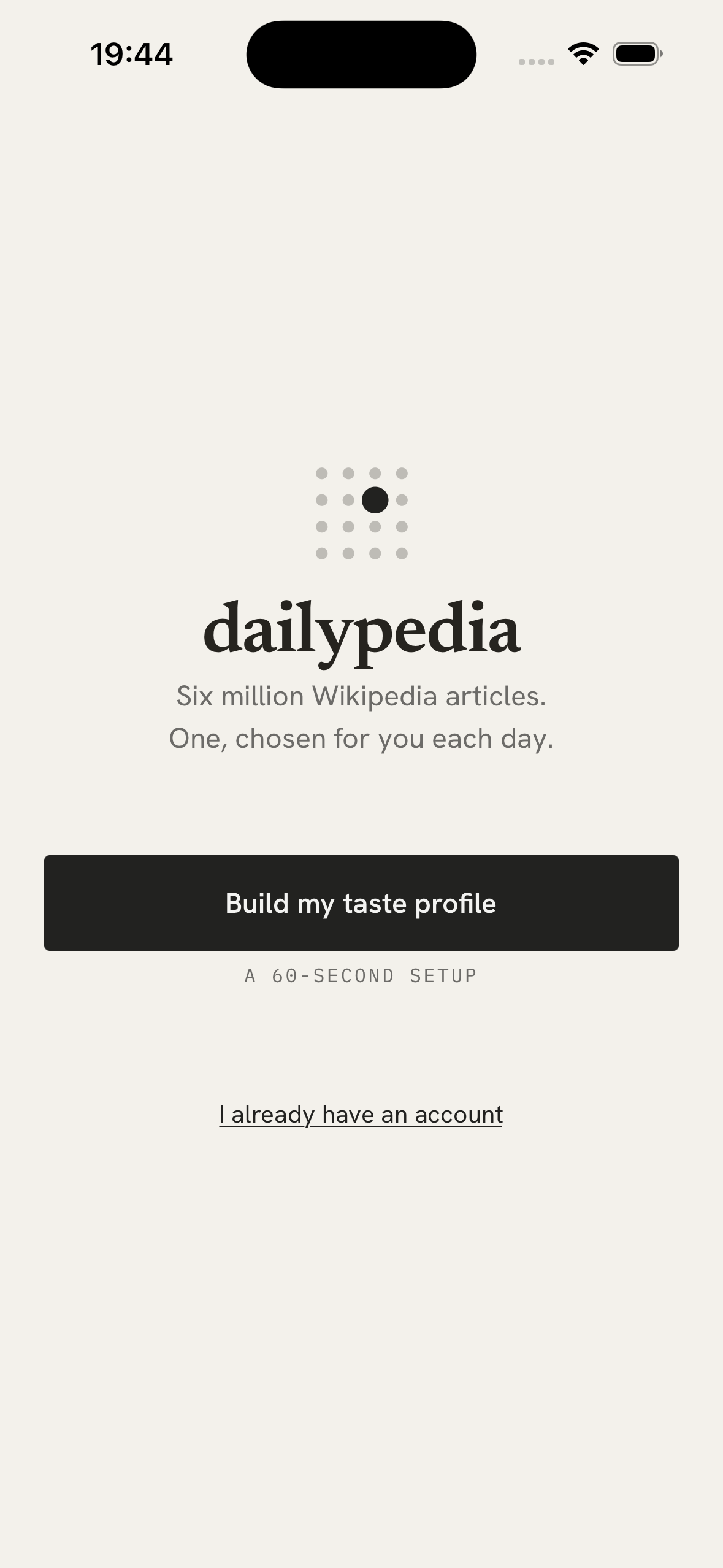
02 - The welcome screen introduces the product before onboarding begins.
-
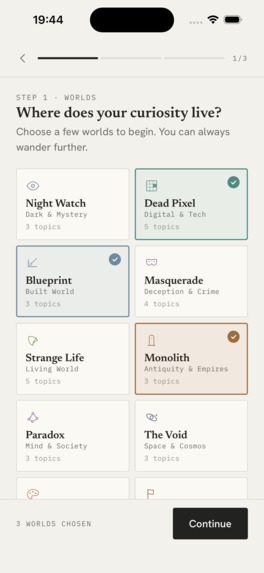
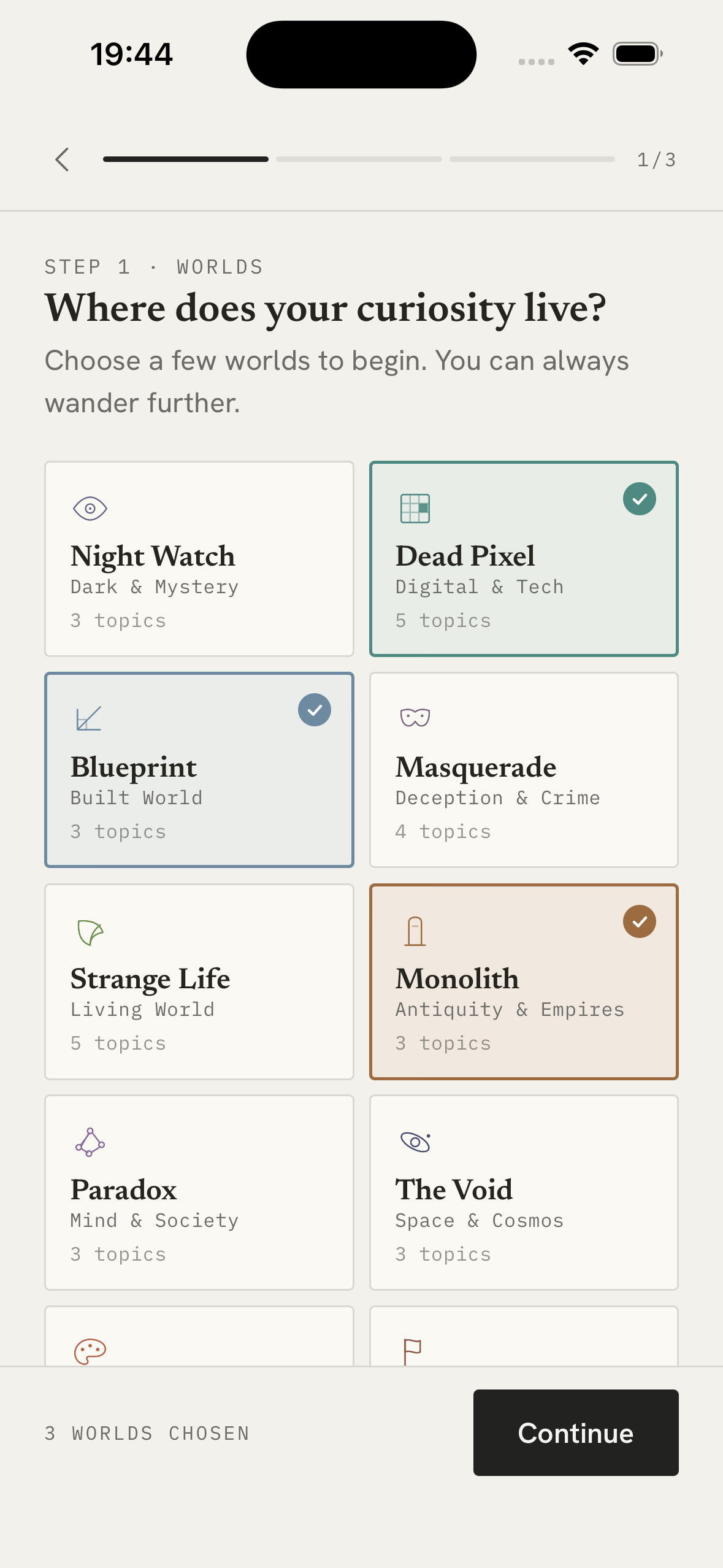
03 - Readers begin by choosing from 18 broad interest worlds.
-
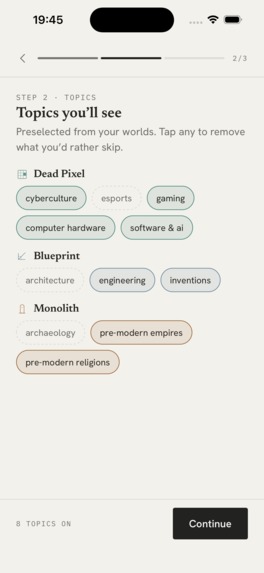
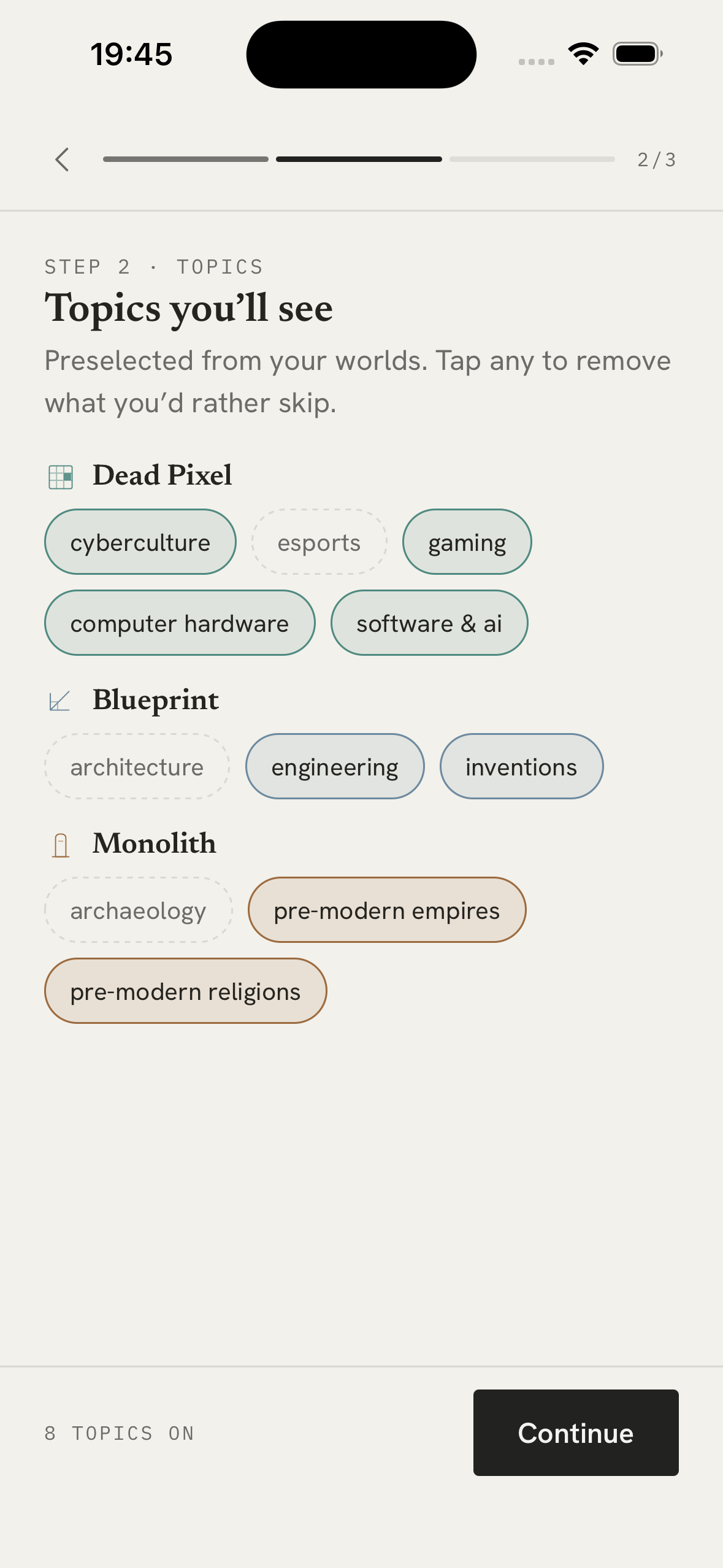
04 - They then refine those choices across 64 specific topics.
-
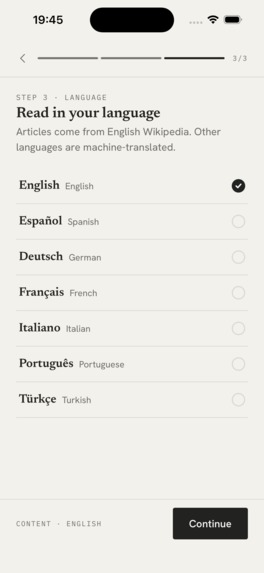
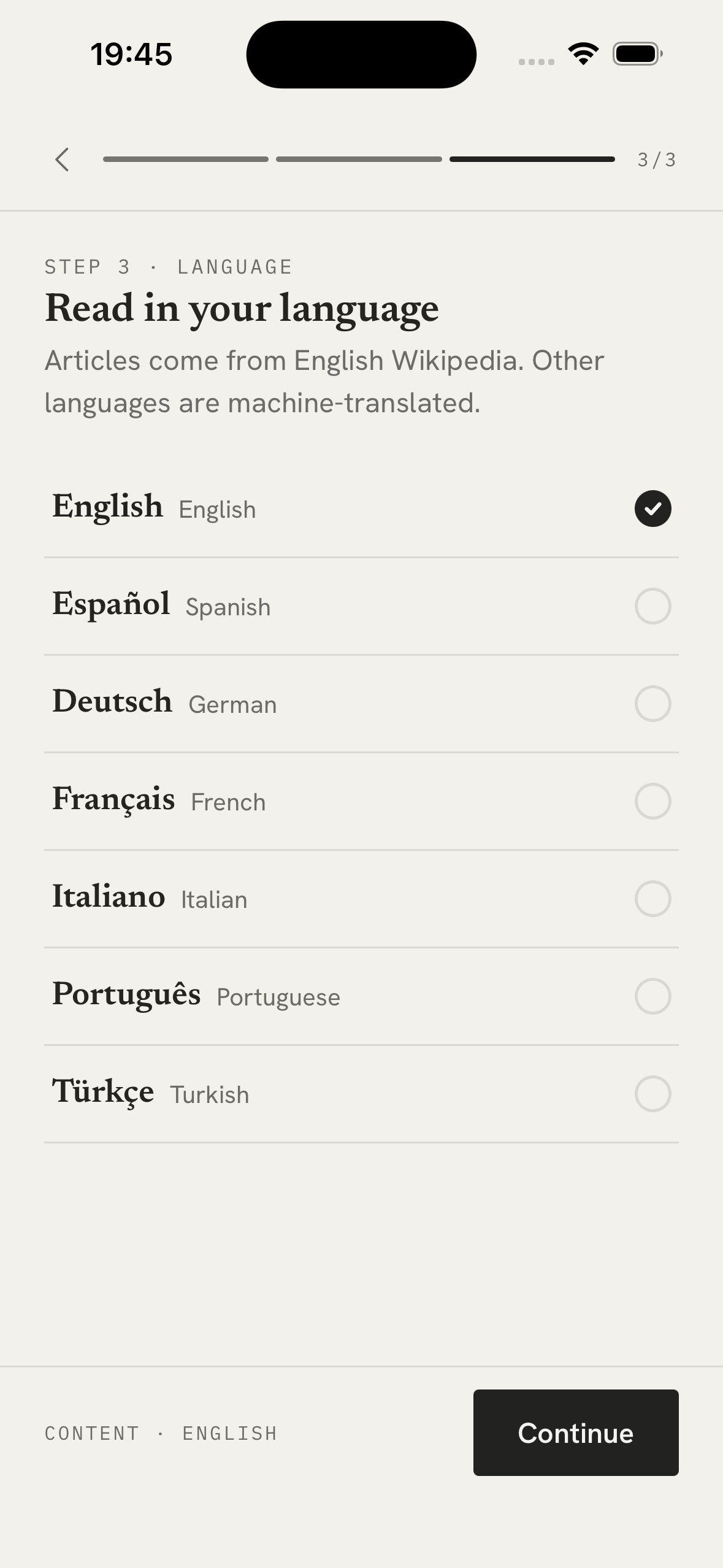
05 - Readers choose their preferred reading language during onboarding.
-
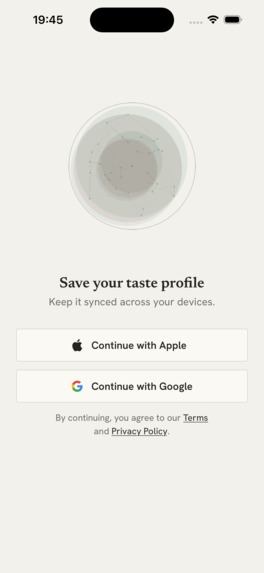
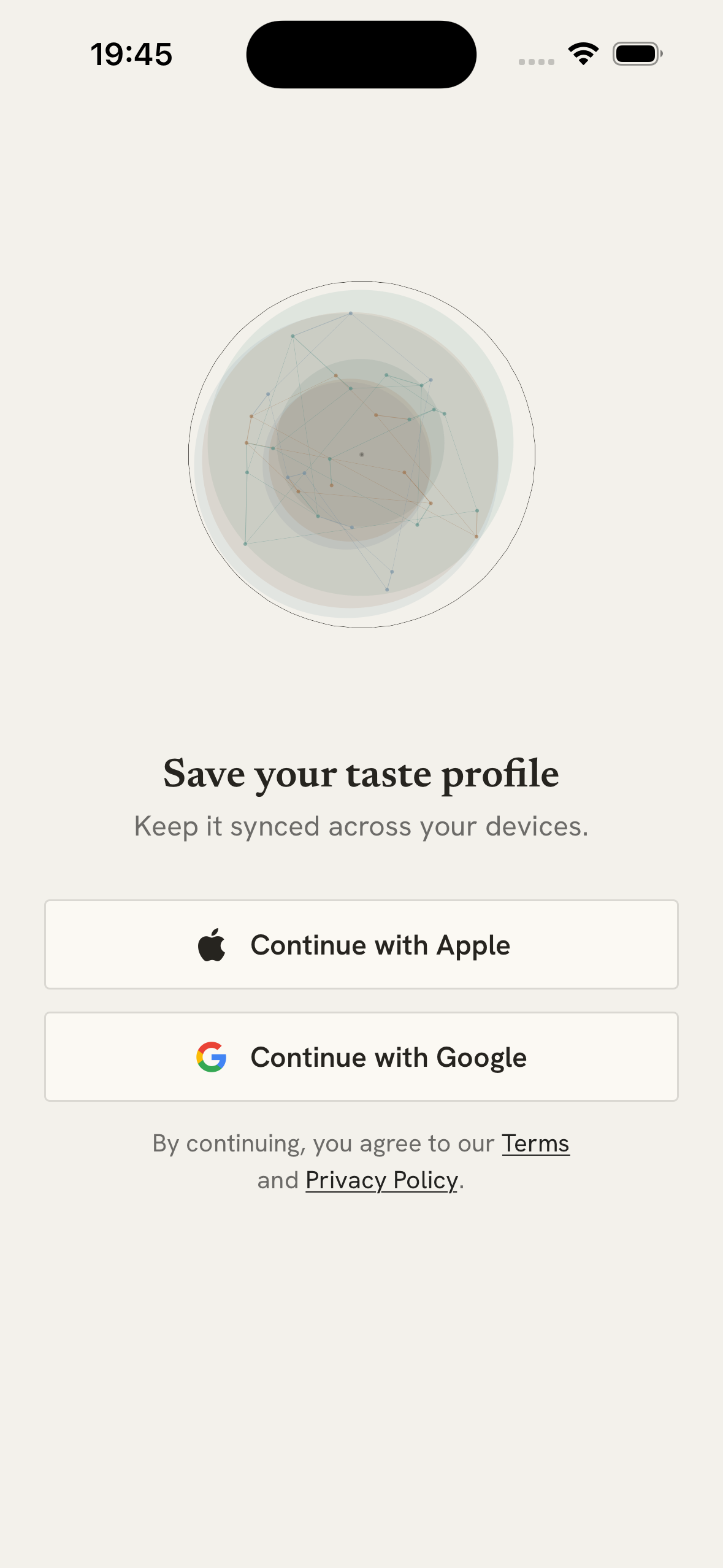
06 - Signing in saves the completed taste profile.
-
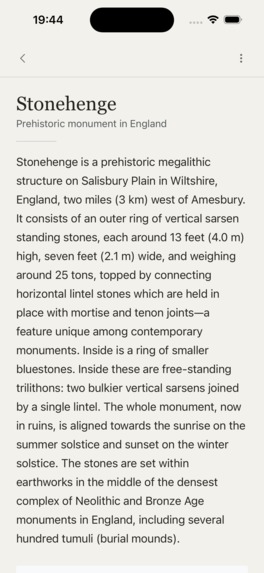
07 - The selected Wikipedia article opens in a focused reading view.
-
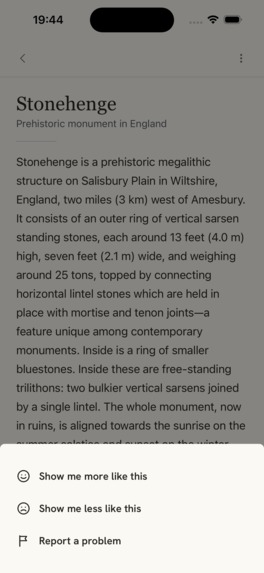
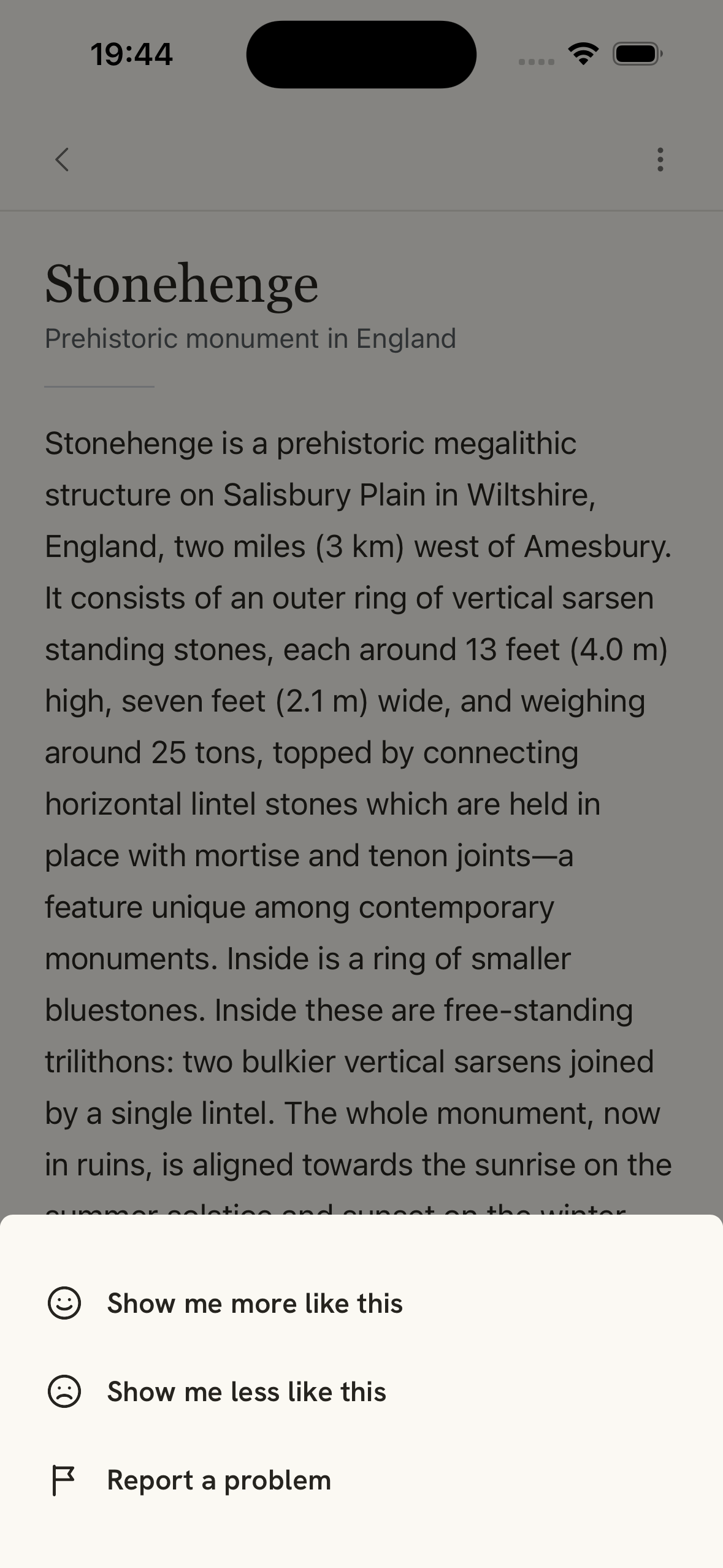
08 - Feedback controls help shape future recommendations.
-
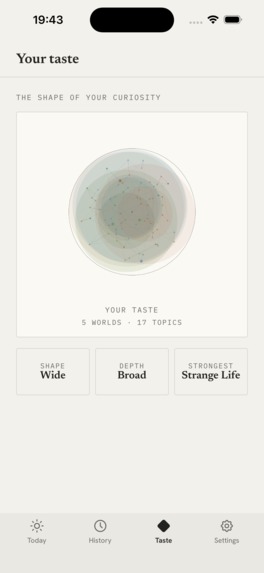
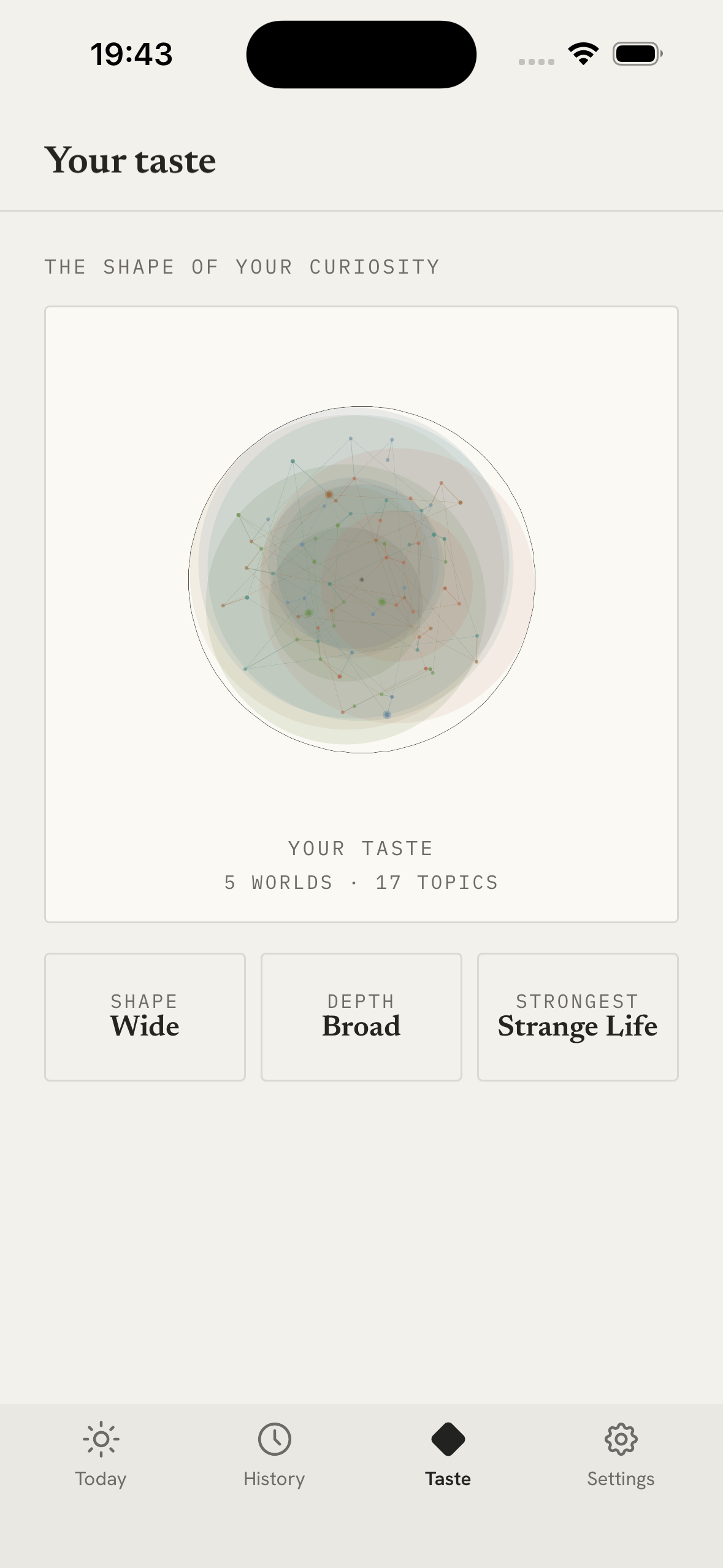
09 - The Taste Profile visualizes how a reader’s interests develop.
-
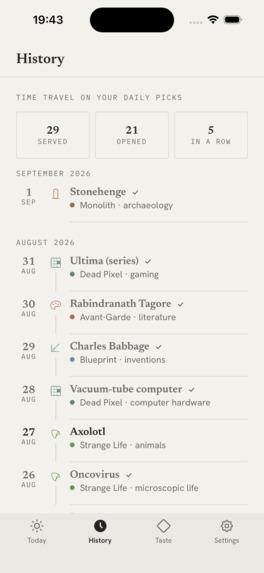
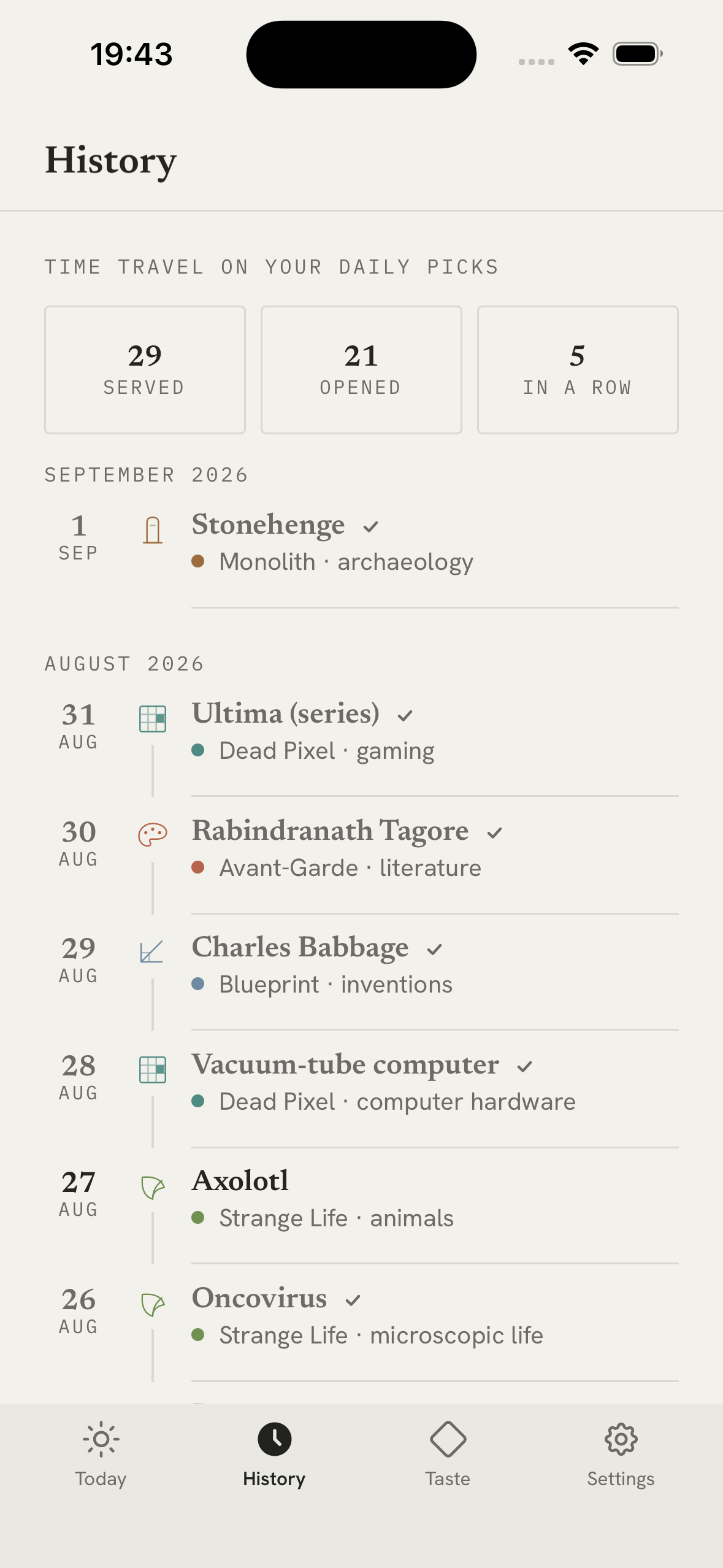
10 - Reading History keeps every previous daily recommendation accessible.
-

11 - dailypedia app icon

Inspiration
In the mid-2010s, a friend showed me IFTTT, a little automation app. One applet caught my attention: every morning, it emailed you a random Wikipedia article. I loved the idea, but something was missing. It could surprise me, but it didn’t know what I was curious about.
What I loved about Wikipedia was falling into it myself, hopping from one link to the next and following my own curiosity instead of a random pick. I later learned that this was called the wiki rabbit hole. That was the good part. The bad part was time: ten minutes could easily turn into hours.
So I built dailypedia to bring the two together: one article a day, shaped by your curiosity, without losing hours down the rabbit hole. You read it, and you’re done.
It’s the daily read I wished existed.
What it does
dailypedia turns six million Wikipedia articles into one daily read chosen for you. It is built for curious people who want to learn something new without giving an app unlimited time.
You begin by choosing from 18 worlds and 64 topics. In about a minute, those choices become a map of your curiosity. dailypedia uses that map to choose one article for you each morning.
Read it, like it, or skip it. dailypedia learns from that feedback, and future recommendations become more personal over time. Your taste map gradually takes shape. Every pick stays in your reading history, so you can return to previous articles whenever you like. The app interface is available in seven languages. On iOS, articles can also be translated on-device into supported languages.
There is no endless feed, trending list, or pressure to keep scrolling. You get one article, give it your attention, and come back tomorrow for another.
On iOS, readers can support dailypedia with an optional tip. It unlocks nothing and does not change the experience. It is simply a way to say thanks.
How we built it
I started with a simple user journey: choose your interests during onboarding, receive one article, and return the next day. Making that experience genuinely personal meant solving the hardest part first: how to turn someone’s curiosity into a recommendation.
The recommendation system did not begin as a single final design. I built a series of prototypes, tested several ways of representing Wikipedia articles as vectors, and compared how each approach behaved before selecting an alpha candidate.
Even after selecting the alpha candidate, I revised the system six times. Each version was tested through long-running simulations across different reader profiles, including simulated use over ten years. Version 1.6 became the recommendation engine that ultimately shipped.
Once the backend reached alpha, I returned to the original user journey. I designed the interface, mapped the core flows, and built the mobile app around that experience. dailypedia then entered a three-week closed beta, where early reader feedback helped refine the experience before its public release.
Challenges we ran into
The hardest challenge was that short-term relevance was not enough. A recommendation that looked good today could say very little about whether the system would remain reliable and consistent months or years later. I needed a way to evaluate long-term behavior without having years of real-world usage.
Translation was another major challenge. The first POCs used Google Translate in a WebView. Its output was good enough to set the quality baseline, but neither the WebView approach nor an API-based alternative was sustainable for a free product. I then evaluated Apple Translation, Google ML Kit, Bergamot, and newer language models through structured comparisons and reader feedback. Apple Translation met the bar on iOS, but finding an Android solution with comparable quality while keeping dailypedia free remains an open challenge.
The final challenge was hiding all that complexity. dailypedia had to feel as simple as its promise: open the app, read one article, and leave. Recommendations, translation, daily delivery, and reading history all had to support that experience without turning it into another endless feed.
Accomplishments that we're proud of
What I am most proud of is that dailypedia is no longer just an idea or a prototype. I built every part of the product, took it through a closed beta with 25 readers across iOS and Android, and then released it publicly.
Today, dailypedia has reached more than 100 readers in over 20 countries and delivered more than 3,000 daily reading recommendations. 40% of its readers are based outside Türkiye, my home country. Around 60% are people outside my immediate circle.
What we learned
Launching dailypedia taught me that attention and adoption are not the same thing. Social engagement did not consistently turn into readers, while organic discovery through the app stores did. That made app store optimization and localization central to how I think about growing the product.
What's next for dailypedia: one article a day
Short term
The next chapter is about deepening the daily ritual, not adding features for their own sake. I want to improve the reading experience as a whole and make discoveries easier to share. On Android specifically, the goal is to bring high-quality article translation while keeping dailypedia free.
Long term
After testing the recommendation system across ten years of simulated use, I hope to look back a decade from now and see a global community of curious readers still returning for their daily article.
Built With
- android
- apple-translation
- astro
- better-auth
- bullmq
- cloudflare-pages
- docker
- drizzle-orm
- expo-push-service
- expo.io
- fastify
- ios
- nestjs
- node.js
- postgresql
- qdrant
- qwen3-embeddings
- react-native
- redis
- revenuecat
- sentry
- tanstack-query
- typescript
- wikimedia-apis
- xstate

Log in or sign up for Devpost to join the conversation.