Inspiration Every parenting app we looked at was about tracking grades, attendance, homework completion. But research shows something different is actually driving student disengagement: over half of teachers cite lack of parent engagement as a top concern. The problem isn't that parents don't care. It's that they're overwhelmed and don't have a simple way to connect, not just supervise. We wanted to build something for the 5-minute windows a busy parent actually has the commute, dinner prep, bedtime instead of another app demanding 30 minutes of oversight.
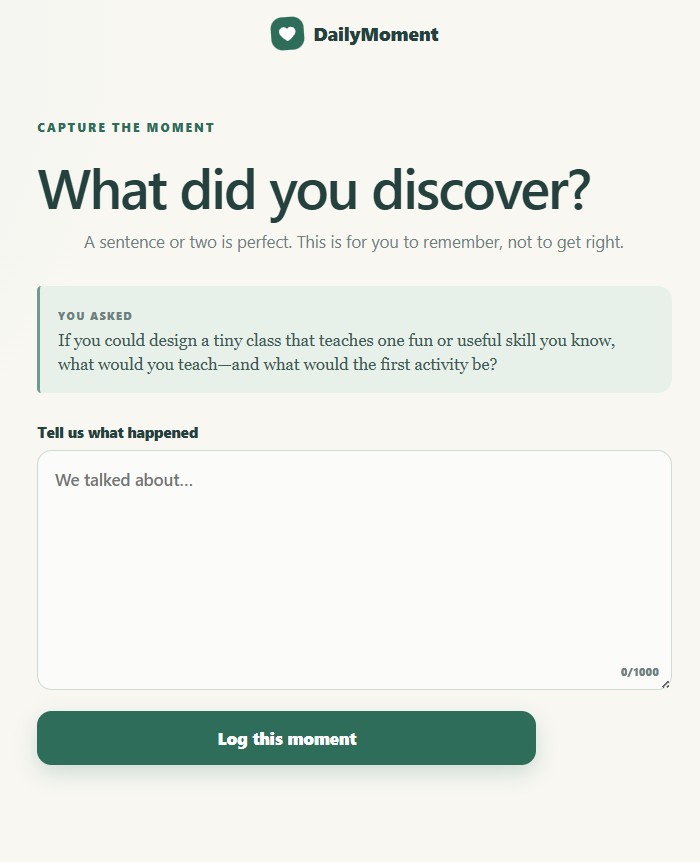
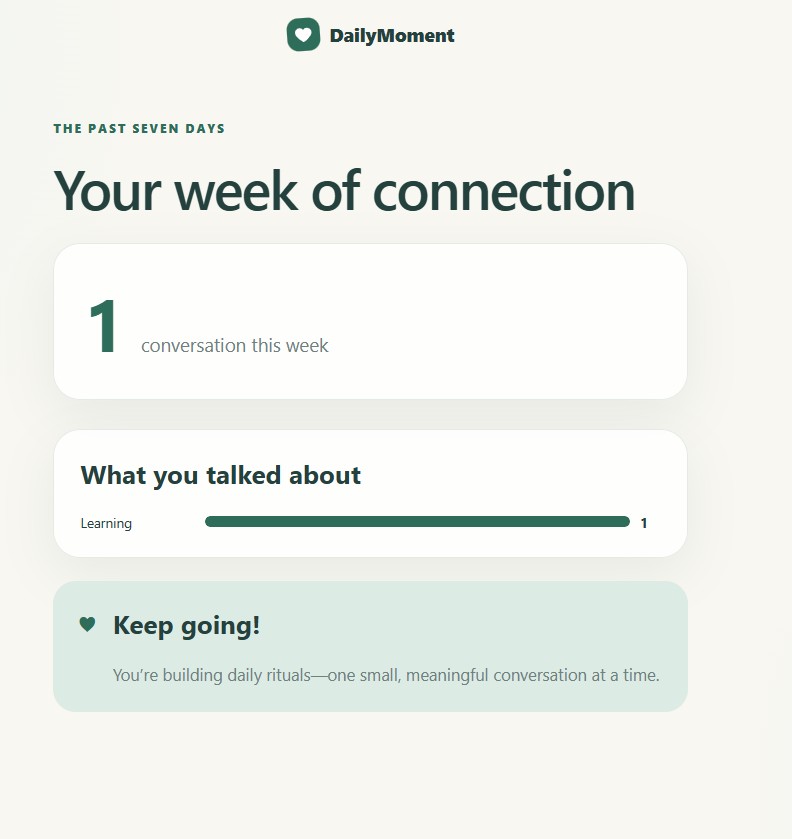
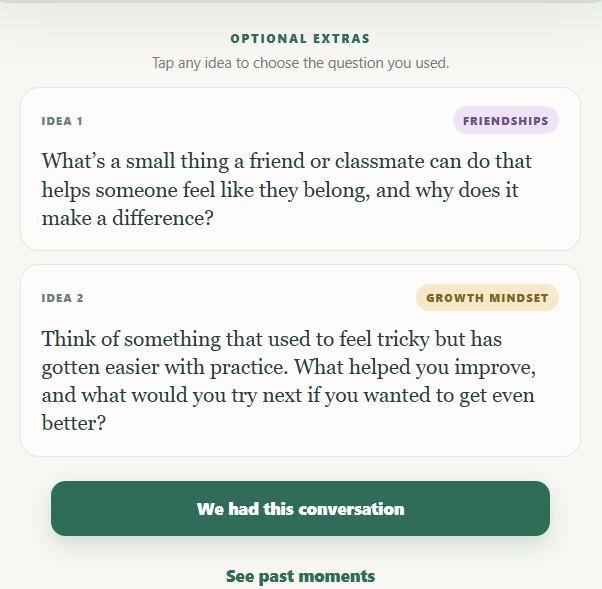
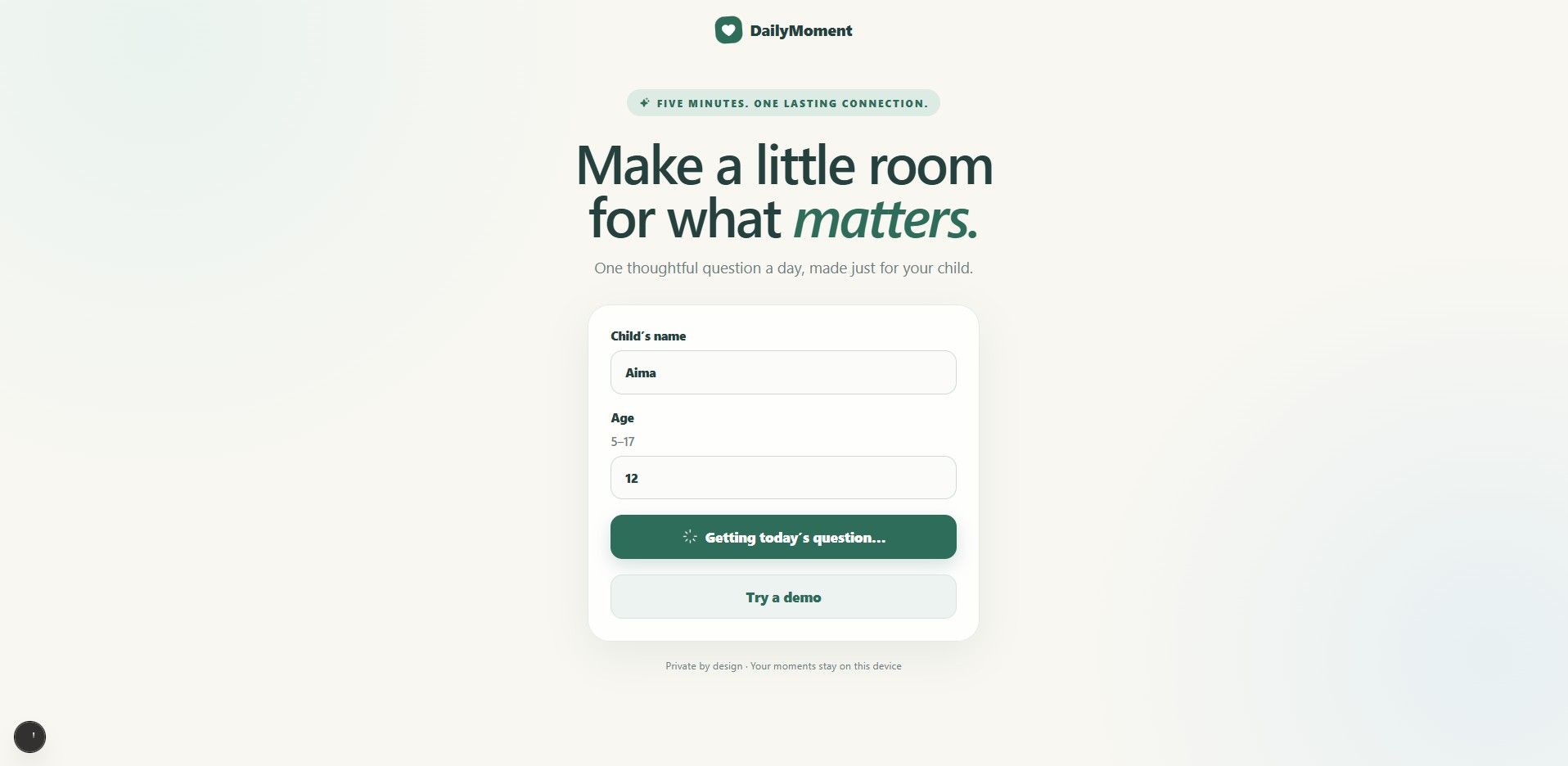
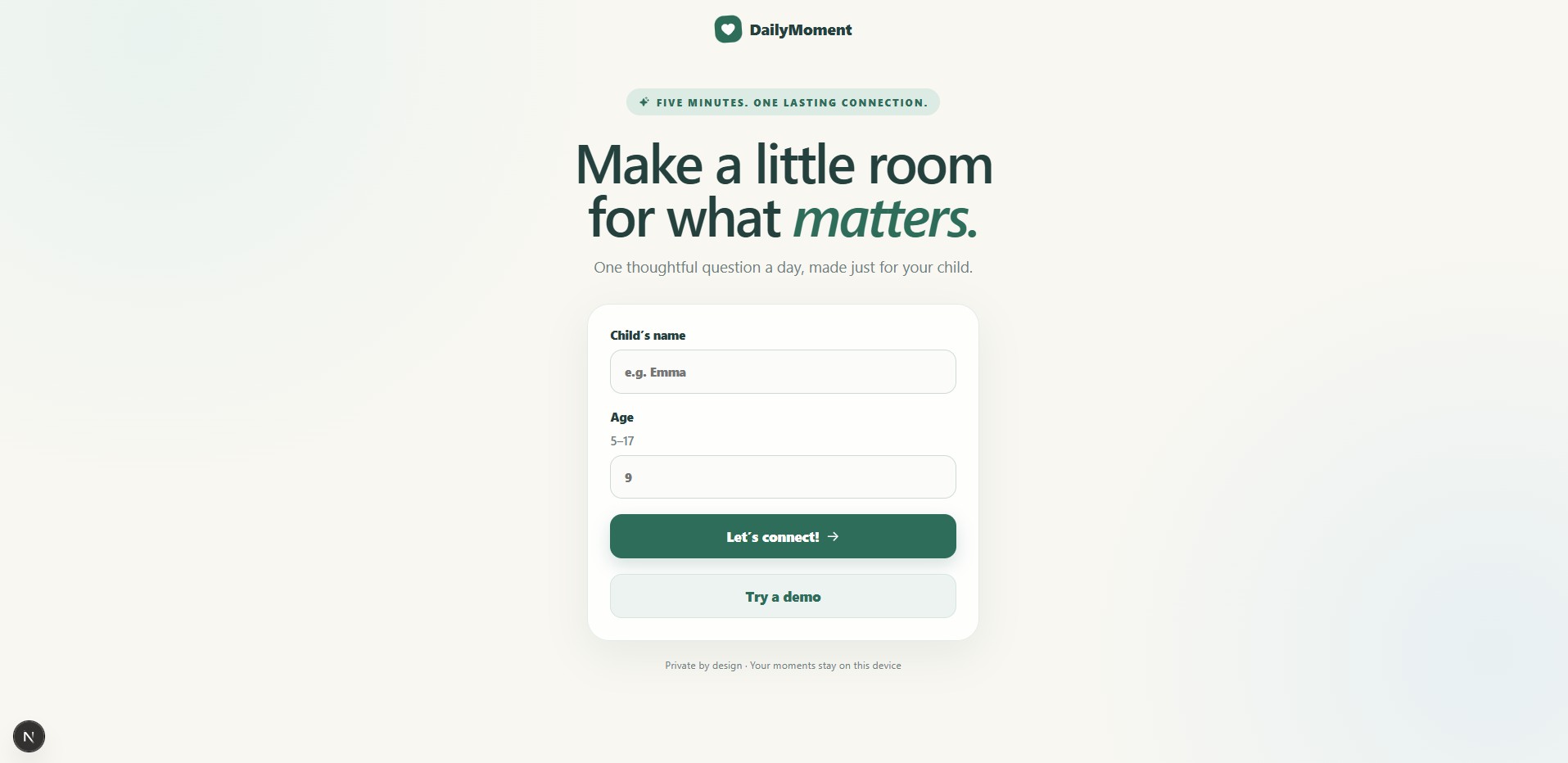
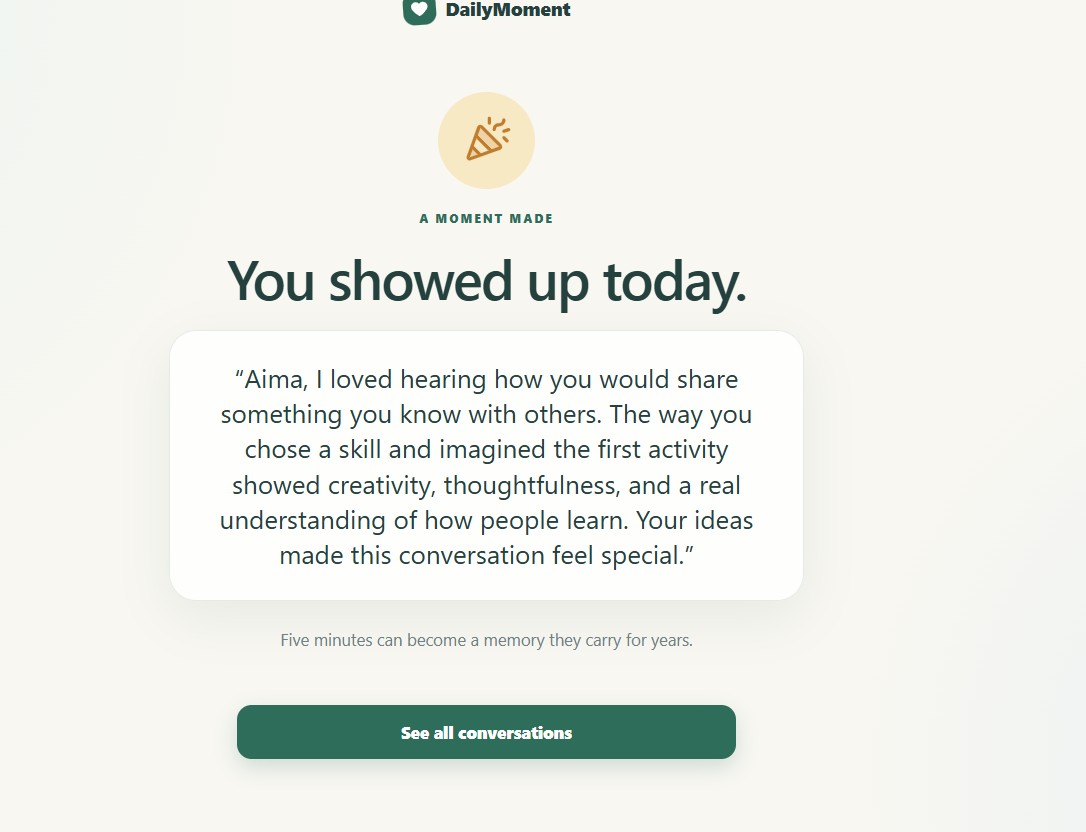
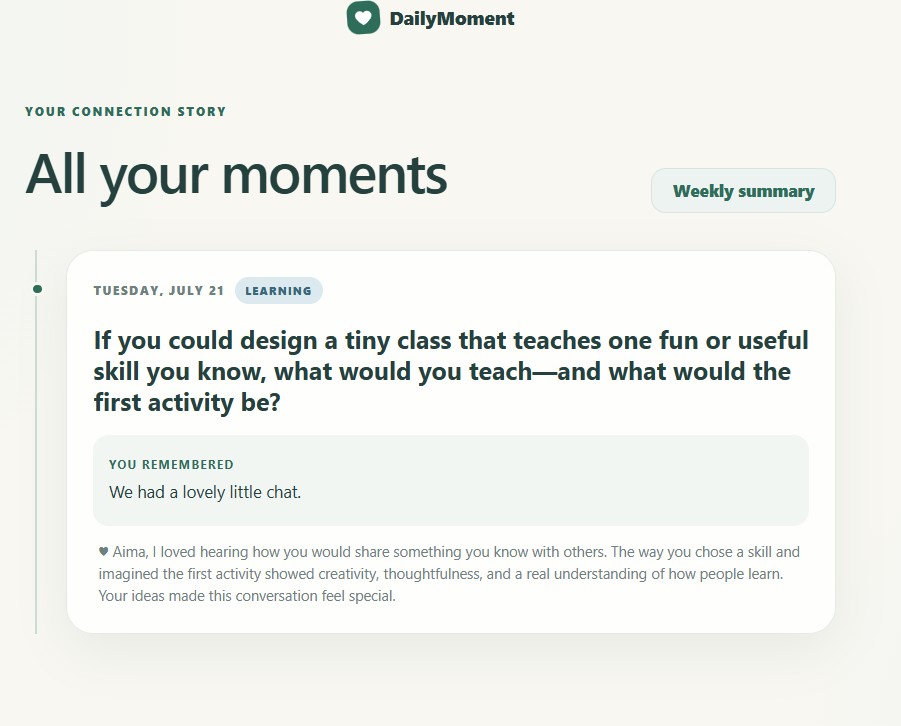
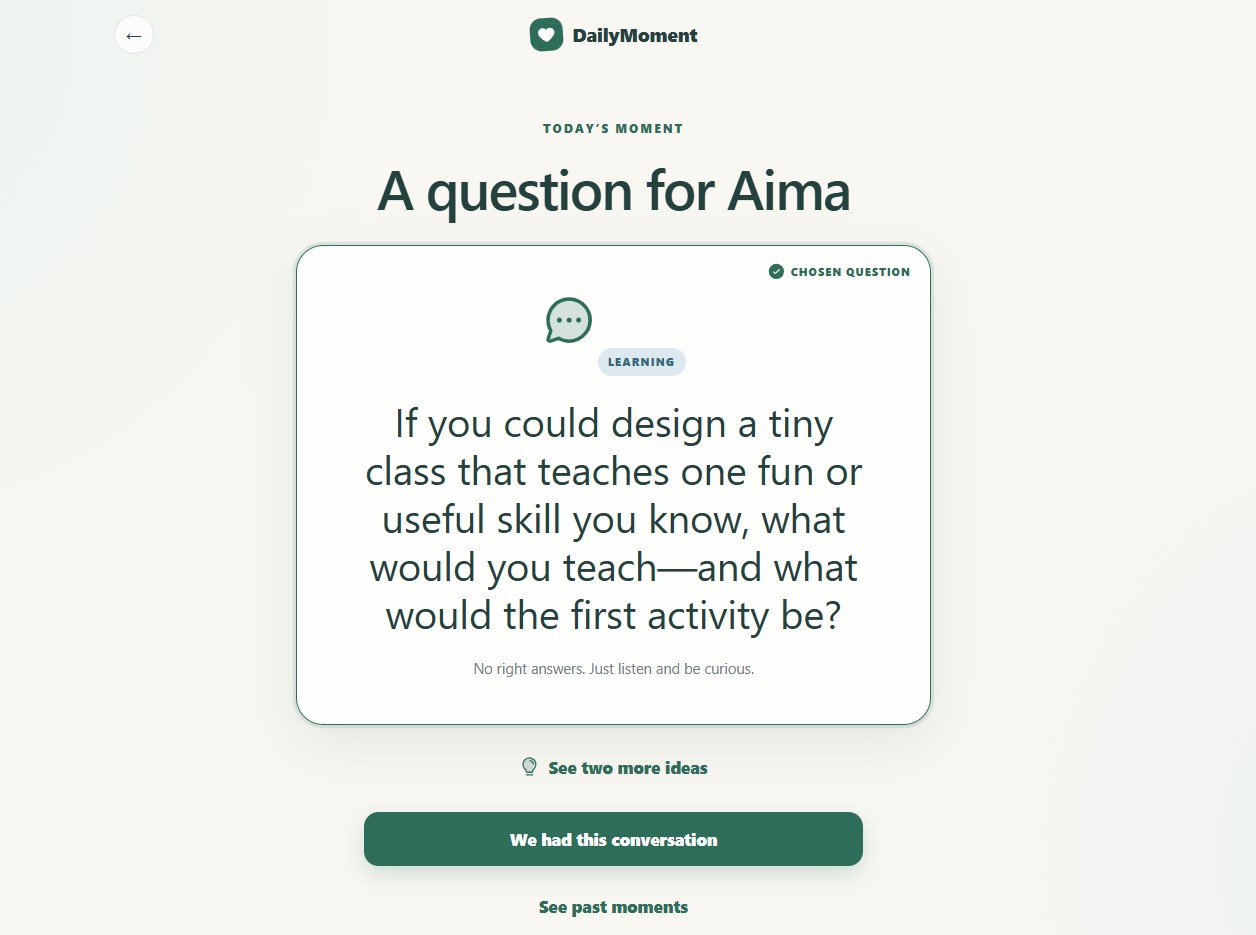
What it does DailyMoment gives a parent one thoughtful conversation starter a day, tailored to their child's age. Alongside the main question, it offers two alternate ideas exploring different themes, so there's always variety. The parent picks one, has a quick conversation with their kid, and logs a short note about what happened. In return, they get a warm, personal reflection celebrating that moment not a score, not a grade, just recognition that connection happened. Over time, a calendar view and weekly summary show the bigger picture of the conversations they've built together.
How we built it We built DailyMoment using Codex and GPT-5.6, working through the entire project inside a single Codex session in ChatGPT. Codex scaffolded the whole Next.js application the onboarding flow, the API route, the multi-screen journey (prompt → log → celebration → calendar → summary), and the styling. GPT-5.6 powers the actual intelligence: generating age-appropriate conversation starters across categories like emotions, curiosity, and resilience, and writing warm, specific reflections after each logged conversation. As a complete beginner, product decisions came first no tracking, no grading, keeping everything centered on connection while Codex handled implementation.
Challenges we ran into API key errors our first API key was invalid; generating a fresh one and correctly loading it into .env.local solved this.
Repetitive prompt categories when we added an optional "see two more ideas" feature, all three prompts initially came back in the same category. We asked Codex to guarantee variety across all three, and it now tests for uniqueness every time. Button responsiveness ("lag") several buttons across the app needed two or three clicks to respond. Codex fixed this by adding immediate loading states and disabling buttons on first click, across every screen. Demo data mixing with real data testing the built-in demo mode left sample data in local storage that then mixed with real entries. Testing in an Incognito window confirmed the real flow works cleanly for any new user.
Accomplishments that we're proud of Going from zero coding experience to a fully working, polished app in a single day
Catching and fixing real UX issues before they reached judges repetitive prompts, laggy buttons, and mixed demo data Landing on a genuinely unique idea in a crowded hackathon: a tool built for connection rather than tracking Keeping the product philosophy consistent throughout no grading, no dashboards, just conversation
What we learned Building DailyMoment showed us that Codex isn't just a code generator it's a genuine collaborator, even for someone with zero prior coding background. The real skill was learning how to describe problems clearly and test rigorously, rather than writing code by hand.
What's next for DailyMoment We'd love to explore optional teacher-facing insights (with parent consent), gentle reminder notifications for the daily ritual, and expanding the conversation categories to cover more life skills and emotional growth topics as the product matures.
Built With
- api
- codex
- css
- gpt-5.6
- javascript
- localstorage
- next.js
- node.js
- openai
- react
- typescript
- vercel

Log in or sign up for Devpost to join the conversation.